So if I won the lottery…Dowdeswell Court

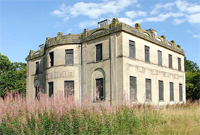
Dowdeswell Court (Image from Savills)

Although many of the stories in this blog are about houses at risk, it should also be noted that, should funds permit, many a fine country house comes up for sale every week via the big agencies such as Knight Frank, Savills, Chestertons etc.  Whilst for most the dream of the large country house is out of reach, the sumptuous photos allow us a brief glimpse of these beautiful buildings. So, watch out for postings of the best of the country houses which have been advertised.

Dowdeswell Court, situated just outside Cheltenham, is an elegant essay in ne0-Classical style.  The estate had been in the Rogers family since 1582 but by the early 1800s the house was so dilapidated that it could only be replaced.  The new house was built in 1833-7, and was designed by a well-respected architect, Charles Paul of Cheltenham, who incorporated the distinctive Corinthian orders and cornicing.  Interestingly though, the final design owes much to the master mason, Thomas Denley, who altered the plans.  The interiors are to the 1830s but have been sympathetically restored.  The house was then sold the now Coxwell-Rodgers family in the 1900s and it then went through a succession of owners and uses including as a school and residential home.  It was from this latter fate that the house was rescued in 2005 and has since been carefully restored.  This truly is a stunning house – a great example of it’s type and conveniently sized and located.

So if you have the requisite £7.9m please do contact Savills and ask for a viewing.  And if you would like someone to carry your bag or something while you do so, please just let me know.

Full details: Dowdeswell Court [Savills]

Nocton Hall ‘amongst 10 most endangered’

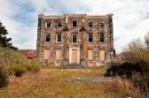
Nocton Hall (Image from Wikipedia)

Nocton Hall suffered a devastating fire in 2004 and since then has remained a roof-less, though restorable, shell with no sign that the new owners have any inclination to rescue this interesting and attractive house.

The original Nocton Hall burnt down in 1834 and the new house was built by William Shearburn for the Earl of Ripon in 1841.  It was then taken over by the Air Ministry in 1940 for use as a hospital for RAF Nocton.  The RAF left in 1983 following which it became a residential home.  However, in the mid-1990s the business failed and it was bought by a local developer, Leda Properties.  A then sadly familiar story played out with the house ravaged by vandalism and theft before the ‘suspicious’ fire in 2004. 

The Victorian Society have now declared that the Grade-II listed Nocton Hall is one of their ‘Top 10 Most Endangered Buildings’ in the country.  Hopefully this will again focus some attention and, along with the concerns of locals, will perhaps prompt Leda Properties to declare their intentions.  One hopes that this is not another case of a developer hoping that further vandalism or fire will give them the opportunity to apply for permission to demolish.  Lincolnshire has lost far too many of it’s country houses already over the last 100 years – there is no reason beyond stubborn greed why Nocton Hall should be added to the list.

Full story: ‘Nocton Hall a ‘top 10’ endangered building‘ [Lincolnshire Echo]

Please someone buy the beautiful Pell Well Hall

Pell Well Hall (Image from Strutt & Parker)

Sir John Soane was one of the most important Regency architects, responsible for some of the most interesting buildings in the country.  However, many of his commissions were urban or were additions to existing country houses.  This makes the country houses which he designed alone quite rare – and as a master architect they are usually amongst the most beautiful and elegant buildings in the country. However, despite their rarity and elegance they have often been mistreated.

Pell Well Hall is one such example.  Built between 1822-28 for the wealthy iron merchant, Mr Purney Sillitoe, it later became a boys school until the mid-1960s when it passed again into private ownership.  This however was a period which ended with the house as a fire-ravaged shell on the verge of collapse.  There was widespread concern with the house appearing on the various ‘building at risk’ registers.  This led to a concerted effort which removed the unsympathetic Victorian and Edwardian additions (sorry SPAB) leaving an eminently manageable country house.  The restoration programme stabilised the building and interior and the house was put on the market about two years ago.  Unfortunately, like Soane’s other ‘at risk’ house, Piercefield in Chepstow (also for sale with Strutt & Parker), it failed to find a buyer.

So, once again, the elegant Pell Well Hall is again for sale.  Strutt & Parker are offering the Grade-II* house with 4 acres of land, with the guide price of £750,000 reflecting the level of work that will be required to restore this important house (think low single digit millions to do it properly).  It could be used for leisure or commercial purposes but really this house cries out for someone to make it a home.

Full details: ‘Pell Wall, Market Drayton, Shropshire‘ [Strutt & Parker]

Could Viewhill House rise from the ashes?

Viewhill House, near Inverness, suffered a devasting fire two years ago which left it a ruined shell.  Since then it has been the subject of debate as to whether it can be saved or demolished and replaced a new development.  Unsurprisingly, a report by the developer has concluded that it should be demolished (what a surprise!) and has unfortunately been backed up by the local conservation officer.  What is interesting is that neither party has actually examined the building fully, claiming it’s too dangerous.  So on the basis of a fairly shallow investigation another part of Scotland’s heritage is imperilled.

The 170-year old  former home of Caledonian Canal engineer Joseph Mitchell, which was Category-B listed, had been empty for some time before the mysterious fire ripped through the house in 2007.  The developer had previously expressed his frustration that he wasn’t allowed to do as he wanted and level the site following the fire but luckily the council had taken a stronger line, demanding stabilisation works.

However, a recent assessment by independent historic buildings expert Scott Handley has concluded that the house can be saved. Mr Handley and the Inverness Civic Trust hope to present their report to the council in the hope of persuading them to preserve this interesting part of Inverness’ heritage before it becomes just yet another half-empty development of city flats.

Full story: ‘Mansion can be saved, says expert‘ [The Inverness Courier]

Scraptoft Hall at risk from ‘rescue’

Scraptoft Hall
Scraptoft Hall

A proposal to restore Scraptoft Hall, a much-neglected Georgian mansion, as part of a large development scheme has been challenged by English Heritage. 

In what may be seen as a return to the mis-guided approaches of the 1970s and 80s, a local developer has dangled the ‘carrot’ of restoration of the Hall whilst seeking permission to build a huge 103-apartment retirement village in the grounds.

Scraptoft Hall was largely built in the early 1720s but the core dates back to the 1500s, however, in recent decades the elegant house had been adandoned and beset by theft and idiot vandals who had set fire to some areas. 

Harborough District Council is ‘minded’ to approve the plans but English Heritage has objected that the proposals would seriously compromise the setting of the hall. 

If approved this scheme would reduce this elegant house to a mere architectural curiousity in the middle of  a huge development.  The Council should reject this scheme – even if the developers claim it’s the only hope.  The sacrificing of the house to enabling development is make a mockery of heritage protection and would encourage other like-minded developers to consider that all old buildings with a bit of land are fair game for their destructive tendencies.

Details of the inquiry: Scraptoft Hall redevelopment inquiry

Full story: ‘Project ‘will restore Scraptoft Hall to its former glory’‘ [Leicester Mercury]