Shrubland Hall finally sold

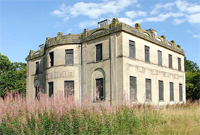
When the Grade-II* listed Shrubland Hall near Ipswich in Suffolk was put on the market for £23m in 2006 it included over 40 cottages, several farms, over 1,400 acres and one of the finest Italianate houses in the country. The house was originally designed by James Paine in the 1770s it was extensively altered by Sir Charles Barry in the 1840s.  Lord de Saumurez had decided to start afresh with a grand country house auction rarely seen such a scale since the 1950s, and which included Meissen porcelain, paintings, and many fine pieces of Georgian furniture.  The sale was a roaring success but the house itself languished on the market as the especially as the growing global credit crunch limited the desire for buyers wealthy enough to take on the 40,000 sq ft. house.

However, after three years, and selling off much of the estate in smaller lots, the house plus a few hundred acres of parkland including the listed gardens designed by Sir Humphrey Repton, has now finally been sold for £6.5m to a London businessman.  It will now be interesting to see how the estate develops as without the larger estate it will be simply a home supported by income from elsewhere.  Here’s hoping that the new owner fully understands and appreciates the architectural gem they have acquired.

Full story: ‘Shrubland Hall sold‘ [Evening Star 24]

Eshott Hall, Northumberland, finally sold

Eshott Hall, Northumberland (Image: telegraph.co.uk)

One event which can always creates a certain risk for country houses is the bankruptcy of the owner.  Once the contents have been sold, apart from the lack of maintenence, an empty house can be a magnet for the thieves who think nothing of stripping fixtures and fittings and even the lead off the roof.  So the news that Eshott Hall in Northumberland has now been sold following the bankruptcy of the owners is to be welcomed as hopefully the house will remain in use.

Full story: ‘Future of hall to become clear as sale nears‘ [The Journal]

Bewsey Old Hall becomes developer’s excuse

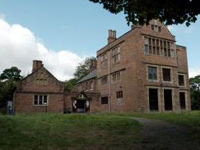
cheshire-bewseyoldhall
Bewsey Old Hall

It’s a familiar story; an old house with a bit of ground has become a bit dilapidated but rather than it being carefully restored as a single family home a developer snaps it up as an ‘opportunity’.  Despite the obvious wealth of Cheshire (or perhaps because of it) approval has almost been given for Bewsey Old Hall to not only be converted into seven apartments but for *48* more units in six other blocks to be built on stilts in the grounds.  So the house goes from being the excuse to enable building to a mere architectural fascinator in the centre of large scale development.

Luckily the local councillors have collected thousands of signatures opposing the plans and are fighting a rearguard action despite the decision of the Government planning inspector who has crazily approved this vandalism. One final hope is that a parcel of Government-owned land which is required to enable the development may yet not be sold.  If the council are successful, here’s hoping that someone with money can buy the house and land and bring this house back to life.

Full story: ‘Last gasp to save Bewsey Old Hall‘ [This is Cheshire]

Viewhill House to be demolished

Local Inverness councillors have managed to cut off their nose to spite their architectural face  – and claim it’s a triumph of cosmetic surgery.  Viewhill House (mentioned in this blog on 13 Oct) has been approved for demolition and will almost certainly be built over – another important and interesting piece of Inverness architecture will be lost forever.  Meanwhile the builders have been claiming that it was the objections of Historic Scotland which have prevented the restoration of the house.  What they mean is that they haven’t been given free reign to do as they wish and now they’re having a tantrum.  The worst developers are prone to claiming that their vandalism is ‘necessary’ to secure jobs/investment/tourism/etc but usually the price is paid in lost architectural heritage.  Viewhill House is another casualty.  Give it a few hundred years and maybe the developers will hold a party when they get rid of the last of these historical speed bumps.

Full story: ‘Heritage in danger of crumbling away‘ [Inverness Courier] / ‘Quango accused of causing failure of three businesses‘ [The Press and Journal]

Please someone buy the beautiful Pell Well Hall

Pell Well Hall (Image from Strutt & Parker)

Sir John Soane was one of the most important Regency architects, responsible for some of the most interesting buildings in the country.  However, many of his commissions were urban or were additions to existing country houses.  This makes the country houses which he designed alone quite rare – and as a master architect they are usually amongst the most beautiful and elegant buildings in the country. However, despite their rarity and elegance they have often been mistreated.

Pell Well Hall is one such example.  Built between 1822-28 for the wealthy iron merchant, Mr Purney Sillitoe, it later became a boys school until the mid-1960s when it passed again into private ownership.  This however was a period which ended with the house as a fire-ravaged shell on the verge of collapse.  There was widespread concern with the house appearing on the various ‘building at risk’ registers.  This led to a concerted effort which removed the unsympathetic Victorian and Edwardian additions (sorry SPAB) leaving an eminently manageable country house.  The restoration programme stabilised the building and interior and the house was put on the market about two years ago.  Unfortunately, like Soane’s other ‘at risk’ house, Piercefield in Chepstow (also for sale with Strutt & Parker), it failed to find a buyer.

So, once again, the elegant Pell Well Hall is again for sale.  Strutt & Parker are offering the Grade-II* house with 4 acres of land, with the guide price of £750,000 reflecting the level of work that will be required to restore this important house (think low single digit millions to do it properly).  It could be used for leisure or commercial purposes but really this house cries out for someone to make it a home.

Full details: ‘Pell Wall, Market Drayton, Shropshire‘ [Strutt & Parker]