Inflamed passions: organised violence against UK country houses (part 2/3) – Reform Act Riots 1831

On 8 October 1831, the Houses of Lords voted down the Second Reform Bill. As before, this had proposed moderately extending the electoral franchise and reorganised the distribution of constituencies to diminish the power of aristocratic patronage. Months of agitation, protest, and public meetings had been dismissed by the Lords, their trenchant opposition seeming to offer little prospect of success through parliamentary democracy. As the news spread around the country that evening and over the next few days, riots broke in several cities and towns including London, Derby, Birmingham, Nottingham, Yeovil, Sherborne, Exeter and Bristol, but which also targeted a number of country houses.


The 1830s were a challenging period for the average worker, urban and rural alike. Unchanging political structures left them unrepresented, which, combined with increasing mechanisation and a deterioration in the social support structures which helped the destitute, had pushed the workers to desperation.

The decade started as it meant to continue. In 1830, farmers started receiving letters from a fictitious ‘Captain Swing’ demanding better conditions for the workers and the end to the use of new threshing machines, which reduced the need to employ as many labourers. When the farmers refused, the labourers in first Kent, and eventually every English county, rose up in destructive protest. Their targets were property, specifically the threshing machines which threatened their livelihoods, but also barns and hayricks, in what became known as the Swing Riots (after the eponymous correspondent). Yet, despite their anger being directed at the property of the farmers and landowners, the mobs seemingly did not target their country houses.

At the same time, the simmering resentment of the urban workers at their lack of political representation reached boiling point. The farm labourers directed their anger at the machines and agricultural features which they experienced in their working daily lives. For the urban worker, their revenge was as indiscriminate as it was targeted; entire areas of cities looted and burnt, whilst also specifically attacking the property of those in the political classes who sought to frustrate change.

Bombarding the Barricades or the Storming of Apsley House – Plate 7: satire with the civilian troops of the Reform Bill attacking the Duke of Wellington and Archbishop of Canterbury. Published by J Bell, February 1832 (Image © The Trustees of the British Museum)

Some in Parliament had recognised the very legitimate concerns about the current political arrangements. Problems included the limited number of voters (just 5% of the population were eligible), the unequal distribution of MPs (did Cornwall in 1821 really require 44 MPs to represent it? It has just six in 2021), and control of the constituencies through patronage. The latter included the infamous ‘rotten boroughs‘, where a handful of electors (or none at all in the case of Old Sarum, Wiltshire) returned one or two MPs; the same numbers as major cities such as Liverpool or Manchester which had populations of over 100,000.

‘TO BE SOLD, The Estate of Rotten Down. Two cottages rather dilapidated a Paddock & a Pig-Sty, Lowest price £25,0000. NB returns Two Members to P[arliamen]t (satirical cartoon in The Looking Glass, Issue No. 10 – published circa. November 1830 – drawn by William Heath)

A fear of revolution had always stalked the British ruling class. This was particularly acute in the century which followed the America War of Independence (1775-1783). This marked the beginning of a period which became known as the Age of Revolution (according to the historian Eric Hobsbawn), when the existing social order was overthrown in a number of countries. Although Pitt the Younger had proposed some limited reforms in 1785, the subsequent experience of France, where modest constitutional reforms in 1789 had become a regicidal reign of terror by 1793, largely blunted any attempt at change.

However, by 1830, there was an increasing sense of concern, even in the political classes. The concern was less about the obvious injustices of the current arrangements, but that unless there was change, the anger may result in revolution, as had so recently happened again in France. In January 1830, a new Whig government was formed and introduced modest proposals to reform the parliamentary system. The Tories, with the Duke of Wellington in the vanguard, were staunch in their opposition, defeating the Reform Bill on each of the three occasions it was brought before the House. The views of the Duke were as dark as they were strident; in one letter he thundered:

Matters appear to be going as badly as possible. It may be relied upon that we shall have a revolution. I have never doubted the inclination and disposition of the lower orders of the people. I told you years ago that they are rotten to the core. They are not bloodthirsty, but they are desirous of plunder. They will plunder, annihilate all property in the country. The majority of them will starve; and we shall witness scenes such as have never yet occurred in any part of the world.

Duke of Wellington to Mrs Arbuthnot on 1 May 1830
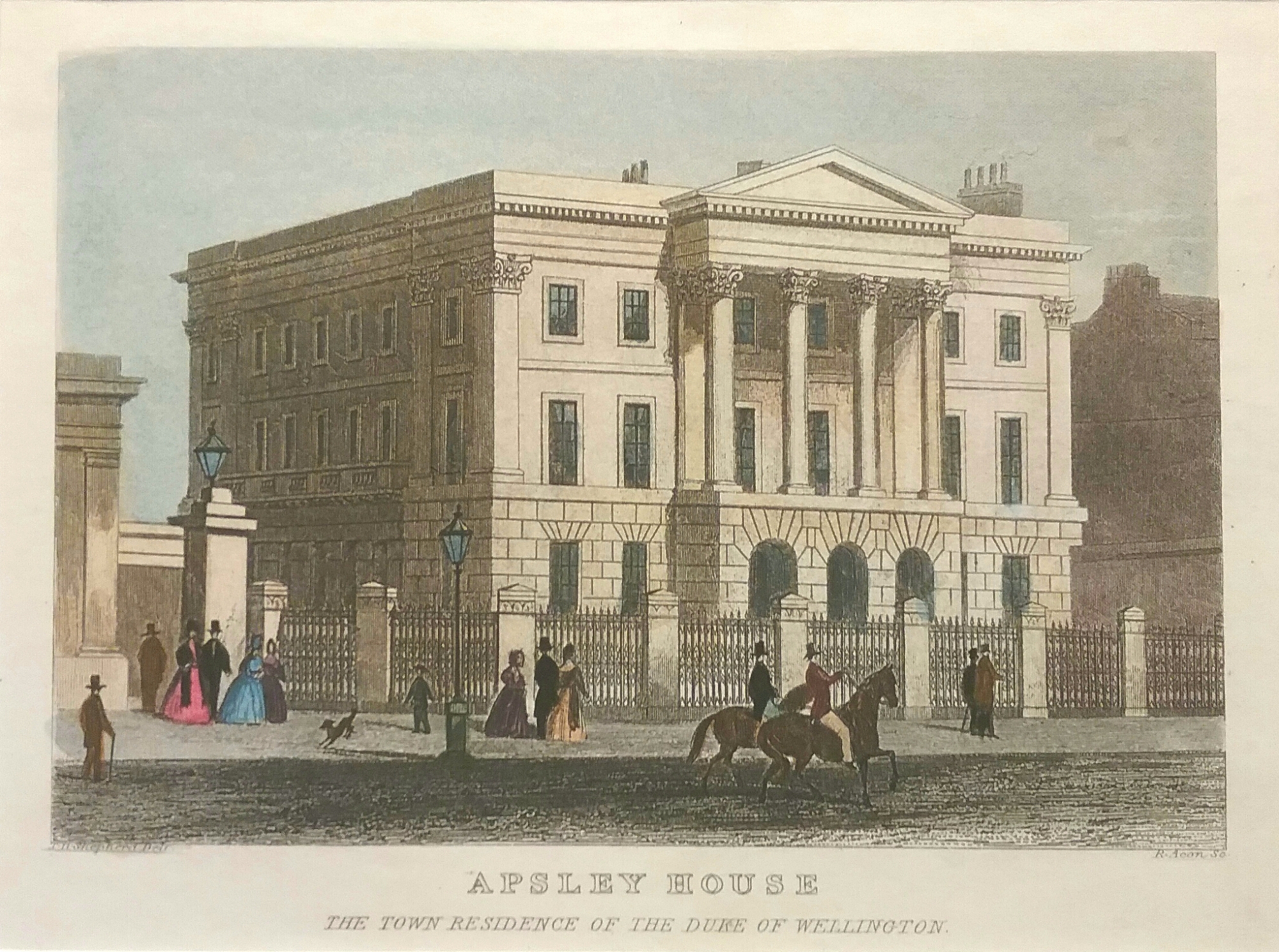
Apsley House, London c.1850

The mob felt equally as enamoured with the Duke. Twice in 1831 they targeted his London home, Apsley House. On 27 April, they smashed thirty windows and threatened to ransack it but were dissuaded by the Duke’s servant, John, who went on the roof and fired blunderbusses in the air to scare the mob off. After this, in June, the Duke had iron shutters fitted to his windows. This earned him his sobriquet of ‘Iron Duke’ – which many today assume was related to his military success, rather than his domestic unpopularity.

In October 1831, this long-running national, class-driven antagonism reached its peak – and country houses stood in the sights of those seeking to make their feelings known to those who were either directly or indirectly frustrating reform and represented the forces of opposition.

Second Reform Bill riots

When the Reform Bill was again voted down by the Lords on 8 October 1831, anger erupted. That night, and over the next few days, messengers, pamphleteers, and newspapers spread the news of the failure to pass the bill. Even though many of those who rioted would still not have met the criteria to get the vote themselves, the bill represented a hope that one day they might – and that hope had been dashed again. As the parliamentary process had failed them, across the country the people turned to a more direct and violent expression of their frustrations and anger.

Derby

As one of the major urban areas, Derby was historically controlled by well-established aristocratic and new plutocratic families – Cavendishes, Cokes, Strutts, and Awkrights, to name a few. However, in the early nineteenth-century it had developed a significant and rapidly increasing urban working class as industrialisation drew many to work in the mills and other industries. Traditionally, Derbyshire farms were much smaller scale and many families enjoyed their putative ‘three acres and a cow‘, providing a degree of self-sufficiency. However, economic hardships had increasingly forced these smallholders to sell up and move to towns and cities; their only remaining option being to enter the precarious labour market. The cause for political reform was therefore met with fertile ground in the county.

In Derby, following 1830 general election, the MPs were both liberal and had supported reform (firmly by Strutt, initially less so by Cavendish, though he later came down more solidly in favour) . When news reached Derby on 8 October that the bill hadn’t passed, the anger of the people was expressed in the violent targeting of the property of those Tories who had been in opposition to it. The rioting continued over the following two days.
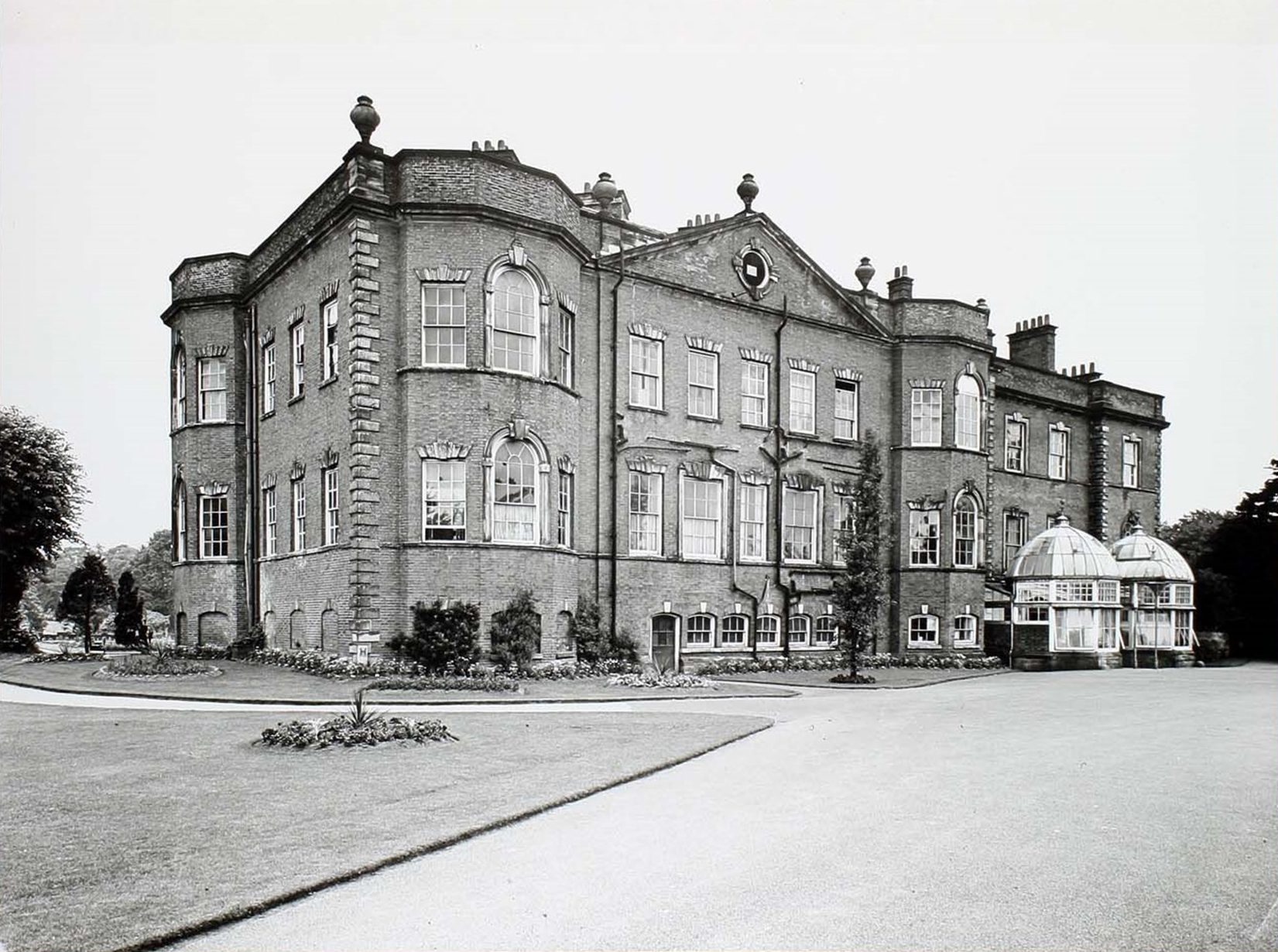
Markeaton Hall, Derby – seat of the Mundy family (Image © Historic England – card reference no: 0840_013)

One target was Markeaton Hall, the home of Francis Mundy. The estate was originally held by the Touchets but was sold in 1516 to John Mundy, a former Lord Mayor of London, who claimed to have local ancestry. The original house was replaced in 1750 with a new brick house, designed by an unknown architect who broadly got the proportions right and the details wrong; cramping the façade by placing the windows too close together. A later extension to the north (shown on the right in the photo above) was more successful in spacing them correctly.

These architectural details would have been of little importance to the mob who assembled on 8 October and marched across the 100-acre parkland to express their displeasure. The damage was reported as being extensive (p.g. v, ‘Derby Riots‘ by Thomas Richardson, 1832) but the agitators seem to have stopped short of setting the house alight and destroying it completely, as it was later repaired and appears much as it did in early prints. The house was eventually demolished in 1964 by the ungrateful Corporation of Derby. They had been left the house and 20 acres in 1929 by Rev. Clark-Maxwell, a Mundy descendent, on the condition that the house be maintained and opened for the cultural benefit of the local people. The Corporation, who had previous poor form with other houses they were gifted, let the house decay until they could tear it down.

Chaddesden Hall, Derby – attacked in 1831, restored, but then demolished in 1926 (Image © Derby Telegraph)

Also attacked was Chaddesden Hall, Derby, the home of Sir Henry Sacheverell Wilmot, 4th Baronet (b.1801 – d.1872) – who as well as being a prominent local Tory, was also married to the Mundy family. Chaddesden Hall survived and was restored though later urban development led to its sale in 1923 by the Wilmot family in to the Rural District Council. The house only lasted another three years before being demolished and the site and part of the parkland being developed for housing.

Somerset

Despite his estate being in the next county, the opposition to reform focused on Lord Ashley, aka Anthony Ashley-Cooper, the 7th Earl of Shaftesbury, an MP by virtue of a rotten borough (Woodstock, Oxfordshire) and a strong supporter of the Duke of Wellington. His election agents were often the local solicitors and in the Yeovil riots it was they who bore the brunt of the people’s anger when they sought their targets on Friday 21 October. The small town houses of the anti-Reformers in Yeovil were visited in turn. One which suffered the most damage was Hendford Manor, home of solicitor Edwin Newman, which was attacked by the angry crowd, eventually forcing Newman and his family to flee before the house was vandalised, causing £250 damage. Elsewhere in Yeovil, Glenthorne House – also owned by a solicitor – and Old Sarum House and Hendford House, were similarly attacked.

Bristol

Ruins of Bishop’s Palace, Bristol by Alfred Montague, 1831 (Image © Bristol Culture (Bristol Museum & Art Gallery))

The riots in Bristol were some of the most severe and costly in the entire 19th-century. The trigger for the violence was the arrival in the city on 29 October of their senior judge, Sir Charles Wetherall, on his annual visit. Speaking in Parliament in the reform debates, he had lied and said that the people of Bristol didn’t favour reform, despite knowing of a 17,000-name petition demanding just that. To cap it all, Wetherall was a manifestation of the inequitable system as he represented the rotten borough of Boroughbridge in Yorkshire which was controlled by the dogmatically anti-reform Duke of Newcastle. The constituency returned two MPs for an population of 947, of whom the electorate was just 48. Bristol at the same time also had two MPs but for a population of 100,000.

Demonstrators greeted Wetherall with loud protests, which degenerated into riots which lasted three days and resulted in damage totalling over £300,000. Both Bristol MPs, James Evan Baillie and Edward Davis Protheroe, supported parliamentary reform, which seems to have saved them from being targeted. Therefore the mob’s targets were mainly civic buildings including the Mansion House, two prisons, toll houses, the Custom House, Excise Office though around 40 private houses in Queen’s Square and Princes Street were looted and burnt down. The violence remained focused in the city and the only house of note to be destroyed was the Bishop’s Palace, targeted as the Bishop of Bristol had been strongly opposed to reform.

Dorset
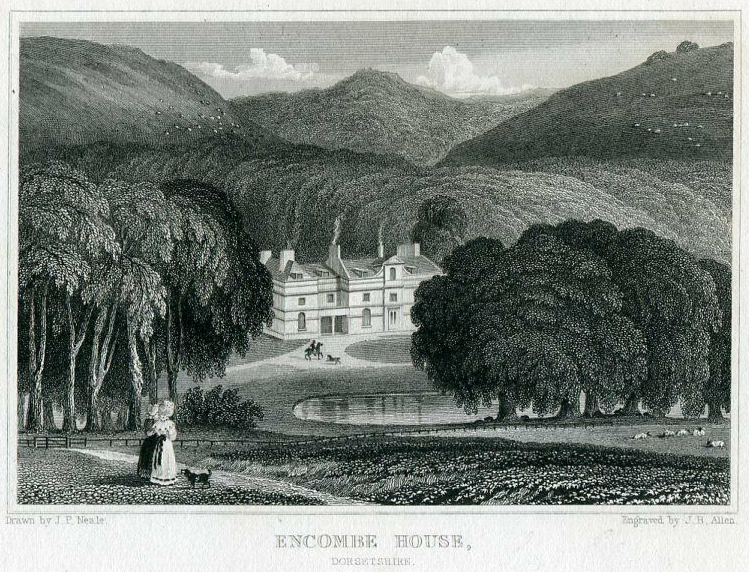
Encombe House, Dorsetshire (engraved by J.H. Allen from a drawing by J.P. Neale, 1830)

Even in smaller urban areas, such was the force of feeling, that nearby country houses were at risk, particularly those individuals who had been long-established as part of the political class. Anger in Poole, Dorset, was still fermenting even after news of the suppression of the Bristol riots and Encombe House, seat of the John Scott, 1st Earl of Eldon (b.1751 – d.1838), who had been loyal advisor to the Crown and Lord Chancellor, was now a target.

The riots at Bristol were quieted and a sufficient force fixed there, two troops of the 3rd Dragoons returned to their headquarters at Dorchester. This morning intelligence was received that a mob from Poole were intending to attack Lord Eldon’s place at Encombe, and also Corfe Castle. Mr Bond’s troop of Yeomanry were in consequence called out, and stationed on and about the bridge at Wareham, thus effectively guarding the only approach from Poole.

Mary Frampton, quoted from her journal (5 November 1831)

Nottingham

Nottingham in the early nineteenth century was described as ‘the worst slum in the Empire apart from Bombay’. Industrialisation had created an influx of workers, but local landowners – aristocratic and commoner alike – refused to release land for house building, forcing an increasing number of families into smaller and ever-worse accommodation. The expansion of the city was blocked to the west by the Duke’s Nottingham Park and Lord Middleton’s estate at Wollaton Hall, and to the east by Colwick parish which was largely owned by the Musters family of Colwick Hall. The north and south boundaries were ‘common’ land which was allocated by lottery to 250 burgessess and freeholders, who defended their rights to the arable land as fiercely as the larger landowners.

The rioters therefore had a number of targets, but their main ire was directed at the property the Duke of Newcastle, an ardent and active opponent of reform, who was also one of the most significant landowners in Nottinghamshire. He also controlled a number of rotten boroughs, responsible for returning fifteen MPs, who all followed the Duke’s direction.

Henry Pelham-Clinton, 4th Duke of Newcastle (1785-1851), was a man of firm views, often expressed in a loud voice. Even the Duke of Wellington, a man with his own trenchant brand of dogmatic hauteur, declared: ‘There never was such a fool.’. Unfortunately for the Duke of Newcastle, his role as one of the leaders of the opposition to the Reform Bill made him a totemic figure in the cast of characters targeted by those angry at the failure of the vote.

Having receiving the news of the vote on Saturday evening, the crowd broke a few shop windows but ‘the Mob dispersed on the appearance of the Military‘ (Ne C 5004 – Letter from Thomas Moore, High Sheriff of Nottingham, Nottingham, to Henry, 4th Duke of Newcastle under Lyne; 12 Oct. 1831).

Sunday was a day of rest. On Monday (10 Oct), a public meeting had been called by the Mayor, which passed off peacefully, However, that evening:

“a Mob collected and after committing a few acts of outrage in the Town proceeded to Colwick where they destroyed the furniture & attempted to burn Mr Muster’s House, in which to a certain extent they succeeded.”

Newcastle Collection, Ne C 5004
Colwick Hall, Nottingham – engraved by W. Smith from a Drawing by J.P. Neale

Colwick Hall, the first target, was the family home of Jack Musters, a local magistrate. Built by Jack’s father, John, in 1776 to designs by John Carr of York, the substantial house was ransacked and set alight, leaving it severely damaged. It was later restored but was sold in 1892 and became the site of Nottingham race course for many years and later turned into a hotel. Having successfully attacked Musters home, the mob, now fortified on his wine cellar, cried out: “to the Castle“.
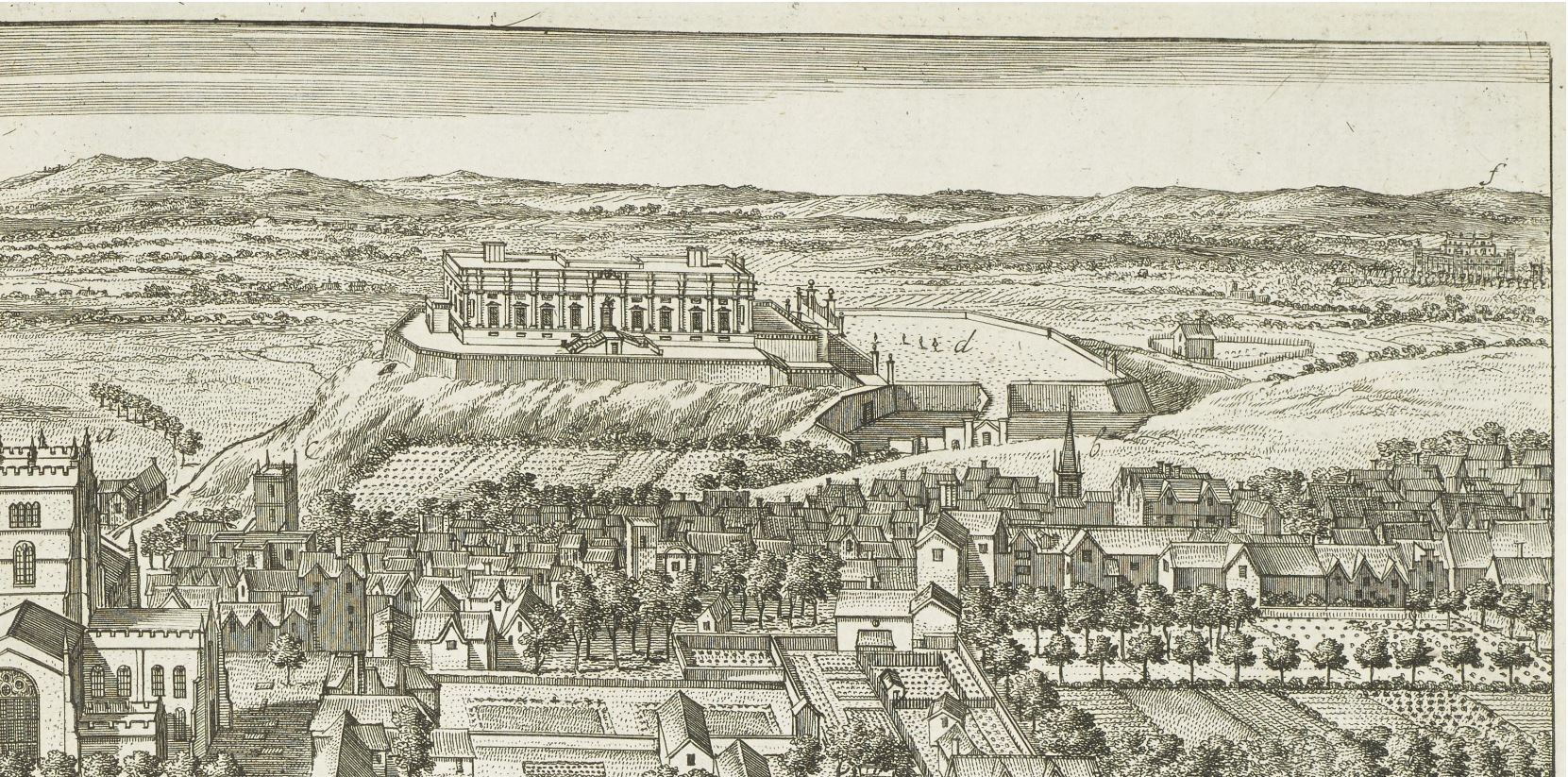
Detail of ‘Nottingham. View from the east‘ by Johannes Kip, showing Nottingham Castle (centre) and Wollaton Hall (right-hand edge) (Image source: National Galleries Scotland/TOYNBEE 150)

Dominating the city skyline since the first motte-and-bailey fortifications had been built in 1068, Nottingham Castle, had been a royal residence until around 1600. It was then held during the English Civil War (1642-1651) by the Parliamentarians who then razed it in 1651 to prevent it being used again. In 1674, William Cavendish, 1st Duke of Newcastle, purchased the castle and immediately began to build his palatial seat. The architect was originally thought to have been Samuel Marsh, a mason who had been working at Belvoir Castle, Chatsworth, (in the 1650s) and at Bolsover Castle (1660s).

However, the design of the palazzo, in a sophisticated and novel artisan mannerist style, is most likely to have been by the 1st Duke, himself (according to Colvin). The Duke died in 1676, before construction was complete. His will stated that the work was to be completed, using the £2,000 a year he left to fund the project, ‘according to the forme and modell thereof by me laid and designed.‘. The Castle represented a very personal manifestation of how he wished to be seen – and it retained this symbolism as the seat of the subsequent Dukes of Newcastle.

For the 4th Duke, an attack on his property must have seemed beyond the pale. The Castle had been unoccupied in recent years so it was guarded by just two or three servants. They were quickly overwhelmed, but unharmed, by the crowd, who numbered around six hundred.

[Having] forced their way past the lodge, [the crowd] poured in [the building] through a broken window, smashed the doors, and set about making a vast bonfire of this hated, if deserted, symbol.

Bryson, Emrys ‘Portrait of Nottingham’ – p.g. 95 (1983)

The mansion was ransacked and a substantial bonfire lit in the basement, which quickly created a fearsome blaze which consumed the entire house, the flames being visible for miles around.

About nine o’clock, the spectacle was awfully grand, and viewed from whatever point, the conflagration presented an exhibition such as seldom witnessed. The grand outline of the building remained entire whilst immense volumes of flames poured forth at the windows, and in some places were seen through the green foliage of the trees. Thousands of people thronged the Castle-yard and every spot that commanded a sight of the fire.

Between the hours of nine and ten, the conflagration had reached its height; the town was comparatively free from tumult, and thousands thronged the Castle-yard, to gaze with mingled feeling on the dreadfully novel spectacle.

Mercury; 15th October 1831
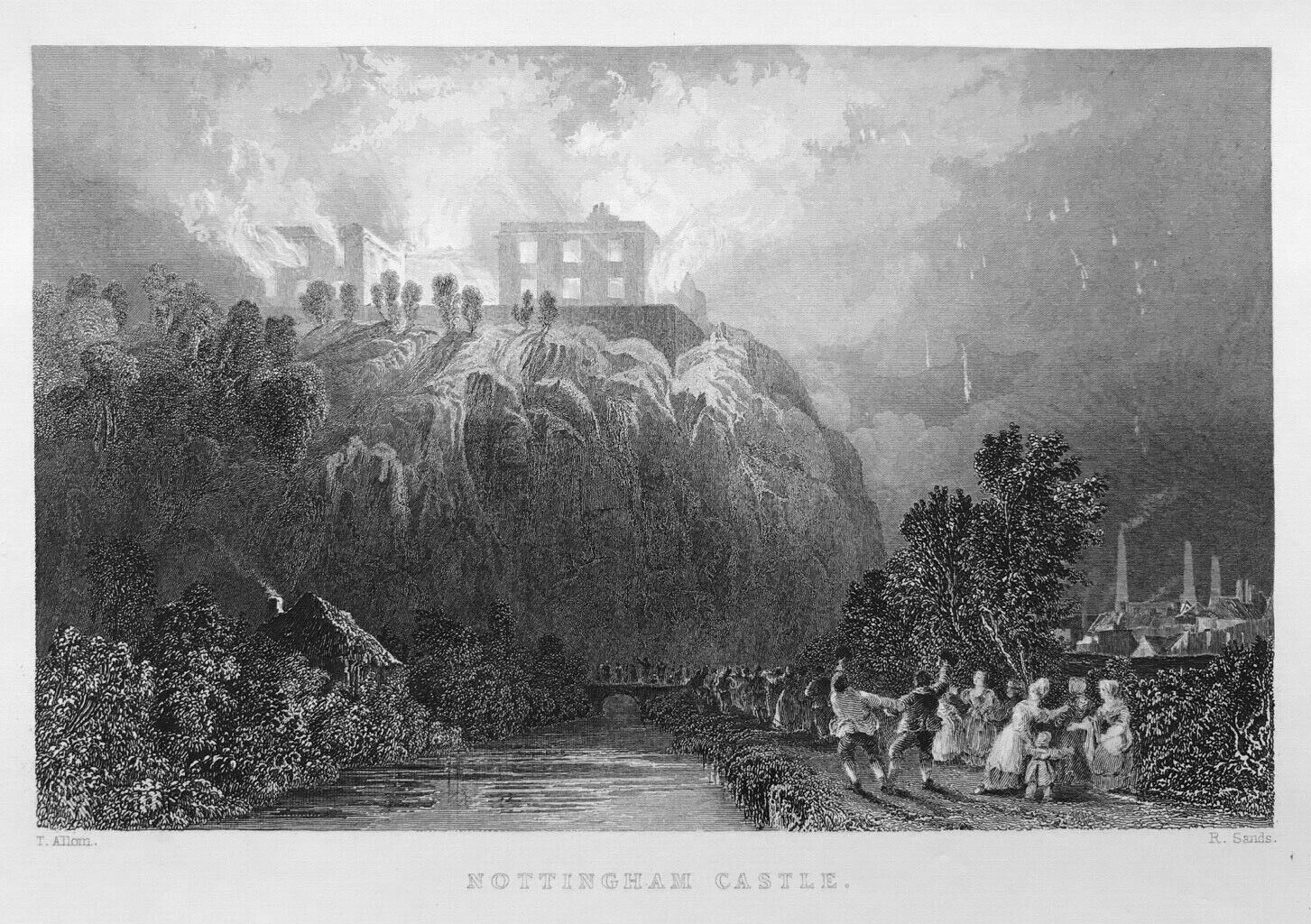
Nottingham Castle in flames – drawn by T. Allom, 1831

Meanwhile, despite the local knowledge that it was well-defended, a separate group had meanwhile started to make their way towards Wollaton Hall, the seat of the 6th Baron Middleton. He had been responsible for a substantial number of changes to the house, directed by Sir Jeffry Wyattville, which had created the imposing centrepiece to Lord Middleton’s estate which, to the rioters, represented another perceived aristocratic blocker on the expansion of Nottingham. The attack on Wollaton was thwarted when the mob were met on their way to the house by the Yeomanry. They engaged the mob, injuring some and capturing others, following which the remainder fled – though they later pelted them with rocks and bricks in an unsuccessful attempt to free the prisoners.
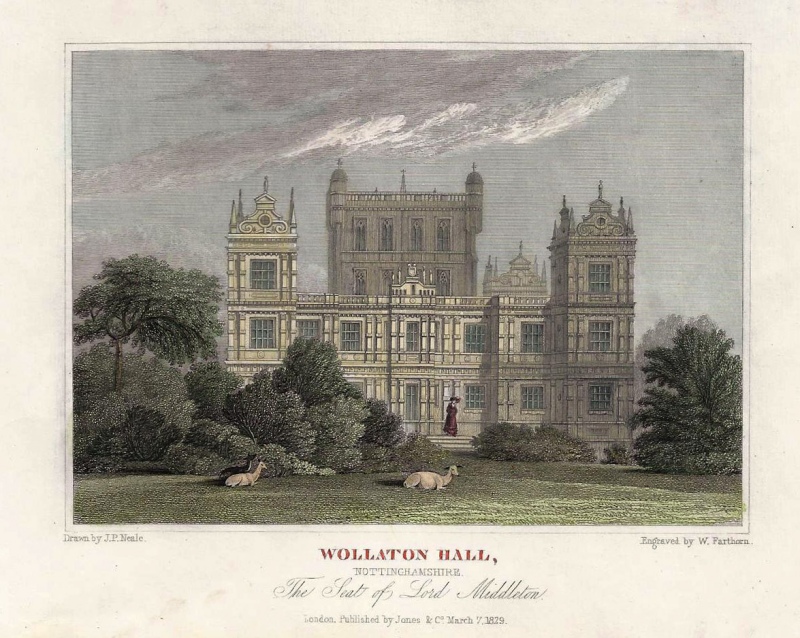
Wollaton Hall, Nottinghamshire c.1829 – drawn by J. P. Neale / engraved by W. Farthorn (Views of the Seats of the Noblemen and Gentlemen in England, Wales, Scotland and Ireland (London: 1818-1823, 1824-1829 [1830-31]))

The Duke was still in London so updates came via letter. Thomas Moore, High Sheriff of Nottingham’s earlier correspondence continued:

I regret to say that afterwards they proceeded to your Grace’s Castle which they completely destroyed”

A local newspaper, The Journal, reported that:

…[the] outer walls of this once splendid edifice are alone left standing, and we fear will remain an eternal monument of the fury of a misguided multitude.

Journal – 15th October 1831

As the light of Tuesday morning rose, the sight of the now gutted and smouldering castle met those looking up from the city streets.
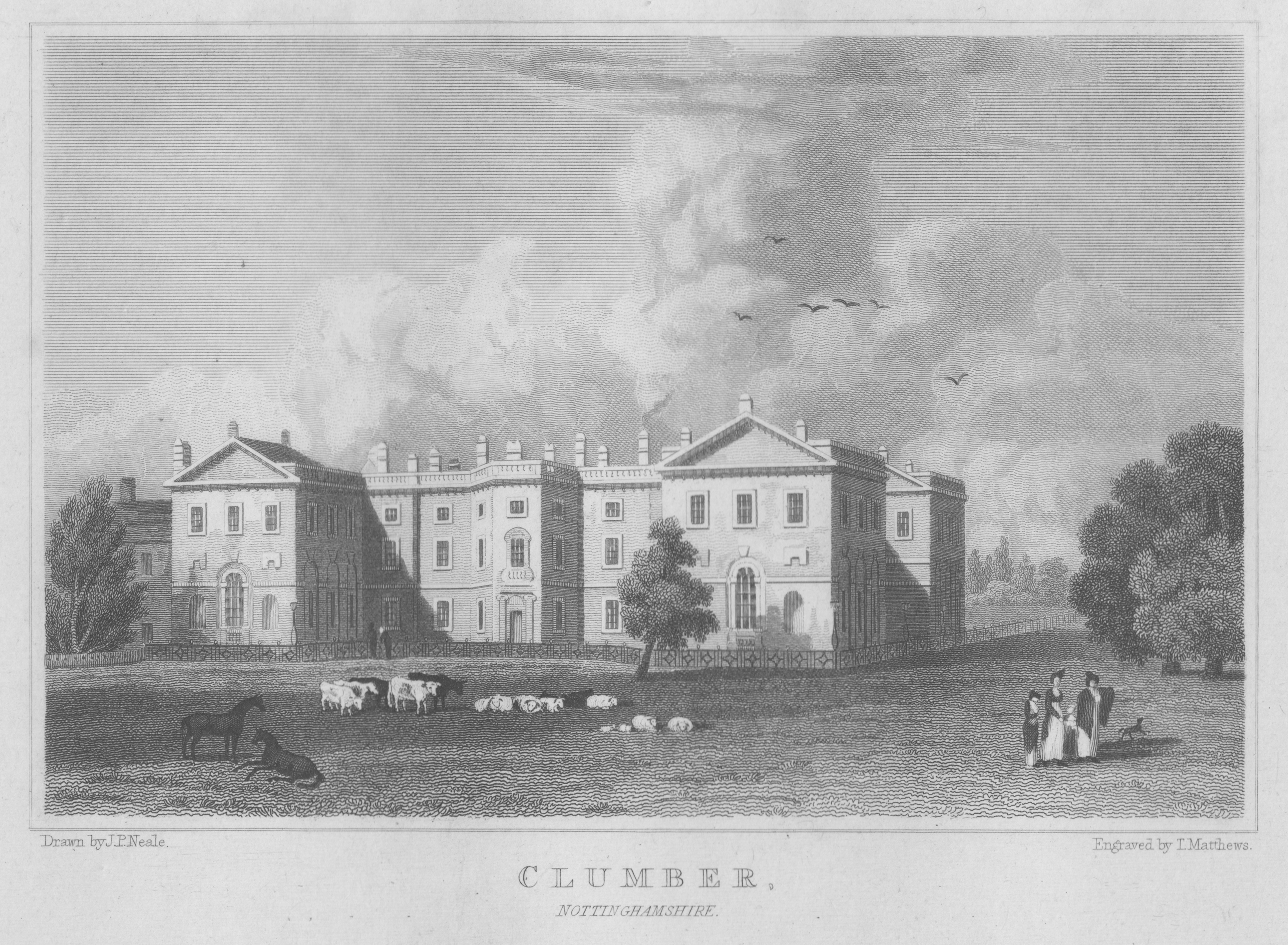
Clumber House, Nottinghamshire – drawn by J.P. Neale, 1818

In contrast to the defenceless Castle, the Duke had be most concerned about the mob attacking his main residence, Clumber Park. In letter written on behalf of his son, the Earl of Lincoln, who was at Clumber, he wrote:

‘…that he is in hourly expectation of an attack on Clumber House. the plate and pictures we have been engaged with removing today and we are pretty well provided with arms and ammunition…’

Ne C 5002 – Letter from Richard Hunt on behalf of Henry Pelham-Clinton, Earl of Lincoln, Clumber, Nottinghamshire, to J. Parkinson; 11 Oct. 1831

A further letter the next day to the Duke gave more details about the preparations at Clumber:

Information having been received that the mob at Nottingham, after totally destroying Nottingham Castle by their intended [sic] to proceed to Clumber, Lord Lincoln gave immediate directions for the removal of the Pictures into the Evidence Room and which has been done without any damage whatever, and the Plate is lodged safely in the cellar, a wall has been built in front of it, which is whitewashed so as to appear like the other walls of the cellar, and a shelf upon which are Bottles set so that no one but those in the secret (and they are few) could find the Plate.

The 24 pieces of cannon are loaded and placed effective situations in various parts of the House and about 150 men were stations with them having also about 150 muskets and large pistols.

Ne C 5010 – Letter from Mr. J. Parkinson, Clumber Park, Nottinghamshire, to Henry, 4th Duke of Newcastle under Lyne; 12 Oct. 1831

Thankfully, given the high likelihood of bloodshed, the mob never attacked Clumber itself and the Duke was able to come and take up residence on 13 October from where he issued various proclamations regarding the rioters and set about re-establishing [the old] order.
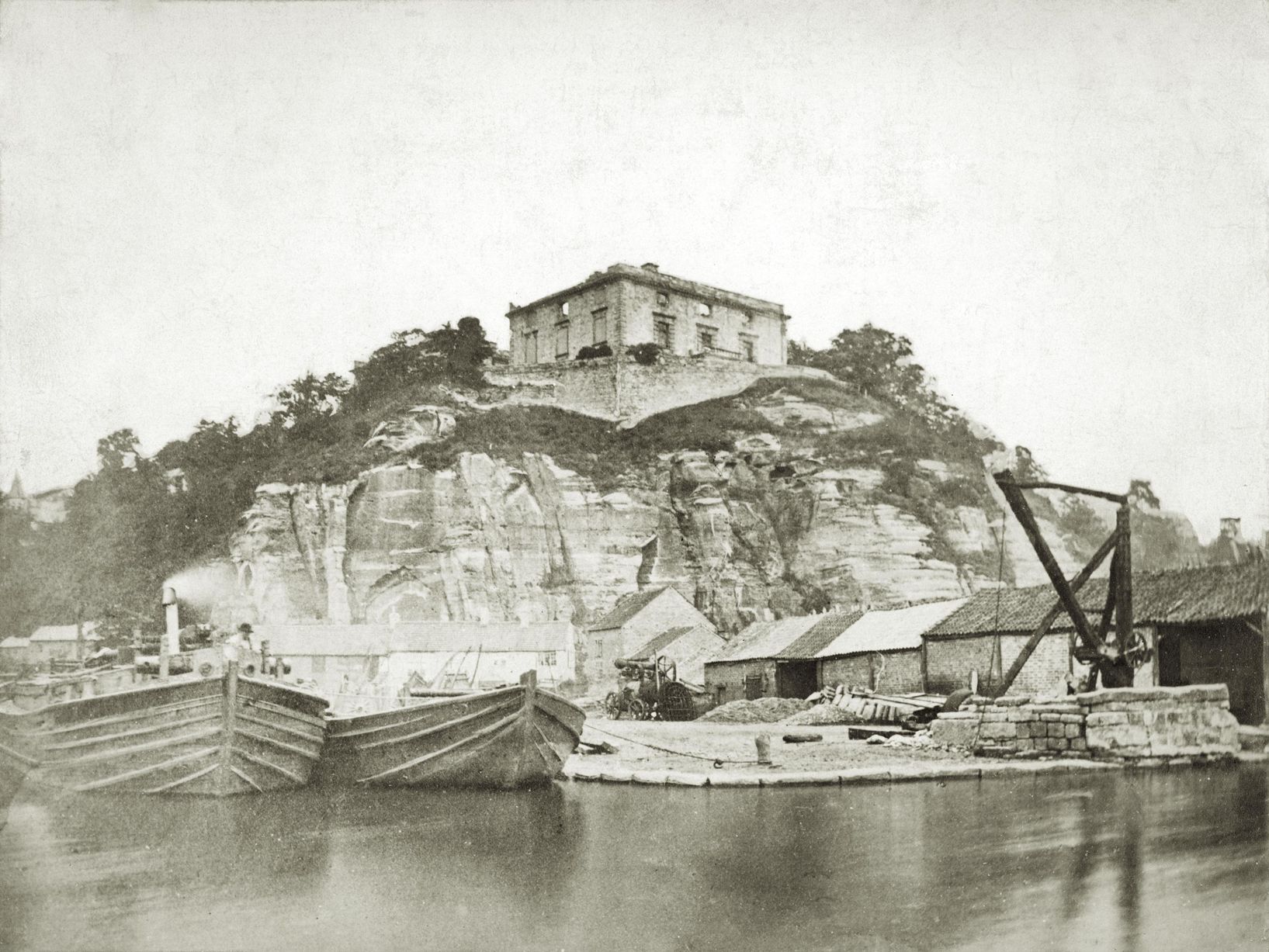
Photo c.1870 showing the still ruinous remains of Nottingham Castle (Image source: Picture Nottingham/Nottingham City Council)

The Duke’s disdain for their protest can be seen in his subsequent claim against the City of Nottingham for £30,000 in damages (though the Duke would privately claim that ‘not that 60,000 would rebuild & reinstate the Castle’). In the end, the jury reached a verdict on only the second day and awarded him £21,000. Displeased, the burnt out shell was left deliberately unrestored to remind the people of Nottingham of their riotous behaviour and the Duke’s displeasure until 1872, when it was sold and restored as a museum and opened by the Prince of Wales in 1878.

Conclusion

The immediate political effect of the riots was, at best, limited. Certainly those who rioted were not those who would gain suffrage under any of the then proposals. What the riots did represent was an outpouring of rage against the property of the reactionaries in the upper echelons of society who used their political power to block reform, but also those in the merchant and middle classes who were seen to be protecting and enabling them. Perhaps the power of the riots was to create a convincing impression that revolution may be the outcome, if reforms continue to be blocked. The riots were certainly influential in persuading the King to back Earl Grey in his plans for reform.


Following this violent spasm of protest, remarkably, the country house was then to remain safe from targeted campaigns of destruction until the 20th-century. Part 3 in this series of articles examines how this changed and the effects it was to have.

Inflamed passions: organised violence against UK country houses (part 1/3) – Priestley Riots 1791

In the fresh night air, they made their way across moorland and parkland towards a number of darkened country houses, their fierce determination matched only by their inexperience as ‘terrorists’. The flames from their arson attacks engulfing the country houses of their political opponents signalled a calculated escalation; attacks on property to further their cause.

Frustration is often at the root of violence and, without a release valve, the impulse to retaliate escalates. Property is inherently symbolic and can simultaneously embody beauty, power, wealth, status, but also hierarchy, division, oppression and domination.

This article looks specifically at instances where country houses suffered destruction as an outcome of organised violence. The targeting of country houses in the UK in peacetime in this way is rare but such bursts of architectural iconoclasm are not unknown and span centuries of anger. This was intended to be a short article, but it turns out that it will now be published in three parts as there’s a bit more than I thought. Each part will focus (mostly) on one violent campaign: one driven by religious differences, one political anger, and one democratic inequality.

For context though, let’s start with the two obvious campaigns which resulted in the destruction of country houses; the English Civil War and the Irish War of Independence.


English Civil War (1642-1651)

War has often led to tragic wholesale destruction. However, it’s worth noting that during the English Civil War, although it is estimated that between 150-200 country houses were destroyed (and many others were damaged), the destruction was broadly linked to military considerations such as the actual or potential use as a barracks or defensive structure, rather than wanton vandalism.

When the royalist Sir William Campion identified that Chilton House, Buckinghamshire might be used as a parliamentary garrison, he wrote ‘my fancy this morning did much envite mee to set fyre to the house’. Instead, Sir William was ordered to pull down the outer walls and remove the doors, leaving it intact but uninhabitable (c.f Besselsleigh, Oxfordshire). However, when, in 1645, the royalists withdrew from Campden House, Gloucestershire, they burnt it down to prevent any possible future use.

Campden House, Gloucestershire, burnt down in 1645 by royalist troops (Image © British Library ref: Maps K.Tops.13.75.3)

This controlled approach, for political and legal reasons, was evident on both sides. As the long-term intention was to occupy, rather than destroy, the orders to target attacks and undertake measured actions limited the authority of commanders to raze towns and buildings. To keep the common soldiers of both side in line, the orders issued to prevent indiscriminate destruction threatened transgressions with the death penalty.

Aesthetic considerations were also a factor. The activities of the parliamentarians were directed by the Committee of Both Kingdoms (1643-1649) which issued instructions that certain houses be protected as far as possible, including Burghley House, Cowdray, Chatsworth House, and Hardwick Hall. Specifically, in response to a request in 1646 for permission to burn down High Ercall House, Shropshire, the committee stated that, in general, it did not ‘think it fit that all houses whose situation or strength render them capable of being made garrisons should be pulled down. There would be then too many sad marks left of the calamity of this war.’.


Irish War of Independence

The most prominent example of an organised campaign of country house destruction is the sustained campaign in Ireland in relation to the struggle for independence.

Between 1919-1923, 275 houses were destroyed (Dooley, Terence – The Decline of the Big House in Ireland: A Study of Irish Landed Families. Dublin: Wolfhound Press, 2001) to deny the use of the houses as garrisons, or in symbolic reprisal; either as symbols of the Anglo-Irish aristocracy or for attacks by British forces. Professor Dooley and others such as The Irish Aesthete (Robert O’Byrne) have well-documented this campaign, and they have covered it far better than I could (e.g. ‘…it seems everything we love goes’: The burning of Castleshane, 15 February 1920‘).

Moore Hall, County Mayo, before being burnt down on 1 February 1923 – source: ‘When Moore is Less’ – The Irish Aesthete

Beyond these periods, the country house has been targeted in at least three distinct occasions; the first, a localised religious pogrom, but one which focused on destroying property, rather than lives.

The Birmingham Riots of 1791 (aka: the Priestley Riots)

‘House of the Rev. Dr. Priestly and Elaboratory, Fair hill’ – drawn by E.H. Witton for A.B. Matthews’ ‘The riots at Birmingham, July, 1791. (An authentic account of the dreadful riots in Birmingham, occasioned by the celebration of the French Revolution, on the 14th of July, 1791, etc. Views of the ruins of the principal houses destroyed during the riots at Birmingham.)’ (Birmingham: Arthur Bache Matthews, 1863)

Birmingham in the 18th-century was notoriously riotous. The people rose up in relation to high food prices (1766, 1782, 1796, 1800), and targeting religious minorities (Dissenters in 1714 and 1715, Quakers and Methodists in 1751 and 1759, and Catholics during the Gordon Riots in 1780). Into this febrile atmosphere, there was the usual tensions of the ages, which corruption, prejudice and alcohol could only exacerbate.

The swirling currents of international events often cause waves which break on distant shores.  The French Revolution in 1789 caused deep concern in England across all levels of society, predictably more for the church and aristocracy. This led to heightened fears around activities which may be seen to sympathise with such radical ideas. For some, though, the radicalism aligned with their own intellectual spirit of curiosity; as willing to explore new political ideas as they were the physical world.

On 14 July 1791, in the Royal Hotel, Birmingham, a dinner was held by a group of the city’s prominent intellectuals, scientists and industrialists. Many were connected with the Lunar Society, an informal social club which met each full moon, whose membership encompassed a broad range of interests. Chief among them was science, and one of the leading members was Joseph Priestley (b.1733 – d.1804), a chemist perhaps best known as being credited with the discovery of oxygen.

Ticket for the dinner at the Royal Hotel celebrating the second anniversary of the storming of the Bastille on 14 July 1791. (Image source: en.wikipedia.org/wiki/Royal_Hotel,_Birmingham (Public Domain))

Priestly was complex figure and combined his extensive scientific knowledge with a deeply-held Christianity and contentiously attempted to combine the two. He brought a scientific sense of discussion to theology, tolerating ideas other than his own, which led to his part in the founding of Unitarianism. Perhaps most controversially, he also was a strong supporter of the French Revolution.

Engraving of the Royal Hotel in Temple Row, Birmingham, in 1800.  Drawn by T. Hollins and engraved by F. Eginton. (Source: Staying in Style: The Hotel – Birmingham in the Long Eighteenth Century)

Priestley, along with others, had organised the 14 July dinner to celebrate the storming of the Bastille, which marked the start of the French Revolution. The event was blamed as the cause of the riot, but in reality this was merely a pretence, for there had been a long-running friction between the established church and dissenters. Those attending the dinner had sensibly proposed the first toast to ‘Church & King’ to express their loyalty and had left some hours before. Priestley, speaking later, reported that:

“When the company met, a croud [sic] was assembled at the door, and some of them hissed, and shewed [sic] other marks of disapprobation, but no material violence was offered to any body. Mr. Keir, a member of the church of England, took the chair; and when they had dined, drank their toasts, and sung the songs which had been prepared for the occasion, they dispersed. This was about five o’clock, and the town remained quiet till about eight. It was evident, therefore, that the dinner was not the proper cause of the riot which followed: but that the mischief had been pre-concerted, and that this particular opportunity was laid hold of for the purpose.”

Whipped up by local agitators, who provided both incendiary pamphlets and alcohol, a mob arrived that evening at the Royal Hotel, eventually smashing every window. The crowd were persuaded to move on by the proprietor, Thomas Dadley, but, either as directed specifically or of their own volition, decided to target the places of worship, businesses, and houses of those Dissenters who had been attending the dinner, whose names had been published in local newspapers.

The riots are considered one of the most documented events in Birmingham history, with both sides producing their accounts, including ‘The riots at Birmingham, July, 1791. (An authentic account of the dreadful riots in Birmingham, occasioned by the celebration of the French Revolution, on the 14th of July)‘. Written in a tone which suggests disapproval of the actions of the mob, it also blames those attending the dinner for their apparent disloyalty to King and country. The follow account draws on this report for the factual elements of the account.

The mob moved on, their violence now destroying nearby religious meeting houses associated with Priestley. The local magistrate, who had been inciting or restraining the mob depending on the account, now realised that there was no controlling them. Their targets were now the Dissenter’s homes, both in the city, and in what was then the surrounding countryside (these areas having subsequently been engulfed by the growth of the city).

‘Rioters Burning Dr. Priestley’s House at Birmingham, 14 July 1791’ by Johann Eckstein (Image source: Wikipedia / Susan Lowndes Marques Collection). Some artistic liberty has been taken as the attack was at night.

Thursday 14 July

The first country house to be targeted was Joseph Priestley’s in nearby Fair Hill (which is today, Sparkbrook), less than two miles from the Royal Hotel. A plaque affixed to the side of the 1960s house which currently occupies the site commemorates that this was once a place of renown. On learning that the mob was heading in their direction, Priestley and his wife fled. Their son William bravely remained, but the house and laboratory were ransacked and burnt, the content either stolen or destroyed, including ‘the most truly valuable and useful apparatus of philosophical instruments that perhaps any individual in this or any other country, was ever possessed of.’

The rioters then appear to have decided that this was a sufficient achievement for the day and dispersed – but their work was not yet complete and they met again the next day.

Friday 15 July

The rioters had now split themselves into two groups, one to target the Dissenters houses and property in Birmingham, whilst the second group formed raiding parties to target their country houses in the nearby areas.

‘Baskerville House, the Residence of John Ryland Esq’ – drawn by E.H. Witton for A.B. Matthews’ ‘The riots at Birmingham, July, 1791. (An authentic account of the dreadful riots in Birmingham, occasioned by the celebration of the French Revolution, on the 14th of July, 1791, etc. Views of the ruins of the principal houses destroyed during the riots at Birmingham.)’ (Birmingham: Arthur Bache Matthews, 1863)

On Friday 15 July, the destruction continued with Baskerville House, on Easy Hill (now Broad Street) being attacked around 2pm. As had become part of the modus operandi of the mob, they ransacked the house for valuables, food, and drink, and then set it alight. Unfortunately, several of the most inebriated attackers failed to escape the house as it was burnt and were killed.

‘Bordesley Hall, the Seat of John Taylor Esq’ – drawn by E.H. Witton for A.B. Matthews’ ‘The riots at Birmingham, July, 1791. (An authentic account of the dreadful riots in Birmingham, occasioned by the celebration of the French Revolution, on the 14th of July, 1791, etc. Views of the ruins of the principal houses destroyed during the riots at Birmingham.)’ (Birmingham: Arthur Bache Matthews, 1863)

At the same time, a separate group of rioters, descended on Bordesley Hall. It was rebuilt in grand style in 1757, replacing a nearby medieval moated manor house, for the button manufacturer and banker John Taylor who spent some £10,000 on his works. He had emparked 15 hectares of land and laid out an ornamental pool on the brook with an island, bridge, and grotto. Exotic shrubs and swans were imported to complete the scene. When the crowd arrived, ‘There five hundred pounds were offered them to desist, but to no purpose, for they immediately set fire to that beautiful mansion, which, together with its superb furniture, stables, offices, green-house, hot-house, etc. are reduced to a heap of ruins.’ (Matthews).

It was rebuilt but demolished in 1840 when the estate was sold off for housing development.

Saturday 16 July

As the violence moved into the third day, the pretence that this was just the frenzied actions of a spontaneous mob was clearly false as more houses were destroyed by groups of men and women, sent with specific intent.

‘The mob being now victorious, and heated with liquor, everything is dreaded’

A.B. Matthews’ ‘The riots at Birmingham, July, 1791, pg. 5
‘The House of William Hutton Esq, Saltley’ – drawn by E.H. Witton for A.B. Matthews’ ‘The riots at Birmingham, July, 1791. (An authentic account of the dreadful riots in Birmingham, occasioned by the celebration of the French Revolution, on the 14th of July, 1791, etc. Views of the ruins of the principal houses destroyed during the riots at Birmingham.)’ (Birmingham: Arthur Bache Matthews, 1863)

Their next target was the home of William Hutton, bookseller and paper warehouse owner, but also a significant figure in Birmingham history, having published the first history of the city in 1781. His success enabled him in 1769 to build a small country house called Red Hill House in Washwood Heath, approximately three miles from Temple Row.

He later recorded that, ‘The triumphant mob, at four in the morning, attacked my premises at Bennet’s Hill, and threw out the furniture I had tried to save. It was consumed in three fires, the marks of which remain, and the house expired in one vast blaze. The women were as alert as the men. One female, who had stolen some of the property, carried it home while the house was in flames; but returning, saw the coach-house and stables unhurt, and exclaimed, with the decisive tone of an Amazon, ‘Damn the coach-house, is not that down yet? We will not do our work by halves!’ she instantly brought a lighted faggot from the building, set fire to the coach-house, and reduced the whole to ashes.’

‘The House of George Humphrys Esq, Spark Brook’ – drawn by E.H. Witton for A.B. Matthews’ ‘The riots at Birmingham, July, 1791. (An authentic account of the dreadful riots in Birmingham, occasioned by the celebration of the French Revolution, on the 14th of July, 1791, etc. Views of the ruins of the principal houses destroyed during the riots at Birmingham.)’ (Birmingham: Arthur Bache Matthews, 1863)

Meanwhile, back in Sparkbrook, where the ruins of Joseph Priestley’s house were probably still smouldering, the mob returned, marching on the substantial Sparkbrook House. Home to furniture retailer George Humphrys, ‘He had prepared for a vigorous defence, and would most certainly have been victorious, for he had none but rank cowards to contend with.’ (Hutton). It was reported that, ‘The people who demolished Mr. Humphrys’ house, laboured in as cool and orderly a manner as if they had been employed by the owner at so much per day.’ (Matthews).

‘Moseley Hall, the Residence of Lady Carhampton’ – drawn by E.H. Witton for A.B. Matthews’ ‘The riots at Birmingham, July, 1791. (An authentic account of the dreadful riots in Birmingham, occasioned by the celebration of the French Revolution, on the 14th of July, 1791, etc. Views of the ruins of the principal houses destroyed during the riots at Birmingham.)’ (Birmingham: Arthur Bache Matthews, 1863)

Their next target was Moseley Hall, also owned by John Taylor, whose other property, Bordesley Hall, had been burnt down the previous day. In a rare vignette of compassion, as Moseley Hall had been rented to the elderly dowager Lady Carhampton (mother of the Duchess of Cumberland), she was given a grace period to enable her belongings to be removed before the fire was started. Curiously, the mob offered genuine assistance to help her do so and protected her belongings in the four waggons it took to take them to safety.

‘The house was spacious; and the conflagration appeared from the town most tremendous. The fury of the mob being directed against this fine building, did not proceed from any hatred to the Lady, but because it was the property of Mr Taylor, whose other houses have been burnt down’

A.B. Matthews’ ‘The riots at Birmingham, July, 1791. pg. 7

Also razed as Kings Heath House, in King’s Heath (approx. four miles from Temple Row), owned by John Harwood. To the north-east, Wake Green House, in Wake Green, owned by Thomas Hawkes was similarly destroyed (though first having earlier sheltered Joseph Priestley as he fled the attack on his home).

‘The House of William Russell Esq, Stowell Green’ – drawn by E.H. Witton for A.B. Matthews’ ‘The riots at Birmingham, July, 1791. (An authentic account of the dreadful riots in Birmingham, occasioned by the celebration of the French Revolution, on the 14th of July, 1791, etc. Views of the ruins of the principal houses destroyed during the riots at Birmingham.)’ (Birmingham: Arthur Bache Matthews, 1863)

William Russells’ house was the final target of the day, though the family had left earlier in the day. William remained to face the mob, but it was claimed that ‘Some pamphlets, of an inflammatory nature, and a private printing press, being found in the house of Mr Russell, were the cause of its being burned.’. (Matthews)

Sunday 17 July

The mob was reported to now be around 2,000 strong. More were joining each hour, including ‘several thousand’ miners from Dudley, Woodside, and Wednesbury, with one fearful estimate that the numbers could, or had already, reached ten thousand. It was clear that the campaign was not just limited to country houses; all property of Dissenters was targeted, including town houses, commercial premises, meeting houses, and mills. By now, those seeking to stop the violence had called on the military to oppose the mobs as they feared that the entire town and others nearby, including Kidderminster, were going to be destroyed, but also that costs of repairs for existing damage would lead to significant tax increases.

The pace of destruction now slowed and the only country houses targeted (but not destroyed) were Ladywood House, the home of Harry Hunt, and Hay Hall at Hay Mills, the home of Joseph Smith.

Edgbaston Hall was the home of Dr William Withering, the noted botanist, who, though not a Dissenter, was known to be a friend of Priestley, therefore his house became of interest to the mob. Luckily for him, his staff were able to delay the mob’s attacks until 64 men of the 15th Regiment of Dragoons arrived from Nottingham to successfully oppose the rioters.

Total losses from the attacks were estimated at £80,000 (approximately £144m on an income value calculation), of which, John Taylor portion was the most significant, totalling £25,000 (approximately £45m – income value).

Monday 18 July

With soldiers continually arriving in Birmingham, the scene became even more tense as the rioters had by now looted several sword factories and were partially armed. In skirmishes, the rioters had actually successfully defended themselves against the soldiers, who retreated to await reinforcements. Later, with the addition of significant numbers of troops, the will of the mob was checked – or, as it was put in a rather understated report:

‘…the magistrates, and some of the principal gentleman of the neighbourhood, explained to them the illegality of their proceedings, and informed them of the immediate and subsequent consequences thereof, which had the desired effect; they dispersed in several small parties, and left the town in possession of its former tranquillity.’

With the riot over, the good townsfolk of Birmingham went back to their usual lives. Protected by the same establishment who had instigated the violence, there appears to have been few consequences for those involved beyond the hangovers and deaths by misadventure and violence, which accounted for some sixty rioters. For those targeted, their lives were forever changed. Many left whilst some rebuilt their lives – but the shadow of violence is one which clouds a life long after it has passed. Joseph Priestley never lived in Birmingham again, moving first to London, before settling in Pennsylvania for the last ten years of his life.

So ended one of the most organised and destructive spasms of peacetime violence against country houses in the UK. The country house was to remain at peace until four decades later, political (rather than religious) anger was to again place them in danger.

Conclusion

Remarkably, the country house was then to remain almost sacrosanct, safe from targeted campaigns of destruction for another half-century until, again, anger spurred action. Part II examines this second outbreak of violence and the country houses it touched.


Further reading

  • Panic on the Streets of Birmingham: July, 1791 (Secret Library Leeds)
  • The Birmingham Riots 1791 (William Dargue – A History of BIRMINGHAM Places & Placenames from A to Y)
  • The riots at Birmingham, July, 1791. (An authentic account of the dreadful riots in Birmingham, occasioned by the celebration of the French Revolution, on the 14th of July, 1791, etc. Views of the ruins of the principal houses destroyed during the riots at Birmingham. Vues des ruines, etc’ / [preface by A. B. Matthews] (Birmingham : Arthur Bache Matthews, 1863).

The Country Seat in 2020

Eltham Palace, Kent (Image © Matthew Beckett)

This year has been a challenging one for everyone and my thoughts are with anyone who has suffered any direct experience with this dreadful virus. We can only be thankful for the incredible service and sacrifice of those on the front-line, particularly in the NHS, but throughout the entire public sector, who have all played their part.

On a personal level, the blog has been dormant as all my books were in storage whilst we undertook a home extension which, unfortunately, was delayed by the pandemic restrictions. Plus, there is a surprising amount of admin linked to having an extension. Anyway, between the extension, my actual day job, and looking after my family, writing about country houses was just not possible.

Happily, we did manage to visit two during the earlier easing of restrictions: Eltham Palace, Kent, and Athelhampton House, Dorset. Hopefully, once we are able, next year we’ll all be able to visit the many country houses which will need our support more than ever. If you can, it’s well worth to join one or more of the many organisations which have been helping to protect our country houses:

And if you can’t visit in person, the various architectural heritage organisations (who have also been financially disadvantaged), have been magnificent and several have been able to provide online lectures which can attended ‘live’ or watched again later for a very small fee:

Now the good news regarding this blog; there is a new article. In fact, it will be published in three parts as it became rather extensive. The first part will be published today, so that I can say that I have at least managed to publish at least once in 2020.

Thank you again for your interest and support and wishing you all the very best for 2021.

Athelhampton House, Dorset (Image © Matthew Beckett)

Supermodels: the rise and fall of architectural models of country houses

A William IV Cut-Card Model of an Unidentified Mansion, 1831 by John Bellamy (Image © Christie's - Sale of the Collection of Professor Sir Albert Richardson, P.R.A., Sep 17, 2013)
A William IV cut-card model of Newtown Park, Hampshire, dated 1831 by John Bellamy (Image © Christie’s – Sale of the Collection of Professor Sir Albert Richardson, P.R.A., Sep 17, 2013)

In a time before widespread literacy, a physical representation of what was intended to be built was a powerful aide to help ensure that the vision of the architect became the physical reality crafted by the builder.  Yet, the architectural model was more than this. Evolving from being a functional tool, it became an aspirational marketing device to demonstrate the proposed scheme but also as a three-dimensional business card for the architect and striking conversational piece for the wealthy patron who would possess both the miniature fantasy and the full-size reality of the design of their country house.

The role of the architectural model can be traced back to the earliest buildings, particularly the devotional and religious. Some of the oldest were found in Egyptian tombs, dating back over four thousand years, and represented functional spaces which may be required such as granaries or gardens. Later they were often displayed as a record of the beneficence of the donor (rather than skill of an architect), they appear in paintings or decorations being held as offerings (such as the 10th-century Vestibule Mosaic showing Justinian presenting the Hagia Sophia to Mary and Christ), or carved into their funerary monuments or other personal iconography such as portraits; all undoubtedly a handy aide-memoire to St Peter, come the reckoning on Judgement Day.

Detail of 17th-century portrait of Queen Marie Thérèse of France, as patron of the Cathedral of Notre-Dame de Paris (Studio of Beaubrun brothers) (Image: public domain via Wikipedia)

The creation of models of new buildings is recorded in the 15th-century with the renowned architect and theoretician Leon Battista Alberti (b.1402 – d.1472), stating that,

‘I always recommend the ancient builders’ practice by which not only drawings and pictures but also wooden models are made, so that the projected work can be considered and reconsidered, with the counsel of experts, in its whole and in all its parts.’

The fashion for the creation of architectural models as objects for study and decoration was one which grew with the interest and wider participation in what became known as the Grand Tour, particularly from the 1760s.  As wealthy young men would embark on extended study (and, if we’re honest, pleasure) tours of the Mediterranean and Middle East, so too did their desire to bring back a tangible memory of their time to display as a marker of their cultural and worldly sophistication.

Cork model of the Temple of Zeus or Apollo, Paestum (c. 1820), attributed to Domenico Padiglione. Courtesy of the Trustees of Sir John Soane's Museum
Cork model of the Temple of Zeus or Apollo, Paestum (c. 1820), attributed to Domenico Padiglione. ©Trustees of Sir John Soane’s Museum

Cork established itself as a popular material for the crafting of models of ancient ruins as it was intrinsically similar in its native form to the weathered appearance of the stones it was shaped to resemble. Light and easy to transport, it is easy to imagine that many hundreds of these were shipped back to country houses back in the UK as a reminder and an inspiration.  It is interesting to speculate how influential these romantically ruinous models were on the nascent Picturesque movement of the 1780s. The models may have generated not only new buildings but also the incorporation of existing ruins into new landscapes or the building of new ‘old’ ones too, energised by having at hand aesthetically compatible examples, steeped in irregularity and showing the forces of nature providing the finishing touches to the works of man.

For those who wished to show a more idealised representation of architectural purity, clearly the imprecise renderings of cork were not going to match their visions. In the 1780s, to demonstrate the beauty of the finer details of the classical world, entirely white, finely crafted ‘Plaster of Paris’ models started to be created.  Almost of these are thought to be the work of two French modellists, Jean-Pierre Fouquet (b.1752 – d.1829) and his son Francois (b.1787 – d.1870), who were based in Paris, trading as Fouquet et Fils.1 For architects, these models presented an alternative version of reality, one which enabled them to present their own schemes in a favourable context to the works of the ancient world.

Model of the ancient Greek Ionic temple on the Illisus, near Athens, 'restored', c.1800-1834, plaster of Paris. (Photo: © Sir John Soane’s Museum, London)
Model of the ancient Greek Ionic temple on the Illisus, near Athens, ‘restored’, c.1800-1834, plaster of Paris. (Photo: © Sir John Soane’s Museum, London)

Beyond the decorative role, the models were also naturally didactic; their representations of the ruins of the ancient world creating opportunities to teach those who would not otherwise be able to travel to see them. Of those who embraced this approach, the most prominent and inventive was Sir John Soane.  His collection was one of the largest but who was also able to use them as inspiration, as teaching aids to his pupils and marketing tool for those who visited his home/studio at Lincoln’s Inn Fields in London, where they can still be seen today in the restored model gallery.

“Many of the most serious disappointments that attend those who build would be avoided if models were previously made of the edifices proposed to be raised. No building – at least none of considerable size or consequence – should be begun until a correct and detailed model of all its parts has been made.”
– Sir John Soane (Royal Academy lecture, 1815)

Soane was drawing on his own experience but what had clearly been a well-established technique within the building trade and architectural profession – but just how frequently were these model houses created as part of the commissioning process? The key challenge is that so few are known to have survived that it’s difficult to draw broad conclusions from such a small selection. However, it is instructive to take a tour of a sample to see the range and skills deployed by architects and craftsmen to not only convince the patron but also to explore proposed designs at a stage when corrections were far easier to make.

Quidenham Hall, Norfolk - architectural model of c.1606 (Norwich Museum Service)
Quidenham Hall, Norfolk – architectural model of c.1606 (Norwich Museum Service)

One of the earliest known examples (and my thanks to Jeremy Musson for bringing it to my attention), is a beautifully detailed model of Quidenham Hall, Norfolk, dating from the early 1600s. The manor was bought by the Holland family from in 1572 and the model was created for the construction of the first house in 1606 – probably in the same year, as it would act as the visual guide for the builders and masons.

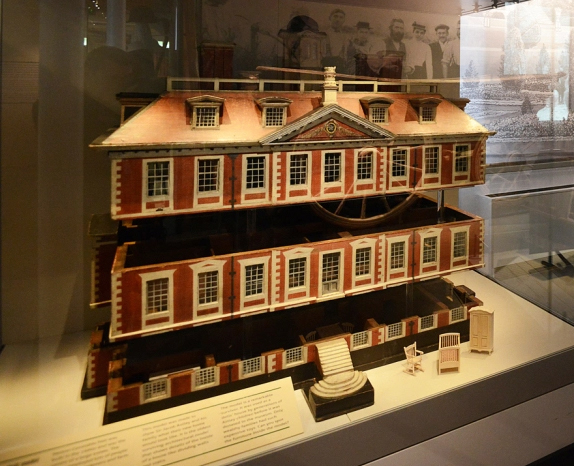
In the context of a less-educated age, the value of the model to the build process becomes more apparent, particularly for more complex designs such as Quidenham, with its detailed elevations including procession, recession, bows, pediments, crenellations, stepped gables, and chimneys.  A feature of the architectural models is that they can be explored, with the house dissembling either horizontally including the exterior walls, or just the interior floors, enabling a ‘fly-through’ so beloved of modern property programmes.  Clearly, being able to visualise the interior in relation to the exterior provided clarity as to the relationship between the designs for the rooms and their physical placement.

Quidenham Hall was subsequently extensively remodelled in the 18th-century with additional wings and the refacing of the entire house in a unifying neo-classical design. For us today, one value which was unexpected in the original construction of the model is that it allows us to know with a high degree of certainty what the original house looked like, despite these changes.

Model of Easton Neston, Northamptonshire, designed by Nicholas Hawksmoor, 1689 (Images © The Art Fund)
Model of Easton Neston, Northamptonshire, designed by Nicholas Hawksmoor, 1689 (Images © RIBA Collections)

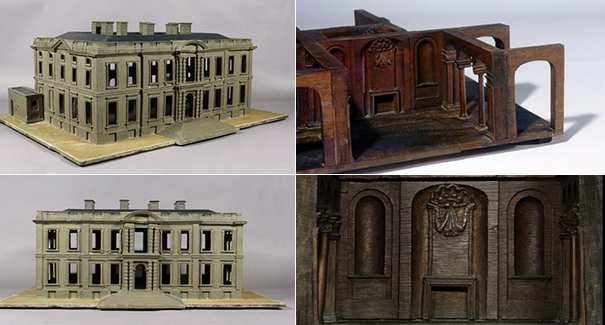
The degree of craftsmanship which was invested in the models is perhaps best shown in the remarkable model of Nicholas Hawksmoor’s masterpiece, Easton Neston, in Northamptonshire. Dating from 1689, it is considered one of the most important models to have survived, due not only to the superb craftsmanship but also because it relates to the design of a house regarded as central to the development of the Anglo-Baroque aesthetic. The model was bought for £180,550 in 2005 when Baron Hesketh sold the contents and house and is now in the RIBA Architecture Study Rooms at the V&A in London.

Model for Tyringham, Buckinghamshire, (designed by Sir John Soane), made by Joseph Parkins, c.1793-1794, wood (© Sir John Soane Museum - number: X236)
Model for Tyringham, Buckinghamshire, (designed by Sir John Soane), made by Joseph Parkins, c.1793-1794, wood (© Sir John Soane Museum – number: X236)

Tyringham Entrance Front 3/5/13, (© Sir John Soane Museum)
Tyringham Entrance Front 3/5/13, (Image © Sir John Soane Museum)

Sir John Soane’s designs for Tyringham Hall, Buckinghamshire, are a particularly instructive example as model, drawings and house (the latter with minor later alterations) survive and can therefore be readily compared. Commissioned by the banker William Praed, the house took five years to build from 1793 to 1798, with the model being created in mahogany c.1793-1794 by Joseph Parkins, a joiner working on the project. This sophisticated approach of thoughtful, inventive but ultimately practical designs, high-quality presentation watercolours by Joseph Gandy, and equally polished miniature evocations show the exemplary professionalism of Soane and why he was one of the leading architects of the era and held in such high regard.

Model of Pyrgo Park, Romford, London (RIBA Collections)
Model of Pyrgo Park, Romford, London, 1851 (RIBA Collections)

A later example was the model created for Pyrgo Park, Essex (demolished c.1940). The house was built for Robert Field, who had inherited a largely derelict Tudor house and estate from his brother in 1836. The remains of the old house were demolished in 1851-52 and a new house built on the same site to a design commissioned from Thomas Allason (b.1790 – d.1852). In light of the architect’s death, in the same year as construction on the new house was due to start, the creation of the model in 1851, now held in the RIBA Collection, would have enabled the work to continue and for a house, faithful to the architect’s design, to be created.

Another architect to use models was George Devey (b.1820 – d. 1896) who produced them as a matter of course when proposing a design to a client.  The distinctive feature of Devey’s models, produced by a dedicated, in-house modeller who was ‘in constant work’, was their scale, being produced small enough to fit in custom, briefcase-sized boxes. These often beautiful models allowed Devey to dispense with creating perspective drawings, producing only elevations and plans, which were combined with the physical miniature they would see in front of them.

The Ledgers, model of proposed alterations - George Devey, c.1882 (Image © Jill Allibone)
The Ledgers, Surrey, model of proposed alterations – George Devey, c.1882 (Image © Jill Allibone)

Barton Manor, model of proposed alterations to the stables - George Devey, c.1873-74 (Image © Jill Allibone)
Barton Manor, model of proposed alterations to the stables – George Devey, c.1873-74 (Image © Jill Allibone)

Two more models are worthy of note due to their size and beautiful detailing. One of the tallest was for Fonthill Abbey, Wiltshire, the vast Gothic edifice built for William Beckford constructed between 1786-1807. The model was notable not only for its scale (built at a ratio of 1 inch to 10 feet), but also for its own evolutionary construction with the model corresponding in part to the earlier designs from 1799, but overall the composition is similar to the engravings from the 1820s. The irony is that this model, built of fragile card, survived more completely than the ill-fated abbey itself.

Model of Fonthill Abbey, Wiltshire, designed by James Wyatt. (Image © British Library)

Perhaps the most beautiful and largest is the proposed model for a new palace in Richmond, Surrey, designed by William Kent for King George II and Queen Caroline in 1735. Created in pearwood, the model is nearly two and half metres long and is exquisitely detailed, as one would expect of a presentation model to be shown to royalty.

Model of a proposed new palace for Richmond, 1735, designed by William Kent. (Image © The Royal Collection)

Clearly there is a long history of the use of models, with examples for houses both large and small from multiple notable architects and other evidence that these models were not an uncommon element in the design and construction of country houses. So, why are so few known to have survived? Without more primary, documentary evidence, conclusions necessarily have to be somewhat conjectural.

Some study has been made of architectural models, particularly by Professor John Wilton-Ely, who has stated that although frequently used, they were less used by the end of the eighteenth-century.  He also highlights that whilst models found favour with some architects, such as Soane, others such as William Chambers only used them occasionally, Wyatt only appears to have used it Fonthill and Longford Castle, Wiltshire, and that there are no known instances of their use by Robert Adam.

Additionally, one reason so few have survived is their role in the actual construction process; the frequent use on-site and the high-level of wear-and-tear likely to result from such treatment meant that those made from more fragile materials such as plaster or card were always at risk of being worn out and discarded.

For those which survived, their bulky nature would always be a factor in determining whether someone not only had the inclination but also the space to store them. Minutes and correspondence from within the Victoria & Albert Museum shows the ascending and waning fortunes of architectural models.  When the V&A first opened (called then, the Museum of Construction), models were given prominent billing and display space – though of the seventy-plus identified2 from the hundred known in the collection, only one is a house, surprisingly dating from 1936. The lack of country houses is stark, reflecting a level of  institutional disinterest from the outset and over the lifetime of the collection.  Cumbersome and unloved, the collection was removed from display in 1888 and put into store. After ownership was passed unenthusiastically between the various museums, the V&A reluctantly took them in 1916 (‘The items do not for the most part appear to be very desirable for us, either for exhibition or reserve‘) with some being selected for disposal, the minutes recording ‘their cremation‘.

Perhaps the most intriguing method of survival is the most charming – their use as dolls houses.  Once the model had served its purpose in design and construction, and perhaps served time as a conversation piece, one can easily imagine the children of the house being given a chance to recreate their lives in miniature. They also would serve as training for one day managing a country house of their own. So if you, or a relative, has an antique but surprisingly good quality or familiar looking dolls house in the attic, take a closer look…!

Melton Constable Hall Model (NWHCM : 1971.386) (Image © Gressenhall Farm and Workhouse - Norfolk Museums)
Melton Constable Hall Model (NWHCM : 1971.386) (Image © Gressenhall Farm and Workhouse – Norfolk Museums)

Perhaps the most impressive (and remarkable) surviving example is that of Melton Constable Hall, Norfolk, dating from the 1660s.  The architect of the now grade-I listed house is unconfirmed, particularly as there are no known drawings, but it is thought that the owner, Sir Jacob Astley, may have designed it himself. In such circumstances, the building of a model would have been a prudent step, both in confirming that his design was fit-for-purpose and for subsequent use during construction. The model of the house was then passed through generations of the Astley family children before being donated to the Norfolk Museum Service.

Another dolls house, this time at Greystoke Castle in Cumbria, was discovered to be a proposed eighteenth-century design for the enlargement of the pele tower.  Much of the work at Greystoke was completed by Anthony Salvin (b.1799 – d.1881) so it is possible that this an example of another architect using models as part of the process.

Today, the architectural model exists but as a method of celebration and display.  The model is less a functional representation of what will be and instead is a now a mechanism for the long-term appreciation of the finished building as sculpture.  It is curious to note that the model has moved from the purpose of remembrance to aspiration and back to the recreation of what has been lost. The sophistication of modern digital rendering has sadly removed the need for the model to help those commissioning a country house to visualise it.  However, in this we have have lost the physicality of the form and the sheer pleasure of the craftsmanship of a country house model; idealised but as yet unrealised.

Known complete models of houses

Do you know of any others? If so, please add a comment with details.

Summary list of examples (architect name and current location of the the model, in brackets, if either are known)


References

1 – ‘Plaster Casts: Making, Collecting and Displaying from Classical Antiquity to the Present’ – Rune Frederiksen, Eckart Marchand (Walter de Gruyter, 27 Sep 2010)

2 – Inside Outside: Changing Attitudes Towards Architectural Models in the Museums at South Kensington’ – LeslieFiona, Architectural History47 (2004), pp. 159200

Further reading

Happy New Year from The Country Seat

I hope this year has been good to you and that 2019 provides its fair measure of happiness, regardless of whatever life and the world decides to do.

Grade II*-listed Kingston Lisle, Oxfordshire, plus 257-acres sold in 2018 for £21.6m (Image © Strutt & Parker and Knight Frank)

This year the Country Seat blog has been quiet to say the least (just one post in April: ‘#Repton200: Humphry Repton, landscape gardener – and architect?’), for which I offer some apologies but can confirm that the blog is still live and I will continue to produce articles as and when I can. I also continue to update the research on lost English country houses at Lost Heritage, plus regular updates to Twitter for both: @thecountryseat and @lostheritage.

When I started the blog in 2009, it was (and remains) a personal interest written in my spare time.  I was also single and without children and having written about no country house topics, all were open for me.  Having now, in the last two and bit years, married and had two beautiful children, time is somewhat more limited, and, more surprisingly, after nearly three hundred posts, it is actually harder to find topics once an architect or house has been written about.  That said, I have an article almost ready to go for January…

Anyway, there are others also writing about country houses in the UK and Ireland so below are a few suggestions you should find very interesting:

  • If you use Facebook (and this group is pretty much the only reason I still do!), then Country Houses of the UK and Ireland is the gold standard for content and conduct. The chief contributor is the leading country house historian Nicholas Kingsley, who provides, almost daily, a full history of a country house with illustrations. The group is closed but membership is easy to obtain and will repay your interest.
  • Nicholas also writes a blog on the Landed families of Britain and Ireland which aims to provide a history of each landowning family with a detailed history of each house they have owned – it is truly epic in its scope.
  • If this wasn’t enough, Nicholas also updates the Charles Hind collection of country house images, which provides hours of happy browsing.
  • Another blog I rate as one of the very best is Handed On, which provides a detailed history of a country house which is selected on the basis that it is little-known, either by design or accident. The quality of research is impressive and it’s brilliantly written.
  • Covering the often related but entirely distinctive Irish country houses is The Irish Aesthete, a blog which has helped me enormously to discover more about a fascinating heritage.

Wishing you all again, a Happy New Year and thank you again for your continuing interest and support.

Matthew