Could Viewhill House rise from the ashes?

Viewhill House, near Inverness, suffered a devasting fire two years ago which left it a ruined shell.  Since then it has been the subject of debate as to whether it can be saved or demolished and replaced a new development.  Unsurprisingly, a report by the developer has concluded that it should be demolished (what a surprise!) and has unfortunately been backed up by the local conservation officer.  What is interesting is that neither party has actually examined the building fully, claiming it’s too dangerous.  So on the basis of a fairly shallow investigation another part of Scotland’s heritage is imperilled.

The 170-year old  former home of Caledonian Canal engineer Joseph Mitchell, which was Category-B listed, had been empty for some time before the mysterious fire ripped through the house in 2007.  The developer had previously expressed his frustration that he wasn’t allowed to do as he wanted and level the site following the fire but luckily the council had taken a stronger line, demanding stabilisation works.

However, a recent assessment by independent historic buildings expert Scott Handley has concluded that the house can be saved. Mr Handley and the Inverness Civic Trust hope to present their report to the council in the hope of persuading them to preserve this interesting part of Inverness’ heritage before it becomes just yet another half-empty development of city flats.

Full story: ‘Mansion can be saved, says expert‘ [The Inverness Courier]
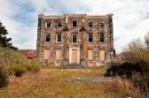
Scraptoft Hall at risk from ‘rescue’

Scraptoft Hall
Scraptoft Hall

A proposal to restore Scraptoft Hall, a much-neglected Georgian mansion, as part of a large development scheme has been challenged by English Heritage. 

In what may be seen as a return to the mis-guided approaches of the 1970s and 80s, a local developer has dangled the ‘carrot’ of restoration of the Hall whilst seeking permission to build a huge 103-apartment retirement village in the grounds.

Scraptoft Hall was largely built in the early 1720s but the core dates back to the 1500s, however, in recent decades the elegant house had been adandoned and beset by theft and idiot vandals who had set fire to some areas. 

Harborough District Council is ‘minded’ to approve the plans but English Heritage has objected that the proposals would seriously compromise the setting of the hall. 

If approved this scheme would reduce this elegant house to a mere architectural curiousity in the middle of  a huge development.  The Council should reject this scheme – even if the developers claim it’s the only hope.  The sacrificing of the house to enabling development is make a mockery of heritage protection and would encourage other like-minded developers to consider that all old buildings with a bit of land are fair game for their destructive tendencies.

Details of the inquiry: Scraptoft Hall redevelopment inquiry

Full story: ‘Project ‘will restore Scraptoft Hall to its former glory’‘ [Leicester Mercury]

Historic houses raise revenue with TV appearances

No country house owner should be blind the fact that their home may be the perfect location for filming a TV drama or a photoshoot. The Times reports on the many houses which you may recognise as the lavish locations for your Sunday evening TV shows. 

Professional companies rarely pose a threat to the houses or grounds and fees of several thousand pounds for a few days disruption can be a quick way of raising revenue.

Full story: ‘Historic homes in the BBC’s new series of Emma‘ [The Times]

Welsh mansion under threat from crass developer

As if Wales hasn’t lost enough country houses already, another is currently under threat of demolition.

Plas Dulas, in Llanddulas, Conwy is currently in a poor state but restorable if swift action was taken.  Built in the 1840s, and visited by Evelyn Waugh, it is remarkable in that the whole estate is complete including gardens, gatehouse, walled garden, and stables.

A local couple, James and Caroline Burt, who have successfully restored another local house into a hotel, made an initial offer of £250k to the owner, who bought the house and estate for £190k in 2002.  According to Mrs Burt, the owner, Alex Davies, replied ‘If you’re not willing to talk around £1m then I’m just going to leave if for another eight years and let it fall down’.  A thoroughly crass and ignorant approach, I’m sure you’ll agree.  Mr Davies is determined to press ahead with his plan, which has been submitted to the council for approval, to demolish the house and destroy the estate with 29 houses.

He has claimed that it would cost £1.5m to restore the house but it’s highly unlikely that it would cost this and is more likely a randomly high figure plucked from the air to justify his vandalism.

The Victorian Society and the renowned local campaigner Mark Baker have both objected but unfortunately CADW is unable to get involved due to its unduly narrow focus as to what is worth saving.

So, hope appears to rest with the local council, national and local pressure, and a miracle conversion for Mr Davies from vandal to someone who appreciates his local heritage.

Full story:

Campaign to save Llanddulas landmark famous author visited‘ [North Wales Weekly News]

 ‘Couple go to Waugh over future of historic mansion‘ [WalesOnline]

10 dukes, 12 country houses

A dinner held as part of the celebrations of Tatler magazine’s 300th birthday brought together 10 of the current 24 dukes.  Between them they own at least 12 significant country houses, including;

  • Alnwick Castle (Dukes of Northumberland)
  • Belvoir Castle (Dukes of Rutland)
  • Arundel Castle (Dukes of Norfolk)
  • Woburn Abbey (Dukes of Bedford)
  • Iveraray Castle (Dukes of Argyll)
  • Stratfield Saye House (Dukes of Wellington)

So if you’ve ever wondered what these defenders of our heritage look like have a look at the article.

Full story: ‘Ten dukes-a-dining: Gathered together over lunch for a unique picture, the grandees with £2bn and 340,000 acres between them‘ [Daily Mail]