Mentmore’s London sibling for sale

Mentmore Towers
Mentmore Towers

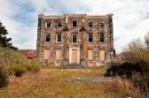
Simon Halabi’s original plan was to develop a super-luxury, six-star club experience with members enjoying country facilities at Mentmore Towers, in Buckinghamshire, with a London base at the In and Out Club on Piccadilly.  However, the recent global crisis seemed to put the plans on hold and concerns had been raised (including in comments on earlier blog post: ‘Simon Halabi and Mentmore Towers’ – 17 July) as to whether sufficient maintenence was being undertaken at both locations.

The master plan appears to have now been changed with the news that the In and Out Club has been put up for sale.  Included in the deal are various neighbouring buildings which give the potential for the sale to raise up to £250m. It’s not known what Mr Halabi’s plans are but one can only hope that the money raised will benefit Mentmore Towers, preserving and protecting this important country house.

Full story: ‘Mayfair’s In and Out Club on market‘ [Financial Times]
Oldway Mansion apparently ‘needs’ 160 homes built nearby?

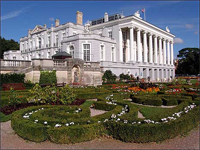
Oldway Mansion
Oldway Mansion

Oldway Mansion has been called a miniature Versailles – which was the intention of the owner, Paris Singer, who rebuilt the house built by his father, Issac Merritt Singer, founder of the Singer sewing machine company.

The house and grounds have long been a pleasant retreat for the locals who, both old and young, have enjoyed the grounds with many weddings held in the house.  However, rising maintenance costs have led the Council into some bizarre logic.  To save the house they have now signed an agreement to lease this important local asset to a developer who has claimed that many millions will be spent apparently converting it into a hotel! In addition, the Rotunda (formerly the stables) will be incorporated into this development.  In a telling comment, Jason Collard, managing director of Akkeron, said the building was an ‘amazing site’. Why do councils keep falling for this classic play from the ‘developers handbook’? The house is a mere architectural inconvenience to them in many cases which put these houses at risk.  The idea that the vandalism of this house should be funded by selling off some of the very gardens which create such a special location is dubious to say the least.

In short, this is a council with little regard for their heritage, selling an architecturally important and much loved local landmark to save a few quid.  It may be expensive to keep it public but to deny or severely limit access whilst undoubtably compromising this house should be challenged.  I’m sure the council will also find that the plans are entirely acceptable to their planning committee so in this round of mutual backslapping I can only hope that something will happen to bring the council to it’s senses.

Full story: ‘160 homes would have to be built to save ‘amazing’ Oldway Mansion‘ [Herald Express]

Pytchley Gates restored

In April 2007 a car veered off the road and severely damaged the historic Pytchley Gates, which were originally the entrance to Pytchley Hall (demolished 1824) before they were moved to become the entrance to Overstone School.  Parts of the main arch and column were demolished with other damage caused to the surrounding areas.  However, Northamptonshire County Council are to be commended for assembling a team skilled in conservation restoration to repair the gates.

Full story: ‘Damaged Pytchley gates restored to former glory‘ [Northamptonshire County Council]

Nocton Hall ‘amongst 10 most endangered’

Nocton Hall (Image from Wikipedia)

Nocton Hall suffered a devastating fire in 2004 and since then has remained a roof-less, though restorable, shell with no sign that the new owners have any inclination to rescue this interesting and attractive house.

The original Nocton Hall burnt down in 1834 and the new house was built by William Shearburn for the Earl of Ripon in 1841.  It was then taken over by the Air Ministry in 1940 for use as a hospital for RAF Nocton.  The RAF left in 1983 following which it became a residential home.  However, in the mid-1990s the business failed and it was bought by a local developer, Leda Properties.  A then sadly familiar story played out with the house ravaged by vandalism and theft before the ‘suspicious’ fire in 2004. 

The Victorian Society have now declared that the Grade-II listed Nocton Hall is one of their ‘Top 10 Most Endangered Buildings’ in the country.  Hopefully this will again focus some attention and, along with the concerns of locals, will perhaps prompt Leda Properties to declare their intentions.  One hopes that this is not another case of a developer hoping that further vandalism or fire will give them the opportunity to apply for permission to demolish.  Lincolnshire has lost far too many of it’s country houses already over the last 100 years – there is no reason beyond stubborn greed why Nocton Hall should be added to the list.

Full story: ‘Nocton Hall a ‘top 10’ endangered building‘ [Lincolnshire Echo]

Scraptoft Hall at risk from ‘rescue’

Scraptoft Hall
Scraptoft Hall

A proposal to restore Scraptoft Hall, a much-neglected Georgian mansion, as part of a large development scheme has been challenged by English Heritage. 

In what may be seen as a return to the mis-guided approaches of the 1970s and 80s, a local developer has dangled the ‘carrot’ of restoration of the Hall whilst seeking permission to build a huge 103-apartment retirement village in the grounds.

Scraptoft Hall was largely built in the early 1720s but the core dates back to the 1500s, however, in recent decades the elegant house had been adandoned and beset by theft and idiot vandals who had set fire to some areas. 

Harborough District Council is ‘minded’ to approve the plans but English Heritage has objected that the proposals would seriously compromise the setting of the hall. 

If approved this scheme would reduce this elegant house to a mere architectural curiousity in the middle of  a huge development.  The Council should reject this scheme – even if the developers claim it’s the only hope.  The sacrificing of the house to enabling development is make a mockery of heritage protection and would encourage other like-minded developers to consider that all old buildings with a bit of land are fair game for their destructive tendencies.

Details of the inquiry: Scraptoft Hall redevelopment inquiry

Full story: ‘Project ‘will restore Scraptoft Hall to its former glory’‘ [Leicester Mercury]