Country houses have been slightly glibly described as ‘prisons’, usually due to the restrictive social conventions, which stifled the freedom of the occupants. However, country houses have occasionally been repurposed as true custodial institutions, serving as prisons, youth detention centres, approved schools, prisoner-of-war (POW) camps from the 18th century to the present. This role is one which has been often overlooked in the history of the country house.
If one wished, it was always possible to cast the country house as a prison, of sorts. The restrictions placed on everyone who lived in one, whether as the lord or the lowliest servant, was a web of both explicit and implicit rules. Although they could, in theory, walk out of any unlocked door, the reality was that they were trapped, bound to the building.
Fiction has long played on this idea, weaving physical incarceration, with its psychological equivalent. There are the self-imposed emotional bonds which confine the jilted Miss Havisham to her decaying Satis House in Charles Dickens’ ‘Great Expectations‘ (1861), or the fear which entraps the governess at Bly House in ‘The Turn of the Screw‘ (1898) by Henry James. In ‘Rebecca‘ by Daphne du Maurier (1938), Manderley, the grand estate in Cornwall, becomes a place of psychological imprisonment for the unnamed narrator. Haunted by the lingering presence of her husband’s first wife, Rebecca, the narrator feels trapped by the oppressive atmosphere of the house and the expectations imposed upon her. More recently, in Sarah Waters’ ‘The Little Stranger‘, the decaying Georgian mansion of Hundreds Hall (played by Newby Hall, Yorkshire in the film), becomes a symbol of entrapment for its inhabitants as their financial decline echoes that of their place in society, leaving them isolated.
Newby Hall, North Yorkshire, represented the fictional Hundreds Hall in the 2018 adaptation of Sarah Waters’ ‘The Little Stranger’
Beyond these intangible confines, the house as a cell was perhaps most famously portrayed with Bertha Mason, Mr Rochester’s wife, confined as the ‘mad woman in the attic’ of Thornfield Hall in Charlotte Brontë’s ‘Jane Eyre‘ (1847).
Royal confinement
Beyond fiction, the country house has, at times of need, served in reality as a place of confinement – pressed into service as a working prison when circumstance demanded.
On 16 May 1568, Mary Queen of Scots fled to England seeking refuge from political turmoil in Scotland after the battle of Langside and spent her first night at Workington Hall, Cumbria. Mary had come to England in the hope of gaining support from the Catholic nobility and of appealing to her cousin, Queen Elizabeth I, for political assistance in regaining her Scottish throne. However, because both women were descended from Henry VII, Mary possessed a strong claim to the English crown. This made her presence in England a direct threat to Elizabeth, particularly as Mary was a Catholic alternative to Elizabeth’s Protestant rule.
Although Mary was technically a guest, she was heavily guarded and this effectively marked the beginning of her nearly 19-year imprisonment before her execution. Mary was moved around regularly to thwart plots to free her, from castles to eventually the country houses of George Talbot, the 6th Earl of Shrewsbury (b.1522 – d.1590). The Earl of Shrewsbury, famously married to Bess of Hardwick, played a pivotal role in the confinement of Mary, having been appointed her custodian by the Queen. Throughout various periods, he held Mary at his family’s houses including Wingfield Manor, Hardwick Hall, Chatsworth House, and Sheffield Manor – all situated within a 15-mile radius in Derbyshire. Mary was finally moved to Fotheringhay Castle, Northamptonshire, arriving on 25 September 1586. She was put on trial in October, and then executed in the Great Hall on 8 February 1587. Her long confinement within such grand yet guarded houses stands as a stark reminder of how the architecture of luxury could so easily become the architecture of captivity.
A prisoner of war
In wartime, country houses have been pressed into service in a wide variety of roles, with prisoner-of-war camps among the least glamorous. Stepping beyond the more obviously martial associations of castles, one of the earliest – and most notorious – examples was at Sissinghurst in Kent during the Seven Years’ War (1756–1763). The house, by this time had been allowed to fall in to a significant state of disrepair by the then owners, the Baker family. The government rented the property and adapted it to hold around 3,000 French naval prisoners, during which time it was further mistreated with the inmates destroying panelling, fireplaces, the chapel furniture, and leaving the garden a wasteland.
In 2008, a newly identified watercolour emerged that provides the most complete known view of the Elizabethan house during this period when it was a prison – and includes the chilling depiction of a double murder.
On 9 July 1761, whilst guarded by local, poorly-trained, armed militia, three prisoners who had escaped were being brought back to the camp. Their arrival caused a group of prisoners to rush to the fence out of curiosity. One of the militia, a hot-head called John Bramston, shouted that they were to come no closer or he would fire. He loaded his musket with three balls and fired at the group. One ball struck the wall, the other two each hitting a prisoner. One by the name of Baslier Baillie was wounded (shown top-left being helped by two friends), but another, Sebastien Billet, was killed instantly. Bramston was unrepentant. The picture is thought to have been painted by a Frenchman to record the crime – but in doing so also left a powerful visual record of a now much-altered house and its time as a prison.
World War II
During the twentieth century, several distinguished country houses were temporarily repurposed to serve the needs of war, their refined architecture providing an incongruous backdrop to confinement. At Huntercombe Hall in Oxfordshire, the late-Victorian mansion, with its commanding stone façade and landscaped setting, was requisitioned during the Second World War as a secure detention site, most notably for high-ranking German prisoners including Rudolf Hess, whose isolation lent the house an unlikely role in wartime diplomacy and intelligence. In north London, Trent Park, a neo-Palladian villa by Sir William Chambers, was adapted as a special interrogation centre, where senior German officers were held in conditions of deceptive comfort while their conversations were secretly recorded – its grand rooms thus becoming instruments of psychological warfare.
Similarly, Mytchett Place, Surrey, during 1941–42, this Victorian mansion was fortified and codenamed “Camp Z,” serving as a one-man prison wired for surveillance for the detention of Deputy Führer Rudolf Hess.
Further north, the Huntroyde Hall estate in Lancashire, long the seat of the Starkie family, was similarly turned over to military purposes, its once-private parkland accommodating prisoners and personnel within hastily erected compounds. As with Sissinghurst, the mistreatment during the harsh use as a prison was a significant factor in its later demolition. Earlier, in the First World War, the partly medieval Badsey Manor House in Worcestershire was similarly employed to house prisoners of war, marking a utilitarian phase in its long domestic history.
The changing attitude to the role of prisons
The use of country estates and their houses was partly one of necessity in wartime, but in the post-war period also reflected a change in attitudes towards a more therapeutic approach towards incarceration from the 19th-century focus on harsh conditions and hard labour as a deterrent.
Why country houses? They offered several advantages: privacy (away from cities, escapes less dangerous to public), space for agriculture and workshops (important for training prisoners in trades), and an existing infrastructure of accommodations and kitchens. Also, symbolically, placing prisoners in a “less oppressive” environment was meant to encourage self-respect and responsibility – a deliberate contrast to the austere walled prison. Askham Grange’s homely appearance was cited as beneficial for women.
The open-prison concept drew heavily on Alexander Paterson, who joined the Prison Commission in 1922. He argued that imprisonment should actively shape behaviour for the better, with inmates encouraged to develop through structured physical and mental activity.
In the 1940s, there had been a steady increase in the total number of people convicted of indictable offences. During a House of Lords debate on Penal Reform in November 1946, the Lord Chancellor, Lord Jowitt, lamented the tendency towards increasing crime before WWII, stating that,
I take the five years 1934–1938. The number of young persons found guilty of indictable offences moved up from 10,000 odd in 1934 to 14,000 odd in 1938 – that is males; females from 1,300 odd in 1934 to 1,600 odd in 1938. …When we have the figures of 14,000 young men and 1,600 young women going up to the sort of figures we have to-day [1947], for the total number of persons – 78,000 in 1938, moving up in 1945 to 116,000…it is quite obvious that we have here a very real problem. (Source: Hansard – column 442)
The noble Lord’s figures indicated a serious issue so whilst not everyone convicted was incarcerated, there was a steady rise in the prison population:
The sustained increase in the total population by over 50% from 1940-1950, would place significant stress on any system of incarceration. However, attitudes had changed and the harsh conditions of punishment of the nineteenth century were now considered to do more harm than good, especially for young offenders. The Criminal Justice Act of 1948 introduced major reforms for young and habitual offenders. It barred sending under-21s to prison except as a last resort, directing them instead to borstal training or, for shorter terms, to detention centres.
This more enlightened perspective, which the Lord Chancellor was fully supportive in that same debate, created a requirement for a system which emphasised a more probationary approach via the borstal system. By relying on less stringent security, and often promoting training and useful labour – particularly agricultural – this created a means to reform and improve the lives of those who had been convicted. The Lord Chancellor welcomed that:
Thank goodness, we are now approaching the time when it will no longer be necessary to detain in prison for long periods persons who are ultimately going to serve their sentences in Borstal. The institutions we now have are of very varied types. Sometimes they are in a camp and sometimes they are in a country house, where the inmates can be engaged on agricultural work. We have also opened a new Borstal institution for girls at East Sutton Park in Surrey. That is a small institution and will take some fifty girls. (Source: Hansard – column 447)
Interest also developed in adapting elements of the short-lived but influential “Wakefield experiment,” introduced during the First World War to manage the most uncompromising conscientious objectors – the Absolutists – who refused all military orders. Previously held in ordinary prisons, they became the focus of MPs arguing for more humane treatment. The government resisted releasing them but agreed to trial a compromise by placing all COs under a new regime at Wakefield.
This system relied on a high degree of trust. Cell doors were left unlocked, prisoners could move freely within the prison, and a small allowance allowed them to buy writing materials and tobacco. Conditions were not freedom, but a clear improvement. Leisure and work were timetabled, with expectations of diligence and no “singing, shouting, whistling, or reading” during working hours. The experiment collapsed when the men rejected the rules they had helped draft, leading to their return to standard prisons. Even so, its central idea – combining restrictions with opportunities for responsibility and reform – would influence later thinking about penal regimes.
Entrance to Tortworth Court, Gloucestershire (Image from private collection)
Speaking during the same debate in 1946, the Lord Chancellor again highlighted that such facilities were being developed:
We have recently taken over a former hospital at Tortworth [Court] in Gloucestershire as what is called a minimum security prison for selected convicts. In that way we can do much towards their rehabilitation and their ultimate reassimilation into ordinary civilian life. (Source: Hansard – column 447)
This approach influenced the selection of suitable locations for the new prisons. At HMP Leyhill, the government repurposed an ex-American Army hospital camp on the Tortworth estate to create the first open prison in 1946. The adjacency of Tortworth Court (then still with the Earl of Ducie) gave the model of a country setting if not using the main house. Interestingly – the house was not taken as it was returned to the Earl; but by the 1950s, Leyhill expanded and did start using some estate buildings, thought the wider estate is still owned and managed by the Earl of Ducie’s family as Tortworth Estates.
Hewell Grange
Hewell Grange epitomizes the pattern for long-term penal conversion. An existing country house could be successfully integrated into the penal system for decades, effectively becoming a self-contained village (with a chapel, workshops, and housing all on site).
The grand main house, last great prodigy houses of its era, provided an environment, even when not used directly as cells for prisoners, was arguably more humane than a typical prison – former inmates often remarked on the beauty of the lake and gardens, which were part of a 250-acre landscape park laid out by Capability Brown, with formal terraces, a lake, and extensive service buildings. By the lake are also the ruins of Old Hewell Grange, the classical predecessor to the current house. After being superseded by the new Hewell Grange in the 1890s, it was accidentally gutted by fire and abandoned, and now survives as a roofless ruin, its classical form still partly visible among collapsed walls and encroaching vegetation.
The new house was built between 1884 and 1891 for Robert Windsor-Clive, later 1st Earl of Plymouth, Hewell Grange cost approximately £250,000 (equivalent to spending c.£39m today). Designed by George Frederick Bodley and Thomas Garner in the Jacobethan style, the red brick house with stone dressings features an E-plan, steeply pitched gables, clustered chimneys, and mullioned-transomed windows. Interiors include carved oak panelling, a double-height Great Hall with a minstrel gallery, and elaborately modelled plaster ceilings.
However, Hewell Grange also reveals both the potential and limitations of prison use: spacious and already built, the house saved the state construction costs in 1946; but by 2019, it was anachronistic and expensive to run. By the 2010s, the UK prison estate was being rationalized. In 2019 the Ministry of Justice announced the closure of the open prison at Hewell Grange, following a critical inspection report and also reflected the cost of maintaining an ageing mansion for modern custody standards. The prison formally closed in 2020, and the entire site was consolidated into one (closed) prison to the north east of the house, around 600 meters away.
Hewell Grange house is now vacant and lacking a clear future, beyond occasional use for filming and events. As is so often the case for heritage without a viable and sustainable purpose, its condition has deteriorated to ‘poor’ after closure, with concerns about lack of maintenance, resulting in it being placed on the Heritage at Risk Register. As of early 2022, the government put the property up for sale, seeking a new custodian to repurpose the historic estate once again.
It was apparently sold in 2023 to a hotel group but it’s unclear whether this fell through or they immediately put it back on the market, as it has been offered through Cushman & Wakefield, with 247 acres, for an undisclosed price. This inevitably raises questions about the future: will it return to a private residence, become a hotel or institution, or will it just be allowed to deteriorate until it becomes another country house to succumb to neglect, urban exploration or a mysterious fire?
Conclusion
The pattern of country house reuse reflects adaptability to historical moment. In wartime, necessity drove usage; in peacetime, policy experimentation and economic forces did. This practice peaked in the mid-20th century and today it would exceptionally unlikely for a house to be taken over for this purpose, with a clear preference for building dedicated facilities.
From a wider heritage perspective, Hewell Grange’s story is instructive as, unlike so many country houses that were demolished in the mid-20th century, the use as a prison provided a value and so it was preserved precisely because it found an institutional function. Now its preservation will depend on finding a sympathetic new use after its institutional life has ended.
A list of country houses used (either currently or previously) for incarceration by the state since 1900
Thomas, Roger J. C. Prisoner of War Camps (1939–1948): Project Report. English Heritage, 2003.
Robinson, John Martin. Requisitioned: The British Country House in the Second World War. Aurum Press, 2014.
Further research
Interestingly, the subject of the use of the country house for incarceration doesn’t appear to have been covered in depth academically, as far as I could discover. Given the numerous angles, this would appear to be an area which someone may wish to investigate further as the official records and related information would probably reveal a richer story than I have been able to share here. Happy to have a chat if anyone wishes to take it on.
Slowly, then suddenly, many estates grew silent. Carriages no longer clattered down the drives. Entrance halls no longer echoed to voices. Kitchens went cold. Staff quarters were emptied. Then, the contents were sent to the auctioneers. Finally, the house was broken apart; hammers and pickaxes the new sounds as hundreds of years of history were reduced to rubble.
One key questions which architectural historians have been trying to answer for a number of years is just how many UK country houses have been lost? The answer, for now, is overthree thousand. Each was a world on its own, but also part of the complex jigsaw of our national heritage.
Heath Old Hall, YorkshireWilton Park, BuckinghamshireEaton Hall, CheshireLindridge Park, DevonStoke Edith, HerefordshireBelvedere, KentFlixton Hall, Suffolk
The genesis for this area of research was ‘The Destruction of the Country House‘ exhibition, which ran from 9 October – 1 December 1974 at the Victoria & Albert Museum in London. I have written about it on a number of occasions so if you would like more insights into it, you can read my article on the 40th anniversary or my reflections on the 50th anniversary.
The position of the landed elites was considered the bedrock of society. The families provided political leadership, social aspiration, and were the centre of the local economy through their employment and expenditure. Land ownership was the passport to this elite status; the open market a safety valve which enabled ‘new money’ to mix with the old, to want to emulate them rather than remove them. This allowed new families to fluidly move up from merely wealthy to established gentry or nobility. After a few generations, the land functioned as an older form of ‘green-washing’, the verdant parkland obscuring where the family had started. Within a few short centuries (though sometimes it was just decades), they had become the elite.
Rounton Grange, Yorkshire – seat of the Bell baronets, of Rounton Grange and Washington Hall (1885). House demolished 1954.
However, the first half of the twentieth century was, for the owner of these large houses, often financially, socially, and politically challenging. The repeal of the Corn Laws in 1846, which opened our markets to cheaper overseas produce, combined with the agricultural depressions of the latter-half of the nineteenth century, had undermined many of the assumptions about the financing of the country house. As debts grew, so the stark financial reality of the situation they were in began to dawn. For many, the path to recovery seemed to be to sell non-core assets such as artworks or outlying estates and hope that this would tide them over until their incomes, usually agricultural, recovered. For those who sold their land early and invested in the stock market, the crash of 1929, was another blow to their planning. As is so often the case, the markets remained against them longer than they could remain solvent.
When Aldous Huxley published his first novel, ‘Crome Yellow‘, in 1921, the challenge to the country house was already significant enough to feature as the fate of the imaginary Gobley Great Park;
‘A stately Georgian pile, with a façade sixteen windows wide; parterres in the foreground; huge, smooth lawns receding out of the picture to right and left. Ten more years of the hard times and Gobley, and all its peers, will be deserted and decaying. Fifty years, and the countryside will know the old landmarks no more. They will have vanished as the monasteries vanished before them.’.
Thankfully, Huxley’s apocalyptic vision wasn’t fully to come to pass. However, from the relatively low levels of losses in the nineteenth-century, the twentieth-century would bring decade after decade of destruction. It’s worth remembering that this was largely a crisis of the country house, not the wider estate. The land was considered more valuable as an income-generating asset and for the social prestige it conferred. Without the expense of the house – the maintenance, the staff, the general running costs – so the income was better able to meet their expenditures. Mr Micawber would be beaming with pride.
So, when seeking to bring their expenditure within the available income, the house was considered a necessary sacrifice. And with so many other families also facing a similar situation, the loss of any one house would be obscured by the loss of so many others. The problem with simple data is that it belies the dramatic local impact the loss of a house would have been. The country house and its estate embodied the idea of stability. The idea of a family owning the house and land and passing it down through the generations was – and arguably still is – embedded firmly in our national psyche, even if the family did change every few hundred years. The key difference in the twentieth-century was that there was often no other family to take their place.
In this dark era, houses languished on the market. This was often evidenced by adverts for the same properties appearing with sad regularity in magazines such as Country Life. It brought reminders of the increasing threats to the established order of the countryside into the drawing rooms and libraries of those most at risk.
Typical advert in Country Life magazine. Key aspects to note: the house is unnamed (though I think it is the infamous Burwell Hall, demolished in 1958), the language emphasises cheapness: ‘moderate price’, ‘modern conveniences’, ‘inexpensive gardens’. (Advert from Country Life, 10 November 1923, pg. XIII)
Each week, beyond the adverts in Country Life, ‘The Estate Market’ page offered a running commentary on the changes. For example, the headline for that page on May 5th 1922, was stark: ‘Demand for small properties’, with the opening paragraph stating, ‘The brightest section of the market is that in which the smaller properties are dealt with…’. Coverage includes the sale of Sudbourne Hall, Suffolk, saying it had sold with 500 acres, having first been offered as a whole but failing to find a buyer, it had been split up. The house was later demolished in 1953.
Another paragraph is headed ‘Mansions as sanatoria’ and writes approvingly of how Lords Londonderry and Boyne have both ‘generously offered’ Seaham Hall and Brancepeth Castle respectively for ‘hospital purposes’. Specifically, it states that Seaham Hall ‘…has had to be closed in consequence of taxation and the heavy cost of upkeep.’ (it survived and is now a hotel). It also mentions that Rendlesham Hall, Suffolk, has been sold for use as a ‘…retreat for drug-addicts and inebriates…’. It was also later demolished in 1949.
During the nineteenth-century, the available data shows that there were fewer losses; approximately one a year. However, when considering the data, there are a few caveats to remember. Critically, the data for the nineteenth-century is thinner than the twentieth-century. Fewer books had been produced, research was sparse, and even confirming if a property was of sufficient stature to be classed as a country house is sometimes challenging. Fire and replacement by a new house were two of the most common reasons.
So how many have been lost?
Quoted in The Daily Telegraph magazine in 2007, the leading country house historian of the lost houses, the late John Harris, said that:
‘At the time [before the V&A exhibition], we reckoned that about 750 houses [in the UK] had been pulled down between 1880 and 1970. Now we know it’s about 1,800.’1
Sadly, John’s estimate was still too low – 1,800 doesn’t even cover England alone.
The gazetteer at the back of ‘The Destruction of the Country House‘ exhibition catalogue listed a total of 1,099 houses (740 for England, 313 Scotland, 46 Wales, with NI not included). This list had been compiled by John, Marcus Binney, and another researcher, Peter Reid, and explicitly stated it was not exhaustive. The total for England was updated with the publication in 2002 of ‘England’s Lost Houses‘ by Giles Worsley which added 445, to total 1,185 for England. However, Ian Gow’s ‘Scotland’s Lost Houses‘ in 2006 listed only 308 (5 fewer than before) but also included examples of houses in cities (which I have excluded from that total).
The task of taking the ground-breaking earlier research forward and to resurrect the memory of these otherwise obscured houses, has now been taken up by amateur enthusiasts, supported by the invaluable work of historians who have focused on specific areas. I started researching the English lost houses in 2006, compiling what I hoped would become the most comprehensive record. All the details, including detailed histories and thousands of images, are shared on the Lost Heritage website.
Distribution of English lost country houses since 1800. Source: Matthew Beckett / www.lostheritage.org.uk
The scorecard of architectural losses
Each of these personal efforts has significantly increased the totals of lost houses with Scotland now standing at 545 (Disley), 390 for Wales (Baker), and 100 for Northern Ireland (Triggs – a particular achievement as they hadn’t been tallied previously).
The total number of lost houses for England alone has now exceeded John Harris’ original estimate for the whole of UK, having reached 2,019 (as at November 2024).
Overall, we can be confident that the number of UK country houses lost since 1800 now totals a remarkable 3,054.
Why does this matter? These houses and their particularly grand and hierarchical era and way of living has gone. It died, not in our leafy lanes, but in the battles and social change of the World Wars. The changes forced an evolution – and in that process, there are winners and losers. The tragedy was that the losers were often not inherently weaker houses, and in so many cases, they were some of the most interesting and significant. Beyond the random losses from fire and environmental causes, often what determined whether a house survived was their owners and their circumstances. For some, they were determined to ensure that the houses were reborn, albeit in a new way of living. For others, they were equally determined that that they would not pass what they saw as a burden to another generation.
In the specific losses to a family, and a locality, and to our architectural heritage, they were to be lamented. But in all of them, they possessed something of our shared heritage, and their loss, and the losses of the future, are pieces of the national jigsaw of our identity. As Simon Jenkins said, ‘Through them we hear the echo of our collective selves – and remember who we are.’2. We remember these parts of our history through the memory of these houses, and the roles they played in the life of our nation, both locally and nationally.
Request for help
If anyone has any further information on the lost country houses of England – either history, dates for losses, or family photos or recollections – please do contact me.
References:
1 – Campbell, Sophie, ‘Brideshead Detonated’ Telegraph Magazine, 20/01/2007 2 – Jenkins, Simon, ‘England’s Thousand Best Houses‘ (Penguin, 2004), vii
Below is the first of two exclusive articles marking the 50th anniversary. This piece delves into the inception of the exhibition and offers some additional reflections. The next article, to be published shortly, will provide an eagerly anticipated update on current research efforts to identify all the lost houses, featuring some significant news on the total count.
On 9 October 1974, on the day before the second general election of that year, the first visitors started making their way to the Victoria & Albert Museum to view the newly-opened exhibition: ‘The Destruction of the Country House: 1875 – 1975.’. Passing through the grand entrance to the monumental museum and then along the stately corridors would have heightened the shock as they entered a room to be faced with the toppling columns and seemingly endless photos of similar architecture which had been so ruthlessly demolished. However, as bad as the situation seemed – might the losses, though deeply regrettable, have been a catalyst for a better future for the country house?
Immersed in designer Robin Wade’s collapsing neo-classical portico, and as the late John Harris’ voice grimly intoned a roll call of the fallen, they may have wondered how such destruction could have been allowed.
To survey the country houses losses in the UK over the last century is to be staggered as to the diversity of beauty and history which has been destroyed. That’s not to say that everything that’s been built should or can be preserved, but the sustained pattern of losses of country houses was cumulatively one of the largest of a particular building type since the Dissolution of the Monasteries. Although each loss was individual, collectively, it was certain to be noticed and mourned. As the then head of the V&A, Roy Strong, considered the situation, it was clear that the time had come to raise awareness of the losses – but could it also help prevent further destruction?
For Strong, working with Marcus Binney and John Harris, the aim of the emotionally-charged exhibition was to:
…draw the public’s attention to the country house as a major part of our national heritage, showing the tragic losses over the last century, stressing the need to preserve important houses with their contents and setting intact, emphasising the positive achievements over the past twenty-five years, and forcibly pointing to the problems that lie in the future.
Strong also wrote that:
…the threatened Wealth and Inheritance Taxes if applied to historic house owners will see … the end of a thousand years of English history and culture, as pell-mell the contents are unloaded into the saleroom, the houses handed over to the Government or demolished. I can’t tell you the horrors looming unless one fights and intrigues at every level behind the scenes.
The V&A exhibition was a landmark in a number of ways. Rarely has an exhibition in a major national museum been so overtly polemical – and political. The Observer newspaper stated that it was ‘the most emotive, propagandist exhibition ever to grace a public museum’s walls’. The Daily Mirror took a rather more dismissive tone, rather snarkily observing that:
Gad…our stately homes are grim! Life in Britain’s stately homes is becoming simply too awful for the coronet set. Dukes, baronets and earls have to use buckets to catch rain dripping through the roofs. They shiver in front of electric fires because the central heating is faulty. (Roger Todd, Daily Mirror, 9 October 1974)
The stark reality of life in the country house had been at the forefront of Roy Strong’s mind when considering their presentation. In a letter from Strong, dated 24 June 1974, to Sir Osbert Lancaster, the social cartoonist and proposed contributor to the exhibition, he highlighted some of the threats to the country house in the twentieth century, including; taxes, loss of heirs in WWI, partial demolition or dereliction, sales of art, land…everything, motorways, urban expansion, conversion to some other purpose, even the National Trust, before culminating in…opening to the public.
Roy Strong to Osbert Lancaster (21 June 1974) V&A Archive, MA/28/243/1
Although the tone is ambiguous, flippant or haughty depending on your perspective, it is interesting that many of the eventual solutions to the problem of the demolition of country house are included. Conversion to alternative uses, be it offices, schools, or hotels, has saved hundreds of houses. The National Trust have been saviours of some of the crown jewels and helped to change the narrative around the purpose of the country house. This has included developing new ways to engage the public and future generations (and continuing to do so), solidifying the cultural foundation of the country house as part of our national recreational and cultural identity.
The November 1974 general election ushered in a new Labour government, during the midst of turbulent economic times. A government which would be considering how to implement their manifesto commitment of “…a fundamental and irreversible shift in the balance of power and wealth in favour of working people and their families.”. It was a bold move by the V&A to try to defend the mansions of the wealthy – but this was also a collective national heritage, even if privately owned. Counter-intuitively, by highlighting that another strand of the national fabric was not only fraying but had serious holes, it may have skilfully blended into general concerns about the overall fate of the nation.
The V&A was not acting alone. As Adrian Tinniswood highlights in ‘Noble Ambitions‘, 1974 was the year in which the country house owners got organised. John Cornforth’s report ‘Country Houses in Britain – can they survive?‘, published that year (by the then almost activist Country Life magazine), painted a dramatic picture of the almost perfect storm which he felt might have led to a crisis within 8-15 years, but was now looming large in the immediate future. Despite his pessimism, Cornforth later wrote ‘The Country Houses Of England 1948-1998‘ in which he strikes a much happier tone, saying:
‘The history of the English houses in the past twenty-five years has proved to be infinitely more positive, and the view of the future more optimistic, than seemed conceivable at the time of The Destruction of the Country House exhibition…when their very existence was threatened by new taxes.’
Back in 1974, Cornforth’s rather gloomy views were echoed elsewhere. In June, Lord Grafton (qualifications: Duke of Grafton, chairman of SPAB, member of Historic Buildings Council, the National Trust’s Historic Buildings Representative in the East of England, and owner of Euston Hall) spoke in the House of Lords to raise with his noble friends/fellow house owners, and the government, that the proposed wealth tax, and a transfer tax to replace death duties, spelled disaster for the country house. The influential Times newspaper editorial also weighed in, and the newly formed lobby group, the Historic Houses Association, emphasised the economic benefits, whilst also organising a petition which garnered a remarkable 1.25m signatures. This level of public support was in some ways unsurprising given that by 1972, 43 million visits were made to the 800 houses and ancient monuments open to the public.
Looking back now, the assumption seemed to be that owners of country houses had almost a right to perpetually live in them, and that the state should subsidise this. There is an argument that the state should look after the interests of all subjects, to a greater or lesser extent, but the preservation of the institution of the country house was certainly presented as one where protecting the elite benefited the nation, tapping into a deep cultural reserve of respect or deference – rightly or wrongly.
The Destruction of the Country House exhibition poster (V&A Archive MA/24/132) produced by Peter Branfield for Her Majesty’s Stationary Office (reproduced with kind permission of Dr Oliver Cox/V&A)
So, although the exhibition was one of the most high profile actions in defence of the country house, it was not without wider support and deep foundations. A preservationist ‘ley line’ can be drawn through the exhibition, connecting it to Historic Buildings and Ancient Monuments Act of 1953, which extended heritage protection to inhabited buildings, leading to a dramatic decline in the number of houses being lost. Although there were other earlier voices raised in defence of our built heritage, including Sir John Vanbrugh’s argument, in 1709, to preserve Woodstock Manor. Of particular note was Philip Kerr, the 11th Marquess of Lothian (1882–1940), who was the catalyst for the National Trust Act of 1937, which created the Country Houses Scheme which saved so many more houses from destruction. Also intersecting our ‘ley line’ is the establishment of the various amenity societies; the Victorian Society in 1958, the Georgian Group in 1937, the Ancient Monuments Society in 1924, and the Society for the Protection of Ancient Buildings in 1877.
It’s also worth noting that the dates referenced in the title of the exhibition extended into the future, if by only a year. The implication was that the destruction was still an on-going process to be feared, though this underestimated the almost immediate positive impact that it would have. The genesis of the exhibition was usefully covered in a blog article I wrote for the 40th anniversary which I would recommend if you’d like some further thoughts.
The exhibition exemplified the challenge of the definition of the reason for the country house; was it a home, a rural business, or museum? Or did, by the nature of the sometimes competing, sometimes intersecting interests of the owners, society, and the state, demand it be all these at once. Legislation crafted to protect or promote one aspect, may impinge on the ability for it to fulfil its other roles, creating a tension which actively threatened the long-term sustainability of the house.
Yet, one reason the exhibition was so successful, and had such a positive impact, was that it also gave hope. Despite the tone of Strong’s letter to Osbert Lancaster, displays showed how country houses could be adapted to survive with many a house escaping demolition through conversion to a school, offices, or hospitality. Sensitive sub-division into apartments by thoughtful developers such as Kit Martin, also offered long-term solutions. Indeed, a number of Kit Martin’s conversions, such as Gunton Park, Burley on the Hill, and Stoneleigh Abbey, are still prized today.
John Harris not only credits the demonstration of alternative uses, but also that there was grant support (though this has now been largely removed). As Giles Worsley noted in his magisterial book ‘England’s Lost Houses‘ (2002) that by the time the exhibition opened, the tide had already turned and the numbers of houses being lost had abated. The demolition of large houses such as Warter Priory (Yorkshire) in 1972, or the threatened total loss of The Grange, Hampshire, (even if it was gutted) was now more of an outlier than a regular occurrence.
South front of Warter Priory, Yorkshire, which was significantly enlarged by the architects Smith and Broderick of Hull for Lord Nunburnholme. Demolished 1972. (Image: Lost Heritage)
Perhaps most importantly for country house conservation, the preservation of our wider architectural heritage, was the founding of SAVE Britain’s Heritage in 1975, by Marcus Binney, one of the co-curators of the exhibition. Binney has been an immense presence in campaigning across the country not only to fight for specific buildings but to change attitudes and the whole perception of the value of our nation’s architecture. Although he has been rightly recognised with an OBE and CBE, how he has not been given a knighthood for his work is one of those inscrutable mysteries. Sadly, the other curator, John Harris died in 2022 and will rightly be remembered as a brilliant architectural historian, with a sparkling wit and enormous fount of stories, particularly relating to his post-war exploration of these derelict mansions.
That the country house remains an easily accessible, and deeply symbolic, cultural touchpoint is a testament to strength of the concept, even though it is now rightly subject to a more honest examination of the history. A greater transparency only adds to the weight of interest in the houses and their extraordinary past, creating a flywheel effect to support further research. This doesn’t diminish the shorthand that the country house represents: beauty, tradition, continuity. To ensure that the concept of the country house remains viable, it has to be refreshed and reinterpreted. This synthesis of the realities of the present and the inheritance of the past, is what creates new opportunities for the country house, not only as an area of academic study, or as place of public culture and entertainment, but also, most critically, as a home.
Perhaps one of the most significant pieces of legislation in creating a sustainable future for the country house was not any of the heritage Acts. Until the Marriage Act 1994 the only ‘approved premises’ for a wedding ceremony was a church or registry office. After 1994, country houses were also considered appropriate venues, ushering in a new avenue for owners to secure an income from their asset. This brought about a fundamental change in the attitude towards the house, both from the owners, and now the wider public, who were now welcomed into these exclusive spaces. The emotional value invested in each occasion, has ensured that there is a ready army of those who will think fondly of a specific house, and often, the idea of the country house more generally.
So what is the future of the country house? To imagine that their current situation and the opportunities they have are guaranteed is fanciful. A recent Law Commission report suggested that weddings could be held in “any safe and dignified location” including family homes, forests, and village halls. Given the rising cost of hiring premium venues such as country houses, this risks driving them back into the more gilded edges of society. The sharply rising cost of maintenance and operating such a house, either as a venue or as a home, increases the risk of benign or malign neglect – the former from the family who don’t wish to leave, but struggle to afford to stay, or the latter; those who only see the opportunities to replace an existing house with something more modern, whilst enjoying the benefits of a location which has been carefully crafted by previous generations.
However, the concept of the country house remains surprisingly endurable. As an aspirational token of success, it has rarely been bettered. Ultimately, the ‘Destruction of the Country House’ exhibition continued the evolution of the country house, further democratising the concept and ultimately helping to build the political and social framework which underpins their survival and success. The fortunes which provides the funding are continually made and lost, with the country house and estate hopefully continuing to stand proud of such vicissitudes for future generations to enjoy.
Acknowledgements
I am indebted and very grateful to Dr Oliver Cox, Head of Academic Partnerships at the V&A South Kensington, who very kindly shared the materials from his lecture in May 2024 on the genesis and impact of the exhibition and gave his permission to use them. His research was facilitated by the excellent V&A Archives team and I echo his gratitude to them.
Further reading
If you are interested in finding out more, then my Amazon bookshopas well as a range of non-fiction and fiction books on country houses has a specifically-selected list of books on lost country houses.
In September 1872,Queen Victoria was invited to stay at Dunrobin Castle in Scotland, seat of the Dukes of Sutherland. She naturally travelled by train, having used them for long-distance journeys since 1842. After being met by crowds at Inverness, her train left on the final leg in the late afternoon.
Just after passing the head of the Cromartie Firth, her afternoon tea was unexpectedly interrupted as the train stopped at Bonar Bridge station. Here, she records in her diary, ‘the Duke of Sutherland came to the door in such a curious get up, that I did not at first recognize him. He had been driving the engine since Inverness, but only appeared now on account of this being the boundary of the Sutherland railway.‘. The Sutherland being a private railway line which the Duke had conceived, financed and now enjoyed the privilege of running across his lands.
Such power and enthusiasm, stoked by immense wealth, were often the hallmarks of the development of the Victorian railway network. With it came the curious demands of landowners and aristocracy for the network to accommodate their personal needs, with the provision of not only private waiting rooms, platforms, and stations, but also entire railway lines.
Dunrobin Station for the Duke of Sutherland at Dunrobin Castle (Image: private collection)
Across the network, private train stations served royalty, aristocracy, industry, and the military. The control and influence of the landowners had an immense effect on the overall development of the railways, arguably more so than any other interest group. In the 1830s, the aristocracy were almost all opposed to the railways but attitudes changed as opportunities arose, resulting in the widespread granting of privileged access and rights to the railways.
This foundation for this article is based on research by others but focuses on the landowners and significantly expands the list of known instances. Importantly, it goes beyond just the better known private stations and identifies where landowners secured their own prerogatives regarding the use of the network in some way. The full list (PDF linked at the end of the article) runs to 114 examples; 72 in England, 33 in Scotland, 4 in Wales, and 5 in Ireland, across 57 different railway lines.
Definitions and caveats
One of the challenges of cataloguing is ensuring that there is consistency and clarity, so below are the definitions I have used:
Private station: a place on a railway line with one or more buildings, restricted to a specific group of people, to enable them to get on or off a train
Private haltor platform: an unstaffed location on a railway line with either no buildings or only temporary structures but with a platform, restricted to a specific group of people, to enable them to get on or off a train
Private waiting room: a purpose-built waiting facility, restricted to a specific group of people, within a station which otherwise remains open to use by the general public
Station of convenience: an otherwise publicly accessible facility on the network but where the location is known, or there is convincing circumstantial evidence, to have been determined by a local landowner
Based on these definitions, my research shows where there is evidence that the siting, service, or facilities of the stations were influenced by the proximity or power of the local landowner.
This research was just for my own interest so there are methodological challenges. I have not checked every station, though I did review all 16,000+ entries in Butt’s ‘The Directory of Railway Stations’ (1995) for references to the names of country houses or locations where I know one exists (or did exist) and other related books. I have also spend hours traversing the railway lines on the Ordnance Survey 1888-1913 maps via the brilliant National Library of Scotland website. My knowledge of Welsh and Irish geography and houses is not as extensive as for England and Scotland so other examples have almost certainly been overlooked. I am also definitely not a railway historian but I do love railways.
Also, there are the ‘possibles’. This is where although there’s no evidence of privilege, a station just appears to be closer to an estate than its urban namesake. For example, Eynsford station which is noticeably south of the village it’s named after but close to the lodge entrance for the Lullingstone estate. There is almost a gravitational distortion where the power of a local estate has pulled the station towards (or pushed it away from) it by varying degrees. These types have been added to a separate list as too circumstantial (but if someone has the GIS skills, they may be able to identify other anomalies). Also, I have not examined primary documents such as railway company or landowner correspondence.
For the landscape historian, it would also be interesting to compare maps of the estate drives before and after the arrival of the railways to determine if an owner took advantage of the new connections to change the introduction to the estate and house, and the subsequent impact on the development of the parkland and the impact on landscape design (approaches from stations, hiding lines or making a feature of them). An examination of appropriate sales particulars may also indicate the relative importance given to these facilities, especially compared to other attributes.
If someone has a list of railway company directors, cross-referencing their country houses may highlight others as it seems to have been a relatively common perk. Also, it’s hard to show where there was a negative influence; the landowner who did not want the railway near them and so forced the line away from what perhaps might have been the optimum route. Anyway, if someone did want to take it further, these are all good branch lines to explore.
Making tracks
The earliest history of railways can be traced to landowners, though not for the carriage of themselves. The first wagonways were created to assist with the extraction of mineral resources from their estates and transportation to shipping hubs. There is some dispute as to the earliest but one of the best developed was the Wollaton Wagonway. Constructed in 1603-04 by Huntington Beaumont, in partnership with Sir Percival Willoughby, it hauled coal from the Strelley mines on the latter’s Wollaton Hall estate.
The very first fare-paying passenger service in the UK – though using horses, rather than steam power – was the Oystermouth Railway at Mumbles, south Wales in 1807. The first railways in the modern incarnation to carry passengers and freight were the Stockton & Darlington, which opened in 1825, and the Liverpool & Manchester, which opened in 1830.
The Stockton & Darlington was proposed as a challenge to the Earl of Strathmore’s proposal in 1818 for a canal from his Evenwood colliery to the river near Stockton, using the statutory powers of compulsory purchase to acquire the necessary land. Commercial interests in the places bypassed by the Earl’s canal considered building their own canal but were persuaded to consider the then revolutionary idea of a public tramway or railway (they hadn’t decided which, even when the Stockton & Darlington Railway Bill was put before Parliament in early 1819). In an early sign of the influence of landowners, Lord Eldon opposed the bill due to the loss of substantial ‘wayleaves’ income paid by canals to cross his land, until they agreed substantial compensation. The Earl of Darlington opposed the idea due to the potential negative impact on his foxhunting and so the route was duly altered to avoid his favoured coverts.
The bill finally received Royal Assent on 19 April 1821, duly authorising a line with a total distance of 36.75 miles, which included a main line of 26.75 miles from the Witton Park colliery to Stockton-on-Tees. From this foundation, what’s particularly remarkable about the development of the railway is the scale and pace. By 1852, there were over 7,000 miles of rail track in England and Scotland, and by 1875, over 70 percent of the ultimate total route mileage had been laid. To emphasise the value of the rail industry, the gross revenue in the period 1870-75 was £254.1m, just slightly ahead of the equivalent revenue for the coal industry at £248.7m.
From the start of the idea of transportation using fixed routes – whether roads, canal, or rail – the power of the owner or occupier of the land has been paramount. This has had a profound impact on the pattern of land use across the country, initiating or accelerating urban growth, or stifling it. The routes ultimately took the path of least resistance; be it geographic, political, legal, or financial. It’s hard to underestimate the profound effects that these decisions have had in the shaping of the country as it is today – the towns which became cities, those which missed out, and the patterns of land usage which affects every aspect of our lives.
Railways: friend or foe?
With any revolution, the outcome is often simultaneously reviled and glorified. The sinuous spread of the railways across Britain and Ireland from the 1820s was both of these and more. At first, it was a dirty, noisy, dangerous contraption. Loathed by the poet William Wordsworth, he lamented in an 1845 sonnet its ‘rash assault‘ on ‘thou beautiful romance Of nature‘. Three decades later, John Ruskin’s contemptuous descriptions of his fellow travellers in Letter 69 of ‘Fors Clavigera‘ did little to add any glamour, describing how ‘The rest of the crowd was a mere dismal fermentation of the Ignominious.‘. By contrast, no lesser figure than the artist J.M.W. Turner looked at these same engines and painted a projection of power and grace.
As the prestige of the railway grew anyway, not least through the patronage of Queen Victoria, so too did the opportunities, especially for well-connected landowners. Certainly, there was the chance for investment and profit. Beyond that, perhaps one of the most attractive was to bring convenience and pre-eminence to those who could bend the tracks to their will. It was the opportunity to appropriate a public good for private benefit through their influence on the infrastructure of the burgeoning rail network.
The manipulation of the power of the network took various forms. From the heights of entirely private stations endowed with powerful legal rights to halt trains, to the creation of exclusive facilities at otherwise public stations, the power also manifested in the overt influence of siting stations to create new approaches to their country estates.
Obstruction and opportunity
In the early days, the main concern for the landowner was how to avoid the dreaded statutory powers of compulsory purchase which had forced the canals through their lands. This meant that the railway surveying parties were often met with outright hostility and occasional violence (see ‘The Battle of Saxby’ aka ‘Lord Harborough’s Curve‘). Where physical methods were unsatisfactory, landowners often deployed their greatest weapons – their wealth and the law.
George Stephenson, and his son Robert, were two of the most successful and prolific railway engineers of the era. They stated that the ideal railway should follow the most level route, which could be constructed the most economically, but which should avoid the park and gardens of country estates. In reality, it was rarely possible to satisfy the first two requirements given the resources employed in the protection of the third.
Each proposed railway required two key components; an Act of Parliament to authorise the development and operation, and substantial capital, of which a portion had to be deposited when the draft Act was laid before Parliament. These Acts were a hostage to the demands of the often hostile landowners who sought to either include their every demand or very generous financial terms, which, if the bill passed, would satisfy them (win!), or increase the build costs for the railway to point where it became uneconomic to continue (win!). For example, the Duke of Cleveland opposed the Northern Counties Union Railway but agreed to sell his land for £35,000 above its market value, knowing that it would likely bankrupt them. It did and delayed the railway reaching Barnard Castle for over ten years.
If they objected to the railway for aesthetic reasons, they might demand an expensive features which benefited them such as a tunnel to hide the line (Marley Tunnel on the South Devon Railway for Sir Walter Carew at Marley House, the Haddon Tunnel on the Midland Railway for the Duke of Rutland at Haddon Hall, or the Gisburn Tunnel on the Blackburn-Hellifield line for Lord Ribblesdale at Gisburne Park). Alternatively, an elaborate ornamental bridge such as the two on the Coventry-Leamington line: one for the Gregorys of Styvichall Manor, and the second for Lord Leigh at Stoneleigh Abbey, or the particularly fine example on the Shugborough estate for Lord Lichfield.
However, as the railways became more powerful and wealthy and socially acceptable, smarter landowners saw an opportunity to influence the development of the railway, bolster their local prestige, and also make substantial amounts of money.
Others were more amenable. When George Stephenson proposed a route for the London & Birmingham railway through Uxbridge, Amersham & Aylesbury, every affected landowner rejected it. However, the Countess of Bridgewater at Ashridge Park, summoned Stephenson and suggested that the line followed the Grand Junction Canal through her land at Berkhamsted and Tring. Scottish landowners often supported the railways as a means to more easily transport their coal and provide quicker and easier access to their remote houses. The Duke of Devonshire provided land for free to the Cromford & High Peak Railway, and in actual Devon, Sir Thomas Acland gave his land in the north of the county as it increased the value of what he retained, and Sir John St Aubyn was as generous in the south. In Essex, Lord Taunton actually returned £15,000 of the £35,000 he had received when he realised that the effect of the railway on his estate was less than anticipated.
‘This train will be calling at…your house’
Wealth is power, and power is best demonstrated through its use. Being able to have a train line or station built to serve your country house and securing rights to demand that the public service be altered to your whims is a very piquant demonstration of both.
Private railway lines
Many ducal estates appeared to have been somewhat allergic to the railways, with them neither running through their land or even that close. This can be seen in Nottinghamshire, where the Thoresby, Welbeck, and Clumber estates cover an area of almost almost 100 square miles without a line running through it. The Duke of Atholl objected to almost all railways, and specifically, the Perth & Dunkeld Bill of 1837, primarily to protect his income from the tolls on the Dunkeld bridge. The Duke of Buccleuch’s vast Scottish estates blocked almost every route from Carlisle to Edinburgh and Glasgow. Eventually, a line was created but he forced it to be over 1.5 miles from Drumlanrig Castle and via a (undoubtedly expensive) 0.75 mile tunnel.
By contrast, the Duke of Marlborough took after the Duke of Sutherland and privately financed his own line; the 4-mile branch line, the Blenheim and Woodstock, which connected his seat at Blenheim Palace to the Great Western Railway at Shipton-on-Cherwell. The Blenheim and Woodstock ran privately from 1890-1897, before being absorbed into the Great Western, though it eventually closed in 1954. The Duke of Sutherland’s Railway was longer, both in distance, at 17 miles, and operating privately, from 1870 until 1884, when it became part of the Highland Railway and which is still part of the Far North line today.
Private lines were clearly a very expensive indulgence and the creators seemed happy to eventually pass responsibility for them to existing, larger operators. Although they lost some of the prestige of having their own exclusive line, they also would have no longer been liable for the undoubtedly substantial running costs. After all, a wealthy person doesn’t remain one by spending money. Other, perhaps wiser, landowners took the ‘have your cake and eat it approach’ by requiring stations to be sited for their convenience and their exclusive use. They occasionally also enjoyed legally enforceable powers to stop trains on the lines provided by the public operators who wished to take their routes across their land.
However, the first private station was a mere wooden shed, opened in 1838. It seems that Sir John Tyssen Tyrell was the first to demand such a right when the Eastern Counties Railway (ECR) sought to use part of his estate are Boreham House, Essex, for the route of their new line. He also secured the right that he could stop any train which passed through. This agreement remained in force until his death in 1877 when, in perhaps an expression of frustration at these type of arrangements, the ECR demolished the wooden shed within a day or so of his funeral, thus rather emphatically terminating the arrangement.
Coloured print, dating from 1831, of Boreham House, Essex, seat of Sir John Tyssen Tyrrell, who had the first private railway station in 1838. (Image source: http://www.ancestryimages.com/)
These stations are fascinating examples of the power of land ownership. Some ownership was subtle, others more overt, and Seaham Hall station was definitely the latter. The arrival of the railway to Seaham was part of an ambitious plan to transform the seaside village into a major harbour, primarily for the shipping of coal from the Durham coalfields. The coalfields were originally part of the vast inheritance of Lady Frances Anne Vane-Tempest of 65,000 acres which included large tracts of County Durham. After her marriage to Charles William Vane, 3rd Marquess of Londonderry in 1819 (who had to take her surname as part of the deal for her inheritance), they developed the idea of a more efficient and integrated approach to the extraction and transportation of coal.
Seaham Hall was originally the seat of Sir Ralph Noel (who, coincidentally had also taken his wife’s surname to qualify for a substantial inheritance), but was acquired by the Vanes in 1821 for £63,000 (equivalent to £5.7m at 2021 values) at what was intended to be the gateway to their domain. With their extensive control of the land required to develop the railway across the entire county, agreeing to a private railway station was a small indulgence in deference to their influence.
However, the family only used Seaham Hall infrequently as they owned other properties including the palatial Wynyard Hall in the same county but also time at Mount Stuart in Northern Ireland. The station opened in 1875 as part of the Londonderry, Seaham, and Sutherland Railway, with the Marquess enjoying the right to ‘to stop other than express trains within reasonable limits‘. This right was retained until 1923 (though only exercised four times between 1900-23) when the line came under the control of the London & North Eastern Railway who requested this privilege be extinguished. Once this was agreed, the station was closed.
For those who were directors of railway companies, a private station was a considerable perk of the job. George Hudson (b.1800 – d.1871) was famed as ‘The Railway King’ due to his extensive influence over the Midlands rail network. Initially, he was lauded for financing and pushing the creation and ambitions of the York and North Midland Railway (YNMR). Ultimately, both his finances and reputation were ruined through his dubious practices. His achievements included facilitating the railway connecting London and Edinburgh, making York an important railway junction, and merging smaller railway companies to create the Midland Railway.
Hudson was a strategic thinker who saw possibilities, which included how to stymie his rivals. One example was leasing a competing line, the Leeds and Selby Railway, for £17,000 per year and promptly shutting it to ensure trains had to use his route via Castleford. Another example was his purchase of the Londesborough Hall estate, just north of the town of Market Weighton, Yorkshire, which despite its small size, was the junction for no less than four branches of the North Eastern Railway.
The estate was purchased in September 1845 for the substantial sum of £500,000 (c.£52m – 2021 value) partly to frustrate the plans of a rival, George Leeman, to build a line from York to Market Weighton, and partly as an investment for his sons. With the new line running from Market Weighton to York, completed in 1847, Hudson wanted to add his own private station and so had one built at the end of a grand avenue of trees to the west of the house on that line. As Hudson’s dubious empire collapsed around him in the late 1840s, one of the accusations was of inappropriately having used NER’s own money to build the station without authorisation and formed part of their claim against him which totalled £750,000. Londesborough Park was sold in 1850 to help pay his debts and the private station closed in 1867. The station building was renamed Avenue House and survived as a private home until it was demolished in the 1960s. Remarkably, where there was once four lines, there are now none connecting to Market Weighton.
Relatively few owners really wished for the expense of building and maintaining a full station, so some opted for a cheaper version.
Private halts or platforms
The halt was usually a rather primitive structure, often scarcely more than a small platform and shed to serve as a waiting room – though some were more substantial. However, that didn’t mean they wouldn’t be invested with substantial powers to command that the mighty locomotives stop there as they would the grandest metropolitan station, but with the advantage of substantially lower running costs.
Some of the remotest examples of private railway use were in the Scottish Highlands. With very infrequent usage, there was little need for a substantial building – though those having to wait in the rain may have disagreed. At the most basic level, the station was simply a raised wooden platform, long enough for a carriage or two, with a rough access drive to rejoin the nearest road. Yet, these platforms were vital in securing the agreement of the landowner to allow the railway to cross their land.
For those with a little more investment in their comfort, a small wooden building was often considered sufficient to meet their needs. For others, they blurred the lines between the halt and a station.
At the latter end of the scale, Avon Lodge Halt, Dorset, is perhaps one of the more infamous over a dispute as to when is a train service not ‘ordinary’. The halt was one of two built to secure the agreement of James Howard Harris, 3rd Earl of Malmesbury, for the Ringwood, Christchurch and Bournemouth Railway, which opened in 1862, to cross his land. As with most of these agreements, it was included in the legislation authorising the construction of the railway, giving it full legal force. Specifically, Section 27 of the Ringwood, Christchurch and Bournemouth Railway Act 1859 states that:
That the company shall erect and for ever maintain a lodge at the point where the railway will cross the occupation road numbered 29 on the plans deposited for the purposes of this Act in the parish of Ringwood, being the northern entrance to Avon Cottage, and the owner or occupier for the time being of Avon Cottage shall at all times have the right of exhibiting at that lodge a road signal, being a red flag by day and a red lamp at night, for the purpose of stopping any “ordinary” train to set down or take up passengers; and whenever such signal shall be visible in reasonable time for the purpose, the company shall cause any such ordinary trains to stop at such point, and shall take up and set down passengers accordingly.
Avon Castle, Hampshire, for which Avon Lodge Halt was built (Image source: Alwyn Ladell / Flickr, used under Creative Commons licence: Attribution-NonCommercial-NoDerivs 2.0 Generic (CC BY-NC-ND 2.0))
However, just a year after it had opened, in June 1863, Avon Castle and the halt were for sale. No copy of the sales particulars seems to be available but one can imagine they extol the virtues of the halt and the associated legal powers. The house and halt sold that year to John Edmund Unett Philipson Turner-Turner for £14,300 and it would be fascinating to know how much of the value was attributed to the halt and the associated privileges.
The arrangements continued until March 1873 when a dispute arose as to the meaning of the word ‘ordinary’. In that year, the London and South Western Railway had started an express Bournemouth-London service. Having to stop at Avon Lodge would delay it to such an extent, and inconvenience the other passengers, as to make it commercially unviable. As stated in the legislation, the owner of Avon Castle had the rights enabling the ‘stopping any “ordinary” train‘ and Turner went to court to force the railway to give him the power over the express. However, in January 1874, the judge disagreed that ‘ordinary’ applied to the express service so the Turners had to to satisfy themselves with local trains.
Despite this setback, Turner continued to push the boundaries of his powers under the legislation. The original privilege was clearly intended to apply to the owner and their family. However, during the early 1890s the house became a hotel (as shown on the Ordnance Survey map). To what was probably the considerable irritation of the train company, the hotel made it a feature that trains would be stopped at their private station – an odd democratisation of the original aristocratic privilege. The Turner family sold up in 1901, and due to dwindling passenger numbers, the station was closed in 1935.
Advert from Hampshire and Isle of Wight Illustratedfor Avon Castle Hotel, Hampshire, including that ‘Trains stopped at Private Station’ (Image source: Alwyn Ladell / Flickr, used under Creative Commons licence: Attribution-NonCommercial-NoDerivs 2.0 Generic (CC BY-NC-ND 2.0))
Private waiting rooms
For those who wished to avoid the expenditure of ownership but still have some physical manifestation of their power, a private waiting room was an expedient solution. It carved out something private from the public space, creating a sense of ownership through often luxurious fittings and exclusive access.
Private waiting rooms could be combined with the latent power of having influenced the siting of the station. One imagines that those locally would have been acutely aware of the abstract power which had created the physical presence of the station so the idea of a permanent reminder of that power within the station buildings wouldn’t have seemed so surprising.
When Clifton & Lowther station, Cumberland, opened in 1846 on the Lancaster & Carlisle Railway (part of the London & North West Railway), it was the nearest for the Earl of Lonsdale at Lowther Castle. The line displays all the characteristics of landowner influence; a line which curves eastwards around the entire parkland with most of it hidden in a series of cuttings with the station carefully sited away from the main north/south axial views from the castle. The price the Earl extracted for the station was the right to stop any train which was due to pass through, even if it wasn’t scheduled to stop there. In 1862, the Eden Valley line opened, providing a better alternative for cross-Pennine passengers. This led to a reduction the number of trains using Clifton & Lowther, though it didn’t close to passengers until 1938. However, a new station, Clifton Moor, was opened on the new line in 1862, it featured a dedicated private waiting room for the Earl and his guests. It’s not known how often the station or the right to stop trains was used but the station closed to passengers in 1962 with the Earl’s waiting room converted into a private house.
The private waiting room enabled a degree of subtle, yet paradoxically overt, ownership by the landowner over an station, acting as yet another reminder of their local influence.
Station of convenience
Perhaps the wisest owners were those who were happy to share the facilities but by the mere fact of choosing the location of the station, secured the greatest personal convenience for themselves.
A majority of these stations were the product of the nineteenth-century, but a handful were created at the turn of the twentieth-century, demonstrating the continuing power of the landowners. One of the most notable was the station at Acton Turville, Gloucestershire, in 1903. The actual name of the station was Badminton after the nearby stately home of the Duke of Beaufort. Given the heavy financial demands of many landowners, the Great Western Railway must have been delighted when His Grace agreed to provide the land required for the railway for free. The only requirement was for a station at Badminton to provide access for the Duke, family and guests and that express trains were required to stop should any of this exclusive group wish to alight. The station was a late arrival, opening in 1903, but featured a suitably plush, red-carpeted waiting room with ducal crest. However, the GWR’s delight had turned to frustration by 1963, as due to the immense inconvenience of having to stop express trains and also otherwise low passenger numbers along the line, British Railways asked Parliament to set aside the agreement. However, Parliament upheld it and so despite closing all the other stations on the line, Badminton retained its passenger service until 1968, when the Duke finally agreed to cede his rights, making it one of the last to enjoy such privileges.
For the landowner who prioritised convenience over exclusivity, simply enjoying the privilege of placing a station at the most convenient position was sufficient. Though they had to share the facilities with the public, the absence of financial responsibility and the overt class divisions meant that these stations were perhaps the most egalitarian of these arrangements.
For some landowners, this was a chance to rethink the landscape of their estates. Owners traditionally considered the approach via the roads and estate drive, owners may now have to consider how to hide the train itself whilst creating access and a suitable sense of arrival for their guests. For some, this was as simple as extending or creating a road and adding a new gate such as Station Lodge leading from Brodie Castle, which faced Brodie station when it opened in 1857 on the Inverness and Aberdeen Junction Railway.
Similarly at Newstead Abbey, a grand avenue of trees emphasised that the approach from the station was an important element of the grandeur of the estate.
Another example shows the lengths to which a landowner would go to when creating a sense of arrival. At the now demolished Blankney Hall, Lincolnshire, the owner, Henry Chaplin, had the option of simply taking his guests along the public roads, from Blankney & Metheringham Station, which opened in 1882 on the Great Northern and Great Eastern Joint Railway. Instead, he created a parallel access road which ran for almost a mile on his land, grandly demonstrating his estate and also providing a higher degree of privacy.
Influencing the siting of stations to the landowner’s convenience seems to have been the most common approach; a powerful but quiet means of both exerting and exhibiting power.
Ireland
Prior to the Irish War of Independence, which ended in the creation of the Irish Free State in December 1922, the railways on the island of Ireland were managed and integrated with the rest of Great Britain. The history of the railway in Ireland ran broadly in parallel with that of the mainland. The Dublin and Kingstown Railway (D&KR) was built in 1834 with dozens of other companies being formed in the following decades. At its peak, by 1920, the rail network extended to 3,500 route miles. The process for the authorisation for the development through the use of Parliamentary legislation and so too came the demands for landowner privileges, though much fewer than elsewhere with only five identified so far.
How to catch a train (station)
The exact discussions by which these concessions were raised, negotiated, and agreed are not obviously unavailable, though there are probably meeting notes in a rail company or landowner’s archive somewhere. The negotiations would have been probably conducted by the land agent for the estate and the family lawyers, under the direction of the landowner.
The era was heavily influenced by those with wealth, those who controlled access to land, and those who had parliamentary influence. For a majority of these private stations and concessions, conveniently those who secured such privileges often had at least one of these three – and sometimes all of them.
Although the 1832 Reform Act had abolished the ‘rotten boroughs’, for many landowners, their control of large areas of a particular location often enabled them to secure their local parliamentary seat, to neatly complement their country seat. These concessions – particularly a private line or station, with stopping rights – required legislation, and landowners who were also MPs were in a prime position to ensure that such amendments were drafted favourably, included in the draft bills, and supported by fellow MPs.
Another important factor was that the financing of the development of the railway was provided entirely by private capital. For those able to commit substantial amounts, their status as an investor could be enhanced with a directorship of the railway company.
So, the wealth which enabled someone to become a landowner (and therefore provide the vital permission for the line to cross their land), also enabled them to be able to invest enough to become a director, whilst sometimes also being an MP. These overlapping spheres of influence can be seen in the total number of MPs who were also directors of a railway company:
Parliamentary period
Directors as MPs
As a percentage of total MPs
1865
157
22% (of 713)
1868-84
124
16% (of 783)
1885-91
83
12.5% (of 663)
1892-1905
73
10% (of 740)
1906-14
42
5.7% (of 739)
Number of railway company directors who were also Members of the House of Commons (Source: Appendix 14, ‘Railwaymen, Politics & Money‘ Vaughan, Adrian)
From the number and widespread distribution of these privileges, it seems that they were quite a common and accepted perk of their support – or at least acquiescence – where the route crossed their land.
The last train will be departing…
Given the significant inconvenience and obvious inequality and inconveniences that these privileges created, their long-term survival was always unlikely. A combination of the amalgamation of the train operating companies, the professionalisation of the service, and the introduction of external capital, all diluted the leverage that created and sustained these special arrangements.
The contractual rights were well known and easily referenced in the debates in the Houses of Parliament on the British Railways Bill. Clause 34 was specifically included to target those covenants ‘requiring that company to provide and to maintain a station for the use of the vendor of the land’, of which the Minister, John Hay, claimed that the Railways Board had said there were over 100 in the Western Region alone. The rights of the landowners were in some ways considered more with frustration and amusement than any great outrage. John Dugdale (Labour MP for West Bromwich, 1941-1963) rather wryly dismissed the situation saying:
“I am not entering into the question of the Duke of Beaufort’s agreement. I am sure we are all sorry for him. Apparently he is a very distressed man. It is a sad thing; here is this great gentleman who unfortunately finds that there is no railway station between Swindon and South Wales at which a train will stop and he has to go in his motor car to Swindon. It is a great hardship for him, and we are distressed that it could happen to him…”
Though the Duke of Beaufort managed to protect his rights until 1968, the British Railways Act of 1963 finally ended almost all such indulgences. At a stroke, it removed an extensive, complex, and eccentric pattern of privilege, created by the unique circumstances of the birth and growth of the railways.
Almost certainly. For the reasons outlined in the methodology, there will be others which relate to country houses which I’ve missed. So if you are aware of them (or any mistakes), please do feel free to share your knowledge in the comments and I’ll update the list below accordingly.
Selected bibliography | Credits
Paterson, Anne-Mary, Lairds in Waiting (Dorchester: The Highland Railway Society, 2021)
Also, credit to all the enthusiasts and experts who have contributed to Wikipedia, Railscot, and numerous individual websites, whose help has been invaluable.
On 8 October 1831, the Houses of Lords voted down the Second Reform Bill. As before, this had proposed moderately extending the electoral franchise and reorganised the distribution of constituencies to diminish the power of aristocratic patronage. Months of agitation, protest, and public meetings had been dismissed by the Lords, their trenchant opposition seeming to offer little prospect of success through parliamentary democracy. As the news spread around the country that evening and over the next few days, riots broke in several cities and towns including London, Derby, Birmingham, Nottingham, Yeovil, Sherborne, Exeter and Bristol, but which also targeted a number of country houses.
The 1830s were a challenging period for the average worker, urban and rural alike. Unchanging political structures left them unrepresented, which, combined with increasing mechanisation and a deterioration in the social support structures which helped the destitute, had pushed the workers to desperation.
The decade started as it meant to continue. In 1830, farmers started receiving letters from a fictitious ‘Captain Swing’ demanding better conditions for the workers and the end to the use of new threshing machines, which reduced the need to employ as many labourers. When the farmers refused, the labourers in first Kent, and eventually every English county, rose up in destructive protest. Their targets were property, specifically the threshing machines which threatened their livelihoods, but also barns and hayricks, in what became known as the Swing Riots (after the eponymous correspondent). Yet, despite their anger being directed at the property of the farmers and landowners, the mobs seemingly did not target their country houses.
At the same time, the simmering resentment of the urban workers at their lack of political representation reached boiling point. The farm labourers directed their anger at the machines and agricultural features which they experienced in their working daily lives. For the urban worker, their revenge was as indiscriminate as it was targeted; entire areas of cities looted and burnt, whilst also specifically attacking the property of those in the political classes who sought to frustrate change.
Some in Parliament had recognised the very legitimate concerns about the current political arrangements. Problems included the limited number of voters (just 5% of the population were eligible), the unequal distribution of MPs (did Cornwall in 1821 really require 44 MPs to represent it? It has just six in 2021), and control of the constituencies through patronage. The latter included the infamous ‘rotten boroughs‘, where a handful of electors (or none at all in the case of Old Sarum, Wiltshire) returned one or two MPs; the same numbers as major cities such as Liverpool or Manchester which had populations of over 100,000.
‘TO BE SOLD, The Estate of Rotten Down. Two cottages rather dilapidated a Paddock & a Pig-Sty, Lowest price £25,0000. NB returns Two Members to P[arliamen]t (satirical cartoon in The Looking Glass, Issue No. 10 – published circa. November 1830 – drawn by William Heath)
A fear of revolution had always stalked the British ruling class. This was particularly acute in the century which followed the America War of Independence (1775-1783). This marked the beginning of a period which became known as the Age of Revolution (according to the historian Eric Hobsbawn), when the existing social order was overthrown in a number of countries. Although Pitt the Younger had proposed some limited reforms in 1785, the subsequent experience of France, where modest constitutional reforms in 1789 had become a regicidal reign of terror by 1793, largely blunted any attempt at change.
However, by 1830, there was an increasing sense of concern, even in the political classes. The concern was less about the obvious injustices of the current arrangements, but that unless there was change, the anger may result in revolution, as had so recently happened again in France. In January 1830, a new Whig government was formed and introduced modest proposals to reform the parliamentary system. The Tories, with the Duke of Wellington in the vanguard, were staunch in their opposition, defeating the Reform Bill on each of the three occasions it was brought before the House. The views of the Duke were as dark as they were strident; in one letter he thundered:
Matters appear to be going as badly as possible. It may be relied upon that we shall have a revolution. I have never doubted the inclination and disposition of the lower orders of the people. I told you years ago that they are rotten to the core. They are not bloodthirsty, but they are desirous of plunder. They will plunder, annihilate all property in the country. The majority of them will starve; and we shall witness scenes such as have never yet occurred in any part of the world.
Duke of Wellington to Mrs Arbuthnot on 1 May 1830
Apsley House, London c.1850
The mob felt equally as enamoured with the Duke. Twice in 1831 they targeted his London home, Apsley House. On 27 April, they smashed thirty windows and threatened to ransack it but were dissuaded by the Duke’s servant, John, who went on the roof and fired blunderbusses in the air to scare the mob off. After this, in June, the Duke had iron shutters fitted to his windows. This earned him his sobriquet of ‘Iron Duke’ – which many today assume was related to his military success, rather than his domestic unpopularity.
In October 1831, this long-running national, class-driven antagonism reached its peak – and country houses stood in the sights of those seeking to make their feelings known to those who were either directly or indirectly frustrating reform and represented the forces of opposition.
Second Reform Bill riots
When the Reform Bill was again voted down by the Lords on 8 October 1831, anger erupted. That night, and over the next few days, messengers, pamphleteers, and newspapers spread the news of the failure to pass the bill. Even though many of those who rioted would still not have met the criteria to get the vote themselves, the bill represented a hope that one day they might – and that hope had been dashed again. As the parliamentary process had failed them, across the country the people turned to a more direct and violent expression of their frustrations and anger.
Derby
As one of the major urban areas, Derby was historically controlled by well-established aristocratic and new plutocratic families – Cavendishes, Cokes, Strutts, and Awkrights, to name a few. However, in the early nineteenth-century it had developed a significant and rapidly increasing urban working class as industrialisation drew many to work in the mills and other industries. Traditionally, Derbyshire farms were much smaller scale and many families enjoyed their putative ‘three acres and a cow‘, providing a degree of self-sufficiency. However, economic hardships had increasingly forced these smallholders to sell up and move to towns and cities; their only remaining option being to enter the precarious labour market. The cause for political reform was therefore met with fertile ground in the county.
In Derby, following 1830 general election, the MPs were both liberal and had supported reform (firmly by Strutt, initially less so by Cavendish, though he later came down more solidly in favour) . When news reached Derby on 8 October that the bill hadn’t passed, the anger of the people was expressed in the violent targeting of the property of those Tories who had been in opposition to it. The rioting continued over the following two days.
One target was Markeaton Hall, the home of Francis Mundy. The estate was originally held by the Touchets but was sold in 1516 to John Mundy, a former Lord Mayor of London, who claimed to have local ancestry. The original house was replaced in 1750 with a new brick house, designed by an unknown architect who broadly got the proportions right and the details wrong; cramping the façade by placing the windows too close together. A later extension to the north (shown on the right in the photo above) was more successful in spacing them correctly.
These architectural details would have been of little importance to the mob who assembled on 8 October and marched across the 100-acre parkland to express their displeasure. The damage was reported as being extensive (p.g. v, ‘Derby Riots‘ by Thomas Richardson, 1832) but the agitators seem to have stopped short of setting the house alight and destroying it completely, as it was later repaired and appears much as it did in early prints. The house was eventually demolished in 1964 by the ungrateful Corporation of Derby. They had been left the house and 20 acres in 1929 by Rev. Clark-Maxwell, a Mundy descendent, on the condition that the house be maintained and opened for the cultural benefit of the local people. The Corporation, who had previous poor form with other houses they were gifted, let the house decay until they could tear it down.
Also attacked was Chaddesden Hall, Derby, the home of Sir Henry Sacheverell Wilmot, 4th Baronet (b.1801 – d.1872) – who as well as being a prominent local Tory, was also married to the Mundy family. Chaddesden Hall survived and was restored though later urban development led to its sale in 1923 by the Wilmot family in to the Rural District Council. The house only lasted another three years before being demolished and the site and part of the parkland being developed for housing.
Somerset
Despite his estate being in the next county, the opposition to reform focused on Lord Ashley, aka Anthony Ashley-Cooper, the 7th Earl of Shaftesbury, an MP by virtue of a rotten borough (Woodstock, Oxfordshire) and a strong supporter of the Duke of Wellington. His election agents were often the local solicitors and in the Yeovil riots it was they who bore the brunt of the people’s anger when they sought their targets on Friday 21 October. The small town houses of the anti-Reformers in Yeovil were visited in turn. One which suffered the most damage was Hendford Manor, home of solicitor Edwin Newman, which was attacked by the angry crowd, eventually forcing Newman and his family to flee before the house was vandalised, causing £250 damage. Elsewhere in Yeovil, Glenthorne House – also owned by a solicitor – and Old Sarum House and Hendford House, were similarly attacked.
The riots in Bristol were some of the most severe and costly in the entire 19th-century. The trigger for the violence was the arrival in the city on 29 October of their senior judge, Sir Charles Wetherall, on his annual visit. Speaking in Parliament in the reform debates, he had lied and said that the people of Bristol didn’t favour reform, despite knowing of a 17,000-name petition demanding just that. To cap it all, Wetherall was a manifestation of the inequitable system as he represented the rotten borough of Boroughbridge in Yorkshire which was controlled by the dogmatically anti-reform Duke of Newcastle. The constituency returned two MPs for an population of 947, of whom the electorate was just 48. Bristol at the same time also had two MPs but for a population of 100,000.
Demonstrators greeted Wetherall with loud protests, which degenerated into riots which lasted three days and resulted in damage totalling over £300,000. Both Bristol MPs, James Evan Baillie and Edward Davis Protheroe, supported parliamentary reform, which seems to have saved them from being targeted. Therefore the mob’s targets were mainly civic buildings including the Mansion House, two prisons, toll houses, the Custom House, Excise Office though around 40 private houses in Queen’s Square and Princes Street were looted and burnt down. The violence remained focused in the city and the only house of note to be destroyed was the Bishop’s Palace, targeted as the Bishop of Bristol had been strongly opposed to reform.
Dorset
Encombe House, Dorsetshire (engraved by J.H. Allen from a drawing by J.P. Neale, 1830)
Even in smaller urban areas, such was the force of feeling, that nearby country houses were at risk, particularly those individuals who had been long-established as part of the political class. Anger in Poole, Dorset, was still fermenting even after news of the suppression of the Bristol riots and Encombe House, seat of the John Scott, 1st Earl of Eldon (b.1751 – d.1838), who had been loyal advisor to the Crown and Lord Chancellor, was now a target.
The riots at Bristol were quieted and a sufficient force fixed there, two troops of the 3rd Dragoons returned to their headquarters at Dorchester. This morning intelligence was received that a mob from Poole were intending to attack Lord Eldon’s place at Encombe, and also Corfe Castle. Mr Bond’s troop of Yeomanry were in consequence called out, and stationed on and about the bridge at Wareham, thus effectively guarding the only approach from Poole.
Mary Frampton, quoted from her journal (5 November 1831)
Nottingham
Nottingham in the early nineteenth century was described as ‘the worst slum in the Empire apart from Bombay’. Industrialisation had created an influx of workers, but local landowners – aristocratic and commoner alike – refused to release land for house building, forcing an increasing number of families into smaller and ever-worse accommodation. The expansion of the city was blocked to the west by the Duke’s Nottingham Park and Lord Middleton’s estate at Wollaton Hall, and to the east by Colwick parish which was largely owned by the Musters family of Colwick Hall. The north and south boundaries were ‘common’ land which was allocated by lottery to 250 burgessess and freeholders, who defended their rights to the arable land as fiercely as the larger landowners.
The rioters therefore had a number of targets, but their main ire was directed at the property the Duke of Newcastle, an ardent and active opponent of reform, who was also one of the most significant landowners in Nottinghamshire. He also controlled a number of rotten boroughs, responsible for returning fifteen MPs, who all followed the Duke’s direction.
Henry Pelham-Clinton, 4th Duke of Newcastle (1785-1851), was a man of firm views, often expressed in a loud voice. Even the Duke of Wellington, a man with his own trenchant brand of dogmatic hauteur, declared: ‘There never was such a fool.’. Unfortunately for the Duke of Newcastle, his role as one of the leaders of the opposition to the Reform Bill made him a totemic figure in the cast of characters targeted by those angry at the failure of the vote.
Having receiving the news of the vote on Saturday evening, the crowd broke a few shop windows but ‘the Mob dispersed on the appearance of the Military‘ (Ne C 5004 – Letter from Thomas Moore, High Sheriff of Nottingham, Nottingham, to Henry, 4th Duke of Newcastle under Lyne; 12 Oct. 1831).
Sunday was a day of rest. On Monday (10 Oct), a public meeting had been called by the Mayor, which passed off peacefully, However, that evening:
“a Mob collected and after committing a few acts of outrage in the Town proceeded to Colwick where they destroyed the furniture & attempted to burn Mr Muster’s House, in which to a certain extent they succeeded.”
Colwick Hall, Nottingham – engraved by W. Smith from a Drawing by J.P. Neale
Colwick Hall, the first target, was the family home of Jack Musters, a local magistrate. Built by Jack’s father, John, in 1776 to designs by John Carr of York, the substantial house was ransacked and set alight, leaving it severely damaged. It was later restored but was sold in 1892 and became the site of Nottingham race course for many years and later turned into a hotel. Having successfully attacked Musters home, the mob, now fortified on his wine cellar, cried out: “to the Castle“.
Detail of ‘Nottingham. View from the east‘ by Johannes Kip, showing Nottingham Castle (centre) and Wollaton Hall (right-hand edge) (Image source: National Galleries Scotland/TOYNBEE 150)
Dominating the city skyline since the first motte-and-bailey fortifications had been built in 1068, Nottingham Castle, had been a royal residence until around 1600. It was then held during the English Civil War (1642-1651) by the Parliamentarians who then razed it in 1651 to prevent it being used again. In 1674, William Cavendish, 1st Duke of Newcastle, purchased the castle and immediately began to build his palatial seat. The architect was originally thought to have been Samuel Marsh, a mason who had been working at Belvoir Castle, Chatsworth, (in the 1650s) and at Bolsover Castle (1660s).
However, the design of the palazzo, in a sophisticated and novel artisan mannerist style, is most likely to have been by the 1st Duke, himself (according to Colvin). The Duke died in 1676, before construction was complete. His will stated that the work was to be completed, using the £2,000 a year he left to fund the project, ‘according to the forme and modell thereof by me laid and designed.‘. The Castle represented a very personal manifestation of how he wished to be seen – and it retained this symbolism as the seat of the subsequent Dukes of Newcastle.
For the 4th Duke, an attack on his property must have seemed beyond the pale. The Castle had been unoccupied in recent years so it was guarded by just two or three servants. They were quickly overwhelmed, but unharmed, by the crowd, who numbered around six hundred.
[Having] forced their way past the lodge, [the crowd] poured in [the building] through a broken window, smashed the doors, and set about making a vast bonfire of this hated, if deserted, symbol.
Bryson, Emrys ‘Portrait of Nottingham’ – p.g. 95 (1983)
The mansion was ransacked and a substantial bonfire lit in the basement, which quickly created a fearsome blaze which consumed the entire house, the flames being visible for miles around.
About nine o’clock, the spectacle was awfully grand, and viewed from whatever point, the conflagration presented an exhibition such as seldom witnessed. The grand outline of the building remained entire whilst immense volumes of flames poured forth at the windows, and in some places were seen through the green foliage of the trees. Thousands of people thronged the Castle-yard and every spot that commanded a sight of the fire.
Between the hours of nine and ten, the conflagration had reached its height; the town was comparatively free from tumult, and thousands thronged the Castle-yard, to gaze with mingled feeling on the dreadfully novel spectacle.
Mercury; 15th October 1831
Nottingham Castle in flames – drawn by T. Allom, 1831
Meanwhile, despite the local knowledge that it was well-defended, a separate group had meanwhile started to make their way towards Wollaton Hall, the seat of the 6th Baron Middleton. He had been responsible for a substantial number of changes to the house, directed by Sir Jeffry Wyattville, which had created the imposing centrepiece to Lord Middleton’s estate which, to the rioters, represented another perceived aristocratic blocker on the expansion of Nottingham. The attack on Wollaton was thwarted when the mob were met on their way to the house by the Yeomanry. They engaged the mob, injuring some and capturing others, following which the remainder fled – though they later pelted them with rocks and bricks in an unsuccessful attempt to free the prisoners.
Wollaton Hall, Nottinghamshire c.1829 – drawn by J. P. Neale / engraved by W. Farthorn (Views of the Seats of the Noblemen and Gentlemen in England, Wales, Scotland and Ireland (London: 1818-1823, 1824-1829 [1830-31]))
The Duke was still in London so updates came via letter. Thomas Moore, High Sheriff of Nottingham’s earlier correspondence continued:
“I regret to say that afterwards they proceeded to your Grace’s Castle which they completely destroyed”
A local newspaper, The Journal, reported that:
…[the] outer walls of this once splendid edifice are alone left standing, and we fear will remain an eternal monument of the fury of a misguided multitude.
Journal – 15th October 1831
As the light of Tuesday morning rose, the sight of the now gutted and smouldering castle met those looking up from the city streets.
Clumber House, Nottinghamshire – drawn by J.P. Neale, 1818
In contrast to the defenceless Castle, the Duke had be most concerned about the mob attacking his main residence, Clumber Park. In letter written on behalf of his son, the Earl of Lincoln, who was at Clumber, he wrote:
‘…that he is in hourly expectation of an attack on Clumber House. the plate and pictures we have been engaged with removing today and we are pretty well provided with arms and ammunition…’
A further letter the next day to the Duke gave more details about the preparations at Clumber:
Information having been received that the mob at Nottingham, after totally destroying Nottingham Castle by their intended [sic] to proceed to Clumber, Lord Lincoln gave immediate directions for the removal of the Pictures into the Evidence Room and which has been done without any damage whatever, and the Plate is lodged safely in the cellar, a wall has been built in front of it, which is whitewashed so as to appear like the other walls of the cellar, and a shelf upon which are Bottles set so that no one but those in the secret (and they are few) could find the Plate.
The 24 pieces of cannon are loaded and placed effective situations in various parts of the House and about 150 men were stations with them having also about 150 muskets and large pistols.
Ne C 5010 – Letter from Mr. J. Parkinson, Clumber Park, Nottinghamshire, to Henry, 4th Duke of Newcastle under Lyne; 12 Oct. 1831
Thankfully, given the high likelihood of bloodshed, the mob never attacked Clumber itself and the Duke was able to come and take up residence on 13 October from where he issued various proclamations regarding the rioters and set about re-establishing [the old] order.
The Duke’s disdain for their protest can be seen in his subsequent claim against the City of Nottingham for £30,000 in damages (though the Duke would privately claim that ‘not that 60,000 would rebuild & reinstate the Castle’). In the end, the jury reached a verdict on only the second day and awarded him £21,000. Displeased, the burnt out shell was left deliberately unrestored to remind the people of Nottingham of their riotous behaviour and the Duke’s displeasure until 1872, when it was sold and restored as a museum and opened by the Prince of Wales in 1878.
Conclusion
The immediate political effect of the riots was, at best, limited. Certainly those who rioted were not those who would gain suffrage under any of the then proposals. What the riots did represent was an outpouring of rage against the property of the reactionaries in the upper echelons of society who used their political power to block reform, but also those in the merchant and middle classes who were seen to be protecting and enabling them. Perhaps the power of the riots was to create a convincing impression that revolution may be the outcome, if reforms continue to be blocked. The riots were certainly influential in persuading the King to back Earl Grey in his plans for reform.
Following this violent spasm of protest, remarkably, the country house was then to remain safe from targeted campaigns of destruction until the 20th-century. Part 3 in this series of articles examines how this changed and the effects it was to have.
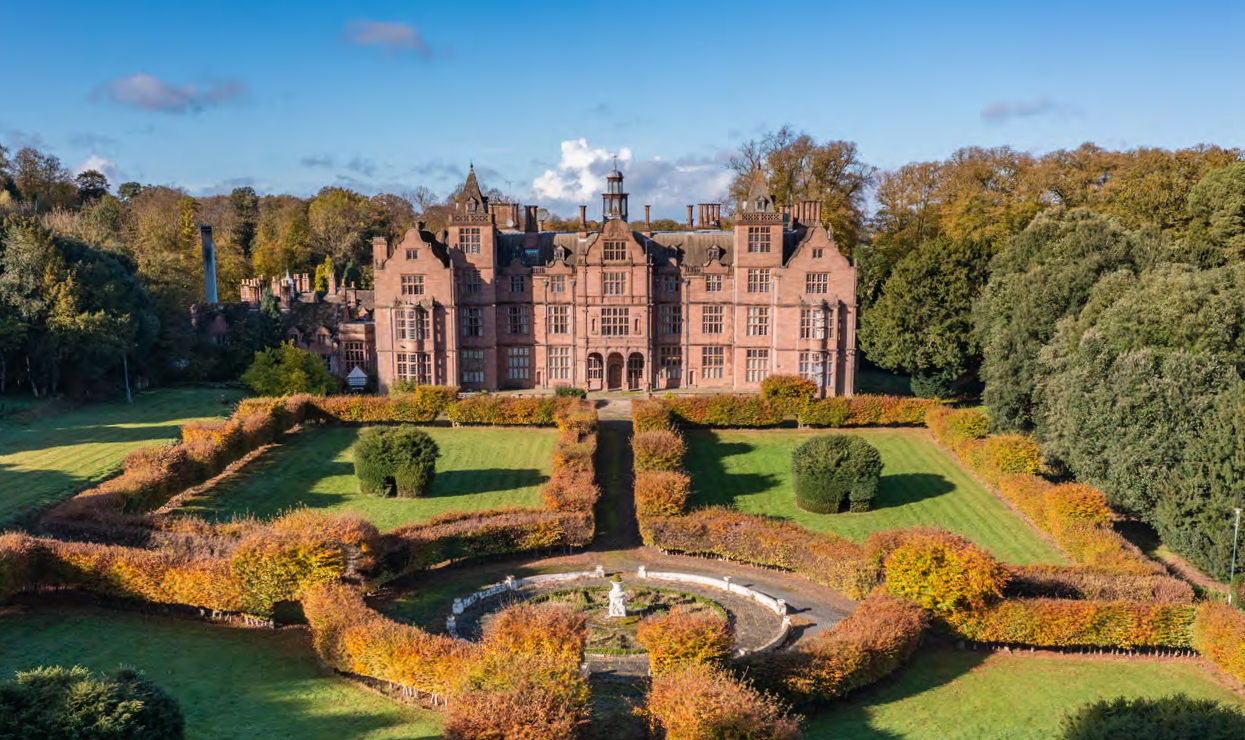


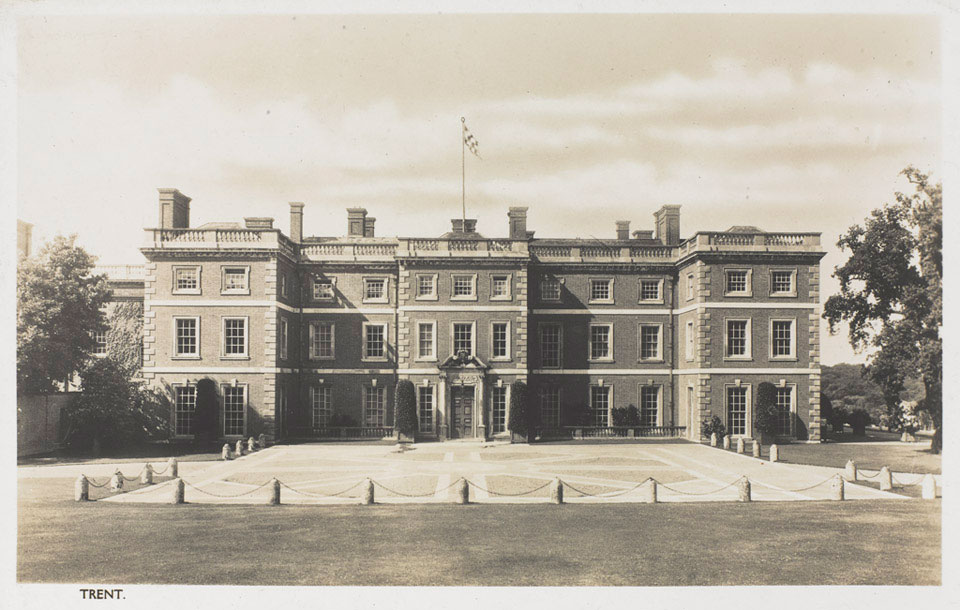
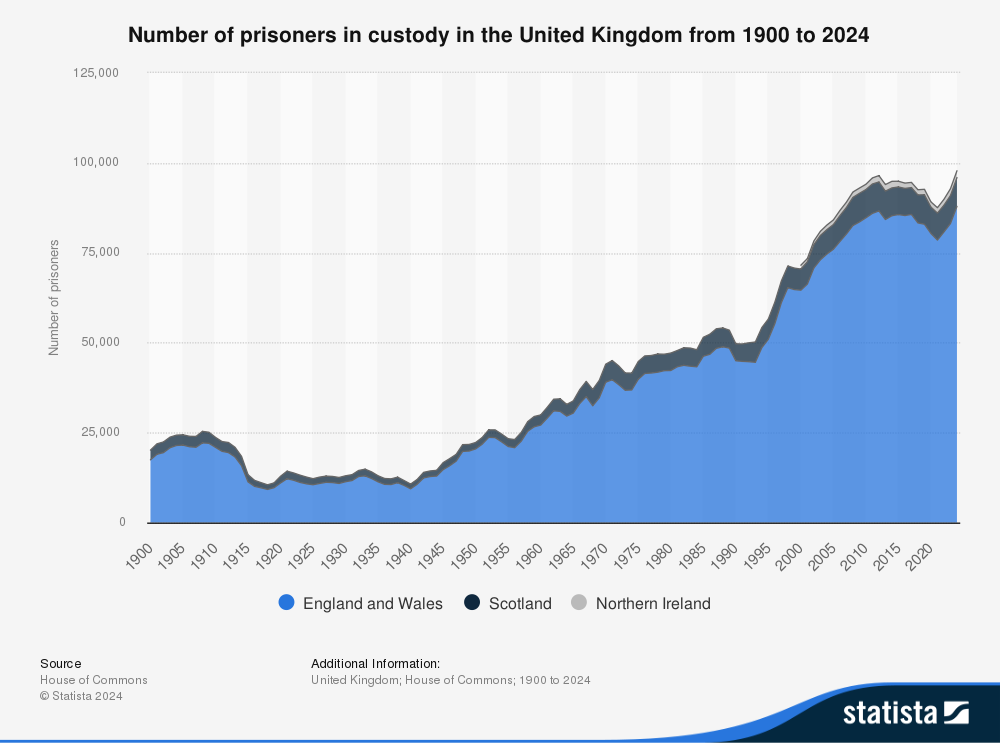
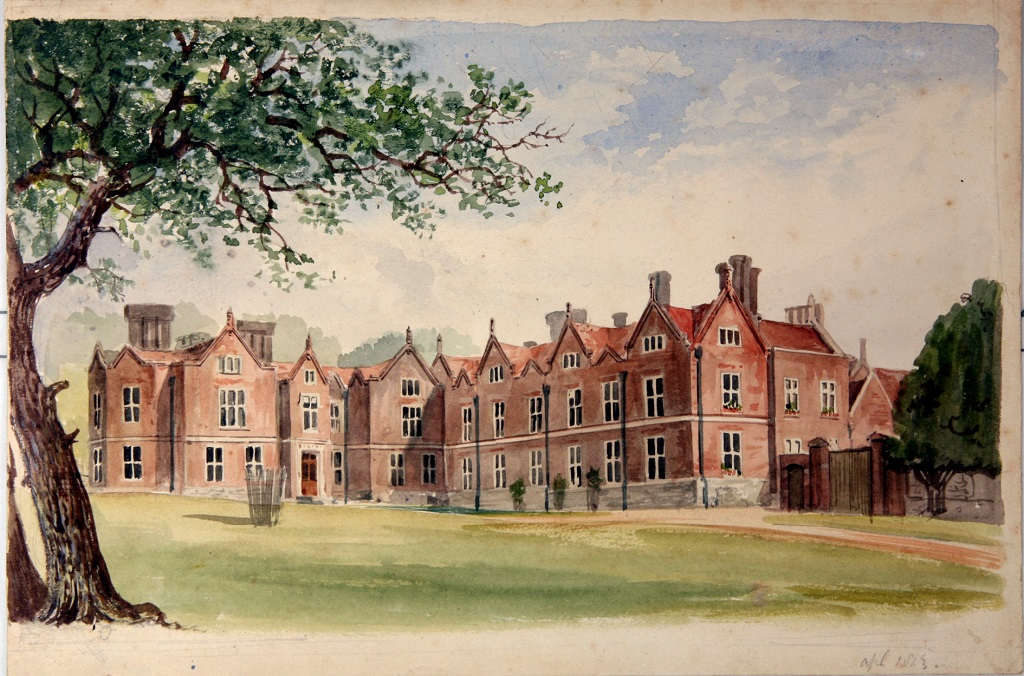

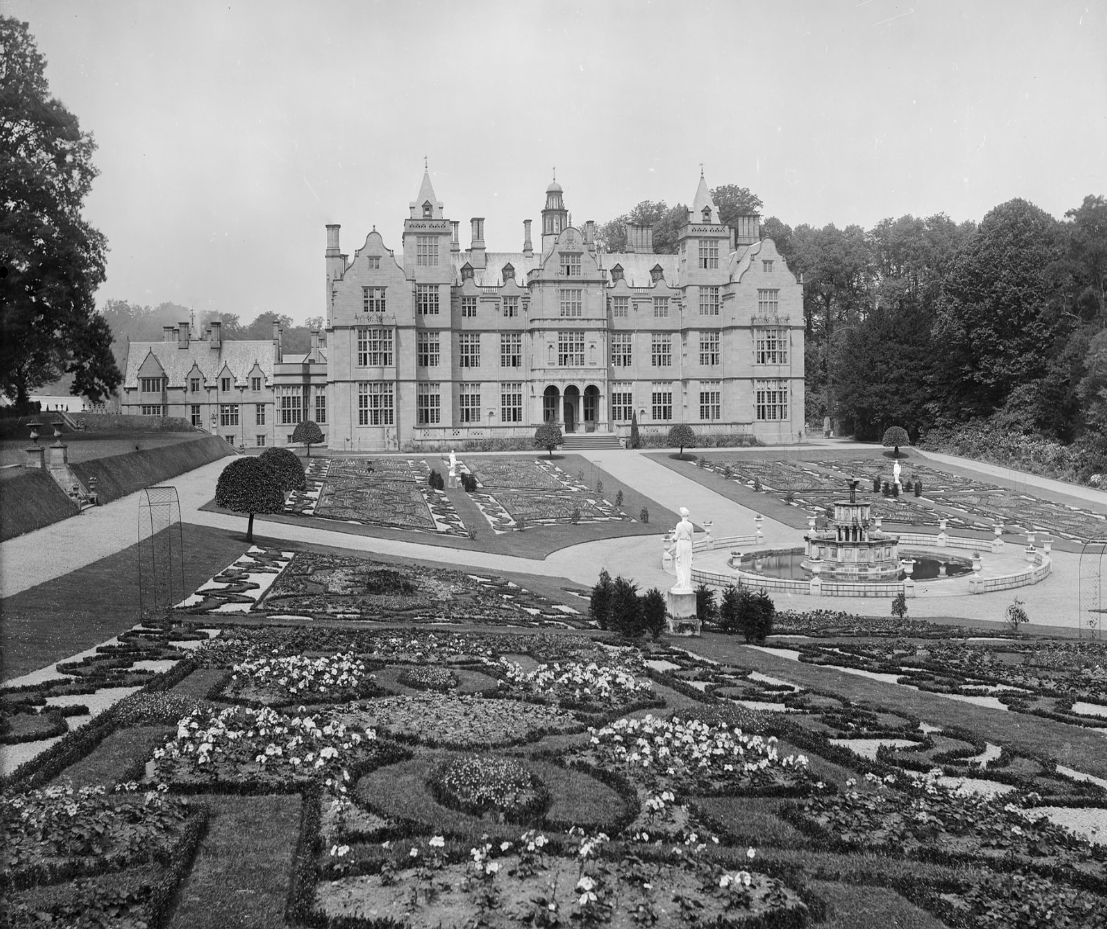
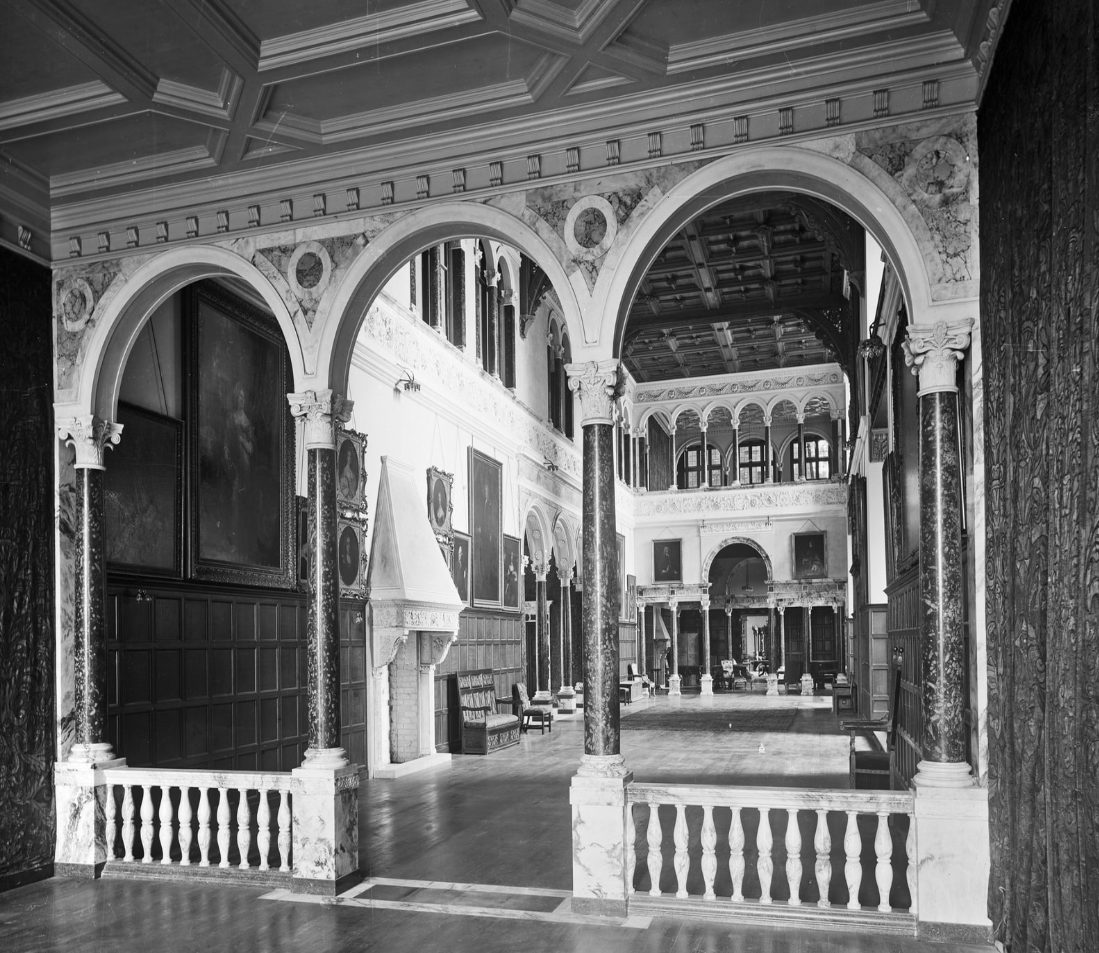


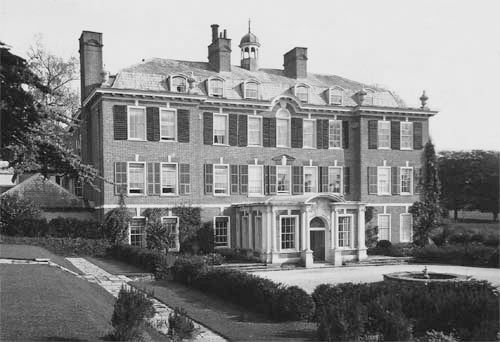


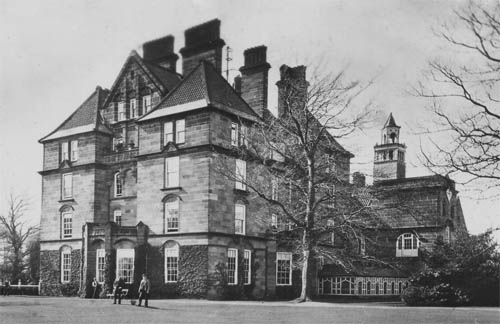


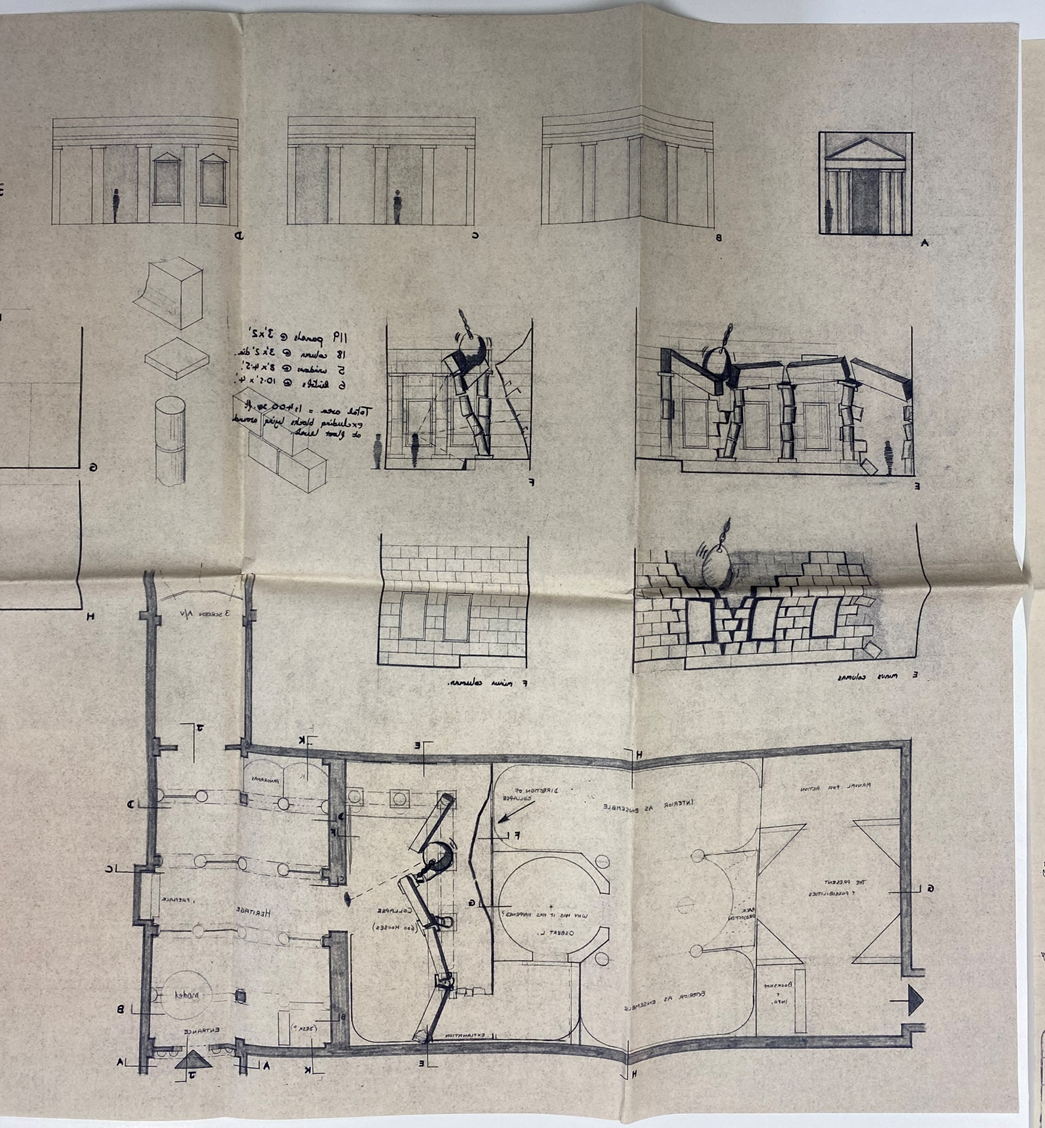

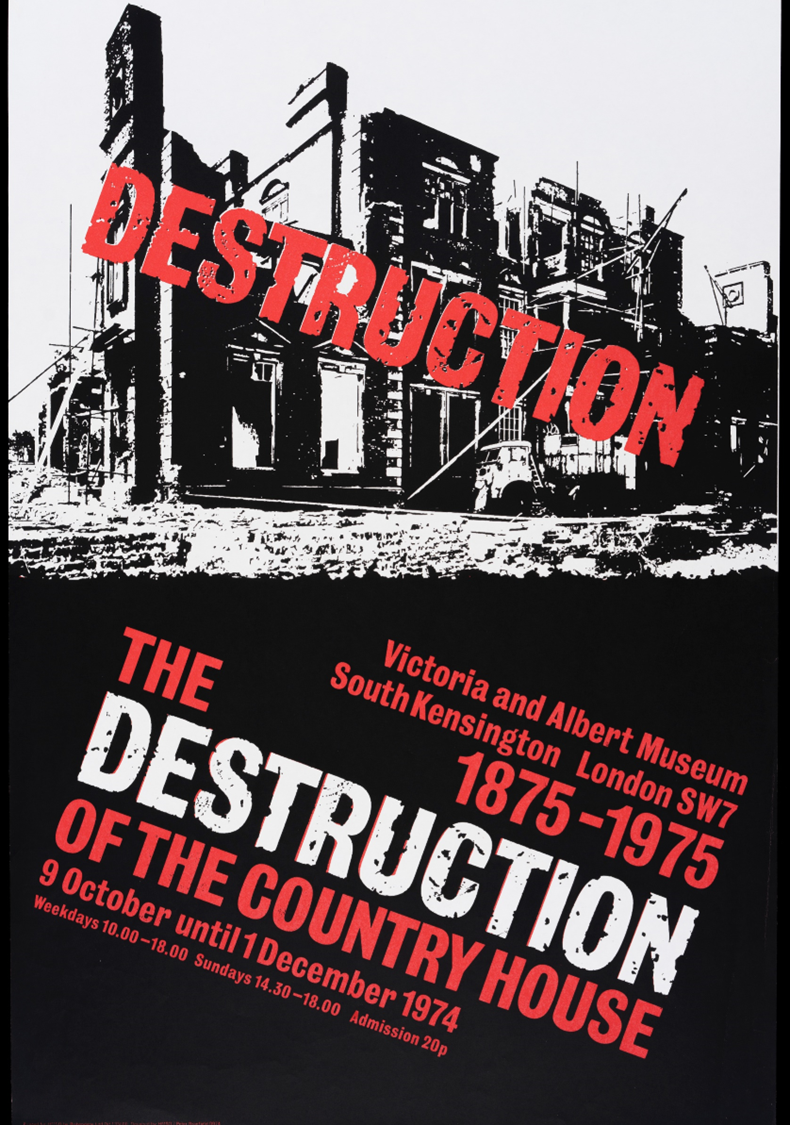


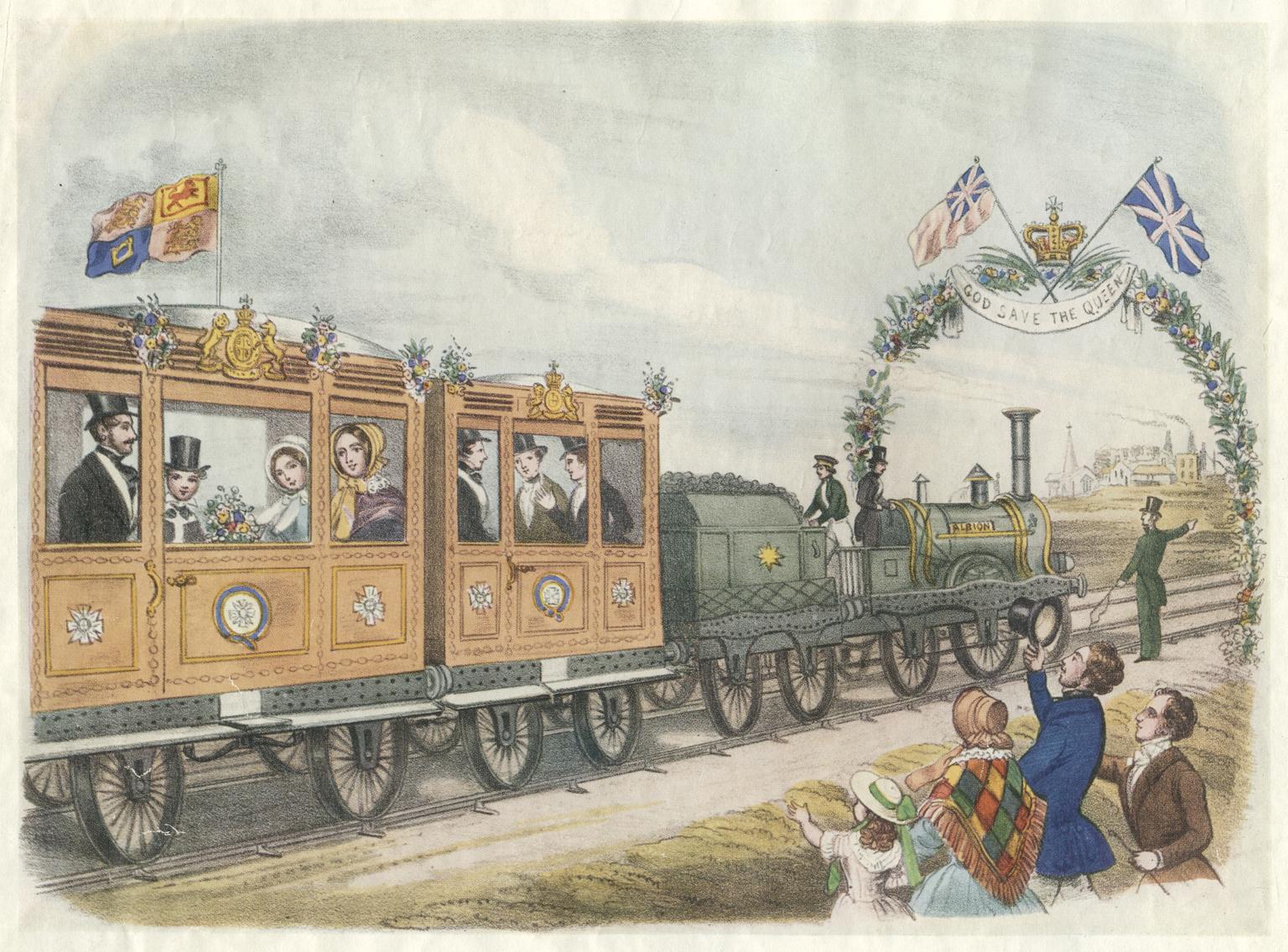


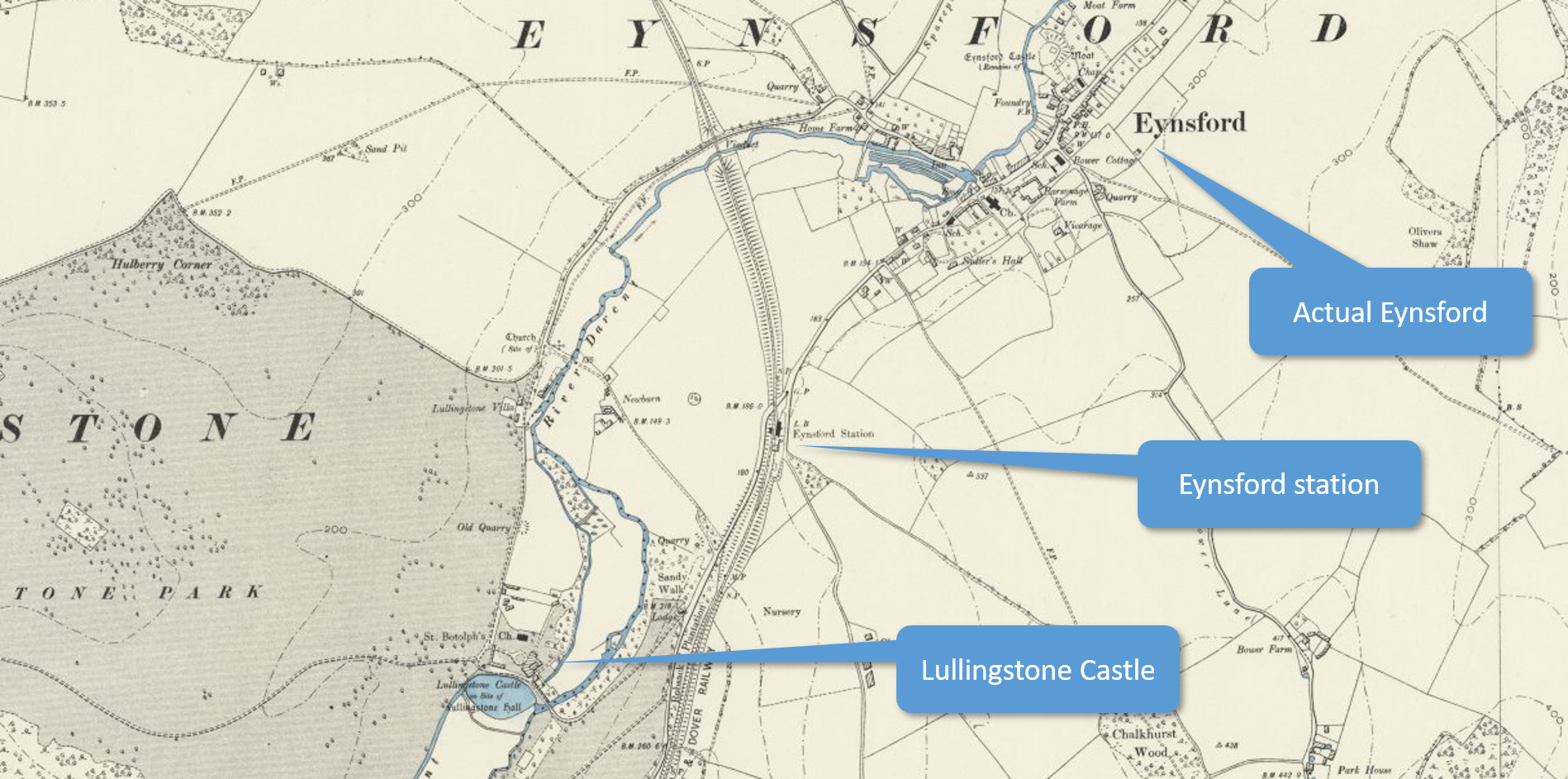


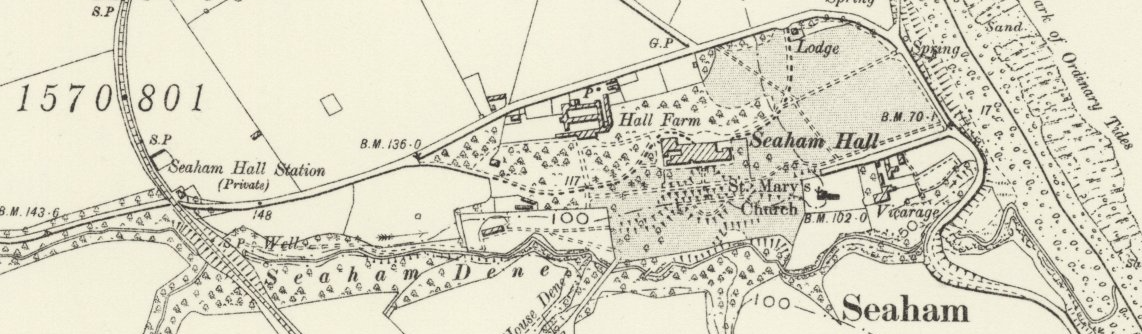
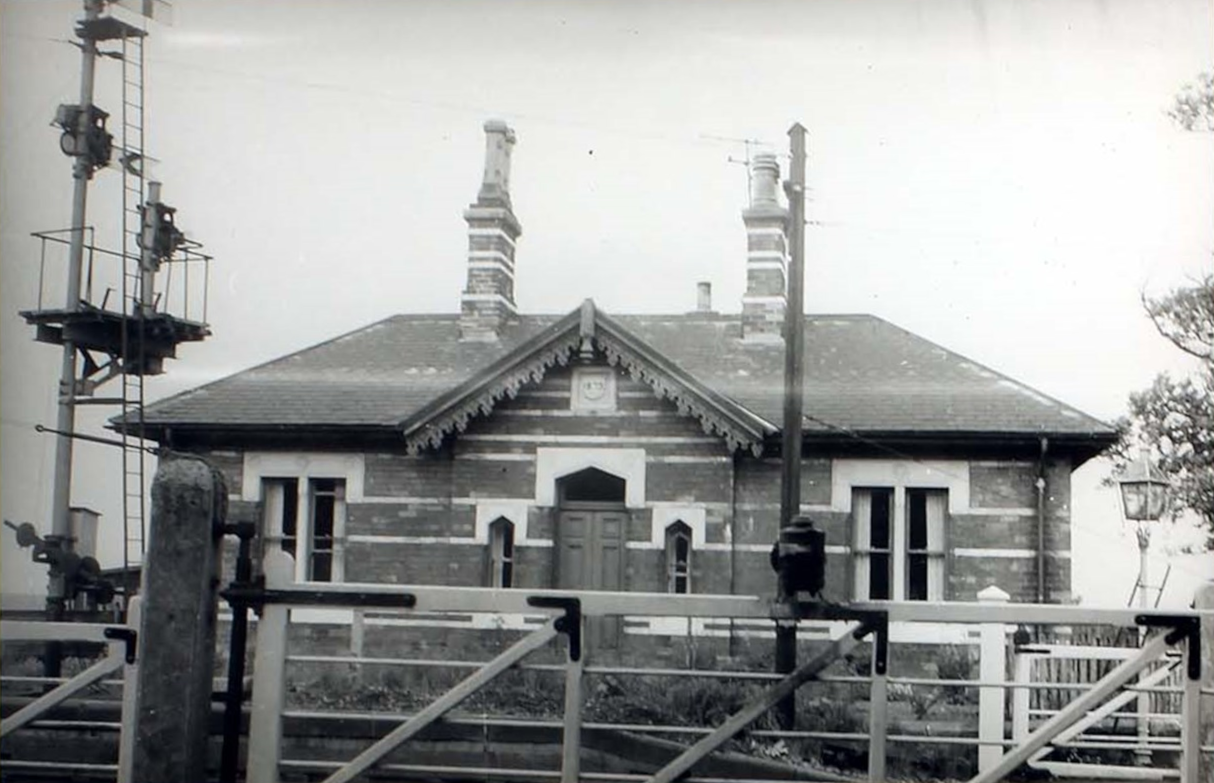


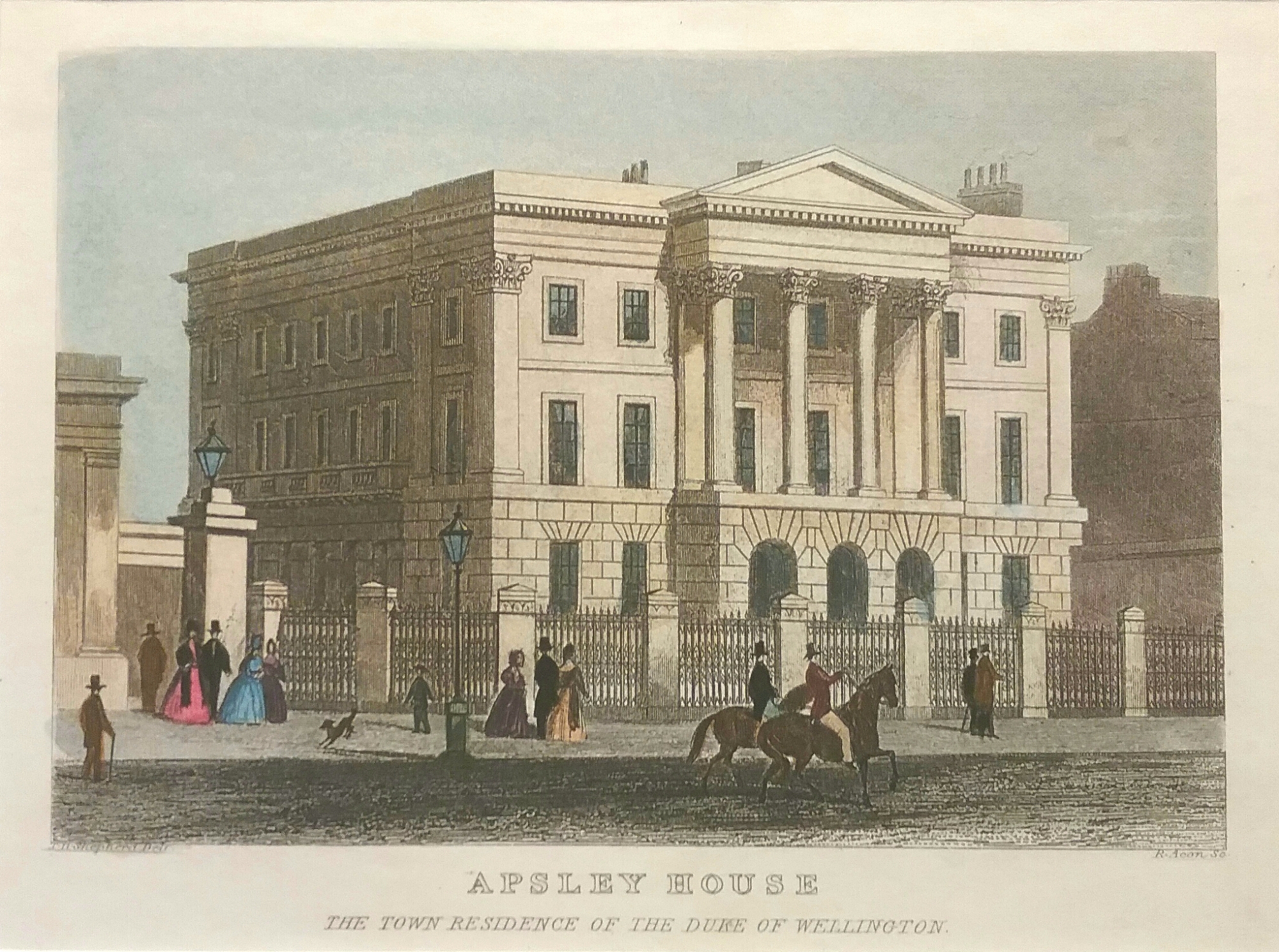
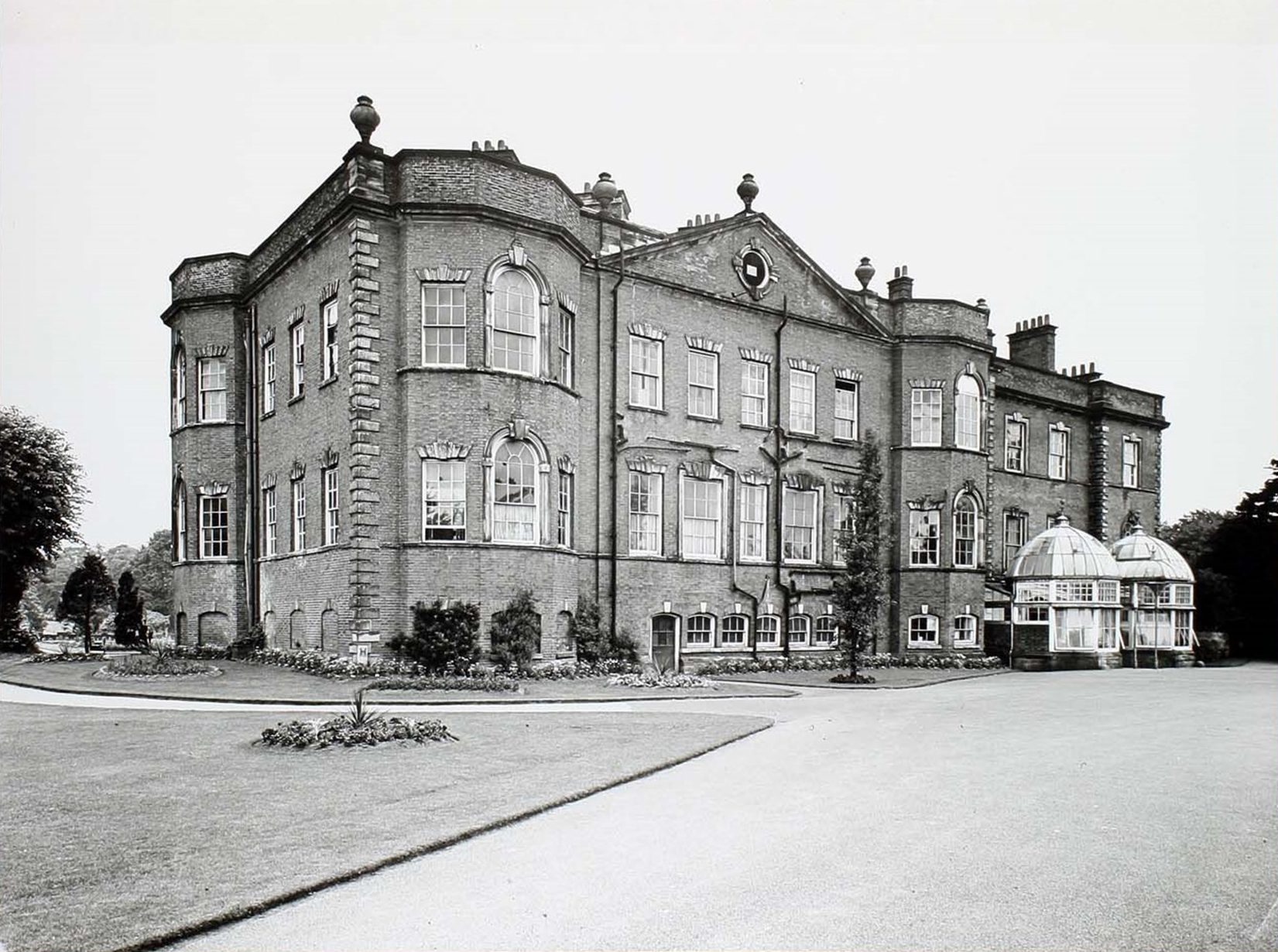



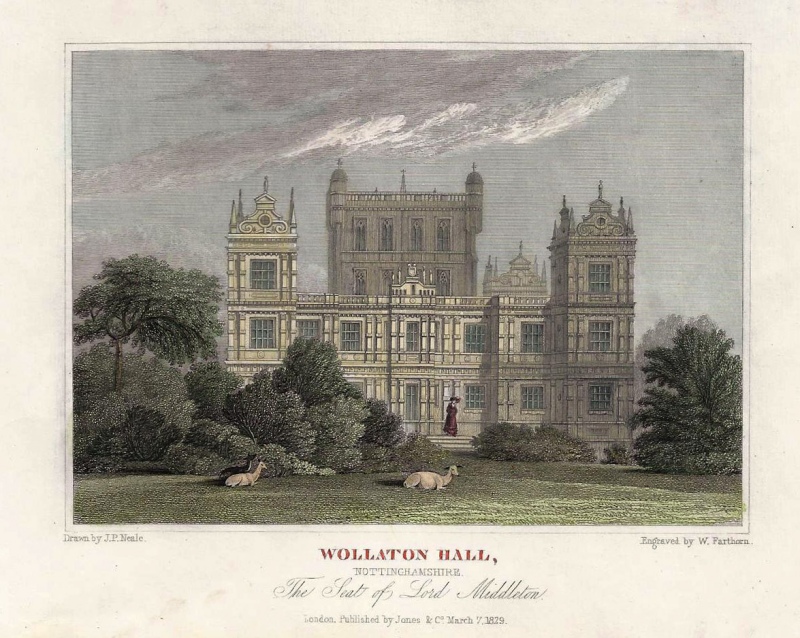
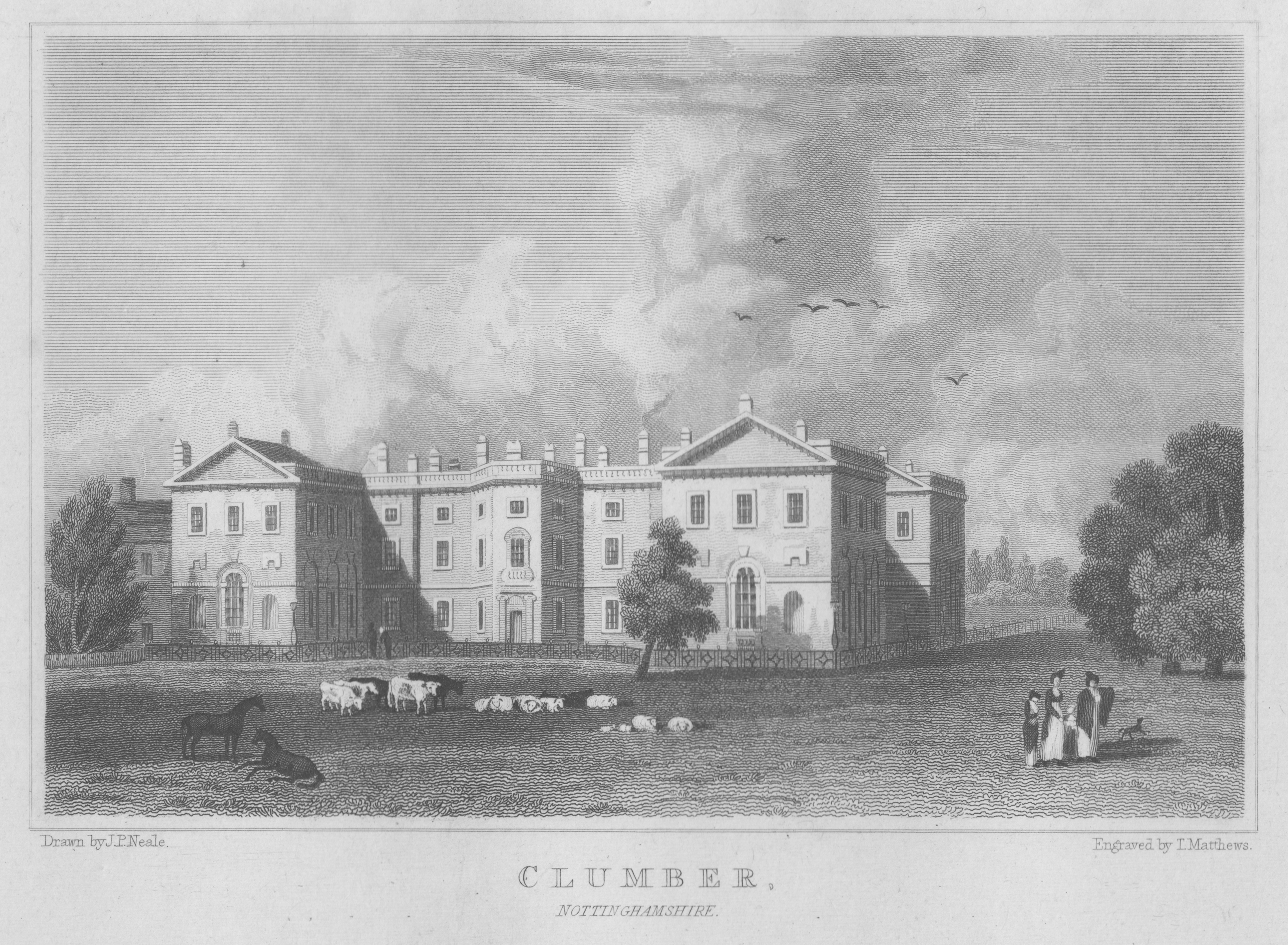
 The Country Seat