A gilded cage: country houses as prisons

Country houses have been slightly glibly described as ‘prisons’, usually due to the restrictive social conventions, which stifled the freedom of the occupants. However, country houses have occasionally been repurposed as true custodial institutions, serving as prisons, youth detention centres, approved schools, prisoner-of-war (POW) camps from the 18th century to the present. This role is one which has been often overlooked in the history of the country house.
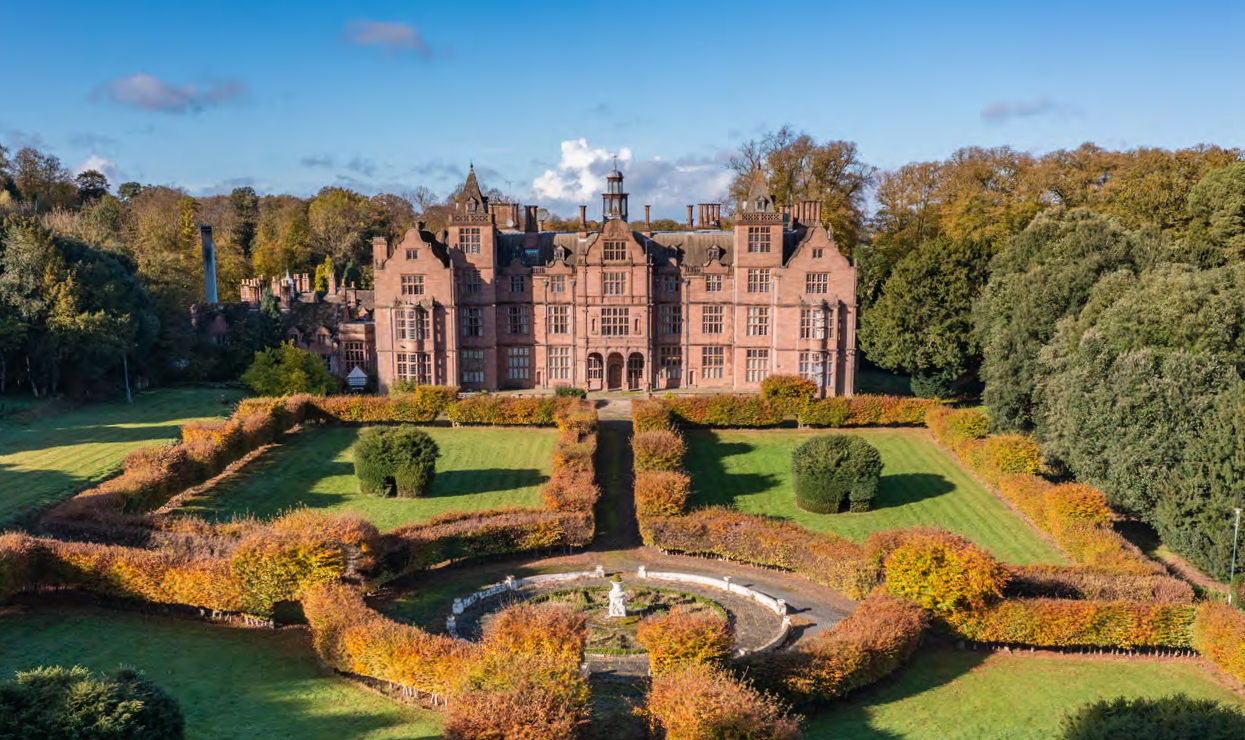
Hewell Grange, Staffordshire aka HM Prison Hewell Grange 1946-2019 (Image © Cushman & Wakefield)

A fictional prison

If one wished, it was always possible to cast the country house as a prison, of sorts. The restrictions placed on everyone who lived in one, whether as the lord or the lowliest servant, was a web of both explicit and implicit rules. Although they could, in theory, walk out of any unlocked door, the reality was that they were trapped, bound to the building.

Fiction has long played on this idea, weaving physical incarceration, with its psychological equivalent. There are the self-imposed emotional bonds which confine the jilted Miss Havisham to her decaying Satis House in Charles Dickens’ ‘Great Expectations‘ (1861), or the fear which entraps the governess at Bly House in ‘The Turn of the Screw‘ (1898) by Henry James. In ‘Rebecca‘ by Daphne du Maurier (1938), Manderley, the grand estate in Cornwall, becomes a place of psychological imprisonment for the unnamed narrator. Haunted by the lingering presence of her husband’s first wife, Rebecca, the narrator feels trapped by the oppressive atmosphere of the house and the expectations imposed upon her. More recently, in Sarah Waters’ ‘The Little Stranger‘, the decaying Georgian mansion of Hundreds Hall (played by Newby Hall, Yorkshire in the film), becomes a symbol of entrapment for its inhabitants as their financial decline echoes that of their place in society, leaving them isolated.

Newby Hall, North Yorkshire, represented the fictional Hundreds Hall in the 2018 adaptation of Sarah Waters’ ‘The Little Stranger’

Beyond these intangible confines, the house as a cell was perhaps most famously portrayed with Bertha Mason, Mr Rochester’s wife, confined as the ‘mad woman in the attic’ of Thornfield Hall in Charlotte Brontë’s ‘Jane Eyre‘ (1847).

Royal confinement

Beyond fiction, the country house has, at times of need, served in reality as a place of confinement – pressed into service as a working prison when circumstance demanded.

On 16 May 1568, Mary Queen of Scots fled to England seeking refuge from political turmoil in Scotland after the battle of Langside and spent her first night at Workington Hall, Cumbria. Mary had come to England in the hope of gaining support from the Catholic nobility and of appealing to her cousin, Queen Elizabeth I, for political assistance in regaining her Scottish throne. However, because both women were descended from Henry VII, Mary possessed a strong claim to the English crown. This made her presence in England a direct threat to Elizabeth, particularly as Mary was a Catholic alternative to Elizabeth’s Protestant rule.

Although Mary was technically a guest, she was heavily guarded and this effectively marked the beginning of her nearly 19-year imprisonment before her execution. Mary was moved around regularly to thwart plots to free her, from castles to eventually the country houses of George Talbot, the 6th Earl of Shrewsbury (b.1522 – d.1590). The Earl of Shrewsbury, famously married to Bess of Hardwick, played a pivotal role in the confinement of Mary, having been appointed her custodian by the Queen. Throughout various periods, he held Mary at his family’s houses including Wingfield Manor, Hardwick Hall, Chatsworth House, and Sheffield Manor – all situated within a 15-mile radius in Derbyshire. Mary was finally moved to Fotheringhay Castle, Northamptonshire, arriving on 25 September 1586. She was put on trial in October, and then executed in the Great Hall on 8 February 1587. Her long confinement within such grand yet guarded houses stands as a stark reminder of how the architecture of luxury could so easily become the architecture of captivity.

A prisoner of war

In wartime, country houses have been pressed into service in a wide variety of roles, with prisoner-of-war camps among the least glamorous. Stepping beyond the more obviously martial associations of castles, one of the earliest – and most notorious – examples was at Sissinghurst in Kent during the Seven Years’ War (1756–1763). The house, by this time had been allowed to fall in to a significant state of disrepair by the then owners, the Baker family. The government rented the property and adapted it to hold around 3,000 French naval prisoners, during which time it was further mistreated with the inmates destroying panelling, fireplaces, the chapel furniture, and leaving the garden a wasteland.

In 2008, a newly identified watercolour emerged that provides the most complete known view of the Elizabethan house during this period when it was a prison – and includes the chilling depiction of a double murder.

Watercolour (c.1761) showing the Killing of a Group of French Prisoners at Sissinghurst Castle Garden, Kent. Sissinghurst Castle © National Trust Images / John Hammond 2016
Sissinghurst Castle with the Killing of a Group of French Prisoners English School, circa 1761. Ink and dye on laid paper. (© National Trust Images / John Hammond 2016)

On 9 July 1761, whilst guarded by local, poorly-trained, armed militia, three prisoners who had escaped were being brought back to the camp. Their arrival caused a group of prisoners to rush to the fence out of curiosity.  One of the militia, a hot-head called John Bramston, shouted that they were to come no closer or he would fire. He loaded his musket with three balls and fired at the group. One ball struck the wall, the other two each hitting a prisoner. One by the name of Baslier Baillie was wounded (shown top-left being helped by two friends), but another, Sebastien Billet, was killed instantly. Bramston was unrepentant. The picture is thought to have been painted by a Frenchman to record the crime – but in doing so also left a powerful visual record of a now much-altered house and its time as a prison.

World War II

During the twentieth century, several distinguished country houses were temporarily repurposed to serve the needs of war, their refined architecture providing an incongruous backdrop to confinement. At Huntercombe Hall in Oxfordshire, the late-Victorian mansion, with its commanding stone façade and landscaped setting, was requisitioned during the Second World War as a secure detention site, most notably for high-ranking German prisoners including Rudolf Hess, whose isolation lent the house an unlikely role in wartime diplomacy and intelligence. In north London, Trent Park, a neo-Palladian villa by Sir William Chambers, was adapted as a special interrogation centre, where senior German officers were held in conditions of deceptive comfort while their conversations were secretly recorded – its grand rooms thus becoming instruments of psychological warfare.
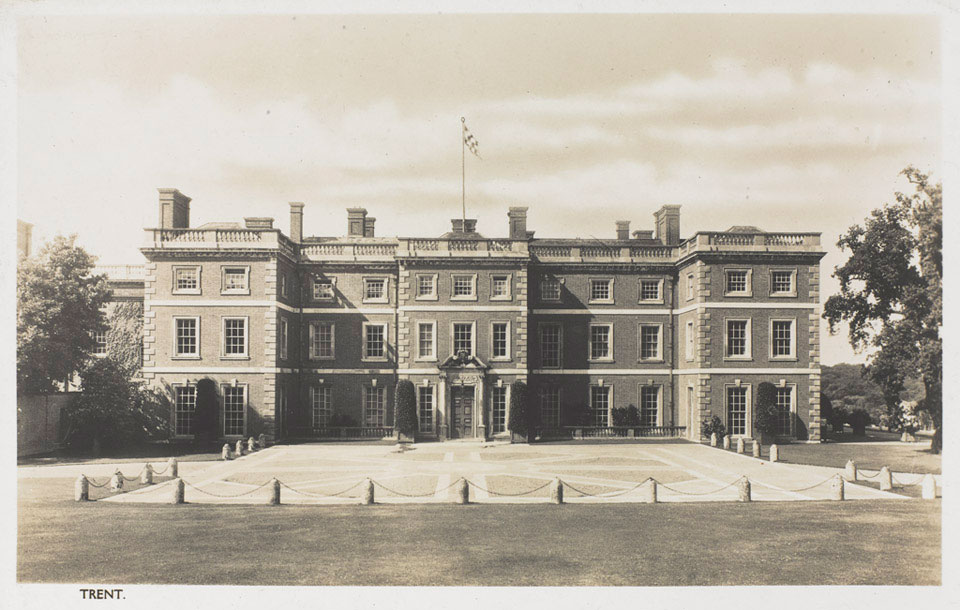
Entrance front of Trent Park, Enfield, north London (Image © National Army Museum ref: NAM. 1993-10-163-1)

Similarly, Mytchett Place, Surrey, during 1941–42, this Victorian mansion was fortified and codenamed “Camp Z,” serving as a one-man prison wired for surveillance for the detention of Deputy Führer Rudolf Hess.

Further north, the Huntroyde Hall estate in Lancashire, long the seat of the Starkie family, was similarly turned over to military purposes, its once-private parkland accommodating prisoners and personnel within hastily erected compounds. As with Sissinghurst, the mistreatment during the harsh use as a prison was a significant factor in its later demolition. Earlier, in the First World War, the partly medieval Badsey Manor House in Worcestershire was similarly employed to house prisoners of war, marking a utilitarian phase in its long domestic history.

The changing attitude to the role of prisons

The use of country estates and their houses was partly one of necessity in wartime, but in the post-war period also reflected a change in attitudes towards a more therapeutic approach towards incarceration from the 19th-century focus on harsh conditions and hard labour as a deterrent.

Why country houses? They offered several advantages: privacy (away from cities, escapes less dangerous to public), space for agriculture and workshops (important for training prisoners in trades), and an existing infrastructure of accommodations and kitchens. Also, symbolically, placing prisoners in a “less oppressive” environment was meant to encourage self-respect and responsibility – a deliberate contrast to the austere walled prison. Askham Grange’s homely appearance was cited as beneficial for women.

The open-prison concept drew heavily on Alexander Paterson, who joined the Prison Commission in 1922. He argued that imprisonment should actively shape behaviour for the better, with inmates encouraged to develop through structured physical and mental activity.

In the 1940s, there had been a steady increase in the total number of people convicted of indictable offences. During a House of Lords debate on Penal Reform in November 1946, the Lord Chancellor, Lord Jowitt, lamented the tendency towards increasing crime before WWII, stating that,

I take the five years 1934–1938. The number of young persons found guilty of indictable offences moved up from 10,000 odd in 1934 to 14,000 odd in 1938 – that is males; females from 1,300 odd in 1934 to 1,600 odd in 1938. …When we have the figures of 14,000 young men and 1,600 young women going up to the sort of figures we have to-day [1947], for the total number of persons – 78,000 in 1938, moving up in 1945 to 116,000…it is quite obvious that we have here a very real problem. (Source: Hansard – column 442)

The noble Lord’s figures indicated a serious issue so whilst not everyone convicted was incarcerated, there was a steady rise in the prison population:
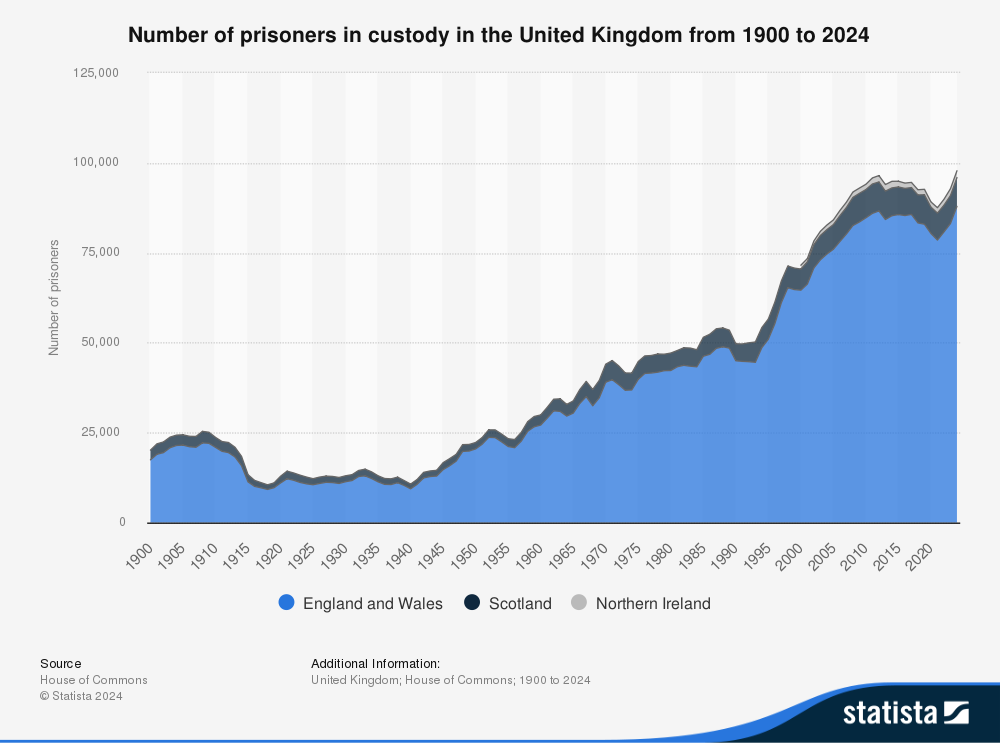
Number of prisoners in custody in the United Kingdom from 1900 to 2024 (Image source: Statista. Data source: UK prison population statistics – published July 2024. House of Commons Library)

The sustained increase in the total population by over 50% from 1940-1950, would place significant stress on any system of incarceration. However, attitudes had changed and the harsh conditions of punishment of the nineteenth century were now considered to do more harm than good, especially for young offenders. The Criminal Justice Act of 1948 introduced major reforms for young and habitual offenders. It barred sending under-21s to prison except as a last resort, directing them instead to borstal training or, for shorter terms, to detention centres.

This more enlightened perspective, which the Lord Chancellor was fully supportive in that same debate, created a requirement for a system which emphasised a more probationary approach via the borstal system. By relying on less stringent security, and often promoting training and useful labour – particularly agricultural – this created a means to reform and improve the lives of those who had been convicted. The Lord Chancellor welcomed that:

Thank goodness, we are now approaching the time when it will no longer be necessary to detain in prison for long periods persons who are ultimately going to serve their sentences in Borstal. The institutions we now have are of very varied types. Sometimes they are in a camp and sometimes they are in a country house, where the inmates can be engaged on agricultural work. We have also opened a new Borstal institution for girls at East Sutton Park in Surrey. That is a small institution and will take some fifty girls. (Source: Hansard – column 447)
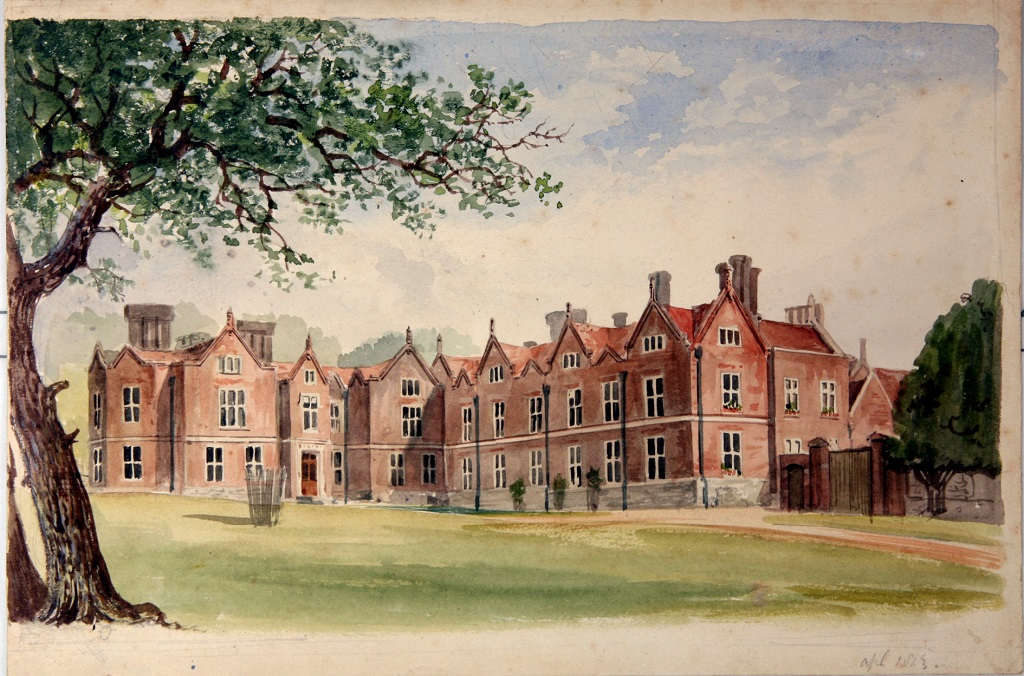
East Sutton Place [Park], Kent, which became the first open female Borstal in 1946 (Image © Kent Archives)

Interest also developed in adapting elements of the short-lived but influential “Wakefield experiment,” introduced during the First World War to manage the most uncompromising conscientious objectors – the Absolutists – who refused all military orders. Previously held in ordinary prisons, they became the focus of MPs arguing for more humane treatment. The government resisted releasing them but agreed to trial a compromise by placing all COs under a new regime at Wakefield.

This system relied on a high degree of trust. Cell doors were left unlocked, prisoners could move freely within the prison, and a small allowance allowed them to buy writing materials and tobacco. Conditions were not freedom, but a clear improvement. Leisure and work were timetabled, with expectations of diligence and no “singing, shouting, whistling, or reading” during working hours. The experiment collapsed when the men rejected the rules they had helped draft, leading to their return to standard prisons. Even so, its central idea – combining restrictions with opportunities for responsibility and reform – would influence later thinking about penal regimes.

Entrance to Tortworth Court, Gloucestershire (Image from private collection)

Speaking during the same debate in 1946, the Lord Chancellor again highlighted that such facilities were being developed:

We have recently taken over a former hospital at Tortworth [Court] in Gloucestershire as what is called a minimum security prison for selected convicts. In that way we can do much towards their rehabilitation and their ultimate reassimilation into ordinary civilian life. (Source: Hansard – column 447)

This approach influenced the selection of suitable locations for the new prisons. At HMP Leyhill, the government repurposed an ex-American Army hospital camp on the Tortworth estate to create the first open prison in 1946. The adjacency of Tortworth Court (then still with the Earl of Ducie) gave the model of a country setting if not using the main house. Interestingly – the house was not taken as it was returned to the Earl; but by the 1950s, Leyhill expanded and did start using some estate buildings, thought the wider estate is still owned and managed by the Earl of Ducie’s family as Tortworth Estates.

Hewell Grange

Hewell Grange epitomizes the pattern for long-term penal conversion. An existing country house could be successfully integrated into the penal system for decades, effectively becoming a self-contained village (with a chapel, workshops, and housing all on site).

The grand main house, last great prodigy houses of its era, provided an environment, even when not used directly as cells for prisoners, was arguably more humane than a typical prison – former inmates often remarked on the beauty of the lake and gardens, which were part of a 250-acre landscape park laid out by Capability Brown, with formal terraces, a lake, and extensive service buildings. By the lake are also the ruins of Old Hewell Grange, the classical predecessor to the current house. After being superseded by the new Hewell Grange in the 1890s, it was accidentally gutted by fire and abandoned, and now survives as a roofless ruin, its classical form still partly visible among collapsed walls and encroaching vegetation.
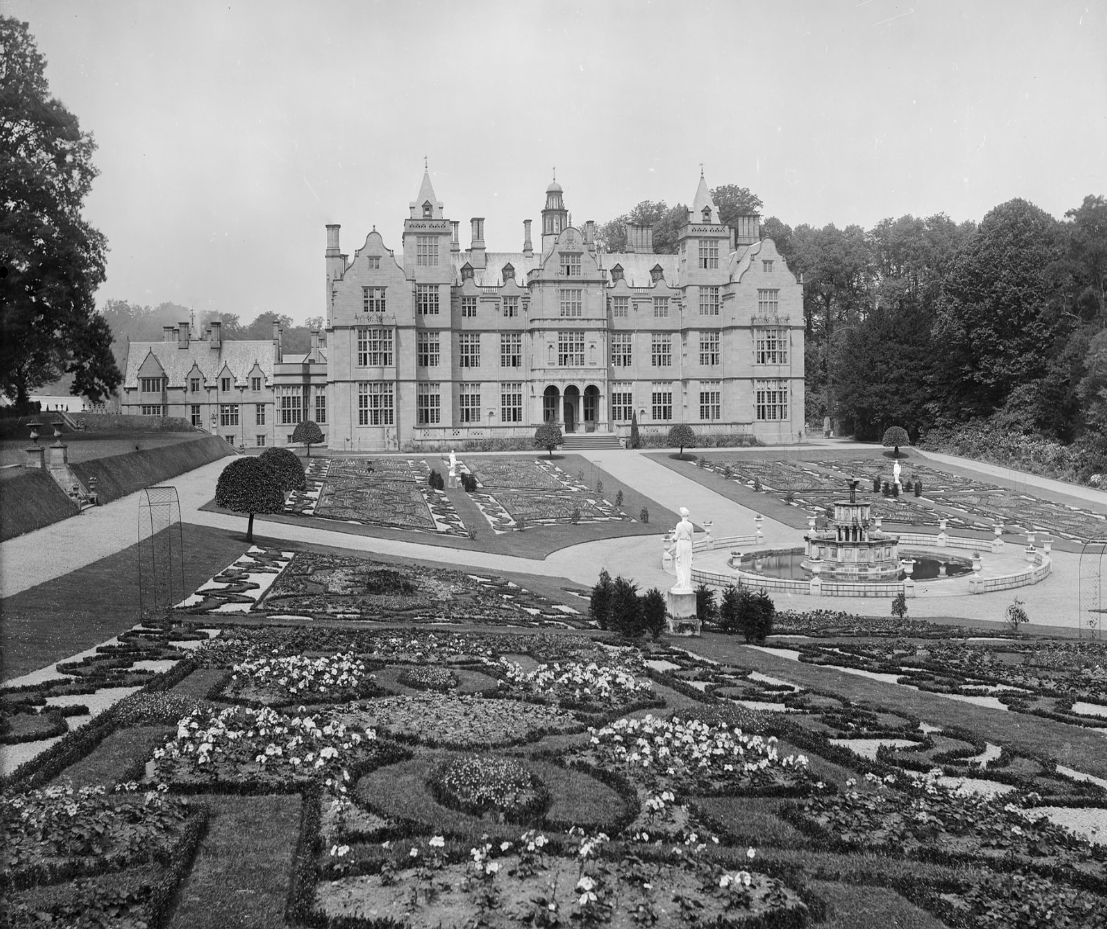
View of Hewell Grange and the formal garden to the south-east of the house c.1892 (Image © Historic England, ref: BL11660/016)

The new house was built between 1884 and 1891 for Robert Windsor-Clive, later 1st Earl of Plymouth, Hewell Grange cost approximately £250,000 (equivalent to spending c.£39m today). Designed by George Frederick Bodley and Thomas Garner in the Jacobethan style, the red brick house with stone dressings features an E-plan, steeply pitched gables, clustered chimneys, and mullioned-transomed windows. Interiors include carved oak panelling, a double-height Great Hall with a minstrel gallery, and elaborately modelled plaster ceilings.
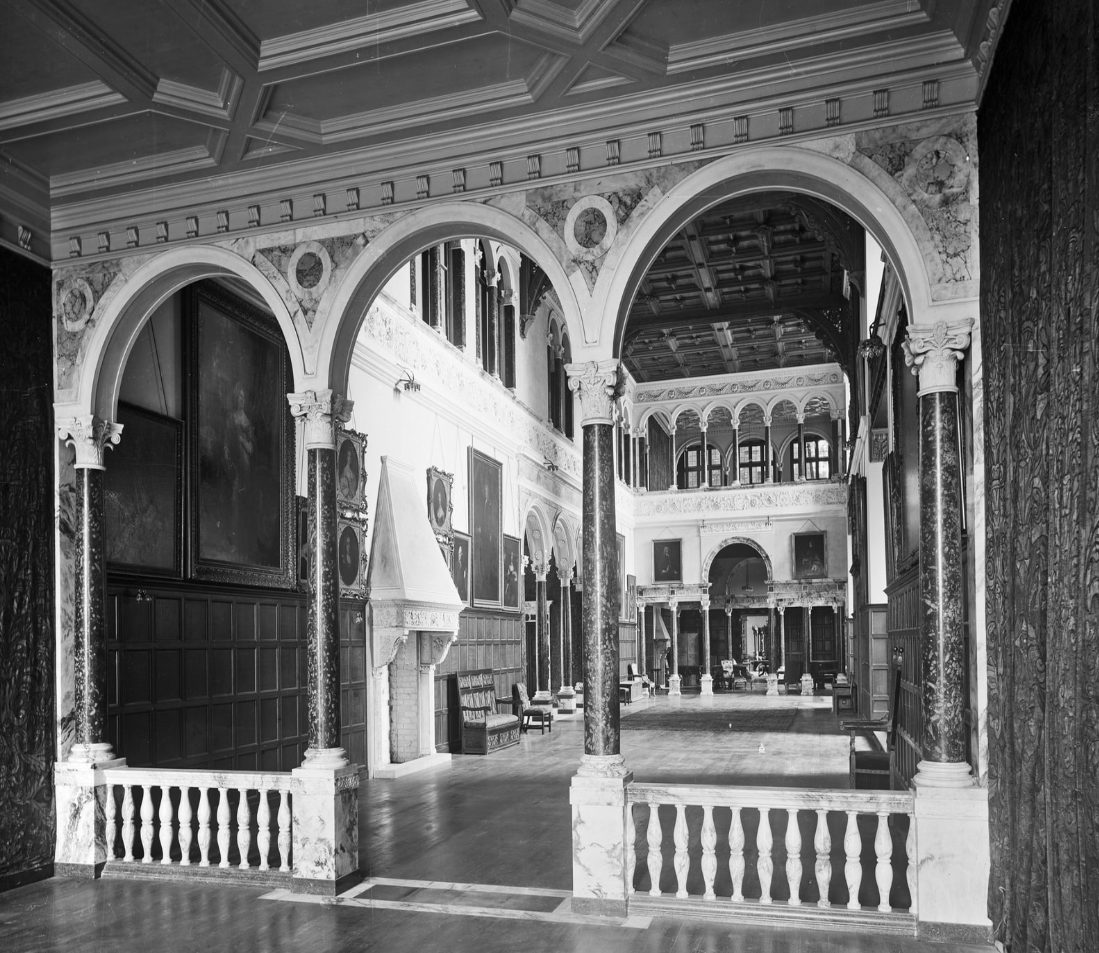
Interior of the Italianate style Great Hall of Hewell Grange, 1891 (Image © Historic England, ref: BL11026)

However, Hewell Grange also reveals both the potential and limitations of prison use: spacious and already built, the house saved the state construction costs in 1946; but by 2019, it was anachronistic and expensive to run. By the 2010s, the UK prison estate was being rationalized. In 2019 the Ministry of Justice announced the closure of the open prison at Hewell Grange, following a critical inspection report and also reflected the cost of maintaining an ageing mansion for modern custody standards. The prison formally closed in 2020, and the entire site was consolidated into one (closed) prison to the north east of the house, around 600 meters away.

Hewell Grange house is now vacant and lacking a clear future, beyond occasional use for filming and events. As is so often the case for heritage without a viable and sustainable purpose, its condition has deteriorated to ‘poor’ after closure, with concerns about lack of maintenance, resulting in it being placed on the Heritage at Risk Register. As of early 2022, the government put the property up for sale, seeking a new custodian to repurpose the historic estate once again.

It was apparently sold in 2023 to a hotel group but it’s unclear whether this fell through or they immediately put it back on the market, as it has been offered through Cushman & Wakefield, with 247 acres, for an undisclosed price. This inevitably raises questions about the future: will it return to a private residence, become a hotel or institution, or will it just be allowed to deteriorate until it becomes another country house to succumb to neglect, urban exploration or a mysterious fire?

Conclusion

The pattern of country house reuse reflects adaptability to historical moment. In wartime, necessity drove usage; in peacetime, policy experimentation and economic forces did. This practice peaked in the mid-20th century and today it would exceptionally unlikely for a house to be taken over for this purpose, with a clear preference for building dedicated facilities.

From a wider heritage perspective, Hewell Grange’s story is instructive as, unlike so many country houses that were demolished in the mid-20th century, the use as a prison provided a value and so it was preserved precisely because it found an institutional function. Now its preservation will depend on finding a sympathetic new use after its institutional life has ended.


A list of country houses used (either currently or previously) for incarceration by the state since 1900

Prison nameCountry houseCounty
Askham GrangeAskham GrangeYorkshire
BlundestonBlundeston LodgeSuffolk
Buckley HallBuckley HallLancashire
Bullwood HallBullwood HouseEssex
East Sutton ParkEast Sutton ParkKent
ErlestokeErlestoke ParkWiltshire
Foston HallFoston HallDerbyshire
HewellHewell GrangeWorcestershire
Hill HallHill HallEssex
HumberEventhorpe HallYorkshire
Kirklevington GrangeKirklevington GrangeYorkshire
Latchmere HouseLatchmere HouseSurrey
LittleheyGaynes HallCambridgeshire
Lowdham GrangeLowdham GrangeNottinghamshire
Morton HallMorton HallLincolnshire
Penninghame HousePenninghame HouseDumfriesshire
Spring HillGrendon HallBuckinghamshire
StockenStocken HallRutland

If I have missed any others, please share the details in the comments or contact me directly and I’ll update the list.

Sites associated with nearby country houses

Prison nameCountry houseCounty
Eastwood ParkEastwood ParkGloucestershire
LeyhillTortworth CourtGloucestershire
Swinfen HallSwinfen HallStaffordshire


Selected references


Further research

Interestingly, the subject of the use of the country house for incarceration doesn’t appear to have been covered in depth academically, as far as I could discover. Given the numerous angles, this would appear to be an area which someone may wish to investigate further as the official records and related information would probably reveal a richer story than I have been able to share here. Happy to have a chat if anyone wishes to take it on.
Syngenta’s shame: proposed demolition of Dalton Grange, Hudderfield

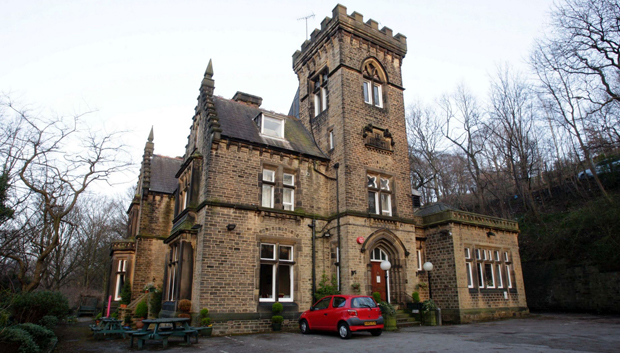
To paraphrase: ‘all that is required for heritage to be lost, is for good people to do nothing‘.  Sometimes this can be through deliberately ignoring a situation or through lack of awareness that a situation even exists. So, this is a quick post to highlight the shamefully poor justification that Syngenta Ltd have proposed as reason to demolish the mistreated but ‘hugely characterful’ Dalton Grange in Huddersfield.

Dalton Grange, Huddersfield, Yorkshire (Image: Huddersfield Examiner)

Syngenta Ltd is a Swiss-based, global agri-business with revenues of over $14bn and profits of over $1.6bn (2013) – and I have no problem with that at all; big business provides jobs but it also creates local responsibilities.  The corporate website is bathed in the language of sustainability and waste reduction – noble, certainly, but sadly in Huddersfield, they appear to not be interested in following these aims.

A recent application was made by Syngenta to Kirklees Council to demolish Dalton Grange; a building the Victorian Society have identified in their response as being locally significant, both historically and architecturally.  They note that it was built in 1870 by prominent local industrialist Henry Brook, of J.H. Brook & Sons of Bradley Mills (both north and south mills at Bradley Mills are listed Grade II).  Sited on a hill, the house is:

…a sturdy and handsome essay in baronial Gothic, with a prominent castellated turret providing dramatic views of the building at the end of its drive. It is a hugely characterful building and is set in large terraced gardens that in recent years have been restored in order to provide the beautiful landscaped setting that it once enjoyed.
Consultee Responses: Victorian Society

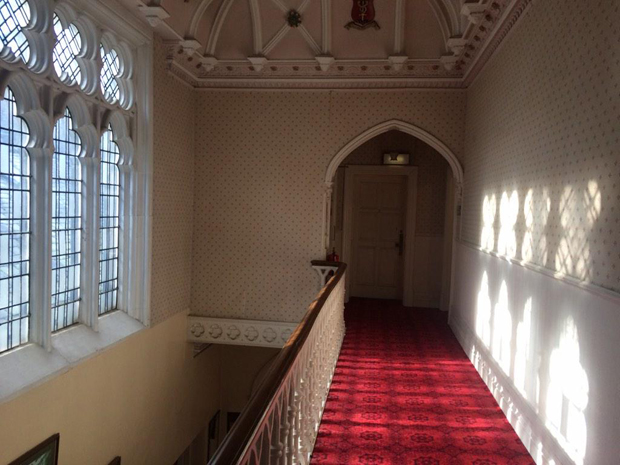
Dalton Grange staircase (Image: Dalton Grange)

Care for a local area should be integral to how a company operates, respecting the traditions and heritage which surround their sites.  In both local terms and in relation to national guidelines, the bar needs to be set high to justify the loss of heritage – so how do Syngenta address this:

Reason for demolition: No foreseeable future use for the building. In addition there are anticipated excessive costs associated with ongoing maintenance & refurbishment
Source: Application 2014/68/91888/W

Allow me to paraphrase: ‘Syngenta can’t be bothered to use this heritage asset which is in their care and it’s looking a bit expensive to look after in the way we are supposed to, so we would prefer it if we could just get rid of it.‘ In some meeting, this must have seemed like a quick solution. Hold on though, we’d better think of something we can usefully use this space for once we’ve cleared it. What inspiring solution can we find? What might conceivably justify this lost of a building which has been part of the Huddersfield landscape for nearly 150 years – let’s look at their application again, specifically section 5:

Please describe details of the proposed restoration of the site: A possible outcome is that parking provision for a number of cars will be made available to help ease traffic problems during stadium events.

A car park. Well done, Syngenta.  Speaking to the Huddersfield Examiner, Syngenta community relations manager (ha ha!), Carl Sykes said “This is a private building on private industrial land.” Which I think is his way of saying ‘It’s none of your business’. He continues:

“Times have changed and now they don’t want to run a social club and we no longer have a use for the building. [Or ‘if we can’t have it, no-one can have it’]

“We’re looking to keep skilled manufacturing jobs in Huddersfield for future generations, we cannot continue to subsidise a tired and decaying building that is becoming beyond economic repair.

“We know there is asbestos in the building and attempts to renovate or modify the building would run into tens of thousands of pounds.” [Asbestos is now the new dry rot – used to justify any sort of historic demolition]

“When the demolition is completed, we shall explore how we might use the land to give some real value to the area, rather than becoming a shuttered up, rotting, old building. [Of course, if you sold it to someone who cared about Huddersfield’s heritage it would avoid the fate you are clearly planning for it]

“For example, the land could be used for allotments or maybe stadium match day parking.” [Oh yes, that’s definitely better. What a fine swap].

This is symptomatic of the casual way in which heritage is being treated up and down the country.  Although there are some great examples of sensitive corporate care for heritage assets, there are many others – from small developers to global multi-national agri-businesses – who fail to recognise that heritage is to be cared for and respected.

Dalton Grange, Yorkshire (Image: Huddersfield Examiner)

Kirklees Council also need to take the role expected of them and reject (forcefully) this casual destruction of historic buildings which are an integral part of the character of their local area. Syngenta may be a major local employer but that’s all the more reason to stand firm and provide a precedent that will ensure that the local residents know that the Council cares about protecting a local environment, rich in character and heritage.  The Huddersfield Daily Examiner, should also be leading a campaign to save their heritage, giving voice to those who live in the area who, if asked, would almost certainly prefer to retain a fine old historic house – an article published on 21 March 2015 does start this with a suitably sceptical headline: ‘Proposed demolition of Dalton Grange sparks outrage‘.

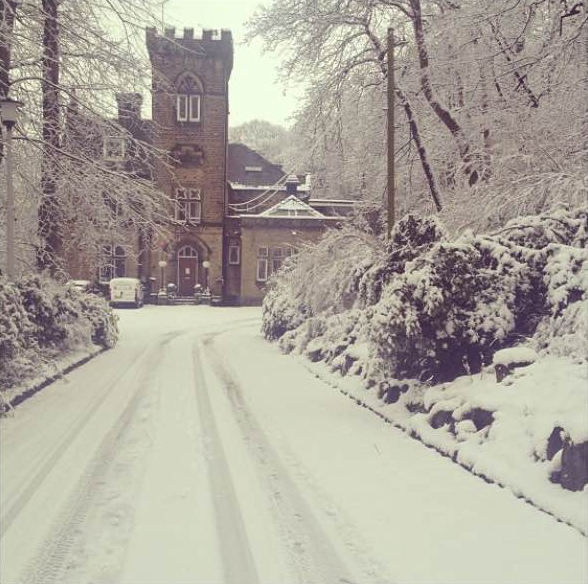
Dalton Grange in the snow (Image: Dalton Grange)

Of course, perhaps Dalton Grange isn’t the most spectacular building or in the best condition or in the best position, on the edge of a huge Syngenta production plant but it is separated by a pleasant band of woodland so it would not impact the integrity of their site if they sold it. And perhaps that plant won’t always be there but during their tenure they should ensure that they show respect to local architectural heritage which has been there since long before them.  To demolish the house on such flimsy grounds as ‘maintenance is a bit expensive’ and ‘we fancy a car park’ would be a shameful episode.  Syngenta should immediately withdraw the application, explain how they are going to restore Dalton Grange or sell it, and help find a sustainable long-term use (in line with their professed corporate philosophy) for this small but locally important part of Huddersfield’s heritage.

——————————————————————————————————

Prior notification for demolition of building: Dalton Grange, 19, Bradley Mills Road, Rawthorpe, Huddersfield, HD5 9PR [2014/68/91888/W]

Proposed demolition of Dalton Grange sparks outrage‘ [Huddersfield Examiner]

Victorian Society

Dalton Grange

A mansion tax is a pox on all our country houses

It’s a widely accepted principle that even if trying to achieve a noble goal, it is not a justification to do harm in doing so.  Whether one is trying to fund the NHS or provide kittens and puppies for all, if ever such an ill-thought out idea as a mansion tax is introduced, it is likely that the law of unintended consequences will find myriad ways to demonstrate itself.  In few sectors will the damage be greater than in that of our nation’s cultural and architectural heritage where decades of hard work and conservation of our country houses will be sacrificed to play a short-term political game.

Beaudesert Hall, Staffordshire - demolished 1935 due to demands of heavy taxation (Image: Lost Heritage)
Beaudesert Hall, Staffordshire – demolished 1935 due to demands of heavy taxation (Image: Lost Heritage)

Let me make clear that this objection is not party political – I would object as vigorously regardless of whoever tried to propose it. Obviously the devil is in the detail but if we assume a tax levied on homes valued at £2m or more at 1% of the property value to be paid annually there are many obvious and profound flaws with the idea – below are a few of them:

  • Fallacy of numbers: there are more expensive houses than there are rich people who could afford the tax. Many houses which would be affected have been inherited thus exchanging the large liquid capital requirements of purchase for the more manageable (though not insubstantial) cost of on-going maintenance.
  • Value suppression: a house valued at £2m will immediately not be worth £2m when a mansion tax is introduced (thus reducing the projected tax receipts).  This will lead to a very hard ceiling on house prices, stagnating the market far below that level as it will prevent others trading up by imposing a disproportionate penalty on anyone purchasing over that price level. Think of all the disadvantages of the current crude banding of Stamp Duty, but magnified.
  • Incentive to neglect: if your house is worth just over £2m, there is a benefit to allowing your property to deteriorate so that it can be assessed at being below the threshold. But how often will they be valued? Will it lead to a cycle of neglect and repair to coincide with this? Who will wish to improve their property for fear that it will push it over the punitive threshold?

Perhaps the greatest threat is to the contents of country houses; the art, sculpture, books, tapestries which combine in such an intangible emotive way to create that atmosphere unique to each.  When the financial effects of the 1870-80s agricultural depression began to be felt, the first items to be sold were the contents – the Titians, Rubens, Caxtons, Shakespeares, Nollekens, Canovas were taken from their pride of place and sent to auction or dealers, the resulting funds merely delaying the inevitable sale of the house.  If we thought the National Lottery Fund was sorely stretched at the moment to acquire for the nation the occasional fine work which appears at auction, there is little chance of them being saved if the volume increases, meaning they will, in many cases, go overseas. Additionally, if the best works have already been sold, then death duties will be a final hammer blow to shatter the cultural and historical unity of the country house, with nothing left to sell or offer in lieu.

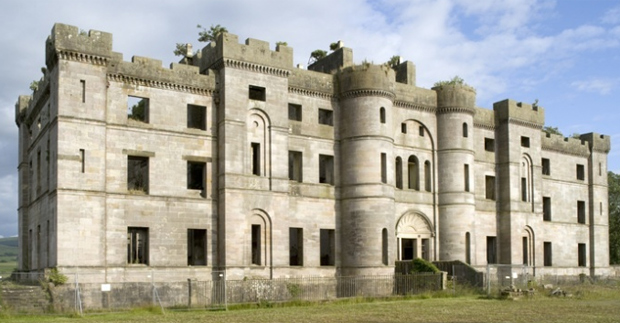
This type of crude taxation has been tried before and it is always heritage which pays the price.  The many gaunt shells of Scottish country houses, such as Dalquharran Castle or New Slains Castle, which were un-roofed to avoid punitive taxes are sad testament to the folly of this approach.  Supporting a mansion tax is to accept a probable return to an era where empty country houses become derelict – ironically coming so soon after the 40th anniversary of the ‘Destruction of the Country House’ exhibition. The National Trust will not be able to take them on without an endowment and English Heritage are sorely underfunded already – leaving either neglect or a hope for an influx of foreign wealth to purchase these houses. Without a local owner living there full time, there are likely to be fewer jobs reducing tax revenues and, with the dearth of rural jobs, leading to higher numbers relying on the State for assistance or an exodus to larger urban areas, further damaging the rural environment.

Dalquharran Castle, Ayrshire - built by Robert Adam c1785-1790, un-roofed 1967 (Image: RCAHMS)
Dalquharran Castle, Ayrshire – built by Robert Adam c1785-1790, un-roofed 1967 (Image: RCAHMS)

Perhaps there could be exemptions for houses which are open a certain number of days a year or which support useful charitable activities but the danger is that these would be used to justify an idea that is inherently wrong.

This article is deliberately painting a rather bleak picture, partially because there is a real likelihood of any of these outcomes, but also to emphasise just how badly-thought out this crude idea is.  It offers no benefits except as a bone to be thrown to a few class warriors but it should seriously worry anyone who cares about the UK’s cultural, artistic and architectural heritage.  Owning a country house is a responsibility, not only as a home for the owner and their family, but one owed to society as a whole.  It is inevitable and right that tax should be raised to pay for the society we hope to live in, but to wilfully sacrifice four centuries of heritage is an immoral and culturally destructive way to do so, no matter how noble the intended reason.

40 years on from the ‘Destruction of the Country House’ exhibition

Many was the time I stood in that exhibition watching the tears stream down the visitors’ faces as they battled to come to terms with all that had gone.’ – Sir Roy Strong [Diaries, 1974]

'Destruction of the Country House' exhibition, 1975 - V&A
‘Destruction of the Country House’ exhibition, 1975 – V&A

In October 1974, one of the most influential exhibitions ever staged by a UK museum opened at the Victoria & Albert Museum.  The ‘Destruction of the Country House‘ laid bare the scale and depth of the losses the UK had suffered, showing how four centuries of architectural tradition and achievement in country houses had been severely damaged by the depredations of the 20th-Century. It was conceived as a dramatic display to waken the nation to the threat faced by country houses and the danger faced by all aspects of heritage.  This was in an age with weak legal protection and which seemed to be growing ever more apathetic, or even hostile, to the idea of preserving what represented the cultural character of the UK.  The exhibition was a huge success, not only in terms of the impact on the public, but also in being the catalyst for a long-term shift in how we seek to save and manage our heritage.  From 13-21 September, a new exhibition at the V&A, ‘Country House – Past, Present & Future‘, seeks to revisit this ground-breaking event and look at the future of the country house.

Thorington Hall, Suffolk - demolished 1949 (Image: Lost Heritage / Tiger Aspect Productions)
Thorington Hall, Suffolk – demolished 1949 (Image: Lost Heritage / Tiger Aspect Productions)

By the 1970s, relatively few people would have been aware of the parlous state of a significant number of country houses and how many had been lost in the demolition binges of the 1930s and the 1950s.  However, that there was a crisis was recognised not only by the owners of the houses, but also by the government which in 1948 had created a committee to look at ‘Houses of Outstanding Historic or Architectural Interest’ and tasked it:

To consider and report what arrangements might be made by the Government for the preservation, maintenance and use of houses of outstanding historic or architectural interest which might otherwise not be preserved, including, where desirable, the preservation of a house and its contents as a unity.

The committee’s conclusions, which became known as the Gowers Report, were published in 1950 and the tone could be determined from the first paragraph which stated that ‘What our terms of reference require us to consider is not whether houses…should be preserved, but how this is to be done‘. The report made a number of recommendations including the creation of the Grade listing system we are so familiar with today, combined with tax concessions to which owners would be entitled, and also financial assistance for which they may be eligible. The aim to create a legal framework where restrictions on the rights of the private owner were compensated by financial incentives to ensure the preservation of these houses.

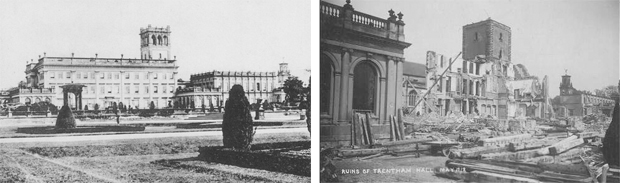
Trentham Hall, Staffordshire - in its heyday and during demolition in 1912 after being polluted by nearby industry  (Images: Lost Heritage)
Trentham Hall, Staffordshire – in its heyday and during demolition in 1912 after being polluted by nearby industry  (Images: Lost Heritage)

Yet, by the early 1970s it was clear that the crisis had not been solved, as demonstrated by the title of a report published in 1972: ‘Country Houses of Britain – can they survive?‘. Written by noted architectural historian John Cornforth, he sought to explore why the issues surrounding the sustainability of the country house had not yet been resolved, but also to cast the debate in a new era of soaring inflation, economic malaise, and with threatened punitive taxes on the asset rich (though cash poor).

In was at this time that Sir Roy Strong had conversations with Christopher Gibbs but the core of the idea came from John Harris, now noted architectural historian, but also a keen fisherman who, in his youth in the 1950s, had surveyed many an abandoned parkland and empty country house whilst fishing the ornamental lakes (adventures later recounted in his book No Voice from the Hall: Early Memories of a Country House Snooper). Combined with Marcus Binney, then at Country Life, they conceived and created this most remarkable exhibition, quite unlike any before or since.

Hall of Lost Houses, from the 1974 Destruction of the Country House exhibition at the V&A
Hall of Lost Houses, from the 1974 ‘Destruction of the Country House’ exhibition at the V&A

Designed by Robin Wade, the layout took visitors through a short display showing the glories of the country house, but then, as they turned a physical and symbolic corner, were faced with an almost full-height portico tumbling to the ground.  On the pillars and walls were photos of some of the hundreds already lost, whilst in the background, John Harris sombrely intoned a roll-call of their names.

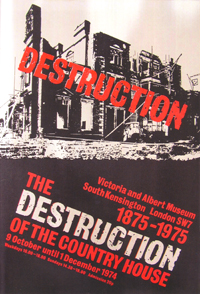
Original poster advertising the Destruction of the Country House exhibition - 1974 (Image: Victoria & Albert Museum)
Original poster advertising the Destruction of the Country House exhibition – 1974 (Image: Victoria & Albert Museum)

The exhibition captured the public imagination, with queues forming to see it at the weekends and the catalogue becoming a best-seller.  Yet, it wasn’t just the public who were captivated by it; in the last week, the Queen, Princess Margaret, Lord Mountbatten, and various government ministers all visited too.  1975 was designated the European Architectural Heritage Year and so focused minds on how to help ensure the survival of the nation’s heritage. This resulted in further legislation which strengthened the legal protection afforded to buildings.   The exhibition also led Marcus Binney to form SAVE Britain’s Heritage, a campaigning charity which took a far more pro-active approach than had traditionally been the case, achieving many notable successes, as it continues to do so today.

Politically, the exhibition could not have opened at a more awkward time – just two days before a general election which brought in a Labour government whose proposed ‘wealth tax’ would have made private ownership of most of these houses unsustainable, probably leading to further wholesale demolition.  Yet, the exhibition also has been identified as ‘…a pivotal moment in the history of country house preservation and heritage politics more generally.’ (Ruth Adams). In truth, a shift had started, as shown by the strong reaction to the proposals by John Baring to demolish The Grange in Hampshire in 1972 which prompted angry exchanges of letters via The Times. However, after the exhibition, no longer were country houses an elite interest for just the owners or art historians, but now the public started to identify with them as part of their national heritage, as something which embodied characteristics and history which they wished to be saved. That broad public sense of attachment to heritage has grown and become almost a natural part of the national psyche (apart from, it seems, in the minds of developers and their occasionally pocket planning committees).

For me personally, the lost country houses were the subject which were the catalyst for my own passion for country houses, leading to the creation of the Lost Heritage website in 2005. The aim is to create the most comprehensive list of all notable lost English country houses – and as far as I’m aware, is the only current ongoing research into the topic. Having seen the ruin of Guy’s Cliffe House about ten years ago, I then started trying to find out more, with two of the most important sources being the superb Catalogue of the exhibition and Giles Worsley‘s later book, the beautiful and elegiac ‘England’s Lost Houses‘.  These contained a gazetteer of known losses – the version in the Catalogue compiled by John Harris and Peter Reid, with Giles’ list building on theirs to take the total to 1,169.  John had estimated that as many as 2,000 had been lost since 1800 and after nearly a decade, sadly my Lost Heritage research has a total of 1,925 (as at Sept 2014), largely proving him correct.

The ‘Destruction of the Country House’ was as much a platform as an exhibition. Although aimed at the public, it was also a touchstone for a wide variety of heritage interests to coalesce and focus their energies and arguments. This helped to create a society which increasingly understood and appreciated heritage but also one which felt there was some collective responsibility towards its defence.  One can only hope that, as a nation, we can continue to recognise the importance of the country house, as well as heritage more broadly, to ensure that those in the future can continue to appreciate their beauty and the rich cultural history they represent.


Events – 2014


Further reading

An academic assessment of the impact of the exhibition: ‘The V&A, The Destruction of the Country House and the Creation of ‘English Heritage‘ – Ruth Adams [Museums & Society]

A deceptive bargain: Halswell House, Somerset

Halswell House, Somerset (Image: Clive Emson Auctioneers)

When newspaper stories appear with headlines such as ‘One of Britain’s ‘finest’ mansions for sale with guide price of £250,000‘, it guarantees that many will immediately start dreaming of exchanging their current home for the life of a country squire.  The auction of Halswell House, Somerset, is the latest chapter in a blighted recent history of the house and the absurdly low guide price should be a warning. This is a house which will require equally deep reserves of money and heritage sensitivity for anyone wishing to take on this important house, a beautiful example of early English Baroque, described by Sir Nikolas Pevsner as ‘the most important house of its date in the country‘.

The Halswell family had been resident in the part of Somerset which took their name since the early 14th-century.  Though no trace of the early building can be seen in Halswell House today, the core – consisting of two rambling gabled wings around a courtyard – dates from the early 16th-century, specifically 1536, when Nicholas Halswell used some of his inheritance to build a new home.  The house and estate passed through the Halswells until 1667, when the then owner, Hugh Halswell, settled the inheritance on his daughter’s 18-year old son, who became, in due course, Sir Halswell Tynte – his daughter having married Sir John Tynte and wisely passing on the family surname as a first name.

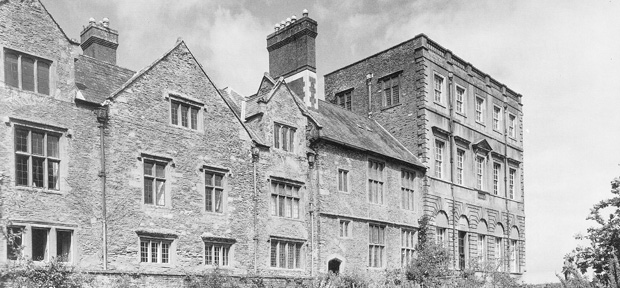
It was Sir Halswell who was responsible for the building of the imposing great North wing, completed in 1689; a bold, three-storey addition which was placed so as to hide the older buildings from the view of visitors arriving along the main carriage drive.  As to the identity of the architect; in a letter, dated March 1683, among the Thynne papers at Longleat, a surveyor called William Taylor, states that before he can return to London he needed to visit Sir William Portman at Orchard Portman and then Sir Halswell. In his famous dictionary of architects, Sir Howard Colvin states that Taylor was almost certainly responsible for the rebuilding of Halswell. Taylor had several commissions in the south-west in the 1680s, including Chipley House, Somerset (built 1681-3, rebuilt 1840, later dem.), and in Devon; Wembury House (dem. 1803) and Escot House, which was destroyed in a fire in 1808, but was illustrated in Colen Campbell’s Vitruvius Britannicus.

Escot House, Devon as shown in Vitruvius Britannicus (vol i, plate 78) - burnt down 1808
Escot House, Devon as shown in Vitruvius Britannicus (vol i, plate 78) – burnt down 1808

The design of Escot has been attributed to Sir Robert Hooke but Colvin quotes that in 1684 Taylor was contracted to ‘contrive, designe, and draw out in paper‘ and supervise the building of the house, for which he was paid £200.  Looking at the design of Escot House, especially the engaged pillars beside the door, the recessed doorway (inspired by Wren’s St Mary-le-Bow, London), surmounted window with pediment,  it’s clear to see the similarities in Taylor’s work at the two houses.  A similar style can be seen at nearby Ston Easton Park, a grand and beautiful house built in 1739, but designed by an unknown architect who appears to have taken inspiration from Halswell.

The importance of Halswell House stems from its very early use of the architectural language of the baroque – some five to ten years before the wider movement took hold in the country.  Sir Christopher Wren had been the midwife to the use of the style but it was only once he had handed over his responsibilities as the Queen’s Surveyor in 1692 that others such as Nicholas Hawksmoor and Sir John Vanbrugh were able to develop their designs into a distinctive school of English Baroque which reached its peak with the grand palaces such as Castle Howard (built 1699-1712) and Blenheim (built 1705-24).  William Taylor was innovative in his use of the style although he was probably copying elements from French pattern books as he lacked the genius of Vanbrugh to bring it to its full expression.

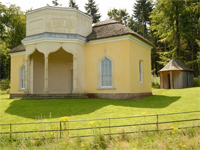
Robin Hood's Hut, Halswell, Somerset (Image: Ian Sumner / Landmark Trust)
Robin Hood’s Hut, Halswell, Somerset (Image: Ian Sumner / Landmark Trust)

After Sir Halswell’s death in 1702, the house continued down the Tynte family line, with his son John’s marriage bringing Welsh wealth into the estate.  It was Sir John’s third son, Sir Charles, who looked beyond the house (completing only minor works there) and instead concentrated his energies on beautifying the parkland.  A series of new lakes, canals and ponds, avenues of trees all grew under his watch, but his best commissions were the hermit’s house on the hill, Robin Hood’s Hut (now restored by the Landmark Trust) and the Temple of Harmony, derived by Thomas Prowse from a Robert Adam design.  Extensive gardens and greenhouses ensured that the table at Halswell was as exotic as it was plentiful.

Sadly, the 19th-century was a time of neglect and disuse for Halswell as, although it was still owned by the family, it had passed to a niece and was regarded as old-fashioned.  It came back into use when Charles Theodore Halswell Kemeys-Tynte succeeded as Lord Wharton in 1916 and the house again became a home.  Any hope that this upward trend in the fortunes of the house could continue were dealt a cruel blow early on 27 October 1923 when Lord Wharton’s valet awoke to smoke seeping under the door to his room at the top of the house.  Despite the efforts of estate staff to both fight the fire and rescue the contents, by breakfast time the grand North wing was gutted, destroying ten bedrooms, the drawing room, reception hall and the dining room.  The local paper reported mournfully that ‘Practically all that remained of the front part of the building were blackened outside walls, the interior being a mass of smouldering debris‘.

The cause of the fire was eventually judged to be a newly-installed electricity supply.  Despite the estate being heavily mortgaged, the house was rebuilt at a cost of £41,534 with the work to such a standard that it was confused for being original.  During WWII, the house became a girls school and the grounds were used as a prisoner of war camp. Halswell House finally passed out of family ownership when it was sold in 1950, after which it was divided into flats (badly) and also used as a furniture store.  The house had a brief respite when it was bought by a businessman in 2004 who lived there and used it as an events venue (sometimes with unexpected results).  However, with the house and estate being repossessed Halswell is again looking for a new owner.

East and North wings, Halswell House (Image: RCHME in 'Some Somerset Country Houses' by David Dunning')
East and North wings, Halswell House (Image: RCHME in ‘Some Somerset Country Houses‘ by David Dunning’)

The auction guide price is simply that – and in this case feels more like a marketing ploy to attract the greatest interest.  It’s likely that bidding will be keen and the final price for the house alone will be multiples of the original guide price, probably nearer £1m, though ideally they will be able to start putting this fractured estate back together, reuniting the parts to create the surroundings that this grade-I listed house deserves.  Beyond the sale price, will also be the certainty that the new owner – if they are the right owner – will need to be willing and able to spend large sums to restore the house, especially the Tudor ranges, to the state it deserves. So, rather than £250,000, this house will easily require £2-4m – and possibly more. Not such a bargain after all.

That said, Halswell House is not simply a home – it’s an important milestone in the development of the English country house and a source of wonder at the beauty and composition of the exterior, married to an equally impressive interior.  Hopefully the house will sell for a price which reflects its value and ideally to someone who will appreciate it and is willing to pour money almost beyond reason into restoring it.  In return, they will be the custodians of one of the finest houses in the country and proud owners of a piece of architectural history.

———————————————————————

Full auction details: ‘HALSWELL HOUSE & THE TUDOR BUILDINGS, HALSWELL PARK‘ [Clive Emson] – auction to be held on 17 December 2013 in Saltash, Cornwall. Halswell House and its five other outbuildings lots will firstly be offered as one lot, then separately if not sold.

Official website: ‘Halswell House

Listing description: ‘Halswell House‘ [British Listed Buildings]

Further history: ‘Halswell House‘ [Wikipedia]

Further reading: ‘The bargain-basement mansion: Historic house which has been a school, a PoW camp and even the site of an ORGY goes on sale for just £250,000 after owner went bust‘ [Daily Mail]