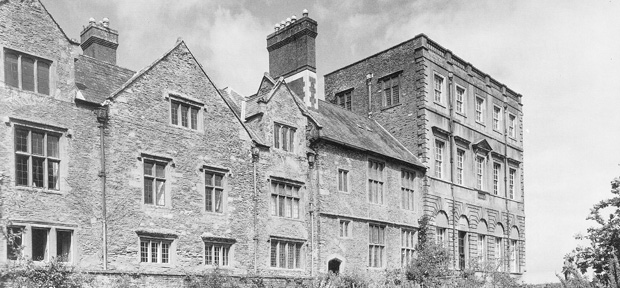
A gilded cage: country houses as prisons

Country houses have been slightly glibly described as ‘prisons’, usually due to the restrictive social conventions, which stifled the freedom of the occupants. However, country houses have occasionally been repurposed as true custodial institutions, serving as prisons, youth detention centres, approved schools, prisoner-of-war (POW) camps from the 18th century to the present. This role is one which has been often overlooked in the history of the country house.
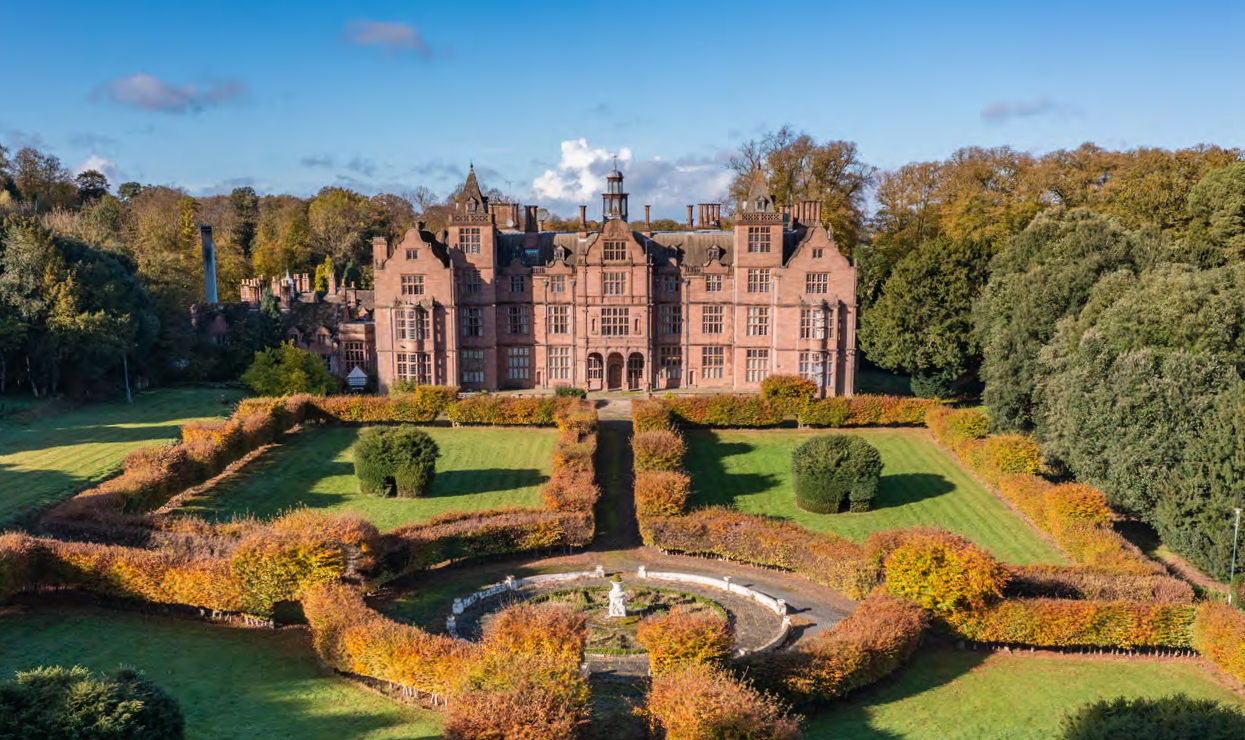
Hewell Grange, Staffordshire aka HM Prison Hewell Grange 1946-2019 (Image © Cushman & Wakefield)

A fictional prison

If one wished, it was always possible to cast the country house as a prison, of sorts. The restrictions placed on everyone who lived in one, whether as the lord or the lowliest servant, was a web of both explicit and implicit rules. Although they could, in theory, walk out of any unlocked door, the reality was that they were trapped, bound to the building.

Fiction has long played on this idea, weaving physical incarceration, with its psychological equivalent. There are the self-imposed emotional bonds which confine the jilted Miss Havisham to her decaying Satis House in Charles Dickens’ ‘Great Expectations‘ (1861), or the fear which entraps the governess at Bly House in ‘The Turn of the Screw‘ (1898) by Henry James. In ‘Rebecca‘ by Daphne du Maurier (1938), Manderley, the grand estate in Cornwall, becomes a place of psychological imprisonment for the unnamed narrator. Haunted by the lingering presence of her husband’s first wife, Rebecca, the narrator feels trapped by the oppressive atmosphere of the house and the expectations imposed upon her. More recently, in Sarah Waters’ ‘The Little Stranger‘, the decaying Georgian mansion of Hundreds Hall (played by Newby Hall, Yorkshire in the film), becomes a symbol of entrapment for its inhabitants as their financial decline echoes that of their place in society, leaving them isolated.

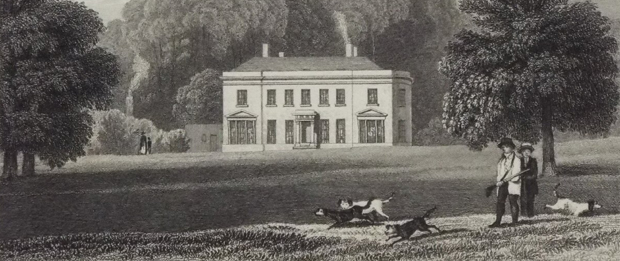
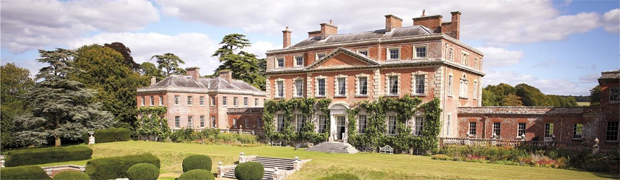
Newby Hall, North Yorkshire, represented the fictional Hundreds Hall in the 2018 adaptation of Sarah Waters’ ‘The Little Stranger’

Beyond these intangible confines, the house as a cell was perhaps most famously portrayed with Bertha Mason, Mr Rochester’s wife, confined as the ‘mad woman in the attic’ of Thornfield Hall in Charlotte Brontë’s ‘Jane Eyre‘ (1847).

Royal confinement

Beyond fiction, the country house has, at times of need, served in reality as a place of confinement – pressed into service as a working prison when circumstance demanded.

On 16 May 1568, Mary Queen of Scots fled to England seeking refuge from political turmoil in Scotland after the battle of Langside and spent her first night at Workington Hall, Cumbria. Mary had come to England in the hope of gaining support from the Catholic nobility and of appealing to her cousin, Queen Elizabeth I, for political assistance in regaining her Scottish throne. However, because both women were descended from Henry VII, Mary possessed a strong claim to the English crown. This made her presence in England a direct threat to Elizabeth, particularly as Mary was a Catholic alternative to Elizabeth’s Protestant rule.

Although Mary was technically a guest, she was heavily guarded and this effectively marked the beginning of her nearly 19-year imprisonment before her execution. Mary was moved around regularly to thwart plots to free her, from castles to eventually the country houses of George Talbot, the 6th Earl of Shrewsbury (b.1522 – d.1590). The Earl of Shrewsbury, famously married to Bess of Hardwick, played a pivotal role in the confinement of Mary, having been appointed her custodian by the Queen. Throughout various periods, he held Mary at his family’s houses including Wingfield Manor, Hardwick Hall, Chatsworth House, and Sheffield Manor – all situated within a 15-mile radius in Derbyshire. Mary was finally moved to Fotheringhay Castle, Northamptonshire, arriving on 25 September 1586. She was put on trial in October, and then executed in the Great Hall on 8 February 1587. Her long confinement within such grand yet guarded houses stands as a stark reminder of how the architecture of luxury could so easily become the architecture of captivity.

A prisoner of war

In wartime, country houses have been pressed into service in a wide variety of roles, with prisoner-of-war camps among the least glamorous. Stepping beyond the more obviously martial associations of castles, one of the earliest – and most notorious – examples was at Sissinghurst in Kent during the Seven Years’ War (1756–1763). The house, by this time had been allowed to fall in to a significant state of disrepair by the then owners, the Baker family. The government rented the property and adapted it to hold around 3,000 French naval prisoners, during which time it was further mistreated with the inmates destroying panelling, fireplaces, the chapel furniture, and leaving the garden a wasteland.

In 2008, a newly identified watercolour emerged that provides the most complete known view of the Elizabethan house during this period when it was a prison – and includes the chilling depiction of a double murder.

Watercolour (c.1761) showing the Killing of a Group of French Prisoners at Sissinghurst Castle Garden, Kent. Sissinghurst Castle © National Trust Images / John Hammond 2016
Sissinghurst Castle with the Killing of a Group of French Prisoners English School, circa 1761. Ink and dye on laid paper. (© National Trust Images / John Hammond 2016)

On 9 July 1761, whilst guarded by local, poorly-trained, armed militia, three prisoners who had escaped were being brought back to the camp. Their arrival caused a group of prisoners to rush to the fence out of curiosity.  One of the militia, a hot-head called John Bramston, shouted that they were to come no closer or he would fire. He loaded his musket with three balls and fired at the group. One ball struck the wall, the other two each hitting a prisoner. One by the name of Baslier Baillie was wounded (shown top-left being helped by two friends), but another, Sebastien Billet, was killed instantly. Bramston was unrepentant. The picture is thought to have been painted by a Frenchman to record the crime – but in doing so also left a powerful visual record of a now much-altered house and its time as a prison.

World War II

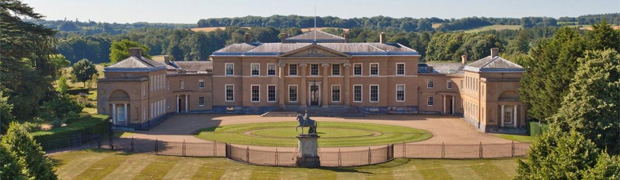
During the twentieth century, several distinguished country houses were temporarily repurposed to serve the needs of war, their refined architecture providing an incongruous backdrop to confinement. At Huntercombe Hall in Oxfordshire, the late-Victorian mansion, with its commanding stone façade and landscaped setting, was requisitioned during the Second World War as a secure detention site, most notably for high-ranking German prisoners including Rudolf Hess, whose isolation lent the house an unlikely role in wartime diplomacy and intelligence. In north London, Trent Park, a neo-Palladian villa by Sir William Chambers, was adapted as a special interrogation centre, where senior German officers were held in conditions of deceptive comfort while their conversations were secretly recorded – its grand rooms thus becoming instruments of psychological warfare.
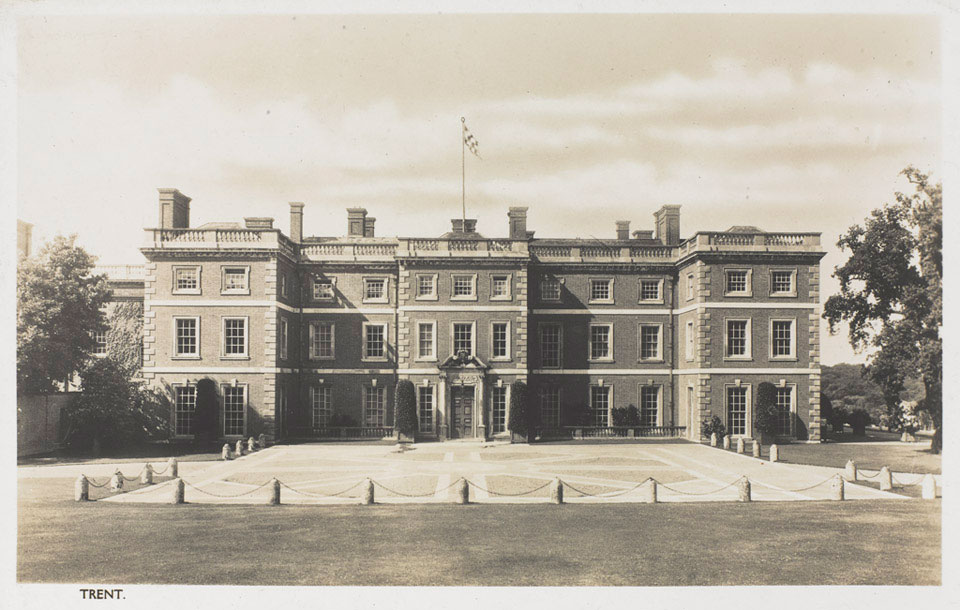
Entrance front of Trent Park, Enfield, north London (Image © National Army Museum ref: NAM. 1993-10-163-1)

Similarly, Mytchett Place, Surrey, during 1941–42, this Victorian mansion was fortified and codenamed “Camp Z,” serving as a one-man prison wired for surveillance for the detention of Deputy Führer Rudolf Hess.

Further north, the Huntroyde Hall estate in Lancashire, long the seat of the Starkie family, was similarly turned over to military purposes, its once-private parkland accommodating prisoners and personnel within hastily erected compounds. As with Sissinghurst, the mistreatment during the harsh use as a prison was a significant factor in its later demolition. Earlier, in the First World War, the partly medieval Badsey Manor House in Worcestershire was similarly employed to house prisoners of war, marking a utilitarian phase in its long domestic history.

The changing attitude to the role of prisons

The use of country estates and their houses was partly one of necessity in wartime, but in the post-war period also reflected a change in attitudes towards a more therapeutic approach towards incarceration from the 19th-century focus on harsh conditions and hard labour as a deterrent.

Why country houses? They offered several advantages: privacy (away from cities, escapes less dangerous to public), space for agriculture and workshops (important for training prisoners in trades), and an existing infrastructure of accommodations and kitchens. Also, symbolically, placing prisoners in a “less oppressive” environment was meant to encourage self-respect and responsibility – a deliberate contrast to the austere walled prison. Askham Grange’s homely appearance was cited as beneficial for women.

The open-prison concept drew heavily on Alexander Paterson, who joined the Prison Commission in 1922. He argued that imprisonment should actively shape behaviour for the better, with inmates encouraged to develop through structured physical and mental activity.

In the 1940s, there had been a steady increase in the total number of people convicted of indictable offences. During a House of Lords debate on Penal Reform in November 1946, the Lord Chancellor, Lord Jowitt, lamented the tendency towards increasing crime before WWII, stating that,

I take the five years 1934–1938. The number of young persons found guilty of indictable offences moved up from 10,000 odd in 1934 to 14,000 odd in 1938 – that is males; females from 1,300 odd in 1934 to 1,600 odd in 1938. …When we have the figures of 14,000 young men and 1,600 young women going up to the sort of figures we have to-day [1947], for the total number of persons – 78,000 in 1938, moving up in 1945 to 116,000…it is quite obvious that we have here a very real problem. (Source: Hansard – column 442)

The noble Lord’s figures indicated a serious issue so whilst not everyone convicted was incarcerated, there was a steady rise in the prison population:
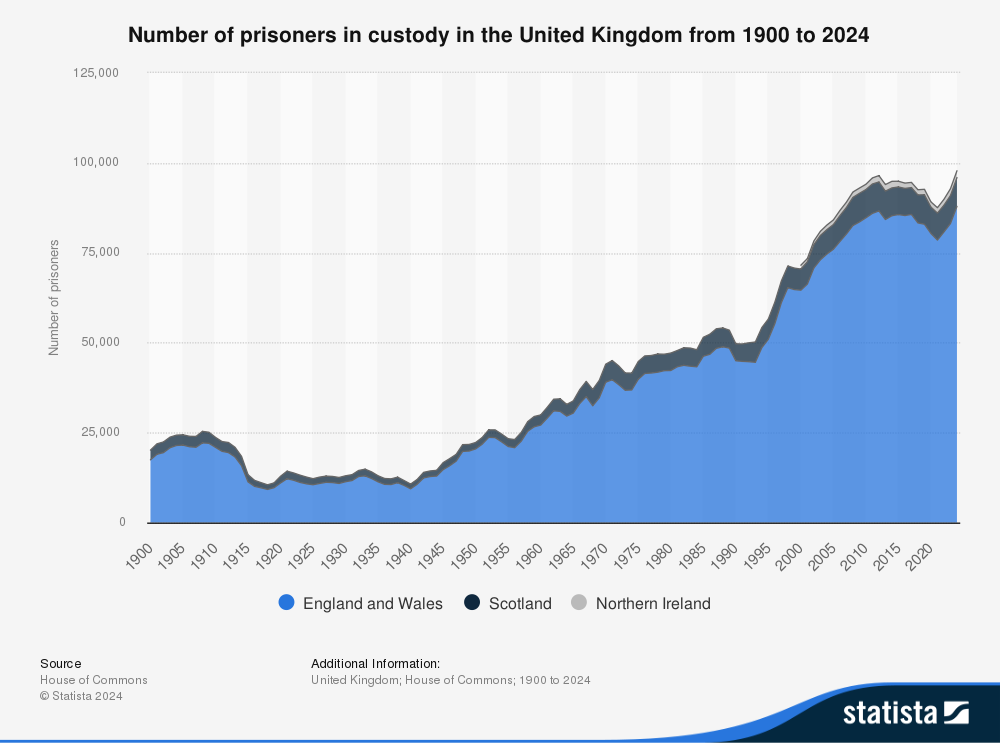
Number of prisoners in custody in the United Kingdom from 1900 to 2024 (Image source: Statista. Data source: UK prison population statistics – published July 2024. House of Commons Library)

The sustained increase in the total population by over 50% from 1940-1950, would place significant stress on any system of incarceration. However, attitudes had changed and the harsh conditions of punishment of the nineteenth century were now considered to do more harm than good, especially for young offenders. The Criminal Justice Act of 1948 introduced major reforms for young and habitual offenders. It barred sending under-21s to prison except as a last resort, directing them instead to borstal training or, for shorter terms, to detention centres.

This more enlightened perspective, which the Lord Chancellor was fully supportive in that same debate, created a requirement for a system which emphasised a more probationary approach via the borstal system. By relying on less stringent security, and often promoting training and useful labour – particularly agricultural – this created a means to reform and improve the lives of those who had been convicted. The Lord Chancellor welcomed that:

Thank goodness, we are now approaching the time when it will no longer be necessary to detain in prison for long periods persons who are ultimately going to serve their sentences in Borstal. The institutions we now have are of very varied types. Sometimes they are in a camp and sometimes they are in a country house, where the inmates can be engaged on agricultural work. We have also opened a new Borstal institution for girls at East Sutton Park in Surrey. That is a small institution and will take some fifty girls. (Source: Hansard – column 447)
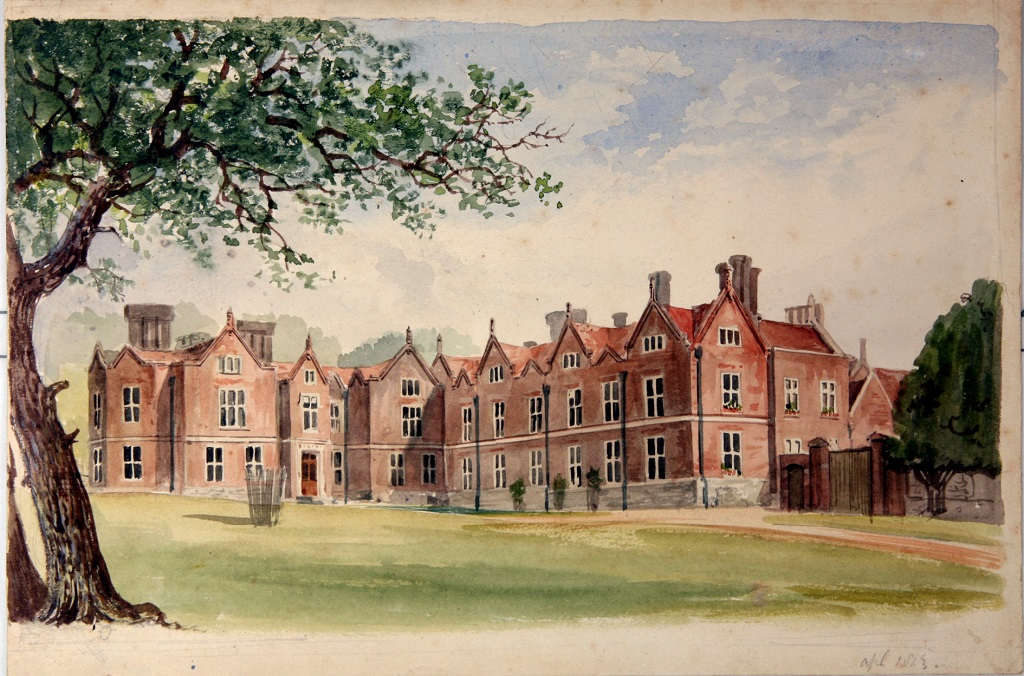
East Sutton Place [Park], Kent, which became the first open female Borstal in 1946 (Image © Kent Archives)

Interest also developed in adapting elements of the short-lived but influential “Wakefield experiment,” introduced during the First World War to manage the most uncompromising conscientious objectors – the Absolutists – who refused all military orders. Previously held in ordinary prisons, they became the focus of MPs arguing for more humane treatment. The government resisted releasing them but agreed to trial a compromise by placing all COs under a new regime at Wakefield.

This system relied on a high degree of trust. Cell doors were left unlocked, prisoners could move freely within the prison, and a small allowance allowed them to buy writing materials and tobacco. Conditions were not freedom, but a clear improvement. Leisure and work were timetabled, with expectations of diligence and no “singing, shouting, whistling, or reading” during working hours. The experiment collapsed when the men rejected the rules they had helped draft, leading to their return to standard prisons. Even so, its central idea – combining restrictions with opportunities for responsibility and reform – would influence later thinking about penal regimes.

Entrance to Tortworth Court, Gloucestershire (Image from private collection)

Speaking during the same debate in 1946, the Lord Chancellor again highlighted that such facilities were being developed:

We have recently taken over a former hospital at Tortworth [Court] in Gloucestershire as what is called a minimum security prison for selected convicts. In that way we can do much towards their rehabilitation and their ultimate reassimilation into ordinary civilian life. (Source: Hansard – column 447)

This approach influenced the selection of suitable locations for the new prisons. At HMP Leyhill, the government repurposed an ex-American Army hospital camp on the Tortworth estate to create the first open prison in 1946. The adjacency of Tortworth Court (then still with the Earl of Ducie) gave the model of a country setting if not using the main house. Interestingly – the house was not taken as it was returned to the Earl; but by the 1950s, Leyhill expanded and did start using some estate buildings, thought the wider estate is still owned and managed by the Earl of Ducie’s family as Tortworth Estates.

Hewell Grange

Hewell Grange epitomizes the pattern for long-term penal conversion. An existing country house could be successfully integrated into the penal system for decades, effectively becoming a self-contained village (with a chapel, workshops, and housing all on site).

The grand main house, last great prodigy houses of its era, provided an environment, even when not used directly as cells for prisoners, was arguably more humane than a typical prison – former inmates often remarked on the beauty of the lake and gardens, which were part of a 250-acre landscape park laid out by Capability Brown, with formal terraces, a lake, and extensive service buildings. By the lake are also the ruins of Old Hewell Grange, the classical predecessor to the current house. After being superseded by the new Hewell Grange in the 1890s, it was accidentally gutted by fire and abandoned, and now survives as a roofless ruin, its classical form still partly visible among collapsed walls and encroaching vegetation.
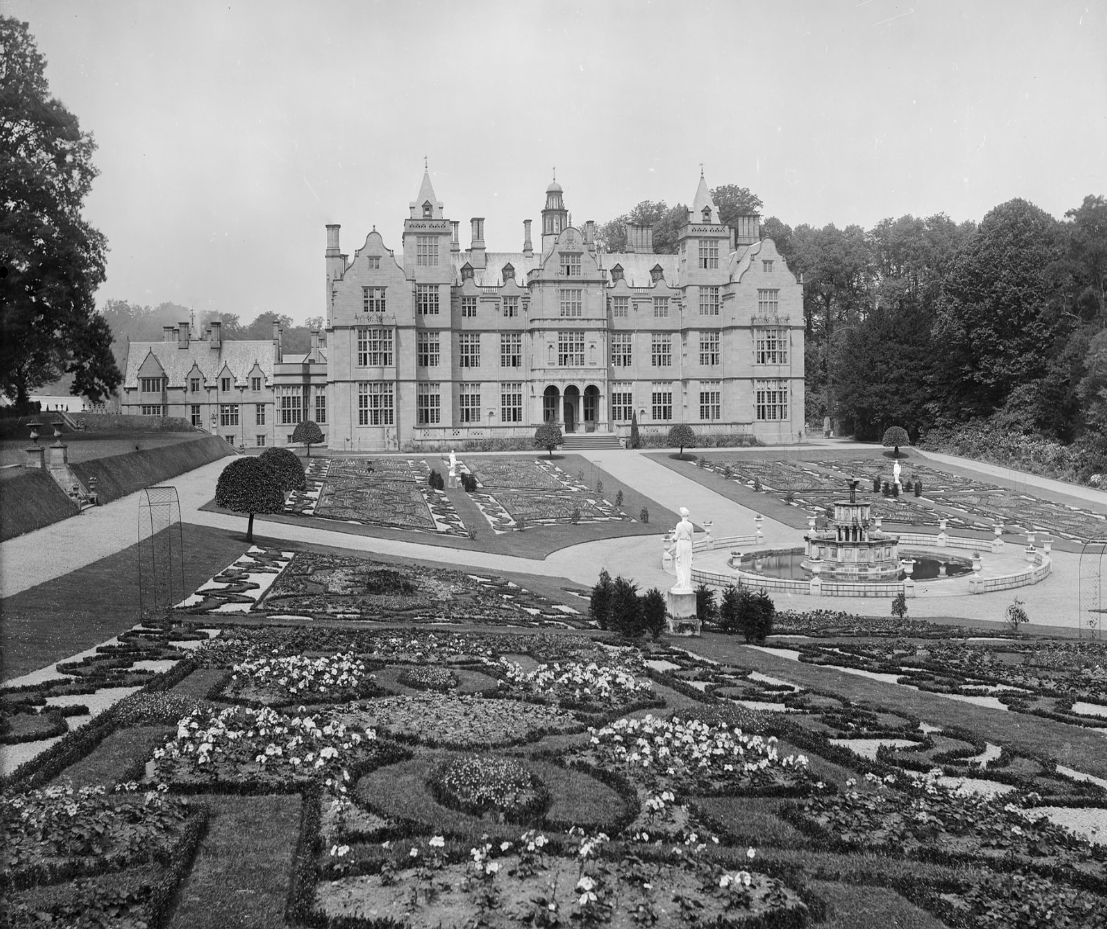
View of Hewell Grange and the formal garden to the south-east of the house c.1892 (Image © Historic England, ref: BL11660/016)

The new house was built between 1884 and 1891 for Robert Windsor-Clive, later 1st Earl of Plymouth, Hewell Grange cost approximately £250,000 (equivalent to spending c.£39m today). Designed by George Frederick Bodley and Thomas Garner in the Jacobethan style, the red brick house with stone dressings features an E-plan, steeply pitched gables, clustered chimneys, and mullioned-transomed windows. Interiors include carved oak panelling, a double-height Great Hall with a minstrel gallery, and elaborately modelled plaster ceilings.
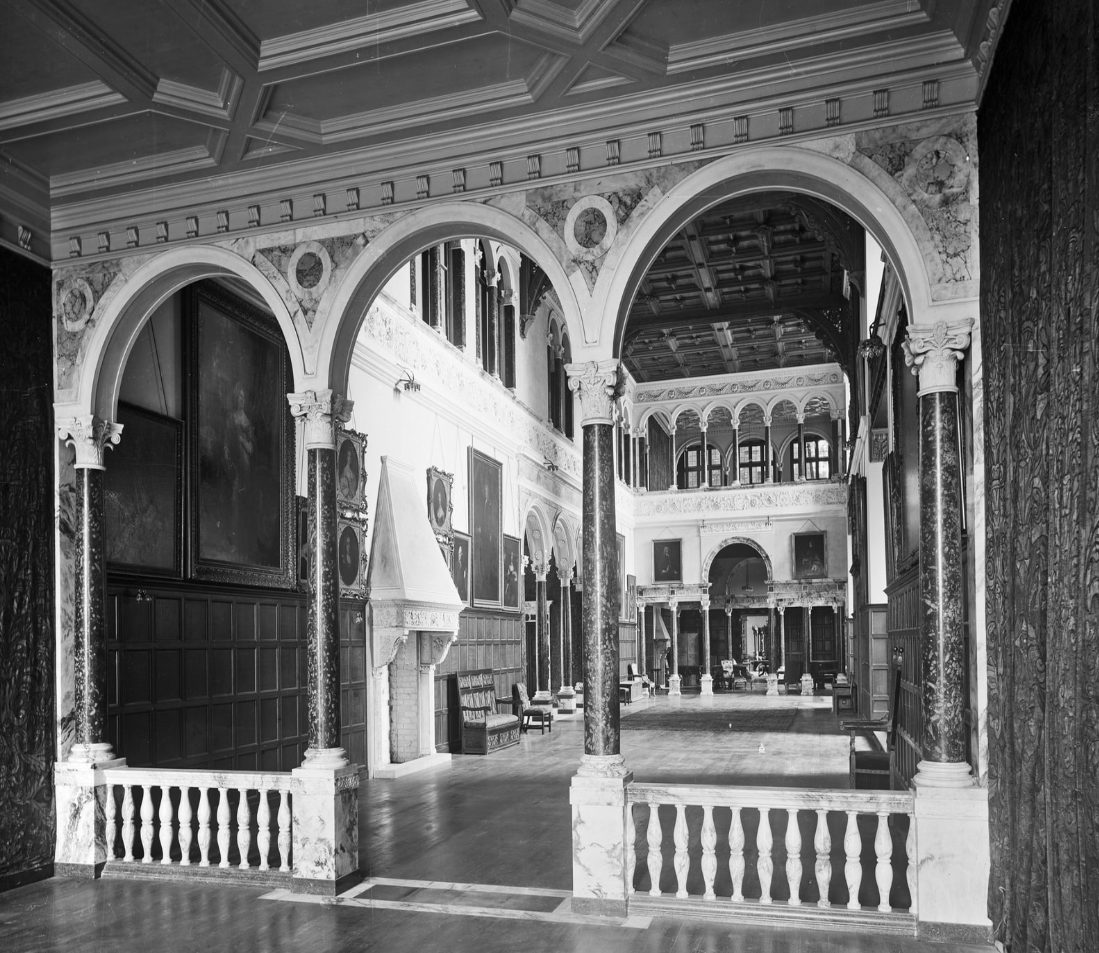
Interior of the Italianate style Great Hall of Hewell Grange, 1891 (Image © Historic England, ref: BL11026)

However, Hewell Grange also reveals both the potential and limitations of prison use: spacious and already built, the house saved the state construction costs in 1946; but by 2019, it was anachronistic and expensive to run. By the 2010s, the UK prison estate was being rationalized. In 2019 the Ministry of Justice announced the closure of the open prison at Hewell Grange, following a critical inspection report and also reflected the cost of maintaining an ageing mansion for modern custody standards. The prison formally closed in 2020, and the entire site was consolidated into one (closed) prison to the north east of the house, around 600 meters away.

Hewell Grange house is now vacant and lacking a clear future, beyond occasional use for filming and events. As is so often the case for heritage without a viable and sustainable purpose, its condition has deteriorated to ‘poor’ after closure, with concerns about lack of maintenance, resulting in it being placed on the Heritage at Risk Register. As of early 2022, the government put the property up for sale, seeking a new custodian to repurpose the historic estate once again.

It was apparently sold in 2023 to a hotel group but it’s unclear whether this fell through or they immediately put it back on the market, as it has been offered through Cushman & Wakefield, with 247 acres, for an undisclosed price. This inevitably raises questions about the future: will it return to a private residence, become a hotel or institution, or will it just be allowed to deteriorate until it becomes another country house to succumb to neglect, urban exploration or a mysterious fire?

Conclusion

The pattern of country house reuse reflects adaptability to historical moment. In wartime, necessity drove usage; in peacetime, policy experimentation and economic forces did. This practice peaked in the mid-20th century and today it would exceptionally unlikely for a house to be taken over for this purpose, with a clear preference for building dedicated facilities.

From a wider heritage perspective, Hewell Grange’s story is instructive as, unlike so many country houses that were demolished in the mid-20th century, the use as a prison provided a value and so it was preserved precisely because it found an institutional function. Now its preservation will depend on finding a sympathetic new use after its institutional life has ended.


A list of country houses used (either currently or previously) for incarceration by the state since 1900

Prison nameCountry houseCounty
Askham GrangeAskham GrangeYorkshire
BlundestonBlundeston LodgeSuffolk
Buckley HallBuckley HallLancashire
Bullwood HallBullwood HouseEssex
East Sutton ParkEast Sutton ParkKent
ErlestokeErlestoke ParkWiltshire
Foston HallFoston HallDerbyshire
HewellHewell GrangeWorcestershire
Hill HallHill HallEssex
HumberEventhorpe HallYorkshire
Kirklevington GrangeKirklevington GrangeYorkshire
Latchmere HouseLatchmere HouseSurrey
LittleheyGaynes HallCambridgeshire
Lowdham GrangeLowdham GrangeNottinghamshire
Morton HallMorton HallLincolnshire
Penninghame HousePenninghame HouseDumfriesshire
Spring HillGrendon HallBuckinghamshire
StockenStocken HallRutland

If I have missed any others, please share the details in the comments or contact me directly and I’ll update the list.

Sites associated with nearby country houses

Prison nameCountry houseCounty
Eastwood ParkEastwood ParkGloucestershire
LeyhillTortworth CourtGloucestershire
Swinfen HallSwinfen HallStaffordshire


Selected references


Further research

Interestingly, the subject of the use of the country house for incarceration doesn’t appear to have been covered in depth academically, as far as I could discover. Given the numerous angles, this would appear to be an area which someone may wish to investigate further as the official records and related information would probably reveal a richer story than I have been able to share here. Happy to have a chat if anyone wishes to take it on.

A Sleeping Beauty: Ombersley Court, Worcestershire

The temptation when Country Life magazine arrives each week is to flick through the properties and make tabloid-esque comparisons about how a detached Regency villa in Dorset with space for a family, chickens, and an excitable spaniel, could be had for the price of a tatty flat in London. Yet sometimes these comparisons seem almost too unreal when faced with the exemplary beauty of a country house like Ombersley Court, Worcestershire, which, along with 39 beautifully wooded acres, has just been put up for sale for just £3.5m; the price of a 3-bed terrace house in Chelsea.

Ombersley Court, Worcestershire (© Savills)

Tucked away in a quiet corner of Worcestershire lies a house which, either through deliberate privacy or convenient obscurity, is little known to the world. Yet Grade-I listed Ombersley Court is one of the finest houses in Worcestershire, arguably even in the wider region, due not only to the sublime architecture and surrounding estate, but also the fine collection of paintings and artwork. The estate has long been the seat of the Sandys family who acquired the manor in the late sixteenth-century. The current house was originally built for the 1st Lord Sandys (b.1695 – d.1770) between 1723-26, replacing earlier monastic buildings on the site.  The house was designed by Francis Smith of Warwick (b.1672 – d.1738), one of the leading regional architects and, working with his brother William (b.1661- d.1724), ‘one of the most successful master builders in English architectural history’ (Colvin).

‘Smith of Warwick’, as Francis was more commonly known, was a clients ideal contractor due to his famous honesty and reliability, able to deliver buildings on time and on budget. His reputation spread amongst the Midlands gentry and aristocracy with almost all his work within a fifty-mile radius of Warwick.  Such was his standing that even the fractious Duchess of Marlborough (who had famously fallen out with Vanbrugh over Blenheim), demanded that for her house in Wimbledon, Surrey, ‘that Mr Smith of Warwickshire the Builder may be employed to make Contracts and to Measure the Work and to doe everything in his Way that is necessary to Compleat the Work as far as the Distance he is at will give him Leave to do’ (1732-33).

Smith’s solid reliability also manifested itself in his repetition of his well-developed plans and designs for houses, creating a distinctive style which is quite recognisable as his own. Broadly, this would be a three storey house with the centre section either projected or recessed, consistent fenestration, and relatively sparse external decoration, usually only decorative stone dressings such as keystones, quoins or balustraded parapets. This consistency was perhaps a double-edged sword, with the Hon. Daines Barrington stated in a letter in 1784, that although ‘all of them (are) convenient and handsome […] there is a great sameness in the plans, which proves he had little invention’.

Yet, this is to overlook that Smith was, at heart, a successful commercial builder whose understanding and appreciation for architectural ornament and variety was inevitably tempered by his determination to deliver the commission on time and on budget. As the architectural historian Sir Howard Colvin highlights, the core design is that of a standard seventeenth-century house such as Belton House, Lincolnshire, but with stylistic updates as fashions evolved.  ‘Smith’ houses such as Umberslade, Alfreton, and Wingerworth all share this readily accessible style, one which married domestic practicality with exterior grandeur.

Perhaps Smith’s greatest achievement was the tragically now-ruinous Sutton Scarsdale, Derbyshire; a house with a facade so stately as to rival Chatsworth. Built for the 4th Earl of Scarsdale in 1724, Sutton Scarsdale was one of the finest houses in the country. Although the form is familiar, the masterful control of a palisade of pilasters and columns topped with Corinthian capitals, gives it a gravitas, whilst the detailing such as the scrolled window surrounds to the projecting wings hint at Renaissance motifs; Fausto Rughesi (Santa Maria in Vallicella, 1605/06) filtered through William Talman (design for Thoresby House, 1685, – shown in Vitruvius Britannicus, C1, Pl.91) and James Gibbs (to whose designs Smith was building Ditchley Park, Oxfordshire, 1722).

derbyshire-Sutton_Scarsdale_Hall_circa_1900

One regret with Ombersley Court is that although the form and plan of the house and much of the superb unaltered early-Georgian internal decoration is still Smith, the exterior is now not his. The original design featured a hipped roof, and what looks to be pilasters, giving it the recognisable ‘Smith’ characteristics.  This was lost when the existing brick was refaced with ashlar in 1809 by the architect John Webb for Mary Sandys, the Marchioness of Downshire. In fairness though, this was a lucky escape as John Nash prepared a much more ambitious scheme in 1808, which proposed adding a two-storey pavilion to each side, linked by a seven-bay screen of giant Ionic columns, though this seems to have been rejected on cost.

Ombersley Court - proposed alteration by John Nash, 1808
Ombersley Court – proposed alteration by John Nash, 1808

One of the glories of the house are the interiors and especially the plasterwork and carving. With a desire for privacy which was rarely breached, few had seen the exceptional decorative work, except through the lens of a Country Life profile by Arthur Oswald in 1953. This extolled the virtues of many aspects including The Chippendale Room which featured bamboo framed silk wall pieces, remarking that ‘it is uncommon to find a Regency example as complete as this or as charming’. The rest of the house struck a careful tone of stately refinement; enough decoration to proclaim wealth and taste, but never excessive.

Ombersley Court - Hallway (© Savills)
Ombersley Court – Hallway (© Savills)

Ombersley Court - Drawing Room (© Savills)
Ombersley Court – Drawing Room (© Savills)

Ombersley Court - Morning Room (© Savills)
Ombersley Court – Morning Room (© Savills)

With the death of Lord Sandys in 2013 the house passed to Lady Sandys but following her recent death, concerns were raised and rebutted via letters in Country Life that this wonderful house would be forced (for complicated reasons) to become a care home; a fate which would have despoiled this jewel of a house. Instead, for the first time since it was built in 1724, it has been placed on the market. This is a house created by one of the finest craftsmen of the early-Georgian period, with connections to a wider, distinct Midlands architectural tradition which epitomises all that one would hope to see in a country seat. As an important house which deserves respect, one hopes that the new owner will appreciate this remarkable situation and that perhaps the best approach would simply be to buy the house and contents and perhaps another couple hundred acres to truly secure an Arcadian ideal, one which would be hard to better anywhere in the country.


Sales particulars: Omblersley Court, Worcestershire [Savills] – £3.5m with 39 acres

Listing description: Ombersley Court, Worcestershire [British Listed Buildings]

The Inadvertent Innovation: Country Life and Property Advertising

Over the last four centuries, the marketing of property has seen relatively few innovations. Those with money and the desire to establish themselves in society would seek out those with knowledge on which estates might be available.  However, the launch of Country Life magazine 120 years ago this month heralded a sea change in the marketing of the landed lifestyle. No longer did the buyer have to rely solely on what they found; now Country Life, through advertising and market reports, brought a selection of the choicest properties right into the drawing rooms of the aspiring elite. The continuing success of the magazine suggests that our desire for the grandeur and leisure of rural society is undimmed over a century later.

Country Life was the idea of Edward Hudson (b.1854 – d.1936), a successful magazine printer, who recognised a gap in the market for a publication which reflected the rural lifestyle of a wealthy elite and, importantly, those who wished to join them.  Conveniently for Hudson, he already had one publication which catered to a significant traditional interest, Racing Illustrated, but lacklustre sales meant it was ripe to be incorporated as a component part of the new magazine. The first issue of Country Life was published on 8 January 1897 and from the outset it was noted for the high quality of the content and, importantly, of the production, with heavy paper and fine photographs.

Country Life Illustrated, 8 January 1897, p. 3

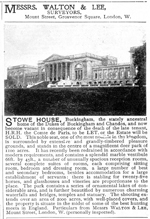
As with most magazines of the time, the front cover and first page were adverts for all manner of essentials such as ‘Cadbury’s Cocoa’ and slightly more obscure (‘Old Grans Special Toddy‘, ‘Vigor’s Horse-Action Saddle – A Perfect Substitute for the Live Horse‘). However, below the grand ‘Country Life Illustrated‘ masthead is a single full page, rich in some of the finest country houses in the land – and all for sale or to let. It’s also noteworthy that this innovative layout was the work of the single firm of land agents, Walton & Lee of Edinburgh, through whom these properties were available.

As today, properties were sold for a number of reasons but, in an age when the loss of the family seat was considered a serious failing in society, financial embarrassment was often the single strongest reason for a property to appear for sale.  Until the twentieth-century, the majority of property transactions for country houses were primarily about the land; the actual house was usually a secondary consideration as, if you felt it wasn’t suitable, you could always rebuild it in a style or scale until it was. Intelligence regarding which estates were for sale was passed around through social networks, partly to preserve privacy, but often as a way of discretely finding a buyer. Local solicitors also played an extensive and dominant role in the sale of property, often using their extensive and intimate knowledge of local families to know who might be open to offers or to find suitable investments, especially as, since 1804, they held the monopoly on conveyancing.

In 1897, the second Agricultural Depression was hitting the income of those landowners who were heavily dependent on income from their estates.  The financial crisis that this created was the catalyst which forced a number of estates to be put on the market. Equally, death dealt its usual cruel blow with estates being sold in part or in total to meet the stipulations of wills, particularly if the only offspring were daughters, often married to a gentleman with his own estate and little need for a part share in another.

'In the Grafton country...' Advert for Writtlebury Lodge, Northamptonshire, Country Life Illustrated, 8 January 1897, p. 3
‘In the Grafton country…’ Walton & Lee advert for Writtlebury Lodge, Northamptonshire, Country Life Illustrated, 8 January 1897, p. 3

The houses shown in that first edition are certainly varied. Ranging from the grandeur of Stowe House to ‘a charming, moderate-sized manorial estate’, each warranted a small but densely-worded description. In contrast to today where a house of the importance of Stowe would most likely be either sold off-market or launched with all the fanfare modern country house estate agency can muster with multi-page, glossy, full page photo adverts. Although, with the exception of Stowe, all were anonymous, of the nine houses advertised, it’s possible to identify six of them:

Column 1

  • SALE: Writtlebury Lodge, Northamptonshire, with 6,700 acres (demolished 1972)
  • SALE: Unidentified ‘moderate-sized Manorial Estate’, South Devon, with 600 acres
  • SALE: Unidentified ‘unique specimen of an early English country house’, Sussex or Surrey, with 42 acres

Column 2

  • TO LET: Maesllwch Castle, Radnorshire, with shooting over 20,000 acres
  • TO LET: Charlecote Park, Warwickshire, with 250 acres (now National Trust)
  • SALE: Apethorpe, Northamptonshire, with 5,000 acres (now a private home again)

'Stowe House, Buckingham', 'In the Grafton country...' Advert, Country Life Illustrated, 8 January 1897, p. 3
‘Stowe House, Buckingham’, Walton & Lee advert, Country Life Illustrated, 8 January 1897, p. 3

Column 3

  • TO LET or SALE: Stowe House, Buckinghamshire, with 1,100 acres (now a school)
  • TO LET: Addington Manor, Buckinghamshire, with ‘parks and grounds’ (demolished 1926)
  • TO LET: Rigmaden Park, YorkshireUnidentified ‘fine Mansion’, North of England with sporting rights over 4,000 acres (thanks to a reader for the identification)

This selection in one week is almost unimaginable now – to have one house such as Stowe or Charlecote advertised for sale would be remarkable; to have those plus other grand houses showed the scale of the crisis which was quietly afflicting the established rural order. As financial circumstances forced retrenchment for families from the larger houses to their smaller ones (or sometimes from the countryside altogether), so Country Life offered a new and effective route for marketing these properties to those who had risen in the heady world of Victorian industry and finance and who now sought to install themselves as the inheritors of the old social order through the possession of their estates.

The photos of the houses for sale also echoed that Country Life also emphasised a new stylistic aesthetic in the photographs which accompanied the articles on specific houses; one which departed from a common representation of country houses; notably by removing the people and all signs of daily life. Whether this was the choice of Edward Hudson or the photographers is unknown, but engravings and images of country houses from earlier periods often showed them as the hubs of rural and social activity. Outdoor views displayed workers in the fields, the aristocracy enjoying the pleasures of the house and parkland, and coaches riding down lanes, whilst interior views were full of noble pursuits.

The bucolic ideal was important in times of political and social turmoil.  Such scenes, although partly a simple tool for demonstrating scale, also promoted the idea of the paternal landowner to those within the landowning classes, those who wished to join them, and others who had simply obtained a copy, perhaps through a lending library.  Note how often the sky is calm, the lake waters placid, and the animals docile or obedient – there are no signs of disharmony. This can be seen in J.P. Neale‘s famous series of views of country seats published between 1819-1823, soon after the tumult of the Napoleonic Wars:

Detail from 'Sunning-Hill Park, Berkshire' drawn by J.P. Neale (Image from Rare Old Prints)
Detail from ‘Sunning-Hill Park, Berkshire’ drawn by J.P. Neale (Image from Rare Old Prints)

The compliant and dutifully grateful cows enjoying the benefits of the parkland at Langley Park, Buckinghamshire:

Detail from 'Langley Park, Buckinghamshire' drawn by J.P. Neale (Image from Rare Old Prints)
Detail from ‘Langley Park, Buckinghamshire’ drawn by J.P. Neale (Image from Rare Old Prints)

Take the later scene presented in J.M. Gilbert’s image, drawn in 1832, the year of the Great Reform Bill which extended voting to all men who owned property worth ten pounds or more in yearly rent, of Newlands, Hampshire, which includes a vignette of rural husbandry with the men taking instructions from an agent with the house looking benignly down:

Detail from 'Newlands, The Seat of Mrs Whitby' by J.M. Gilbert, 1832, from 'Grove's Views of Lymington' (Image from Rare Old Prints)
Detail from ‘Newlands, The Seat of Mrs Whitby’ by J.M. Gilbert, 1832, from ‘Grove’s Views of Lymington’ (Image from Rare Old Prints)

Interior views often showed the aristocratic families at leisure. This was partly due to the romanticisation of the country house which can, in part, be attributed to the popular historical novels of Sir Walter Scott who, as noted by the writer Thomas Carlyle, that they

‘have taught all men this truth … that the bygone ages of the world were actually filled with living men, not by protocols, state papers, controversies and abstractions of men’.

For example, in Nash’s ‘The Mansions of England in the Old Time‘ published between 1839-49, the domestic scenes feature prominent groups of people going about their daily lives as imagined as an aristocratic set-piece where all the clothes were fine, the people good looking, and the activities noble.

'The Gallery, Knole House, near Sevenoaks, Kent'. Joseph Nash. (Image © Victoria and Albert Museum, London - Museum no. 2996-1876)
‘The Gallery, Knole House, near Sevenoaks, Kent’. Joseph Nash. (Image © Victoria and Albert Museum, London – Museum no. 2996-1876)

This is not to say that all followed such an approach. Many artists such as the Rev. F.A.O. Morris in his famous ‘Picturesque Views of Seats of the Noblemen and Gentlemen of Great Britain and Ireland‘ published 1866 emphasised the houses, showing no signs of people.

Country Life therefore was both following the precedent of some earlier artists but also by so rigorously applying this view of the houses and the popularity of the magazine spreading this ideal far and wide, so the perception of country houses as denuded of evidence of life was one which was almost in contrast to the warm, sympathetic portrayal of the families in the accompanying text.

Walton & Lee maintained their tenacious grip on the important first page of advertising in Country Life from 1897 until 1912.  In that year, as a measure of the success of Country Life in establishing itself as one of the prime avenues for the sale of property, Howard Frank, of Knight, Frank & Rutley, bought Walton & Lee specifically to secure that  coveted advertising space. Though their reign at the forefront of advertising country estates had ended, their influence in the presentation of property was to remain and can be seen today. Evidence of this is in both the continued hold Knight Frank maintain on the first page of advertising, and the stylistic aesthetic which the estate agents and Country Life established as the standard for the photographic presentation of country houses for sale and exalted in numerous publications.


Country Life wrote their own retrospective on property advertising in 2007 for the 110th anniversary: ‘Wanted: Property for a Gentleman’ [Country Life]

So, you made the 2016 Sunday Times Rich List – where to live?

The now annual round-up of the richest 1,000 people in the UK (whose wealth can be ascertained…!) has been published today in the Sunday Times (£). Although there are now a few less billionaires than last year in the UK, the minimum required to join the list has risen slightly to £103m. With 80% of the list members having made their own fortunes and having acquired the trappings of status along the way, it’s unsurprising that many will already own a country house. However, some may not and to help them out of this socially embarrassing predicament, below are some of the most interesting country houses for sale today (April 2016).

Ignoring any of the ‘new’ country houses which, unless by Craig Hamilton and a limited few others, are unlikely to be architecturally notable, this entirely subjective selection, focuses on those historic houses which can be regarded as such.

Hackwood Park, Hampshire (Image © Savills)

Many of the most impressive country estate sales are often conducted ‘off market’, offers and negotiations concluded in private; never receiving the splendour of an advert in Country Life. However, occasionally, one quietly appears which sets the pulses racing. What will probably be one of the most interesting houses to be offered publicly this year is Hackwood Park, Hampshire, a splendid Classical house (listed Grade-II*) with accompanying 260-acres.  Designed by Lewis William Wyatt (1777-1853), nephew to the more famous James Wyatt, Lewis developed a very successful country house practice, especially in Cheshire, including work at Lyme, Heaton and Tatton Parks, but has been rather sadly overlooked in the history of architecture (something I will try to address in another post). Looking through the photos of Hackwood House, his skill and ability in handling of the external form (which was a rebuilding of an earlier house) and the superb interiors demonstrates clearly why he enjoyed a productive career. No price is given for Hackwood House, but given the quality of the house, the location and the estate, I suspect that only those troubling the upper reaches of the Rich List need contact Savills.

Trafalgar Park, Wiltshire (Image © Savills)

Another house which certainly has grandeur in Trafalgar Park, Wiltshire – but it also hides a surprisingly important architectural statement. Built as Standlynch Park in 1733 by John James of Greenwich as a ‘villa’ for Sir Peter Vandeput, it was acquired by the nation in 1814 as a gift to Horatio Nelson, 1st Viscount Nelson, 1st Duke of Bronté to express England’s gratitude for doing his duty for his country and renamed ‘Trafalgar Park’. Unfortunately for Lord Nelson, as he had famously died in 1805, the house, titles and generous pension were given to his elder brother, the Rev. William Nelson and descended through the family until 1948 when they were no longer able to afford the upkeep when the Attlee government cancelled the Nelson Pension.

Corridor by Nicholas Revett, Trafalgar Park, Wiltshire (Image © Savills)

After a slightly choppy latter half of the 20th-century, the house was bought in 1997 by Michael Wade who over the years has lavished attention to restore the house in an exemplary fashion but now wishes to move on.  I was lucky enough to visit in April 2013 with the Georgian Group and can attest to the quality of the work, especially to the main block. And the surprising architectural statement; the North wing contains a ‘monumental’ hall designed in 1766 by Nicholas Revett who had published in 1762, with James ‘Athenian’ Stuart, ‘The Antiquities of Athens‘ which was the catalyst for the hugely popular Greek Revival style in England.  This house therefore contains the genesis for the Greek-influenced ‘Neoclassicism‘ of the Georgian period which is still much admired and copied today. So if your place on the Rich List means you have £12m (plus a few more to finish the restoration, including Revett’s incredibly important corridor and North wing), again, contact Savills.

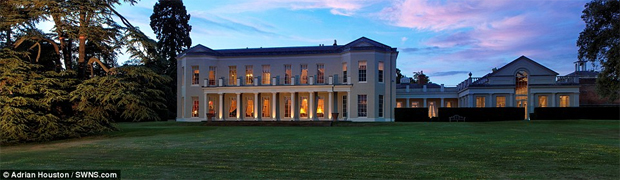
Woolmers Park, Hertfordshire (Image © Adrian Houston / SWNS.com)

The phrase ‘comprehensively renovated and extended‘, especially in relation to a grade-II* listed Georgian country house can sometimes send a chill down your spine, fearful that all that made it special has been smothered in the relentlessly, boringly bland ‘international hotel’ style. Thankfully although, Woolmers Park, Hertfordshire, has been restored to within an inch of its life and whilst perhaps too polished for some, overall, the essential charm of the country house and what could be called the Colefax-Fowler ‘look’ makes the main rooms look very elegant. Originally an 18th-century house, it was rebuilt between 1796-1802 for the 3rd Duke of Bridgewater, and then again between 1821-3 to designs by C.R. Cockerell, who probably added the Greek Doric colonnade on the south front. Bought by the Earl and Countess of Strathmore in the 1920s, it was then sold to Arthur Smith in 1949 and became home to the Hertfordshire Polo Club before being sold in 1997.  Now for sale again with 232-acres, Knight Frank have given it a guide price of £30m (don’t forget the eye-watering £3.5m stamp duty), which reflects that this is a house to which very little will need to be done to enjoy a country lifestyle.

For those a little further down the Rich List, below are some less pricey options but still would give the country house style to which many aspire:

  • Hall Place, Tonbridge, Kent – an unusually large house for the county, Victorian, with up to 226-acres – £8m [Strutt & Parker]
  • Manor Hall, Gloucestershire – 15th-century but updated including by the current owner Peter De Savery – £7.95m [Knight Frank]
  • Guyzance Hall, Northumberland – rebuilt 1894, now with 323-acres – £6m [Knight Frank]
  • Chedington Court, Dorset – built 1840 and altered 1894 in Jacobean style, now with ~50-acres – £5.95m [Savills]
  • Brandsby Hall, Yorkshire – built 1760s and well-proportioned, it now has some ‘interesting’ decor and needs a lot of work to fix  – £4.25m [Knight Frank]
  • Howsham Hall, Yorkshire – built 1610, the dramatic facade is dominated by beautiful mullioned windows – £4.25m [Savills]

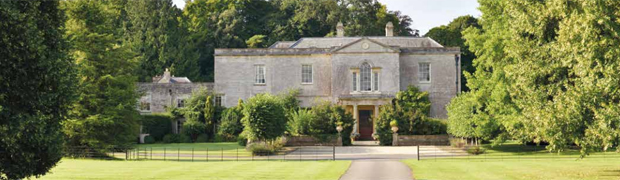
Somerton Randle, Somerset (Image © Knight Frank)

Personally, if I was in the fortunate position of troubling the Rich List, the house I would beating a path to is the bucolically named, Somerton Randle, Somerset (£5.75m – Knight Frank). A compact grade-II listed country house built in the late 1700s, and now with 88-acres, the interiors are a wonderful example of regional Georgian style and retain an exceptional elegance.

A deceptive bargain: Halswell House, Somerset

Halswell House, Somerset (Image: Clive Emson Auctioneers)

When newspaper stories appear with headlines such as ‘One of Britain’s ‘finest’ mansions for sale with guide price of £250,000‘, it guarantees that many will immediately start dreaming of exchanging their current home for the life of a country squire.  The auction of Halswell House, Somerset, is the latest chapter in a blighted recent history of the house and the absurdly low guide price should be a warning. This is a house which will require equally deep reserves of money and heritage sensitivity for anyone wishing to take on this important house, a beautiful example of early English Baroque, described by Sir Nikolas Pevsner as ‘the most important house of its date in the country‘.

The Halswell family had been resident in the part of Somerset which took their name since the early 14th-century.  Though no trace of the early building can be seen in Halswell House today, the core – consisting of two rambling gabled wings around a courtyard – dates from the early 16th-century, specifically 1536, when Nicholas Halswell used some of his inheritance to build a new home.  The house and estate passed through the Halswells until 1667, when the then owner, Hugh Halswell, settled the inheritance on his daughter’s 18-year old son, who became, in due course, Sir Halswell Tynte – his daughter having married Sir John Tynte and wisely passing on the family surname as a first name.

It was Sir Halswell who was responsible for the building of the imposing great North wing, completed in 1689; a bold, three-storey addition which was placed so as to hide the older buildings from the view of visitors arriving along the main carriage drive.  As to the identity of the architect; in a letter, dated March 1683, among the Thynne papers at Longleat, a surveyor called William Taylor, states that before he can return to London he needed to visit Sir William Portman at Orchard Portman and then Sir Halswell. In his famous dictionary of architects, Sir Howard Colvin states that Taylor was almost certainly responsible for the rebuilding of Halswell. Taylor had several commissions in the south-west in the 1680s, including Chipley House, Somerset (built 1681-3, rebuilt 1840, later dem.), and in Devon; Wembury House (dem. 1803) and Escot House, which was destroyed in a fire in 1808, but was illustrated in Colen Campbell’s Vitruvius Britannicus.

Escot House, Devon as shown in Vitruvius Britannicus (vol i, plate 78) - burnt down 1808
Escot House, Devon as shown in Vitruvius Britannicus (vol i, plate 78) – burnt down 1808

The design of Escot has been attributed to Sir Robert Hooke but Colvin quotes that in 1684 Taylor was contracted to ‘contrive, designe, and draw out in paper‘ and supervise the building of the house, for which he was paid £200.  Looking at the design of Escot House, especially the engaged pillars beside the door, the recessed doorway (inspired by Wren’s St Mary-le-Bow, London), surmounted window with pediment,  it’s clear to see the similarities in Taylor’s work at the two houses.  A similar style can be seen at nearby Ston Easton Park, a grand and beautiful house built in 1739, but designed by an unknown architect who appears to have taken inspiration from Halswell.

The importance of Halswell House stems from its very early use of the architectural language of the baroque – some five to ten years before the wider movement took hold in the country.  Sir Christopher Wren had been the midwife to the use of the style but it was only once he had handed over his responsibilities as the Queen’s Surveyor in 1692 that others such as Nicholas Hawksmoor and Sir John Vanbrugh were able to develop their designs into a distinctive school of English Baroque which reached its peak with the grand palaces such as Castle Howard (built 1699-1712) and Blenheim (built 1705-24).  William Taylor was innovative in his use of the style although he was probably copying elements from French pattern books as he lacked the genius of Vanbrugh to bring it to its full expression.

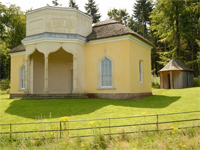
Robin Hood's Hut, Halswell, Somerset (Image: Ian Sumner / Landmark Trust)
Robin Hood’s Hut, Halswell, Somerset (Image: Ian Sumner / Landmark Trust)

After Sir Halswell’s death in 1702, the house continued down the Tynte family line, with his son John’s marriage bringing Welsh wealth into the estate.  It was Sir John’s third son, Sir Charles, who looked beyond the house (completing only minor works there) and instead concentrated his energies on beautifying the parkland.  A series of new lakes, canals and ponds, avenues of trees all grew under his watch, but his best commissions were the hermit’s house on the hill, Robin Hood’s Hut (now restored by the Landmark Trust) and the Temple of Harmony, derived by Thomas Prowse from a Robert Adam design.  Extensive gardens and greenhouses ensured that the table at Halswell was as exotic as it was plentiful.

Sadly, the 19th-century was a time of neglect and disuse for Halswell as, although it was still owned by the family, it had passed to a niece and was regarded as old-fashioned.  It came back into use when Charles Theodore Halswell Kemeys-Tynte succeeded as Lord Wharton in 1916 and the house again became a home.  Any hope that this upward trend in the fortunes of the house could continue were dealt a cruel blow early on 27 October 1923 when Lord Wharton’s valet awoke to smoke seeping under the door to his room at the top of the house.  Despite the efforts of estate staff to both fight the fire and rescue the contents, by breakfast time the grand North wing was gutted, destroying ten bedrooms, the drawing room, reception hall and the dining room.  The local paper reported mournfully that ‘Practically all that remained of the front part of the building were blackened outside walls, the interior being a mass of smouldering debris‘.

The cause of the fire was eventually judged to be a newly-installed electricity supply.  Despite the estate being heavily mortgaged, the house was rebuilt at a cost of £41,534 with the work to such a standard that it was confused for being original.  During WWII, the house became a girls school and the grounds were used as a prisoner of war camp. Halswell House finally passed out of family ownership when it was sold in 1950, after which it was divided into flats (badly) and also used as a furniture store.  The house had a brief respite when it was bought by a businessman in 2004 who lived there and used it as an events venue (sometimes with unexpected results).  However, with the house and estate being repossessed Halswell is again looking for a new owner.

East and North wings, Halswell House (Image: RCHME in 'Some Somerset Country Houses' by David Dunning')
East and North wings, Halswell House (Image: RCHME in ‘Some Somerset Country Houses‘ by David Dunning’)

The auction guide price is simply that – and in this case feels more like a marketing ploy to attract the greatest interest.  It’s likely that bidding will be keen and the final price for the house alone will be multiples of the original guide price, probably nearer £1m, though ideally they will be able to start putting this fractured estate back together, reuniting the parts to create the surroundings that this grade-I listed house deserves.  Beyond the sale price, will also be the certainty that the new owner – if they are the right owner – will need to be willing and able to spend large sums to restore the house, especially the Tudor ranges, to the state it deserves. So, rather than £250,000, this house will easily require £2-4m – and possibly more. Not such a bargain after all.

That said, Halswell House is not simply a home – it’s an important milestone in the development of the English country house and a source of wonder at the beauty and composition of the exterior, married to an equally impressive interior.  Hopefully the house will sell for a price which reflects its value and ideally to someone who will appreciate it and is willing to pour money almost beyond reason into restoring it.  In return, they will be the custodians of one of the finest houses in the country and proud owners of a piece of architectural history.

———————————————————————

Full auction details: ‘HALSWELL HOUSE & THE TUDOR BUILDINGS, HALSWELL PARK‘ [Clive Emson] – auction to be held on 17 December 2013 in Saltash, Cornwall. Halswell House and its five other outbuildings lots will firstly be offered as one lot, then separately if not sold.

Official website: ‘Halswell House

Listing description: ‘Halswell House‘ [British Listed Buildings]

Further history: ‘Halswell House‘ [Wikipedia]

Further reading: ‘The bargain-basement mansion: Historic house which has been a school, a PoW camp and even the site of an ORGY goes on sale for just £250,000 after owner went bust‘ [Daily Mail]