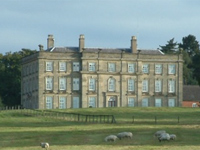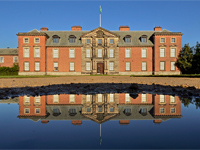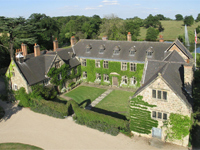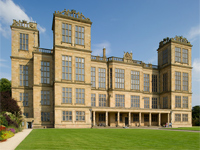
Bylaugh Hall: the hidden history to a remarkable restoration opportunity

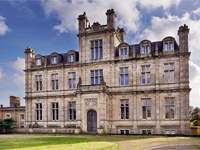
Bylaugh Hall, Norfolk (Image: Chesterton Humberts)

Many country houses we can visit today are innately interesting; the design, the contents, the occupants, all tell a tale.  Sometimes though there are houses with a much richer past which not only have an immediate story to tell but also a much more complex history, one fascinating for anyone with an interest in how these houses came to be created. One such house which was recently launched – and amusingly described on Rightmove as a ‘60 bedroom detached house for sale‘ – is the remarkable Bylaugh Hall in Norfolk, an engineering marvel and architectural delight, which had a forced birth through litigation, which wasn’t wanted by the first owner, and where credit for the design hasn’t truly been given to the right architect.

Bylaugh is remarkable in many ways; some obvious, others less so.  Even its genesis came from beyond the grave as the controversial inherited wish of the last owner, Sir John Lombe Bt (b. c1731 – d.1817), a man whose fortune came from the family’s silk throwing mill in Derbyshire.  The Lombe’s were established Norfolk gentry whose original estate was at Great Melton, centred around Melton Hall (built in 1611 by the Anguish family) but now a ruin having been first tenanted and then, by the end of the 19th-century, abandoned.

Allegedly won by Sir John in a skewed card game, the Lloyds had owned the Bylaugh estate for a number of years, and even if the story is false, it was legitimately Sir John’s by c1796.  The Lombe’s were unusual in that their wealth largely came from industry, and one which was located outside of the county, but they quickly used their fortune to create the fourth largest estate in Norfolk, at over 13,000-acres by 1883.

Whatever house was already at Bylaugh was insufficient for Sir John so he resolved to build an entirely new one.  However, the house he had in mind was not the house which was built.  Sir John must have had a fair idea that he would not survive to see his grand plan to fruition but he certainly wasn’t going to let mere death cheat him of his ambition.  Having placed £20,000 in trust for the express purpose of building the house – though without approving a design – he died in 1817 (unmarried and childless), leaving his estate and his firm directions to his brother Edward. Here, the family history becomes a little complicated as Edward was his half brother, the product of an affair with a Norwich doctor’s wife.  Edward adopted the Lombe surname but was reluctant to take on the grand role envisioned by his late brother – which is perhaps why Sir John’s will was so prescriptive, and which led to a quite extraordinary court case.

Edward Lombe disputed with the executors of the estate the instruction to build the new house.  However, Sir John had been quite clear, including this fascinating clause in his will:

And whereas it is my wish and intention that a mansion house and suitable offices fit for the residence of the owner of my estate shall be erected on some convenient spot in the parish of Bylaugh in the county of Norfolk either in my lifetime or after my death and that if I shall not erect the same in my lifetime then that my said trustees shall forthwith after my death erect the same according to such plan as I shall in my lifetime approve of or if I shall die before such plan shall be prepared and completed then according to such plan as the trustees or trustee for the time being under this my will with the consent of the person for the time being beneficially entitled to the immediate freehold of my said manors &c under this my will shall think proper to adopt adhering as closely as possible situation and other incidental circumstances being considered to the plan of the house now the residence of Robert Marsham esquire at Stratton Strawless in the said county of Norfolk. (source)

Yet Edward resisted, delaying the start of the build for years by arguing with the executors, Mr Mitchell and Mr Stoughton, and stating that even if they built the house he wouldn’t live in it.  Finally, in 1828, he went to the Court of Chancery and demanded that the money, now having grown to £43,000, be placed with it and a judgement made as to whether he could overturn the provisions of his brother’s will. The case was still undecided in 1839, by which time the fund had grown to over £63,500, when Edward again pressed his case, with a decision finally being made in 1841 – against him.  The Vice-Chancellor said:

It appears to me to be impossible to read this passage in the will without seeing that there is in the plainest language an express trust for the erection of the mansion house which the trustees are forthwith after his death to commence and to proceed with the erecting of. I cannot conceive any words more plain.
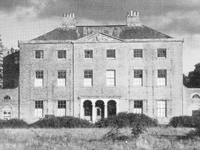
Stratton Strawless Hall, Norfolk - pre 1960 (Image: 'The Country Houses of Norfolk' by David Clarke)
Stratton Strawless Hall, Norfolk – pre 1960 (Image: ‘The Country Houses of Norfolk’ by David Clarke)

Which rather settled that. In the meantime, the executors had not been idle in their duties – but they weren’t as obedient as they might strictly have been.  Sir John had clearly stated that the house was to follow ‘as closely as possible‘ Sir Robert Masham’s house at Stratton Strawless; a three-storey (now two), strictly classical, almost Palladian house with a Tuscan-columned porch.  However, the executors ignored this provision and with possibly an eye to emphasising the esteemed family line and to help the new house blend in with the other seats in the area, they chose to create a historical ‘Jacobethan’-style house – but even that is not the one we see today.

Interestingly, although the current Bylaugh is rightly described as being designed by Charles Barry the younger and his partner, Robert Robinson Banks, few are aware that in 1822 the trustees had originally asked another noted architect, William Wilkins (b.1778 – d.1839), to draw up a plan, and his design showed a remarkable stylistic similarity to the one actually built 27 years later.
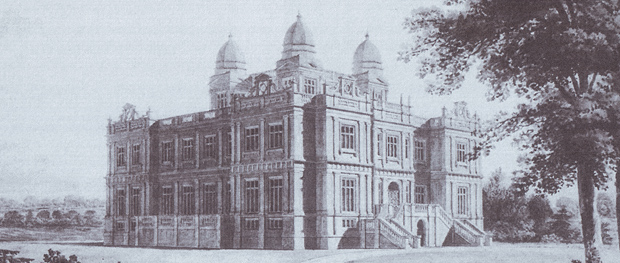
Unexecuted design for Bylaugh Hall by William Wilkins, 1822 (Image: Public Record Office MPA. 66.1 / 'William Wilkins, 1778-1839' - R.W. Liscombe)
Unexecuted design for Bylaugh Hall by William Wilkins, 1822 (Image: Public Record Office MPA. 66.1 / ‘William Wilkins, 1778-1839’ – R.W. Liscombe)

Although a noted proponent of the Greek Revival, Wilkins, like many an architect, was well-educated in other styles and could turn his hand if asked. Clearly inspired by the style of ‘Prodigy‘ houses such as Burghley and Longleat, he also drew on elements of buildings he had seen and studied – for example, the polygonal domes capping the raised central hall are copied from the Porta Honoris at Gonville and Caius College, Cambridge, on which Wilkins had written a scholarly article for the esteemed ‘Vetusta Monumenta‘ in 1809. Although each façade was similar, the entrance front was enlivened by a projecting centre bay above the door which was on the piano nobile, reached by an elegant split stair.

The plan of the house was also modern, rejecting a rambling layout, and firmly following the Palladian 3×3 grid on the ground floor.  Centred around a double-return staircase, this was an innovative layout for an early Victorian design – though one Wilkins the classicist would have been entirely comfortable with.  Essentially, he had designed a Palladian villa, dressed in the architectural garb of the ‘Jacobethan’ style.
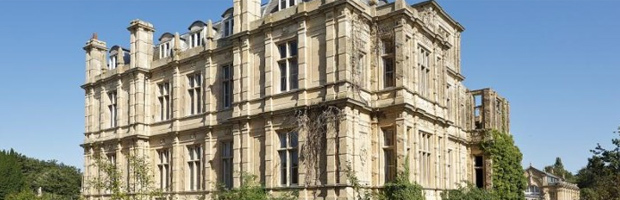
Bylaugh Hall today (Image: Chesterton Humberts)

Bylaugh Hall, as attributed to Barry and Banks in 1849, was perhaps better described as an updated version of Wilkins earlier plan – the core 3×3 layout remained, as did the external style, though some of the details such as the raised central hall and domes were removed, and the central staircase replaced by a saloon.  The construction did display some innovation, being one of the earliest steel-framed buildings and was considered a success with one rather giddy local newspaper exclaiming ‘Neither Holkham nor Houghton, those Norfolk wonders, can compare with it for either appearance or comfort‘.  Such wild exaggeration aside, this was a house at the forefront of domestic convenience and was commended in The Builder for having no corridors in the main block, which maximised the space.  It was completed in 1852 at a cost of £29,389, and by 1869 it was reported that £38,000 had been spent on the project, which would have included further works on estate buildings and landscaping (see photos of the house and grounds c1917).  An interesting aside is that during the delay in starting the money had grown to quite a considerable sum, more than enough for all the works.  Edward Lombe applied for the remainder but the Court demanded it be spent on bricks and mortar and so a 4-mile perimeter wall was constructed to satisfy this.
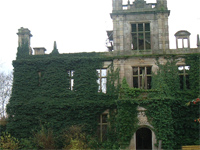
Ruined shell of Bylaugh Hall before restoration (Image: The Burrell Partnership)

It seems that no descendent ever loved the house.  By 1878, the then owner, Edward Henry Evans-Lombe, was renting the handsomely Classical Thickthorn Hall, before buying Marlingford Hall, whilst selling off outlying parts of the estate.  In 1917, Bylaugh Hall and the 8,150-acre estate were put up for auction in 140 lots but Edward sold it whole for £120,000, and the hall and 736-acre park were subsequently sold to the Marsh family.  Used by the RAF in WWII, it was sold in 1948 to a new owner who unsuccessfully planned to turn it into a nursing home.  At that nadir of country houses generally, a familiar pattern started; parts of the house were demolished and in June 1950 a 350-lot demolition sale was held which stripped the interiors of the house, creating a gaunt and sad shell.  So it remained until, in 1999, the house and a lodge was sold to a local sculptor who dreamt of fully restoring the house but with insufficient funds he was forced to restore just the Orangery (article by the engineers with lots of photos), intending it to be a wedding venue.  Other parts of the main house were parcelled up as investments and rebuilt but the plan faltered and then failed, leaving the partially restored house we see today.

So Bylaugh Hall is a house paid for by a man who never got to see it, with a design chosen by two men who ignored the last wishes of the patron, with credit for that design going to two men who relied heavily on another architect now obscured, for a beneficiary who really didn’t want it in the first place. A brilliant story richly illustrating the fascinating complexities of our country houses.

So what should happen to this superb house? Interestingly, the 557-acre Pavilion farm which surrounds the east and south of the house, and includes one of the original lodges, is also for sale, providing the opportunity for the right person to combine them both.  It would require real vision – the restoration work at Bylaugh Hall may be sound but the aesthetics are dire.  Given the budget, much of the existing restoration should be stripped right back and the interiors given the lavish attention they demand.  This is a house which cries out for sumptuous plasterwork and panelling, for grand rooms with fine wallpaper and filled with artworks and quality furniture. With the funds and the vision to take advantage of this rare opportunity, a restored Bylaugh Hall, combined with the farm and more land later, could once again create one of the finest estates in Norfolk.

—————————————————————————–

Property details

1917 auction catalogue:

Listing description: ‘Bylaugh Hall‘ [British Listed Buildings]

HS2 Northern Extensions, Part 2 – Birmingham to Manchester: a delicate dance with one mis-step

Having looked at the impact on country houses of the first branch of the next phase of the HS2 line between Birmingham and Leeds (‘HS2 Northern Extensions, Part 1 – Birmingham to Leeds: good for some, bad for others‘) it’s clear that the damaging heritage choices which marred the plans for the first phase between London and Birmingham have been largely avoided.  Can this new spirit be successfully continued as the line tries to find a path to Manchester through a landscape shaped by the many country houses in the area?

Shugborough Hall, Staffordshire (Image: Neilsvrx via flickr)

The line emerges from the urban sprawl of Birmingham and swings past Lichfield into the Staffordshire countryside, equidistant between the rivers Trent and Blithe, well to the west of the remains of Hamstall Hall with its beautifully weathered gateway, and Blithfield Hall, which now sits next to the Blithfield reservoir. It also sweeps past well to the north of the first of the great estates on the route, the grand Shugborough Park. The core of the house was built in 1693, but the house house seen today was largely the creation of the architect Thomas Wright, between 1745-48, followed in 1794, by Samuel Wyatt who added the dramatic, ten-column portico. Across the river, the splendid Tixall Gatehouse (to the demolished, later Tixall Hall) also can continue in its peaceful repose.

Ingestre Hall, Staffordshire (Image: Langstraat via Wikipedia)

Sadly, a poor route decision follows immediately after, with the line cutting within 400 metres to the south-west [PDF] of the grand front of Ingestre Hall (historical details here).  A former home of the Earls of Shrewsbury, the house is a wonderful example of the Jacobean tradition, that short period which developed the drama of the Elizabethan house with classical principles, combining architectural flamboyance with symmetry.  Although Ingestre is no longer a home, and the park a golf course, the embankments of the HS2 line may not be enough to mitigate a serious incursion into the environs of this house.

Swynnerton Hall, Staffordshire (Image: Simon Huguet via Geograph)

The route continues to the north of Swynnerton, placing the village between the trains and the beautiful seat of Lord Stafford, Swynnerton Hall, which still sits in a 3,000-acre estate. After Newcastle-under-Lyme, the line passes to the east of Doddington Hall, still the seat of the old Staffordshire family, the Broughton-Delves.  The route continues northward, neatly bisecting Winsford and Middlewich, passing to the east of the impressive but now hugely over-developed Bostock Hall with its housing estate at the back.

Tabley Hall, Cheshire (Image: Peter I. Vardy via Wikipedia)

As HS2 heads into Cheshire, the delicate dance to avoid the grand houses and their estates requires some deft footwork. Knutsford is surrounded by important houses but importantly, for us, the line passes west of the beautiful Tabley Hall and estate, which was so atmospherically painted by J.M.W. Turner (the painting can be seen at Petworth in Sussex).  One of the finest examples of the work of John Carr, the house replaced Tabley Old Hall which remained on the estate and was incorporated as an eye-catcher in the landscape as a picturesque ruin.  Also untroubled is Viscount Ashbrook’s family seat of Arley Hall, also well to the west of the line.  Similarly, the ever-grand Tatton Park, once seat of the Egerton family, now owned by the National Trust, and its thousand acres of parkland are kept well clear of the line.

Dunham Massey, Cheshire (Image: Danny Beath via flickr)

Past Knutsford and heading towards Altrincham, the line splits with one branch curving gently west away from another National Trust property, Dunham Massey. Following this line, heading north of Lowton, the attractive small family home of the Byrom family, Byrom Hall, built in 1713, loses its rural outlook and will instead be at the edge of a rolling stock maintenance depot at the end of that line.  The other branch heads south of Altrincham and heads towards Manchester, skirting the edge of the city but by now the semi-urban fringe is no longer the setting for country retreats and so the line passes into the city without any further threats.

So again, the route of HS2 from Birmingham has avoided many of the pitfalls of the first phase and has mostly been able to step lightly around the historic estates which have brought such beauty to our landscapes.  However, the one mis-step is around Ingestre Hall, where the line will create a dramatic slash through the parkland and perhaps impinge on the future ability of the house to be rescued from its current use as an arts centre and golf course to one day become a home again.  This is unlikely if the economics of conversion and restoration are upset by the overall value of the house and estate being seriously compromised by HS2.  With farmland to the south, it would make sense to move the route just another couple of hundred metres to ensure tranquillity for this fine house.  Overall though, the planners at Arup and Mott Macdonald ought to be congratulated on plotting a sensitive course through a difficult landscape and one hopes that the final plan maintains this.

———————————————————–

Source for route: ‘HS2 phase two initial preferred route plan and profile maps‘ [Department for Transport/HS2 Limited]

HS2 Northern Extensions, Part 1 – Birmingham to Leeds: good for some, bad for others

One of the major UK infrastructure projects of the next 20-30 years, assuming it gets the go-ahead, will be the construction of the long-awaited High-Speed 2 (HS2) railway line, linking London with some of the major cities of the North.  Any construction project on this scale was always going to upset someone, and the initial route for the first phase managed to rile not just those in the towns and cities but also those who care about the rural areas and our wonderful country houses, which faced being blighted by the new trains rushing through their once peaceful idylls.  With the announcement of the route of the next sections beyond Birmingham, have the planners learnt their lessons?

Edgcote House, Northamptonshire (Image: Bacab) - threatened by the initial London-Birmingham plan with a serious visual impact, the route was moved in the final announcement
Edgcote House, Northamptonshire (Image: Bacab) – threatened by the initial London-Birmingham plan with a serious visual impact, the route was moved in the final announcement

There are undoubted merits in encouraging the use of greener transport options such as rail over other forms such as cars or planes. However, by their nature, high-speed trains rely on longer straight stretches and the easiest way to achieve this is by picking the most efficient route.  The particular challenge arises when that route involves beautiful countryside and an adverse impact on some of our finest country houses – and it was always going to cause a row.  An initial examination of the route in an earlier post (‘The price of progress: country houses and the High Speed 2 rail project‘) highlighted how surprisingly damaging some of the route choices had been.  When the final announcement came, although not perfect, the route was much improved and had mitigated many of the earlier concerns (‘The axe falls: route of High Speed 2 rail line announced‘).

The good news is that the route for the new HS2 Birmingham to Leeds route shows a greater sensitivity than was shown in the first phase and, after skirting past the sites of the long-vanished Hams Hall (dem. 1920) and Willesley Hall (dem. 1953), it wisely follows existing major roads, minimising the blight to areas already affected.

However, there are a number of houses which are significantly affected as the line moves north and the meanderings of the road network are ironed out into straighter lines for the high-speed trains.  One of the first is the smaller Grade-II* manor house of Pooley Hall, on the edge of Polesworth, as the line cuts to the south of the motorway it takes it within a hundred metres, sacrificed to save the Pooley Fields country park.

Langley Priory, Derbyshire (Image: Langley Priory)

The first significant country house to be affected is the attractive Grade-II* Langley Priory, near Diseworth, with the line cutting a rather dramatic slash through their 500-acre parkland, barely 200-metres to the west of  the main house.  Even the addition of a significant railway cutting, the close proximity of the house will inevitably have an adverse impact on what is currently a secluded and rural estate.  This will be an interesting test case for the generosity of the compensation scheme and how tightly it draws its boundaries and criteria for deciding the level of awards.

Further north, the line slices off the tail end of the western parkland at Thrumpton Hall, a wonderful Jacobean house with links to the Gunpowder Plot, which is the family home of the writer Miranda Seymour.  The house itself faces north and with the line passing nearly a kilometre to the west, the effect on this house should be minimal – and if one was to worry about existing blights, look south-west and the rather dramatic bulk of the Ratcliffe Soar power station dominates the skyline.

As HS2 emerges from Long Eaton, the route thankfully passes far to the west of the spectacular Wollaton Hall, but nearby, two smaller country houses which have so far escaped the ravaging pressures of urban development will now be drastically affected by this new development.  The first is Trowell Hall, originally built as a rectory in 1846 in a Jacobean Revival style, possibly by the architect Thomas Chambers Hine, it was then sold to a racehorse breeder in 1927.  It later became a dormitory for the workers at the M1 service station before again becoming a private home.  The new line will pass within 500-metres, though a high embankment may mitigate some of the effects. (Listing description: Trowell Hall, Nottinghamshire)

Strelley Hall, Nottinghamshire (Image: Strelley Hall website)

For Strelley Hall, a rather elegant smaller manor house, tucked away next to the local church, and now used as serviced offices, the route lines up almost straight past their back door but will dive into a tunnel just over the road.  Unfortunately for them, it appears that their newly built B&B business lies directly in the path of the new ‘cut & cover’ tunnel and so will have to be demolished.  Hopefully, once the work is over, and the trees and other planting have taken effect, the disturbance from the trains should be lessened but the disruption during the construction will be significant, especially with the loss of the B&B business.

The line now weaves a path through the outer edges of Nottingham passing far to the west of the impressive former home of Lord Byron, Newstead Abbey, but a bit closer to that long ‘At Risk’ country house, Annesley Hall, though still far enough to not be a concern.

Hardwick Hall, Derbyshire (Image: Xavier de Jauréguiberry via flickr)

The next section sees a routing decision which seems highly likely to be motivated by a desire to protect a country house.  Considering the scale of the project it would have to be a special house and it is; the line switches from the east side of the M1 [PDF] to continue on the west side, thus avoiding the need to go near the wonder that is Hardwick Hall, the incredible Grade-I listed seat of Bess of Hardwick, and which was famously immortalised in rhyme as ‘Hardwick Hall, more window than wall‘ (Pevsner preferred that version). Now owned by the National Trust, they must be relieved the planners have not chosen to pick a battle with them (unlike with parts of the first phase of HS2).

The line now heads out past the forlorn but still discernible grandeur of Sutton Scarsdale before nipping between the village of Renishaw and the railway line, thankfully preserving the parkland to the west of Renishaw Hall, seat of the famous Sitwell family and portrayed so beautifully by John Piper. After Sheffield, the village of Thorpe Hesley perhaps forces the line to the west, conveniently taking it further from the breathtaking Wentworth Woodhouse.  The last section up to the final destination of Leeds, skirts the various large towns, diving into green spaces and across parkland, such as at Methley, where if the grand Methley Hall had not been demolished in 1963, it might now look out on the final junction for the new HS2 Birmingham to Leeds branch.

All in all, the planners have seemingly learnt the lessons from their initial bruising encounters and have sought to find a route which deals more sensitively with the natural and built environment which already exists.  There are inevitably some houses which will be adversely affected and wherever possible this should be challenged to ensure that each intrusion can be fully justified, and where sustained, that appropriate compensation is paid.

This is just the first of the extensions to be examined; we will see shortly if the Birmingham to Manchester route holds any further threats to our country houses.

————————————————————

Source for route: ‘HS2 phase two initial preferred route plan and profile maps‘ [Department for Transport/HS2 Limited]

Harry Gordon Selfridge and his grand plans: Hengistbury Head

Those who dream grand plans in their professional lives can be equally ambitious in their private lives too.  This can be particularly acute when their thoughts turn to building their own homes; that ultimate statement of wealth, ambition, and, they hope, taste.  When Harry Gordon Selfridge came to Britain he quickly spotted an opportunity to revolutionise the high-street shopping experience and he was prepared to invest to do so, starting with a flagship store on Oxford Street in London.  Yet, what perhaps fewer are aware of, was his plan to build a spectacular castle in Dorset – a personal vision of his to create a home which matched his ambition.

Selfridges, 1929, seen from south-west (Image: RIBA Library Photographs Collection)

Harry Gordon Selfridge (b.1864 – d.1947) became a giant of the retail industry.  Born in Ripon, Wisconsin, his father was manager of the general store but abandoned his family and then Harry’s two brothers died young, leaving him an only child.  His mother struggled financially, and Selfridge, displaying a precociously enterprising talent started, aged 12, a magazine which made money through advertising whilst he worked at another store. He then worked in a bank, then insurance, before joining the store which became Marshall Field in Chicago, as a stock boy. Over the next 25 years, he worked his way up to junior partner, became wealthy and married a local socialite.

During a visit to London in 1906, Selfridge noticed that the UK retail experience significantly lagged behind the latest innovations in the US and so decided to bring those ideas to Britain.  In his typical style, he did this on a huge scale – his vast 50,000 sq ft store on Oxford Street was a bold statement as to the importance of shopping.  Built in a grand Classical Revival style which echoed that of other areas of Edwardian London, it was actually designed by an American architect, Daniel Burnham, who had been responsible for the influential ‘World’s Columbian Exposition‘ held in Chicago in 1893 which had embedded and popularised the Classical style in US architecture.

Plaster model of proposed Selfridges tower (Image: RIBA Library Drawings Collection)

The store was built in phases but to a unified overall design.  The first nine-and-a-half bays closest to the Duke Street corner were completed first, with the store opening in 1909 at a cost of £400,000. The western extension was then built between 1924-29, designed by Sir John Burnet, who had designed the strikingly similar King Edward VII gallery at the British Museum in 1905. Externally, the store as it was in 1929 is the store you see today – but in true Selfridge style, this wasn’t all.  Planned from the beginning, the final piece of this retail jigsaw was more decorative and an early indication of Selfridge’s ability to think big: a 450-ft tower to soar over both the store and London. After five years of lobbying, Selfridge had permission from the Portman Estates and Marylebone Council – now he just needed a design.  It had always been his policy to commission more than one architect on a project, enjoying the differing ideas and so he also employed the well-respected Philip Tilden (who had carved out a comfortable career creating a number of country houses such notably Port Lympne and Chartwell), as well as Burnet. Both architects produced a number of designs all in a broadly Classical idiom but with significant differences (see Tilden’s variations: 1 / 2 / 3 / 4) -but none met with Selfridge’s approval and eventually he scrapped the idea, with only a plaster model to show for it. However, by this time, he had another commission for Tilden.

Between 1916-22, Selfridge took the lease on Highcliffe Castle, Dorset and enjoyed entertaining his wealthy friends from both London and the local area.  Yet, as was typical, this wasn’t enough and so he bought the nearby Hengistbury Head; a mile-long stretch of beautiful cliffs, wildlife, and ancient Bronze Age monuments.  Much to the alarm of the locals, he then announced that he would be building ‘the largest castle in the world‘. A showman’s boast perhaps (considering the competition!) but he set Tilden to work to make this dream a reality; which he did, lovingly creating a series of dramatic panoramas and hundreds of detailed individual designs.

Proposal for Hengistbury Head by Philip Tilden for H. Gordon Selfridge (Image: RIBA Library Drawings Collection)

Selfridge, of course, had his own vision what this castle would look like – and the brief must have made Tilden shudder (inwardly, of course).  Although Selfridge was rigorously Classical in London, he wanted a true castle and so demanded a mix; a medieval fortress planned on Classical lines with ‘…mighty vistas, balance, and co-ordination of the parts‘.  From early 1919, Tilden created a wonderful series of perspectives which Clive Aslet describes as ‘…dreams of Piranesian grandeur and Watteau-like romance‘.  This architectural hybrid was something of a awkward marriage, the imposing mass of the castle fortifications interrupted by delicate Classical arcades, statues and details.

Proposed Barbican at Hengistbury Head (Image: 'The Last Country Houses' by Clive Aslet)
Proposed Barbican at Hengistbury Head (Image: ‘The Last Country Houses’ by Clive Aslet)

The basic plan involved four miles or ramparts with towers, a ‘small castle’ (to be completed first and lived in whilst the main part was completed) and a ‘large castle’ on higher ground.  This ‘large castle’ was to include (beyond the usual living accommodation), a Gothic hall, a 300-ft tower, a theatre, a Hall of Mirrors copied from that at Versailles, a winter garden, a covered lake, long corridors and galleries for pictures, tapestries and other objet d’art, and at least 250 suites of rooms for guests.  Even the small castle would have been a significant project and the proposals for the main castle firmly moved this plan out of reality and into fantasy considering that, although wealthy, a building on this scale (the plans had to be drawn at 1:64) might even have caused the Morgans, Vanderbilts or Carnegies of this world to think twice – and they were many times richer than Selfridge.

Terrace at Hengistbury Head (Image: RIBA Library Drawings Collection)

Although Tilden must have quickly realised that this scheme would never be built in full, and at best only a small portion may be created, he took the commission seriously.  Each month he would travel to see Selfridge either in London or at Highcliffe and update him on the progress of the designs.  Selfridge would often have a selection of his millionaire friends in attendance who would pore over the developments and offer their encouragement and suggestions.  These intellectual gatherings even started to give Selfridge a slim reputation that he was a connoisseur in the grand tradition of earlier country house patrons.

Sadly, Selfridge’s personal life and fortune had both suffered over the years.  His beloved wife had died of influenza in 1918, after which he became increasingly reckless; lavishly entertaining, gambling and taking up with a pair of sisters who performed on stage.  In the decade after his wife died he reputedly ran through an $8m fortune and, combined with the financial impact of the Wall Street Crash in 1929, his wealth could no longer support his lifestyle. So, in 1930, he sold 300-acres of Hengistbury Head to the local council, including covenants still in force today that ironically stipulated that the land could not be built on (though, optimistically, he did retain 33-acres).  By the mid-1930s he was all but penniless and in 1939 he was forced to retire from Selfridges, eventually moving to a small flat in Putney and travelling around on the buses, before dying at home in May 1947, his grandiose plans for the largest castle in the world, a mere memory.

In many ways, H. Gordon Selfridge’s life was a remarkable series of triumphs and frustrations.  His early years clearly led him to a preference for the grandiose statements and a desire to accumulate the trappings of those he considered his social rivals who may have looked down on his humble beginnings.  Of course, he wasn’t the only department store owner with grand ambitions which ran far ahead of his budget – Lutyens‘ original design for the dramatically beautiful Castle Drogo, Devon for Julius Drew, owner of the Home and Colonial Stores, was three times larger than the completed building.  However, the sheer scale of Selfridge’s plans for Hengistbury Head increasingly looked more like an ‘after-dinner’ exercise; something to show and discuss with his wealthy friends rather than something he seriously intended to build.  In this way, he was a consummate showman with an ability to think grand dreams, which is to be applauded. However, in some ways we get the best deal; he didn’t get to create an oversized ego-driven building on a beautiful section of coastline but we do get to admire the incredibly detailed designs which Tilden laboured on for over half a decade to amuse Selfridge’s ambition.

—————————————————————-

A new drama called ‘Mr Selfridge‘ on ITV in the UK on the life of H. Gordon Selfridge starts on 6 January 2013 – hence this article.

—————————————————————-

More of Philip Tilden’s designs: ‘Hengistbury Head‘ [RIBA Library Drawings Collection]

Merry Christmas and a Happy New Year

The east front of Hardwick Hall, Derbyshire, in the snow. (Image: National  Trust Picture Library)
The east front of Hardwick Hall, Derbyshire, in the snow. (Image: National Trust Picture Library)

It’s that time of year when I especially wished that I actually lived in a country house; the decorations, the roaring fire, the snow on the parkland. That said, I am lucky enough to write about and visit them – in 2012 I saw:

…and Buckingham Palace, twice (bit of advice: if going, book the last time slot of the day – it’s quiet and a pleasure.  Going in the middle of the day, not so much). Most of these visits were through organisations such as the Georgian Group, the Irish Georgians, and the Society of Architectural Historians of Great Britain. They, and of course, the National Trust, do excellent work – both practical and scholarly – and are well-worth joining if you’d like to find out more.  I was also lucky enough to attend the Attingham Trust 60th Anniversary Conference which was a wonderful opportunity to meet some real experts and also, unexpectedly, some friends of the blog.

Of course, I remain grateful for the incredible interest shown by the tens of thousands of visitors to the blog who kindly read my articles and comment.  I always appreciate feedback and thank you for taking the time to do so.  In mid-December, the blog hit the milestone of 250,000 page views in a year – so the milestone is now a benchmark and I hope to bring our country houses to an even wider audience next year.  Thank you also to all those who have signed up by email and on Twitter (@thecountryseat), which has proved to be a useful channel for sharing snippets of news and connecting with those interested in houses specifically, and heritage generally.

More contributors?

In 2013, I’m aiming to build on the successes of the last few years.  Of course, there will be more articles, however, I’m conscious that the frequency has dropped, mainly due to my ever busier day job.  I’d be interested to have your thoughts on whether you would like to read articles by other contributors? I have written all of them so far (bar a brilliant piece on ruins by Jeremy Musson back in 2011) but there are many other writers out there who would undoubtedly bring greater and wider expertise on country houses.  At the moment, I write mainly about the architecture (especially the exteriors) but would you be interested in someone writing about say, plasterwork, on specific houses, the contents, or other aspects? I’d also be keen to hear what you would not be interested in reading about. It’s possible that the blog could become a platform for experts in their respective fields who may not wish to maintain their own blog or go down the academic journal route.  Anyway, it’s just a thought and I’d be keen to have your feedback either in the comments below or via email.

Thank you again for your interest and I wish you all a very Merry Christmas and all the best for 2013.

Matthew