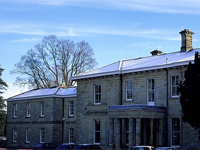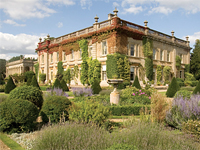
Kiddington Hall sold – but as a home or an investment?

Kiddington Manor, Oxfordshire (Image: Country Life)

After many viewings and some speculation, the Sunday Times is reporting that Kiddington Hall has finally been sold for £15m to Jemima Goldsmith, the wealthy socialite.  The grade-II listed house, originally built in 1673 but largely rebuilt to designs by Sir Charles Barry, comes with 466-acres of gardens and parkland designed by ‘Capability’ Brown.  The Sunday Times quotes a ‘property source’ as saying “It was a romance. She just fell in love with it.”.

The sale was ordered by the court to fund the divorce settlement of the owner, Erik Maurice Robson, who needed to raise £8m to provide for his ex-wife (for a detailed estimation of the likely proceeds see the comments on a previous post: ‘The economics of selling a country house‘).  The estate, described as a ‘jewel in the heart of Oxfordshire’, was one of the most important estates to be launched onto the market last year as rarely do prime estates with a manageable house, fine gardens and a productive estate, come up for sale in the prime Home Counties and this was reflected in the original asking price of £42m for the entire 2,000-acres and house.

However, considering Jemima’s previous successful forays into property development, is Kiddington Hall to be a family home or will she take the advice of some who say that if she spends a couple of million on refurbishment the property could be worth £20m?  It will certainly be one to watch as if it is relaunched in a year or two, it will provide a useful barometer as to the recovery of prime country property.

The sale of the main house will also mean that the sale of the remainder of the estate, encompassing 1,600-acres plus several farms and houses can proceed.  These sales were contingent on the main sale as without the sale of the main house the rest of the estate could not be sold.  The Sunday Times is reporting that Alec Reed, founder of the Reed recruitment agency, is the purchaser.

More details: ‘Jemima Goldsmith jumps on £15m stately home‘ [The Sunday Times]

Ury House restoration project still in doubt a year on

Ury House, Scotland (Image: Geograph)

When the developers FM Developments went into administration in 2009, it put in jeopardy a huge development scheme which was to fund the restoration of the historic Ury House.  The size of Ury House meant that any scheme was going to have to be ambitious to provide sufficient funding and this one involved the building of 230 homes and the creation of a Jack Nicklaus-designed golf course.  The developers had been praised for consulting with local residents and had the full support of the council for bringing jobs and no small measure of glamour to Stonehaven. Now, a year after the collapse, it’s still not clear if the scheme will proceed at all, leaving the spectacular ruins of Ury House at further risk of decline.

The first house had burnt down in 1645, and the second house was subsequently completely rebuilt as the Ury House we see today in 1855 for Alexander Baird in a fine Elizabethan style by the architect John Baird.  Baird was one of the most successful of the architects working at this time even if he rarely followed fashion.  His work at Ury was a continuation of the style of Wilkins and Burns they had developed 40 years earlier but was of a high quality which is still visible even today in the shell of the house. As a first stage of the work of the restoration, extensive scaffolding had been erected around the house in January 2009.

The proposals for redevelopment of the 1,500-acre estate included the conversion of the house into nine townhouses.  Unlike in many other cases of ‘enabling development’ where the setting of the house is compromised through the encroachment of the housing, the plan put forward placed the residential estate well to the east of the house, thus protecting it.  With the bankruptcy of FM Developments these plans have  been thrown into doubt and local planning officers are now working on the assumption that the development will not go ahead – despite local councillors being determined to resurrect the scheme.  Unfortunately the danger is now that another, less sympathetic, developer will take on the project but may try to cram more houses in or extend the area of the estate taken for housing. This would be a real shame. Although the ideal but unlikely outcome would be the restoration of the house as a single family home, this project had developed as a good example of enabling development practiced in the right way, with sensitive restoration of the main house, protection of the setting of the house, and productive use of the estate.

More details: ‘Future of Ury mansion site in doubt‘ [The Press and Journal]

Future of Ury mansion site in doubt

The economics of selling a country house: Kiddington Hall

Kiddington Manor, Oxfordshire (Image: Country Life)

An article regarding the sale of Kiddington Hall in the Financial Times has highlighted that the asking price of a country house when put on the market is not the amount which will end up in the buyer’s pocket.

When grade-II listed Kiddington Hall was launched on the market in September 2009, the price tag of £42m reflected its status as one of the most important houses to be offered since the sale of Easton Neston in 2004.  The main house was built in 1673 and sits in the centre of it’s 2,000-acre estate in Oxfordshire, with parkland designed by ‘Capability’ Brown. The house was remodelled in the 1850s by Sir Charles Barry in his trademark Italianate style which included the creation of a large courtyard and extensives terraces in the gardens.

The beautifully elegant house is being sold by Erik Maurice Robson, whose father bought the house for £115,000 in 1950. The sale was court ordered to fund his £8m divorce settlement, and valued his freehold interest in the house and estate at just £16m. This article states that this value is what remains after “excluding furniture, capital gains tax and sale costs”.  Mr Robson has now asked the court to reduce the value of the settlement as, due to a fall in property values, his interest is now worth only £13.18m.  This seems a remarkably small amount to be able to realise from such a high asking price and perhaps emphasises that a country house is not the pot of gold many imagine it to be.

Full story: ‘Stately home at heart of divorce appeal‘ [Financial Times]

A house and it’s garden to be reunited? Leonardslee, Sussex

Leonardslee House, Sussex (Image: tom@picasaweb)

Often the course of the country estate over the last 100 years has been for the land to be gradually sold off, starting with the outlying areas, and moving closer until just the house and it’s immediate gardens remain intact.  At Leonardslee in Sussex the process was eventually taken one step further with the house being sold off.  This, however, may about to be reversed.

Sir Edmund Loder bought the manor house and 225-acre gardens from his inlaws in 1889 and soon opened them to the public.  Over the next five generations, the Loder family added to the planting and landscaping to create what is now one of the only 163 grade-I listed gardens in the country.  Despite the family still owning the gardens the grade-II listed Italianate manor house, built in 1853 and featuring a 900 sq ft central hall decorated with Ionic columns, was sold off separately in the 1980s and became offices.  The gardens grew in reputation so it was something of a shock when in April 2008 it was announced that they were being put up for sale by Robin Loder for £5m through the estate agency Savills.  Cleverly, the company who owned the house also announced they were open to offers at around £3.25m for the house.

The Times is now reporting that after nearly two years on the market, the gardens have been sold to a private businessman and are likely to close to the public.  They are also reporting that the house may also be under offer at £2.75m to the same businessman giving him a perfect  opportunity to once again recreate a stunning small estate which, with the addition of the house, could be worth in the region of £10m.  Though a sad day for the many garden-lovers who have made many a pilgrimage to wander among the wallabies, it’s an encouraging reversal of the trend for houses to lose the control of the landscape which so often perfectly frames them.

Full story: ‘Leonardslee Gardens to close to the public after being sold‘ [The Times]

Is Gwrych Castle for sale again?

Gwrych Castle, Wales (Image: geograph.co.uk)

When Gwrych Castle was finally sold in June 2006 after twenty years of neglect, dereliction, fires and theft, there was much praise and relief locally that the once-beautiful “showplace of Wales” was to be rescued.  Bought by Yorkshire-based Clayton Hotels for £860,000, they estimated that once planning permission had been secured, the restoration would take between 2-3 years and cost an estimated £6m – however three years later, the major part of the restoration work has yet to start.

Built between 1819-1825 for Lloyd Hesketh Bamford-Hesketh, grade-I listed Gwrych was one of the largest ‘castlellated mansions’ in Europe, part of a ‘gothick’ revival which included some of Britain’s most picturesque country houses such as Eastnor Castle, East Cowes Castle, Lea Castle, and Castel Coch and many more. Following its sale by the 13th Earl of Dundonald in 1946 it was opened to the public in various forms and under various owners until 1989.  The failure of the redevelopment plans led to the castle being left unprotected against the ravages of the weather, travellers, and vandals, leaving the castle a mere shell, the fine interiors rotting in piles in the collapsed ground floor.

The plans unveiled by Clayton Hotels in 2007 showed that the castle would be fully restored and largely based on the original layout. Mark Baker of the Gwrych Castle Preservation Trust, who had campaigned since he was 11 to save the castle, welcomed the plans and for many it seemed that the end was in sight.  In February 2009, Wales Online (‘Welsh ruin to be transformed with techniques fit for royal home‘) trumpeted how the design work for the restoration was starting under the care of Donald Insall, one of the best conservation architects in the UK.  However, in May 2009, a story on BBC News (‘Slow economy delays hotel plans‘) explained that the slow economy had delayed plans and also the cost for the project had risen to between £12-14m.

Now a recent story (‘Clitheroe man haunted by ghostly image in castle window‘) about a ghost in a window included some interesting quotes which raise some questions about the status of the project – or perhaps just the intended future clients.

A Lancashire businessman who combines being an optician with “psychic management” claimed to have taken a picture of a girl standing at a window where there is no floor.  Kevin Horkin claimed he was visiting the site as “I buy property and was looking at the castle with the view buying it.” and the story ends by saying that “Kevin has put a bid in for the castle which he hopes to turn into a luxury psychic retreat.”.  Despite the obvious convenience of a psychic who wants to open a hotel taking one of the clearest ever pictures of a ghost, it does raise questions about why he is saying the hotel is for sale? The Clayton Hotels website is one page with an email link and with the dramatic rise in restoration costs and the difficulties of the property markets, is the castle being quietly marketed ‘off the record’? Perhaps the quotes are misconstrued, or perhaps Clayton will refurbish the house but lease it Mr Horkin, but either way, Clayton Hotels should perhaps clarify exactly what is happening to this iconic part of Wales’ architectural heritage especially as so many people have spent so long campaigning for its rescue.

More information about the house: ‘Gwrych Castle Trust