Country houses have been slightly glibly described as ‘prisons’, usually due to the restrictive social conventions, which stifled the freedom of the occupants. However, country houses have occasionally been repurposed as true custodial institutions, serving as prisons, youth detention centres, approved schools, prisoner-of-war (POW) camps from the 18th century to the present. This role is one which has been often overlooked in the history of the country house.
If one wished, it was always possible to cast the country house as a prison, of sorts. The restrictions placed on everyone who lived in one, whether as the lord or the lowliest servant, was a web of both explicit and implicit rules. Although they could, in theory, walk out of any unlocked door, the reality was that they were trapped, bound to the building.
Fiction has long played on this idea, weaving physical incarceration, with its psychological equivalent. There are the self-imposed emotional bonds which confine the jilted Miss Havisham to her decaying Satis House in Charles Dickens’ ‘Great Expectations‘ (1861), or the fear which entraps the governess at Bly House in ‘The Turn of the Screw‘ (1898) by Henry James. In ‘Rebecca‘ by Daphne du Maurier (1938), Manderley, the grand estate in Cornwall, becomes a place of psychological imprisonment for the unnamed narrator. Haunted by the lingering presence of her husband’s first wife, Rebecca, the narrator feels trapped by the oppressive atmosphere of the house and the expectations imposed upon her. More recently, in Sarah Waters’ ‘The Little Stranger‘, the decaying Georgian mansion of Hundreds Hall (played by Newby Hall, Yorkshire in the film), becomes a symbol of entrapment for its inhabitants as their financial decline echoes that of their place in society, leaving them isolated.
Newby Hall, North Yorkshire, represented the fictional Hundreds Hall in the 2018 adaptation of Sarah Waters’ ‘The Little Stranger’
Beyond these intangible confines, the house as a cell was perhaps most famously portrayed with Bertha Mason, Mr Rochester’s wife, confined as the ‘mad woman in the attic’ of Thornfield Hall in Charlotte Brontë’s ‘Jane Eyre‘ (1847).
Royal confinement
Beyond fiction, the country house has, at times of need, served in reality as a place of confinement – pressed into service as a working prison when circumstance demanded.
On 16 May 1568, Mary Queen of Scots fled to England seeking refuge from political turmoil in Scotland after the battle of Langside and spent her first night at Workington Hall, Cumbria. Mary had come to England in the hope of gaining support from the Catholic nobility and of appealing to her cousin, Queen Elizabeth I, for political assistance in regaining her Scottish throne. However, because both women were descended from Henry VII, Mary possessed a strong claim to the English crown. This made her presence in England a direct threat to Elizabeth, particularly as Mary was a Catholic alternative to Elizabeth’s Protestant rule.
Although Mary was technically a guest, she was heavily guarded and this effectively marked the beginning of her nearly 19-year imprisonment before her execution. Mary was moved around regularly to thwart plots to free her, from castles to eventually the country houses of George Talbot, the 6th Earl of Shrewsbury (b.1522 – d.1590). The Earl of Shrewsbury, famously married to Bess of Hardwick, played a pivotal role in the confinement of Mary, having been appointed her custodian by the Queen. Throughout various periods, he held Mary at his family’s houses including Wingfield Manor, Hardwick Hall, Chatsworth House, and Sheffield Manor – all situated within a 15-mile radius in Derbyshire. Mary was finally moved to Fotheringhay Castle, Northamptonshire, arriving on 25 September 1586. She was put on trial in October, and then executed in the Great Hall on 8 February 1587. Her long confinement within such grand yet guarded houses stands as a stark reminder of how the architecture of luxury could so easily become the architecture of captivity.
A prisoner of war
In wartime, country houses have been pressed into service in a wide variety of roles, with prisoner-of-war camps among the least glamorous. Stepping beyond the more obviously martial associations of castles, one of the earliest – and most notorious – examples was at Sissinghurst in Kent during the Seven Years’ War (1756–1763). The house, by this time had been allowed to fall in to a significant state of disrepair by the then owners, the Baker family. The government rented the property and adapted it to hold around 3,000 French naval prisoners, during which time it was further mistreated with the inmates destroying panelling, fireplaces, the chapel furniture, and leaving the garden a wasteland.
In 2008, a newly identified watercolour emerged that provides the most complete known view of the Elizabethan house during this period when it was a prison – and includes the chilling depiction of a double murder.
On 9 July 1761, whilst guarded by local, poorly-trained, armed militia, three prisoners who had escaped were being brought back to the camp. Their arrival caused a group of prisoners to rush to the fence out of curiosity. One of the militia, a hot-head called John Bramston, shouted that they were to come no closer or he would fire. He loaded his musket with three balls and fired at the group. One ball struck the wall, the other two each hitting a prisoner. One by the name of Baslier Baillie was wounded (shown top-left being helped by two friends), but another, Sebastien Billet, was killed instantly. Bramston was unrepentant. The picture is thought to have been painted by a Frenchman to record the crime – but in doing so also left a powerful visual record of a now much-altered house and its time as a prison.
World War II
During the twentieth century, several distinguished country houses were temporarily repurposed to serve the needs of war, their refined architecture providing an incongruous backdrop to confinement. At Huntercombe Hall in Oxfordshire, the late-Victorian mansion, with its commanding stone façade and landscaped setting, was requisitioned during the Second World War as a secure detention site, most notably for high-ranking German prisoners including Rudolf Hess, whose isolation lent the house an unlikely role in wartime diplomacy and intelligence. In north London, Trent Park, a neo-Palladian villa by Sir William Chambers, was adapted as a special interrogation centre, where senior German officers were held in conditions of deceptive comfort while their conversations were secretly recorded – its grand rooms thus becoming instruments of psychological warfare.
Similarly, Mytchett Place, Surrey, during 1941–42, this Victorian mansion was fortified and codenamed “Camp Z,” serving as a one-man prison wired for surveillance for the detention of Deputy Führer Rudolf Hess.
Further north, the Huntroyde Hall estate in Lancashire, long the seat of the Starkie family, was similarly turned over to military purposes, its once-private parkland accommodating prisoners and personnel within hastily erected compounds. As with Sissinghurst, the mistreatment during the harsh use as a prison was a significant factor in its later demolition. Earlier, in the First World War, the partly medieval Badsey Manor House in Worcestershire was similarly employed to house prisoners of war, marking a utilitarian phase in its long domestic history.
The changing attitude to the role of prisons
The use of country estates and their houses was partly one of necessity in wartime, but in the post-war period also reflected a change in attitudes towards a more therapeutic approach towards incarceration from the 19th-century focus on harsh conditions and hard labour as a deterrent.
Why country houses? They offered several advantages: privacy (away from cities, escapes less dangerous to public), space for agriculture and workshops (important for training prisoners in trades), and an existing infrastructure of accommodations and kitchens. Also, symbolically, placing prisoners in a “less oppressive” environment was meant to encourage self-respect and responsibility – a deliberate contrast to the austere walled prison. Askham Grange’s homely appearance was cited as beneficial for women.
The open-prison concept drew heavily on Alexander Paterson, who joined the Prison Commission in 1922. He argued that imprisonment should actively shape behaviour for the better, with inmates encouraged to develop through structured physical and mental activity.
In the 1940s, there had been a steady increase in the total number of people convicted of indictable offences. During a House of Lords debate on Penal Reform in November 1946, the Lord Chancellor, Lord Jowitt, lamented the tendency towards increasing crime before WWII, stating that,
I take the five years 1934–1938. The number of young persons found guilty of indictable offences moved up from 10,000 odd in 1934 to 14,000 odd in 1938 – that is males; females from 1,300 odd in 1934 to 1,600 odd in 1938. …When we have the figures of 14,000 young men and 1,600 young women going up to the sort of figures we have to-day [1947], for the total number of persons – 78,000 in 1938, moving up in 1945 to 116,000…it is quite obvious that we have here a very real problem. (Source: Hansard – column 442)
The noble Lord’s figures indicated a serious issue so whilst not everyone convicted was incarcerated, there was a steady rise in the prison population:
The sustained increase in the total population by over 50% from 1940-1950, would place significant stress on any system of incarceration. However, attitudes had changed and the harsh conditions of punishment of the nineteenth century were now considered to do more harm than good, especially for young offenders. The Criminal Justice Act of 1948 introduced major reforms for young and habitual offenders. It barred sending under-21s to prison except as a last resort, directing them instead to borstal training or, for shorter terms, to detention centres.
This more enlightened perspective, which the Lord Chancellor was fully supportive in that same debate, created a requirement for a system which emphasised a more probationary approach via the borstal system. By relying on less stringent security, and often promoting training and useful labour – particularly agricultural – this created a means to reform and improve the lives of those who had been convicted. The Lord Chancellor welcomed that:
Thank goodness, we are now approaching the time when it will no longer be necessary to detain in prison for long periods persons who are ultimately going to serve their sentences in Borstal. The institutions we now have are of very varied types. Sometimes they are in a camp and sometimes they are in a country house, where the inmates can be engaged on agricultural work. We have also opened a new Borstal institution for girls at East Sutton Park in Surrey. That is a small institution and will take some fifty girls. (Source: Hansard – column 447)
Interest also developed in adapting elements of the short-lived but influential “Wakefield experiment,” introduced during the First World War to manage the most uncompromising conscientious objectors – the Absolutists – who refused all military orders. Previously held in ordinary prisons, they became the focus of MPs arguing for more humane treatment. The government resisted releasing them but agreed to trial a compromise by placing all COs under a new regime at Wakefield.
This system relied on a high degree of trust. Cell doors were left unlocked, prisoners could move freely within the prison, and a small allowance allowed them to buy writing materials and tobacco. Conditions were not freedom, but a clear improvement. Leisure and work were timetabled, with expectations of diligence and no “singing, shouting, whistling, or reading” during working hours. The experiment collapsed when the men rejected the rules they had helped draft, leading to their return to standard prisons. Even so, its central idea – combining restrictions with opportunities for responsibility and reform – would influence later thinking about penal regimes.
Entrance to Tortworth Court, Gloucestershire (Image from private collection)
Speaking during the same debate in 1946, the Lord Chancellor again highlighted that such facilities were being developed:
We have recently taken over a former hospital at Tortworth [Court] in Gloucestershire as what is called a minimum security prison for selected convicts. In that way we can do much towards their rehabilitation and their ultimate reassimilation into ordinary civilian life. (Source: Hansard – column 447)
This approach influenced the selection of suitable locations for the new prisons. At HMP Leyhill, the government repurposed an ex-American Army hospital camp on the Tortworth estate to create the first open prison in 1946. The adjacency of Tortworth Court (then still with the Earl of Ducie) gave the model of a country setting if not using the main house. Interestingly – the house was not taken as it was returned to the Earl; but by the 1950s, Leyhill expanded and did start using some estate buildings, thought the wider estate is still owned and managed by the Earl of Ducie’s family as Tortworth Estates.
Hewell Grange
Hewell Grange epitomizes the pattern for long-term penal conversion. An existing country house could be successfully integrated into the penal system for decades, effectively becoming a self-contained village (with a chapel, workshops, and housing all on site).
The grand main house, last great prodigy houses of its era, provided an environment, even when not used directly as cells for prisoners, was arguably more humane than a typical prison – former inmates often remarked on the beauty of the lake and gardens, which were part of a 250-acre landscape park laid out by Capability Brown, with formal terraces, a lake, and extensive service buildings. By the lake are also the ruins of Old Hewell Grange, the classical predecessor to the current house. After being superseded by the new Hewell Grange in the 1890s, it was accidentally gutted by fire and abandoned, and now survives as a roofless ruin, its classical form still partly visible among collapsed walls and encroaching vegetation.
The new house was built between 1884 and 1891 for Robert Windsor-Clive, later 1st Earl of Plymouth, Hewell Grange cost approximately £250,000 (equivalent to spending c.£39m today). Designed by George Frederick Bodley and Thomas Garner in the Jacobethan style, the red brick house with stone dressings features an E-plan, steeply pitched gables, clustered chimneys, and mullioned-transomed windows. Interiors include carved oak panelling, a double-height Great Hall with a minstrel gallery, and elaborately modelled plaster ceilings.
However, Hewell Grange also reveals both the potential and limitations of prison use: spacious and already built, the house saved the state construction costs in 1946; but by 2019, it was anachronistic and expensive to run. By the 2010s, the UK prison estate was being rationalized. In 2019 the Ministry of Justice announced the closure of the open prison at Hewell Grange, following a critical inspection report and also reflected the cost of maintaining an ageing mansion for modern custody standards. The prison formally closed in 2020, and the entire site was consolidated into one (closed) prison to the north east of the house, around 600 meters away.
Hewell Grange house is now vacant and lacking a clear future, beyond occasional use for filming and events. As is so often the case for heritage without a viable and sustainable purpose, its condition has deteriorated to ‘poor’ after closure, with concerns about lack of maintenance, resulting in it being placed on the Heritage at Risk Register. As of early 2022, the government put the property up for sale, seeking a new custodian to repurpose the historic estate once again.
It was apparently sold in 2023 to a hotel group but it’s unclear whether this fell through or they immediately put it back on the market, as it has been offered through Cushman & Wakefield, with 247 acres, for an undisclosed price. This inevitably raises questions about the future: will it return to a private residence, become a hotel or institution, or will it just be allowed to deteriorate until it becomes another country house to succumb to neglect, urban exploration or a mysterious fire?
Conclusion
The pattern of country house reuse reflects adaptability to historical moment. In wartime, necessity drove usage; in peacetime, policy experimentation and economic forces did. This practice peaked in the mid-20th century and today it would exceptionally unlikely for a house to be taken over for this purpose, with a clear preference for building dedicated facilities.
From a wider heritage perspective, Hewell Grange’s story is instructive as, unlike so many country houses that were demolished in the mid-20th century, the use as a prison provided a value and so it was preserved precisely because it found an institutional function. Now its preservation will depend on finding a sympathetic new use after its institutional life has ended.
A list of country houses used (either currently or previously) for incarceration by the state since 1900
Thomas, Roger J. C. Prisoner of War Camps (1939–1948): Project Report. English Heritage, 2003.
Robinson, John Martin. Requisitioned: The British Country House in the Second World War. Aurum Press, 2014.
Further research
Interestingly, the subject of the use of the country house for incarceration doesn’t appear to have been covered in depth academically, as far as I could discover. Given the numerous angles, this would appear to be an area which someone may wish to investigate further as the official records and related information would probably reveal a richer story than I have been able to share here. Happy to have a chat if anyone wishes to take it on.
In September 1872,Queen Victoria was invited to stay at Dunrobin Castle in Scotland, seat of the Dukes of Sutherland. She naturally travelled by train, having used them for long-distance journeys since 1842. After being met by crowds at Inverness, her train left on the final leg in the late afternoon.
Just after passing the head of the Cromartie Firth, her afternoon tea was unexpectedly interrupted as the train stopped at Bonar Bridge station. Here, she records in her diary, ‘the Duke of Sutherland came to the door in such a curious get up, that I did not at first recognize him. He had been driving the engine since Inverness, but only appeared now on account of this being the boundary of the Sutherland railway.‘. The Sutherland being a private railway line which the Duke had conceived, financed and now enjoyed the privilege of running across his lands.
Such power and enthusiasm, stoked by immense wealth, were often the hallmarks of the development of the Victorian railway network. With it came the curious demands of landowners and aristocracy for the network to accommodate their personal needs, with the provision of not only private waiting rooms, platforms, and stations, but also entire railway lines.
Dunrobin Station for the Duke of Sutherland at Dunrobin Castle (Image: private collection)
Across the network, private train stations served royalty, aristocracy, industry, and the military. The control and influence of the landowners had an immense effect on the overall development of the railways, arguably more so than any other interest group. In the 1830s, the aristocracy were almost all opposed to the railways but attitudes changed as opportunities arose, resulting in the widespread granting of privileged access and rights to the railways.
This foundation for this article is based on research by others but focuses on the landowners and significantly expands the list of known instances. Importantly, it goes beyond just the better known private stations and identifies where landowners secured their own prerogatives regarding the use of the network in some way. The full list (PDF linked at the end of the article) runs to 114 examples; 72 in England, 33 in Scotland, 4 in Wales, and 5 in Ireland, across 57 different railway lines.
Definitions and caveats
One of the challenges of cataloguing is ensuring that there is consistency and clarity, so below are the definitions I have used:
Private station: a place on a railway line with one or more buildings, restricted to a specific group of people, to enable them to get on or off a train
Private haltor platform: an unstaffed location on a railway line with either no buildings or only temporary structures but with a platform, restricted to a specific group of people, to enable them to get on or off a train
Private waiting room: a purpose-built waiting facility, restricted to a specific group of people, within a station which otherwise remains open to use by the general public
Station of convenience: an otherwise publicly accessible facility on the network but where the location is known, or there is convincing circumstantial evidence, to have been determined by a local landowner
Based on these definitions, my research shows where there is evidence that the siting, service, or facilities of the stations were influenced by the proximity or power of the local landowner.
This research was just for my own interest so there are methodological challenges. I have not checked every station, though I did review all 16,000+ entries in Butt’s ‘The Directory of Railway Stations’ (1995) for references to the names of country houses or locations where I know one exists (or did exist) and other related books. I have also spend hours traversing the railway lines on the Ordnance Survey 1888-1913 maps via the brilliant National Library of Scotland website. My knowledge of Welsh and Irish geography and houses is not as extensive as for England and Scotland so other examples have almost certainly been overlooked. I am also definitely not a railway historian but I do love railways.
Also, there are the ‘possibles’. This is where although there’s no evidence of privilege, a station just appears to be closer to an estate than its urban namesake. For example, Eynsford station which is noticeably south of the village it’s named after but close to the lodge entrance for the Lullingstone estate. There is almost a gravitational distortion where the power of a local estate has pulled the station towards (or pushed it away from) it by varying degrees. These types have been added to a separate list as too circumstantial (but if someone has the GIS skills, they may be able to identify other anomalies). Also, I have not examined primary documents such as railway company or landowner correspondence.
For the landscape historian, it would also be interesting to compare maps of the estate drives before and after the arrival of the railways to determine if an owner took advantage of the new connections to change the introduction to the estate and house, and the subsequent impact on the development of the parkland and the impact on landscape design (approaches from stations, hiding lines or making a feature of them). An examination of appropriate sales particulars may also indicate the relative importance given to these facilities, especially compared to other attributes.
If someone has a list of railway company directors, cross-referencing their country houses may highlight others as it seems to have been a relatively common perk. Also, it’s hard to show where there was a negative influence; the landowner who did not want the railway near them and so forced the line away from what perhaps might have been the optimum route. Anyway, if someone did want to take it further, these are all good branch lines to explore.
Making tracks
The earliest history of railways can be traced to landowners, though not for the carriage of themselves. The first wagonways were created to assist with the extraction of mineral resources from their estates and transportation to shipping hubs. There is some dispute as to the earliest but one of the best developed was the Wollaton Wagonway. Constructed in 1603-04 by Huntington Beaumont, in partnership with Sir Percival Willoughby, it hauled coal from the Strelley mines on the latter’s Wollaton Hall estate.
The very first fare-paying passenger service in the UK – though using horses, rather than steam power – was the Oystermouth Railway at Mumbles, south Wales in 1807. The first railways in the modern incarnation to carry passengers and freight were the Stockton & Darlington, which opened in 1825, and the Liverpool & Manchester, which opened in 1830.
The Stockton & Darlington was proposed as a challenge to the Earl of Strathmore’s proposal in 1818 for a canal from his Evenwood colliery to the river near Stockton, using the statutory powers of compulsory purchase to acquire the necessary land. Commercial interests in the places bypassed by the Earl’s canal considered building their own canal but were persuaded to consider the then revolutionary idea of a public tramway or railway (they hadn’t decided which, even when the Stockton & Darlington Railway Bill was put before Parliament in early 1819). In an early sign of the influence of landowners, Lord Eldon opposed the bill due to the loss of substantial ‘wayleaves’ income paid by canals to cross his land, until they agreed substantial compensation. The Earl of Darlington opposed the idea due to the potential negative impact on his foxhunting and so the route was duly altered to avoid his favoured coverts.
The bill finally received Royal Assent on 19 April 1821, duly authorising a line with a total distance of 36.75 miles, which included a main line of 26.75 miles from the Witton Park colliery to Stockton-on-Tees. From this foundation, what’s particularly remarkable about the development of the railway is the scale and pace. By 1852, there were over 7,000 miles of rail track in England and Scotland, and by 1875, over 70 percent of the ultimate total route mileage had been laid. To emphasise the value of the rail industry, the gross revenue in the period 1870-75 was £254.1m, just slightly ahead of the equivalent revenue for the coal industry at £248.7m.
From the start of the idea of transportation using fixed routes – whether roads, canal, or rail – the power of the owner or occupier of the land has been paramount. This has had a profound impact on the pattern of land use across the country, initiating or accelerating urban growth, or stifling it. The routes ultimately took the path of least resistance; be it geographic, political, legal, or financial. It’s hard to underestimate the profound effects that these decisions have had in the shaping of the country as it is today – the towns which became cities, those which missed out, and the patterns of land usage which affects every aspect of our lives.
Railways: friend or foe?
With any revolution, the outcome is often simultaneously reviled and glorified. The sinuous spread of the railways across Britain and Ireland from the 1820s was both of these and more. At first, it was a dirty, noisy, dangerous contraption. Loathed by the poet William Wordsworth, he lamented in an 1845 sonnet its ‘rash assault‘ on ‘thou beautiful romance Of nature‘. Three decades later, John Ruskin’s contemptuous descriptions of his fellow travellers in Letter 69 of ‘Fors Clavigera‘ did little to add any glamour, describing how ‘The rest of the crowd was a mere dismal fermentation of the Ignominious.‘. By contrast, no lesser figure than the artist J.M.W. Turner looked at these same engines and painted a projection of power and grace.
As the prestige of the railway grew anyway, not least through the patronage of Queen Victoria, so too did the opportunities, especially for well-connected landowners. Certainly, there was the chance for investment and profit. Beyond that, perhaps one of the most attractive was to bring convenience and pre-eminence to those who could bend the tracks to their will. It was the opportunity to appropriate a public good for private benefit through their influence on the infrastructure of the burgeoning rail network.
The manipulation of the power of the network took various forms. From the heights of entirely private stations endowed with powerful legal rights to halt trains, to the creation of exclusive facilities at otherwise public stations, the power also manifested in the overt influence of siting stations to create new approaches to their country estates.
Obstruction and opportunity
In the early days, the main concern for the landowner was how to avoid the dreaded statutory powers of compulsory purchase which had forced the canals through their lands. This meant that the railway surveying parties were often met with outright hostility and occasional violence (see ‘The Battle of Saxby’ aka ‘Lord Harborough’s Curve‘). Where physical methods were unsatisfactory, landowners often deployed their greatest weapons – their wealth and the law.
George Stephenson, and his son Robert, were two of the most successful and prolific railway engineers of the era. They stated that the ideal railway should follow the most level route, which could be constructed the most economically, but which should avoid the park and gardens of country estates. In reality, it was rarely possible to satisfy the first two requirements given the resources employed in the protection of the third.
Each proposed railway required two key components; an Act of Parliament to authorise the development and operation, and substantial capital, of which a portion had to be deposited when the draft Act was laid before Parliament. These Acts were a hostage to the demands of the often hostile landowners who sought to either include their every demand or very generous financial terms, which, if the bill passed, would satisfy them (win!), or increase the build costs for the railway to point where it became uneconomic to continue (win!). For example, the Duke of Cleveland opposed the Northern Counties Union Railway but agreed to sell his land for £35,000 above its market value, knowing that it would likely bankrupt them. It did and delayed the railway reaching Barnard Castle for over ten years.
If they objected to the railway for aesthetic reasons, they might demand an expensive features which benefited them such as a tunnel to hide the line (Marley Tunnel on the South Devon Railway for Sir Walter Carew at Marley House, the Haddon Tunnel on the Midland Railway for the Duke of Rutland at Haddon Hall, or the Gisburn Tunnel on the Blackburn-Hellifield line for Lord Ribblesdale at Gisburne Park). Alternatively, an elaborate ornamental bridge such as the two on the Coventry-Leamington line: one for the Gregorys of Styvichall Manor, and the second for Lord Leigh at Stoneleigh Abbey, or the particularly fine example on the Shugborough estate for Lord Lichfield.
However, as the railways became more powerful and wealthy and socially acceptable, smarter landowners saw an opportunity to influence the development of the railway, bolster their local prestige, and also make substantial amounts of money.
Others were more amenable. When George Stephenson proposed a route for the London & Birmingham railway through Uxbridge, Amersham & Aylesbury, every affected landowner rejected it. However, the Countess of Bridgewater at Ashridge Park, summoned Stephenson and suggested that the line followed the Grand Junction Canal through her land at Berkhamsted and Tring. Scottish landowners often supported the railways as a means to more easily transport their coal and provide quicker and easier access to their remote houses. The Duke of Devonshire provided land for free to the Cromford & High Peak Railway, and in actual Devon, Sir Thomas Acland gave his land in the north of the county as it increased the value of what he retained, and Sir John St Aubyn was as generous in the south. In Essex, Lord Taunton actually returned £15,000 of the £35,000 he had received when he realised that the effect of the railway on his estate was less than anticipated.
‘This train will be calling at…your house’
Wealth is power, and power is best demonstrated through its use. Being able to have a train line or station built to serve your country house and securing rights to demand that the public service be altered to your whims is a very piquant demonstration of both.
Private railway lines
Many ducal estates appeared to have been somewhat allergic to the railways, with them neither running through their land or even that close. This can be seen in Nottinghamshire, where the Thoresby, Welbeck, and Clumber estates cover an area of almost almost 100 square miles without a line running through it. The Duke of Atholl objected to almost all railways, and specifically, the Perth & Dunkeld Bill of 1837, primarily to protect his income from the tolls on the Dunkeld bridge. The Duke of Buccleuch’s vast Scottish estates blocked almost every route from Carlisle to Edinburgh and Glasgow. Eventually, a line was created but he forced it to be over 1.5 miles from Drumlanrig Castle and via a (undoubtedly expensive) 0.75 mile tunnel.
By contrast, the Duke of Marlborough took after the Duke of Sutherland and privately financed his own line; the 4-mile branch line, the Blenheim and Woodstock, which connected his seat at Blenheim Palace to the Great Western Railway at Shipton-on-Cherwell. The Blenheim and Woodstock ran privately from 1890-1897, before being absorbed into the Great Western, though it eventually closed in 1954. The Duke of Sutherland’s Railway was longer, both in distance, at 17 miles, and operating privately, from 1870 until 1884, when it became part of the Highland Railway and which is still part of the Far North line today.
Private lines were clearly a very expensive indulgence and the creators seemed happy to eventually pass responsibility for them to existing, larger operators. Although they lost some of the prestige of having their own exclusive line, they also would have no longer been liable for the undoubtedly substantial running costs. After all, a wealthy person doesn’t remain one by spending money. Other, perhaps wiser, landowners took the ‘have your cake and eat it approach’ by requiring stations to be sited for their convenience and their exclusive use. They occasionally also enjoyed legally enforceable powers to stop trains on the lines provided by the public operators who wished to take their routes across their land.
However, the first private station was a mere wooden shed, opened in 1838. It seems that Sir John Tyssen Tyrell was the first to demand such a right when the Eastern Counties Railway (ECR) sought to use part of his estate are Boreham House, Essex, for the route of their new line. He also secured the right that he could stop any train which passed through. This agreement remained in force until his death in 1877 when, in perhaps an expression of frustration at these type of arrangements, the ECR demolished the wooden shed within a day or so of his funeral, thus rather emphatically terminating the arrangement.
Coloured print, dating from 1831, of Boreham House, Essex, seat of Sir John Tyssen Tyrrell, who had the first private railway station in 1838. (Image source: http://www.ancestryimages.com/)
These stations are fascinating examples of the power of land ownership. Some ownership was subtle, others more overt, and Seaham Hall station was definitely the latter. The arrival of the railway to Seaham was part of an ambitious plan to transform the seaside village into a major harbour, primarily for the shipping of coal from the Durham coalfields. The coalfields were originally part of the vast inheritance of Lady Frances Anne Vane-Tempest of 65,000 acres which included large tracts of County Durham. After her marriage to Charles William Vane, 3rd Marquess of Londonderry in 1819 (who had to take her surname as part of the deal for her inheritance), they developed the idea of a more efficient and integrated approach to the extraction and transportation of coal.
Seaham Hall was originally the seat of Sir Ralph Noel (who, coincidentally had also taken his wife’s surname to qualify for a substantial inheritance), but was acquired by the Vanes in 1821 for £63,000 (equivalent to £5.7m at 2021 values) at what was intended to be the gateway to their domain. With their extensive control of the land required to develop the railway across the entire county, agreeing to a private railway station was a small indulgence in deference to their influence.
However, the family only used Seaham Hall infrequently as they owned other properties including the palatial Wynyard Hall in the same county but also time at Mount Stuart in Northern Ireland. The station opened in 1875 as part of the Londonderry, Seaham, and Sutherland Railway, with the Marquess enjoying the right to ‘to stop other than express trains within reasonable limits‘. This right was retained until 1923 (though only exercised four times between 1900-23) when the line came under the control of the London & North Eastern Railway who requested this privilege be extinguished. Once this was agreed, the station was closed.
For those who were directors of railway companies, a private station was a considerable perk of the job. George Hudson (b.1800 – d.1871) was famed as ‘The Railway King’ due to his extensive influence over the Midlands rail network. Initially, he was lauded for financing and pushing the creation and ambitions of the York and North Midland Railway (YNMR). Ultimately, both his finances and reputation were ruined through his dubious practices. His achievements included facilitating the railway connecting London and Edinburgh, making York an important railway junction, and merging smaller railway companies to create the Midland Railway.
Hudson was a strategic thinker who saw possibilities, which included how to stymie his rivals. One example was leasing a competing line, the Leeds and Selby Railway, for £17,000 per year and promptly shutting it to ensure trains had to use his route via Castleford. Another example was his purchase of the Londesborough Hall estate, just north of the town of Market Weighton, Yorkshire, which despite its small size, was the junction for no less than four branches of the North Eastern Railway.
The estate was purchased in September 1845 for the substantial sum of £500,000 (c.£52m – 2021 value) partly to frustrate the plans of a rival, George Leeman, to build a line from York to Market Weighton, and partly as an investment for his sons. With the new line running from Market Weighton to York, completed in 1847, Hudson wanted to add his own private station and so had one built at the end of a grand avenue of trees to the west of the house on that line. As Hudson’s dubious empire collapsed around him in the late 1840s, one of the accusations was of inappropriately having used NER’s own money to build the station without authorisation and formed part of their claim against him which totalled £750,000. Londesborough Park was sold in 1850 to help pay his debts and the private station closed in 1867. The station building was renamed Avenue House and survived as a private home until it was demolished in the 1960s. Remarkably, where there was once four lines, there are now none connecting to Market Weighton.
Relatively few owners really wished for the expense of building and maintaining a full station, so some opted for a cheaper version.
Private halts or platforms
The halt was usually a rather primitive structure, often scarcely more than a small platform and shed to serve as a waiting room – though some were more substantial. However, that didn’t mean they wouldn’t be invested with substantial powers to command that the mighty locomotives stop there as they would the grandest metropolitan station, but with the advantage of substantially lower running costs.
Some of the remotest examples of private railway use were in the Scottish Highlands. With very infrequent usage, there was little need for a substantial building – though those having to wait in the rain may have disagreed. At the most basic level, the station was simply a raised wooden platform, long enough for a carriage or two, with a rough access drive to rejoin the nearest road. Yet, these platforms were vital in securing the agreement of the landowner to allow the railway to cross their land.
For those with a little more investment in their comfort, a small wooden building was often considered sufficient to meet their needs. For others, they blurred the lines between the halt and a station.
At the latter end of the scale, Avon Lodge Halt, Dorset, is perhaps one of the more infamous over a dispute as to when is a train service not ‘ordinary’. The halt was one of two built to secure the agreement of James Howard Harris, 3rd Earl of Malmesbury, for the Ringwood, Christchurch and Bournemouth Railway, which opened in 1862, to cross his land. As with most of these agreements, it was included in the legislation authorising the construction of the railway, giving it full legal force. Specifically, Section 27 of the Ringwood, Christchurch and Bournemouth Railway Act 1859 states that:
That the company shall erect and for ever maintain a lodge at the point where the railway will cross the occupation road numbered 29 on the plans deposited for the purposes of this Act in the parish of Ringwood, being the northern entrance to Avon Cottage, and the owner or occupier for the time being of Avon Cottage shall at all times have the right of exhibiting at that lodge a road signal, being a red flag by day and a red lamp at night, for the purpose of stopping any “ordinary” train to set down or take up passengers; and whenever such signal shall be visible in reasonable time for the purpose, the company shall cause any such ordinary trains to stop at such point, and shall take up and set down passengers accordingly.
Avon Castle, Hampshire, for which Avon Lodge Halt was built (Image source: Alwyn Ladell / Flickr, used under Creative Commons licence: Attribution-NonCommercial-NoDerivs 2.0 Generic (CC BY-NC-ND 2.0))
However, just a year after it had opened, in June 1863, Avon Castle and the halt were for sale. No copy of the sales particulars seems to be available but one can imagine they extol the virtues of the halt and the associated legal powers. The house and halt sold that year to John Edmund Unett Philipson Turner-Turner for £14,300 and it would be fascinating to know how much of the value was attributed to the halt and the associated privileges.
The arrangements continued until March 1873 when a dispute arose as to the meaning of the word ‘ordinary’. In that year, the London and South Western Railway had started an express Bournemouth-London service. Having to stop at Avon Lodge would delay it to such an extent, and inconvenience the other passengers, as to make it commercially unviable. As stated in the legislation, the owner of Avon Castle had the rights enabling the ‘stopping any “ordinary” train‘ and Turner went to court to force the railway to give him the power over the express. However, in January 1874, the judge disagreed that ‘ordinary’ applied to the express service so the Turners had to to satisfy themselves with local trains.
Despite this setback, Turner continued to push the boundaries of his powers under the legislation. The original privilege was clearly intended to apply to the owner and their family. However, during the early 1890s the house became a hotel (as shown on the Ordnance Survey map). To what was probably the considerable irritation of the train company, the hotel made it a feature that trains would be stopped at their private station – an odd democratisation of the original aristocratic privilege. The Turner family sold up in 1901, and due to dwindling passenger numbers, the station was closed in 1935.
Advert from Hampshire and Isle of Wight Illustratedfor Avon Castle Hotel, Hampshire, including that ‘Trains stopped at Private Station’ (Image source: Alwyn Ladell / Flickr, used under Creative Commons licence: Attribution-NonCommercial-NoDerivs 2.0 Generic (CC BY-NC-ND 2.0))
Private waiting rooms
For those who wished to avoid the expenditure of ownership but still have some physical manifestation of their power, a private waiting room was an expedient solution. It carved out something private from the public space, creating a sense of ownership through often luxurious fittings and exclusive access.
Private waiting rooms could be combined with the latent power of having influenced the siting of the station. One imagines that those locally would have been acutely aware of the abstract power which had created the physical presence of the station so the idea of a permanent reminder of that power within the station buildings wouldn’t have seemed so surprising.
When Clifton & Lowther station, Cumberland, opened in 1846 on the Lancaster & Carlisle Railway (part of the London & North West Railway), it was the nearest for the Earl of Lonsdale at Lowther Castle. The line displays all the characteristics of landowner influence; a line which curves eastwards around the entire parkland with most of it hidden in a series of cuttings with the station carefully sited away from the main north/south axial views from the castle. The price the Earl extracted for the station was the right to stop any train which was due to pass through, even if it wasn’t scheduled to stop there. In 1862, the Eden Valley line opened, providing a better alternative for cross-Pennine passengers. This led to a reduction the number of trains using Clifton & Lowther, though it didn’t close to passengers until 1938. However, a new station, Clifton Moor, was opened on the new line in 1862, it featured a dedicated private waiting room for the Earl and his guests. It’s not known how often the station or the right to stop trains was used but the station closed to passengers in 1962 with the Earl’s waiting room converted into a private house.
The private waiting room enabled a degree of subtle, yet paradoxically overt, ownership by the landowner over an station, acting as yet another reminder of their local influence.
Station of convenience
Perhaps the wisest owners were those who were happy to share the facilities but by the mere fact of choosing the location of the station, secured the greatest personal convenience for themselves.
A majority of these stations were the product of the nineteenth-century, but a handful were created at the turn of the twentieth-century, demonstrating the continuing power of the landowners. One of the most notable was the station at Acton Turville, Gloucestershire, in 1903. The actual name of the station was Badminton after the nearby stately home of the Duke of Beaufort. Given the heavy financial demands of many landowners, the Great Western Railway must have been delighted when His Grace agreed to provide the land required for the railway for free. The only requirement was for a station at Badminton to provide access for the Duke, family and guests and that express trains were required to stop should any of this exclusive group wish to alight. The station was a late arrival, opening in 1903, but featured a suitably plush, red-carpeted waiting room with ducal crest. However, the GWR’s delight had turned to frustration by 1963, as due to the immense inconvenience of having to stop express trains and also otherwise low passenger numbers along the line, British Railways asked Parliament to set aside the agreement. However, Parliament upheld it and so despite closing all the other stations on the line, Badminton retained its passenger service until 1968, when the Duke finally agreed to cede his rights, making it one of the last to enjoy such privileges.
For the landowner who prioritised convenience over exclusivity, simply enjoying the privilege of placing a station at the most convenient position was sufficient. Though they had to share the facilities with the public, the absence of financial responsibility and the overt class divisions meant that these stations were perhaps the most egalitarian of these arrangements.
For some landowners, this was a chance to rethink the landscape of their estates. Owners traditionally considered the approach via the roads and estate drive, owners may now have to consider how to hide the train itself whilst creating access and a suitable sense of arrival for their guests. For some, this was as simple as extending or creating a road and adding a new gate such as Station Lodge leading from Brodie Castle, which faced Brodie station when it opened in 1857 on the Inverness and Aberdeen Junction Railway.
Similarly at Newstead Abbey, a grand avenue of trees emphasised that the approach from the station was an important element of the grandeur of the estate.
Another example shows the lengths to which a landowner would go to when creating a sense of arrival. At the now demolished Blankney Hall, Lincolnshire, the owner, Henry Chaplin, had the option of simply taking his guests along the public roads, from Blankney & Metheringham Station, which opened in 1882 on the Great Northern and Great Eastern Joint Railway. Instead, he created a parallel access road which ran for almost a mile on his land, grandly demonstrating his estate and also providing a higher degree of privacy.
Influencing the siting of stations to the landowner’s convenience seems to have been the most common approach; a powerful but quiet means of both exerting and exhibiting power.
Ireland
Prior to the Irish War of Independence, which ended in the creation of the Irish Free State in December 1922, the railways on the island of Ireland were managed and integrated with the rest of Great Britain. The history of the railway in Ireland ran broadly in parallel with that of the mainland. The Dublin and Kingstown Railway (D&KR) was built in 1834 with dozens of other companies being formed in the following decades. At its peak, by 1920, the rail network extended to 3,500 route miles. The process for the authorisation for the development through the use of Parliamentary legislation and so too came the demands for landowner privileges, though much fewer than elsewhere with only five identified so far.
How to catch a train (station)
The exact discussions by which these concessions were raised, negotiated, and agreed are not obviously unavailable, though there are probably meeting notes in a rail company or landowner’s archive somewhere. The negotiations would have been probably conducted by the land agent for the estate and the family lawyers, under the direction of the landowner.
The era was heavily influenced by those with wealth, those who controlled access to land, and those who had parliamentary influence. For a majority of these private stations and concessions, conveniently those who secured such privileges often had at least one of these three – and sometimes all of them.
Although the 1832 Reform Act had abolished the ‘rotten boroughs’, for many landowners, their control of large areas of a particular location often enabled them to secure their local parliamentary seat, to neatly complement their country seat. These concessions – particularly a private line or station, with stopping rights – required legislation, and landowners who were also MPs were in a prime position to ensure that such amendments were drafted favourably, included in the draft bills, and supported by fellow MPs.
Another important factor was that the financing of the development of the railway was provided entirely by private capital. For those able to commit substantial amounts, their status as an investor could be enhanced with a directorship of the railway company.
So, the wealth which enabled someone to become a landowner (and therefore provide the vital permission for the line to cross their land), also enabled them to be able to invest enough to become a director, whilst sometimes also being an MP. These overlapping spheres of influence can be seen in the total number of MPs who were also directors of a railway company:
Parliamentary period
Directors as MPs
As a percentage of total MPs
1865
157
22% (of 713)
1868-84
124
16% (of 783)
1885-91
83
12.5% (of 663)
1892-1905
73
10% (of 740)
1906-14
42
5.7% (of 739)
Number of railway company directors who were also Members of the House of Commons (Source: Appendix 14, ‘Railwaymen, Politics & Money‘ Vaughan, Adrian)
From the number and widespread distribution of these privileges, it seems that they were quite a common and accepted perk of their support – or at least acquiescence – where the route crossed their land.
The last train will be departing…
Given the significant inconvenience and obvious inequality and inconveniences that these privileges created, their long-term survival was always unlikely. A combination of the amalgamation of the train operating companies, the professionalisation of the service, and the introduction of external capital, all diluted the leverage that created and sustained these special arrangements.
The contractual rights were well known and easily referenced in the debates in the Houses of Parliament on the British Railways Bill. Clause 34 was specifically included to target those covenants ‘requiring that company to provide and to maintain a station for the use of the vendor of the land’, of which the Minister, John Hay, claimed that the Railways Board had said there were over 100 in the Western Region alone. The rights of the landowners were in some ways considered more with frustration and amusement than any great outrage. John Dugdale (Labour MP for West Bromwich, 1941-1963) rather wryly dismissed the situation saying:
“I am not entering into the question of the Duke of Beaufort’s agreement. I am sure we are all sorry for him. Apparently he is a very distressed man. It is a sad thing; here is this great gentleman who unfortunately finds that there is no railway station between Swindon and South Wales at which a train will stop and he has to go in his motor car to Swindon. It is a great hardship for him, and we are distressed that it could happen to him…”
Though the Duke of Beaufort managed to protect his rights until 1968, the British Railways Act of 1963 finally ended almost all such indulgences. At a stroke, it removed an extensive, complex, and eccentric pattern of privilege, created by the unique circumstances of the birth and growth of the railways.
Almost certainly. For the reasons outlined in the methodology, there will be others which relate to country houses which I’ve missed. So if you are aware of them (or any mistakes), please do feel free to share your knowledge in the comments and I’ll update the list below accordingly.
Selected bibliography | Credits
Paterson, Anne-Mary, Lairds in Waiting (Dorchester: The Highland Railway Society, 2021)
Also, credit to all the enthusiasts and experts who have contributed to Wikipedia, Railscot, and numerous individual websites, whose help has been invaluable.
Although principally known as a ‘landscape gardener’ – a job title he invented even if the role was already well-defined – Humphry Repton was clearly a man who understood that an estate was a composition of many parts and that architecture had a vital role to play in the success of his schemes. The challenge in assessing Repton’s contribution to architecture is that of his collaborations; what sprang from his inventive and knowledgeable mind, and what came from those he worked with, including his sons, John and George, and also that leading proponent of the Picturesque, John Nash.
Humphry Repton (b.1752 – d.1818) had a lifelong passion for gardening, but it was not his first career. After starting in business as a general merchant in Norwich, which failed, Repton decided to retire to the countryside and live with his sister and husband in Sustead, near Aylsham, in Norfolk. With his father’s prosperity and sister’s indulgence, he developed his interest in botany and gardening. After a brief period in 1783 as private secretary in Ireland to his neighbour William Windham of Felbrigg (he resigned after a month), Repton took a cottage near Romford, Essex, and decided to focus on turning his interest into a career. Fortunately, circumstances meant that he was well placed to do so with his deep horticultural knowledge, his superlative skills as a watercolourist, which he used to create his visions in his beautifully produced Red Books, plus opportune timing, with the death of Lancelot ‘Capability’ Brown in 1783 creating a gap for someone with Repton’s grand ideas.
Although the setting of a house was a key consideration for any architect of the era, few thought of themselves as landscape gardeners (Decimus Burton (b.1800 – d.1881) was something of an exception). However, those who were of that profession seemed to not only have an opinion on architecture but also apparently felt confident that they could also practice in this as well as their primary domain. For Repton, although not trained as an architect, he saw architecture as ‘an inseparable and indispensable auxiliary‘ to his efforts. Repton was usually brought in after the house was complete and his plans would be presented in one of his famous Red Books, leather-bound volumes of his ideas for a specific property, in which he set out his vision of the landscape as it was, including the current house. In it, Repton would often include his criticisms of what was there and include his suggestions for sympathetic alterations which would better enable the house to fit within his vision.
Detail showing possible changes to example house – Plate III, State B from Repton’s ‘Sketches and hints on landscape gardening‘ (1794) – source: copy held by University of Wisconsin and kindly shared online
A measure of Repton’s boundless confidence in his own abilities can be seen in whom he felt able to criticise for their architectural efforts, including Sir John Soane, probably the leading architect of his era. Repton was commissioned to create a landscape at several of Soane’s commissions, usually appearing a year or two after completion, including at Mulgrave Castle, Moggerhanger House, Aynhoe Park, Holwood House and Honing Hall. In the case of the latter house, Soane had made extensive alterations in 1788, and in Repton’s Red Book, produced in 1792, he criticised Soane’s work saying:
The proportions of the house are not pleasing, it appears too high for its width, even where seen at any angle presenting two fronts; and the heaviness of a dripping roof always takes away from the elegance of any building above the degree of a farm house; it would not be attended with great expence to add a blocking course to the cornice, and this with a white string course under the windows, would produce such horizontal lines as might in some measure counteract the too great height of the house. There are few cases where I should prefer a red house to a white one, but that at Honing is so evidently disproportioned, that we can only correct the defects by difference of colour, while in good Architecture all lines should depend on depths of shadow produced by proper projections in the original design. (1)
In the illustrations in the Red Book for Honing Hall, Repton boldly showed the house, not as it was, but with his suggested improvements. Repton had form for his criticisms of Soane, having been asked, in 1790, to review the newly completed Tendring Hall, Suffolk, (demolished 1955) where he wrote:
…had I been previously consulted the house would neither have been so lofty in its construction nor so exposed in its situation.
For a man with no formal architectural training to be so forthright in his judgements gives a sense of Repton’s confidence in his own abilities. Luckily (for Repton), it’s likely that the notoriously sensitive Soane never saw these criticisms and they maintained cordial relations for many years. Repton’s comment about rarely preferring a red house to a white one is also corroborated by other Red Books, including the designs for Stansted Hall, and Rivenhall Place, in Essex and Hatchlands Park, Surrey.
Images showing proposed exterior changes from H. Repton’s Red Book for Hatchlands Park, Surrey (1800) – source: The Morgan Library & Museum
Repton’s architectural contributions are often overlooked as he was never enough of an architect to be considered as one, and, in general, those primarily interested in his landscapes are insufficiently interested in his architecture. A prime example of this (not mentioned in Colvin, or Stephen Daniels’ book, except buried in an endnote) is Repton’s vision for Port Eliot, Cornwall, the seat of Lord Eliot. In 1792, in one of his earlier commissions, he was brought in for his advice on the estate. Repton assumed the role of architect and provided, in the Port Eliot Red Book, a broader set of broadly Gothic proposals which brought house, church, estate and even the nearby town into his remit. This expansive approach to his brief was a challenge for Sir John Soane who was asked in 1794 to contribute his ideas – but now within a Gothic framework set by Repton (a style to which Soane was hostile), whose designs had found a level of favour with Lord Eliot, and which he adapted.
One of the key questions when considering the architectural improvements suggested by Repton is to what degree they were his and what had been conceived by his eldest son John Adey Repton (b.1775 – d.1860). J.A. Repton had been a pupil to William Wilkins where he developed a profound understanding of Gothic architecture. He had then moved in 1796 to the office of John Nash, with whom the elder Repton had established an arrangement to pass on any architectural commissions in exchange for 2.5% of the cost of the work – an agreement which Nash failed to honour, leading to the partnership being terminated in 1800.
Nash has a chequered reputation professionally and this extended to those in his office, including J.A. Repton but left to become his father’s assistant when the agreement between Nash and his father ended. Nash was unfortunately a champion of the Picturesque but not of his assistants; he never acknowledged J.A. Repton’s significant contribution in various schemes. Unfortunately, John was to suffer the same issue to a certain extent with his father, though he was later clearly credited for his assistance ‘in the architectural department‘ for designs for a number of houses including Stratton Park, Scarisbrick, Panshanger, and others.
In the Port Eliot Red Book, eighteen of the drawings are signed by the son and are probably his designs, however the scheme as a whole is attributed to the elder Repton, though he may have been angling for this to be a major commission for his son. Unfortunately for the Reptons, their grand vision for Port Eliot was never going to be realised, mainly due to financial constraints, though Soane was to provide an alternative scheme which he diplomatically managed to agree with Lord Eliot – much to Repton’s chagrin, later writing:
my beautiful plan for Port Eliot…my design for bringing together the house and the Abbey did not suit the fancy of my fanciful friend [Soane] (who knows but little about Gothic) so the plan was totally changed.
Repton’s architectural work was significant enough to merit inclusion in Howard Colvin’s seminal reference work, ‘A Biographical Dictionary of British Architects 1600-1840’. The most important was the work at Welbeck Abbey in 1790 to remodel the east and west fronts (and the Red Book contains designs for an entirely new house) but the other entries are relatively insignificant – minor works in 1792 at Honing Hall, the enclosing of the courtyard at Sarsden House in 1795 to create a domed ‘hall of communication’, and a new entrance to Uppark in 1805. Beyond that, his association with John Nash meant he had an insight into the ‘cottage orne’ style and which Repton used in his design for a new ‘lodge of a new and singular description‘ comprising two thatched cottages on the Isle of Wight, one either side of the road.
Lodges at the entrance to Mr Simeon’s grounds on the Isle of Wight, designed by H. Repton (Image from ‘A New Picture of the Isle of Wight‘ by W. Cooke (1808)
Beyond that, his architectural contributions were mainly the designs within the books on landscape gardening. The most important of these were ‘Sketches and hints on landscape gardening : collected from designs and observations now in the possession of the different noblemen and gentlemen, for whose use they were originally made : the whole tending to establish fixed principles in the art of laying out ground’, published early in his career in 1794, and the posthumous collection published in 1840, ‘The Landscape Gardening and Landscape Architecture of the late Humphry Repton’.
So, can Repton be considered an architect as well as a landscape gardener? On balance, his position seems to be more that of ‘frustrated architect but successful critic’. Repton doesn’t seem to have been able to establish a reputation as an expert on architecture, possibly because his commentary was often only available in the Red Books, with their naturally limited circulation. Also, his work was usually after the house was already built and often only recently finished, meaning the owner was unlikely to consider making significant changes very quickly, leaving few opportunities for him to showcase the talents he clearly thought he had.
However, his work was influential on the practices of contemporary and later architects, forcing them to acknowledge that their buildings did not exist in splendid isolation and had to be considered as whole; a three-dimensional, interactive, ever-changing landscape painting. Open, expansive parklands had the effect of placing the building on a visual plinth, majestic but with an aloof air. Repton firmly brought all the elements together, blending both Gothic with greenery and the Palladian with the planting. His architectural contributions reflect this sensitivity and with more opportunities he may have been even more influential in the field of architecture, much as he dominated the landscapes represented so beautifully in his famous Red Books.
(1) – Humphry Repton, Red Book for Honing Hall [1792], quoted in ‘The Surprising Discretion of Soane and Repton’ by Gillian Darley, in the Georgian Group Journal vol. XII 2002
Apologies for the long gap between articles – happily, just after I posted the last one in September 2017, our beautiful son was born. Mother and baby were, and remain, fine and his sister clearly loves him. However, as anyone with experience of small children knows, they’re justifiably demanding and, combined with having a day job, it’s meant I haven’t had the time to write, but as he gets a little older hopefully I should now be able to again…at least in some capacity, though they’ll remain sporadic. Tweeting is easier to do regularly, so please do follow @thecountryseat and @lostheritage. OK, on with the show…
Over the last four centuries, the marketing of property has seen relatively few innovations. Those with money and the desire to establish themselves in society would seek out those with knowledge on which estates might be available. However, the launch of Country Life magazine 120 years ago this month heralded a sea change in the marketing of the landed lifestyle. No longer did the buyer have to rely solely on what they found; now Country Life, through advertising and market reports, brought a selection of the choicest properties right into the drawing rooms of the aspiring elite. The continuing success of the magazine suggests that our desire for the grandeur and leisure of rural society is undimmed over a century later.
Country Life was the idea of Edward Hudson (b.1854 – d.1936), a successful magazine printer, who recognised a gap in the market for a publication which reflected the rural lifestyle of a wealthy elite and, importantly, those who wished to join them. Conveniently for Hudson, he already had one publication which catered to a significant traditional interest, Racing Illustrated, but lacklustre sales meant it was ripe to be incorporated as a component part of the new magazine. The first issue of Country Life was published on 8 January 1897 and from the outset it was noted for the high quality of the content and, importantly, of the production, with heavy paper and fine photographs.
Country Life Illustrated, 8 January 1897, p. 3
As with most magazines of the time, the front cover and first page were adverts for all manner of essentials such as ‘Cadbury’s Cocoa’ and slightly more obscure (‘Old Grans Special Toddy‘, ‘Vigor’s Horse-Action Saddle – A Perfect Substitute for the Live Horse‘). However, below the grand ‘Country Life Illustrated‘ masthead is a single full page, rich in some of the finest country houses in the land – and all for sale or to let. It’s also noteworthy that this innovative layout was the work of the single firm of land agents, Walton & Lee of Edinburgh, through whom these properties were available.
As today, properties were sold for a number of reasons but, in an age when the loss of the family seat was considered a serious failing in society, financial embarrassment was often the single strongest reason for a property to appear for sale. Until the twentieth-century, the majority of property transactions for country houses were primarily about the land; the actual house was usually a secondary consideration as, if you felt it wasn’t suitable, you could always rebuild it in a style or scale until it was. Intelligence regarding which estates were for sale was passed around through social networks, partly to preserve privacy, but often as a way of discretely finding a buyer. Local solicitors also played an extensive and dominant role in the sale of property, often using their extensive and intimate knowledge of local families to know who might be open to offers or to find suitable investments, especially as, since 1804, they held the monopoly on conveyancing.
In 1897, the second Agricultural Depression was hitting the income of those landowners who were heavily dependent on income from their estates. The financial crisis that this created was the catalyst which forced a number of estates to be put on the market. Equally, death dealt its usual cruel blow with estates being sold in part or in total to meet the stipulations of wills, particularly if the only offspring were daughters, often married to a gentleman with his own estate and little need for a part share in another.
‘In the Grafton country…’ Walton & Lee advert for Writtlebury Lodge, Northamptonshire, Country Life Illustrated, 8 January 1897, p. 3
The houses shown in that first edition are certainly varied. Ranging from the grandeur of Stowe House to ‘a charming, moderate-sized manorial estate’, each warranted a small but densely-worded description. In contrast to today where a house of the importance of Stowe would most likely be either sold off-market or launched with all the fanfare modern country house estate agency can muster with multi-page, glossy, full page photo adverts. Although, with the exception of Stowe, all were anonymous, of the nine houses advertised, it’s possible to identify six of them:
Column 1
SALE: Writtlebury Lodge, Northamptonshire, with 6,700 acres (demolished 1972)
SALE: Unidentified ‘moderate-sized Manorial Estate’, South Devon, with 600 acres
SALE: Unidentified ‘unique specimen of an early English country house’, Sussex or Surrey, with 42 acres
Column 2
TO LET: Maesllwch Castle, Radnorshire, with shooting over 20,000 acres
TO LET: Charlecote Park, Warwickshire, with 250 acres (now National Trust)
SALE: Apethorpe, Northamptonshire, with 5,000 acres (now a private home again)
‘Stowe House, Buckingham’, Walton & Lee advert, Country Life Illustrated, 8 January 1897, p. 3
Column 3
TO LET or SALE: Stowe House, Buckinghamshire, with 1,100 acres (now a school)
TO LET: Addington Manor, Buckinghamshire, with ‘parks and grounds’ (demolished 1926)
TO LET: Rigmaden Park, Yorkshire, Unidentified ‘fine Mansion’, North of England with sporting rights over 4,000 acres (thanks to a reader for the identification)
This selection in one week is almost unimaginable now – to have one house such as Stowe or Charlecote advertised for sale would be remarkable; to have those plus other grand houses showed the scale of the crisis which was quietly afflicting the established rural order. As financial circumstances forced retrenchment for families from the larger houses to their smaller ones (or sometimes from the countryside altogether), so Country Life offered a new and effective route for marketing these properties to those who had risen in the heady world of Victorian industry and finance and who now sought to install themselves as the inheritors of the old social order through the possession of their estates.
The photos of the houses for sale also echoed that Country Life also emphasised a new stylistic aesthetic in the photographs which accompanied the articles on specific houses; one which departed from a common representation of country houses; notably by removing the people and all signs of daily life. Whether this was the choice of Edward Hudson or the photographers is unknown, but engravings and images of country houses from earlier periods often showed them as the hubs of rural and social activity. Outdoor views displayed workers in the fields, the aristocracy enjoying the pleasures of the house and parkland, and coaches riding down lanes, whilst interior views were full of noble pursuits.
The bucolic ideal was important in times of political and social turmoil. Such scenes, although partly a simple tool for demonstrating scale, also promoted the idea of the paternal landowner to those within the landowning classes, those who wished to join them, and others who had simply obtained a copy, perhaps through a lending library. Note how often the sky is calm, the lake waters placid, and the animals docile or obedient – there are no signs of disharmony. This can be seen in J.P. Neale‘s famous series of views of country seats published between 1819-1823, soon after the tumult of the Napoleonic Wars:
Detail from ‘Sunning-Hill Park, Berkshire’ drawn by J.P. Neale (Image from Rare Old Prints)
The compliant and dutifully grateful cows enjoying the benefits of the parkland at Langley Park, Buckinghamshire:
Detail from ‘Langley Park, Buckinghamshire’ drawn by J.P. Neale (Image from Rare Old Prints)
Take the later scene presented in J.M. Gilbert’s image, drawn in 1832, the year of the Great Reform Bill which extended voting to all men who owned property worth ten pounds or more in yearly rent, of Newlands, Hampshire, which includes a vignette of rural husbandry with the men taking instructions from an agent with the house looking benignly down:
Detail from ‘Newlands, The Seat of Mrs Whitby’ by J.M. Gilbert, 1832, from ‘Grove’s Views of Lymington’ (Image from Rare Old Prints)
Interior views often showed the aristocratic families at leisure. This was partly due to the romanticisation of the country house which can, in part, be attributed to the popular historical novels of Sir Walter Scott who, as noted by the writer Thomas Carlyle, that they
‘have taught all men this truth … that the bygone ages of the world were actually filled with living men, not by protocols, state papers, controversies and abstractions of men’.
For example, in Nash’s ‘The Mansions of England in the Old Time‘ published between 1839-49, the domestic scenes feature prominent groups of people going about their daily lives as imagined as an aristocratic set-piece where all the clothes were fine, the people good looking, and the activities noble.
Country Life therefore was both following the precedent of some earlier artists but also by so rigorously applying this view of the houses and the popularity of the magazine spreading this ideal far and wide, so the perception of country houses as denuded of evidence of life was one which was almost in contrast to the warm, sympathetic portrayal of the families in the accompanying text.
Walton & Lee maintained their tenacious grip on the important first page of advertising in Country Life from 1897 until 1912. In that year, as a measure of the success of Country Life in establishing itself as one of the prime avenues for the sale of property, Howard Frank, of Knight, Frank & Rutley, bought Walton & Lee specifically to secure that coveted advertising space. Though their reign at the forefront of advertising country estates had ended, their influence in the presentation of property was to remain and can be seen today. Evidence of this is in both the continued hold Knight Frank maintain on the first page of advertising, and the stylistic aesthetic which the estate agents and Country Life established as the standard for the photographic presentation of country houses for sale and exalted in numerous publications.
Country Life wrote their own retrospective on property advertising in 2007 for the 110th anniversary: ‘Wanted: Property for a Gentleman’ [Country Life]
When newspaper stories appear with headlines such as ‘One of Britain’s ‘finest’ mansions for sale with guide price of £250,000‘, it guarantees that many will immediately start dreaming of exchanging their current home for the life of a country squire. The auction of Halswell House, Somerset, is the latest chapter in a blighted recent history of the house and the absurdly low guide price should be a warning. This is a house which will require equally deep reserves of money and heritage sensitivity for anyone wishing to take on this important house, a beautiful example of early English Baroque, described by Sir Nikolas Pevsner as ‘the most important house of its date in the country‘.
The Halswell family had been resident in the part of Somerset which took their name since the early 14th-century. Though no trace of the early building can be seen in Halswell House today, the core – consisting of two rambling gabled wings around a courtyard – dates from the early 16th-century, specifically 1536, when Nicholas Halswell used some of his inheritance to build a new home. The house and estate passed through the Halswells until 1667, when the then owner, Hugh Halswell, settled the inheritance on his daughter’s 18-year old son, who became, in due course, Sir Halswell Tynte – his daughter having married Sir John Tynte and wisely passing on the family surname as a first name.
It was Sir Halswell who was responsible for the building of the imposing great North wing, completed in 1689; a bold, three-storey addition which was placed so as to hide the older buildings from the view of visitors arriving along the main carriage drive. As to the identity of the architect; in a letter, dated March 1683, among the Thynne papers at Longleat, a surveyor called William Taylor, states that before he can return to London he needed to visit Sir William Portman at Orchard Portman and then Sir Halswell. In his famous dictionary of architects, Sir Howard Colvin states that Taylor was almost certainly responsible for the rebuilding of Halswell. Taylor had several commissions in the south-west in the 1680s, including Chipley House, Somerset (built 1681-3, rebuilt 1840, later dem.), and in Devon; Wembury House (dem. 1803) and Escot House, which was destroyed in a fire in 1808, but was illustrated in Colen Campbell’s Vitruvius Britannicus.
Escot House, Devon as shown in Vitruvius Britannicus (vol i, plate 78) – burnt down 1808
The design of Escot has been attributed to Sir Robert Hooke but Colvin quotes that in 1684 Taylor was contracted to ‘contrive, designe, and draw out in paper‘ and supervise the building of the house, for which he was paid £200. Looking at the design of Escot House, especially the engaged pillars beside the door, the recessed doorway (inspired by Wren’s St Mary-le-Bow, London), surmounted window with pediment, it’s clear to see the similarities in Taylor’s work at the two houses. A similar style can be seen at nearby Ston Easton Park, a grand and beautiful house built in 1739, but designed by an unknown architect who appears to have taken inspiration from Halswell.
The importance of Halswell House stems from its very early use of the architectural language of the baroque – some five to ten years before the wider movement took hold in the country. Sir Christopher Wren had been the midwife to the use of the style but it was only once he had handed over his responsibilities as the Queen’s Surveyor in 1692 that others such as Nicholas Hawksmoor and Sir John Vanbrugh were able to develop their designs into a distinctive school of English Baroque which reached its peak with the grand palaces such as Castle Howard (built 1699-1712) and Blenheim (built 1705-24). William Taylor was innovative in his use of the style although he was probably copying elements from French pattern books as he lacked the genius of Vanbrugh to bring it to its full expression.
Robin Hood’s Hut, Halswell, Somerset (Image: Ian Sumner / Landmark Trust)
After Sir Halswell’s death in 1702, the house continued down the Tynte family line, with his son John’s marriage bringing Welsh wealth into the estate. It was Sir John’s third son, Sir Charles, who looked beyond the house (completing only minor works there) and instead concentrated his energies on beautifying the parkland. A series of new lakes, canals and ponds, avenues of trees all grew under his watch, but his best commissions were the hermit’s house on the hill, Robin Hood’s Hut (now restored by the Landmark Trust) and the Temple of Harmony, derived by Thomas Prowse from a Robert Adam design. Extensive gardens and greenhouses ensured that the table at Halswell was as exotic as it was plentiful.
Sadly, the 19th-century was a time of neglect and disuse for Halswell as, although it was still owned by the family, it had passed to a niece and was regarded as old-fashioned. It came back into use when Charles Theodore Halswell Kemeys-Tynte succeeded as Lord Wharton in 1916 and the house again became a home. Any hope that this upward trend in the fortunes of the house could continue were dealt a cruel blow early on 27 October 1923 when Lord Wharton’s valet awoke to smoke seeping under the door to his room at the top of the house. Despite the efforts of estate staff to both fight the fire and rescue the contents, by breakfast time the grand North wing was gutted, destroying ten bedrooms, the drawing room, reception hall and the dining room. The local paper reported mournfully that ‘Practically all that remained of the front part of the building were blackened outside walls, the interior being a mass of smouldering debris‘.
The cause of the fire was eventually judged to be a newly-installed electricity supply. Despite the estate being heavily mortgaged, the house was rebuilt at a cost of £41,534 with the work to such a standard that it was confused for being original. During WWII, the house became a girls school and the grounds were used as a prisoner of war camp. Halswell House finally passed out of family ownership when it was sold in 1950, after which it was divided into flats (badly) and also used as a furniture store. The house had a brief respite when it was bought by a businessman in 2004 who lived there and used it as an events venue (sometimes with unexpected results). However, with the house and estate being repossessed Halswell is again looking for a new owner.
The auction guide price is simply that – and in this case feels more like a marketing ploy to attract the greatest interest. It’s likely that bidding will be keen and the final price for the house alone will be multiples of the original guide price, probably nearer £1m, though ideally they will be able to start putting this fractured estate back together, reuniting the parts to create the surroundings that this grade-I listed house deserves. Beyond the sale price, will also be the certainty that the new owner – if they are the right owner – will need to be willing and able to spend large sums to restore the house, especially the Tudor ranges, to the state it deserves. So, rather than £250,000, this house will easily require £2-4m – and possibly more. Not such a bargain after all.
That said, Halswell House is not simply a home – it’s an important milestone in the development of the English country house and a source of wonder at the beauty and composition of the exterior, married to an equally impressive interior. Hopefully the house will sell for a price which reflects its value and ideally to someone who will appreciate it and is willing to pour money almost beyond reason into restoring it. In return, they will be the custodians of one of the finest houses in the country and proud owners of a piece of architectural history.
———————————————————————
Full auction details: ‘HALSWELL HOUSE & THE TUDOR BUILDINGS, HALSWELL PARK‘ [Clive Emson] – auction to be held on 17 December 2013 in Saltash, Cornwall. Halswell House and its five other outbuildings lots will firstly be offered as one lot, then separately if not sold.
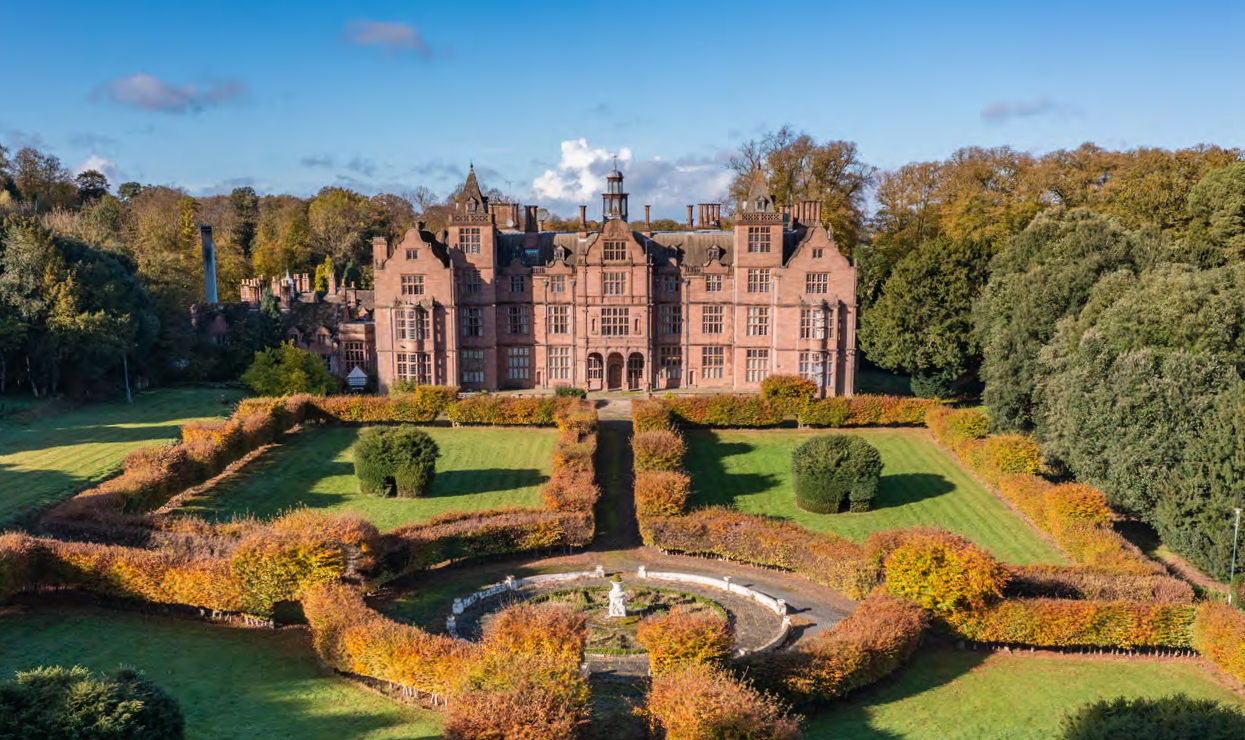


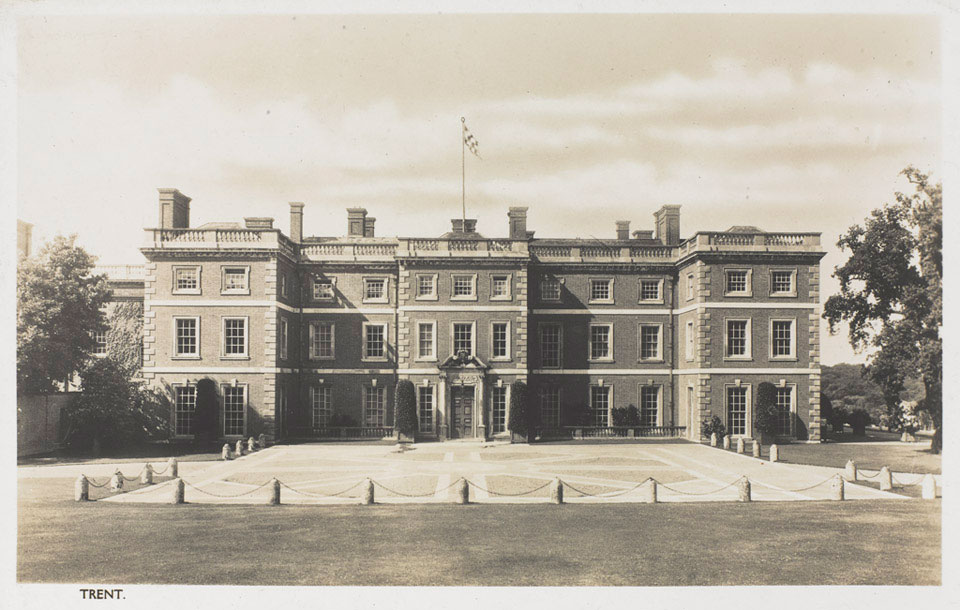
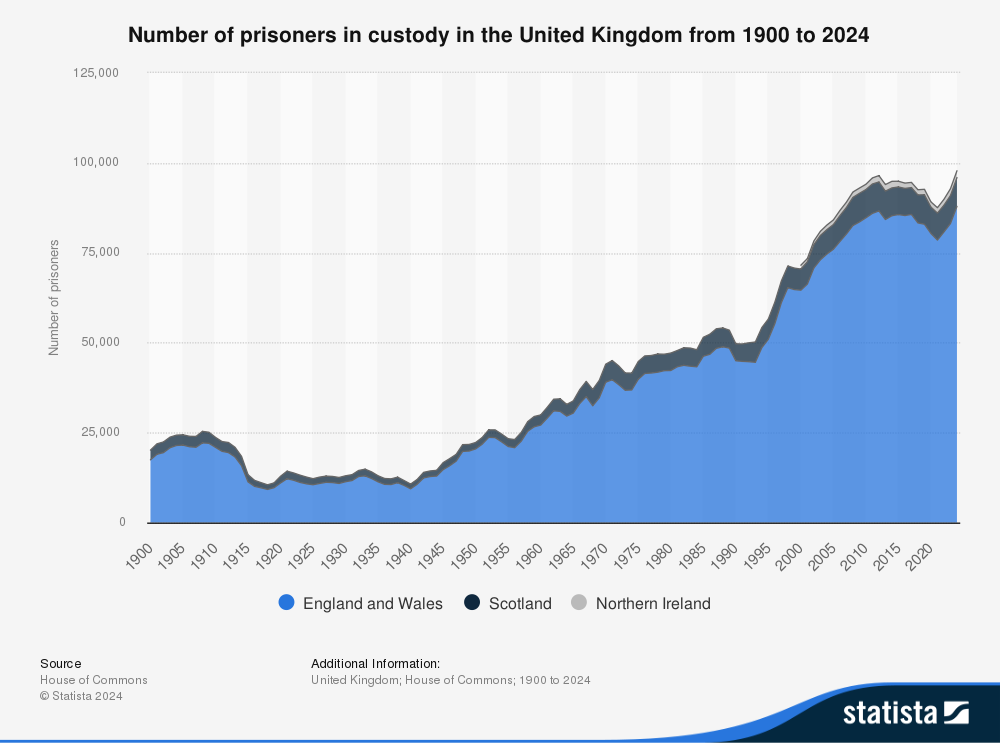
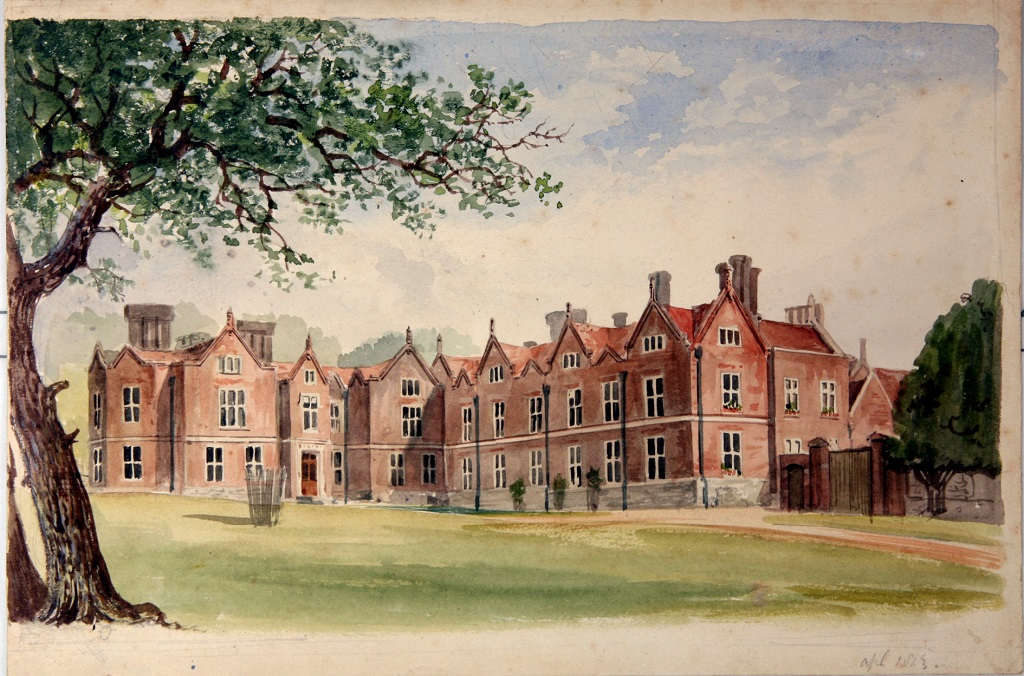

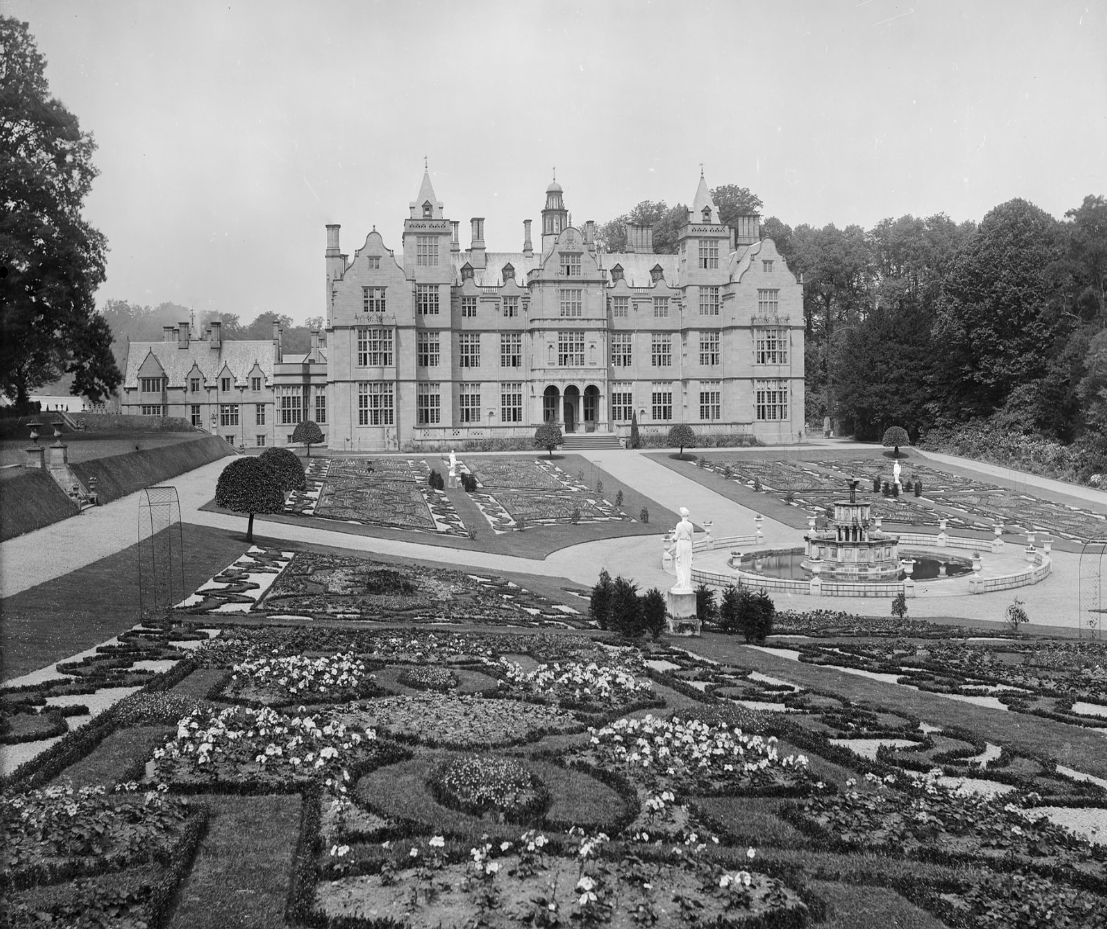
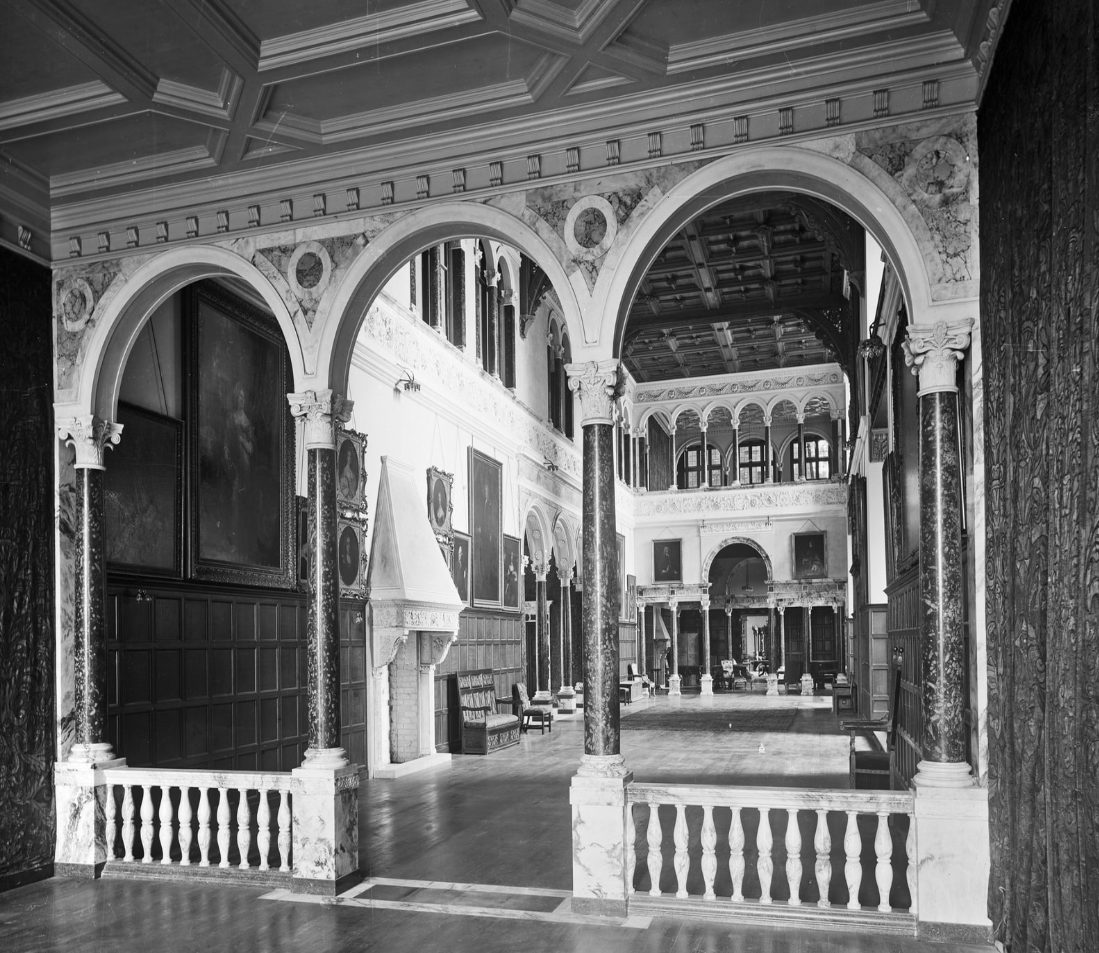
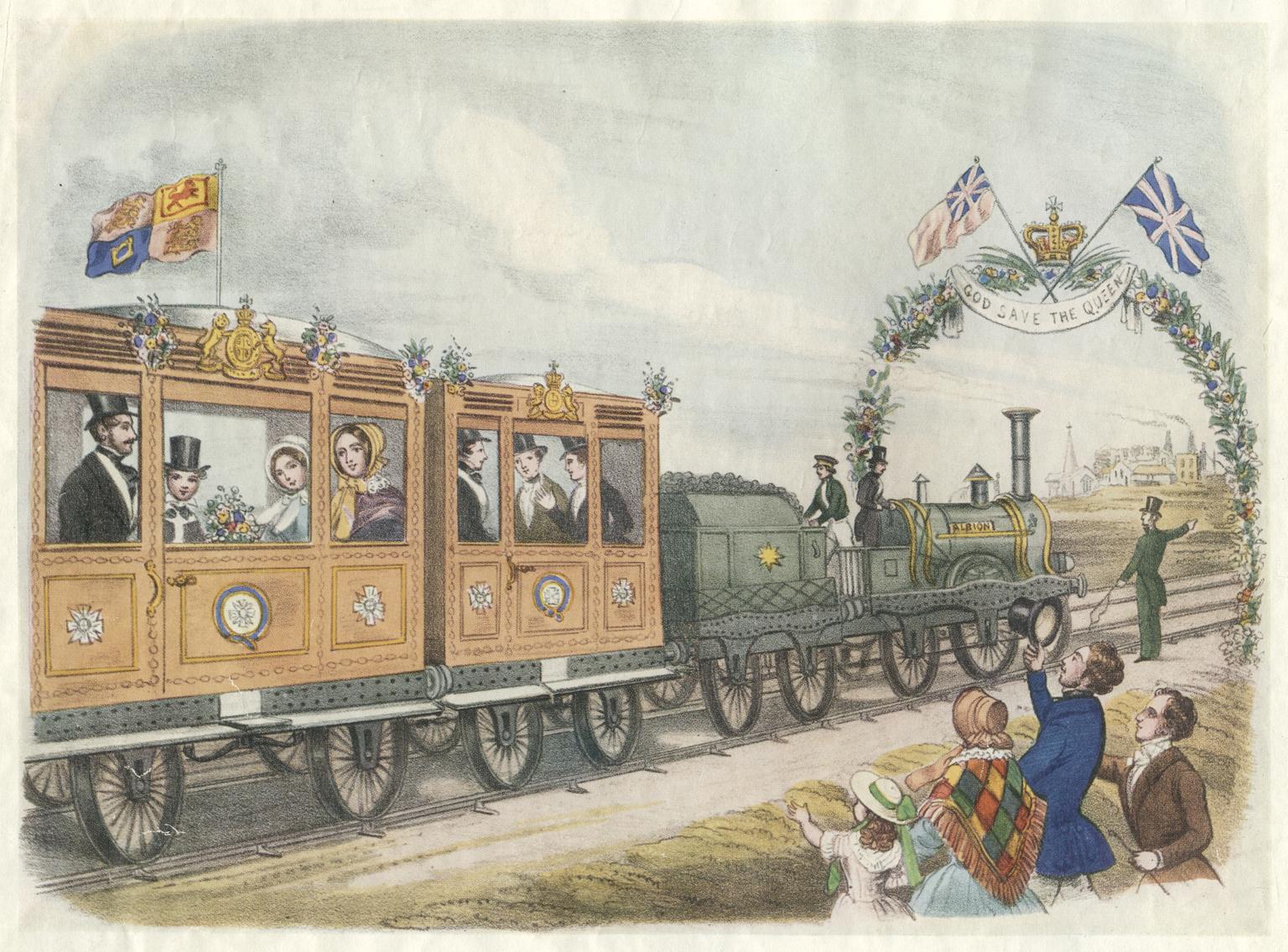


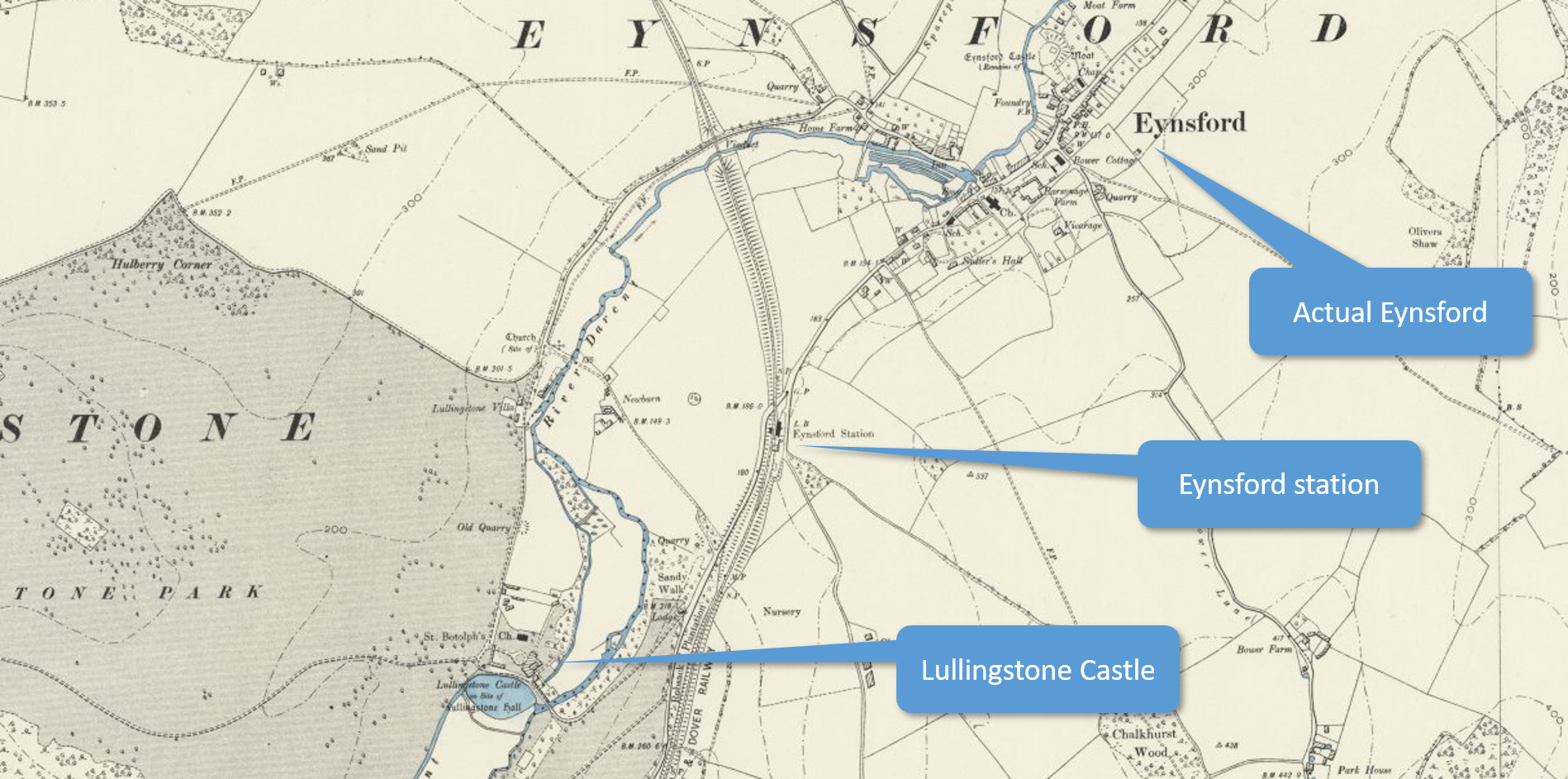


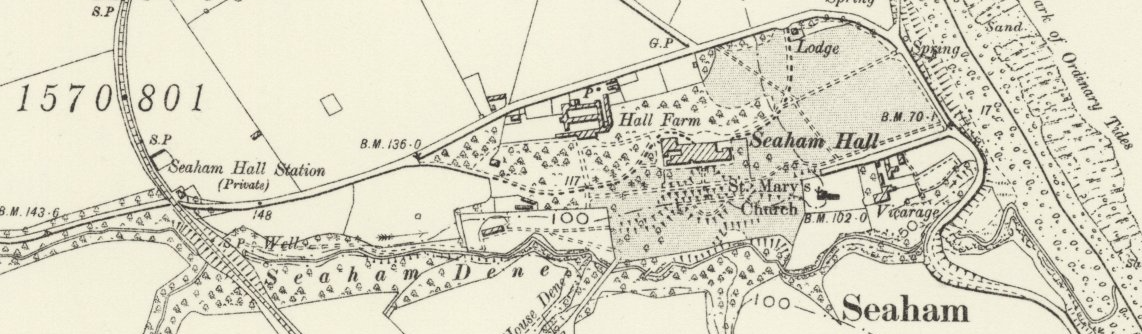
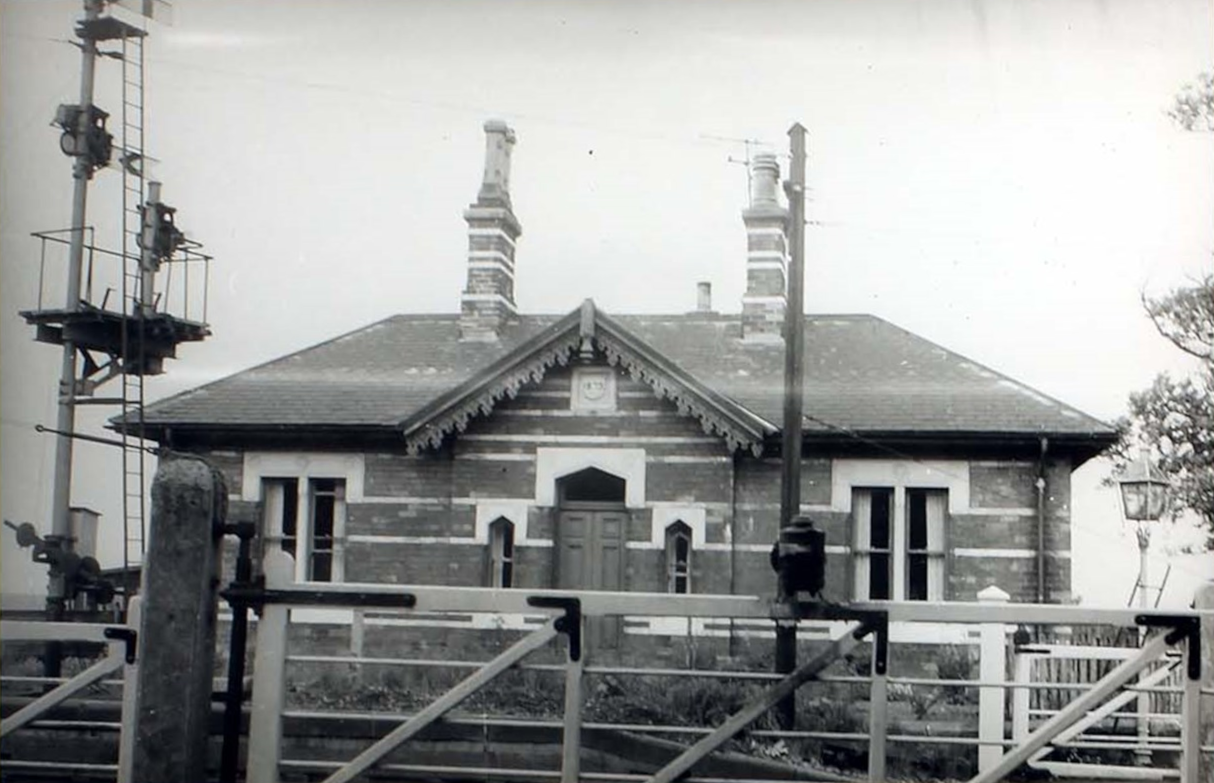


 – Stephen Daniels
 – Dorothy Stroud

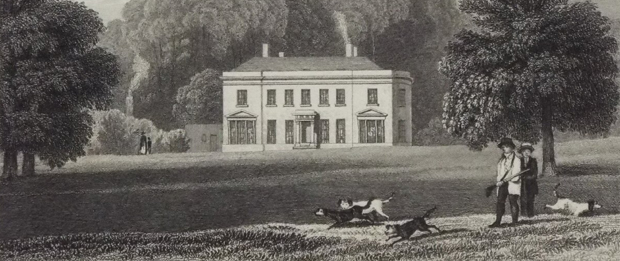


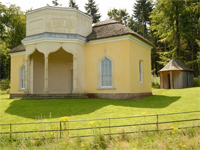
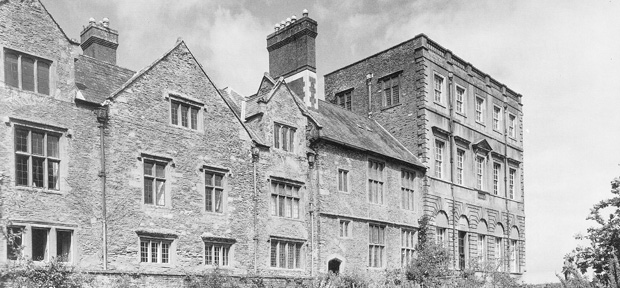
 The Country Seat