A gilded cage: country houses as prisons

Country houses have been slightly glibly described as ‘prisons’, usually due to the restrictive social conventions, which stifled the freedom of the occupants. However, country houses have occasionally been repurposed as true custodial institutions, serving as prisons, youth detention centres, approved schools, prisoner-of-war (POW) camps from the 18th century to the present. This role is one which has been often overlooked in the history of the country house.
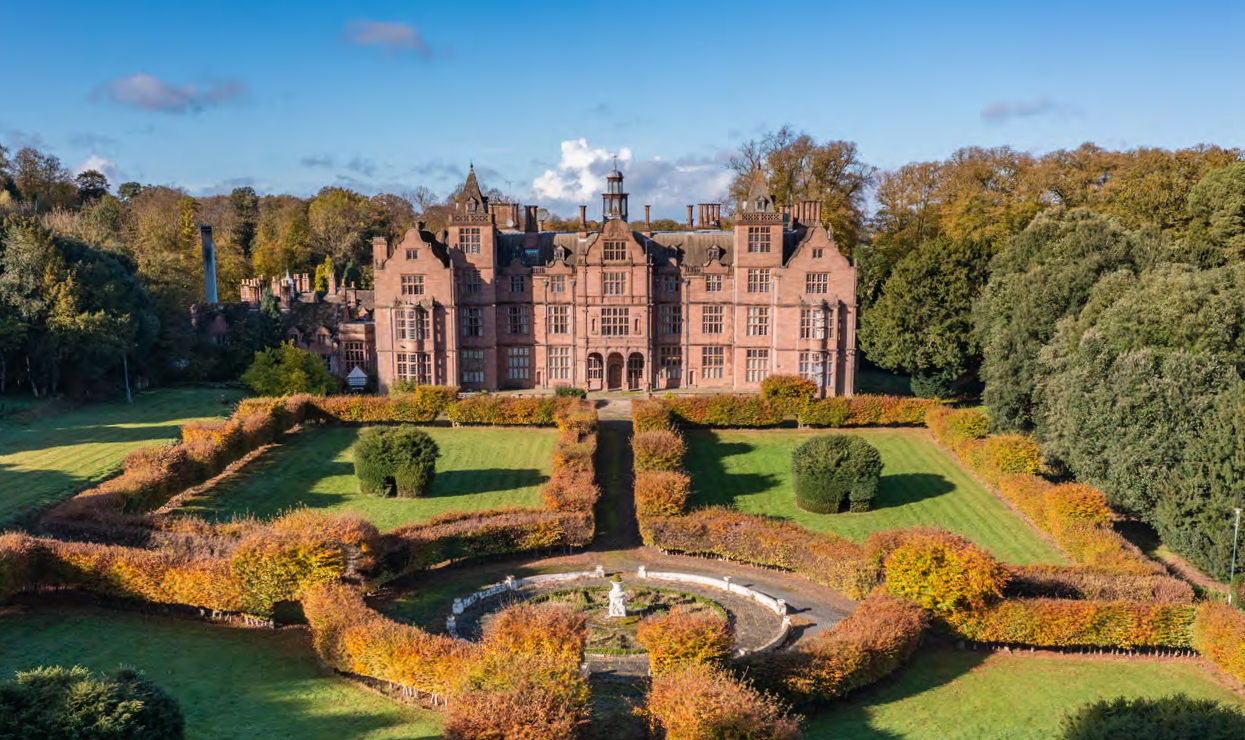
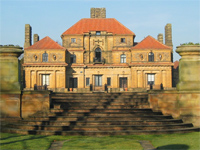
Hewell Grange, Staffordshire aka HM Prison Hewell Grange 1946-2019 (Image © Cushman & Wakefield)

A fictional prison

If one wished, it was always possible to cast the country house as a prison, of sorts. The restrictions placed on everyone who lived in one, whether as the lord or the lowliest servant, was a web of both explicit and implicit rules. Although they could, in theory, walk out of any unlocked door, the reality was that they were trapped, bound to the building.

Fiction has long played on this idea, weaving physical incarceration, with its psychological equivalent. There are the self-imposed emotional bonds which confine the jilted Miss Havisham to her decaying Satis House in Charles Dickens’ ‘Great Expectations‘ (1861), or the fear which entraps the governess at Bly House in ‘The Turn of the Screw‘ (1898) by Henry James. In ‘Rebecca‘ by Daphne du Maurier (1938), Manderley, the grand estate in Cornwall, becomes a place of psychological imprisonment for the unnamed narrator. Haunted by the lingering presence of her husband’s first wife, Rebecca, the narrator feels trapped by the oppressive atmosphere of the house and the expectations imposed upon her. More recently, in Sarah Waters’ ‘The Little Stranger‘, the decaying Georgian mansion of Hundreds Hall (played by Newby Hall, Yorkshire in the film), becomes a symbol of entrapment for its inhabitants as their financial decline echoes that of their place in society, leaving them isolated.

Newby Hall, North Yorkshire, represented the fictional Hundreds Hall in the 2018 adaptation of Sarah Waters’ ‘The Little Stranger’

Beyond these intangible confines, the house as a cell was perhaps most famously portrayed with Bertha Mason, Mr Rochester’s wife, confined as the ‘mad woman in the attic’ of Thornfield Hall in Charlotte Brontë’s ‘Jane Eyre‘ (1847).

Royal confinement

Beyond fiction, the country house has, at times of need, served in reality as a place of confinement – pressed into service as a working prison when circumstance demanded.

On 16 May 1568, Mary Queen of Scots fled to England seeking refuge from political turmoil in Scotland after the battle of Langside and spent her first night at Workington Hall, Cumbria. Mary had come to England in the hope of gaining support from the Catholic nobility and of appealing to her cousin, Queen Elizabeth I, for political assistance in regaining her Scottish throne. However, because both women were descended from Henry VII, Mary possessed a strong claim to the English crown. This made her presence in England a direct threat to Elizabeth, particularly as Mary was a Catholic alternative to Elizabeth’s Protestant rule.

Although Mary was technically a guest, she was heavily guarded and this effectively marked the beginning of her nearly 19-year imprisonment before her execution. Mary was moved around regularly to thwart plots to free her, from castles to eventually the country houses of George Talbot, the 6th Earl of Shrewsbury (b.1522 – d.1590). The Earl of Shrewsbury, famously married to Bess of Hardwick, played a pivotal role in the confinement of Mary, having been appointed her custodian by the Queen. Throughout various periods, he held Mary at his family’s houses including Wingfield Manor, Hardwick Hall, Chatsworth House, and Sheffield Manor – all situated within a 15-mile radius in Derbyshire. Mary was finally moved to Fotheringhay Castle, Northamptonshire, arriving on 25 September 1586. She was put on trial in October, and then executed in the Great Hall on 8 February 1587. Her long confinement within such grand yet guarded houses stands as a stark reminder of how the architecture of luxury could so easily become the architecture of captivity.

A prisoner of war

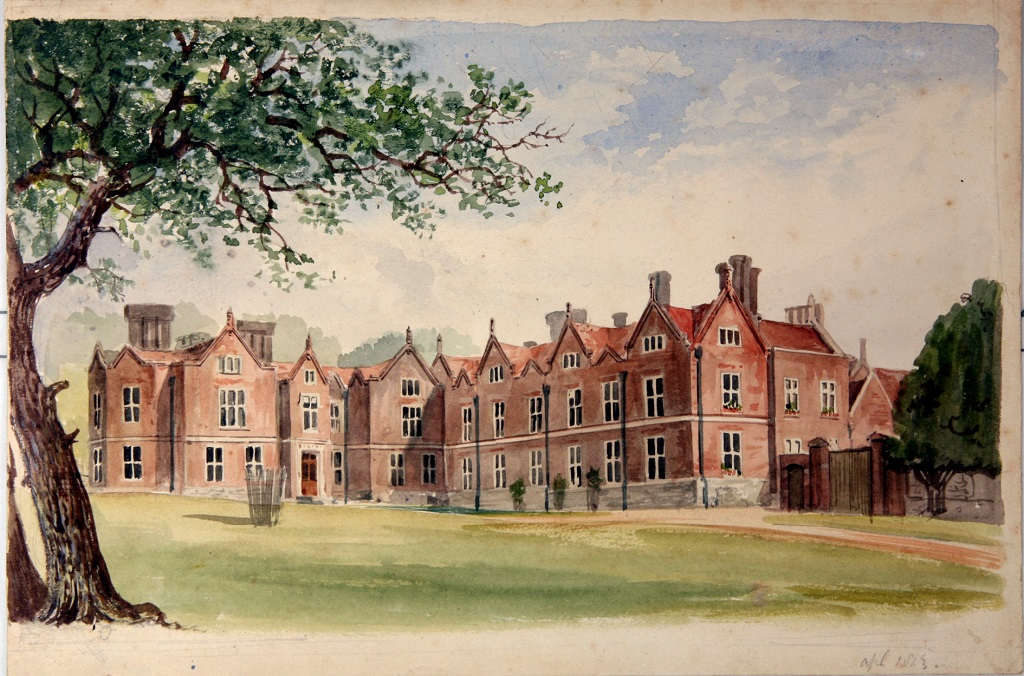
In wartime, country houses have been pressed into service in a wide variety of roles, with prisoner-of-war camps among the least glamorous. Stepping beyond the more obviously martial associations of castles, one of the earliest – and most notorious – examples was at Sissinghurst in Kent during the Seven Years’ War (1756–1763). The house, by this time had been allowed to fall in to a significant state of disrepair by the then owners, the Baker family. The government rented the property and adapted it to hold around 3,000 French naval prisoners, during which time it was further mistreated with the inmates destroying panelling, fireplaces, the chapel furniture, and leaving the garden a wasteland.

In 2008, a newly identified watercolour emerged that provides the most complete known view of the Elizabethan house during this period when it was a prison – and includes the chilling depiction of a double murder.

Watercolour (c.1761) showing the Killing of a Group of French Prisoners at Sissinghurst Castle Garden, Kent. Sissinghurst Castle © National Trust Images / John Hammond 2016
Sissinghurst Castle with the Killing of a Group of French Prisoners English School, circa 1761. Ink and dye on laid paper. (© National Trust Images / John Hammond 2016)

On 9 July 1761, whilst guarded by local, poorly-trained, armed militia, three prisoners who had escaped were being brought back to the camp. Their arrival caused a group of prisoners to rush to the fence out of curiosity.  One of the militia, a hot-head called John Bramston, shouted that they were to come no closer or he would fire. He loaded his musket with three balls and fired at the group. One ball struck the wall, the other two each hitting a prisoner. One by the name of Baslier Baillie was wounded (shown top-left being helped by two friends), but another, Sebastien Billet, was killed instantly. Bramston was unrepentant. The picture is thought to have been painted by a Frenchman to record the crime – but in doing so also left a powerful visual record of a now much-altered house and its time as a prison.

World War II

During the twentieth century, several distinguished country houses were temporarily repurposed to serve the needs of war, their refined architecture providing an incongruous backdrop to confinement. At Huntercombe Hall in Oxfordshire, the late-Victorian mansion, with its commanding stone façade and landscaped setting, was requisitioned during the Second World War as a secure detention site, most notably for high-ranking German prisoners including Rudolf Hess, whose isolation lent the house an unlikely role in wartime diplomacy and intelligence. In north London, Trent Park, a neo-Palladian villa by Sir William Chambers, was adapted as a special interrogation centre, where senior German officers were held in conditions of deceptive comfort while their conversations were secretly recorded – its grand rooms thus becoming instruments of psychological warfare.
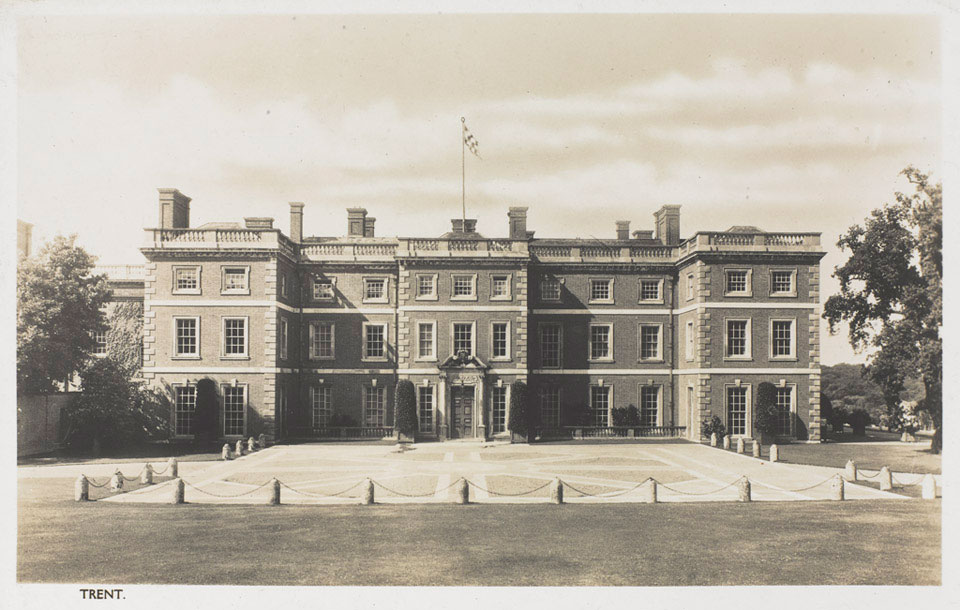
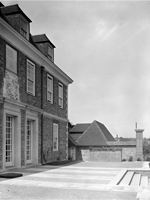
Entrance front of Trent Park, Enfield, north London (Image © National Army Museum ref: NAM. 1993-10-163-1)

Similarly, Mytchett Place, Surrey, during 1941–42, this Victorian mansion was fortified and codenamed “Camp Z,” serving as a one-man prison wired for surveillance for the detention of Deputy Führer Rudolf Hess.

Further north, the Huntroyde Hall estate in Lancashire, long the seat of the Starkie family, was similarly turned over to military purposes, its once-private parkland accommodating prisoners and personnel within hastily erected compounds. As with Sissinghurst, the mistreatment during the harsh use as a prison was a significant factor in its later demolition. Earlier, in the First World War, the partly medieval Badsey Manor House in Worcestershire was similarly employed to house prisoners of war, marking a utilitarian phase in its long domestic history.

The changing attitude to the role of prisons

The use of country estates and their houses was partly one of necessity in wartime, but in the post-war period also reflected a change in attitudes towards a more therapeutic approach towards incarceration from the 19th-century focus on harsh conditions and hard labour as a deterrent.

Why country houses? They offered several advantages: privacy (away from cities, escapes less dangerous to public), space for agriculture and workshops (important for training prisoners in trades), and an existing infrastructure of accommodations and kitchens. Also, symbolically, placing prisoners in a “less oppressive” environment was meant to encourage self-respect and responsibility – a deliberate contrast to the austere walled prison. Askham Grange’s homely appearance was cited as beneficial for women.

The open-prison concept drew heavily on Alexander Paterson, who joined the Prison Commission in 1922. He argued that imprisonment should actively shape behaviour for the better, with inmates encouraged to develop through structured physical and mental activity.

In the 1940s, there had been a steady increase in the total number of people convicted of indictable offences. During a House of Lords debate on Penal Reform in November 1946, the Lord Chancellor, Lord Jowitt, lamented the tendency towards increasing crime before WWII, stating that,

I take the five years 1934–1938. The number of young persons found guilty of indictable offences moved up from 10,000 odd in 1934 to 14,000 odd in 1938 – that is males; females from 1,300 odd in 1934 to 1,600 odd in 1938. …When we have the figures of 14,000 young men and 1,600 young women going up to the sort of figures we have to-day [1947], for the total number of persons – 78,000 in 1938, moving up in 1945 to 116,000…it is quite obvious that we have here a very real problem. (Source: Hansard – column 442)

The noble Lord’s figures indicated a serious issue so whilst not everyone convicted was incarcerated, there was a steady rise in the prison population:
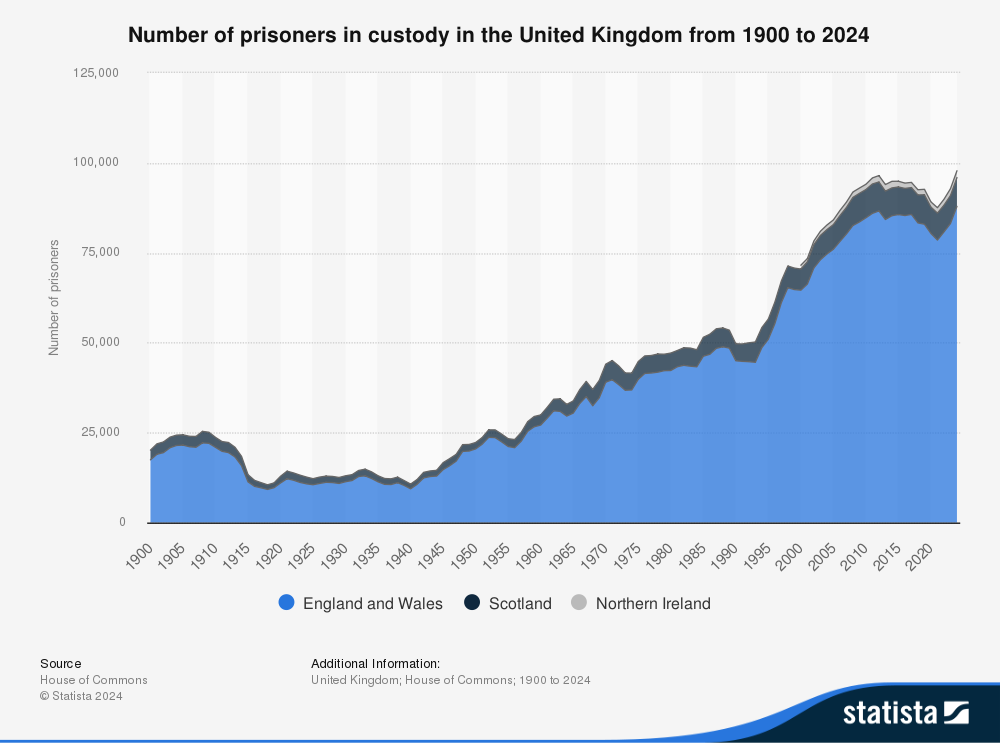
Number of prisoners in custody in the United Kingdom from 1900 to 2024 (Image source: Statista. Data source: UK prison population statistics – published July 2024. House of Commons Library)

The sustained increase in the total population by over 50% from 1940-1950, would place significant stress on any system of incarceration. However, attitudes had changed and the harsh conditions of punishment of the nineteenth century were now considered to do more harm than good, especially for young offenders. The Criminal Justice Act of 1948 introduced major reforms for young and habitual offenders. It barred sending under-21s to prison except as a last resort, directing them instead to borstal training or, for shorter terms, to detention centres.

This more enlightened perspective, which the Lord Chancellor was fully supportive in that same debate, created a requirement for a system which emphasised a more probationary approach via the borstal system. By relying on less stringent security, and often promoting training and useful labour – particularly agricultural – this created a means to reform and improve the lives of those who had been convicted. The Lord Chancellor welcomed that:

Thank goodness, we are now approaching the time when it will no longer be necessary to detain in prison for long periods persons who are ultimately going to serve their sentences in Borstal. The institutions we now have are of very varied types. Sometimes they are in a camp and sometimes they are in a country house, where the inmates can be engaged on agricultural work. We have also opened a new Borstal institution for girls at East Sutton Park in Surrey. That is a small institution and will take some fifty girls. (Source: Hansard – column 447)
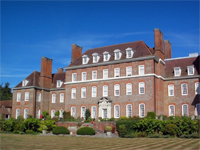
East Sutton Place [Park], Kent, which became the first open female Borstal in 1946 (Image © Kent Archives)

Interest also developed in adapting elements of the short-lived but influential “Wakefield experiment,” introduced during the First World War to manage the most uncompromising conscientious objectors – the Absolutists – who refused all military orders. Previously held in ordinary prisons, they became the focus of MPs arguing for more humane treatment. The government resisted releasing them but agreed to trial a compromise by placing all COs under a new regime at Wakefield.

This system relied on a high degree of trust. Cell doors were left unlocked, prisoners could move freely within the prison, and a small allowance allowed them to buy writing materials and tobacco. Conditions were not freedom, but a clear improvement. Leisure and work were timetabled, with expectations of diligence and no “singing, shouting, whistling, or reading” during working hours. The experiment collapsed when the men rejected the rules they had helped draft, leading to their return to standard prisons. Even so, its central idea – combining restrictions with opportunities for responsibility and reform – would influence later thinking about penal regimes.

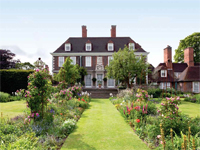
Entrance to Tortworth Court, Gloucestershire (Image from private collection)

Speaking during the same debate in 1946, the Lord Chancellor again highlighted that such facilities were being developed:

We have recently taken over a former hospital at Tortworth [Court] in Gloucestershire as what is called a minimum security prison for selected convicts. In that way we can do much towards their rehabilitation and their ultimate reassimilation into ordinary civilian life. (Source: Hansard – column 447)

This approach influenced the selection of suitable locations for the new prisons. At HMP Leyhill, the government repurposed an ex-American Army hospital camp on the Tortworth estate to create the first open prison in 1946. The adjacency of Tortworth Court (then still with the Earl of Ducie) gave the model of a country setting if not using the main house. Interestingly – the house was not taken as it was returned to the Earl; but by the 1950s, Leyhill expanded and did start using some estate buildings, thought the wider estate is still owned and managed by the Earl of Ducie’s family as Tortworth Estates.

Hewell Grange

Hewell Grange epitomizes the pattern for long-term penal conversion. An existing country house could be successfully integrated into the penal system for decades, effectively becoming a self-contained village (with a chapel, workshops, and housing all on site).

The grand main house, last great prodigy houses of its era, provided an environment, even when not used directly as cells for prisoners, was arguably more humane than a typical prison – former inmates often remarked on the beauty of the lake and gardens, which were part of a 250-acre landscape park laid out by Capability Brown, with formal terraces, a lake, and extensive service buildings. By the lake are also the ruins of Old Hewell Grange, the classical predecessor to the current house. After being superseded by the new Hewell Grange in the 1890s, it was accidentally gutted by fire and abandoned, and now survives as a roofless ruin, its classical form still partly visible among collapsed walls and encroaching vegetation.
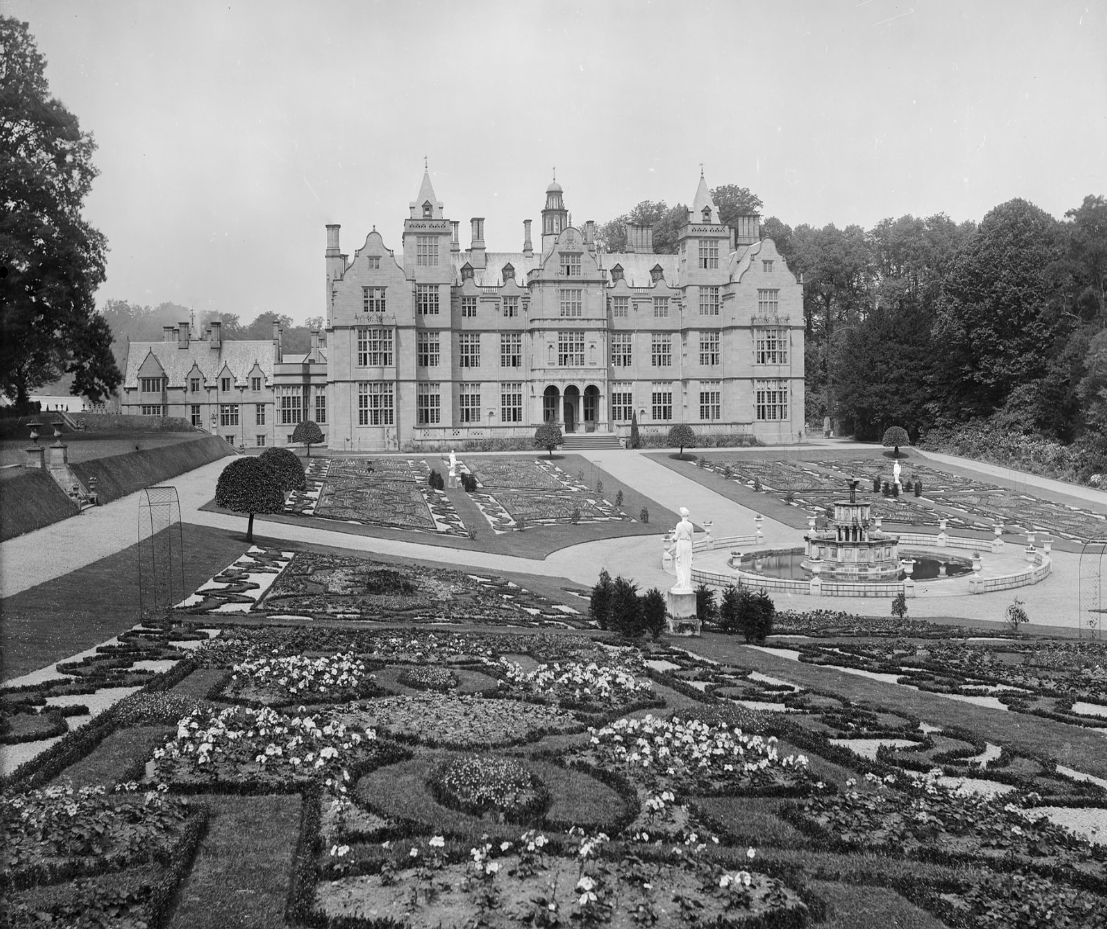
View of Hewell Grange and the formal garden to the south-east of the house c.1892 (Image © Historic England, ref: BL11660/016)

The new house was built between 1884 and 1891 for Robert Windsor-Clive, later 1st Earl of Plymouth, Hewell Grange cost approximately £250,000 (equivalent to spending c.£39m today). Designed by George Frederick Bodley and Thomas Garner in the Jacobethan style, the red brick house with stone dressings features an E-plan, steeply pitched gables, clustered chimneys, and mullioned-transomed windows. Interiors include carved oak panelling, a double-height Great Hall with a minstrel gallery, and elaborately modelled plaster ceilings.
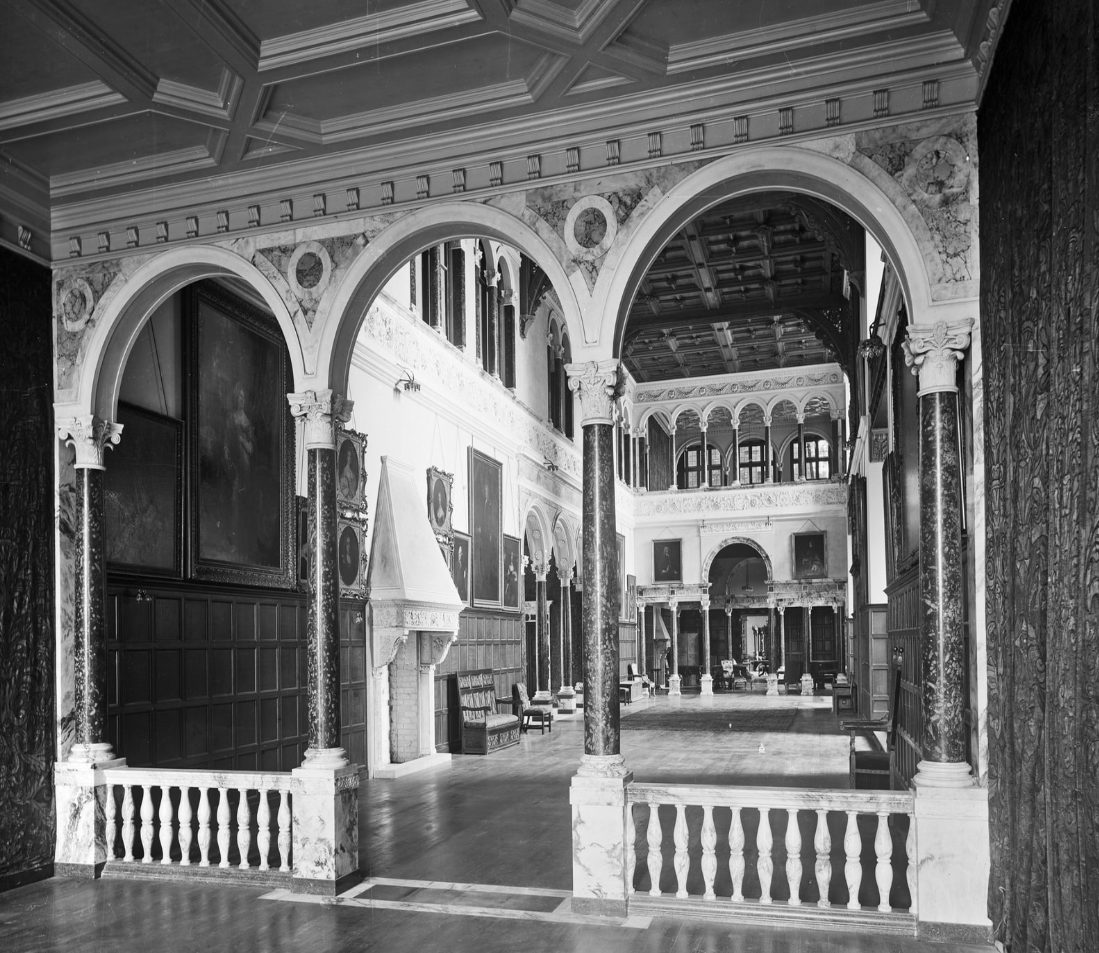
Interior of the Italianate style Great Hall of Hewell Grange, 1891 (Image © Historic England, ref: BL11026)

However, Hewell Grange also reveals both the potential and limitations of prison use: spacious and already built, the house saved the state construction costs in 1946; but by 2019, it was anachronistic and expensive to run. By the 2010s, the UK prison estate was being rationalized. In 2019 the Ministry of Justice announced the closure of the open prison at Hewell Grange, following a critical inspection report and also reflected the cost of maintaining an ageing mansion for modern custody standards. The prison formally closed in 2020, and the entire site was consolidated into one (closed) prison to the north east of the house, around 600 meters away.

Hewell Grange house is now vacant and lacking a clear future, beyond occasional use for filming and events. As is so often the case for heritage without a viable and sustainable purpose, its condition has deteriorated to ‘poor’ after closure, with concerns about lack of maintenance, resulting in it being placed on the Heritage at Risk Register. As of early 2022, the government put the property up for sale, seeking a new custodian to repurpose the historic estate once again.

It was apparently sold in 2023 to a hotel group but it’s unclear whether this fell through or they immediately put it back on the market, as it has been offered through Cushman & Wakefield, with 247 acres, for an undisclosed price. This inevitably raises questions about the future: will it return to a private residence, become a hotel or institution, or will it just be allowed to deteriorate until it becomes another country house to succumb to neglect, urban exploration or a mysterious fire?

Conclusion

The pattern of country house reuse reflects adaptability to historical moment. In wartime, necessity drove usage; in peacetime, policy experimentation and economic forces did. This practice peaked in the mid-20th century and today it would exceptionally unlikely for a house to be taken over for this purpose, with a clear preference for building dedicated facilities.

From a wider heritage perspective, Hewell Grange’s story is instructive as, unlike so many country houses that were demolished in the mid-20th century, the use as a prison provided a value and so it was preserved precisely because it found an institutional function. Now its preservation will depend on finding a sympathetic new use after its institutional life has ended.


A list of country houses used (either currently or previously) for incarceration by the state since 1900

Prison nameCountry houseCounty
Askham GrangeAskham GrangeYorkshire
BlundestonBlundeston LodgeSuffolk
Buckley HallBuckley HallLancashire
Bullwood HallBullwood HouseEssex
East Sutton ParkEast Sutton ParkKent
ErlestokeErlestoke ParkWiltshire
Foston HallFoston HallDerbyshire
HewellHewell GrangeWorcestershire
Hill HallHill HallEssex
HumberEventhorpe HallYorkshire
Kirklevington GrangeKirklevington GrangeYorkshire
Latchmere HouseLatchmere HouseSurrey
LittleheyGaynes HallCambridgeshire
Lowdham GrangeLowdham GrangeNottinghamshire
Morton HallMorton HallLincolnshire
Penninghame HousePenninghame HouseDumfriesshire
Spring HillGrendon HallBuckinghamshire
StockenStocken HallRutland

If I have missed any others, please share the details in the comments or contact me directly and I’ll update the list.

Sites associated with nearby country houses

Prison nameCountry houseCounty
Eastwood ParkEastwood ParkGloucestershire
LeyhillTortworth CourtGloucestershire
Swinfen HallSwinfen HallStaffordshire


Selected references


Further research

Interestingly, the subject of the use of the country house for incarceration doesn’t appear to have been covered in depth academically, as far as I could discover. Given the numerous angles, this would appear to be an area which someone may wish to investigate further as the official records and related information would probably reveal a richer story than I have been able to share here. Happy to have a chat if anyone wishes to take it on.
Syngenta’s shame: proposed demolition of Dalton Grange, Hudderfield

To paraphrase: ‘all that is required for heritage to be lost, is for good people to do nothing‘.  Sometimes this can be through deliberately ignoring a situation or through lack of awareness that a situation even exists. So, this is a quick post to highlight the shamefully poor justification that Syngenta Ltd have proposed as reason to demolish the mistreated but ‘hugely characterful’ Dalton Grange in Huddersfield.

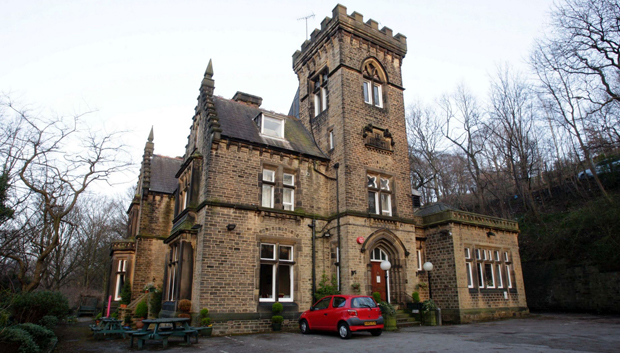
Dalton Grange, Huddersfield, Yorkshire (Image: Huddersfield Examiner)

Syngenta Ltd is a Swiss-based, global agri-business with revenues of over $14bn and profits of over $1.6bn (2013) – and I have no problem with that at all; big business provides jobs but it also creates local responsibilities.  The corporate website is bathed in the language of sustainability and waste reduction – noble, certainly, but sadly in Huddersfield, they appear to not be interested in following these aims.

A recent application was made by Syngenta to Kirklees Council to demolish Dalton Grange; a building the Victorian Society have identified in their response as being locally significant, both historically and architecturally.  They note that it was built in 1870 by prominent local industrialist Henry Brook, of J.H. Brook & Sons of Bradley Mills (both north and south mills at Bradley Mills are listed Grade II).  Sited on a hill, the house is:

…a sturdy and handsome essay in baronial Gothic, with a prominent castellated turret providing dramatic views of the building at the end of its drive. It is a hugely characterful building and is set in large terraced gardens that in recent years have been restored in order to provide the beautiful landscaped setting that it once enjoyed.
Consultee Responses: Victorian Society

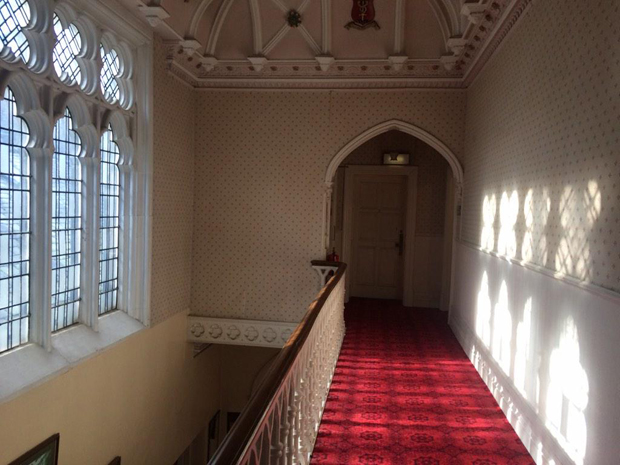
Dalton Grange staircase (Image: Dalton Grange)

Care for a local area should be integral to how a company operates, respecting the traditions and heritage which surround their sites.  In both local terms and in relation to national guidelines, the bar needs to be set high to justify the loss of heritage – so how do Syngenta address this:

Reason for demolition: No foreseeable future use for the building. In addition there are anticipated excessive costs associated with ongoing maintenance & refurbishment
Source: Application 2014/68/91888/W

Allow me to paraphrase: ‘Syngenta can’t be bothered to use this heritage asset which is in their care and it’s looking a bit expensive to look after in the way we are supposed to, so we would prefer it if we could just get rid of it.‘ In some meeting, this must have seemed like a quick solution. Hold on though, we’d better think of something we can usefully use this space for once we’ve cleared it. What inspiring solution can we find? What might conceivably justify this lost of a building which has been part of the Huddersfield landscape for nearly 150 years – let’s look at their application again, specifically section 5:

Please describe details of the proposed restoration of the site: A possible outcome is that parking provision for a number of cars will be made available to help ease traffic problems during stadium events.

A car park. Well done, Syngenta.  Speaking to the Huddersfield Examiner, Syngenta community relations manager (ha ha!), Carl Sykes said “This is a private building on private industrial land.” Which I think is his way of saying ‘It’s none of your business’. He continues:

“Times have changed and now they don’t want to run a social club and we no longer have a use for the building. [Or ‘if we can’t have it, no-one can have it’]

“We’re looking to keep skilled manufacturing jobs in Huddersfield for future generations, we cannot continue to subsidise a tired and decaying building that is becoming beyond economic repair.

“We know there is asbestos in the building and attempts to renovate or modify the building would run into tens of thousands of pounds.” [Asbestos is now the new dry rot – used to justify any sort of historic demolition]

“When the demolition is completed, we shall explore how we might use the land to give some real value to the area, rather than becoming a shuttered up, rotting, old building. [Of course, if you sold it to someone who cared about Huddersfield’s heritage it would avoid the fate you are clearly planning for it]

“For example, the land could be used for allotments or maybe stadium match day parking.” [Oh yes, that’s definitely better. What a fine swap].

This is symptomatic of the casual way in which heritage is being treated up and down the country.  Although there are some great examples of sensitive corporate care for heritage assets, there are many others – from small developers to global multi-national agri-businesses – who fail to recognise that heritage is to be cared for and respected.

Dalton Grange, Yorkshire (Image: Huddersfield Examiner)

Kirklees Council also need to take the role expected of them and reject (forcefully) this casual destruction of historic buildings which are an integral part of the character of their local area. Syngenta may be a major local employer but that’s all the more reason to stand firm and provide a precedent that will ensure that the local residents know that the Council cares about protecting a local environment, rich in character and heritage.  The Huddersfield Daily Examiner, should also be leading a campaign to save their heritage, giving voice to those who live in the area who, if asked, would almost certainly prefer to retain a fine old historic house – an article published on 21 March 2015 does start this with a suitably sceptical headline: ‘Proposed demolition of Dalton Grange sparks outrage‘.

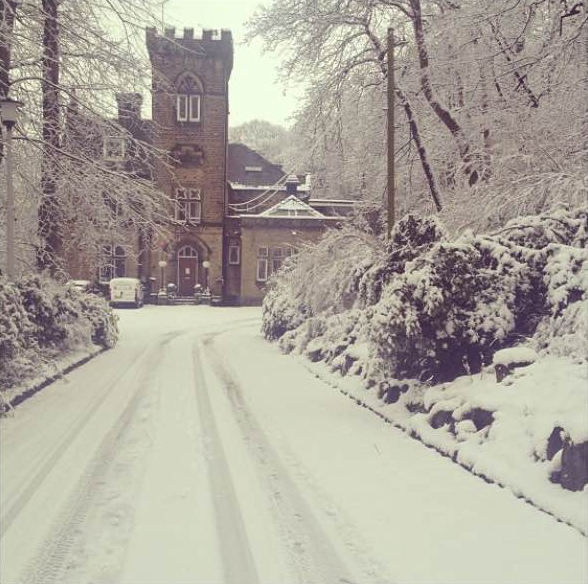
Dalton Grange in the snow (Image: Dalton Grange)

Of course, perhaps Dalton Grange isn’t the most spectacular building or in the best condition or in the best position, on the edge of a huge Syngenta production plant but it is separated by a pleasant band of woodland so it would not impact the integrity of their site if they sold it. And perhaps that plant won’t always be there but during their tenure they should ensure that they show respect to local architectural heritage which has been there since long before them.  To demolish the house on such flimsy grounds as ‘maintenance is a bit expensive’ and ‘we fancy a car park’ would be a shameful episode.  Syngenta should immediately withdraw the application, explain how they are going to restore Dalton Grange or sell it, and help find a sustainable long-term use (in line with their professed corporate philosophy) for this small but locally important part of Huddersfield’s heritage.

——————————————————————————————————

Prior notification for demolition of building: Dalton Grange, 19, Bradley Mills Road, Rawthorpe, Huddersfield, HD5 9PR [2014/68/91888/W]

Proposed demolition of Dalton Grange sparks outrage‘ [Huddersfield Examiner]

Victorian Society

Dalton Grange

The finest SAVE, now for sale: Barlaston Hall, Staffordshire

Barlaston Hall, Staffordshire (Image: Knight Frank)

The wholesale destruction of UK country houses in the 1930s and 1950s was undoubtedly a tragic waste; not only of materials but also the embodied beauty and history of the hundreds of houses lost. Barlaston Hall, recently launched on the market for sale, and which was so valiantly fought for by SAVE Britain’s Heritage who famously bought it for £1, provides a case study which shows what might have been possible if circumstances had been different. How many more of our country houses might have survived to still be found nestled at the end of a tree-lined drive?

Collapse of Hague Hall, Yorkshire, due to mining subsidence, 1910 (Image: Lost Heritage)

The plight of the country house in the 20th-century struck at both the large and the small, the grand and the intimate.  A financial crisis could, in a generation, take a family from a secure status enjoying thousands of acres to one of ruin and a forced retreat from the family seat.  For some houses the demise was swift – for sale intact one year but the following year could see sales of contents, then fixtures and fittings, and finally the materials. The alternative fate for a number of houses was a lingering demise – abandoned, at risk from thieves and the weather, to an increasingly hostile environment with threats coming from every angle, even from below.

The elegant Barlaston Hall in Staffordshire was one house which fell firmly into the latter category. A remarkable house, it represented an important development of the Palladian tradition; the moment it moved from ‘copying’ to evolving.  The house was built c.1756-58 for Thomas Mills, a local lawyer, with the design convincingly attributed to Sir Robert Taylor (b.1714-1788).

Architecture was not his first choice of career. Taylor was the son of a master mason and sculptor, also called Robert, who was successful enough to build a villa in Woodford, Essex, but who was also rather profligate.  The father managed to get his son apprenticed to the sculptor Henry Cheere and on completing his time, found his father had just enough to send him on to Rome to study.  Whilst there, his father died so he came back to find his inheritance was no more than debts, but friends enabled him to set up as a sculptor and by 1744 he was sufficiently accomplished to be commissioned by Parliament and to carve the pediment of the Mansion House in the City of London.  It became clear that he paled in the shadow of his contemporaries – Roubiliac, Rysbrack and Scheemakers – so at the age of 40 he turned to architecture.

Outside influences often act as catalysts for development. In the same way that Blenheim Palace was enriched by Vanbrugh‘s theatrical experience, so Taylor had the advantage of his earlier, if unsuccessful, sculptural career which brought a more developed sense of shape, form, and movement to his architecture.  Colvin praises him as an architect of ‘considerable originality‘ and that ‘his villas…represented a new departure in country-house architecture‘. What Taylor provided was an evolution of the strict Palladian designs of the previous generation, marrying them to a more tolerant approach that allowed the interiors to be more Rococo, with decorative plasterwork and patterns, drawing on his knowledge of the original sources in Italy. Taylor created wonderfully elegant villas for his clientèle of bankers and merchants, who needed smaller houses for entertaining rather than seats for a rural family empire.

Braxted Park, Essex - note the octagonal window frames (Image: Braxted Park)
Braxted Park, Essex – note the octagonal window frames (Image: Braxted Park)

Although Taylor undoubtedly designed many buildings, he seems to have almost conspired to make it impossible to attribute them as he left no record of his practice and also apparently never signed his drawings.  There are, therefore, large gaps in both his chronological and stylistic history but starting with his first country house, Braxted Park, Essex in 1753-6, it is clear that his skill and legendary capacity for hard graft meant a sizeable output.

Harleyford Manor, Buckinghamshire (Image: Stephen Richards via Geograph)

Of particular note, in relation to Barlaston Hall, is Taylor’s design for Harleyford Manor, Buckinghamshire, in 1755. Part of a group of second-generation Palladians – along with Flitcroft, Keene, Paine, Ware, and Wright – Taylor saw Palladio as an inspiration but was not a slavish disciple.  The core principles relating to proportion and preserving a necessary elegance were respected but it was in the interpretation that they introduced variety.  At Harleyford, Taylor took a more vernacular style to the idea of the Villa Rotonda (a standalone villa with four equal fronts, allied with its landscape) but also combined with a sculptors appreciation that it should be attractive from all angles.

Asgill House, Richmond, Surrey (Image: Matthew Beckett)

Built between 1756-58, the layout and style of Barlaston Hall clearly shows the kinship with Harleyford. The elegant simplicity of the ground floor layout with the four principal rooms pushing out into the arms of the cross with a double-height central hall clearly can be derived from the Villa Rotonda but rotated on the axis to create more interior space, as opposed to the Rotonda’s open loggias.  One of the most distinctive features is the pleasing ‘chinese’-style woodwork, with octagonal window tracery on the exterior, a pattern mirrored in the library in the bookcase doors.  For one so early in his career, Taylor was showing remarkable invention, elegance and practicality, all of which served to launch his practice, which continued for 35 years. After Barlaston, further commissions such as Asgill House (1761-64) on the riverside at Richmond, Surrey, for his friend Sir Charles Asgill, also helped establish Taylor’s reputation.

Not that any of this innovation and elegance mattered to the Wedgwood company who applied twice in the early 1980s to demolish Barlaston Hall.  The house and estate had been bought by the famous pottery firm in 1937 as part of a scheme to create a new factory and model village for their workers.  These were built some distance away but the now grade-I listed house was badly neglected with serious water damage causing it to become increasingly derelict, with ceilings and the staircase collapsing, and the structure affected by subsidence caused by coal-mining.  The house also sat across a geological fault and future mining plans risked the whole area sinking by about 40 feet.  Clearly, this was a house very much at risk.

Entrance front, Barlaston Hall, Staffordshire (Image: SAVE Britain's Heritage)
Entrance front, Barlaston Hall, Staffordshire (Image: SAVE Britain’s Heritage)

In 1981, the second application to demolish was called to public inquiry, due to the importance of the house, where the architectural conservation charity SAVE Britain’s Heritage argued the case for the preservation and restoration of the house. As Barlaston Hall had been designated as ‘outstanding’ this placed certain obligations on the National Coal Board who would be required to pay for not only repairs but also preventative measures, such as the huge concrete raft they devised to prevent further movement.  After a few days of arguments, Wedgwood decided that they would make a bold move and offer the house to SAVE for £1 on the condition that it was restored within five years or they could buy it back for £1 (after which the house would no doubt be swiftly demolished).  The then Secretary of SAVE, Sophie Andreae, immediately phoned the President, Marcus Binney (who was in the USA) with the news.  Conscious that he had to make a decision there and then, Marcus called Wedgwood’s bluff and bought Barlaston Hall.

Dining Room, Barlaston Hall, Staffordshire - 1981 (Image: SAVE Britain's Heritage)
Dining Room, Barlaston Hall, Staffordshire – 1981 (Image: SAVE Britain’s Heritage)

A few days later when Marcus was able to visit the house for the first time, the scale of the challenge became starkly apparent.  Stepping into the debris-strewn hallways, light shone through all three floors from gaping holes in the collapsed roof and 4″ cracks indicated where the subsidence was taking hold.  Although most of the fireplaces had been stolen, the good news was that much of the original plasterwork on the walls and the distinctive woodwork had survived.  SAVE immediately organised a temporary roof, after which, the house took nearly 2 years to fully dry out.  Specialist heritage builders and professionals swiftly set to work on both the structural and conservation issues.

East front, Barlaston Hall - 1981 / 2014 (Images: SAVE Britain's Heritage / Knight Frank)
East front, Barlaston Hall – 1981 / 2014 (Images: SAVE Britain’s Heritage / Knight Frank)

Although work had started well, delays in securing the necessary certificates from the Secretary of State meant that the National Coal Board then decided to try and renege on their agreement to fund the work.  SAVE sought leave for a judicial review which prompted the Secretary of State to immediately fulfil his promises, which ultimately forced the National Coal Board to capitulate from their shameful position and fund the repair and preventative works – and SAVE’s legal fees too.  With immediate funding secured, which was followed by further grants, the conservation work continued.  It was put up for sale in 1992 and bought by the current owners who have sensitively completed the restoration of this captivating and fascinating house.

That the value of a house can go from £1 to £2.3m in the space of 30 years shows that the fortunes of country houses can rise as swiftly as they fall.  Barlaston Hall not only represents an important link in our understanding of the domestic Anglo-Palladian tradition, but is also a testament to how determined action can succeed even against larger opponents.  Today, the house still stands proudly displayed from the road, a bold statement of hope and preserved beauty.

——————————————————————

If you would like to support the fight to preserve our architectural heritage, please do become a Friend of SAVE Britain’s Heritage.  You will receive a regular newsletter plus access to the online database of ‘buildings at risk’.  You can also follow them on Twitter: ‘@SAVEBrit‘.  I am on the Committee of SAVE.

——————————————————————

The sale was announced in Country Life magazine: ‘A Country House Reborn‘ [16 April 2014]

Sales particulars: ‘Barlaston Hall‘ [Knight Frank]

A more detailed account of SAVE’s fight: ‘Barlaston Hall‘ – the Wedgwood Museum also has a brief history of the house on their website but which skips over the bit where Wedgwood tried to have it demolished. For historical images, see ‘Neville Melkin’s Grand Tour of the Potteries‘.

Welcome to the market: Lutyens’ The Salutation, Kent

The Salutation, Kent (Image: Knight Frank)

The analogy between language and architecture is one that has often been made, particularly as fluency is the key measure of success in both fields.  An immature architect can make elementary mistakes with the grammar of a building style as much as any tourist abroad can when ordering dinner. In most cases, both novice architect and linguist can be understood but when compared to the more experienced practitioner, skill and mastery come sharply into relief.  Such a lesson by a master architectural linguist has just been launched on the market; The Salutation, in Sandwich, Kent; a beautiful piece of poetry which demonstrates the fluency of the architect in the language of Classicism.

Heathcote, Ilkley (Image: Thursday Dave via Flickr)

Lutyens’ career can largely be seen in three phases; the early years of the ‘Surrey-Tudor’, which evolved into the middle ‘Arts & Crafts’, and then the divergence into the bold ‘Classical’, and its particular variant, ‘Edwardian Baroque’.  That last switch can be seen quite dramatically in the brilliant Heathcote, Yorkshire, built 1906, where Lutyens playfully adopted and adapted the Classical motifs and style of Palladio and Scammozzi to create a wonderfully detailed villa, rich in style and quite unlike his previous work.  After the exuberance of Heathcote (which annoyed Pevsner, who although he commented that it was ‘Only a villa, but how grand the treatment!‘, also dismissed features such as the pilasters which ‘disappear’ into the continuous rustication (see ground floor either side of the windows) as ‘silly tricks‘). On a side note; Heathcote recently sold having previously been bought by a developer/vandal who wished to split the house into two, thus ruining Lutyens’ interior planning – fingers crossed the new owner is sympathetic to this wonderful house.

Lutyens was, of course, part of a longer tradition starting with the first English classical architects practising around the time of Sir Christopher Wren in the mid-17th Century including Hugh May, William Samwell, and Roger Pratt. These pioneers displayed a similar skill in Anglo-Classicism producing buildings such as Cassiobury House (May), the first Eaton Hall (Samwell) and the revolutionary Coleshill (Pratt).  Classicism has long had a place in British architecture, despite other fashions, and has shown its versatility in being used for all sizes of house, from palaces to the smaller country retreat – and it was in this latter requirement that Lutyens was commissioned to build The Salutation.

Located on the site of an old inn of the same name, it was built in 1911-12 in the Queen Anne style as a retreat for Gaspard Farrer, a partner in Barings Bank, and his two bachelor brothers. Lutyens’ clients were typically those who had made money in the decades either side of 1900; that high-point of the country-house lifestyle when staff, materials and labour were relatively cheap. If there is a ‘criticism’ of Lutyens it’s his generosity with regards to space with hallways, alcoves, and large staircases, such as at The Salutation where an extended landing serves as an overflow from the library.  Yet, each space serves a purpose in the plan, typically framing views along axes or as part of a route to the principal rooms which Lutyens often incorporated into houses.

Great Maytham, Kent (Image: Stephen Nunney via Geograph)

The exterior of the house is a smaller derivation of his earlier and much grander Great Maytham, built 1910, for the Liberal MP, H.J. Tennant.  Following the exuberance of Heathcote (which most commentators seem to think came very close to pomposity), Lutyens took a more restrained path through Classicism (compared say, to Richard Norman Shaw at Bryanston House for Viscount Portman) and Great Maytham can be seen as a larger version of Samwell’s Eaton Hall, built 1675, or the smaller Puslinch in Devon, built 1720, with the latter showing clear similarities with The Salutation.

East terrace, The Salutation, Kent (Image: Country Life Picture Library)

The plan of The Salutation is based on the Palladian 3×3 grid but, importantly, Lutyens is able to adapt and amend this without losing the beauty of the proportions.  Gavin Stamp comments that, for Lutyens, his houses were ‘essentially romantic creations; that is, their form is determined by a picture in the architect’s mind‘ and another writer H.S. Goodhart-Rendel compared his ability to that of Wren in that they both had ‘the sculptor’s capacity of making beautiful shapes‘.  Country Life magazine said that it was a ‘dazzlingly suave yet restrained reinterpretation of the old Georgian idiom‘. It was this ability to combine a profound understanding of the Classical rules of architecture with originality which marked Lutyens out as one of the great architects.

To be given a measure of the importance the house, in 1950, it was the first 20th-century building to be given a Grade-I listing.  However, The Salutation suffered in the later 20th-century with the 1980s a particularly difficult time. Repeated attempts by developers were made to either split those graceful internal spaces into apartments or simply demolish it entirely and build on the 3-acre site, over which Lutyens (and possibly his long-term collaborator Gertrude Jekyll) had spent so much time and care crafting.

The Salutation from the garden (Image: Knight Frank)

Salvation for The Salutation came in the form of Dominic and Stephanie Parker who bought it in 2004 for £2.6m and have subsequently spent £3m on its restoration and who now run it as a luxury B&B. Now for sale at £4.5m, for someone with the budget, this could again be a superb home; combining the finest elements of the last boom of the country villa, designed by one of the greatest architects Britain has produced.  For the rest of us, if you’d like to see and experience staying in one of Lutyens finest small houses, I’d suggest booking soon.

———————————————————-

Sale particulars: ‘The Salutation‘ [Knight Frank]

If you’d like to stay; you can book through their website: ‘The Salutation

Video of Mr Parker talking about his decision to buy: ‘The Salutation was ‘like finding a diamond in a river‘ [2009, Kent Online]

Watch the Parker’s competing in a B&B TV competition: ‘Four in a bed‘ [Channel 4]

For more on Lutyens, I recommend Gavin Stamp’s ‘Edwin Lutyens Country Houses‘ [Amazon]

Support the legacy: ‘Lutyens Trust

Listing description: ‘The Salutation‘ [British Listed Buildings]

‘A brighter, richer landscape lies display’d’; the battles for the views of country houses

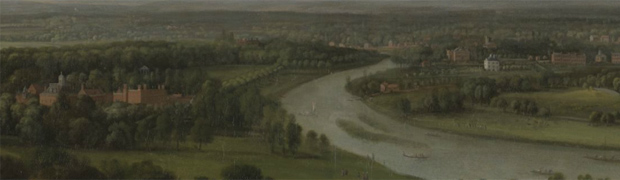
'View of the Thames from Richmond Hill' by Peter Tillemans c.1720-1723 (Image: Government Art Collection)
‘View of the Thames from Richmond Hill’ by Peter Tillemans c.1720-1723 (Image: Government Art Collection)

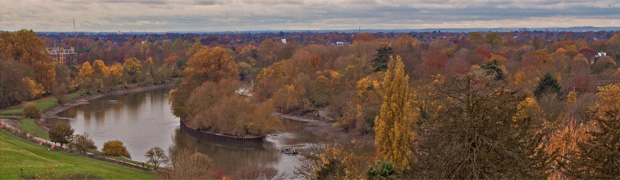
Looking out from the top of Richmond Hill in south west London,  towards Windsor Castle, is to take in one of the most famous and admired views of the Thames, one that includes glimpses of at least four significant country houses. One of those, the beautiful Marble Hill House, was also the site of a ‘battlefield’; but this is a heritage one, a battle to protect one country house in particular and that spectacular view.  The fight to protect the views surrounding country houses has been fought many times, but two from the modern era in particular, at Witley Park and Marble Hill House, are worth a closer look for the impact they had.

Folly castle in Hagley Park, built c.1747, designed by Sanderson Miller (Image: Matthew Beckett)

In earlier centuries, landowners had far greater power to determine what they saw from their drawing room windows.  With the rise of the landscape architect, mere history was an insufficient reason for a tree, stream, building or even an entire village, to be left alone where they interfered with the sight-lines.  With the new emphasis on a view terminating in some object of interest, ever grander follies, bastions, and sham ruins sprang from the ground; from a distance giving an air of ancient decay, but betrayed up close by the drying cement. Yet, ancient buildings also could be pressed into service as ‘eye-catchers’ – but only if they met with the approval of the landscaper and/or the owner.

The first ‘battle’ to be fought to protect a heritage asset which formed part of a view was between a duchess and her husband’s architect, and involved one of grandest houses in the country. Ironically, the battleground was a house built to celebrate a military victory, Blenheim Palace, but a fight almost as vicious was being waged between Sarah, 1st Duchess of Marlborough, and the architect, Sir John Vanbrugh (b.1664 – d.1726), one of the most remarkable men of that era.  Vanbrugh’s design for Blenheim was a tour-de-force of contemporary architecture; a spectacular palace which drew on the Continental Baroque style to create a house which was a set-piece of country house theatre.

Woodstock Manor, Oxfordshire (dem. 1720) (Image: courtesy of His Grace the Duke of Marlborough and Jarrold Publishing via Smithsonian Magazine)

The battle was fought over the ruins of the original Woodstock Manor, a house where King Henry II had romanced ‘fair Rosamund’ de Clifford, and which formed the original palace on the estate.  Having suffered under bombardment in the Civil War, large parts were in ruins.  However, Vanbrugh saw them not only as a historical artefact, but also as part of the grand conception of the landscaping; a precocious attempt at the Picturesque twenty-five years before William Gilpin conceived it.  Vanbrugh wrote to the Duchess, explaining:

That Part of the Park which is Seen from the North Front of the New Building, has Little Variety of Objects Nor dos the Country beyond it Afford any of Vallue, It therefore Stands in Need of all the helps that can be given, which are only Two; Buildings and Plantations. These rightly dispos’d will indeed Supply all the wants of Nature in that Place: And the Most agreable Disposition is to Mix them: in which this Old Manour gives so happy an Occasion for…So that all the Building left, (which is only the Habitable part and the Chappel) might Appear in Two Risings amongst ’em, it wou’d make One of the Most agreable Objects that the Best of Landskip Painters can invent. And if on the Contrary this Building is taken away; there then remains nothing but an Irregular, Ragged, Ungovernable Hill.

His appeals were in vain and the house razed to the ground in 1720.  The Duchess of Marlborough had a famously low opinion of architects and her dealings with Vanbrugh seemed to entrench this; his own case not helped by secretly making the Manor habitable again for his use but funded by the Duke’s money.  She was also devoted to the Duke and intended Blenheim to be his monument in life and for all time, and so she may not have wished to see another competing memorial to love from her windows.

Little changed in the following two centuries; if a landowner wished to reshape the view of his estate from his dining room, then so he shall.  Perhaps the ultimate expression of that was the occasional removal of an inconveniently sited village such as for Lord Cobham at Stowe c.1730, and Lord Harcourt at Nuneham Courtenay c.1750.

Some of the earliest effective challenges to this power only came much later from Victorian social activism which provided a platform for ideas to be confronted from the perspective of what was good for the people.  A landmark in the campaign for heritage protection of landscape centred around the now-lost mansion of Witley Park in Surrey.

Witley Park, Surrey (Image: Lost Heritage - England's Lost Country Houses)
Witley Park, Surrey (Image: Lost Heritage – England’s Lost Country Houses) – click for more images of the house

The man responsible for raising the ire of the locals was one Whitaker Wright. A controversial financier who  made a fortune, lost a fortune, made another fortune and then bought the Witley Park estate and also the neighbouring South Park Farm estate from the Earl of Derby which included Hindhead Common and the famous Devil’s Punch Bowl.  To ‘improve’ the views from the house, Wright set 600 men to work, creating lakes and parkland but more worryingly, raising or levelling hills.  Without the legal frameworks we now rely on to protect the countryside and other areas of outstanding beauty for the common good, there was a real concern that Wright’s grandiose schemes would irreparably alter the local landscape.

Fortunately Wright’s other fanciful plans were his undoing; following the collapse of his companies in 1900 he was charged with fraud, found guilty, and dramatically committed suicide in court just after his sentencing hearing.  With his death the estate was put up for auction, and the locals who had been concerned about his landscaping efforts banded together and bought the sections of the estate which included the Devil’s Punch Bowl and Hindhead Common at auction in 1905. The locals then donated the land to the National Trust in 1906, becoming, in the process, the first Trust property to be managed by a local committee.

The idea that heritage was a national issue for the public good strengthened as organisations such as the National Trust and the Society for the Protection of Ancient Buildings who took up the cause.  At the heart of the heritage debate was a widespread concern about the threat to heritage from development – and Marble Hill House was a prime example.

Marble Hill House, Surrey (Image: Maxwell Hamilton via Flickr)

Regarded as one of the finest Palladian villas in the country, the house was built between 1724-29 for Henrietta Howard, Countess of Suffolk and former mistress of George II. On her retirement from court, Lady Suffolk created a new one, centred around her and her villa.  Her friendship with the writer Alexander Pope and the ‘man of taste’ Horace Walpole (whose own house, Strawberry Hill is nearby), created a wide ranging literary, political, and artistic circle which only enhanced the reputation of that corner of the Thames.  The bright-white villa was an obvious reference point for those looking down from Richmond Hill and formed ‘this Earthly Elysium‘, appreciated by those without and within.

As Richmond and Twickenham grew as one of the most fashionable places to visit, so too did the number of artists who recorded the view in paintings, engravings, books and pamphlets. Yet, the rural nature of the suburb which had so impressed those who gazed upon it became increasingly threatened as Victorian London moved west.  With the death of the last owner, the widow of General Peel, in 1887, the house was increasingly viewed with avaricious eyes by developers. In 1901, a local newspaper quoted Jonathan Swift’s 1727 poem ‘Pastoral Dialogue between Richmond Lodge and Marble Hill‘:

Some South Sea broker from the City
Will purchase me, and more’s the pity,
Lay all my fine plantations waste
To fit them to his vulgar taste.

The article carried on to warn that ‘It is the demon builder who will in all probability destroy this historical desmesne with his exhibition of latter day villadom‘. That threat took a more concrete form that same year when, having been empty for ten years, it was finally sold to William Cunard (of the shipping family) who lived in nearby Orleans House (dem. 1926).  His plans involved the villa becoming the centrepiece to a suburban development (oh, how depressingly familiar this all sounds!), and so trees were felled and roads laid. However, the prospect of this view being lost galvanised public opinion, causing Cunard to pause.  The Architectural Review highlighted that with regards to the view:

…it is evident that the deep wedge of woodland formed by Marble Hill is its most necessary and indispensable part; that spoiled, the view tumbles to pieces, with an eyesore for its focus.

View from Richmond Hill, 2012 - Ham House can still be seen on the left, the only one now not obscured by trees. (Image: Kam Sanghera via Flickr)
View from Richmond Hill, 2012 – Ham House can still be seen on the left, the only one now not obscured by trees. (Image: Kam Sanghera via Flickr)

In July 1901, the Richmond Hill View Executive Committee was formed and, with continued interest from the press, kept up the pressure until in June 1902, following an Act of Parliament, the house was saved. The (slightly over-the-top) speeches on the day it opened to the public reflected a mood and an understanding of the value of heritage and why many fight to save it.  As the press reports stated:

They felt that a national view was at stake; that a historic view was at stake, nay, that a view that was necessary to the whole world was at stake…  It is not only the glory of London, but the glory of the British Empire; and it is one of those things which struck foreigners visiting this country with amazement and delight.

Tattershall Castle, Lincolnshire (Image: Richard Croft via geograph)

Looking beyond such giddy prose, those same core beliefs in the value and wonder of heritage can still be seen today.  Following the Marble Hill victory, further action such as in the Tattershall Castle controversy in 1910 showed that it was possible to mount an effective opposition.  Although not strong enough to prevent the worst excesses of the mass destruction of the country houses in the 1920s, 30s and 50s, these victories were critical in providing a cultural foundation, bolstered by wider appreciation through magazines such as Country Life, for the heritage protection movement which, despite many successes, continues to fight those battles today.