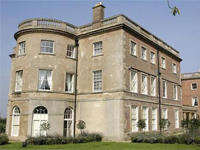
Yaldham Manor application delayed again

The application to restore Yaldham Manor, near Wrotham in Kent, has been delayed again with the decision deferred until a site visit has taken place in February. After a first application, submitted three years ago, was withdrawn as it was thought likely to fail, the new application [pdf] was first submitted back in January 2009 and has been the subject of extensive discussions as to the appropriateness of the enabling development.

Yaldham Manor has a 14th-century great hall, which also features a large Tudor window, and also impressive ornamental chimneys.  Latterly the home of the Lade and Cory families it is now falling into a poor state of repair and requires urgent work.  To fund the restoration of the main house, the application seeks permission to create a ‘hamlet’ with new cottages being built to replace ones which have been demolished and also new homes in the derelict outbuildings.  The main house will remain as a single residence.

It seems a shame that they all couldn’t be bought by someone who could restore the house and outbuildings as a single family mini-estate.  However, if this is not possible, and much as I’m usually against most enabling development, this seems to be a sensitive proposal.  I fully support the council in taking a very close look at the application however it does seem a shame that it will have taken over a year to reach a decision but it must be recognised that our heritage requires a careful balance between protection and ensuring that appropriate works can be carried out.

Full story: ‘Historic manor in jeopardy‘ [thisiskent.co.uk]
Interesting houses for sale – Shurland Hall / Clifton Hall

There are always options for those who have the sensitivity to own an interesting house rather than a simply expensive one.

kent-shurlandhall
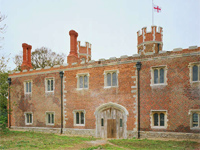
Shurland Hall (Image: Jackson-Stops)

Shurland Hall, Eastchurch – Kent

Shurland  Hall was the gatehouse to a once impressive and important house built between 1510 and 1518 by Sir Thomas Cheyne and visited by Henry VIII in 1532 but now demolished.  The final residents of the house were troops billeted there during WWI who did enough damage to ensure that it was uninhabitable.  In 1996, the local council spent £200,000 to install supportive scaffolding to arrest the deterioration in the structure.  In 2006, a further grant of £300,000 was made to restore the facade and roof and this work has now been completed by the Spitalfields Trust.  This beautiful Grade-II* building is now for sale via Jackson-Stops for offers in excess of £2,000,000 – hopefully to someone who can complete the restoration sympathetically.

Property details: ‘Shurland Hall‘ [Jackson Stops]

nottinghamshire-cliftonhall
Clifton Hall (Image: Page One)

Clifton Hall, Nottingham

Grade-I listed Clifton Hall shot into the headlines in September 2008 when the owner walked away from the house and returned it to the mortgage company claiming that he and his family had been driven out by ghosts (‘Spooked businessman flees ‘haunted’ mansion‘). The house includes 10-bedrooms, 7 receptions, large cellars, 2.5-acres of grounds along with voices, knocks, apparitions and blood spots appearing on bed-linen.  If you don’t believe in ghosts then this house could be an absolute bargain; an advert in the Home section of the Sunday Times (15 November 2009) lists the price as £2.5m but on the agents website it’s down to £1.5m. So pack your holy water and book a viewing.

Property details: ‘Clifton Hall‘ [FHP Living] (interesting that none of the big agencies have taken this instruction…)

For sale: country house with good local shopping

Stone Castle
Stone Castle

To call Stone Castle a country house is pushing it really.  The house, built on the site of the castle where William the Conquerer signed a peace treaty with the men of Kent in 1067, is now besieged by property development which has marched to within 70ft of the front door.  Current owners, Land Securities, have used the house as a venue for conferences and weddings.

The house is perched on an outcrop high above the old quarry which now houses the vast Bluewater shopping centre. The house has a tower dating from the 14th-century but the majority of the house is late Georgian, built in 1825.  The house now only has 2.5-acres of gardens but luckily the developments are to the rear of the property leaving lofty views from the lawns.

The house is being auctioned on 5 November with a guide price of £750,000 – but expect to spend even more to make it a home.

Full story: ‘STONE: Hidden castle from medieval era up for auction‘ [News Shopper]

Some new country houses to visit?

Dorneywood, Buckinghamshire

One interesting proposal to come out of the Conservative Conference this week is that the grace-and-favour country houses, currently used by ministers, would be open to view and for use by the public.

At the moment Dorneywood in Buckinghamshire – where John Prescott was famously snapped playing croquet instead of ruining running the country – and Chevening House in Kent, would be available for the first time.

Francis Maude, the shadow cabinet office minister, has indicated that he would like to see them being used for events and by local charities rather than just as retreats for ministers. 

So, anyone who has exhausted their National Trust book in the south east might be able to add two more to their itineraries.

Full story: ‘John Prescott croquet estate Dorneywood will be opened to public by Tories‘ [Daily Telegraph]

Lutyen’s Salutation in Sandwich Restored

Following a decade of neglect and after facing 17 separate attempts to either ruin the setting through development or simply demolish the house, the gardens of The Salutation in Sandwich have finally been opened to the public following extensive restoration.

The house, now the private home of Dominic Parker, was designed and built between 1911-12 by one of the most important English architects, Sir Edwin Lutyens. The Salutation was heavily influenced, though built on a smaller scale , by the architecture of Sir Christopher Wren.  The gardens were originally by Lutyens’ long-term collaborator Gertrude Jekyll and have been restored from a state of just “grass and weeds”.

This is an impressive restoration and has saved a nationally important house from the hands of short-sighted developers who only see land and not history.  Well-worth a visit if you are in the area.

Full story: ‘Stunning rebirth for beautiful stately home‘ [Kent News]