Empty walls? The sale of contents to fund the house – Althorp House

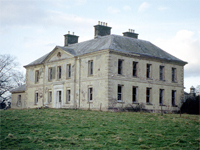
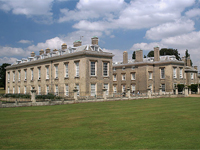
Althorp House, Northamptonshire (Image: Andrew Walker @ wikipedia)

For hundreds of years the political power of a country house was in the ownership of the house, and most importantly the estate – acreage equated with power even if the land was mortgaged to the hilt.  The paintings or furniture which furnish these houses were not only decorative but assets which were easy to sell off when financial circumstances demanded that money be raised.  An upcoming sale at Christies highlights how this is still the case today – even if the strength of the art market means that fewer works now need to be sold to raise the totals required.

Althorp House in Northamptonshire has famously been the home of the Spencer family since the 16th-century and sits in a 14,000-acre estate.  The family fortune was founded in livestock and commodities which enabled John Spencer to purchase the red-brick Tudor house at Althorp in 1522.  It was this house which the 2nd Earl Spencer commissioned the architect Henry Holland to modernise in 1787-89, encasing it in white brick and tiles and remodelling the interior to create the grade-I listed house we see today.  The Spencer family then built up their connections becoming politically influential but also extensive art collectors.

Today, Althorp is in the middle of a £10m project to put the house on a sound structural footing.  One major task, along with repairing the ornate stonework and the external tiles, is to fix the roof – an undertaking which is taking nine months and requires over 50-tonnes of lead.  Globalisation means that commodity prices have been rising strongly on the back of growing demand from countries such as China meaning the cost of the project has proved too great to be borne through income.  So the 9th Earl Spencer has been forced to put a selection of art, considered ‘non-core’ to the collection by the trustees, up for auction.  However, the flip side to globalisation is the massive wealth creation and more well-funded collectors chasing the best works.  In this case, the quality of the paintings and the robust prices being achieved at recent auctions, it is possible to raise enough money with just a few works.

The highlight is ‘A Commander Being Armed for Battle‘ by Sir Peter Paul Rubens which is expected to fetch between £8-12m which should cover the restoration bill for the house with the other works, including ‘King David‘ by the Italian Giovanni Francesco Barbieri, known as Il Guercino, providing some financial breathing space.  Ironically, the current Earl publicly criticised his stepmother for selling off four van Dycks and a Stubbs in the 1970s and 80s but this time the difference is that the proceeds will be re-invested in the house and estate rather than just simply for running costs.  It’s a fact of life that ownership of a country house is a constant battle against physical deterioration and with grant aid from the public bodies in such short supply it is unfortunately the artistic heritage which is once again being sacrificed to ensure that the family seat remains intact.

Full story: ‘On their uppers: The great aristocratic art sell-off‘ [The Independent]

Auctioneers: Christies – The Spencer House sale will be on 8 July 2010.
What’s to happen to Mentmore Towers?

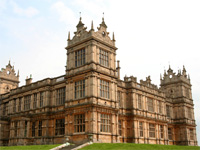
Mentmore Towers, Buckinghamshire (Image: wikipedia)

Running  a country house is always going to require a certain level of wealth with larger houses easily costing six figures a year in basic running costs and maintenance.  When funds are lacking it can be the house which shows the physical consequences as it becomes difficult to fund the ongoing care. Mentmore Towers in Buckinghamshire is one of the largest and impressive houses in the UK and the latest reports that its owner, Simon Halabi, has been declared bankrupt raise some worrying concerns about the future of this grand house.

The grade-I listed Mentmore Towers (known locally and to staff as just ‘Mentmore’) was originally built between 1852-54 by Baron Mayer de Rothschild of the famous banking family.  Designed by Joseph Paxton (of Crystal Palace fame) the neo-Renaissance style echoed houses as Wollaton Hall in Nottinghamshire and following Sir Charles Barry’s work at Highclere Castle in 1838.  The interiors are considered to be some of the finest Victorian designs and workmanship in the country.

Mr Halabi’s original plan was to convert Mentmore into a six-star country club with a London equivalent based at the ‘In and Out’ Club on Piccadilly which was also part of his property empire.  The global financial crises appeared to put these plans on hold before the collapse in property values caused a default on the bond secured on these properties which led to the bankruptcy.  Both properties are on the English Heritage ‘Buildings at Risk’ Register – indeed, Mentmore has been on for over 8 years with particular concern about the elegant stonework and the roofs with the danger of serious leaks increasing with each month goes by.  An earlier story on this blog (‘Simon Halabi and Mentmore Towers‘) produced a series of comments that indicated that a lack of maintenance was already taking it’s toll on the house.

So what’s to happen next?  Although Mr Halabi’s fortune is much reduced it is expected that the sale of various properties from his White Tower property empire will cover the £56m required to clear the debt which led to bankruptcy.  Ownership of Mentmore is also thought to be obscured through a web of companies but, if the report in The Times is correct, it is likely to be last property Mr Halabi would want to sell as his young son Samuel who tragically drowned in France is buried on the estate.  Hopefully, the bankruptcy will provide the opportunity for Mr Halabi to re-organise his empire, free up some capital and undertake not only the urgent basic repairs but also secure the long-term future of one of the most important country houses in the UK.

More details: ‘Hunt for Simon Halabi after tycoon is made bankrupt‘ [The Times]

A glimmer of hope: ‘Country House Rescue’ visits Kelly House

Kelly House, Devon (Image: English Heritage)

Kelly House has a series of long associations; there has been a house there for over 900 years, it has been the seat of the Kelly family for that entire time, and, sadly, has been on the English Heritage Buildings at Risk Register for over five years.  Now the latest twist in the tale is that the house will feature in Channel 4’s ‘Country House Rescue’ on Thursday 1 April when expert Ruth Watson offer possible solutions which will help the Kelly family remain in their ancestral home.

The Kelly’s are one of the very rare families able to trace their lineage back to pre-Conquest times.  Warin Kelly is the 31st squire of the family to live in a house which has been passed down since 1100 through fathers, grandfathers, and brothers.  Described as being ‘in a class of its own’ by Marcus Binney*, the elegant Palladian house was built in 1743 -45 for Arthur Kelly by Abraham Rundle (d.1750), a joiner and provincial but obviously skilled architect who lived in Tavistock.  The house is grade-I listed and features a Portland stone doorcase, sash windows glazed with Crown glass and made in London, with local slat stone walls with moorstone quoins. Inside, the extensive high quality woodwork  features superb carving including panelling, chair rails, and a particularly good staircase with chunky corkscrew balusters.

However, the fine panelling hides serious issues such as the periodic bouts of dry rot which break out. Mr Kelly, as a conservation architect advocating minimal intervention, admirably refuses to treat it with chemicals or by stripping out the panelling.  This ongoing damage is largely the fault of death duties, with two demands being levied in swift succession which have severely limited the family’s ability to maintain the house.  Kelly House is exactly the sort of house which the Historic Buildings Councils would have provided grants for when they were set up in the 1950s.  Today, with English Heritage’s budgets under severe pressure, Mr Kelly was told in 2005 that they were unable to provide funds as the increase in the value of the restored house would be greater than the grant – meaning that they force owners towards the sale of their ancestral homes.

Much as it would appear difficult to argue for the provision of public money to preserve private residences, there has to be a better solution than just letting them slowly grow more derelict despite the often heroic efforts of the family involved.  The current generation doesn’t want to be the one which is remembered for having to sell the family seat, leading to a battle against the elements of decay which saps finances and families and often doesn’t provide a long-term solution.  Outside expertise is to be welcomed as it may show the way to a sustainable future for these beautiful homes. Hopefully Ruth’s suggestions can be taken on by the Kellys and other families to ensure their homes are self-financing and not a burden to either the state or the owners who are then able to look forward to the prospect of handing a home and not a liability to their descendants.

Programme details: ‘Country House Rescue‘ (Channel 4)

More information: ‘TV show could help manor restoration‘ [Western Morning News]

Official Kelly House website: ‘Kelly House

* – ‘Houses to Save’ – article by Marcus Binney in Country Life magazine (8 September 2005)