Forty Hall ‘renovation’ gets approval from council but probably not from everyone else

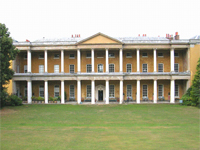
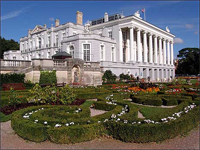
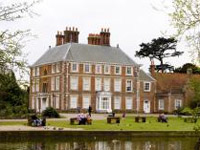
Forty Hall, Enfield (Image: Enfield Independent)

Enfield Council’s proposed renovation plan for Forty Hall in Enfield has been given the go-ahead by the council planners. However, the plan seems to verge on invasive and to contravene best practice guidelines from organisations such as the Society for the Protection of Ancient  Buildings which recommend preserving as much historic material as possible to show how a building has developed.  The changes are part of plan funded with nearly £2m in grants from the Heritage Lottery Fund.

The Grade-I listed house was originally built in 1629 for Sir Nicholas Rainton, a City Alderman, President of St Bartholomew’s Hospital and Lord Mayor of London.  The house passed through various owners until bought in 1895 by Major Henry Bowles who  made many changes including a new staircase with stained glass incorporating his family’s coat of arms.

However, rather than respect it as an important example of one of the many smaller mansions built on the edges of the then city but now subsumed into the suburbs, the council seem determined to make their own extensive changes.  An illuminating quote was given when the HLF grant was announced: “This gives us a unique chance to re-model the Hall completely to make sure that every aspect of it is planned and coordinated to make it the top visitor attraction that it should be.” [enfield.gov.uk].  Among the changes the council have proposed are:

  • installation of a lift shaft,
  • removal of the entrance porch,
  • construction of a glazed roof to the central courtyard, and
  • replacement of the main staircase.

It’s the latter that seems to be the most worrying change as the staircase was an important part of the history of the house.  The Victorian Society has raised their objection to this loss.  Interestingly, the press release inspired news story doesn’t mention whether English Heritage or the Society for the Protection of Ancient Buildings have given their approval.

Also of concern is the intention to redocorate the interior which will be carried out “by detailed investigation of historic finishes” – which doesn’t say that they will follow the evidence of the past.

All in all this seems to be a council who have approved their own plans to make many insensitive and substantial changes to a Grade-I listed building in an attempt to create a  ‘theme-park’ pastiche of an old house.  Perhaps a more considered approach would not only preserve more of the historic fabric the council seem so willing to rip out but would also offer cost savings.

The plans still require approval from the Secretary of State, John Denham, before they can be implemented so there is hope yet that this apparently inappropriate scheme might yet be modified so that whilst still meeting the council’s aim of increasing access and improving facilites it’s much more sensitive to this elegant house.

Full story: ‘Forty Hall renovation gets thumbs up from planners‘ [Enfield Independent]
Woolsington Hall restoration stalls again

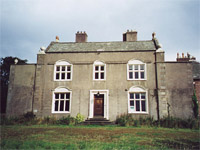
Woolsington Hall (Image: English Heritage)

Grade-II* listed Woolsington Hall, set in 340 acres of fine parkland, was bought in 1994 by Sir John Hall, who had successfully turned Wynyard Hall into a palatial hotel.  Though on a much smaller scale, Woolsington was to also be converted into a small, luxury hotel at a cost of £8m – 10m.  However, after several years of inaction, its deteriorating condition led to it being placed on the English Heritage ‘buildings-at-risk’ register in 2002. Despite work in 2008 to make the building watertight and in prepartation of the main conversion, work has been halted again.  Sir John insists the money is still available but that he is so busy with his many other ventures that he is unable to commit to it at the moment.

Though this is somewhat understandable in the current economic climate, as a Grade-II* listed building it must not be forgotten and allowed to decay again.  The building remains on the English Heritage register but hopefully work will start again to rescue this charming smaller country house in 2010 and bring it back to life.

Full story: ‘Plans for Woolsington Hall on hold yet again‘ [journallive.co.uk]

Yaldham Manor application delayed again

The application to restore Yaldham Manor, near Wrotham in Kent, has been delayed again with the decision deferred until a site visit has taken place in February. After a first application, submitted three years ago, was withdrawn as it was thought likely to fail, the new application [pdf] was first submitted back in January 2009 and has been the subject of extensive discussions as to the appropriateness of the enabling development.

Yaldham Manor has a 14th-century great hall, which also features a large Tudor window, and also impressive ornamental chimneys.  Latterly the home of the Lade and Cory families it is now falling into a poor state of repair and requires urgent work.  To fund the restoration of the main house, the application seeks permission to create a ‘hamlet’ with new cottages being built to replace ones which have been demolished and also new homes in the derelict outbuildings.  The main house will remain as a single residence.

It seems a shame that they all couldn’t be bought by someone who could restore the house and outbuildings as a single family mini-estate.  However, if this is not possible, and much as I’m usually against most enabling development, this seems to be a sensitive proposal.  I fully support the council in taking a very close look at the application however it does seem a shame that it will have taken over a year to reach a decision but it must be recognised that our heritage requires a careful balance between protection and ensuring that appropriate works can be carried out.

Full story: ‘Historic manor in jeopardy‘ [thisiskent.co.uk]

West Wycombe House at risk from high-speed rail link?

buckinghamshire-westwycombehouse
West Wycombe House

Concerns have been raised that the proposed route of the £34bn Network Rail project to provide a high-speed link to Scotland will severely compromise many areas of natural beauty and a large number of listed buildings including the setting of the Grade-I listed West Wycombe Park in Buckinghamshire.

The main problem lies in the fact that to achieve high speeds, the 1,500 miles of railway lines would need to be laid in the most direct line between two locations.  This would mean that the line would simply carve through the landscape, destroying areas of Special Scientific Interest and unspoilt countryside in the heart of the Chilterns such as the Misbourne valley.

One proposal of particular concern is to build tunnels beneath High Wycombe but the Chilterns Conservation Board (CCB) fear that the tunnel would surface near the historic village of West Wycombe – threatening the  stunning setting of the architecturally important West Wycombe House.  The Italianate-style house with it’s rococo gardens were built by Sir Francis Dashwood – of Hellfire Club fame – over a period of 60 years from 1740. The defining exterior feature is the rare double colonnade (see picture) which was certainly inspired by Palladio’s work in Italy such as the Palazzo Chiericati which Dashwood would have seen on his Grand Tour.  Further Palladian and neo-Classical flourishes in both the house and parkland make this house worthy of protection from crude spoilation by the planners.

More details: ‘High speed rail line will blight Chilterns‘ [Chilterns AONB]

Oldway Mansion apparently ‘needs’ 160 homes built nearby?

Oldway Mansion
Oldway Mansion

Oldway Mansion has been called a miniature Versailles – which was the intention of the owner, Paris Singer, who rebuilt the house built by his father, Issac Merritt Singer, founder of the Singer sewing machine company.

The house and grounds have long been a pleasant retreat for the locals who, both old and young, have enjoyed the grounds with many weddings held in the house.  However, rising maintenance costs have led the Council into some bizarre logic.  To save the house they have now signed an agreement to lease this important local asset to a developer who has claimed that many millions will be spent apparently converting it into a hotel! In addition, the Rotunda (formerly the stables) will be incorporated into this development.  In a telling comment, Jason Collard, managing director of Akkeron, said the building was an ‘amazing site’. Why do councils keep falling for this classic play from the ‘developers handbook’? The house is a mere architectural inconvenience to them in many cases which put these houses at risk.  The idea that the vandalism of this house should be funded by selling off some of the very gardens which create such a special location is dubious to say the least.

In short, this is a council with little regard for their heritage, selling an architecturally important and much loved local landmark to save a few quid.  It may be expensive to keep it public but to deny or severely limit access whilst undoubtably compromising this house should be challenged.  I’m sure the council will also find that the plans are entirely acceptable to their planning committee so in this round of mutual backslapping I can only hope that something will happen to bring the council to it’s senses.

Full story: ‘160 homes would have to be built to save ‘amazing’ Oldway Mansion‘ [Herald Express]