The Historic Houses Association have highlighted that there is an estimated backlog of repairs totalling £390m. In recognition of local and sometimes national importance of these houses and their role in stimulating local economic activity, Edward Harley, president of the HHA has urged politicians to provide sympathetic tax breaks and also to allow those house with significiant public benefit to be allowed to apply for lottery funds.
Strawberry Hill, Middlesex (Image: World Monuments Fund)
Although Horace Walpole’s large and impressive art collection initially remained at Strawberry Hill after his death in 1797, it was later sold off by his heir in a 24-day sale in 1842. With the sale, one of the best collections of it’s time of art, furniture, cermanics, glassware and manuscripts was scattered.
Now the Strawberry Hill Trust who look after the house are trying to find some of the objects in the collection with a view to borrowing or even purchasing some of the items. In particular, if you know the whereabouts of:
Roman funerary urn;
mirror with portrait of Viscount Malpas;
ornate Turkish dagger;
Gothic dining table;
basalt Bust of Vespasian
For more details about each of the items, see the story at The Art Newspaper:
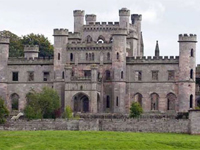
Empty since 1942, Lowther Castle was used during WWII as a weapons research lab and the grounds as a practice ground for tanks who did their best to destroy the ornaments, fountains, paths and gardens. The house was not lived in again and in 1957 was unroofed and abandoned as a shell, leaving it as an ornament in the gardens of the 3,000-acre estate. The castle deteriorated over the passing decades until it was overgrown and the central tower was in danger of collapse and was featured in the 2008 Buildings at Risk register. However, this decay is about to be arrested and ambitious plans are afoot to partially restore the tower and invest in the gardens and park.
An application has been lodged to restore the gardens including the kilometre-long central avenue and create an indoor garden within the shell of the house once this has been stabilised. The work is expected to cost up to £9m but will attract 160,000 vistors a year to the attraction, generating £10m for the local economy.
Although the loss of the castle as a house is lamentable it’s encouraging to see that the shell and estate still have such value which will hopefully secure the future for this elegant building for future generations. Who knows, one day it may be possible for the Lowthers to restore the castle and move back in?
The last castle to be built in the UK, Castle Drogo, occupies a commanding position far up the Teign Gorge in Devon. Designed by Sir Edwin Lutyens and built in the 1910s and 1920s and finally finished in 1931 for the wealthy businessman Julius Drewe, the Grade-I listed house is a brilliant modern interpretation of a castle combined with the comforts of a country house.
It was also one of the last houses to be built entirely in granite, the local stone of the area. The grey stone and the clever massing of towers and wings give the house a solid, impregnable air but the house is under attack from the elements, with rain penetration causing serious concern. The many flat roofs hidden behind the battlements started causing problems only two years after the house was finished and ever since it has been a constant battle to keep the house watertight.
House manager Bryher Mason told BBC News: “I wouldn’t be surprised to walk into a room one morning and find a section of the ceiling having fallen in because the metalwork in the ceiling has failed.”
The National Trust, who have cared for it since it was handed to them in 1974, have instigated a restoration and repair programme on the many roofs, which will include the replacement of all 13,000 window panes, and has been estimated to cost £10m, and will be completed by 2016.
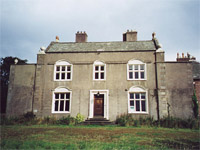
Grade-II* listed Woolsington Hall, set in 340 acres of fine parkland, was bought in 1994 by Sir John Hall, who had successfully turned Wynyard Hall into a palatial hotel. Though on a much smaller scale, Woolsington was to also be converted into a small, luxury hotel at a cost of £8m – 10m. However, after several years of inaction, its deteriorating condition led to it being placed on the English Heritage ‘buildings-at-risk’ register in 2002. Despite work in 2008 to make the building watertight and in prepartation of the main conversion, work has been halted again. Sir John insists the money is still available but that he is so busy with his many other ventures that he is unable to commit to it at the moment.
Though this is somewhat understandable in the current economic climate, as a Grade-II* listed building it must not be forgotten and allowed to decay again. The building remains on the English Heritage register but hopefully work will start again to rescue this charming smaller country house in 2010 and bring it back to life.


 The Country Seat