Woolsington Hall restoration stalls again

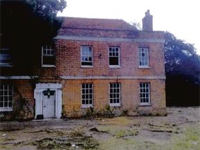
Woolsington Hall (Image: English Heritage)

Grade-II* listed Woolsington Hall, set in 340 acres of fine parkland, was bought in 1994 by Sir John Hall, who had successfully turned Wynyard Hall into a palatial hotel.  Though on a much smaller scale, Woolsington was to also be converted into a small, luxury hotel at a cost of £8m – 10m.  However, after several years of inaction, its deteriorating condition led to it being placed on the English Heritage ‘buildings-at-risk’ register in 2002. Despite work in 2008 to make the building watertight and in prepartation of the main conversion, work has been halted again.  Sir John insists the money is still available but that he is so busy with his many other ventures that he is unable to commit to it at the moment.

Though this is somewhat understandable in the current economic climate, as a Grade-II* listed building it must not be forgotten and allowed to decay again.  The building remains on the English Heritage register but hopefully work will start again to rescue this charming smaller country house in 2010 and bring it back to life.

Full story: ‘Plans for Woolsington Hall on hold yet again‘ [journallive.co.uk]

Yaldham Manor application delayed again

The application to restore Yaldham Manor, near Wrotham in Kent, has been delayed again with the decision deferred until a site visit has taken place in February. After a first application, submitted three years ago, was withdrawn as it was thought likely to fail, the new application [pdf] was first submitted back in January 2009 and has been the subject of extensive discussions as to the appropriateness of the enabling development.

Yaldham Manor has a 14th-century great hall, which also features a large Tudor window, and also impressive ornamental chimneys.  Latterly the home of the Lade and Cory families it is now falling into a poor state of repair and requires urgent work.  To fund the restoration of the main house, the application seeks permission to create a ‘hamlet’ with new cottages being built to replace ones which have been demolished and also new homes in the derelict outbuildings.  The main house will remain as a single residence.

It seems a shame that they all couldn’t be bought by someone who could restore the house and outbuildings as a single family mini-estate.  However, if this is not possible, and much as I’m usually against most enabling development, this seems to be a sensitive proposal.  I fully support the council in taking a very close look at the application however it does seem a shame that it will have taken over a year to reach a decision but it must be recognised that our heritage requires a careful balance between protection and ensuring that appropriate works can be carried out.

Full story: ‘Historic manor in jeopardy‘ [thisiskent.co.uk]

The lack of modern country houses: FT Special Report

Grafton New Hall, Cheshire (Image: Ushida Findlay Architects)

The building of a country house used to be the ultimate expression of success. It was the sign that a man had achieved much that he wished to do and was now able to devote time and resources to this rural ‘badge of honour’.  Importantly, the success, learning, and attitude of the owner was to be expressed through his choice of architecture.  This determined individualism led to a vast range of styles – French chateau, gothic, ne0-classical – but one style which is lacking is the modern(ist) country house.

The FT report highlights how, after the decline in country house ownership during the early 20th century, those few country houses which have been built have been largely of a Classical design.  Indeed, when Ushida Findlay Architects proposed a radical ‘starfish’ design to replace the old Grafton Hall in Cheshire, the plan languished for years, never attracting an owner wishing to invest in the concept.  However, permission has now been granted for the construction of a large Classical house by Robert Adam.  This is another sign of the hold that this elegant style of architecture still not is aesthectically pleasing but also appeals to the ‘masculine’ objectives of building a house which states the power and wealth of the owner.

This attitude has moved modern country houses into the realm of the bespoke, ultra-luxury market and away from the aspirations of the merely wealthy.  In many ways, it’s good to see our exsiting stock of houses being cared for but there is also an important architectural history which needs to be expanded through the building of high-quality, modern country houses – able to meet the demanding standards of the contemporary rich but also to push forward the design of one of the most important elements of British architecture.

Full story: ‘Building Blocks‘ [FT.com]

The plot thickens and a row brews: Brook House, Essex

Brook House, Essex (Image: Daily Gazette)

It seems that, despite the claims of the owner/developer of Brook House in Tiptree, Essex, English Heritage haven’t said that the house should be demolished.  Following on from the earlier story (Another house at risk from a developer: Brook House, Tiptree, Essex – 25/11/09) a local resident has flagged up a new story with EH now saying that although they believe the house to be in poor condition they have not said it should be demolished.

John Neale, English Heritage team leader for Essex, has confirmed that they are still examining the application – leaving the statements of the owner in his application to demolish looking somewhat precarious.  Let’s hope that EH, and Colchester Council listen to the concerns of the local residents and Tiptree Parish Council and not only refuse the demolition but also serve an urgent works notice to save this interesting part of the local architectural heritage.

Full story: ‘Listed Brook House row is brewing‘ [Daily Gazette]

Staley Hall to be restored – sort of

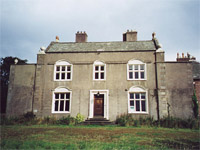
Stayley Hall, Stayleybridge

There appears to be an end in sight for the sorry saga of the neglect of Staley Hall in Staleybridge.  After being derelict for over 50-years, the grade-II listed, 400-year old house has been subject to indifference and some council apathy which has led to arson and massive deterioration in the fabric of the building.  All that remains now are the outer walls – all roofs, interior walls, floors, and decoration have been lost.  The building has reached such a poor condition that – although it pains me to say it – the developer’s proposal to demolish the shell and then reconstruct it as the facade for apartments does seem to be the only viable solution.

All this might have been avoided if the local council had taken this issue in hand at any time over the last few decades – such negligence is unfortunately all too common up and down the country as hard-pressed planning departments face budget and manpower cuts.  Unfortunately it’s the nation’s heritage which pays the price.

Full story: ‘‘Saddest house in England’ to be turned into flats‘ [Crain’s Manchester Business]