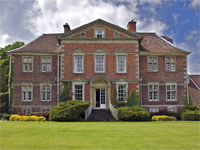
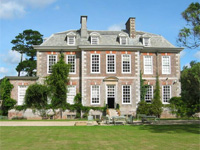
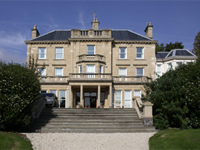
If a moat floats your boat: for sale; Playford Hall and Giffords Hall, Suffolk

Baddesley Clinton, Warwickshire (Image: Nala Rewop / flickr)

Moated houses are an architectural short cut to a more functional time when where a family lived had to be defensible and not simply a place of relaxation.  Today, of course, we admire them for their ancient charm, the weathered bricks reflected in gently rippling waters.  These houses are an older expression of our love of the natural, which found a more formal form in the later Picturesque movement, their more organic outlines in contrast with the more rigid classicism which followed.

Though once numerous, time has taken its toll and excellent examples are less common – and especially appealing when they come to market, as two have recently. The moated manor house was a result of many factors; the decline of the traditional castle, a more peaceful society, and increased wealth, but still with a need to provide some defence against thieves and attackers.  The latter category was increasingly rare but a moat with gatehouse and even drawbridge had a practical advantage.  However, for families which wished to visually bolster the perceptions of the grandeur of their lineage, a moated house was very evocative of permanence and status, drawing on their architectural ancestry with castles.  As each manor required somewhere for the local owner to stay (sometimes only occasionally if they owned many) each had a house of varying size and status depending on the wealth of the owner.  As each manor often covered a relatively small area this led to the building of thousands of these houses (though not all with moats), particularly in England.

Groombridge Place, Kent (Image: Hans Bernhard / wikipedia)

The organic growth of a moated house often created a pleasing historical collage of styles, such as at Ightham Mote, Kent, though this was sometimes swept away to be replaced by a new house such as at Groombridge Place, also in Kent.  This beautiful house was build in 1662 though in a traditional Jacobean/Elizabethan ‘H’ plan on the footprint of the older, more fortified house – though the diarist John Evelyn thought, following his visit in August 1674, that “…a far better situation had been on the south of the wood, on a graceful ascent.” indicating not everyone found a moat romantic.

Yet not every grand family felt the need to abandon the old house.  The Lygon family (Earls Beauchamp between 1815-1979) have lived at the evocative Madresfield Court, Worcestershire for 28 generations.  At its core, a 15th-century moated manor house, the current building is largely the work of the architect Philip Hardwick in 1865 for the 6th Earl Beauchamp.  The house is a prime example of late Victorian taste; a clever blend of Anglo-Catholic Pugin gothick with extensive Arts-and-Crafts interiors including a wonderful library by C.R. Ashbee of the Cotswold Guild of Handicraft (to read more about this remarkable family and house I can recommend ‘Madresfield: the Real Brideshead‘ by Jane Mulvagh).

Ightham Mote, Kent (Image: Matthew Beckett)

The physical security of a moated house was also a factor in its decline as it limited the space available for expansion as either the family, wealth or ambition of the owner grew. Many a grand country house was constructed elsewhere to replace a smaller manor with the old house either being abandoned, demolished (sometimes for building materials), or used as a secondary or dower house.  Yet, as a harsher economic reality came to pass from the 1880s, and as these smaller houses were lauded in magazines such as Country Life, so their attractiveness grew with many rescued from neglect and sometimes reinstated as a principle house on the estate.

H. Avray Tipping, one of the most influential of the Country Life writers, was a prime supporter of the smaller houses as reflected in his choice of house for the weekly ‘Country Houses and Gardens’ section – nearly a fifth of them in 1910, for example.  This was also a time when John Ruskin was arguing for more honesty in architecture and against the over-enthusiastic renovations of the Victorians which he regarded as ‘ignorant’. This regret at the neglect of manor houses in general can be seen even in the earliest Country Life articles.  Writing in 1897 (the year it was founded), John Leyland writing about Swinford Old Manor, Oxfordshire, said;

“There are manor houses through the length and breadth of the land as charming, it may be, as this, but awaiting, like sleeping beauties, the kiss that is to arouse them to fresh and unsuspected charm, the needed touch of the loving hand invested with creative skill.”

Plumpton Place, Sussex (Image: Knight Frank)

Perhaps one of the best examples of this loving restoration can be seen at Plumpton Place, Sussex for Country Life proprietor Edward Hudson by the architect Sir Edwin Lutyens.  When Hudson bought the it in 1928 the house was semi-derelict though with an intrinsic beauty from its setting on an island in the middle of the uppermost of three lakes.  Lutyens successfully restored and adapted the house to create one of the best current examples of a moated manor house – which was also offered for sale in July 2010 for £8m (and featured in another post: ‘For those who like their houses with pedigree: Plumpton Place, Sussex‘)

So having whetted our collective appetites, those with £3.5m to spare currently have a choice of two historic moated manor houses in Suffolk; Playford Hall, near Ipswich (£3.25m), and Giffords Hall, in Wickhambrook (£3.5m).

Playford Hall, Suffolk (Image: Savills)

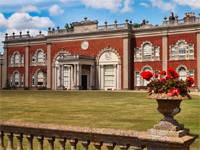
Playford Hall has the beauty of the warm red-brick with two wings placed off-centre, hinting at the further wing demolished in the 1750s after a devastating storm in 1721 blew holes in the roof and following a long period of dereliction from 1709 following the death of the owner, Sir Thomas Felton, who had remodelled the house in its current style.  The house then passed by marriage into the estate of the Earls of Bristol, in which it remained until sold after WWII.  The house has been restored and updated – though whoever buys it will probably want to re-do the eye-wateringly pink dining room.

Giffords Hall, Suffolk (Image: Savills)

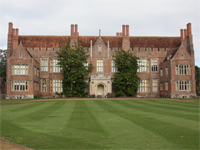
No such concerns about the wonderful interiors of Giffords Hall – the house abounds with historic woodwork, from the masses of exposed beams to the extensive panelling.  The exterior, in contrast to Playford, is almost entirely timber-framed, with an Arts-and-Crafts style north wing added in 1908 by the owner Mr A. H. Fass who also carefully restored the house following a period of neglect.   Now cleverly brought up-to-date, in co-operation with English Heritage, the house now has a full suite of reception rooms, a new kitchen and a full quota of bathrooms.

So, proving the folly of those who allowed these romantic houses to decay and the wisdom of those who restored them – with thanks to the evangelism of Country Life – another important branch of the nation’s architectural history has been redeemed and now, once again, attracts high valuations which reflect the immediate attraction these houses can exert on us all.

—————————————————————————-

For further reading, the excellent ‘The English Manor House – from the archives of Country Life’ by Jeremy Musson – though unfortunately this appears to be out of print and surprisingly expensive. One for the second-hand bookshop search, I think.

For those looking to visit, a handy list: ‘Manors in England‘ [Britain Express]

A bad omen: the spring country house relaunch

One rather unscientific barometer of the health of the country house market is the thickness of Country Life magazine as it comes through the letterbox each week.  After the thinning of the issue in the run-up to Christmas it’s always pleasing to feel the first weighty edition of the new year.  Yet, though this week’s issue (2 March) boasts ’70 pages of property for sale’ it’s remarkable that the estate agents have so few significant country houses to offer and of those that are there, it seems, along with last week’s issue, the largest houses are relaunches.

Pyrford Court, Surrey (Image: Savills)

One of the most interesting is grade-II listed Pyrford Court, Surrey.  Originally built in 1910 for the 2nd Lord Iveagh, of the Guinness brewing family, it was one of a group of houses built around that time on the profits of beer (along with Polesden Lacey, Elveden Hall, and Bailliffscourt). The land was sold to Lord Iveagh by his father-in-law, Lord Onslow, whose family had owned the area since the 17th-century.  The house was designed by Clyde Young who had also worked at Elveden, another seat of the Guinness family, though the sensitively designed wings were added in 1927-29 by J.A. Hale of Woking to designs by Lord Iveagh.  The stylish neo-Georgian house is an elegant red-brick composition which originally sat in a 1,000-acre estate – though sadly now reduced to just 21-acres.  Lord Iveagh died in 1967 and the house sat empty until sold in 1977 – apart from a brief burst of fame as a location in the 1965 film ‘The Omen’.  The house then became an old people’s home with all the attendant damage until the current owners started their seven-figure restoration.

Pyrford Court was originally launched on the market in January 2010 for an ambitious £20m, a staggering rise in valuation from the £3.25m paid in 2000 and from the £8m asking price when it was offered for sale in 2002 (reduced, a year later, to £6.5m).  Yet this proved too much for the market to take; even for a ‘super-prime’ house within 25 miles of central London, and despite the high-quality restoration of the impressive interiors.  It subsequently languished and has now been promoted with a double-page advert – though the price is ‘on application’ meaning we won’t yet know quite how far the price has dropped.  However, looking at the other houses Savills have for sale in the area this is by far the most interesting and attractive house.

Brockhampton Park, Herefordshire (Image: Jackson-Stops & Staffs)

Another impressive house is the classically elegant, red-brick Brockhampton Park, Herefordshire.  Although the architect hasn’t been confirmed, the fact that it is virtually identical to Hatton Grange in Shropshire by Thomas Farnolls Pritchard, means it can probably be attributed to him.  The house was built in the late 1750s for Bartholomew Richard Barneby, probably using the £3,000 brought to him through his marriage in 1756 to one Betty Freeman. The Barneby family had owned the estate since the 15th-century and were to own it until 1946 when John Talbot Lutley (who was a descendent of the  Barneby family) left the house and 1,200-acre estate to the National Trust. Col. Lutley was a no-nonsense man who, on hearing of the NT country houses scheme, wrote them a short letter in 1938 saying that as he was a bachelor whose heirs were rather distant, would they be interested?

James Lees-Milne was duly dispatched – and almost rejected it on sight as it wasn’t pure Georgian due to some relatively small Victorian alterations.  However, after a tour of the estate and on seeing the beautiful Lower Brockhampton Manor, he felt that the latter two would be fine additions for the Trust – even if the big house would be a drain. It was duly left to the NT in 1946 following the Colonel’s death. Neither the house nor the contents were of sufficient quality to justify retaining or opening to the public so they sought to let it.  Unfortunately no private tenant wished to take it on, usually citing its remoteness, however in 1985 an insurance company let the house as offices and undertook a comprehensive restoration programme.  After they moved out in 1996 it was again restored as a private home and is now available with just 8-acres but surrounded by the rest of the NT-owned estate.  Interestingly the house is listed under the ‘Sales’ section of the Jackson-Stops & Staff website but I suspect this is due to it being leasehold – again ‘price on application’ so the price of the privilege is unknown, but the house has been advertised since last summer so it may be cheaper than before.

Ebberly House, Devon (Image: Savills)

Perhaps the most surprising house to still be available is the grand Ebberly House, Devon.  Rather than the expected provincial house, this is a house which displays remarkable architectural sophistication. Described by Pevsner as ‘unusual and attractive’, whose distinctive rounded ends ‘hint at the variety of room shapes inside; a provisional echo of the interest of contemporary architects such as Nash and Soane’.  Designed by Thomas Lee of Barnstaple, a pupil of Sir John Soane, the grade-II* house compensates for it’s remoteness with a fantastic house set in a fine 250-acre estate.  Offers in excess of £4m on the back of a postcard to Savills in Exeter.

Perhaps there are some clever marketing plans being hatched at the estate agents which means that rather than pushing their best properties in the first big property edition of Country Life of 2011 they’re saving them for…when?  Bonuses have just been announced and those looking to buy are probably active so perhaps there is just a general scarcity of significant country houses coming to the market.  Does this indicate 2011 will be rather thin for the agents as uncertainty limits buyers to the super-rich looking for somewhere in London or will the market pick up and a slew of new houses soon be released to whet our appetites?

Back from the brink: country houses rescued from dereliction

Finedon Hall, Northamptonshire (Image: Stephens Pictures / flickr)

One often forgotten aspect of local newspapers is their ability to draw on their archives and provide reminders of local history. The local paper frequently played an important part in publicising the goings on at the ‘big house’, reporting the successes and scandals with usually equal vigour.  A recent article in the Northamptonshire ‘Evening Telegraph‘ reflects not only on the collapse of the Volta tower, built by the owner of Finedon Hall as a memorial to his drowned son, but also the later dereliction and near loss of the house itself as it slipped from dereliction ever closer to demolition.  Yet, unlike so many hundreds of other country houses which were lost, Finedon Hall was one of the many which have been saved.

c1980 - Finedon Hall, Northamptonshire (Image: Evening Telegraph)

Finedon Hall has 17th-century origins but its current style is the result of what Mark Girouard called “eccentric chunky” alterations by E.F. Law for the owner, William Mackworth-Dolben, in the 1850s.  Built in a Tudor-Gothic style in the local ironstone (which was quarried on their land) the house passed through the family until the last of the family, the spinster Ellen Mackworth-Dolben died in 1912.  With no heirs, the estate was sold off in parcels with the house passing through a number of owners before being bought by developers in 1971.  For over a decade they allowed the house to deteriorate until just ten years later parts of the roof had gone and the exterior was in serious danger of collapse.  Luckily, more enlightened developers stepped in and during the 1990s the house (and estate buildings) were converted into apartments.

One of the largest houses to be converted in this way was Thorndon Hall in Essex.  One of James Paine‘s largest commissions, this Palladian mansion was originally built for the 9th Lord Petre in 1764-7 but was gutted by fire in 1876, leaving only the eastern end of the main block and the eastern pavilion intact.  The Petre family lived in the reduced house until 1919 when they leased it and the estate to a golf club and they moved back to the original family home, Ingatestone Hall.  The house remained a largely ruined shell until it was sold for development in 1976 but was then bought in 1978 by a local builder who created a total of 84 apartments in the house, pavilions and estate buildings.

Ecton Hall, Northamptonshire (Image: Conway Collections / Courtauld Institute of Art)

One of the most accomplished and intelligent of the developers to convert country houses is Kit Martin who has saved several houses and including Ecton Hall in Northamptonshire.  The house was largely remodelled by Ambrose Isted in 1755 in the then relatively new ‘Gothic-Revival‘ style (Horace Walpole had only started his work at Strawberry Hill in the early 1750s and it’s considered one of the earliest houses in the new style).  The house was filled with fine art, books and furniture and passed through the Isteds and then, by marriage, to the Sothebys who owned it until the last died, childless, in 1952. At this point the rot set in; builders called in to remove a large kitchen extension also, apparently, stole the valuable lead from the roof leading to dry and wet rot. Alexander Creswell, visiting in the 1980s, described the scene:

“The rich ochre stone of the garden front is engulfed in Virginia creeper, and sparkles of broken glass litter the terrace.  Inside the house, the drawing room fireplace rises above a heap of plaster that the roof has brought down…At one end of the house the winter storms have toppled a gable, which in falling has crushed the fragile camellia-house below; one surviving camellia blooms among the rubble of ironstone – the only flourishing vestige of Ecton’s former glory” – ‘The Silent Houses of Britain

However, by 1989 Kit Martin had finished his work and the new apartments were advertised for sale in Country Life; a remarkable rescue for this almost lost house.

Gunton Park, Norfolk (Image: Broads Marshman / flickr)

Perhaps Kit’s finest work is Gunton Park in Norfolk.  The house was originally the work of Matthew Brettingham, a competent, if sometimes unimaginative, Palladian who had first achieved recognition with his work executing William Kent and Lord Burlington‘s designs for Holkham Hall.  This work brought him to the attention of other aristocratic clients, particularly in Norfolk, including Sir William Harbord who commissioned him in 1745 to design a replacement at Gunton for an earlier house which had burnt down three years earlier.  Brettingham’s house was to be significantly enlarged c.1785 to designs by James Wyatt.

Sadly, fire struck again; in 1882 the Brettingham portion of the house, including the fine rooms, was almost completely gutted and remained a forlorn shell for the next 100 years.  Kit Martin bought the house in 1981 and sensitively created well-proportioned apartments in the remaining wings. The front of the Brettingham wing (pictured above) become one large house separated from the main block by a large void created by the fire but still linked by the retained façades.  It’s not just the house which has been rejuvenated; the parkland – nearly 1,000 acres – has also been bought or, through agreements, reunited (and in the process winning an award from Country Life magazine) to restore the setting of this elegant house.

Barlaston Hall, Staffordshire (Image: Peter I. Vardy / Wikipedia)

It’s rare for a house, once in a state of dereliction, to be restored as a single family home, yet thankfully it does happen. Barlaston Hall is one example of this – and it’s rescue was down to some bold decisions by the campaigning charity SAVE Britain’s Heritage and their President, the architectural writer Marcus Binney, who was offered this elegant house for £1!  Barlaston Hall is, according to Binney, almost certainly the work of the architect Sir Robert Taylor (b.1714 – d.1788).   The house is a relatively unadorned but sophisticated house, enlivened with unusual octagonal and diamond glazing bars in the sash windows; Taylor’s response to the popularity of Chinese Chippendale furniture and a general fashion for the Rococo.

Dining Room - Barlaston Hall, Staffordshire (Image: Christopher Dalton)

However, the house had been built on several coal seams which threatened the house when they were mined in the 20th-century.  Structurally unsound, it had been abandoned and vandalised but SAVE stepped in to challenge Wedgewood’s application to demolish.  At the subsequent public inquiry, the National Coal Board threw down the challenge that SAVE could buy the house for £1 provided it completed restoration and repairs within six years.  SAVE swung into action, raising money through grants and by forcing the NCB to meet its obligations (which it did after some shameful attempts to avoid doing so), and the house was stabilised, restored, and subsequently sold to a couple who completed the interior and it remains a family home.

Piercefield House, Monmouthshire (Image: darkcell / flickr)
Piercefield House, Monmouthshire (Image: darkcell / flickr) - click to see large version

Sadly there are many country houses still at risk today – though the rescues also continue. Pell Well Hall in Shropshire, a wonderful house by Sir John Soane built in 1822-28, has been restored as a shell after decades of neglect, vandalism and fire, and now requires someone with vision to complete the process.  Bank Hall in Lancashire was featured in the original ‘Restoration’ TV series but has continued to deteriorate with sections collapsing.  However, planning permission is being sought to convert the house into apartments which will enable restoration of the house. One house however has, inexplicably (well, to me), remained unrestored; Piercefield House in Monmouthshire.  This beautiful house, again by Sir John Soane, became uninhabited and was mistreated during WWII by the American troops stationed nearby who used the façade for target practice.  The house, set in 129 acres, has been for sale for several years but despite the architectural provenance and the wonderful setting it remains unsold.

The story of the country house has always been one of changing fortunes, which sadly led to many being demolished. The difference now we have heritage legislation is that whereas before houses were often simply demolished, now their plight is likely to drag on for many years.  Restoration is often the best course of action, preserving as much of the original fabric as possible, and ideally as a single family home, though the less palatable options of conversion are always to be preferred to the complete loss of another of our historic houses.

News story: ‘Fascinating history of Hall‘ [Evening Telegraph]

Anyone restoring a country house?

Blackborough House, Devon (Image: Trouserama / Derelict Places)
Blackborough House, Devon (Image: Trouserama / Derelict Places) - currently for sale with Winkworths

Heritage and the dedicated work of those who seek to rescue it can often be overlooked only to be occasionally thrust into the spotlight of TV – though this can be a useful promotion in these times of austerity.  Sadly, the schedules seem to focus on heritage in bursts, giving us ‘The Restoration Man‘ and ‘Country House Rescue‘ at the same time but it’s good to know that their popularity encourages the programme makers to continue to commission this type of series.  Of course these programmes need material so if you know anyone restoring a UK country house, please read on.

One of the most successful of the heritage programmes was the original ‘Restoration‘, a wonderful series presented by Griff Rhys Jones who has personal experience of restoring his own rural Welsh farmhouse.  This series truly caught the attention of the public and raised awareness of the buildings at risk in their own areas.  Keen to tap this interest again, Endemol, the production company behind ‘Restoration’, have a new series, ‘Restoration Home‘, ready for broadcast in Spring 2011 (and flagged up as a comment already on this blog) – though sadly without Griff as the presenter.  The new series focuses on private owners and follows their restoration of ‘at risk’ houses as modern homes.  Although the intention is that these will be sensitive restorations it will be interesting to see exactly what compromises and sacrifices are made in creating the home the owner wishes to achieve.

As a sign of the confidence that Endemol have in likely popularity of the series, they are already looking for houses to feature in a second series with, ideally, work starting in the next few months and reaching completion around March 2012.  To quote Natasha Evans of Endemol Television:

“Each show will chart the restoration process by the owners of one house, as they restore their home to its former glory. Much as the original series, we’ll bring the property to life, setting it in its cultural and historic context. This is a major aspect of each show and will be interwoven with the restoration. At the same time, we’ll be looking at the different stages of its architectural styles.”

One of the key criteria is that the houses must be owned privately by those who are intending to live in them, that they are currently in need of a bit of love and attention, and that the owners are passionate about their house and specifically interested in the history of their house. So if you are undertaking your own project, or know someone who fits the criteria, please contact Natasha Evans on 0208 222 4326 or by email  natasha.evans@endemoluk.com

——

If you are inspired by these programmes and would like to find your own building at risk then one of the best places to start is the ‘Buildings at Risk Register‘ managed by the architectural heritage charity SAVE Britain’s Heritage.  To access the register you need to subscribe but this will give you full access to the register of hundreds of properties in need of a sensitive owner.

If Blackborough House (pictured above) takes your fancy, it’s currently (January 2011) for sale with Winkworths for between £1m – £1.5m, but will require at least that (and probably more) spent again on it to restore it as a home.

——

An autumn flutter: country houses currently for sale

Country houses are often launched on the market to catch either bonus money early in the year or those looking to move before the summer.  However, circumstances or owner preference can lead to some interesting houses being given a promotional push in the autumn (usually through Country Life magazine) to catch those who fancy Christmas in front a different log fire.  So, here’s a quick round-up of some of the better country houses currently for sale.

Upton Pynes, Devon (Image: Upton Pynes website)

Easily one of the most impressive houses is one that has always been a sign for me that I’m nearly home when travelling back to Devon on the train.  Just outside Exeter is the beautiful grade-II* listed Upton Pynes, which, despite the very English sounding name, bears a striking resemblance to a French chateau.  Built c.1700 by Hugh Stafford with very sympathetic later additions, this large but elegant house sits in a commanding position in the Exe Valley, perfectly positioned to catch the sun throughout the day, giving the red-brick façades a warm glow.  Described by Pevsner as “…an excellent example of the stately double-pile house that became popular after the Restoration but is relatively rare in Devon.”, the interior features a particularly grand entrance hall created as part of alterations in 1852 by the architect Ambrose Poynter for Sir Stafford Henry Northcote (later the Earl of Iddesleigh).  The main interiors of the house, including an enfilade of rooms on the south front and a notable library, largely dates from 1700.  The house also has the claim that it was the one Jane Austen had in mind when describing ‘Barton House’ in ‘Sense & Sensibility’.  The house still requires some restoration but will definitely reward whoever completes this grand project.

> More information: ‘Upton Pynes, Devon‘ £3.25m, 37-acres [Savills]

Crendle Court, Dorset (Image: Savills)

Sometimes a grand house designed by an interesting architect can remarkably remain unlisted, as is the case with the Edwardian Crendle Court in Dorset which was designed by Walter H. Brierley (b.1862 – d.1926) who has been described as ‘the Yorkshire Lutyens’.  A prolific architect, he designed over 300 buildings including schools, churches and several country houses including the elegant neo-Georgian Sion Hill Hall in Yorkshire.  Brierley was a versatile architect able to work successfully in various styles though with a preference for ‘Wrenaissance’ – a modern re-working of the architectural language of Sir Christopher Wren.  Crendle Court was built in 1909 and features elaborate ornamental plasterwork in the main reception rooms by George Bankart, and sits, well, more luxuriates, in 270-acres of grounds.  Considering the architect and the quality English Heritage ought to send someone round to evaluate and spot list it before it gets ruined by someone with more money than taste.

> More information: ‘Crendle Court, Dorset‘ £6.95m, 270-acres [Savills]

Rudby Hall, Yorkshire (Image: Carter Jonas)

Other significant houses available were launched earlier but are now being promoted following price cuts.  One such house is the grade-II* listed Rudby Hall in Yorkshire, which was originally given a guide price of £3.5m but now is offered at £2.75m.  Designed by Anthony Salvin in 1838 for the 10th Viscount Falkland, who originally called it Leven Grove, but by the late 19th-century it was known as Skutterskelfe Hall before being given its present name by the company which owned it in the 1990s.  The house was restored in the 1980s and comprises the main house but with the ancillary buildings converted into let accommodation bringing in a handy £50,000 p/a – so long as you don’t mind sharing your gardens, grounds and woodlands with them.

> More information: ‘Rudby Hall, Yorkshire‘ £2.75m, 10-acres [Carter Jonas]

Blairquhan Castle, Ayrshire, Scotland (Image: Blairquhan Castle website)

For those who fancy something more baronial, then Blairquhan Castle in Ayrshire, Scotland may be perfect.  The core of the property is a tower house built in 1346 but was later given a new front by William Burn in 1820-24 to provide the imposing if slightly stern façade we see today.  The estate was noted for it beauty with Lord Cockburn writing in 1844: “I rose early…and surveyed the beauties of Blairquhan. It deserves its usual praises. A most gentleman-like place rich in all sorts of attractions – of wood, lawn, river, gardens, hill, agriculture and pasture.”.  What more could a squire desire?

> More information: ‘Blairquhan Castle, Scotland‘ £4.85m, 670-acres [Savills]

Beaurepaire House, Hampshire (Image: Knight Frank)

Most of these houses seem to be with Savills so to even things up, and to include a house I’m surprised hasn’t sold already, is Beaurepaire in Hampshire.  The house was featured on the blog in more detail (‘Phoenix for sale: Beaurepaire House, Hampshire‘) when it was first launched in June this year.  The house is what remains after a devastating fire in 1942 destroyed the main block of the house, leaving the current service wing which was extensively refurbished and remodelled after WWII to give the elegant house which is for sale today.  Approached down a long drive, what guest couldn’t fail to be impressed by the wonderful gates designed by Sir John Soane which guard the entrance over the moat?  Sitting in a 250-acre estate, the £8m price tag is probably justified for the area – and the owner is apparently in no rush to sell so don’t expect any big price cut soon.

> More information: ‘Beaurepaire, Hampshire‘ £8m, 250-acres [Knight Frank]

So you can’t afford a whole house: country house apartments

Charlton Park, Wiltshire (Image: Chesterton Humberts)

Country houses were always a community with not only the family but also a significant number of staff.  Yet as these houses became more uneconomical and houses emptied, large sections often lay dormant, until the family moved out and, in darker times, the house might be demolished.  However, conversion of the house into multiple individual homes offered a route to not only save the house but ensure that it was lived in rather than just used as a conference centre or hotel.  These apartments are now highly prized and offer the fascinating possibility of living in a grand stately home without many of the burdens – but only if it was converted sensitively and the setting preserved, which sadly isn’t always the case.

The idea of converting country houses into smaller, more manageable units is a fairly modern practice, largely since World War II, though some smaller conversions had taken place previously.  A pioneer was the now defunct Country Houses Association which was set up in 1955 to provide shared accommodation, with communal meals, for well-to-do retirees in good health in a style to which many residents had formerly been accustomed. The first house to be bought and converted, in 1956, was the red-brick Elizabethan Danny in Sussex. Next, in 1959, was the grade-I listed Aynhoe Park in Northamptonshire, a Soanian masterpiece with an elegant central block framed by two wings (though this has now been converted back into being a single home).  These set the pattern which was successfully repeated for seven other houses, some of which remain as retirement communities despite the collapse of the CHA scheme.

Around the same time, Christopher Buxton formed ‘Period and Country Houses Ltd’ which focused on creating independent units within the house and estate buildings.  Buxton had several notable successes such as the restoration of Kirtlington Park in Oxfordshire, keeping the splendid central portion as his own home, and also Charlton Park in Wiltshire, seat of the Earls of Suffolk, who currently still live in a portion of the house and own the 4,500-acre estate surrounding it.

In the 1950s and 60s, sale adverts for country houses often included the phrase “eminently suitable for conversion”.  Other developers could now see the potential and developed their own schemes – but with little heritage protection they often did more harm than good.  For them the key to getting the maximum profit was to cram in as many units as possible within the house and estate buildings before trying to built in the parkland.  This sadly meant that the grandest rooms in the houses – ballrooms, libraries etc, – would be crudely sub-divided, wreaking their proportions and destroying decorative details.  Sometimes developers simply developed the houses in the estate and then neglected to restore the main house, often citing the mounting costs of the work.

Northwick Park, Gloucestershire (Image: Cotswold District Council)

A sad example of where the house has been compromised through too many units is at Northwick Park in Gloucestershire, a grade-I listed house of 1686, with later work by Lord Burlington in 1728-30 for Sir John Rushout.  An architecturally interesting house with a Classical east front topped with a decorated pediment, which contrasts with Burlington’s work on the east front, which was later, oddly, given shaped gables sometime between 1788-1804.   Empty from 1976 with significant thefts of chimneys and doorcases and general deterioration, it was then bought including just 19-acres in 1986 by a local developer for £2m.  With repairs estimated at the time to come to at least £1.5m, the local authority permitted some enabling development totalling 68 new units – with just six in the main house itself.  However, the new properties had to be sited within the footprint of existing estate buildings leading to an overcrowded development with the house becoming almost an architectural ornament, lost in the rest of the residential development.

Many of the most successful and sensitive conversions have been undertaken by Kit Martin, a gifted architect who has saved some wonderful houses and been instrumental, with assiduous promotion by Marcus Binney of SAVE Britain’s Heritage, in demonstrating that it is possible to convert a house without compromising it.  His particular skill was in dividing the houses vertically, rather than horizontally, which gave each residence (as they always are in KM’s developments – never apartments) a range of rooms and usually included one of the fine rooms.  Starting with Dingley Hall, a beautiful but terribly derelict house at risk of complete loss, he has worked on a number of significant houses including The Hazells in Bedfordshire, Burley-on-the-Hill in Leicestershire, and Ecton Hall in Northamptonshire.  His finest work, however, has been at Gunton Park in Norfolk, grade-II* listed house of 1742 designed by Matthew Brettingham with later work c1785 by Samuel and William Wyatt.

Formerly seat of Lord Suffield it had suffered a serious fire in 1872 leaving a large section of the main house as a burnt out shell.   Fortunately for Mr Martin, extensive Georgian estate buildings had been constructed in anticipation of future work to enlarge the house which never happened, leaving him with a perfect opportunity to create a new community.  He then proceeded to vertically divide the main house into four large 5,000 sq ft houses, with other smaller houses created in the wings and outbuildings.  Having restored the house, he then sought to recreate the 1,500-acre parkland by William Gilpin and Humphrey Repton and has succeeded in re-acquiring over 1,000-acres and has been replanting over 6,000 trees – each one in the place originally marked out on Repton’s plan.

It’s not known in total how many country houses have been converted to multiple residences but it is probably at least between 40-50.  Many of these would otherwise likely have been demolished so conversion is preferable but only where it respects the existing architectural heritage and setting.  However, where successful, these fascinating properties allow the opportunity for those of lesser means to experience living in the grandeur of a stately home with the cost and responsibility of owning a whole one.


Examples of apartments currently for sale in country houses:


The state of the country house market: Autumn 2010

Noseley Hall, Leicestershire (Image: Knight Frank)

Throughout September, the increasing weight of each week’s ‘Country Life‘ magazine heralds the starts of one of the busy periods for launches of country houses.  As an relatively unscientific barometer it would appear that the market is doing well with some impressive estates and houses being offered up to tantalise the armchair enthusiast and serious purchaser alike – but a few houses are still proving difficult to shift.

The September 1 magazine provided a summary of the successes of the year-to-date with glowing reports from estate agents who, despite some fears in January about an uncertain year ahead, are happy to highlight their successes.  The article quotes Crispin Holborow of Savills who rightly points out that ‘best in class‘ houses will always sell quickly and for above their guide price if the right buyers start competing.  He cites Ropley House in Hampshire which sold at over it’s guide price of £4.25m, as did the grade-I listed Shanks House in Somerset which was offered with 70-acres for £5.5m, but their biggest success was the coveted Chadacre estate in Suffolk with 680-acres which reputedly sold for more than double it’s £10m asking price.  Other houses such as the elegant grade-I Worlingham Hall – regarded by Norman Scarfe as ‘the most beautiful house of manageable size in Suffolk’ – also sold over it’s guide price of £3.9m.

Other houses sold close to their guide include Peatling Hall in Leicestershire (mentioned on this blog in July) which was offered at £4.75m, whilst the stunning Compton Pauncefoot Castle in Somerset suffered from an unfortunately timed launch in September 2008 at £17m which knocked buyer confidence meaning that it hung around until Febuary 2010 before selling at £15m.  Others had to drop their prices or accept being sold in lots with Kiddington Hall in Oxfordshire selling for £15m to Jemima Khan once the rest of the 2,000-acre estate had been sold (originally offered as one for £42m), whilst Fillongley Hall in Warwickshire has yet to find a buyer even after selling 400- out of the original 500-acres originally offered when it went on the market in 2005 (£3.5m, Savills).  Pusey House in Oxfordshire, which was originally launched with 643-acres but when featured as the lead property advert in the September 15 magazine it was offered with just 67.

So who are the awkward squad?  Grade-I listed Noseley Hall in Leicestershire is still with Knight Frank with the same acreage; though now at £12m rather than the original £14m asking price, and Iver Grove in Buckinghamshire, a pocket Palladian gem, is still being offered (again with Knight Frank) – though mysteriously with no price, so probably less that the £4.5m guide in February 2010; and way down from it’s original price of £6.5m when it was first launched in 2007.  Up country, Yester House in Scotland is still available despite having had it’s price halved from £15m to £8m since the original launch in August 2008.

So, although the property market does seem buoyant, it does seem that some are struggling.  Perhaps the flurry of launches will bring an influx of new buyers who may take a renewed interest in the harder-to-sell properties, but they equally may well wonder why they are still available and pass them over.  It seems that some owners who are keen to sell are being flexible, either dropping the price or selling in lots, but for owners who refuse to budge the market may take a very long time to rise to meet what they think their property is worth.  It seems flexibility is still a vital attribute whatever rung of the property ladder you are on.

How tourism split a house from the estate: Warwick Castle, Warwickshire

Warwick Castle, Warwickshire (Image: Gernot Keller/Wikipedia)

A small advert tucked away in a recent Country Life marks the final split of a house from it’s estate. With the sale of the parkland associated with Warwick Castle in Warwickshire, another house loses control over an important asset – though this separation is very much tied up with the history of the opening of country houses to tourists, and this castle in particular.

Country house visiting is perhaps thought of as a more modern phenomenon but Warwick Castle was one of the first houses to be truly exploited as a tourist attraction with visitors coming in significant numbers from 1815 onwards. The growth of the industrial Midlands in the Victorian era and consequently a growing middle class seeking excursions, shifted the pattern of ‘show-houses’ (that is, ones regularly open to the public when the family were absent or on specific days) northwards, away from the more aristocratic 18th-century London-Bath axis.  The Midlands were particularly well provided for with many houses open to the public from the 1850s including Eaton Hall, Chatsworth House, Haddon Hall, Newstead Abbey, and Belvoir Castle amongst perhaps a hundred.  This reached a peak in the 1880s when the most popular houses would receive tens of thousands of visitors a year, reflecting a popular interest in the houses of ‘Olden Time‘ as popularised by writers such as Joseph Nash and Sir Walter Scott.

Warwick Castle, with it’s prized medieval origins, was particularly popular – to the extent that not opening it was considered unthinkable.  That the public expected to be allowed to see inside these houses could be shown in a comment in the Daily Telegraph in 1871 which said:

An Earl of Warwick who would make his whole castle his own in the spirit of an inhospitable curmudgeon, who would shut out all eyes but his own from the feast within those walls, is a being so opposed to every English tradition that it is difficult to realise him.

For the aristocratic owners, economics certainly played a stronger role than any sense of public generosity.  For some, having a popular house in the country was no inconvenience as, such as at Dunster Castle in Somerset, it was remarked in 1845; ‘The owner, an inveterate Bachelor, lives in London and hardly ever comes here‘.

Especially convenient for trippers from Birmingham and the nearby resort of Leamington Spa, Warwick Castle was hosting as many as 6,000 visitors per year in 1825-26 and when the Earl of Warwick’s housekeeper died in 1834 she was said to have left £30,000 earned from tips.  Yet it was the devastating fire of December 1871 which firmly moved the castle from being simply a home to a business. The fire destroyed the family apartments but luckily left the oldest parts of the castle untouched.  The Earl of Warwick’s financial situation meant that he simply could not afford to restore the house to its former glory, a prospect which scared the local tradespeople, fearing the loss of the tourist trade and so a restoration fund was created.  However, to ensure the Earl’s pride was not dented it was presented as recognition of the burden he bore as owner of a national treasure.

However, a furious response from no lesser figure than John Ruskin marked the start of a backlash, saying ‘If a noble family cannot rebuild their own castle, in God’s name let them live in the nearest ditch till they can‘.  Behind this was the growing social democratic movement which moved from support of national treasures privately-owned towards a more socialist belief that national assets ought to be owned by the ‘people’.  The purchase of Aston Hall by Birmingham Council in 1864 as a public museum and park was no doubt playing on the minds of both certain radical sections of society and Lord Warwick – though for different reasons.  The appeal eventually raised £9,000 which paid for restoration by Anthony Salvin but the importance of opening the house as an attraction was highlighted as a way of not only funding costs but also as a way of keeping the public happy that they had ‘access’ to what they now felt of as ‘theirs’.

From this point, the house was never really a private home again.  The Earl and his son embraced the tourist industry but in 1885 closed the castle for a year to re-organise the showing on a more commercial basis.  Gone were the old servants acting as guides; in came professionals paid for by the one shilling admission tickets.  The new system was a success, with 20,000 visitors in the first full year of the new regime.  The new domestic arrangements were confirmed by the 5th Earl who inherited in 1893 and preferred to live at his wife’s estate Easton Lodge in Essex.  In the same year, the castle staged its first historical pageant, which was repeated on a grander scale in 1906.  The 6th Earl, who took over in 1924, further promoted the tourist business, pushing visitors to a peak in 1930 of over 80,000.  Even during the war years, there were over 10,000 visitors in 1943-44, and numbers had recovered to their pre-war peak by 1949-50.

All this increasingly showed that the wider estate, for all its charms – landscaped by Capability Brown in 1747 and much admired by Horace Walpole, it was considered secondary to the primary purpose of the enterprise; to get people into the castle. When the 8th Earl decided to abandon Warwick Castle once and for all in 1978, selling it to the Madame Tussauds group which underlined just how much a tourist attraction it had become, the estate was included but farmed by tenant farmers leaving the grounds as a mere sideshow.  The 679-acres now under offer (guide price: £3m) is the bulk of the estate bar a few acres around the castle.  Land and house have been separated as assets and are unlikely to be reunited. This leaves a house without control of the setting which, although sidelined, has been an important part of what made it into such a popular tourist attraction, and leaving fans of our country houses sad that another has been split up in this way.

Property details: ‘Warwick Castle Park, Warwickshire‘ [John Shepherd]

For more history on country house tourism I can strongly recommend ‘The Fall and Rise of the Stately Home’ by Peter Mandler which proved very useful in relation to this article.

As predicted; Cherkley Court, Surrey now for sale

Cherkley Court, Surrey

When the doors to Cherkley Court in Surrey closed to visitors in December 2009, it was thought that low visitor numbers had proved it uneconomic to keep the house and gardens open.  However, as predicted by a commenter to my original blog post [thanks Andrew], Cherkley Court is now for sale and has been launched with a double-page centre spread in the Sunday Times Home section today [19 Sept 2010].

If one was to try an define what might constitute a perfect trophy estate in Surrey, Cherkley Court might well tick most of the estate agents’ criteria.  The grade-II listed house, built c1870 (and rebuilt after a fire in 1893), is a four-storey, chateau-style mansion extending to over 24,000 sq ft with home cinema and five grand reception rooms, with nearly 400-acres of gardens and parkland.

The house is now for sale following a 7-year, £10m restoration of the house and grounds orchestrated by the architect Christopher Smallwood and David Mlinaric, the interior designer.  The house became a famous venue for parties under the ownership of Max Aitken (later Lord Beaverbrook) and his wife Gladys who lived there until her death in 1994.  It was her death which sparked a bitter legal dispute between beneficiaries of the will which has forced the sale.

So if you have £20m and don’t mind the restriction on not landing your helicopter in the grounds, have a word with Savills.

Property details: ‘Cherkley Court, Surrey‘ [Savills]

Listed building description: ‘Cherkley Court, Surrey

Developer shows sense; Ruperra Castle for sale

Ruperra Castle, Newport, Wales (Image: Savills)

Run-down or derelict country houses are often an enticing prospect for a developer, especially where the house still retains some land, on which they can propose ‘enabling development’.  In theory this is the correct use of this exemption but frequently the developer will suggest too many houses or ignore the fact that the house has too little land to avoid any development compromising the setting of the house.  When this happens, it is often the house which suffers as the developers wait for appeals or a change in policy whilst allowing the house to deteriorate further.  So in the case of Ruperra Castle in Wales it’s encouraging that the owner has decided to bow out giving someone else the chance to restore this architecturally interesting house.

Ruperra is an early example of the ‘mock’ castles which became fashionable in the Elizabethan and Stuart eras and were an example of life imitating art as the idea of these houses drew from the ‘pageant castles’ as featured in court entertainment of the time.  These stage castles formed the centrepiece to the royal ‘masques’ and were laden with allegorical symbolism as they might be populated by damsels (signifying virtue) but successfully defended against attacking knights (signifying baser desires).  Works such as Edmund Spenser’s The Faerie Queen (published in 1590 and 1596) also fed a fashion for chivalry and heraldic forms. Importantly, the long period of domestic peace during Elizabeth’s reign meant that the design of houses moved from being primarily military and defensive to more simply domestic with the look of a house increasingly dictated by aesthetics.

Ruperra wasn’t quite the first of it’s type; that distinction could be said to be held by houses such as Michaelgrove in Sussex built for the Shelley family in 1536 (dem. 1830s), and Mount Edgcumbe in Devon, built between 1547 – 1554, which also were not fortresses and featured a square or rectangular central block with drum or square towers on each corner.  This was followed by the fabulous Wollaton Hall in Nottinghamshire, begun in 1580, which was an altogether more grandiose statement of power but broadly followed the same layout – as did Hardwick Hall, although in an adapted form. However, the Renaissance ornamentation of Robert Smythson‘s design at Wollaton contrasted dramatically with more austere designs of the true ‘mock’ castles which harked back to the earlier simplicity of decorated castles such as Herstmonceaux Castle in Sussex, begun in 1440, with its many windows and regularised defensive elements (such as the arrow loops) making them almost decorative.

Lulworth Castle, Dorset (Image: Matthew Beckett)

The design for Ruperra Castle was clearly based on that for Lulworth Castle, just 100 miles away in Dorset, and built between 1603-05.  Always called a ‘castle’ but built with the instruction from Lord Howard of Bindon that it ‘prove pretty’, it was never military.  Indeed, Thomas Gerard writing in 1630 described it as ‘well seated for prospect and pleasure; but of little other use’. Bought by the Weld family from Lord Howard it remained their family seat until a devastating fire in 1929 completely gutted the interior – as it remains today, although the building itself has been restored.  Another house thought to have been built around 1612 is Compton Bassett House in Wiltshire (dem. c1929) which clearly shared a similar layout although the corner turrents were square.

The builder of Ruperra Castle was Thomas Morgan (b.1564 – d.1632), who made his fortune as the Steward for the Earls of Pembroke at Wilton House, Wiltshire.  Morgan would have been regularly exposed to court life and would have been very aware of the latest architectural fashions.  Hence when he came to build his own house, which was finished in 1626, he deliberately drew on the latest architectural fashions and created one of the first of the ‘modern’ country houses.  The layout was a significant departure as the rooms were orientated to the outside to make the most of views – hence Ruperra’s elevated site chosen for its beauty rather than defensibility.  Interestingly the ‘castle’ design seemed to fall quite quickly from favour and so there are few other examples of this type – though one late example was Beaurepaire Park in Hampshire built in 1777 (sadly burnt down in 1942).

Ruperra Castle remained as part of the Morgan’s vast Tredegar estate and was traditionally used to house the eldest son before he inherited Tredegar House, the family’s principal seat.  The castle originally had dormers but these were removed during the rebuilding after a fire in 1785 and replaced with the crenellations there today.  It was last inhabited during World War II when a searchlight battery requisitioned it and they were there when the terrible fire caused by faulty wiring broke out in 1941.  Despite best efforts, the house was completely gutted and was eventually sold, along with the rest of the 52,000-acre Tredegar estate in 1952.

Since then, constant promises of restoration have come to nothing and it has steadily deteriorated, most dramatically when, in 1982, the south east tower largely collapsed.  Sold to the current vendor, Mr Ashraf Barakat, in 1998 he had hoped to convert the house into 11 flats and build 18 more houses in the 14-acre grounds that remained with the house.  After a final rejection at a public enquiry in 2009, Mr Barakat has now, wisely, put the still grade-II* listed Ruperra Castle on the market for £1.5m, rather than holding on and letting the house deteriorate further.  This should not be considered a development opportunity, so hopefully now someone with deep pockets will come forward to restore, as a single family house, this architecturally important building.  Its rescue would once again connect the modern history of country house design in Wales, bringing life back to a house which, when it was built, was the most sophisticated in the country.

Property details: ‘Ruperra Castle, Lower Machen, Gwent, Wales‘ [Savills]

More on this story:

More information:

Credit: I’m indebted to the prior work of Mark Girouard (‘Elizabethan Architecture‘ 2009) and the late Andor Gomme for their knowledge of Elizabethan architecture.