Interesting houses for sale – Shurland Hall / Clifton Hall

There are always options for those who have the sensitivity to own an interesting house rather than a simply expensive one.
kent-shurlandhall
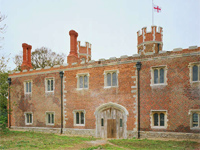
Shurland Hall (Image: Jackson-Stops)

Shurland Hall, Eastchurch – Kent

Shurland  Hall was the gatehouse to a once impressive and important house built between 1510 and 1518 by Sir Thomas Cheyne and visited by Henry VIII in 1532 but now demolished.  The final residents of the house were troops billeted there during WWI who did enough damage to ensure that it was uninhabitable.  In 1996, the local council spent £200,000 to install supportive scaffolding to arrest the deterioration in the structure.  In 2006, a further grant of £300,000 was made to restore the facade and roof and this work has now been completed by the Spitalfields Trust.  This beautiful Grade-II* building is now for sale via Jackson-Stops for offers in excess of £2,000,000 – hopefully to someone who can complete the restoration sympathetically.

Property details: ‘Shurland Hall‘ [Jackson Stops]
nottinghamshire-cliftonhall
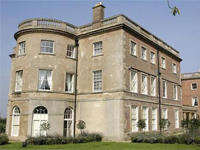
Clifton Hall (Image: Page One)

Clifton Hall, Nottingham

Grade-I listed Clifton Hall shot into the headlines in September 2008 when the owner walked away from the house and returned it to the mortgage company claiming that he and his family had been driven out by ghosts (‘Spooked businessman flees ‘haunted’ mansion‘). The house includes 10-bedrooms, 7 receptions, large cellars, 2.5-acres of grounds along with voices, knocks, apparitions and blood spots appearing on bed-linen.  If you don’t believe in ghosts then this house could be an absolute bargain; an advert in the Home section of the Sunday Times (15 November 2009) lists the price as £2.5m but on the agents website it’s down to £1.5m. So pack your holy water and book a viewing.

Property details: ‘Clifton Hall‘ [FHP Living] (interesting that none of the big agencies have taken this instruction…)

2009 English Heritage Buildings at Risk Register

Another year, another sad list of important, interesting, beautiful and sadly at risk properties.  Each year the English Heritage Buildings at Risk Register and that produced by SAVE Britain’s Heritage give another sad reminder that though the UK is rich in vernacular architectural heritage there are still significant individual buildings at risk even today, after 50 or 60 years of interest in heritage protection.  Perhaps of equal concern is the fact that only 60% of local councils have their own BaR Register and often it is out of date – local councils should be the first line of defence for their local heritage.  Ask your council for their Register and if they say they haven’t got one or that it’s out of date demand to know why.

If you have the resources but most importantly a sympathetic understanding of restoration then please do consider taking on one of these buildings.  Remember that listed buildings – when well looked after and sensitively restored – always command a premium in the housing market.

Below are David Brack of English Heritage’s top five tips when taking on a restoration project:

  1. You’ll need to discover why the property is in the state it is?
  2. Get a proper survey.
  3. Appoint a good architect.
  4. Employ a good builder.
  5. Maintain contact with your Conservation Officer throughout your renovation.

Full story: ‘The pitfalls of buying a romantic wreck

Prince Charles and SPAB

It seems such a shame that Prince Charles and the Society for the Protection of Ancient Buildings have fallen out.   This seems to be a classic case of dogmatic positions leading to the removal of a nose to the detriment of the face.  Both the Prince and SPAB have campaigned for the same causes and seem to sing from the same hymnsheet so often yet I can understand why SPAB felt as they did and similarly why HRH felt slighted.  Compromise can be the bitterest pill to swallow and I can only hope that there is a rapprochement in the future – for the sake of providing a better voice for conservation in the UK.

Full story: ‘Prince Charles resigns over restoration rumpus

So why this blog?

My great love is country houses, particularly those which grace the counties of England.  Each is a fascinating example of the hopes, aspirations, aesthetics and wealth of someone.  One of the best aspects of what has been called the UK’s most significant contribution to architecture, is that each is different – whether the grand Palladian palaces sitting in parkland, to the mid-size expressions of Victorian industrialists to the smaller manor houses which nestle in countless small villages.  However, it must be recognised that many have been demolished or otherwise lost and many exist now only to be abused by unsympathetic owners or to be used as schools, hospitals and offices.

The aim of this blog is to highlight interesting stories relating to country houses in the UK with the occasional comment from me.  I hope to bring greater awareness of the vast heritage we have within the UK and hopefully to build a greater appreciation and respect for it.