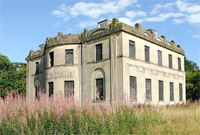
Pell Well Hall finally sold – but will buyer finish the job?

Pell Well Hall (Image from Strutt & Parker)

After abandonment, institutional use, and a serious fire, there is finally some good news for Pell Well Hall.  It’s reported that an offer has been accepted and finally the house can move to what will hopefully be the final stages of restoration.   Originally with an asking price of £750,000 the offer accepted was £550,000 – but with estimated costs of between £2m – £5m to complete the restoration.

With such a huge project and the need for significant financing, the hope is that the new purchaser will complete the work sooner rather than later.  However, after neglect and fire the original interior has been entirely lost meaning that in many senses this is a recreation rather than a strict restoration.  Perhaps leaving some evidence of this sad state would be an honest approach – and heaven forbid that the interior ends up as just some identikit footballers Surrey mansion.  This a special house and deserves a careful hand on the design and budget.

Full story: ‘New owner for historic hall as offer accepted‘ [Shropshire Star]

Beauty – but at what price?‘ [Daily Telegraph]

New Hudson’s Guide 2010 launched

The latest edition of that ‘bible’ of country house visiting, ‘Hudson’s Historic Houses and Gardens, Castles and Heritage Sites‘, has just been launched. Described in their own words as “a definitive guide to the best historic houses and gardens, castles and heritage sites that Britain has to offer.”.  Useful not only for your weekend trips but also for events and weddings – so get out there and support our beautiful houses!

Lutyen’s Salutation in Sandwich Restored

Following a decade of neglect and after facing 17 separate attempts to either ruin the setting through development or simply demolish the house, the gardens of The Salutation in Sandwich have finally been opened to the public following extensive restoration.

The house, now the private home of Dominic Parker, was designed and built between 1911-12 by one of the most important English architects, Sir Edwin Lutyens. The Salutation was heavily influenced, though built on a smaller scale , by the architecture of Sir Christopher Wren.  The gardens were originally by Lutyens’ long-term collaborator Gertrude Jekyll and have been restored from a state of just “grass and weeds”.

This is an impressive restoration and has saved a nationally important house from the hands of short-sighted developers who only see land and not history.  Well-worth a visit if you are in the area.

Full story: ‘Stunning rebirth for beautiful stately home‘ [Kent News]

Kensington Palace: HRH’s scheme criticised

Prince Charles’ scheme to improve the setting of Kensington Palace has suffered a setback after his plans were described as looking ‘twee’ and like something that would appear in a “garden furniture catalogue”.

Originally a royal country retreat from the smells and noise of the Palace of Westminster, Kensington Palace is now part of central London and is somewhat blighted by the large hotel sited to the right as you approach from the busy Kensington High Street.

There is certainly room for improvement but perhaps a more interesting scheme could find favour by looking at enhancing the grand approaches rather than adding smaller details – certainly not enough long, tree-lined avenues are being planted these days.

Full story: ‘Prince Charles’ architecture charity backs ‘twee’ revamp of Kensington Palace’ [Daily Telegraph]

So why this blog?

My great love is country houses, particularly those which grace the counties of England.  Each is a fascinating example of the hopes, aspirations, aesthetics and wealth of someone.  One of the best aspects of what has been called the UK’s most significant contribution to architecture, is that each is different – whether the grand Palladian palaces sitting in parkland, to the mid-size expressions of Victorian industrialists to the smaller manor houses which nestle in countless small villages.  However, it must be recognised that many have been demolished or otherwise lost and many exist now only to be abused by unsympathetic owners or to be used as schools, hospitals and offices.

The aim of this blog is to highlight interesting stories relating to country houses in the UK with the occasional comment from me.  I hope to bring greater awareness of the vast heritage we have within the UK and hopefully to build a greater appreciation and respect for it.