A suburban survival at risk: Braunstone Hall, Leicestershire

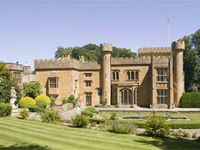
Braunstone Hall, Leicestershire (Image: East Midlands Oral History Archive))
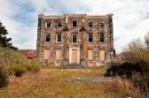
Braunstone Hall, Leicestershire (Image: East Midlands Oral History Archive)

Two of the most important aspects of campaigning to save country houses are vigilance and visibility – and yet sometimes even this doesn’t always seem to bring about restoration any quicker when faced with a slow-moving owner. Braunstone Hall, a Georgian gem still with significant grounds but now swallowed up in the sprawl of Leicester, has been empty for over ten years but despite a vigorous campaign both in the media and online it still remains very much at risk.

Braunstone Hall, now grade-II listed, was built in 1776 (date on rainwater head) for the Winstanley family by the architect William Oldham (b. 1737 – d. 1814) who also designed an early Leicester racecourse grandstand (1770), Master’s House at Alderman Newton’s School (1789) and the New House of Correction (1803) – all though now demolished.  The red-brick house is two and a half storeys tall by five bays wide with a cornice and hipped roof.  The relatively simple front is enlivened with stone bands marking the ground and first floors with an impressive tripartite doorway with fluted columns, a small pediment and an elegant fanlight with arched glazing bars.  One further very distinctive feature is the giant blind recessed arch in the central bay – an architectural device which seems quite popular in Leicestershire with examples in Burbage, Belgrave House (also 1776), and the beautiful rectory at Church Langton (by William Henderson – 1760).  The interior is largely complete with some impressive detailing.

The Winstanley family bought the estate from the Hastings family in 1650 and remained there until forced out in the 1920’s by the pressure to build houses following the First World War.  Estates on the edge of existing towns and cities were eagerly eyed-up by local councils.  For some families, already facing financial hardships following the war this was a perfect opportunity to sell the family seat and relocate.  Others, including the Winstanleys in the shape of Major Richard Norman Winstanley, fought the prospect of compulsory purchase arguing that this was still a family home and the building work would undermine the value of his recently modernised house.  However, he was unsuccessful and so the house, gardens, parkland and further 949-acres were compulsorily purchased in 1925 for £116,500 (equivalent to £5.2m – 2008).  Most of the land was built over except for the house and 168-acres surrounding it which became a public park.  The house remained in council ownership and was first a secondary school, opening in 1932, before becoming a primary school a year later until it closed in 1996.

Since then the Leicester City Council has failed to either find a viable long-term use or adequately protect Braunstone Hall with the house falling victim to repeated acts of vandalism and arson.  The latter is the most worrying as the incidents have not only included fires outside the building but also now inside.  Over the last few years the Council have been making very slow progress towards finding a solution but, as always, they are claiming poverty when it comes to heritage projects.  A very active campaigning group has been set up on Facebook with the members regularly corresponding with councillors and reporting any damage or deterioration at the hall – effectively a dedicated ‘Neighbourhood Watch’ for the house.

The Council put the house up for sale on a 125-year lease in 2007 and had recently been negotiating to sell the house to a local businessman for conversion to a hotel, conference centre and wedding venue. However this has been delayed by changes to what’s being offered in relation to the land for enabling development.  Each delay increases the risk that the local yobs will finally succeed in their mindless vandalism and burn down this elegant and important part of Leicester’s heritage.  If this happens the blame can be laid firmly at the feet of Leicester City Council and their apathy and indecisiveness over the last 14 years.

Join the Facebook campaign group: ‘Restore Braunstone Hall

Detailed history of the house: ‘Braunstone Hall‘ [Leicester City Council]

Detailed description of the house: ‘Braunstone Hall‘ [English Heritage]

Minister ignores good advice: Scraptoft Hall

Scraptoft Hall (Image: wikipedia)

John Denham, the Secretary of State for Communities, has overruled the experts at English Heritage and approved the view of a local planning inspector which will see Scraptoft Hall forever compromised as a country house and reduced to a mere architectural footnote of a massive retirement village.

As had been previously reported (‘Scraptoft Hall at risk from ‘rescue’‘) a developer had used the standard excuse of ‘enabling development’ to propose building a massive 103-unit retirement village with the restoration of the house as a ‘reward’ to the council for this vandalism.  The house, although in a serious state of disrepair, is an important local house largely built in the 1720s but with a core dating from the 1500s.  A period as accommodation for Leicester University ensured that, although not ideal, the house was in use and maintained.  Once the university had left, the vandals and thieves moved in leaving the house as a juicy target for the developers.

It seems that the entire concept of ‘enabling development’ has been seriously compromised to allow councils (sometimes with the connivance of central government as in this case) to get around inconvenient restrictions on building houses.  Although it’s obviously of some social value to provide housing, it seems crass that the price to be paid for new homes is the irrevocable loss of important local buildings, and particularly country houses which are designed to stand proud in their settings.  Consider the English Heritage guidance on the appropriate extent of ‘enabling development’:

“English Heritage believes that ‘enabling development’ to secure the future of a heritage asset is unacceptable unless …it is demonstrated that the amount of enabling development is the minimum necessary to secure the future of the heritage asset, and that its form minimises harm to other public interests.” – emphasis mine – quoted from pg 9-10 of ‘Enabling development and the conservation of heritage assets‘ [PDF])

Reading that it seems incredible that the minister thinks a 103-apartment residential development is the ‘minimum necessary’.  I imagine that if there was a comprehensive review of the use of the ‘enabling development’ excuse many councils would be found to have waived through inappropriate schemes to meet ulterior motives.

So unfortunately Scraptoft Hall is to be sacrificed with the acquiescence of not only the local planning department, the local council, the local MP but also the minister who should ultimately be the last line of defence against these highly damaging schemes.  A further problem is that each time one of these schemes is approved it creates a damaging precedent which is then used against other houses which sadly find themselves the target of the rampaging developers.  If only English Heritage had a legal right to veto schemes which, in its expert opinion, were a gross abuse of the spirit and letter of the planning legislation.

More details: ‘Villagers hail ‘yes’ to plans for historic Scraptoft hall‘ [Leicester Mercury]

A religious conversion: Rempstone Hall

Rempstone Hall, Leicestershire (Image: Country Life)

In the early part of the 20th-century one option for a country house to avoid demolition was to be converted to institutional use.  In this way, many houses became schools, hospitals or offices, but also some became religious institutions – for example, in the 1940s and 50s, Gloucestershire lost seven houses but twenty-two were converted to institutional use.  Now with property prices rising but membership of convents falling, houses used for holy purposes are now being sold – and could once again be homes.  Rempstone Hall in Leicestershire, currently the Holy Cross Convent, is on the market for £2.5m, as the nuns move to a purpose-built home nearby.

Rempstone Hall is a classically beautiful Georgian red-brick house, originally built in 1792 for William Gregory Williams, a major local landowner.   Various families passed though the house usually keeping it as a secondary house to much grander seats elsewhere.  By the beginning of the 20th-century it was unoccupied as probably, as with many other houses, at risk of demolition as the houses became surplus to requirements and a drain on finances already under pressure.  Rempstone Hall was saved in 1909 when P.W. Carr moved in and made significant additions including a new north wing and a fine stable block before selling it in 1920 to the Derbyshire family from whom the Convent bought it in 1979 for just £110,000.

During their time at Rempstone, the nuns have removed the exterior stucco to expose the warm red-bricks giving the house a bold appearance, the two red blocks framing an elegant loggia which faces the gently sloping lawn.  At 21,000sqft this is undeniably a large house with 20 bedrooms, a large entrance hall with possibly Jacobean staircase, a sizable chapel and many other rooms.  One downside of institutional use is the rather functional decor and Rempstone is no exception, with lino, acres of red carpet and various partitions which the new owner would need to remove; total renovation costs are estimated to be in the region of £500,000.

This fine and beautiful house, well-located in the Midlands, with 60-acres and several estate buildings, cries out for someone with taste to restore this house back to being a family home – which is helpfully the outcome favoured by the local planners.

More details: ‘Your prayers have been answered‘ [Sunday Times: Home]

Still available for sale – the country houses proving difficult to sell

Despite the enthusiasm of the estate agents, it seems that some of the most impressive houses featured in the glossy adverts at the front of Country Life magazine are proving difficult to sell.  Whether this is due to a poor local market or unreasonable prices, or just bad luck, here are a few stunning country houses which are still looking for buyers.

Noseley Hall, Leicestershire (Image: Knight Frank)

Noseley Hall in Leicestershire has been in the family of the present Lord Hazelrigg for nearly 300 years but was put up for sale in April 2009 at a guide price of £14m for the grade-II* listed house plus the 1,200-acre estate.  Built in 1728 on the back of Northumberland coal mining wealth, the house is decorated with works of art (though fewer now following several auctions), and fine plasterwork.  However, Lord Hazelrigg admitted that the estate doesn’t cover the costs of running the house, and so he decided to sell, but it’s still listed on the Knight Frank website – and still with a guide price of £14m.   More details: ‘The last of the romantics‘ [Sunday Times]

Dowdeswell Court (Image from Savills)

Another house which has been for sale is Dowdeswell Court in Gloucestershire which was first advertised in 2005 and then sold for £4.75 but then came back on the market in summer 2009 with a guide price of £7.9m (and was featured in this blog).  When serial restorer James Perkins took on the house it had been a 46-room nursing home resulting in a huge restoration project and since he sold in 2005 has moved on to restoring other country houses including Aynhoe Park.  The grade-II house was built between 1833-35 by local architect Charles Paul of Cheltenham and was originally three storeys but during the 1920s the top storey was neatly removed.  The more manageable house is a beautiful example of neo-Classical detailing combined with modern comforts. The house is available through either Knight Frank or Savills.

Compton Pauncefoot Castle - Somerset (Image: Bidwells)

The final property for this list is the impossibly beautiful Compton Pauncefoot Castle in Somerset which has been for sale since 2006.   Built in 182o, the grade-II listed house sits in a 1,278-acre estate with 40-acres of stunning gardens and lakes.  Originally on the market for £22m, it failed to sell even during the boom years of 2007-8 and despite 20 buying agents being invited to a launch event, and being featured in the The Sunday Times, it’s now being sold at auction – though I suspect the reserve would be near the current price advertised on the agents websites of in excess of £17m.  Perhaps the fact that it’s only for sale as a whole may have put off those who might just want the house and immediate grounds – but this would deny the owner the certainty of privacy that the surrounding estate would bring.  The house is available through Bidwells and Knight Frank (who despite putting it as their lead advert in Country Life this week fail to have it on their website).

Scraptoft Hall at risk from ‘rescue’

Scraptoft Hall
Scraptoft Hall

A proposal to restore Scraptoft Hall, a much-neglected Georgian mansion, as part of a large development scheme has been challenged by English Heritage. 

In what may be seen as a return to the mis-guided approaches of the 1970s and 80s, a local developer has dangled the ‘carrot’ of restoration of the Hall whilst seeking permission to build a huge 103-apartment retirement village in the grounds.

Scraptoft Hall was largely built in the early 1720s but the core dates back to the 1500s, however, in recent decades the elegant house had been adandoned and beset by theft and idiot vandals who had set fire to some areas. 

Harborough District Council is ‘minded’ to approve the plans but English Heritage has objected that the proposals would seriously compromise the setting of the hall. 

If approved this scheme would reduce this elegant house to a mere architectural curiousity in the middle of  a huge development.  The Council should reject this scheme – even if the developers claim it’s the only hope.  The sacrificing of the house to enabling development is make a mockery of heritage protection and would encourage other like-minded developers to consider that all old buildings with a bit of land are fair game for their destructive tendencies.

Details of the inquiry: Scraptoft Hall redevelopment inquiry

Full story: ‘Project ‘will restore Scraptoft Hall to its former glory’‘ [Leicester Mercury]