Bargains from difficult circumstances: country house reposessions

Sheriff Hutton Hall, Yorkshire (Image: Savills)

An article in the Sunday Times Home section (11 June 2010) includes two houses featured on this blog; one recently and one back in November 2009.  The story this week exposes that both are for sale as some of the grandest repossessions in the country with lenders forcing the sale.

Each of these houses when bought was probably the realisation of an aspiration many have to own a grand country house.  Yet, what goes up can come down and each owner has now been forced out of their dream.  The first house, Sheriff Hutton Hall in Yorkshire is a grade-I listed gem surrounded by 170-acres and indeed featured on this blog entitled ‘If I won the lottery…‘.  Originally built in the early 1600s as a hunting lodge before being remodelled in a lighter brick in 1732.  The outbuildings were constructed using quantities of stone and panelling from nearby Sheriff Hutton Castle, it also features richly decorated ceilings with plasterwork by John Burridge and Francis Gunby, who is also thought to have worked on the Dining Room at Temple Newsam in Leeds.

Sheriff Hutton Hall was sold in 1998 and became the northern branch of the East 15 acting school.  Today however, despite strenuous efforts by the owner, a secondary lender has called in their loan forcing the sale.  Originally for sale, through Savills, at offers over £5m (nearer £6m was apparently hoped for) the price has now dropped to £4.5m.

Sale details: ‘Sheriff Hutton Hall‘ [Savills]

Detailed architectural description: ‘Sheriff Hutton Hall‘ [British Listed Buildings]
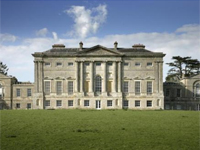
Wardour Castle, Wiltshire (Image: Strutt & Parker)

The second property, Apartment One in Wardour Castle, Wiltshire, was only launched in Country Life magazine a few weeks ago and was featured here with the idea that it might be used as a starting point for the conversion of the house back to a single home (‘Conversion reversion: Wardour Castle‘).  Yet it now appears that it was the original project to convert this Georgian gem that has caused the current vendor’s difficulties.  The house, designed by James Paine, was built in the 1770s for the eighth Baron Arundell and was (and in some ways still is) the grandest and largest house of it’s era in Wiltshire.

After use as a school for thirty years until 1990 it had an uncertain future.  Nigel Tuersley then bought the grade-I listed house for £1m in 1992 and decided to convert the house into ten large apartments with Nigel retaining the largest in the centre of the house for himself.  However with property boom turning to bust the bank was unwilling to continue funding the project.  This first manifested itself when the same apartment, all 23,000 sq ft of it, was put on the market for £7m in 2008 – possibly a bit ambitious even at the time.  With the contents now removed (not that you can really tell as the interior was designed by the famous Minimalist architect John Pawson) the apartment now waits for someone with a more reasonable £2.75m through Strutt & Parker.

The house is another in a small but sadly growing list of ‘posh repossessions’ (those valued at over £1m) which show that dreams, however big, can still be brought down and that perhaps the hardest part of reaching the top is staying there.

Sale details: ‘Apartment One – Wardour Castle‘ [Strutt & Parker]


Credit: original story in the Sunday Times Home section – 11 July 2010.  Story only available online to subscribers.

The relative cost of your English country house

Great Hockham Hall, Norfolk (Image: Savills)

So you’ve decided you really want a country house.  Nothing too big; more a residential estate than a working or sporting one so perhaps just 48 acres. Luckily your four-bed house in the best part of Fulham is worth £1.75m so you can sell up and surely move straight into your dream rural arcadia? Unfortunately a recent survey by upmarket estate agents Savills has shown that you might need just a bit more money than that.

As always, proximity to London is the key factor in determining how far your money will stretch.  With the Russians and Middle Eastern families not willing to be too far from the cultural delights of Bond Street the price of a decent country house with 48 acres in Surrey tops the table.  To secure a decent small estate in the nicest parts would require between £15m-£20m but a similar property in Hampshire would set you back just £10m on average.

So with the those two counties ruled out, where next?  The Cotswolds have always been popular with the corresponding effect on prices but if Hampshire is too expensive then unfortunately you’re also out of luck in Gloucestershire with the average there hitting £12m – but north Oxfordshire might look attractive with the average of between £7m-£8m.

Distance from London reduces prices but with broadband making working from your country home on Friday possible Dorset or Wiltshire are still very attractive but more affordable – but you’ll still have to expect to pay between £4.5m-£5m.  Fewer transport options make East Anglia even cheaper with a country house in Norfolk going for around £3.25m – which makes the pretty Great Hockham Hall [pictured above], a grade-II listed Queen Anne house built in 1702 and with 47.66 acres, almost a bargain at £2.95m.

So where could you trade in your Fulham house for a small country estate? Step forward Lincolnshire where the average is the lowest in England at ‘just’ £1.75m-£2.25m. So proving that everything is relative it seems that even the high prices of London don’t always directly translate into a ticket to the country life unless you’re willing to go where the market takes you.

______________________

Source: research by Savills (but listed not on their website) and reported in The Times ‘Bricks & Mortar’ property supplement on Friday 18 June (but their website doesn’t allow access so no link there either).

If you are interested in the rest of the report or the averages for other counties I’m guessing the best contact is Alex Lawson at Savills (Rural Research) on +44 (0) 20 7409 8882 or email alawson@savills.com.

How to lose money on a country house: Compton Bassett, Wiltshire

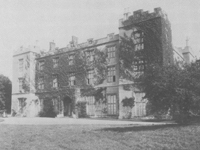
Compton Bassett House, Wiltshire (demolished 1929)

[This article was originally published in 2010]

The news that Robbie Williams is to sell his country house, Compton Bassett in Wiltshire, for a potential £1m loss shows that with the wrong property it is still possible to buck the generally rising trend in prices by overpaying in the first place.

The Basset family (after whom the village was named) had first built a timber-framed house in the 13th-century. By 1553, the new owner of the manor, Sir John Mervyn (d. 1566) rebuilt the house using a reported 260 oaks, which gives some indication of the size of the house. It was still standing in 1659 and was recorded as being on a U-shaped plan, open to the south east. In 1663, the house and estate were sold to Sir John Weld, of the ancient Dorset family. He made significant changes, spending the colossal sum of £10,000 between 1663-1672 to build the sides up to 130ft and 110ft to create a large rectangle and to then cover over the courtyard. Originally, the house was in a soft, white stone but this renewed in brick in 1814, with the rest of the house following in the late 19th-century, during which it also gained the battlements. 

Sir John also added the distinctive corner turrets; a stylistic device which echoed the form of a castle which bears some similarity to the Weld family’s main country seat, Lulworth Castle in Dorset,. This was built as a hunting lodge in 1610 by Thomas Howard, 3rd Lord Bindon, and bought by Humphrey Weld (John’s elder brother) in 1641, but sadly gutted in a devastating fire in 1929. As Humphrey Weld died (in 1684) without a male heir, Lulworth Castle passed to John’s son William who seems to have chosen it as his family seat and sold Compton Bassett in 1700.  

The house passed through various owners until it was inherited by George Walker Heneage (d. 1875) who, by 1828 had established an estate covering 1,813 acres in the area. It was Walker Heneage’s grandson, Godfrey, who eventually inherited the estate in 1901 but then sold it in 1918 to the Co-Operative Wholesale Society who sold it again in 1929.  It was bought by one E.G. Harding who then parcelled up the estate and sold it off piecemeal. 

That period was a dark time for the country house in the UK with many being demolished. The house was bought by Captain Sir Guy Benson who sadly decided that he would rather live in the stables and so this wonderful house was levelled in the early 1930s and the stables converted in 1935 into the new Compton Bassett House.  Unlike other successful conversions of stables, this one was obviously designed as a functional building and lacked the grace of so many of the stable buildings we can still see today and so did not lend itself to being the main house.   Not that it has stopped various owners over the years trying.

Compton Bassett, Wiltshire (former stables) (Image: Panoramio)

The latest project was started in 1998 by the then owner Paul Cripps and was to take six months and cost £500,000 but ended up taking three years and costing £3m.  The house was then launched on the property market in 2007 at an eye-watering £8.5m (no doubt to try and recover some of the lavish overspending on the interior) for the house plus 71-acres.  After languishing for many months Robbie finally bought it for £8.1m but never really settled here, preferring his life in the US.  So now it is back on the market with Savills (but not listed on their website) for a reported asking price of £7.5m – but once you factor in all the costs involved from buying and selling, Robbie should be about a million down from when he bought it.  This also assumes he’d get that price – losses could rise if, remarkably, there was someone else out there who liked the look of the house but decided that it was still too expensive and drove the price down further.  To be honest, when compared with some of the other properties Savills have available in Wiltshire for around £6m (e.g. Langley House or Midway Manor) why anyone would chose this one is beyond me.

n.b. the interior and floor plans can be seen in this article in Variety magazine in 2013 when it was again on the market for £5.5m: In Case You Missed It: Robbie Williams

*Update* 2010

Savills have added Compton Bassett to their website so if you have £7.5m and really feel that this house is the best way to spend it, then have a look at the details: Savills: Compton Bassett

*Update* February 2021

So, it turns out that Mr Williams was not able to sell the house in 2010 or 2013 or 2016 when it was variously reporting as being relisted. Again, in 2021, there is renewed interest as he plans to move with his family to a new house in Switzerland and has no plans to stay in a house he (and his daughter) now feel is ‘creepy’.

Robbie Williams selling £9 million ‘haunted’ Wiltshire mansion in Switzerland move (Evening Standard)


25/02/2021: article updated with further details on the history of the house and the current situation regarding Mr Williams.

Midmar Castle – all that glistens isn’t quite golden

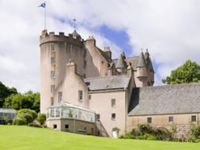
Midmar Castle, Aberdeenshire (Image: The Times)

It seems that an interesting story used to help speed up the sale of a house but for Midmar Castle in Aberdeenshire even a tale of sunken gold hasn’t helped secure a sale a year after the house was launched. The category-A listed castle was launched on the market on February 2009 with a fulsome write-up in The Times relating how the value of the house had underwritten a risky – but ultimately successful – expedition to recover £50m in Russian gold which had gone down with HMS Edinburgh in WWII.

The castle was originally started in 1411 but was greatly extended in the late sixteenth-century by the remarkable local granite-masons known as the Midmar school. They were responsible for Midmar and four other castles built nearby – Crathes, Frazer, Drum, Craigievar – all of which are now owned by the National Trust apart from Midmar.  Based on the traditional defensive z-plan with three main towers, this is an impressive and historic home.

The original price tag of £5m (set by Knight Frank who have now been replaced by Savills) for the house, gardens, outbuildings and surrounding 185-acres has now dropped to £3.5m – which represents an average drop of over £100,000 for each month it has remained on the market.   This may reflect some over-optimistic valuations but it’s still a superb, historic castle set in a perfect mini estate – ideal for anyone who wishes to experience the Scottish country lifestyle but doesn’t want the thousands of acres which often come with a house of this quality.

Property details: ‘Midmar Castle, Aberdeenshire‘ [Savills]