Going to the country: more country houses of UK Prime Ministers – Part 2

The first part of this series, highlighted the aristocratic background of our early Prime Ministers – Earls and Dukes abound.  This meant that a country house was just where they had been brought up and simply regarded as home rather than the aspirational purchase.  It also highlighted that the architectural tastes of the PMs reflected their political beliefs with a strong preference for the Classical, representing structure and order.

So, to continue the tour of country houses of Prime Ministers, this time those who served  under George III (1760–1820):

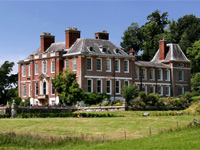
Luton Hoo, Bedfordshire (Image: ickle_angel/Flickr)

The first was John Stuart, 3rd Earl of Bute. Originally a man of rather limited means who only acquired great wealth following his marriage to the rich heiress, Mary Wortley Montagu. The family seat was Mount Stuart on the Isle of Bute; at the time a small Queen Anne house which burnt down in 1877 to be replaced by the Gothic palace we see today.  With his later wealth and prominence the Earl created two fine new country houses.  On his retirement as PM, he bought Luton Hoo, Bedfordshire in 1763 and in 1767 commissioned Robert Adam to create a large neoclassical mansion which, although this was never fully realised, the resulting house (now a hotel) is still sizable.  The wings are a later addition but faithful to Adam’s original conception. Ill health later forced a move to the Dorset coast and having bought a clifftop position he built High Cliff “to command the finest outlook in England.“.  Unfortunately it was a little to fine, the crumbling cliff not only necessitated the demolition of the house in the late 1790s, it also led to the Earl’s death in 1792 due to a fall whilst picking plants.

He was succeeded as PM in 1763 by George Grenville who was born, and lived, at the family seat, Wotton House, Buckinghamshire.  He is one of only nine PMs who did not become a peer on leaving office.

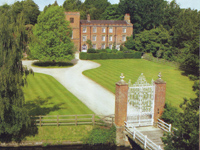
Wentworth Woodhouse, Yorkshire (Image: geograph.co.uk)

If there was a competition for the most impressive house of Prime Ministers then Charles Watson-Wentworth, 2nd Marquess of Rockingham would be feeling rather confident.  His family home, Wentworth Woodhouse, Yorkshire, is one of the largest private country houses in Britain with a main front extending to over 600ft. Built over a 25-year period, the house exemplifies the grand palaces which became possible in Georgian England. Faced with the usual pressures on later owners, plus vindictive coal mining, the family moved out and the house was leased as a teacher training college but since 1999 it has been the home of architect Clifford Newbold and his family who have been undertaking a massive and very impressive restoration programme.

William Pitt the Elder, 1st Earl of Chatham was brought up in great comfort from the proceeds of the sale of the Regent Diamond by his father.  As the younger son, Pitt would not inherit the family seat and so made his own way, choosing politics and becoming PM in 1766.  His country residence was the relatively modest Hayes Place in Kent, which he had built after he bought the estate in 1757.  He later sold it in 1766 to Horace Walpole who encased the house in white brick and enlarged it before selling back to Pitt in 1768 on his retirement.  The house survived until 1933 when it was demolished and houses built on the land.
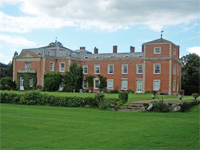
Euston Hall, Suffolk (Image: David Robarts / flickr)

Another Prime Ministerial seat to suffer later loss was Euston Hall in Suffolk seat of Augustus FitzRoy, 3rd Duke of Grafton who succeeded William Pitt.  The Dukes of Grafton were very wealthy with extensive land holdings in Suffolk, Norfolk, Northamptonshire and London.  Euston Hall had been extensively remodelled by the Palladian architect Matthew Brettingham for the 2nd Duke between 1750-56.  The house suffered a devastating fire in 1902 which destroyed the south and west wings, which were subsequently rebuilt on the same plan but then demolished again by the 10th Duke in 1952.  It should also be noted that the Dukes also owned the splendid Wakefield Lodge in Northamptonshire, designed by William Kent, though it was tenanted and therefore the Dukes never lived there.

William Petty-FitzMaurice, 2nd Earl of Shelburne had the splendid fortune to be brought up in one of the finest of Georgian country houses, Bowood House in Wiltshire, which also became a scandalous loss when it was demolished in 1955/56.  Remodelled for the 1st Earl by Henry Keene between 1755-60, the house also featured interiors by Robert Adam, who also altered Keene’s original portico to create a much grander version.  Afterwards the stables were converted to function as the main house where the 9th Marquess of Lansdowne (as the Earls became) still lives today.

Welbeck Abbey, Nottinghamshire (Image: Mr Nibbler / flickr)

The next PM, William Cavendish-Bentinck, 3rd Duke of Portland inherited Welbeck Abbey, Nottinghamshire, which had also been the home of an earlier PM, his relative Thomas Pelham-Holles, 1st Duke of Newcastle.  As stated in Part 1, this is a fascinating house which has often been overlooked due to the fact that it has been rarely open to the in the last 100 years, public tours having finished in 1914. Extensive work was carried out between 1742-46 by the relatively unknown architect John James who reconstructed the south wing and remodelled the west front for Henrietta, Countess of Oxford.  The west front was subsequently changed again in 1790 to designs by Sir Humphry Repton.  The Dukes of Portland also had a southern seat at Bulstrode Park in Buckinghamshire, though this house was replaced in 1865 by the 12th Duke of Somerset who by then owned the estate.

In contrast to the vast wealth and aristocratic status of the preceeding PM, William Pitt the Younger was able to bring political heritage; his father also having served in the same role. In stark contrast to the size and splendour of Welbeck, his country home was Holwood House in Kent, a modest mansion set in 200-acres for which Pitt paid £7,000 in 1783 before commissioning Sir John Soane to alter and enlarge it in 1786 and 1795.  Soane’s work here led to Pitt recommending him for the work to build what was to be one of Soane’s masterpieces; the Bank of England building which was so sadly demolished in the 1920s.  Holwood was also to be demolished, in 1823, to be replaced by a much grander house designed by Decimus Burton.

The country houses of Henry Addington 1st Viscount Sidmouth have both largely now vanished under the sprawl that is Reading University.  Addington had a low-key record as PM and his houses were equally modest.  Although on becoming PM Addington moved into the beautiful White Lodge in Richmond, his main seat was Woodley House, Berkshire, which had been built in 1777 before being bought by Addington in 1789. At the same time, he also bought the neighbouring estate of Bulmershe Court which was then tenanted, before falling into disrepair in the 19th century leading to two-thirds of it being demolished. Woodley House was used by the Minstry of Defence during WWII but subsequent dereliction led to its demolition in 1960.

William Wyndham Grenville, 1st Lord Grenville, as well as abolishing slavery, also created one of the most elegant of the houses in this series; Dropmore House in Buckinghamshire.  Built in 1795 and designed by Samuel Wyatt (b.1737 – d.1807) with later work by Charles Heathcote Tatham (b.1772 – d.1842), it was Grenville’s refuge, describing it as ‘deep sheltered from the world’s tempestuous strife‘. The grounds were also lavished with attention with Grenville planting 2,500 trees, and creating numerous walks which took in the superb views and even going as far as to remove a hill which blocked the view to Windsor Castle.  Tragically, devastating fires in 1990 and 1997 left a ruined shell but it has been recently rebuilt as a series of luxury apartments.

The only PM to be assassinated, Spencer Perceval, never really had a country seat of his own but had grown up in Enmore Castle, Somerset though he would never inherit as he was the second son of second marriage.  Only a small section of the main house now remains after it was largely demolished in 1833, but originally Enmore, built c1779, was one of the largest houses in the county.  In later life, Perceval lived in a large house called Elm Grove on the south side of Ealing Common in London – though at the time this would have been quite a rural area but not quite enough to classify this as a true country house.

The final PM under George III was Robert Banks Jenkinson, 2nd Earl of Liverpool who again chose to live close to London, though in a country house, at Coombe House in Kingston upon Thames in Surrey.  Originally Tudor, this brick house was replaced with a Georgian mansion which was later altered by Sir John Soane, including the addition of a library.  The house survived until 1933 when it was demolished with houses now covering the site.

So although the Gothic revival movement had started in the 1740s and was the main alternative to the dominant Classical architectural style, even by the 1820s, it did not reflect the tastes of any of the Prime Ministers.  Considering the system still echoed the exclusions of the Reformation with its explicit rejection of all things ‘catholic’ (architectural, theological, political) it was unlikely to change, especially as the Catholic Emancipation Bill wasn’t passed until 1828.  Architecture was taken an expression of belief and so to favour the Gothic could potentially have given the wrong signals.

Next: Prime Ministers under George IV and William IV
List of UK Prime Ministers

Merry Christmas!

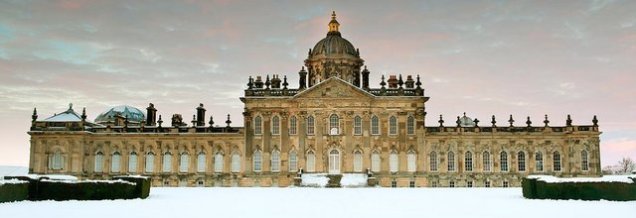
Castle Howard, Yorkshire (Image: Tricky via Flickr)

I started updating this blog regularly in January 2010 so it has been fascinating and humbling to see over the past year just how many others share my love and interest in UK country houses. So, thank you to all those who have visited and a particular thanks to the many kind people who have shared information and commented on the various stories – it is very much appreciated.

The blog will be back next year with more stories about the glories of our country houses, updates on the threats they face, and anything else related.  I’m also aiming to visit more houses (including a trip to Derbyshire to see the Cavendish houses and others) and highlighting those which come up for sale in Country Life magazine and elsewhere.  There will naturally be fewer updates over the next couple of weeks so I’d like to take the opportunity to wish you all a very Merry Christmas and all the best for 2011!

Matthew

An autumn flutter: country houses currently for sale

Country houses are often launched on the market to catch either bonus money early in the year or those looking to move before the summer.  However, circumstances or owner preference can lead to some interesting houses being given a promotional push in the autumn (usually through Country Life magazine) to catch those who fancy Christmas in front a different log fire.  So, here’s a quick round-up of some of the better country houses currently for sale.

Upton Pynes, Devon (Image: Upton Pynes website)

Easily one of the most impressive houses is one that has always been a sign for me that I’m nearly home when travelling back to Devon on the train.  Just outside Exeter is the beautiful grade-II* listed Upton Pynes, which, despite the very English sounding name, bears a striking resemblance to a French chateau.  Built c.1700 by Hugh Stafford with very sympathetic later additions, this large but elegant house sits in a commanding position in the Exe Valley, perfectly positioned to catch the sun throughout the day, giving the red-brick façades a warm glow.  Described by Pevsner as “…an excellent example of the stately double-pile house that became popular after the Restoration but is relatively rare in Devon.”, the interior features a particularly grand entrance hall created as part of alterations in 1852 by the architect Ambrose Poynter for Sir Stafford Henry Northcote (later the Earl of Iddesleigh).  The main interiors of the house, including an enfilade of rooms on the south front and a notable library, largely dates from 1700.  The house also has the claim that it was the one Jane Austen had in mind when describing ‘Barton House’ in ‘Sense & Sensibility’.  The house still requires some restoration but will definitely reward whoever completes this grand project.

> More information: ‘Upton Pynes, Devon‘ £3.25m, 37-acres [Savills]

Crendle Court, Dorset (Image: Savills)

Sometimes a grand house designed by an interesting architect can remarkably remain unlisted, as is the case with the Edwardian Crendle Court in Dorset which was designed by Walter H. Brierley (b.1862 – d.1926) who has been described as ‘the Yorkshire Lutyens’.  A prolific architect, he designed over 300 buildings including schools, churches and several country houses including the elegant neo-Georgian Sion Hill Hall in Yorkshire.  Brierley was a versatile architect able to work successfully in various styles though with a preference for ‘Wrenaissance’ – a modern re-working of the architectural language of Sir Christopher Wren.  Crendle Court was built in 1909 and features elaborate ornamental plasterwork in the main reception rooms by George Bankart, and sits, well, more luxuriates, in 270-acres of grounds.  Considering the architect and the quality English Heritage ought to send someone round to evaluate and spot list it before it gets ruined by someone with more money than taste.

> More information: ‘Crendle Court, Dorset‘ £6.95m, 270-acres [Savills]

Rudby Hall, Yorkshire (Image: Carter Jonas)

Other significant houses available were launched earlier but are now being promoted following price cuts.  One such house is the grade-II* listed Rudby Hall in Yorkshire, which was originally given a guide price of £3.5m but now is offered at £2.75m.  Designed by Anthony Salvin in 1838 for the 10th Viscount Falkland, who originally called it Leven Grove, but by the late 19th-century it was known as Skutterskelfe Hall before being given its present name by the company which owned it in the 1990s.  The house was restored in the 1980s and comprises the main house but with the ancillary buildings converted into let accommodation bringing in a handy £50,000 p/a – so long as you don’t mind sharing your gardens, grounds and woodlands with them.

> More information: ‘Rudby Hall, Yorkshire‘ £2.75m, 10-acres [Carter Jonas]

Blairquhan Castle, Ayrshire, Scotland (Image: Blairquhan Castle website)

For those who fancy something more baronial, then Blairquhan Castle in Ayrshire, Scotland may be perfect.  The core of the property is a tower house built in 1346 but was later given a new front by William Burn in 1820-24 to provide the imposing if slightly stern façade we see today.  The estate was noted for it beauty with Lord Cockburn writing in 1844: “I rose early…and surveyed the beauties of Blairquhan. It deserves its usual praises. A most gentleman-like place rich in all sorts of attractions – of wood, lawn, river, gardens, hill, agriculture and pasture.”.  What more could a squire desire?

> More information: ‘Blairquhan Castle, Scotland‘ £4.85m, 670-acres [Savills]

Beaurepaire House, Hampshire (Image: Knight Frank)

Most of these houses seem to be with Savills so to even things up, and to include a house I’m surprised hasn’t sold already, is Beaurepaire in Hampshire.  The house was featured on the blog in more detail (‘Phoenix for sale: Beaurepaire House, Hampshire‘) when it was first launched in June this year.  The house is what remains after a devastating fire in 1942 destroyed the main block of the house, leaving the current service wing which was extensively refurbished and remodelled after WWII to give the elegant house which is for sale today.  Approached down a long drive, what guest couldn’t fail to be impressed by the wonderful gates designed by Sir John Soane which guard the entrance over the moat?  Sitting in a 250-acre estate, the £8m price tag is probably justified for the area – and the owner is apparently in no rush to sell so don’t expect any big price cut soon.

> More information: ‘Beaurepaire, Hampshire‘ £8m, 250-acres [Knight Frank]

The rise and fall of French taste on UK country houses

Wrest Park, Bedfordshire (Image: English Heritage)

For all the traditional antipathy towards the French, the influence of their architecture has been felt throughout Britain’s country houses.  Although initially the use of the French architectural vocabulary was a sign of wealth and education only available to the best families, the style was regarded as sullied by the later, more energetic, constructions of the Victorians – an association which still sadly lingers today.

The first wave of Anglo-French design started in the Elizabethan period; a time when it was acceptable to display one’s knowledge conspicuously. The French style, with its dramatic rooflines, dovetailed with the traditional English manor house and its own profusion of gables and chimneys.  Houses such as Burghley in Northamptonshire made dramatic use of the style with the central, three-storey pavilion, dated 1585, based on the French triumphal arch but oddly includes a traditional mullioned window on the third floor. Burghley was the product of the owner, Lord Burghley, an architectural enthusiast who as far back as 1568 was known to have been writing to France to obtain specific architectural books.

This early use of the French style was relatively restrained – probably more by the conservatism of the ruling gentry who were most likely to be building these houses.  Yet, our impressions now are more strongly influenced by the bolder, more assertive French style which was so popular during the Victorian era – though this same popularity was to also lead to it being derided.

The first of the Victorian nouveau-riche were keen to be accepted by society and so built houses which largely followed the same designs used by the local families.  The end of the Napoleonic wars in 1815 led to a rush across the Channel leading to a revival of interest in French design, particularly in relation to interiors, such as the Elizabeth Saloon at Belvoir Castle, Rutland, built c.1825.  By the mid-nineteenth century this was being more confidently expressed in dramatic houses which sought to boldly make their mark.

The second French Renaissance was influenced by lavish works such as the new block at the Louvre in Paris, built between 1852-70.   However, there were earlier examples such as the complete Louis XV chateau at Wrest Park in Bedfordshire, designed by the owner Earl de Grey, built in 1834-39, and Anthony Salvin’s French roofs added to Oxonhoath in Kent in 1846-47.  Yet, after the Louvre, the fashion gathered pace with designs such as R.C. Carpenter’s redesign of Bedgebury in Kent in 1854-55, and Salvin’s work at Marbury Hall in Cheshire in 1856-8.  Less successfully, the architect Benjamin Ferrey built Wynnstay in Denbighshire for Sir Watkin Williams-Wynn which, for all its dramatic high roofs and pavilions, was thought rather gloomy.  Another dramatic, albeit slightly awkward, design was that of Plas Rhianfa, Wales, built in 1849, which seems to mix both Scots baronial and French, whilst Sir Charles Barry completed a more successful use of the two styles at Dunrobin Castle for the Dukes of Sutherland in 1845.  Also of note was Nesfield’s design for Kinmel Hall, described as a Welsh ‘Versailles’.

These houses were largely for the existing gentry who found the impressive skylines met their needs for a dramatic statement as was fashionable at the time.  With the fashion spreading into London and being used for luxury hotels, clubs and offices it was inevitable that the newly wealthy would wish to emulate in the country the world they already enjoyed.  The last burst of ‘aristocratic French’ could be seen in the designs for Hedsor House in Buckinghamshire, 1865-68 for Lord Boston, Alfred Waterhouse’s Eaton Hall in Cheshire, 1870-72 for the Duke of Westminster, and T.H. Wyatt’s Nuneham Paddox in Warwickshire for the Earl of Denbigh, built in 1875.  From around this time, its fashionability declined.

One of the earliest of this new wave was Normanhurst in Sussex, built in 1867 for Thomas Brassey, son of the famous railway contractor.  Reputedly, Lady Ashburnham from nearby Ashburnham Place (note the very different architectural style of house) would snootily refer to him as ‘that train driver over the hill’.  In Worcestershire, the equally dramatic red-brick Impney Hall – later Chateau Impney – was built in 1869-75 for local salt tycoon John Corbett, who employed Auguste Tonquois, who had extensive experience around Paris.  In County Durham, the foundation stone of the Bowes Museum, originally designed to be part-home also, was laid in 1869 for John and Josephine Bowes.  Designed by Jules Pellechet with J.E. Watson of Newcastle-upon-Tyne, the house reflected their love of France but also made a statement as to their wealth – and possibly sought to hide their less-than-solid social position as illegitimate son of an Earl and an actress.  In Yorkshire, the additions to Warter Priory were considered unsuccessful, either due to the strange proportions or because the style had simply fallen out of favour.  More successfully, St Leonard’s Hill, Berkshire, was transformed from a Georgian house in the mid-1870s to create a dramatic chateau visible from Windsor Castle.

Waddesdon Manor, Buckinghamshire (Image: National Trust)

Interestingly though, perhaps the most famous of the English chateau was also one of the latest.  Waddesdon Manor in Buckinghamshire was built in 1889 for Baron Ferdinand de Rothschild to a design by French architect Gabriel-Hippolyte Destailleur, mixing elements from various famous French chateaux such as Blois, Chambord and Anet.  The last of these grand French imports was Halton House, designed by William R. Rogers and built in 1882-88, also in Buckinghamshire and also for a Rothschild, Alfred Charles; Baron Ferdinand’s cousin.  Equally grand, this house also featured a wonderful winter garden, though this was sadly demolished to make way for an accommodation block for the RAF who bought the house and turned it into an officer’s mess.

Perhaps one of the final straws as to the desirability of the French style was the spectacular collapse of the Victorian financier Baron Grant who, in 1875, spent over £270,000 (approx. £20m) building a huge house in Kensington before his crimes were exposed in 1879 with the subsequent public disgrace, and the demolition the house in 1883.  Such a high-profile scandal and its flash monument would have been felt in society and tarnished the style for no-one would wish to be associated with such disgrace.  However, fashion would have played a more significant role, with taste moving on to new styles, leaving these extravagant mementos to an earlier, brasher architectural exuberance which now give us an unexpected glimpse of France in the British countryside.


Credit: a wonderful insight into the period is Mark Girouard’s ‘The Victorian Country House’ which was most useful in the research for this post.

For more information on Chateau Impney; ‘Chateau Impney – the story of a Victorian country house’ by John Hodges

Monumental follies: current large country houses in the UK

Hampton Court Palace, Surrey (Image: Andreas Tille/Wikipedia)

In previous centuries the country house was primarily a home, but also included other functions such as storehouse, dormitory, dairy, bakery, laundry.  This inevitably led to their size increasing to the point where they could be regarded as small villages – but despite the scale of houses such as Knole or palaces such as Hampton Court we still admire their elegance and charm.   So what’s changed now that the modern ‘palaces’ so lack the beauty of those which went before?  Is it because so many have been demolished that we have no sense of how to design the largest of country houses?

The size of a country house has always been used as a simple measure of the owner’s wealth – and subsequent owners could also argue it would equally symbolise the size of their burden.  In the UK, traditionally the name ‘palace’ was reserved for the homes of the monarchy or bishops with few landowners being bold enough to take the name for their own houses – regardless of size.  One of the few to do so were the Dukes of Hamilton, whose home – Hamilton Palace in Scotland – could truly be said to justify the name.  A vast Classical edifice with a north front stretching over 260-ft long, the interiors and collections were easily a match for any other house in Europe.  Yet, financial circumstances, wartime damage and apparent mining subsidence condemned the house and it was demolished in 1921.

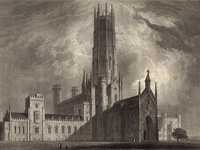
Fonthill Abbey, Wiltshire (Image: Wikipedia)

Other houses were conceived on an even grander scale.  Perhaps the most famous is Fonthill Abbey in Wiltshire, designed by James Wyatt for the immensely wealthy William Beckford. Inspired by a love of the Gothic, Beckford set out to create what was effectively a residential cathedral.  The vast 300-ft tower and huge 35-ft tall doors all contributed to an awe-inspiring impression for the few visitors able to see it before it collapsed under its own ambition in 1825.  Wanstead House in Essex, built in 1715, was also conceived on a similar scale to the later Hamilton Palace but again was lost – this time when creditors tore it down so the materials could be sold to pay debts in 1825.  The roll call of other huge houses includes Eaton Hall in Cheshire, Worksop Manor and Clumber House in Nottinghamshire, Nonsuch Palace in Surrey, and Haggerston Castle in Northumberland.  Yet what distinguishes all these houses in that they have been demolished – their very size eventually condemning them as later economic circumstances rendered them unsupportable.  However, each was architecturally an interesting house, one that, if it still survived, would be admired today (well, perhaps less so the bulky Haggerston Castle).

No modern palace has yet matched the beauty of the UK’s largest private country house still standing – Wentworth Woodhouse in Yorkshire.  From the end of one dome-capped wing to the other, the house, built largely in the 1730s, runs for over 600-ft but is an object lesson in Classical elegance.  The huge and imposing portico towers over the façade provide balance and a natural harmony with the scale of the flanking wings. Other large house still in existence which were built on a similar scale include Blenheim Palace and Castle Howard.

Updown Court, Surrey (Image: Savills)

So what have lost that means that the houses built to a similar scale today are so poor architecturally?  Perhaps one of the best (worst?) examples of this problem is Updown Court in Surrey. Completed at the end of 2006, this vast mansion is described on the official sales website as symbolising “the grand and imposing presence of the Great Houses of England.” (stop sniggering at the back!).  Although the ‘in excess of £70m’ price tag will naturally limit the pool of potential buyers, is it just the size or the price causing the problem? Perhaps it is the curse of the American ‘McMansion’ which leaves it to languish?  The derogatory term ‘McMansion’ was coined in the US in the 1980s to describe the huge houses being constructed which valued sheer size over architectural merit.  The architect of Updown, the American John B Scholz, can truly be said to pay fervent homage to such excess.  Extending to over 50,000 sq ft – bigger than Hampton Court or Buckingham Palace – the house is a exemplar of the type of house which simply is built with little thought to design beyond the ill-considered use of architectural elements to just decorate the house.

However, is no design better than too much? At Hamilton Palace in Surrey the owner, the notorious Nicholas van Hoogstraten, has taken great pains to ensure the design reflects his character.  Over-bearing and rather menacing, it was designed by Anthony Browne Architects (who are no longer involved), with work starting in 1985 and still ongoing though so far it includes a huge copper dome and a massive floor reserved for Hoogstraten’s art collection. The east wing is designed as a mausoleum where he can be hubristically entombed after death with his art collection in the manner of the Pharoahs. Yet for all the attention which has been lavished on the design and a reputed £30m spent so far, it has none of the grace and elegance of the earlier palaces.  Perhaps this is the ultimate expression of ‘self’ – a shameless design, built without a care as to what others think.  Which is probably a good things as it has been described by The Observer as “a cross between Ceausescu’s palace and a new civic crematorium” and by John Martin Robinson in The Independent Magazine (October 1988) as “Post-Modern Classical with a touch of meglomania”.

One final example, which although not strictly a country house, exemplifies this rush for scale over beauty is the proposed replacement for Athlone House in Hampstead, north London.  Owned by a Middle Eastern billionaire, this 50,000 sq ft pile is being designed by Robert Adam, a pre-eminent neo-Classical architect.  Despite this he has managed to produce a design described by one local critic as a ‘cross between a Stalinist palace and a Victorian lunatic asylum’ – and yet Mr Adam is responsible for some elegant examples of country houses such as the proposed Grafton Hall, Cheshire.

Obviously the scale of a modern palace is way beyond the realm of normal domesticity – and that’s fine.  The house has long been an expression of power and prestige but it was also one of taste, a refined justification as to the choice of a particular architect or style.  The modern ‘palace’ (and I use the word simply to suggest scale not beauty) is sometimes just the product of an architect interpreting vague notions from clients who seem unwilling to invest the time to become educated.  The end results are over-sized houses which lack the intellectual justification which underpinned the Fonthills and Eaton Halls of their day.  Nowadays, the need to spend the budget on a sad checklist of gimmicks seems to be pushing houses away from architecture and simply into a form of ‘decorated construction’ – a largely functional building given a variety of architectural fig leaves to hide its naked purpose as simply a Corbusier-esque ‘machine for living’ – but on a monumental and unpalatable scale.

Original story: ‘Hot property: Palaces‘ [ft.com]

Official website: ‘Updown Court, Surrey

Property details: ‘Updown Court, Surrey‘ [savills.com]

More criticism of Athlone House by Simon Jenkins ‘Greed, egos and yet another blot on the horizon‘ [thisislondon.com]