The greatest country house you’ve never heard of: Wentworth Woodhouse

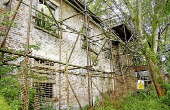
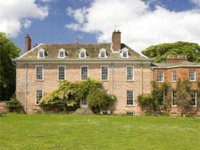
Wentworth Woodhouse, Yorkshire (Image: geograph.co.uk)

Although Britain is a relatively small island it still has the capacity to hide some spectacular buildings which, unless opened to the public, can remain a secret.  One such house, featured this week in Country Life magazine (February 17) is Wentworth Woodhouse in Yorkshire, thought to be the largest private residence in Europe and for Marcus Binney “unquestionably the finest Georgian house in England”.

Built over a 25 year period from 1724 for Thomas Watson-Wentworth, Marquess of Rockingham, it is twice as wide as Buckingham Palace and boasts over a 1,000 windows, 365 rooms and five miles of underground passageways.  The stable block appears to be a large country house but is merely the lodging for up to 100 horses. Inside the main house, the Earls FitzWilliam enjoyed a priceless art collection which included works by Titian, Van Dyck, Guido, and Raphael.

Yet this was a house to be blighted by the bitter class-war hatred of the post-war Labour government and questions of inheritance. In April 1946, heavy machinery moved into Wentworth Park to pointlessly mine low-grade coal right up to the back door of the house on the express instruction of Manny Shinwell, the minister of fuel and power.  A old-school left-winger, Shinwell was given options to save the parkland and gardens but was determined to press on despite representations from the local miners who had been very well treated by successive generations of FitzWilliams.

Once mining finished the FitzWilliams leased the house as a training college and retreated to 40-rooms but even then lived mostly elsewhere. Questions about the legitimacy of the inheritance led the last Earl to order a vast bonfire in 1972 of 16 tons of family papers, some dating back to medieval times, which burnt for three weeks.

Yet, despite its size the house escaped the fate of so many large houses in England and merely languished in obscurity.  Sold with just 30-acres in 1988 by the daughter of the last Earl it was bought by Wensley Haydon-Baillie who promised investment but in 1998 it was repossessed. It was then sold for the unbelievably low price of £1.5m (equivalent to just £7 per sq ft) to the architect Clifford Newbold whose careful restoration work has been praised and beautifully photographed in this weeks Country Life.

—————————————————————————–

*Update* May 2011 – I have written a more extensive write-up on the architectural history of the house in response to the episode of ‘The Country House Revealed

—————————————————————————–

More information: ‘Wentworth Woodhouse’ (Wikipedia)
Sewerby Hall restoration projects secures HLF funding

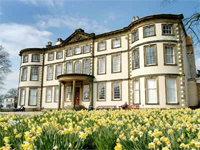
Sewerby Hall, Yorkshire (Image: East Riding Council)

Sewerby Hall has secured £50,000 to develop further it’s plans for a £2.6m restoration of the house. 

The grade-I listed Sewerby Hall was inherited by John Graeme in 1714 who promptly rebuilt the house which is the core of the current building.  The Graeme family owned Sewerby unti 1934 and in intervening 200 years made many alterations to create the elegant house which survives today. 

The Council are proposing to redevelop the outbuildings such as the former laundry block to provide the necessary visitor facilities.  The house will also be restored but encouragingly the Council have said that they “will work closely with planning and architectural colleagues, English Heritage, the Heritage Lottery Fund and other specialist advisors to take the project forward to the next stage” – which sounds encouragingly sensitive in contrast to the plans of other councils (see earlier post on Forty Hall in Middlesex).  Of course, the proof of how sensitive they will be will only become apparent when the plan is published but hopefully this project will not only protect but enhance this important house.

Full story: ‘Big step forward for Sewerby restoration project‘ [Nafferton Today]

Fight for Elmswell Old Hall to carry on

Elmswell Old Hall (Image: Hull Daily Mail)

Campaigners have vowed to continue the twenty-year battle for Elmswell Old Hall despite the latest setback.  The house, near Driffield, was built in 1642 and the home of the seventeenth-century agricultural diarist Henry Best – but the last time someone lived in the house was in 1965.  Although Grade-II* listed and thought to be one of the first brick-built houses in Yorkshire, it has slowly fallen into such an advanced state of dereliction that the owners have requested permission, via an entity ironically named ‘Elmswell Heritage Ltd’, to partially demolish what remains and consolidate the rest as a ruin.

An alternative plan, supported by locals and the Yorkshire Buildings Preservation Trust, has been put forward by the Spitalfields Trust who have a long record of restoring Georgian townhouses and historic country houses including the recently for sale Shurland Hall.  This plan would not only consolidate what fabric of the building remains but would also then restore it for use as a home. However, a major obstacle is that the house and land are owned by the same estate who have made it clear that the plan was unfeasible as they would not sell land nor access to the house.

So the future for the house appears to be that of architectural curiosity, open occasionally for school visits and scholars.  Unless a miracle happens, is seems another piece of Yorkshire, and the nation’s, heritage has been effectively lost due to fifty-years of neglect by the owner and the local council who should’ve stepped in decades ago to protect the hall.

Full story: ‘Preservation fight goes on even after building demolition backed‘ [Yorkshire Post]

Castle Howard benefits from ‘stay-cations’

Castle Howard, Yorkshire (Image: Wikipedia)

Despite fears that country houses would suffer during these turbulent times it seems that at least one has bucked the trend and reported a 17 per cent year-on-year increase in vistor numbers.  Staff at the grade-I listed masterpiece by Vanbrugh and Hawksmoor had expected the worse and sensibly shelved plans and looked for cost savings in anticipation of a financial shortfall which failed to materialise as the phenomenon of the ‘staycation’ boosted visitor numbers.

The need to re-examine budgets and expenditure at the beginning of the year has probably been a blessing in disguise for many houses as they have had to focus on the essentials and hopefully will now have a clearer idea of the most effective areas to spend their money.  One can only hope that the new awareness of these efficiencies will be maintained to ensure that our heritage has the maximum amount of money available to ensure they continue to be enjoyed by future generations.

Full story: ‘Visitor numbers up at Castle Howard, near Malton‘ [Gazette & Herald]

If I won the lottery…Sheriff Hutton Park

Sheriff Hutton Park (Image: Savills)

Launched this week in Country Life magazine is the stunning Sheriff Hutton Park, in Yorkshire. This is a quintessential English country estate: grade-I listed house with 10 bedrooms, farm, 200 acres, lake, and parkland.  The house, which dates from 1730, is in need of some modernisation but retains many of the original architectural features.  So if you have in excess of £5m available this could be the perfect estate for someone who wants the benefits of an important, but manageable house, combined with the opportunity to add your own choice of (architecturally sensitive) interior.

Property details: ‘Sheriff Hutton Park‘ [Savills]