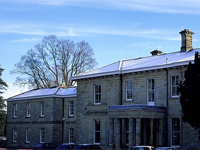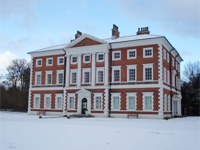
Lytham Hall restoration to secure future

Lytham Hall, Lancashire (Image: Lytham Hall blog)

To secure the future of what is considered to be one of the finest Georgian houses in Lancashire, the owners of  Lytham Hall have unveiled an ambitious £5m restoration plan.

The house was built for Thomas Clifton by the famous architect John Carr of York between 1752-64 and incorporated elements of the existing Jacobean house.  It remained the Clifton family home until the 1960s when it was finally sold to Guardian Royal Exchange Insurance who owned it until 1997, and is now run by Heritage Trust for the North West on a 99-year lease on behealf of the owners, Lytham Town Trust.

The £5m plans are the first part of an eventual £10m plan to upgrade every aspect of the house and estate to provide holiday accomodation, a tea room and conference facilities.  Although a shame that the house is no longer a home, it’s encouraging to find plans which respect the history and architectural importance of the house as they seek ways to ensure a secure future.

Full story: ‘New lease of life for historic hall‘ [Lytham St Anne’s Express]
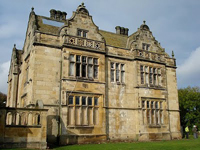
English Heritage grant helps towards Sockburn Hall restoration

Sockburn Hall, County Durham (Image: Sockburn Hall Project)

A project to restore the long-neglected Sockburn Hall has received a boost with a grant for £37,000 from English Heritage.  This is in addition to the £38,000 it was also awarded last year as part of a long-term project to make the house watertight, eliminate the dry rot and then restore the interiors.

The grade-II* listed Sockburn Hall was originally built in 1834 in a neo-Jacobean style for the Blackett family on the site of a lost Jacobean house built for the Conyers family which had vanished by 1823.  The house became notorious in 2000 when the sisters who lived there were prosecuted for keeping animals in squalid conditions in the various rooms of the house. Listed on the English Heritage ‘Buildings at Risk’ Register it had long been a cause for concern as water penetration and vegetation growth threatened the structure of the house.

The family have taken on the house as a restoration project to avoid selling it and risking it being developed and have created a small group of volunteers who are valiantly clearing the grounds and restoring features whilst specialist firms are working on the house. The grant in 2009 enabled emergency repair work to be undertaken on the roofs and guttering to remove the temporary tin sheeting and to ensure good drainage to help stop water ingress into the building.  This project will take years but hopefully, one day, the family will be able to move back into this house and make it a home again.

You can follow the progress of the work either on their website or via the Sockburn Hall Facebook group where you can also volunteer to help out.

New series of ‘Country House Rescue’ starts 4 March

Plas Teg, Wales (Image: Plas Teg website)

The fascinating first series of ‘Country House Rescue’ showed all to clearly that ownership of a country house is no passport to an easy life of luxury.  In fact, it demonstrated that being the ‘lord of the manor’ brings with it many responsibilities which can take a significant toll both physically but most importantly financially.

On Thursday 4 March at 20:00 on Channel 4 the next series of ‘Country House Rescue‘ starts in Wales with the owner of Plas Teg; a grade-I listed Jacobean house which has remained remarkably unchanged since it was built in 1610.  However, for the owner who gave up her glamorous life in Notting Hill when she moved to this 20,000sq ft house, it has proved to be a constant struggle to maintain this important house.  Hopefully Ruth can provide some of her usual robust advice to help get Plas Teg on the path to a more secure future.

More details: ‘Country House Rescue‘ [Channel 4]

A house and it’s garden to be reunited? Leonardslee, Sussex

Leonardslee House, Sussex (Image: tom@picasaweb)

Often the course of the country estate over the last 100 years has been for the land to be gradually sold off, starting with the outlying areas, and moving closer until just the house and it’s immediate gardens remain intact.  At Leonardslee in Sussex the process was eventually taken one step further with the house being sold off.  This, however, may about to be reversed.

Sir Edmund Loder bought the manor house and 225-acre gardens from his inlaws in 1889 and soon opened them to the public.  Over the next five generations, the Loder family added to the planting and landscaping to create what is now one of the only 163 grade-I listed gardens in the country.  Despite the family still owning the gardens the grade-II listed Italianate manor house, built in 1853 and featuring a 900 sq ft central hall decorated with Ionic columns, was sold off separately in the 1980s and became offices.  The gardens grew in reputation so it was something of a shock when in April 2008 it was announced that they were being put up for sale by Robin Loder for £5m through the estate agency Savills.  Cleverly, the company who owned the house also announced they were open to offers at around £3.25m for the house.

The Times is now reporting that after nearly two years on the market, the gardens have been sold to a private businessman and are likely to close to the public.  They are also reporting that the house may also be under offer at £2.75m to the same businessman giving him a perfect  opportunity to once again recreate a stunning small estate which, with the addition of the house, could be worth in the region of £10m.  Though a sad day for the many garden-lovers who have made many a pilgrimage to wander among the wallabies, it’s an encouraging reversal of the trend for houses to lose the control of the landscape which so often perfectly frames them.

Full story: ‘Leonardslee Gardens to close to the public after being sold‘ [The Times]

Confirmed: Gwrych Castle is for sale again

Gwrych Castle, Wales (Image: geograph.co.uk)

Following earlier concerns, sources have confirmed that the grade-I listed former ‘showplace of Wales’, Gwrych Castle, is once again for sale.

After many years as a deteriorating ruin, it’s outlook improved when the castle was finally sold for £860,000 in 2007 to City Services Ltd (trading as Clayton Homes – a separate company to Clayton Hotels which is still trading). They soon announced ambitious plans to convert it into a luxury 5-star hotel using the original layout as the starting point.  Initial work on site has included the removal of over 1,900 tons of asbestos and debris from within the shell and the vegetation stripped from the exterior. The site was ready for restoration to start and Donald Insall architects were working on the designs for restoration.

Unfortunately 2007 was the height of the property market and the subsequent fall hit many companies including Clayton Homes which went into administration on 12 August 2009.  Deloitte (Leeds) were appointed as administrators and have been quietly marketing the assets including Gwrych Castle.  This was highlighted by the story of the businessman who was viewing the castle as a possible site for his ‘psychic school’ when he conveniently saw a ghost at a window.   Kevin Horkin has apparently submitted a bid for around £850,000 – which may secure him the site but to complete the project to the required standard will require at least another £6m-12m depending on his ambitions.  This is a significant level of investment if he is to restore this wonderful house to the appropriate standard.  Hopefully Cadw, the Welsh equivalent to English Heritage, will keep a very close eye on the project and ensure that any plans are at least to the same standard as those approved for Clayton Homes.

Many people have taken a keen interest in Gwyrch Castle and had hoped that the sale would lead to this once grand house again taking a key role in the local area and also to save this important part of their architectural heritage.  It would be tragedy if the work already done to create a secure and viable foundation for restoration was allowed to deteriorate again – the house must be sold to a sympathetic owner who has both the vision and funds to complete this project in a way which befits this beautiful house.

More details: