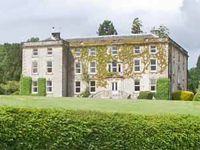
Country House Rescue – Series 4: Meldon Park, Northumberland

Meldon Park, Northumberland (Image: Meldon Park)

One of the joys of Country House Rescue is to bring to light some of the lesser known houses. The subject of this week’s edition (12 July, 20:00, Channel 4), Meldon Park in Northumberland, can certainly be said to be one of the ‘illustrious obscure‘.  This is also perhaps an apt description of the architect, who was one of the most prolific in the north east of England yet surprisingly little known beyond that, though the house also features later work by another who was certainly famous. Yet, such noble associations do not pay the bills so, despite a 3,800-acre estate, the Cookson family have called in the services of Simon Davis to provide ideas to help keep the house in the family.
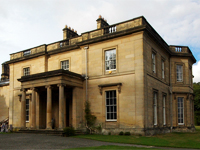
Entrance front, Meldon Park (Image: lawrencecornell via flickr)

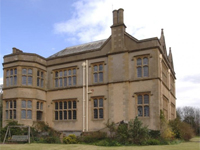
Meldon Park is certainly an elegant essay in the neo-Classical; golden brown sandstone in a compact and elegant design with some superb subtle detailing which denotes the hand of a finer architect.  The entrance front, though only three bays wide, features a grand porch with four free-standing (or ‘tetrastyle prostyle’ if you’d prefer the architectural terms) Ionic columns, projecting from a slight recession of the middle bay, with the corners of the building marked by shallow pilasters.

The architect of the now grade-II* Meldon Park was the regionally prolific John Dobson (b.1787 – d.1865) – a name famous in the north east but, due to his geographic focus, one less known nationally.  Dobson was born in Chirton, County Durham, and showed an early talent for drawing which led, at the age of 15, to his becoming a pupil of leading Newcastle architect David Stephenson.  On completing his studies in 1809, Dobson moved to London to develop his skills further, studying under the famous watercolourist John Varley. In London, Dobson became friends with the artist Robert Smirke and his two architect sons Robert (who designed the main facade of the British Museum) and Sydney (who later married Dobson’s daughter).  Despite the urging of his friends to stay in London, Dobson moved back to Newcastle where he established his practice, becoming (reputedly) the only architect between York and Edinburgh, except for Ignatius Bonomi in Durham.

Jesmond Towers, Newcastle (Image: GeordieMac Pics via flickr)

Dobson proved to be an exceptionally capable architect; not only could he produce beautiful and convincing watercolours of proposed projects, he was also technically competent, to the extent that his daughter claimed he ‘…never exceeded an estimate, and never had a dispute with a contractor‘. Dobson is perhaps best remembered for designing much of central Newcastle, and in particular, the beautiful curved train shed at the Central station.  Despite his urban output, Dobson was also extensively involved in projects outside of the towns, designing or altering over sixty churches and more than a hundred country houses; the latter principally commissioned by the beneficiaries of the wealth of the Industrial Revolution. Dobson was a rare architect in that he was competent in designing in both the picturesque style of Tudor Gothic (such as at Beaufront Castle and Jesmond Towers) and the classical style of the Greek Revival – and it was in the latter that he truly excelled. Although Howard Colvin praises his careful siting of the houses, high-quality finish and precise and scholarly detailing, he thought Dobson had a tendency to exaggerate the scaling, creating an overall look which might be considered bleak. Yet, this is more an academic criticism; those today looking on the many houses he worked on would consider them to be handsome examples of the flourishing of the country house which resulted from the new wealth in the north east.
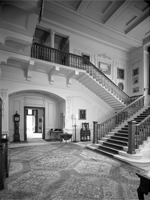
Stair hall, Meldon Park (Image: Country Life Picture Library)

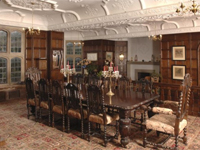
Meldon Park was to be one of Dobson’s finest of his Greek Revival designs.  Built in 1832 for Isaac Cookson, at a cost of £7,188 1s 1d (about £5m today if compared with average earnings), it was a sizeable house with extensive service accommodation and extending to a beautiful Orangery, even if the main house was comparatively small.  That said, the rooms are bright and well-proportioned with a grand Imperial central staircase, with its deep coffered ceiling described by Pevsner as being ‘the size of one in a London club‘.  The staircase was later reworked by no lesser figure than Sir Edwin Lutyens, who replaced the original metal balustrades with wooden ones and added decorative plaster panels.

Isaac Cookson was the third generation to manage the family manufacturing interests and had taken charge of his father’s glass works, developing them into one of the country’s leading makers, along with a very successful chemical works.

Longhirst Hall, Northumberland (Image: Longhirst Hall Hotel)

Cookson had previously employed Dobson to design part of a speculative urban development in Newcastle and combined with his earlier country house work at neighbouring Mitford Hall, Longhirst (with its striking entrance portico) and Nunnykirk halls, Dobson was a natural choice when looking to create his refined country seat.

As owners of a glass works, it was natural that the house would be well-lit; the bright interior a result of the large windows which graced the main rooms on the south and east sides.  Yet, Meldon Park actually marks a turning point.  The brilliant Mark Girouard, writing in Country Life in 1966, pointed out that:

In rooms like this, one realises just how much Georgian architecture developed in the course of the late 18th and early 19th centuries, as windows grew bigger and more and more effort was made to link the inside of the house visually with the landscape.  Meldon shows the development at its final stage; soon a reaction was to begin and the Victorians turned away from the sun and immersed themselves in increasing gloom.   In this as in other aspects Meldon represents in a very convincing way, the last flowering of the Georgian country house tradition.

So Meldon Park represents not only the work of one of the finest architects to have worked in the north east but also marks a key point in the development of British architecture; the high-water mark of Georgian elegance before the more insular and muscular Victorian style swept over the north of England.  The house is also one of those rare survivals where it is still owned and lived in by descendants of the person who commissioned it, sitting in its own huge estate.  This is a house which seems to be clearly loved by the owners who have worked incredibly hard to ensure they can remain there especially when the house is less of an attraction for visitors as previous generations had sold the art collection.  Judging by their new website and other news stories about their expanded and diversified activities it seems that they were also willing to listen to Simon Davis’ advice and act on it and such pragmatism can only be applauded and will hopefully be rewarded.

——————————————————————————

Official website: ‘Meldon Park

Photos from Country Life: Meldon Park [Country Life Picture Library]

Listed building description: ‘Meldon Park, Northumberland‘ [British Listed Buildings]

Want to stay there? Meldon Park: East Wing Apartment

Country House Rescue – Series 4 [Channel 4]

Country House Rescue – Episode 5 [Channel 4]

For more information about the architect: ‘John Dobson 1787-1865: Architect of the North East‘ – Thomas Faulkner & Andrew Greg

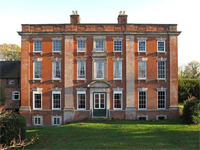
Country House Rescue – Season 4: Chapel Cleeve Manor, Somerset

Chapel Cleeve Manor, Somerset (Image: Webbers)

Many have bought things on a whim; it’s quite something for that thing to be a huge country house which once played host to royalty and celebrity.  When plans don’t work out and problems mount, it can be understandable for a family with generations of emotional attachment to a house to doggedly carry on, but the owner of Chapel Cleeve Manor in Somerset, who features in this weeks ‘Country House Rescue‘ (Thursday 21 June, 20:00, Channel 4), displays a rare level of stoicism.

Chapel Cleeve would be a fascinating house even if it wasn’t on television, but sadly its decline is all to familiar.  The origins of the house lie as a medieval inn for pilgrims visiting the now lost St Mary’s Chapel and travelling to the Cistercian abbey at Cleeve, which owned much of the land in the area until it was surrendered to the Crown in 1536.  The estates then passed to the Earls of Sussex in 1538 who held it until 1602, after which it passed through a number of owners, including Lord Foley of Kidderminster in the early 1700s.

When the new house was built, the remains of the inn, dating from 1423, were then incorporated as part of the north-west wing of the house as it is today.  The house, built between 1818-1823, was designed by Richard Carver (b. c1792 – d.1862) whom Colvin believes to be the ‘R. Carver’, a pupil of Sir Jeffry Wyatville who submitted work for display in The Royal Academy in 1811 and 1812, before establishing his practice in Somerset and eventually rising to be County Surveyor.  Best known for his many churches, Colvin is critical saying “…though occasionally showing some originality in plan (e.g. Theale, and the octagonal Blackford), are poorly detailed, and were despised by serious Gothic Revivalists.” He was damned by the Ecclesiologist in 1844 as having “…proved himself entirely ignorant of the principles of Ecclesiastical Architecture.” He may have been grateful that his Tudor Gothic design for Chapel Cleeve Manor was outside their remit and so escaped their ire.

Dining Room - Chapel Cleeve Manor, Somerset (Image: Webbers)
Dining Room – Chapel Cleeve Manor, Somerset (Image: Webbers)

Just under a century after Carver finished, the house was enjoying what was to prove to be its heyday.   Bought by the Lysaght family, wealthy from their corrugated-steel business, the original five bay house, featuring a central octagonal entrance hall with a top-lit staircase, was extended between 1913-14 with a sympathetic addition which increased the size of the house to over 27,000 sq ft, with salons, a ballroom and a 100-ft long gallery. Of particular note are the high-quality interior plasterwork ceilings which were created by one of the leading Arts-and-Crafts sculptors; George Percy Bankart. Staffed by 50 servants, the house played host to the young Princesses Elizabeth and Margaret, and with Fred Perry staying for tennis parties.

The death in 1951 of G.S. Lysaght triggering punitive death duties which forced the sale of the house and, worse, the sale of parts of the grounds as building plots.  The dense woodland which had thus far shielded the manor was now largely obliterated with housing claustrophobically creeping up on three sides. Perhaps the expectation was that the house would not survive and further housing could be built, but the house then enjoyed a resurgence when it became a hotel in the 1960s and 70s, becoming the place to be in the area. However, when that business closed, the rot, both metaphorically and physically, set in, so that when it was bought by the current owner for 14 years of Chapel Cleeve, Jeannie Wilkins, in 1998 ‘there was not one habitable room‘.

Chapel Cleeve Manor, Somerset (Image: Webbers)

Having spent £360,000 purchasing the property with her partner and with the help of two skilled friends, they started the mammoth task of restoring the house.  Correctly starting with the roof, it took two years to complete the task of making it watertight, with the restoration of the Edwardian wing taking many of the subsequent years.  The restoration was to a high standard, with care being taken to reinstate the many various mouldings and panelling, with the overall intention being to create six flats in the house, five of which could then be let – but, as with all the best laid plans, it went awry.

The inevitable challenges of finding an agreeable path through the stringent planning rules governing this Grade-II* listed house caused delays, and, sadly, Ms Wilkins relationship ended, following which she bought out her ex-partner, leaving her in sole charge of a vast partially-restored mansion with its 150-ft façade and spectacular views over the nearby hills.  With an income of just £5,000 per year from renting out a cottage in the grounds she faces a huge backlog of repairs (only 18 rooms are habitable out of 45 in total) and the costs of restoring it, which she estimates at around £500,000 (so, at least £750,000 – as anyone who has watched Grand Designs will know!).

Chapel Cleeve was offered for sale in early 2010 at £1.695m (and featured in a post at the time: ‘The start of the rush? Country houses for sale in the Sunday Times Home section‘), but it is still available. The combination of the restoration challenges, general economic climate and the severely compromised situation of the house – reduced to just 7-acres surrounded by a drab housing estate – have driven Ms Wilkins to call for the help of Simon Davis and ‘Country House Rescue’ to inject some new ideas – which he does, though none are the financial miracle she may have been hoping for.

In many ways, Ms Wilkins’ commitment to the house has to be admired – her dedication has almost certainly saved it from joining the sad, long list of lost houses.  However, it might be argued that her unwillingness to drop the asking price (especially considering the cost of the works outstanding) is also again putting the house at risk. A house of this size would ideally have much larger grounds to provide seclusion and planners ought to insist on a minimum 500-metre ‘green-belt’ around each house which would help protect their long-term viability. Undoubtedly Jeannie Wilkins deserves a just reward for the incredible work she has put in, but a quick sale at a reasonable price would certainly not only be best for her, but also for the long-term future of the house.

——————————————————————————

Sales details: ‘Chapel Cleeve Manor‘ [Fine & Country]

Official website: ‘Chapel Cleeve Manor

Listing description: ‘Chapel Cleeve Manor‘ [British Listed Buildings]

News articles:

Country House Rescue – Series 4 [Channel 4]

A stay in the country: country houses as hotels – and a bad plan

Stoke Park, Buckinghamshire (Image: Stoke Park Country Club and Resort)

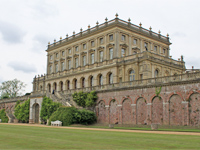
Although country houses were built primarily as homes, an integral and important function was their use for entertaining.  However, one dramatic change has been the nature of the guests and how they paid for their visits – and the birth of the refined country house holiday now regarded as the best the hospitality industry can offer.  That said, running such a hotel is no guaranteed path to the wealth suggested by the lifestyle; with huge initial costs, large ongoing expenses and the elusive need for profitability leading to the recent troubles for the Von Essen hotel chain which had dominated this niche, including running the finest country house hotel – Cliveden, before collapsing under their own ambition.  The chase for profitability has also led to some shocking schemes for building further accommodation which can be seen in the recent proposals for Wyreside Hall in Lancashire.

Country houses have long been used as accommodation for travellers, be they friends of the owning family or, more spectacularly in medieval and Renaissance periods, for the monarch.  Often considered a great honour (supposedly there are more beds in which Queen Elizabeth I has apparently slept than nights she was alive), the occasion of a royal visit – or the possibility of one – would cause local aristocrats, or those aspiring, to refurbish suites of rooms such as at Burghley, Hatfield House, and Kirby Hall (even though Elizabeth I never came to the latter).  Sometimes, the ruinous expense of hosting the royal retinue would sometimes leave the owner with a title but also debts they’d be paying off for decades.

Eaton Hall, Cheshire (by Alfred Waterhouse - dem. 1961) (Image: Lost Heritage)

The heights of country house entertaining were reached by the Victorians and Edwardians who popularised, amongst the aristocracy, the vast weekend house party.  This led to houses being built or extended to create, in effect, large hotels.  The key difference was the guests were pre-selected from a narrow social strata and were expected to ‘pay’ for the hospitality with reciprocal entertainment or with business or political favours.  The greater the social elevation of the guests, so the number of staff required increased, leading to some houses, particularly at the cream of society, such as Eaton Hall and Clumber House, being greatly extended.  Eaton Hall eventually numbered around 150 bedrooms ranging from those for the honoured guests down to the  lowliest servants who would share dormitories.  Sadly, it was these sizeable extensions and aggrandisements which were largely the reason for their demolition in the 20th-century in their hundreds as austerity hit home and these huge palaces became unaffordable.

Sandringham, Norfolk (Image: Sandringham Estate)

Edward VII, when Prince of Wales, was the longest serving Regent and developed a highly cultivated habit of ‘weekending’ at country houses, especially his own at Sandringham, Norfolk.  His preferences have been said to have laid the foundations for not only the practice of weekend visits but also for indulging with grand breakfasts followed by country activities such as shooting, followed by convivial dinners.  Such was his reputation that some owners would fear a visit for the expense involved with one family, the Gurneys of Northrepps Hall in Norfolk, allegedly burning down a wing to forestall such a visit. By contrast, in 1902, when Edward VII visited Burton in Staffordshire an entire wing was built and named after him in his honour at Rangemore Hall.

Country house visiting had been a common activity for the travelling aristocrat in the Georgian era (a topic explored in a previous article ‘How tourism split a house from the estate‘).  Often calling on those they knew, they would also call on the notable houses in an area (an acceptable enough practice to be included by Jane Austen in ‘Pride and Prejudice‘) – and the owners of these ‘show houses’ were happy to parade their good taste.  By the beginning of the 18th-century, Blenheim, Castle Howard, Chatsworth, Wilton and Burghley had become the ‘must-see’ houses for the country house tourist – later joined by Houghton, Holkham, Eaton Hall and Kedleston.  Sadly, visitors weren’t always there for the educational opportunities of seeing some of the finest art in the world – as Horace Walpole lamented regarding the visitors to his father’s Houghton Hall, where he was a guide, the worst were the seers:

 …they come, ask what such a room is called, in which Sir Robert lay, write it down, admire a lobster or a cabbage in a market-piece, dispute whether the last room was green or purple, and then back to the inn for fear the fish should be overdressed.

Tregenna Hotel, Cornwall (Image: lindad4a via flickr)

It’s the last line which is of particular interest – even the well-to-do Georgian guest would be staying in a nearby coaching inn unless they had family nearby.  By the Victorian era, the nature and number of the guests had changed, but still the houses were private residences – until 1878 when the first country house became a hotel; Tregenna Castle near St Ives, Cornwall.  The catalyst was the extension of the railway, and the purchasers of a initial lease on Tregenna, before buying the freehold in 1895, was the Great Western Railway who could not only provide the destination, but the means to get there.

Cliveden, Buckinghamshire (Image: sjm_1974 via flickr)
Cliveden, Buckinghamshire (Image: SJM_1974 via flickr)

The growth of a paying middle class in the Victorian and Edwardian eras created demand – but most importantly, both eras were about aspiration.  The middle class may not have had the wealth to run a country house (and in the 1930s and 1950s, many owners didn’t either) but they certainly wanted to experience it.  The glut of country houses which became available in the first half of the 20th-century presented many opportunities for the hospitality industry to cater for these new markets.  For the upper classes, although many had been forced to sell up or move out, they still wanted to continue the lifestyle – though not necessarily alongside the nouveau riche. This created another market for the exclusive country club with clear social stratification driving the finest hotels to become bywords for extravagant elegance – something still clear today (though entry is more socially open) when one looks at hotels such as Cliveden or Stoke Park.

Gravetye Manor, Sussex (Image: Patrick Baty)

Though initially slow to take-off, the first half of the 20th-century saw a number of houses become hotels; in 1929, Theobalds Park, Hertfordshire and North Bovey Manor, Devon (another for the Great Western Railway), Welcombe Manor, Warwickshire in 1931, Otterburn Tower, Northumberland and Studley Priory, Oxfordshire, both in 1947 and Greywalls in Scotland in 1948, to name but a few.  Gravetye Manor was sold to Peter Herbert in 1957, when he paid £57,000 and charged £2 per night.  One author reported that the 1995 Egon Ronay guide listed 220 country house hotels, and the Historic Houses Association estimated that a quarter of the country houses sold between 1972-1990 were converted into hotels.  Though some have inevitably failed, the trend continues with one of the most recent being Coworth Park, built in 1776, opening in September 2010.

This potential re-use of the houses has not always been benign.  The nature of hotels is that the bedrooms generate the income so the more you have the better for them – though usually not for the architectural cohesion of the house. In hotel terms, many houses would not be economic which has led to the building of large, and not necessarily sensitive, additions.  Considering the original intentions of country house owners were to demonstrate their wealth and taste and to build a house to last, rarely are the modern extensions designed with anything approaching the same care and expense so there is an inevitable mismatch.  Many a country house hotel is scarred with poor quality and visually flawed wings which are almost designed to detract from the main house – but then buildings designed by accountants never win prizes for beauty.

Wyreside Hall, Lancashire (Image: Lancaster Guardian)

Although there is evidence of a greater sensitivity in recent years where new wings are tucked away from the main house and linked by corridors, it seems that there are still some owners who see the house as merely an ornament to put on the front cover of the brochure whilst they ruin the setting.  It was hoped that the worst schemes were behind us but sometimes one is proposed which is so bad that it would be laughable if it didn’t threaten a fine (though currently not in the best condition) house – Wyreside Hall in Lancashire (hat-tip to Matthew Steeples for flagging this one up).

The house was originally built in the 17th-century but was remodelled in 1790 by the then owner, John Fenton Crawthorne, MP, to a design by the gifted architect, Robert Adam.  Though the full scheme wasn’t implemented, the exterior benefited from a graceful symmetry with the drawing room, dining room and library also completed to his plans (though apparently no evidence of their decoration now remains).  The now Grade-II house remained in the Garrett family until 1936 after which it became a school and then home for a local motorsport legend.  The scheme that has now been proposed learns none of the lessons of sensitive hotel development (or any work involving heritage) over the last 50 years.

Proposed development, Wyreside Hall, Lancashire (Image: Wyre Council planning proposal, via Matthew Steeples)

Yes, it really is that ugly.  The design effectively doubles the size of the house and, as can be seen from the plan (scroll to page 44 – no direct link, sorry), the associated access roads, parking and ‘landscaping’ ruin the immediate setting of the house.  The usual arguments have been made about this bringing jobs to the area but if we must sacrifice the very heritage which gives an area a distinct identity, which attracts tourists or the wealthy (who usually also spend money locally) then it’s a poor bargain.  Wyre Council should throw out this and any subsequent plan which displays equally limited thinking and such an arrogant disregard for the architectural heritage of the area.  As we’ve seen, country house hotels can work – but not when they are at the expense of the original building.

———————————————————————————

Matthew Steeples’ original blog post is available here: ‘Adam would turn in his grave

Listed buildings description: ‘Wyreside Hall, Lancashire‘ [British Listed Buildings]

Planning application documents: ‘Ref 11/00840/LBC – Wyreside Hall‘ [Wyre Council]

———————————————————————————

This is the last post for 2011 – 43 posts in total, now over 350 subscribers to the blog, nearly 210,000 pages served up; and 850 followers of @thecountryseat on Twitter, so all-in-all, a fairly impressive level of interest; thank you! Matthew

A poor prognosis: Great Barr Hall, Staffordshire

Great Barr Hall, Staffordshire (Image: English Heritage)

Many of the houses featured in this blog are shown as a celebration of the brilliance of our architects and craftsmen in creating one of the finest bodies of buildings of their type in the world.  Yet, in abundance is, perhaps inevitably, failure; where an interesting house becomes a victim of circumstance, policy, incompetence or, sometimes, all of the above.  Great Barr Hall, once outside Birmingham, now encircled by advancing urbanisation, is a sad example of where a house can languish and deteriorate whilst deliberate vandalism and institutional lethargy condemn it to its fate – and unless something is done soon, Great Barr Hall will join the already far-too-long list of the lost country houses of England.

Great Barr Hall c1800 (Image: artist known / sourced from Bill Dargue)

Despite its current sorry state, Great Barr Hall was once a sizable house – though precisely how large is unclear.  An early print in 1798 Stebbing Shaw’s ‘History and Antiquities of Staffordshire‘ shows a 11-bay castellated house with four corner turrets but the present house is 9-bays.  For comparison, it’s interesting to note the stylistic similarities with Syon House in west London, a seat of the Dukes of Northumberland, though it is also 9-bays wide and has an imposing porte cochere.

What is known is in the 1760s, Sir Joseph Scott, then head of a family line which had been in the area for 600 years, built a new house in a ‘gothick’ style.  The original architect is unknown but Stebbing Shaw describes how ‘The present possessor [Joseph Scott], about the year 1767, began to exercise his well known taste and ingenuity upon the old fabric, giving it the pleasing monastic appearance it now exhibits – and has since much improved it by the addition of a spacious dining room at the east end, and other rooms and conveniences‘. If Scott was his own architect, perhaps he was, in part, inspired by the remodelling of Syon House by Robert Adam which started in that same year.

Sir Joseph Scott’s original extensive works led to some financial difficulties and so, from 1785, he moved to the Continent and rented the house out.  The lease was taken by Samual Galton junior, a controversial Birmingham Quaker, banker,  gun manufacturer, and intellectual who hosted meetings of the Lunar Society at Great Barr Hall leading to it becoming a noted crossroads for industrial ideas, a crucible for the Midlands industrial growth and the wider Industrial Revolution.

Where Great Barr becomes particularly interesting from our point of view is with the arrival of the young architect John Nash and his business collaborator and famous landscaper, Humphrey Repton. Nash was there to provide the buildings which Repton needed to complete his  gardening visions. This worked well for both men; Nash was to pay Repton 2.5% for any work the latter passed his way so Nash charged his clients the then rather high fee of 7%, giving him a 4.5% fee. There is no record of Nash ever putting any work towards Repton – but Nash benefited with work on over one hundred estates. There seems to be some uncertainty as to exactly when Nash started working there but John Summerson gives the date as 1800 for the construction of a gothic archway to the adjacent chapel, but other works such as the gate lodges, an icehouse and a new steeple for the chapel started in 1797 and were probably also by Nash and Repton.

Corsham House, Wiltshire - copper engraved print published in The Beauties of England and Wales, 1813 (Image: Ancestry Images)

About this time, the house was also updated to create the appearance we can just make out today – but it hasn’t been confirmed that Nash was the architect.  However, there are tantalising clues that it could well be by him. Nash had been developing his particular style of Picturesque gothic during his time in Wales and had been applying it with varying degrees of success since then during alterations at Kentchurch Court, Herefordshire, (1795) and at Corsham House, Wiltshire (1797 – a disaster due to poor workmanship with Nash’s work later demolished).  Yet, some of the architectural fingerprints of each of these can be seen in Great Barr.  Externally, one such feature is the crenellations applied to both the roof and the tops of the projecting towers, another is the hooded Elizabethan-style windows. Another interesting piece of the jigsaw is a house which Nash was working on in 1800 in Buckinghamshire,  Chalfont Park, which bears not only a superficial stylistic similarity but also one of form – a long rectangular main body with a projecting 3-bay centre.  However, Chalfont Park was also altered by Anthony Salvin in 1840 so it’s not possible to tell how much of the gothic detailing is Nash’s.

The Scott’s return in 1797 prompted the works of Repton and Nash before further work in 1830 and 1848 which included moving the entrance from the west side to the north.  In 1863, a chapel was built to a design thought to be by Sir George Gilbert Scott, though it was never consecrated and so became a billiard room.

The replacement windows (Image: Simon Cornwell) - click to see 'before and after'

The house remained with the Scotts until the house became a hospital for the mentally ill in 1918 following the death of Lady Bateman-Scott in 1909.  As is usual, the institutional nature of hospital use was not kind to the house.  Beyond the extensive network of buildings which marched across Repton’s parkland (and the south eastern corner of the estate being carved up by the M6 motorway), the house itself had a modern two-storey extension added in 1925 and in 1955 the clock tower, stables and much of the east wing were demolished.  In the 1960s, some sensitive architectural ‘genius’ removed the two splendid first-floor oriel windows which flanked the main entrance and inserted a pair of non-matching government-issue casement windows.

The current plight of Great Barr Hall can largely be laid at the door of Bovis Homes and John Prescott, formerly the Deputy Prime Minister, and the one who eventually signed off on the architectural blight that now affects the house.  Considering that the hospital buildings were in two distinct campuses, one to the north west and another to the north east, if there had to be development, replacing the buildings to the NW would have placed them furthest from the house, with the advantage of creating a more complete parkland around the house, with the possibility of re-instating, to some extent, the earlier Picturesque drive.  To hope that someone of Prescott’s aesthetic insensibilities would see such a solution was always forlorn but one might hope that someone on the local council or in English Heritage might have proposed a more sensitive outcome.  Sadly it was not to be and now a large development of 445 executive-style homes has been built, the closest being scarcely a hundred metres from the back of the house.  Worse, following the sale of the house to a building preservation trust, little progress has been made, with questions now being asked about the trust’s failure to restore it as promised earlier.  It was again put up for sale in May 2011 by the Trust at the unrealistic price of £2.2m with the option to buy a further 100-acres of parkland – with the threat of even more development.

Despite some architectural uncertainties, what is clear is that those charged with its care in the recent decades have failed.  Perhaps this is a broader failure of policy, that without an explicit mandate to determine that the architectural heritage must be managed, maintained and preserved as far as is possible, it will fall to all-to-fallible councillors to look beyond their own short-term interests; sadly, an unlikely prospect.  The NHS generally has a poor record of managing historical assets once it has no further use for them e.g Sandhill Park, and Stallington Hall are just two examples and don’t forget that Soane’s Moggerhanger survived despite the NHS, not because of it. A strong national policy should provide a clear strategy for preservation of heritage assets taken over by the state rather than just relying on existing listed buildings legislation.  In Great Barr Hall’s sad circumstance, one can only hope that someone will be able to extract the money owed as part of the enabling development, which can then be devoted to restoring this interesting and significant house so that it once again can be something for the local residents to be proud of, rather than the monument to NHS, central government and local council incompetence which it is today.

————————————————————————

Still for sale? (thanks to Andrew for spotting this): Great Barr Hall might still be for sale – there is a page with details but it’s not listed on the agent’s website: ‘Great Barr Hall‘. Now listed for £3m but with 150-acres but with another 100-acres of parkland by separate negotiation.   Considering the Building Preservation Trust paid just £900,000 for the entire site this seems a little odd – perhaps someone will enlighten us.

————————————————————————

Listing description: ‘Great Barr Hall‘ [British Listed Buildings]

‘At Risk’ Register entry: ‘Great Barr Hall‘ [English Heritage]

Recent history of house and some proposals for rescue

News stories:

Inspired by Park Place? Other country houses for sale to restore

The recent restoration and sale of Park Place was certainly on an epic scale – £42m to buy, a further £100m to complete – but thankfully not all projects need be so expensive (though they’ll never be cheap).  The story of the country house has, for many, featured a cycle of ascendency, enlargement, and enjoyment, followed by neglect but – hopefully – rescue. As the annual SAVE Britain’s Heritage ‘Building’s at Risk’ Register sadly makes all too clear there are any number of country houses which have reached quite a serious state of disrepair, even dereliction. Yet even for these there may be someone who is willing to step up and rescue part of the nation’s architectural heritage. Houses in need of a saviour are often for sale, their forlorn state in Country Life magazine a stark contrast to their better loved brethren.

The UK generally has a much more positive attitude towards restoration than many other countries.  The Victorians would often be tempted to restore an ancient seat due to the contemporary popularity of the romantic notions of ‘Ye Olde England’.  Living in an Elizabethan or Jacobean house gave the owner associations with older family lines (not necessarily their own) and was a short-cut to perceived greater respectability.  Today, those who take on a restoration of one of our beautiful older houses are rightly lauded over those who simply buy a super-sized Barrett home.  Yet, restoration requires sensitivity and a willingness to submit an individual’s grand designs to work within the boundaries of the listed building regulations and the character of the house.

Marske Hall, Yorkshire (Image: Carter Jonas)

One house with hidden character and which will require careful planning is Maerske Hall, Yorkshire.  Originally built by the Hutton family in 1597, they were still in residence in 1730 when the house was rebuilt and extended in a Classical style. The grade-II* house was mainly used for shooting parties by the family in the 19th-century saving it from alteration but in the 20th it was threatened with requisition by the Army in WWII.  Luckily the family were able to arrange for pupils from Scarborough College to take up residence instead which saved it from the worst damage.  After the war, it again came near to destruction, as it was sold in 1947 to local builders George Shaw and his son George William who intended to demolish it for the materials.  However, they baulked at taking down such a lovely house and so sympathetically converted it into 10 apartments.  Still divided but now empty it is for sale at £2.5m with 19-acres of beautiful, mature gardens, and presents a fascinating opportunity to recreate a single family home. For more on the history, there’s a brochure: ‘Marske Hall‘ PDF [Carter Jonas].

Walton Hall, Derbyshire (Image: Knight Frank)

For those wanting a more straight-forward restoration, Walton Hall, Derbyshire perhaps offers a more appealing option.  This fine and elegant grade-II* house, prominently sited above Walton on Trent, was built between 1724 -1729 to designs by the architect Richard Jackson. The most striking feature are the full-height pilasters, giving dignity to a slowly deteriorating house which has become such a concern as to be listed on the English Heritage ‘At Risk’ register.  Inside, the most impressive feature is the grand staircase, reputedly copied from a building in The Hague.  The house is basically habitable but requires significant sensitive restoration, hence the price; £1.5m for the house plus just 7.5-acres.  That said, once restored this will be a quintessential Georgian  house to be enjoyed for generations.

Felix Hall, Essex (Image: Savills)

For those who prefer a real challenge then the next two houses could be ideal.  The first is Felix Hall, situated just outside Kelvedon, Essex – the picture (right) immediately showing the scale of the challenge.  At its core, this house is firmly in the tradition of the Palladian villa with a compact footprint but featuring wonderful architectural flourishes such a fine portico (added in 1825) and, to the rear, four engaged columns and a pediment.  Originally built between 1760-2, it was purchased by the Weston family of Rivenhall Place in 1793 and was significantly extended with flanking wings in the early 19th-century, possibly on the occasion of Charles Callis Weston’s  ennoblement as Lord Weston of Rivenhall in 1833.  However, as with many larger houses, a reduction in  size was thought prudent and so in 1939 the two wings were removed, leaving just a 7-bay central section.  Sadly, during the course of renovations it caught fire, completely gutting the fine interiors leaving the gaunt shell with the proud Ionic columns we can see today.  The remains were bought in 1953 and the basement rooms restored as an occasional country retreat but this is a house crying out for a full restoration (for which there is planning permission).  However, the estate buildings such as the nearby stables have been separately converted and there is only a small amount of land – it would be lovely if the new owner could also purchase the buildings and gardens and if they could also acquire the field in front, they could create a superb small parkland in which to truly display the house.

Piercefield House, Monmouthshire (Image: darkcell / flickr)

Another shell available is the one I would be heading for: Piercefield, near Chepstow, Wales.  Designed by the peerless Sir John Soane in 1785 for George Smith, the actual completion of the house was delayed until 1793.  Of particular interest  here is that the design is not entirely unique – Soane appears to have used very similar plans for Shotesham Park in Norfolk which was also built in 1785, although that house was brick with stone dressings, whilst Piercefield is faced entirely with stone. The house was sold 1794 as Mr Smith had run into some financial difficulties and it was bought by Sir Mark Wood who employed Joseph Bonomi to add a saloon and a winding staircase – though not the two pavilions as has been suggested.  The house was sold in 1926 by the Clay family, who had bought it in 1861, to Chepstow Racecourse who abandoned it, leaving it become increasingly derelict, apparently helped by American troops stationed nearby in WWII who used the house for target practice.  After 90 years of neglect, the house still has the power to impress with its refined façade and elegant temple pavilions.  Although on the market for over six years the price has remained at a rather ambitious £2m (although it does include 129 grade-I listed acres of parkland). However, recent comments by the director of the race course have indicated that they might entertain offers of around £1m; though, of course, the restoration bill would be many times that – but what a prize at the end!

Ruperra Castle, Wales (Image: Jeffrey Ross - Estate Agent)

Even further down the scale of dereliction is another important house, also in Wales, which has been stubbornly mis-priced.  Ruperra Castle near Newport is one of the few ‘mock’ castles designed for pleasure and not as defensive installations – a subject examined in more detail in an earlier blog post related to Ruperra: ‘Developer shows sense; Ruperra Castle for sale‘ (Sept 2010).  Few of these style of houses were built and Ruperra’s importance derives from it being one of the earliest of the country houses of this type, having been built in 1626.  Sadly, many of the other examples have been lost (most recently, fire gutting the interior of Lulworth Castle in 1929) so for someone Ruperra offers the opportunity to not only restore an architectural gem but also to be able to enjoy the same stunning views which attracted Thomas Morgan to build there in the first place.  Unfortunately, although the owner has now switched agents, the price is still ambitious at £1.5m – especially considering the immense challenges and costs of restoration and the location.  Hopefully, as with Piercefield, the owner ought to be willing to entertain realistic offers and allow the house to be saved before it is lost forever.

Perhaps the last is stretching it to call it a restoration opportunity as Bellamour Hall, Staffordshire now exists only as two walls and a few piles of stones!

Restoration is never a cheap or easy approach but the satisfaction and pride in knowing that the work has saved another part of our architectural heritage must be immense.  For too long our country houses have been under threat from neglect, vandalism and poor maintenance and the selection above (and there are more) show that the degrees of restoration and commitment required can vary dramatically.  That said, I can only hope someone is out there with the wealth and sensitivity to take on these houses and bring them back to life.