Woolsington Hall restoration stalls again

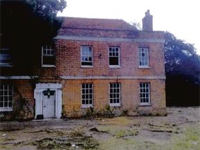
Woolsington Hall (Image: English Heritage)

Grade-II* listed Woolsington Hall, set in 340 acres of fine parkland, was bought in 1994 by Sir John Hall, who had successfully turned Wynyard Hall into a palatial hotel.  Though on a much smaller scale, Woolsington was to also be converted into a small, luxury hotel at a cost of £8m – 10m.  However, after several years of inaction, its deteriorating condition led to it being placed on the English Heritage ‘buildings-at-risk’ register in 2002. Despite work in 2008 to make the building watertight and in prepartation of the main conversion, work has been halted again.  Sir John insists the money is still available but that he is so busy with his many other ventures that he is unable to commit to it at the moment.

Though this is somewhat understandable in the current economic climate, as a Grade-II* listed building it must not be forgotten and allowed to decay again.  The building remains on the English Heritage register but hopefully work will start again to rescue this charming smaller country house in 2010 and bring it back to life.

Full story: ‘Plans for Woolsington Hall on hold yet again‘ [journallive.co.uk]
Yaldham Manor application delayed again

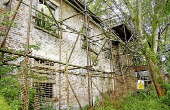
The application to restore Yaldham Manor, near Wrotham in Kent, has been delayed again with the decision deferred until a site visit has taken place in February. After a first application, submitted three years ago, was withdrawn as it was thought likely to fail, the new application [pdf] was first submitted back in January 2009 and has been the subject of extensive discussions as to the appropriateness of the enabling development.

Yaldham Manor has a 14th-century great hall, which also features a large Tudor window, and also impressive ornamental chimneys.  Latterly the home of the Lade and Cory families it is now falling into a poor state of repair and requires urgent work.  To fund the restoration of the main house, the application seeks permission to create a ‘hamlet’ with new cottages being built to replace ones which have been demolished and also new homes in the derelict outbuildings.  The main house will remain as a single residence.

It seems a shame that they all couldn’t be bought by someone who could restore the house and outbuildings as a single family mini-estate.  However, if this is not possible, and much as I’m usually against most enabling development, this seems to be a sensitive proposal.  I fully support the council in taking a very close look at the application however it does seem a shame that it will have taken over a year to reach a decision but it must be recognised that our heritage requires a careful balance between protection and ensuring that appropriate works can be carried out.

Full story: ‘Historic manor in jeopardy‘ [thisiskent.co.uk]

Fight for Elmswell Old Hall to carry on

Elmswell Old Hall (Image: Hull Daily Mail)

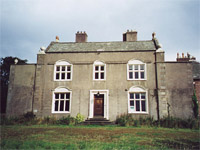
Campaigners have vowed to continue the twenty-year battle for Elmswell Old Hall despite the latest setback.  The house, near Driffield, was built in 1642 and the home of the seventeenth-century agricultural diarist Henry Best – but the last time someone lived in the house was in 1965.  Although Grade-II* listed and thought to be one of the first brick-built houses in Yorkshire, it has slowly fallen into such an advanced state of dereliction that the owners have requested permission, via an entity ironically named ‘Elmswell Heritage Ltd’, to partially demolish what remains and consolidate the rest as a ruin.

An alternative plan, supported by locals and the Yorkshire Buildings Preservation Trust, has been put forward by the Spitalfields Trust who have a long record of restoring Georgian townhouses and historic country houses including the recently for sale Shurland Hall.  This plan would not only consolidate what fabric of the building remains but would also then restore it for use as a home. However, a major obstacle is that the house and land are owned by the same estate who have made it clear that the plan was unfeasible as they would not sell land nor access to the house.

So the future for the house appears to be that of architectural curiosity, open occasionally for school visits and scholars.  Unless a miracle happens, is seems another piece of Yorkshire, and the nation’s, heritage has been effectively lost due to fifty-years of neglect by the owner and the local council who should’ve stepped in decades ago to protect the hall.

Full story: ‘Preservation fight goes on even after building demolition backed‘ [Yorkshire Post]

Stanwick Hall to get a makeover on TV

Stanwick Hall, Northamptonshire (Image: Daily Telegraph)

When the beautiful Grade-II* listed, Queen Anne-era Stanwick Hall came up for sale in 2006, many would have been surprised at the relatively  low asking price of £1.1m.

Though the house came with seven bedroom and 11-acres in the Northamptonshire countryside, it also came with an ‘At Risk’ rating from English Heritage due to the structural problems.

Despite this it did sell and now Endemol have expressed an interest to the architect in charge of the restoration, Anthony Rickett, who has agreed to let them follow the work.  It’s always pleasing to hear of houses being restored and it’s even better when the work is brought to the attention of the wider public so they can also appreciate the hard work that is done to maintain these vital pieces of our heritage.

Full story: ‘Hall’s restoration to be shown on TV‘ [Evening Telegraph]

The plot thickens and a row brews: Brook House, Essex

Brook House, Essex (Image: Daily Gazette)

It seems that, despite the claims of the owner/developer of Brook House in Tiptree, Essex, English Heritage haven’t said that the house should be demolished.  Following on from the earlier story (Another house at risk from a developer: Brook House, Tiptree, Essex – 25/11/09) a local resident has flagged up a new story with EH now saying that although they believe the house to be in poor condition they have not said it should be demolished.

John Neale, English Heritage team leader for Essex, has confirmed that they are still examining the application – leaving the statements of the owner in his application to demolish looking somewhat precarious.  Let’s hope that EH, and Colchester Council listen to the concerns of the local residents and Tiptree Parish Council and not only refuse the demolition but also serve an urgent works notice to save this interesting part of the local architectural heritage.

Full story: ‘Listed Brook House row is brewing‘ [Daily Gazette]