School’s out: seats of learning for sale

One of the many uses to which our country houses have been successfully adapted to is that of schooling – from the grandest such as Stowe and Bryanston to the many smaller houses which have delighted and terrified children in equal measure for many years.  Even as recently as April 2010, Wispers in Sussex, was sold to a London primary school as a satellite to their main campus. Yet for all the fond memories held by generations of youngsters, private schools and educational colleges are facing their own periods of austerity, forcing some to close.  With closure comes a rare opportunity for a house to once again become a home – though such a move is fraught with practical, and sometimes political, challenges.
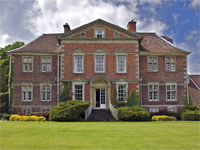
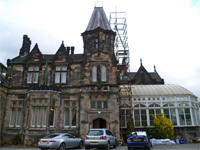
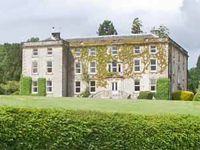
Urchfont Manor, Wiltshire (Image: Augustus Photographic via flickr)

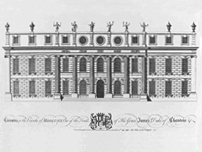
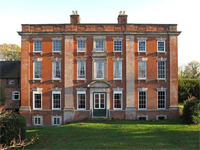
One of the bonuses of writing this blog is to discover houses so little known that, despite their obvious beauty, they seldom appear in books.  Urchfont Manor, Wiltshire is a classic example of this. Currently a residential college, this stunning smaller William and Mary country house was built around 1678 for William Pynsent, a wealthy London barrister, who would have been well-aware of the latest architectural fashions. The architect is unconfirmed but, with the hipped roof and projecting, pedimented centrepiece, it appears to draw inspiration from houses such as Horseheath Hall, Cambridgeshire (though 7-bays to Horseheath’s eleven) designed by Sir Roger Pratt in 1663-5 (dem.1777), and also clear stylistic similarities with houses such as  the north and south fronts of Fawley Court, Buckinghamshire (built 1684-5, by Sir Christopher Wren) and Puslinch, Devon (a late proponent of the style, being built c1720).  One curious anecdote, told to Sir John Julius Norwich, was that the house was substantially altered, creating the elegant east front, about twelve years after construction to designs by William Talman – but Colvin doesn’t mention it and no firm evidence has appeared to support this…so far.
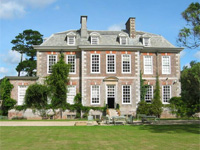
Puslinch House, Devon (Image: Devon Rural Archive)

Urchfont is a fascinating and enchanting smaller manor house which successfully plays the neat visual trick of looking larger than it is – at least from some angles. The two key views of the house are from the main road from the village, which gave a clear view of the east front and the road running below the south front (the house was once more visible; maps from 1880s show only a few clumps of trees, much fewer than there are now).  If one only saw these two fronts, one might think this a large, cube-shaped house – but move round to the north and the house is clearly only one room deep on the east front. A lovely piece of social aggrandisement.  The house passed through various families and was tenanted before being bought by another lawyer, Hamilton Rivers-Pollock, in 1928, who lived there until his death in 1941.  It then became a home for London children suffering from tuberculosis, and was then bought in 1945 by Wiltshire County Council as a residential college.  Now, faced with cutbacks,  the council have decided to sell up, amid much local controversy, giving this beautiful house an opportunity to once again become a home.
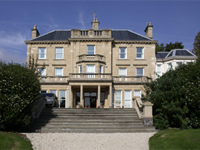
The Hill, Abergavenny, Monmouthshire (Image: Cooke & Arkwright)

Across the country in Monmouthshire, The Hill, as the name implies, sits rather proudly on the edge of Abergavenny.  Built in the mid-18th century, the house sits in 20-acres of gardens (which are included on the Register of Parks and Gardens of Special Historic
Interest in Wales) from a once larger estate, the residential spread of the town having crept up towards it.  Sadly, poor planning has led to a small residential estate taking up the grounds to the east of the house, and further buildings associated with its time as a college now stand between them and the house.  This makes it exceptionally unlikely that the house would become a single-family home again but potentially a high-quality development, replacing the modern buildings and respecting the grounds, could offer a workable solution.

Bedgebury Park, Kent (Image: Knight Frank)

On a larger scale, the curse of the associated buildings also blights Bedgebury Park, Kent. The original house of the estate, seat of the influential Culpepper family, financed by a flourishing iron business based on the clay-ironstone on which it sits, was to the east of the current grand mansion (now a lake), and played host to Elizabeth I, who visited in August 1573.  The current house was built in 1688 for Sir James Hayes, a man who had become wealthy through  his wife’s inheritance and financing the recovery of jewels and gold from a sunken Spanish ship.  Sir John Cartier bought it in 1789 and added some impressive plasterwork and the chain of lakes on the estate.  Following Cartier’s death,  Bedgebury was bought by one of the Duke of Wellington’s most trusted men, Field Marshal Viscount Beresford.  He commissioned Alexander Roos c.1838 and the subsequent extensive alterations and the addition of the cross wings to create the H-shape, obscured the red-brick original behind an impressive cladding of warm, honey-coloured sandstone ashlar, creating a house which positively glows in the sun. Inherited by Alexander Beresford Hope in 1854, he made his mark on the house by adding the impressive Neo-Classical stairhall and the striking mansard roof.

Stairhall created c.1850s, Bedgebury Park, Kent (Image: Knight Frank)

The house was bought by the Church Education Corporation with 200-acres in 1919, opening as a school with just five pupils in 1920.  It quickly grew and new buildings were added in the grounds providing extra teaching and residential facilities, before closing in 2006.  Now offered at £7.5m, the grade-II* house sits in a 90-acre estate awaiting its future.  The brochure mentions that the local planning department are open to the idea of it becoming a single unit residence again – a possibly tempting prospect for a billionaire who needs an impressive house, a small estate, and doesn’t mind having to demolish the modern school buildings which have sprung up.  Considering the quality of the interiors, this must surely be a feasible prospect, especially in light of the recent sale of Park Place for £140m which proved that there are those willing to pay exceptional prices for the best quality properties.

Apethorpe Hall, Northamptonshire (Image: English Heritage)

For those seeking to move into a former school which has been partially restored to the highest standards and now only requires the finishing touches (if you have a couple of million pounds available), then possibly the finest option would be Apethorpe, Northamptonshire.  This fascinating Tudor/Jacobean/Elizabethan house has played a supporting role in royal entertainments for 500 years and features some of the finest plaster ceilings in the country – and became a particularly grand school between the late 1940s and 1982, when it closed. Bought by an absentee owner, it languished for years, flirting with dereliction.  Finally, intervention by English Heritage brought it into their care and it’s currently for sale for offers around £5m (English Heritage reputedly spent £7m on the rescue so far), and would require another approximately £4m to complete the restoration.  On an remarkable side note; the fact that Apethorpe was saved from the usual vandalism, arson and theft which so often afflicts empty buildings, was largely due to the tireless efforts of the caretaker, George Kelley, who carried on even though he wasn’t being paid to do so.

The most recent closure (at least partially) is of St Michael’s in Tawstock, Devon.  Originally known as Tawstock Court, it was built in 1787 in a provincial Gothick style to replace an Elizabethan house which burnt down that same year.  Although the staff and parents have made heroic efforts to save it, the concern for them is that the house will fall into the hands of developers who will convert it into flats – and considering the poor job most do of such a task, their concerns are very valid.

In these straitened times, sadly a number of parents and councils will be forced to economise and schools, usually private, may well close.  Sad though this will inevitably be for the many current and former pupils, it does also offer a possibility that these houses may revert to their former role for which they were designed – and few would argue that the spectacular Marshcourt in Hampshire, designed by Lutyens, was better off as a school. However, as the roll call of struggling schools lengthens, it is important that the future of the often wonderful buildings, which gave each school their character, are given due priority to ensure an appropriate transition and restoration if the opportunity arises for them to return to being family homes.

————————————————————————

Original story: ‘Urchfont Manor sale row erupts‘ [Gazette and Herald]

Listed building description: ‘Bedgebury Park, Kent‘ [British Listed Buildings]

A silver lining to an industrial cloud; the Mersey mansions of the Victorian elite

To join the landed gentry you previously needed to have no connection with the vulgar business of actually making money. Even if you had bought a significant house and estate, to be truly accepted (and not be cast off into social Siberia) a gentleman would have to sell all his business interests and retire to live off the proceeds.  Yet, times changed and as it became acceptable to mix business and pleasure, so the requirements of the new gentry altered as they became unwilling to be too far from their sources of wealth, particularly around the great Victorian cities.  Smaller country houses and weekend villas with reduced estates sprang up to meet this new demand, with Liverpool being a prime example of these forces.  Later, as the cities grew, fortunes waned and housing pressures increased, many of these houses were lost; yet, occasionally, a rare survivor appears such as Calderstones Park Mansion House in Liverpool.

Harewood House, Yorkshire (Image: Lee Elvin via flickr)

The Georgian era truly challenged the mystique of inherited wealth and royal patronage being the primary route to social elevation (though both helped).  Money talks, and the vast wealth being created, and the men making it, could not be ignored.  No family exemplified this more than the Lascelles family of Yorkshire. Although the family had been in the county for many years, their purchase of the Harewood estate in 1739 for £63,827 (for an estate of 6000-8000 acres) was with wealth generated only relatively recently.  Henry Lascelles (b. 1690 – d. 1753) had made his fortune largely between 1715 and 1730 as a plantation owner, victualling contractor and Collector of Customs in Barbados. It was his son, Edwin, who, having inherited his father’s vast fortune, set about, between 1759-71, building the grand house we see at Harewood today, to designs by John Carr of York who had already built the stables.  The vast expense of paying Carr, plus Robert Adam for the interiors, Angelica Kauffman and Biagio Rebecca for internal decorative painting, Thomas Chippendale for the superb furniture, and ‘Capability’ Brown for the beautiful grounds hardly made any serious dent in the family fortune.  On Edwin’s death in 1795, he reportedly had an income of £50,000 per year, of which half came from the West Indies business interests.  It was this mercantile wealth which established one of the great houses of the 18th-century, elevated the family to the peerage and enabled them to become a local political force, all in the space of just 60 years – something not possible on the limited and sometimes uncertain income of an estate alone.

Picture gallery, Dawpool, Cheshire (Image: H Bedford Lemere, Bedford Lemere & Co / copyright: English Heritage/NMR)

The 19th-century only saw this trend accelerate with the great wealth of the cities now a serious challenge to the old inherited wealth of the land. This was especially true since, following political reform, land holdings were not always necessary to secure power and influence.  Now the owners could indulge their preferences, as not all of them, having been born, brought up, educated, worked and having made their fortunes in the cities, would feel a natural attachment to the countryside, beyond the social cachet it brought.  Rising land values from the mid-19th-century also would have been a factor which might have put off the hard-headed businessman – better value to invest in the most luxurious house possible.  Yet, the allure of the country seat was still strong as a recognised symbol of success so around each major Victorian city could be found these mini ‘pleasure’ estates; with Liverpool being a classic example.

Hafodunos Hall, Wales in 1954 (Image: RCAHMW) - burnt out in 2004

For some, their fortunes financed the Victorian version of the Lascelles, with the acquisition of large estates and the building of the great houses away from the dirt and noise of the cities, such as at Hafodunos Hall (sadly burnt out by morons in 2004) by George Gilbert Scott for H.R. Sandbach (son of a Liverpool West India merchant). Yet for some of these gentleman there was no shame in being near to the industrial heart which pumped their fortunes – but that didn’t mean they had to compromise on luxury or convenience. Soon, many large houses with small estates populated the edges of the city.  Writing in 1873, the journalist Patricius Walker said:

Crowds of comfortable and luxurious villas besprinkle the country for miles round Liverpool, inhabited by ship-owners, ship-insurers, corn merchants, cotton brokers, emigrant agents, etc, etc, men with “on foot on sea, and one on shore,” yet to one thing constant ever – namely, money-making – and therein duly successful.

These captains of industry and commerce were also able to take advantage of the newly developed railways; becoming early commuters, able to spend the day at the office yet still escape at the end, back to their slice of bucolic charm.

The merchant palaces of Liverpool were, broadly, either those which were built as villas with substantial gardens near the large pleasure parks such as Sefton, or, taking advantage of the rail links, based outside the city in areas such as a the Wirral, just across the Mersey.

Holmestead, Cheshire (Image: openlyJane via skyscrapercity)

One particularly fine example of ‘rural urban’ villa was Holmestead on Mossley Hill, set in its own extensive grounds just to the east of the elegant and very desirable Sefton Park.  What is remarkable is that many of the larger houses still survive, albeit in an altered form; some becoming flats or care-homes.  The house was originally built in the 1840s in a Gothic style and effectively doubled in size in 1869-70 by the then owner, Michael Belcher, a local cotton broker. Urban ‘society’ of the newly wealthy mirrored the practices of those in the countryside as shown by William Imrie, owner of the house at the turn of the 19th-century and formerly of the famous White Star line, and also a patron of the Arts-and-Crafts movement.  He held regular concerts in his music room – a grand space, decorated with William Morris’ ‘Acanthus‘ pattern wallpaper, with the imposing ‘The Tree of Forgiveness‘ by Edward Burne-Jones on one wall, and Spencer Stanhope’s ‘Why Seek Ye the Living Amongst the Dead‘ on another. Remarkably, the house has survived and is still a single family home.

Dawpool, Cheshire - dem. 1927 (Image: H Bedford Lemere, Bedford Lemere & Co / copyright: English Heritage/NMR)

One of the grandest houses of them all was also connected to the White Star Line.  Dawpool was the pet project of Thomas Henry Ismay, the man who built a company large enough to launch the Titantic. Although was not conceived as the centre of a landed estate, it was certainly designed to showcase the power of his empire.  Designed by the leading architect, Richard Norman Shaw, the house, started in 1882, was a monument to Ismay’s wealth and meant to last – the local red sandstone was finely shaped and even the screws being finest brass.  The house took four years to build at a cost of over £50,000 – equivalent to over £3.5m today, a colossal sum compared to the average £80 per year the skilled ship-worker took home. Yet, the house was to survive less than half a century. After Ismay’s death in 1899, the widowed Mrs Ismay said that the house had given her husband pleasure every day – but without that driving force, it languished before being sold, becoming an orthopaedic hospital in WWI, before being sold again, and then demolished in 1927 [more history and photos available on Lost Heritage: Dawpool].

Calderstones House, Liverpool (Image: Liverpool Confidential)

Although some have been demolished and most of the houses have lost their extensive grounds, one rare survivor, Calderstones House, gives a rare insight into the once-gilded edges of Liverpool.  The now grade-II listed house was built in 1823 for Joseph Need Walker, a lead shot manufacturer, who built an elegant late-Georgian design (architect unknown) with a Doric portico which looked out over carefully tended gardens and parkland.  In 1875, the house and grounds were sold for £52,000 to Charles MacIver, a shipping magnate who had spent 35 years with the Cunard Line. The house and grounds were sold in 1902 to the Liverpool Corporation for £42,000 and became one of the city’s finest parks (John Lennon apparently used to hang about there) with the house used as offices for their Parks departments with a public tea-room and, to the rear, a stage for concerts.

Faced with severe budget cuts, Liverpool Council are now exploring what options are available, with a sale the preferred outcome.  Sadly, it is extremely unlikely to become a home again; to carve out sufficient space and access from a public space would be extremely controversial, with security a further worry.  The two most likely options are that it is taken on as a public facility with commercial aspects such as concerts and refreshments, or that it will languish, becoming progressively more dilapidated.  Sadly, local government generally has often shown a rather careless attitude to heritage assets in their care -though in recent years they have improved markedly from the 1950s and 60s when some (Derbyshire being particularly notorious) would simply demolish the historic buildings, especially country houses.

The current period of austerity is forcing councils to re-examine their assets and objectively analyse the most cost-effective way of operating – a process open to the risk of losing elements of what makes an area locally distinctive.  This is especially true when ‘heritage’ and ‘arts’ are seen (falsely) as relatively ‘high-brow’ interests – this creates a challenge for everyone to be aware of what their councils own, and to monitor whether there are any signs of them seeking to cut corners and creating conditions which threaten the heritage assets.  They hold these in trust for the local area and, if necessary, councils need to be forcefully reminded of their obligations to this generation and the ones which follow to care for the built environment which contributes so much to local identity.

Articles:

Further reading: Merchant Palaces: Liverpool and Wirral Mansions Photographed by Bedford Lemere (Photographers of Liverpool) (disclosure: this is an Amazon associates link – the price you pay is the same but I’m experimenting to see if I can help offset costs with Amazon affiliate links).

The Lost Rooms: the sale of architectural salvages to America

Having just spent two weeks touring the west coast of the United States, one great pleasure has been visiting the various art museums to see some of the wonderful paintings which the immensely wealthy collectors of the late 19th- and early 20th-centuries acquired at a time when many of our country houses were in crisis. Sadly, in so many cases, the sales were a precursor to the complete loss of the house, with over 1,400 houses demolished since 1900.  However, it is still possible to see a fragment of these grand homes as the demolitions fuelled an impressive transatlantic trade in architectural salvage which included entire rooms. The whereabouts of many of these are now unknown – but they do sometimes reappear in surprising places…

Cannons, Middlesex (Image: Vitruvius Brittanicus / wikipedia) - engraving from Vitruvius Brittanicus, vol. 4, by J. Badeslade & J. Rocque (London, 1739)

This post and the entire subject of country house architectural salvage owes an immense debt to the historian John Harris who has been chronicling these losses since he first started exploring country houses in the grim era following World War II. Of course, the trade had been going for many years: Nonsuch Palace, in Surrey, was deliberately sold for its materials in 1682, Cannons, in Middlesex, the seat of the Duke of Chandos was stripped and sold in 1747 after his death, and the once impressive Wanstead House, Essex, was similarly dismembered and sold to pay the debts of the spendthrift husband of the heiress in 1824. The plundering of rooms as part of the spoils of war by a conquering army has also happened throughout history with perhaps the most famous room taken also one of the greatest mysteries; no-one has seen the famed Amber Room from the Catherine Palace, just outside St Petersburg, since the German army meticulously removed it in 1941.

The country house room salvage trade takes off when, just as Europe is facing an agricultural slump which disproportionately affected landowners, the immensely wealthy industrial titans in the US were flexing their wallets to acquire collections which would become their legacies.  In the UK, as the situation worsened, so the familiar pattern of contents sales started with pictures and other artworks being discreetly sold.  Often many of these works were acquired by US collectors such as Frick, Mellon, Carnegie, Kress, amongst others, often on the enthusiastic encouragement of dealers such as Joseph Duveen.  However, to display the art required the right setting, and so an industry grew up to satisfy a voracious demand for authentic rooms – even if the rooms weren’t identical by the time they arrived.  Later, museums were also looking for rooms in which to provide context for their collections of furniture and art.

The Lawrence Room, Boston Museum of Fine Arts - de-accessioned 1930 (Image: 'Moving Rooms' - John Harris)

John Harris identifies the first stirrings of the transatlantic trade with the sale in 1876 of a supposedly ‘Jacobethan’ room to a Mrs Timothy Lawrence, which was incorporated into the Boston Museum of Fine Arts.  Harris next highlights the reference, in November 1897, in the sales/stock records of the famous Duveen family of art and antiques dealers of a ‘large Louis 14 Style Brown & Gold Room‘ ‘delivered free New York‘ for Mrs William C. Whitney which cost $10,000.  By the early 1900s, adverts were appearing in Country Life magazine and the Connoisseur listing entire rooms or just the parts; chimneypieces being a popular offering.  Building on the still lingering Victorian fashion for anything Elizabethan and Jacobean, dealers competed to offer the most choice rooms from the houses being demolished at the time.  One of the largest dealers, Robersons, were boasting in 1906 of having ‘100 Old Marble Mantelpieces in Stock‘, whilst Druce & Co had 5,000 feet of old panelling.  Books such Charles Latham’s ‘In English Homes‘ fuelled the fascination with these periods – perhaps even spurring on the demolition of some houses by creating a demand for the materials, and making it easier for the owners to decide to demolish.  As the architect John Swarbrick, founder of the Ancient Monuments Society, argued in 1928, ‘history adds commercial value to buildings’.

This desire for ancient association led some dealers to be somewhat generous in their attributions of the architects or owners involved.  The dealers Robersons were particularly apt at indulging in this type of misattribution, often assigning provenance with little or no research.  Another firm, Gill & Reigate, were being quietly accused of fabricating rooms as early as 1926.

Advert for the Staircase from Cassiobury House with Edwards & Co (Image: 'Moving Rooms' - John Harris)
Advert for the Staircase from Cassiobury (Image: 'Moving Rooms' - John Harris)

However, the finest pieces were often were those with a clear provenance, usually from a celebrated dispersal or demolition auction such as that of Cassiobury House near Watford or Hamilton Palace in Lanarkshire.  The urban growth of Watford has spoiled the estate at Cassiobury and so it was gutted in 1922, leading to the sale and dispersal, via French & Co, of one of the finest sets of Grinling Gibbons carvings in the country, including the impressive staircase.  Hamilton Palace, seats of the Dukes of Hamilton, was one of the most impressive houses in the country – and one of the greatest losses.  Built on coal wealth, it was also its literal undermining with subsidence (but also it’s vast size) leading to its demolition following huge sales in 1919 which not only released huge quantities of art and antiques but also of material.

Although there were many buyers, the most voracious – and possibly indiscriminate – was William Randolph Hearst; publishing magnate and heir to a mining fortune which reputedly gave him an annual income of $15m.  Although disliked by dealers for his lack of taste (something Joseph Duveen was particularly sensitive to), the value of his spending meant that they beat a path to his door despite his sometimes difficult behaviour.  In one case, having bought the staircase from Hamilton Palace via French & Co, he returned it to them no less than three times – but as he had spent $8m with them they were willing to be indulgent.  A network of agents throughout Europe sent him a daily stack of catalogues and flyers which he would eagerly read before dispatching orders for purchases.  These would then be shipped to his five-storey warehouse which occupied a whole New York block and was dedicated to his acquisitions and employed a staff of 30.  European purchases were mainly installed at San Simeon in California, but 50 English medieval salvages were installed at St Donat’s Castle in Wales which he bought without seeing and in which he only spent one night. In New York, he occupied five floors of a mansion block, creating a vast home which housed yet more salvage and art.  Almost inevitably, Hearst’s spending caused financial difficulties leading to a badly timed sale of many items in 1941 through the Gimbel Brothers department store in New York – though much remains even today in that warehouse which is still owned by the Hearst Corporation, who sadly refuse access to researchers (and if anyone knows someone who can get me in there I would happily make the trip to New York!). The scale of Hearst’s acquisitiveness is astounding and I’ll probably revisit it later in a separate post.

Inlaid Chamber, Sizergh Castle, Northumberland (Image: NTPL/Andreas von Einsiedel)

Sadly, like a tide coming in, which swept so many items and rooms into houses and museums in the States, so it also retreated and they also were removed, sometimes to vanish, their present whereabouts unknown.  Museums began quietly de-accessioning some rooms when they discovered that they perhaps weren’t as authentic and accurate as they had been led to believe.  Sometimes it was a positive thing; that sense of place being the greater concern leading to restitutions such as the Inlaid Chamber from Sizergh Castle (now National Trust) which was removed to the V&A Museum in 1891 and returned in 1999. One rare success for a Hearst purchase was that of the Dining Room from Gwydir Castle in Wales which was returned – having never been unpacked – in 1996 (the story is wonderfully told in ‘Castles in the Air‘ written by the then owner).

Perhaps it’s a little harsh to call the rooms lost if they have only been moved but to take a room from its original context is to lose something of the intrinsic value of it as part of an architectural whole. That said, it could also be argued that they were being rescued as, when the houses were demolished, fittings which couldn’t be sold were sometimes burnt – John Harris recalls seeing a beautiful staircase from Burwell Park in Lincolnshire being put on a bonfire in 1957.  Yet, so much of what was bought is still out there – particularly the items acquired by Hearst.  Which leads me to my own personal discovery in a bar in San Francisco; if you are ever in the Fisherman’s Wharf area of San Francisco, do visit ‘Jack’s Bar‘ in The Cannery where you will be standing in the former Long Gallery of Albyns, an elegant Jacobean house built c.1587.  It was demolished in 1954 but which had been gutted earlier with the gallery bought by Hearst but sold in the mid-1960s and given a new life – though not an elegant one.

Long Gallery, Albyns - now Jack's Bar, San Francisco (Image: Matthew Beckett)

So these rooms, once the centrepieces of some of our finest country houses, have been extracted and shipped around the world but particularly to America where, although they were initially often fully appreciated, now they may languish, unremarked and more worryingly unknown, vulnerable to just being dumped as though simple room decoration.  So, if you know of a Hearst room installed in a house or museum (and I’d be particularly grateful to my many American readers) then please do post a comment or email me and we’ll try and make sure that these wonderful expressions of the craftsman’s art are not forgotten and lost forever.

—————————————————————————————–

If you would like to see some of the rooms and items then below is a small list of museums where these items are being exhibited (thanks to Andrew for help with the research):

New YorkMetropolitan Museum of Art

PhiladelphiaPhiladelphia Museum of Art

BostonMuseum of Fine Arts

MinneapolisInstitute of Arts

  • Tudor Room‘ – unconfirmed, possibly Higham Manor House, Suffolk

Louisville – J.B. Speed Art Museum

Amherst, Massachusetts – Mead Art Museum, Amherst College

Washington DC – Freer Gallery of Art

—————————————————————————————–

Find out more – some recommended further reading

Inspired by Park Place? Other country houses for sale to restore

The recent restoration and sale of Park Place was certainly on an epic scale – £42m to buy, a further £100m to complete – but thankfully not all projects need be so expensive (though they’ll never be cheap).  The story of the country house has, for many, featured a cycle of ascendency, enlargement, and enjoyment, followed by neglect but – hopefully – rescue. As the annual SAVE Britain’s Heritage ‘Building’s at Risk’ Register sadly makes all too clear there are any number of country houses which have reached quite a serious state of disrepair, even dereliction. Yet even for these there may be someone who is willing to step up and rescue part of the nation’s architectural heritage. Houses in need of a saviour are often for sale, their forlorn state in Country Life magazine a stark contrast to their better loved brethren.

The UK generally has a much more positive attitude towards restoration than many other countries.  The Victorians would often be tempted to restore an ancient seat due to the contemporary popularity of the romantic notions of ‘Ye Olde England’.  Living in an Elizabethan or Jacobean house gave the owner associations with older family lines (not necessarily their own) and was a short-cut to perceived greater respectability.  Today, those who take on a restoration of one of our beautiful older houses are rightly lauded over those who simply buy a super-sized Barrett home.  Yet, restoration requires sensitivity and a willingness to submit an individual’s grand designs to work within the boundaries of the listed building regulations and the character of the house.

Marske Hall, Yorkshire (Image: Carter Jonas)

One house with hidden character and which will require careful planning is Maerske Hall, Yorkshire.  Originally built by the Hutton family in 1597, they were still in residence in 1730 when the house was rebuilt and extended in a Classical style. The grade-II* house was mainly used for shooting parties by the family in the 19th-century saving it from alteration but in the 20th it was threatened with requisition by the Army in WWII.  Luckily the family were able to arrange for pupils from Scarborough College to take up residence instead which saved it from the worst damage.  After the war, it again came near to destruction, as it was sold in 1947 to local builders George Shaw and his son George William who intended to demolish it for the materials.  However, they baulked at taking down such a lovely house and so sympathetically converted it into 10 apartments.  Still divided but now empty it is for sale at £2.5m with 19-acres of beautiful, mature gardens, and presents a fascinating opportunity to recreate a single family home. For more on the history, there’s a brochure: ‘Marske Hall‘ PDF [Carter Jonas].

Walton Hall, Derbyshire (Image: Knight Frank)

For those wanting a more straight-forward restoration, Walton Hall, Derbyshire perhaps offers a more appealing option.  This fine and elegant grade-II* house, prominently sited above Walton on Trent, was built between 1724 -1729 to designs by the architect Richard Jackson. The most striking feature are the full-height pilasters, giving dignity to a slowly deteriorating house which has become such a concern as to be listed on the English Heritage ‘At Risk’ register.  Inside, the most impressive feature is the grand staircase, reputedly copied from a building in The Hague.  The house is basically habitable but requires significant sensitive restoration, hence the price; £1.5m for the house plus just 7.5-acres.  That said, once restored this will be a quintessential Georgian  house to be enjoyed for generations.

Felix Hall, Essex (Image: Savills)

For those who prefer a real challenge then the next two houses could be ideal.  The first is Felix Hall, situated just outside Kelvedon, Essex – the picture (right) immediately showing the scale of the challenge.  At its core, this house is firmly in the tradition of the Palladian villa with a compact footprint but featuring wonderful architectural flourishes such a fine portico (added in 1825) and, to the rear, four engaged columns and a pediment.  Originally built between 1760-2, it was purchased by the Weston family of Rivenhall Place in 1793 and was significantly extended with flanking wings in the early 19th-century, possibly on the occasion of Charles Callis Weston’s  ennoblement as Lord Weston of Rivenhall in 1833.  However, as with many larger houses, a reduction in  size was thought prudent and so in 1939 the two wings were removed, leaving just a 7-bay central section.  Sadly, during the course of renovations it caught fire, completely gutting the fine interiors leaving the gaunt shell with the proud Ionic columns we can see today.  The remains were bought in 1953 and the basement rooms restored as an occasional country retreat but this is a house crying out for a full restoration (for which there is planning permission).  However, the estate buildings such as the nearby stables have been separately converted and there is only a small amount of land – it would be lovely if the new owner could also purchase the buildings and gardens and if they could also acquire the field in front, they could create a superb small parkland in which to truly display the house.

Piercefield House, Monmouthshire (Image: darkcell / flickr)

Another shell available is the one I would be heading for: Piercefield, near Chepstow, Wales.  Designed by the peerless Sir John Soane in 1785 for George Smith, the actual completion of the house was delayed until 1793.  Of particular interest  here is that the design is not entirely unique – Soane appears to have used very similar plans for Shotesham Park in Norfolk which was also built in 1785, although that house was brick with stone dressings, whilst Piercefield is faced entirely with stone. The house was sold 1794 as Mr Smith had run into some financial difficulties and it was bought by Sir Mark Wood who employed Joseph Bonomi to add a saloon and a winding staircase – though not the two pavilions as has been suggested.  The house was sold in 1926 by the Clay family, who had bought it in 1861, to Chepstow Racecourse who abandoned it, leaving it become increasingly derelict, apparently helped by American troops stationed nearby in WWII who used the house for target practice.  After 90 years of neglect, the house still has the power to impress with its refined façade and elegant temple pavilions.  Although on the market for over six years the price has remained at a rather ambitious £2m (although it does include 129 grade-I listed acres of parkland). However, recent comments by the director of the race course have indicated that they might entertain offers of around £1m; though, of course, the restoration bill would be many times that – but what a prize at the end!

Ruperra Castle, Wales (Image: Jeffrey Ross - Estate Agent)

Even further down the scale of dereliction is another important house, also in Wales, which has been stubbornly mis-priced.  Ruperra Castle near Newport is one of the few ‘mock’ castles designed for pleasure and not as defensive installations – a subject examined in more detail in an earlier blog post related to Ruperra: ‘Developer shows sense; Ruperra Castle for sale‘ (Sept 2010).  Few of these style of houses were built and Ruperra’s importance derives from it being one of the earliest of the country houses of this type, having been built in 1626.  Sadly, many of the other examples have been lost (most recently, fire gutting the interior of Lulworth Castle in 1929) so for someone Ruperra offers the opportunity to not only restore an architectural gem but also to be able to enjoy the same stunning views which attracted Thomas Morgan to build there in the first place.  Unfortunately, although the owner has now switched agents, the price is still ambitious at £1.5m – especially considering the immense challenges and costs of restoration and the location.  Hopefully, as with Piercefield, the owner ought to be willing to entertain realistic offers and allow the house to be saved before it is lost forever.

Perhaps the last is stretching it to call it a restoration opportunity as Bellamour Hall, Staffordshire now exists only as two walls and a few piles of stones!

Restoration is never a cheap or easy approach but the satisfaction and pride in knowing that the work has saved another part of our architectural heritage must be immense.  For too long our country houses have been under threat from neglect, vandalism and poor maintenance and the selection above (and there are more) show that the degrees of restoration and commitment required can vary dramatically.  That said, I can only hope someone is out there with the wealth and sensitivity to take on these houses and bring them back to life.

The most expensive UK country house: Park Place, Oxfordshire

A new record price for a UK country house has just been achieved with the sale of Park Place, near Henley-on-Thames, in Oxfordshire.  One of three most notable estates on that stretch of the Thames, it was also the most expensive country house ever sold in its unrestored state in 2007.  Now, after five years and many millions of pounds, the house again has set the record having been sold to an unknown Russian billionaire for £140m.

'A view of Park Place, Henley' - artist unknown - c.1742-3 (Image: Royal Collection) - click to see full image

Park Place is, at its core, a more modest Georgian house built in 1719 for Lord Archibald Hamilton, son of the Duke of Hamilton.  The proximity to London and the beautiful setting has long attracted the wealthy to the area as a convenient escape from the city, with several riverside estates featuring a series of impressive houses.  Starting at Marlow, the first house is Bisham Abbey (now the national sports centre), then the now lost Temple House (dem. 1910), Harleyford Manor (beautiful small villa restored in 1989), Whittington House [pdf] (rebuilt by Reginald Blomfield c1897, now HQ of SAS Ltd), Danesfield House (now a hotel), Medmenham Abbey (now two houses), Culham Court (sold for £38m in 2006), Greenlands (now Henley Management College), Fawley Court (sold for £13m in 2008, possibly for conversion back to a private house), and then finally, just past Henley, lies Park Place.  Of particular interest are the architectural similarities between Fawley Court (built 1684 – reputedly to a design by Sir Christopher Wren), the original Park Place (built c1718), Culham Court (built 1771), and Reginal Blomfield’s 1897 rebuilding of Whittington House, all of which are on based on a red-brick 5- or 7-bay, two storey villa with bulls-eye window inserted into a projecting pediment.

Park Place, Henley - c1810 (Image: Thames Pilot) - click for the full image

Sadly, Park Place is no longer part of this architectural brethren having undergone a series of substantial changes.  The house was sold by Lord Hamilton in 1738 to Prince Frederick, then Prince of Wales and eldest son of King George II, who split his time between there and Cliveden. After Frederick’s death, the house was then bought by General Henry Seymour Conway in 1752 and it was he who made the first significant changes both to the house (including a library by Sanderson Miller in 1757) and, perhaps more importantly to the grounds, which are now grade-II*. His works, to designs by Thomas Pitt, 1st Baron Camelford, included the installation of an ancient stone henge given as a gift from the people of Jersey where he was Governor, the lightning-damaged steeple from St Bride’s Church as an obelisk, four more obelisks as gateposts, an underground cavern, and a bridge, using stones from Reading Abbey, which was subsequently admired by Horace Walpole.  There was also an artificial classical ruin designed by James ‘Athenian’ Stuart.

Park Place, Oxfordshire - c.1900 (Image: henleyonthames.org)

The house was sold to John Noble in 1871 but was largely gutted by fire a year later, giving Noble the opportunity to indulge something of an architectural whim.  The pattern and style of the Victorian country house was much admired around Europe and our expertise was exported widely around the continent – but it rarely flowed back (a topic already covered in an earlier post ‘The rise and fall of French taste on UK country houses‘).  Park Place is one of the few houses in the country build using the French Renaissance style, creating an impressive château in the heart of England.

The design of the rebuilt house is widely attributed to Thomas Cundy [III], the son and grandson of two previous Thomas’ who had also been country house architects. Although the latter two are given sizeable entries in Howard Colvin’s ‘Biographical Dictionary of British Architects‘, the grandson is given only a paragraph as part of his father’s, leaving us somewhat in the dark as to what, bar some London churches, he may have been involved with. However, considering his father had good form with the chateau style having built Grosvenor Gardens in London, so Thomas III would have been schooled in the style before his father’s death in 1867.

The house remained with the Noble family until 1947 when it and the 670-acre estate was parcelled up into 22 lots and sold off.  The main house was bought by Middlesex County Council who converted it into a special school, which it remained until 1988 when it closed. The house was then bought by John Latsis, the Greek shipping tycoon, but it seems unlikely that he lived there as it remained unrestored, with the vestiges of the school – gymnasium, classrooms, a woodwork studio etc – all still in situ, along with various outbuildings, as can be seen from these images of the house.

Those who had a chance to look around the house when it was for sale in 2006 all noted that beneath the shabby institutional veneer, the potential of the house was clear; glimpses of fine tiles, the original stone fireplaces, stained glass, and grand spaces with impressive views.  The house was then sold to a consortium who intended to create a superior country club – until Wokingham council said ‘no’.  Put on the market for £45m, it was finally sold for £42m to Mike Spink, a property developer who specialised in high-end houses in central London. With this experience, Spink transformed this once dilapidated house into a palace fit for a billionaire with all the requisite features such as a helipad, swimming pool, panic room etc.  Somewhat disappointingly, the house now only comes with 200-acres, with the remaining 300 with which it was sold retained by Spink for as yet unspecified ‘development’ – a phrase which will no doubt spark local concerns.

Even when it was first sold, those in the property business were predicting that Park Place would sell for possibly up to £100m, and the rising ‘super prime’ market has proven even those estimates conservative.  Sadly, this record is not for a spectacular historic house at the centre of a large estate but instead one where the location (location, location!) has elevated the price to such a stratospheric level. Nevertheless, many country houses were built as retreats for wealthy industrialists and financiers and this house is proof that the lure of the trophy country estate is as strong as ever – which can only be a good thing for those seeking to prove their desirability in modern times.

———————————————————————–

Story about the original sale: ‘Sold for £42m… still in need of renovation‘ [Daily Telegraph]

Latest sale: ‘Park Place: Britain’s most expensive home sold for record £140m‘ [Daily Telegraph]