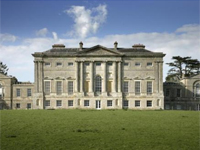
Conran collects another Georgian gem: Wardour Castle, Wiltshire

Wardour Castle, Wiltshire (Image: Strutt & Parker)

The recent financial crisis has forced many properties onto the market and easily one of the grandest was the main apartment of Wardour Castle in Wiltshire which has now been bought by the fashion designer Jasper Conran.

The Apartment (as it’s imaginatively known) includes the wonderful central staircase, described by Pevsner as ‘the most glorious Georgian interior of Wiltshire’, plus the other major state rooms which were restored with the assistance of John Pawson, the high priest of Minimalism.  This particular property has featured twice in this blog, once for suggested conversion back to being a single family home, but also later with the news that the property was one of the grandest repossessions in the country.
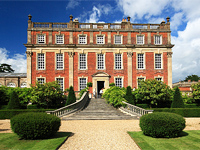
Ven House, Somerset (Image: Mike Searle/wikipedia)

What is interesting about Conran’s purchase is that he appears to be collecting fine Georgian houses in the same way one might collect furniture or paintings.  In 2007 he bought the incredibly elegant Ven House in Somerset for just less than the £8.5m asking price. At the time the house had languished on the market for two years before Conran took it on.  Although more famous as a fashion designer, Conran has a good track record with property restoration having bought Walpole House in Chiswick, London for £7.25m which was sold following refurbishment for £12.5m in 2008 or Flemings Hall in Suffolk which he sold for £2m in 2006. Ven required comparatively little work and has remained his country home, opening it up for use by local organisations for charity fund-raisers.

It seems fashion designers have a taste for Georgian as Jasper’s father Terence Conran lives in Barton Court, an elegant red-brick villa-style house in west Berkshire which he bought in the 1970s and has carefully restored.  On a much larger scale, the American fashion designer Leon Max famously bought the magnificent Easton Neston in Northamptonshire for £15m in 2005.  The grade-I listed house, designed by Nicholas Hawksmoor and built between 1695-1710, was the home of the Hesketh-Fermor family for nearly 500-years before the current Lord Hesketh decided to sell up. Leon Max purchased the house with the intention of converting a fire-damaged wing into a base for his fashion company.

Perhaps the natural grace and light of the best of the Georgian homes appeals just as much to the aesthetic eye of the designer as it does to most of us, confirming their broad appeal.  Happily for Wardour Castle it seems that has caught the eye of someone who has a good track record of looking after the wonderful homes he has bought.  Perhaps he might be open to suggestions for others that need some attention: Melton Constable Hall perhaps?

Full story: ‘Conran captures the repossessed castle: Fashion designer Jasper snaps up £7m ‘Billy Elliot’ house – for just £2.75m‘ [Daily Mail]
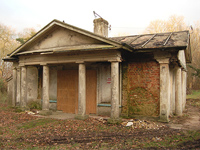
Lodges to lost houses: Thorington Hall Gate Lodge, Suffolk

Thorington Hall Lodge, Suffolk (Image: buildings_fan on Flickr)

Often the only visible sign of  a grand estate is the lodge house seen as we drive past; their varied size and designs indicating the wealth and aspirations of the owners.  Although still a integral part of the functioning of some estates, providing security and accommodation, sometimes these beautiful buildings lie abandoned, intriguing those who go past them everyday.  ‘The Restoration Man’ series on Channel 4 has been showing people who have been willing to take on abandoned listed buildings and bringing them back to life. The episode to be shown on Sunday 25 April features Thorington Hall Gate Lodge, a forlorn reminder of Thorington Hall, one of the many elegant demolished Suffolk country houses.

Although their main function was to provide shelter for the estate worker who opened the gates, lodges were often designed by the same pre-eminent architects who were working on the main house.  Far from being an afterthought, these houses were often strongly imbued with the overall architectural style of the estate and were seen as an important way of announcing the status of the estate and owner.  Alternatively they gave scope for the owner to indulge in some architectural experimentation.  The styles of the lodges are as varied as the many houses they protected, from Victorian Gothic follies to small thatched cottage orne to minature Greek temples, such as at Thorington Hall.  The publication of ‘pattern books’ such as Joseph Gandy’s ‘Designs for Cottages, Cottage Farms and other Rural Buildings, Including Entrance Gates and Lodges‘ (1805) also enabled the discerning owner to select particular buildings from an established design without the need for an architect.

Many of these lodge cottages are now no longer part of the estate and have been turned into interesting family homes.  Their smaller, more domestic, scale also ensured that they often survived the demolition of the main house.  One example is Clumber Park in Nottinghamshire where all nine lodges at each of the estate entrances survive despite the palatial mansion being demolished in 1938.  Increasingly, the modern estate owner is buying back these buildings to reintegrate them with the overall estate.  However, some still survive as neglected shells and these can prove to be an exciting opportunity to create a home.  One important factor bear in mind is that these houses are often very small (sometimes only two rooms) and their listed status means it’s not always possible to add significant new extensions.  One of the joys of these houses is their diminutive size and that should be respected when considering restoration, but completed sensitively, these houses can be an interesting feature of your local heritage.

To find lodge houses which may be available for sale, join SAVE Britain’s Heritage and access their ‘Buildings at Risk Register’ where you can search for these properties plus many others.  Their latest ‘Buildings at Risk’ report – ‘Live or Let Die’ – will be published on 1 June 2010 and can be pre-ordered now.

To find out more about the many country houses which have been demolished in Suffolk there is a superb book which has been recently published called ‘The Lost Country Houses of Suffolk’ by W.M. Roberts [amazon.co.uk].

Programme details: ‘The Restoration Man‘ [Channel 4]

Posh B&B – stately home owners diversify

Sennowe Park, Norfolk (Image: sennowepark.com)

A country house was traditionally the centrepiece of an estate usually absorbing huge amounts of money in running costs and improvements.  This model was sustainable when the estate or other source was sufficient to provide the necessary income but today often a family can inherit a large house with all the costs but not the means to fully maintain it.

In another example of the diversification that has allowed so many of our country estates to survive, aristocratic families are now offering the chance for those willing to pay from £1,000 per day to experience life as it is for those lucky enough to live in these beautiful homes. A Suffolk firm, ‘More than Good Manners‘ arranges these luxury stays with an emphasis sharing in some of the best country pursuits in houses such as Sennowe Park, the grand Edwardian family home of Thomas Cook and his descendants.

Some may complain that these are a devaluation of the grandeur of the country houses and the families who live there. However it could be argued that there is a long tradition of these houses hosting visitors for gain when years ago the monarch would be lavishly entertained in hope that honours or privileges would be bestowed on the hosts. This modern twist on the theme sees income being provided in a way which doesn’t greatly increase the wear and tear on the fabric of the house and is largely in keeping with the original purpose of the house as a centre for leisure.

Full story: ‘Take a break – with an aristocratic family‘ [Eastern Daily Press]

Remembering the lost country houses of Suffolk

Each county in England has suffered the loss of at least some of its wealth of country houses.  Although nearly 1,800 have been identified so far, it’s clear that some counties, such as Somerset, escaped relatively lightly whilst others such as Yorkshire were severely depleted.  Of course, the losses are not simply about numbers as these can mask the importance of the individual houses.  One county which has been deprived of not only a significant number but also some houses of national importance is Suffolk in East Anglia.  Financed by early wealth from the wool trade followed by large scale agriculture, Suffolk boasts some of the finest houses in the country including Somerleyton Hall (built for rail magnate Samuel Morton Peto), Ickworth (the spectacular home of the Marquesses of Bristol), and superb Elizabethan Long Melford Hall.

Yet Suffolk has also lost nearly 60 other country houses of all ages and styles to both fashion, finance and fire.   A new book focussing on these losses called ‘Lost Country Houses of Suffolk‘ (Boydell & Brewer, 2010) has just been published by a Suffolk author W.M. Roberts.  This superbly produced and researched book highlights 40 of these now vanished houses, including the larger houses such as the beautiful Rushbrooke Hall, and the lavish Flixton Hall, but also the smaller ones such as Assington Hall, and provides detailed histories of the ascendancy of the houses before explaining their demise.  Lavishly illustrated, the book is also a wealth of detail with further details and sources for anyone, be they genealogist or local historian, looking to research even deeper.

The book is available direct from the publisher or via Amazon or all good bookshops.

Full disclosure: I contributed a little of my research into England’s lost country houses to this book but I make no gain from sales.

Shrubland Hall finally sold

When the Grade-II* listed Shrubland Hall near Ipswich in Suffolk was put on the market for £23m in 2006 it included over 40 cottages, several farms, over 1,400 acres and one of the finest Italianate houses in the country. The house was originally designed by James Paine in the 1770s it was extensively altered by Sir Charles Barry in the 1840s.  Lord de Saumurez had decided to start afresh with a grand country house auction rarely seen such a scale since the 1950s, and which included Meissen porcelain, paintings, and many fine pieces of Georgian furniture.  The sale was a roaring success but the house itself languished on the market as the especially as the growing global credit crunch limited the desire for buyers wealthy enough to take on the 40,000 sq ft. house.

However, after three years, and selling off much of the estate in smaller lots, the house plus a few hundred acres of parkland including the listed gardens designed by Sir Humphrey Repton, has now finally been sold for £6.5m to a London businessman.  It will now be interesting to see how the estate develops as without the larger estate it will be simply a home supported by income from elsewhere.  Here’s hoping that the new owner fully understands and appreciates the architectural gem they have acquired.

Full story: ‘Shrubland Hall sold‘ [Evening Star 24]