A gilded cage: country houses as prisons

Country houses have been slightly glibly described as ‘prisons’, usually due to the restrictive social conventions, which stifled the freedom of the occupants. However, country houses have occasionally been repurposed as true custodial institutions, serving as prisons, youth detention centres, approved schools, prisoner-of-war (POW) camps from the 18th century to the present. This role is one which has been often overlooked in the history of the country house.
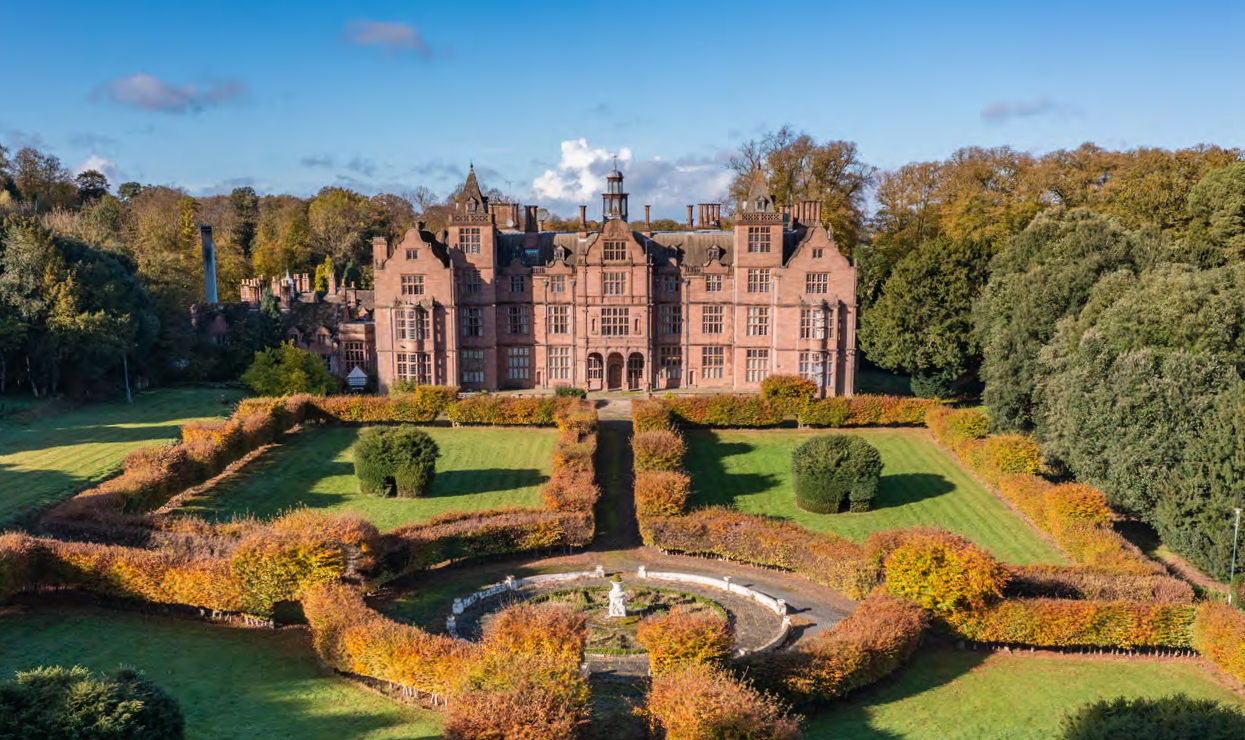
Hewell Grange, Staffordshire aka HM Prison Hewell Grange 1946-2019 (Image © Cushman & Wakefield)

A fictional prison

If one wished, it was always possible to cast the country house as a prison, of sorts. The restrictions placed on everyone who lived in one, whether as the lord or the lowliest servant, was a web of both explicit and implicit rules. Although they could, in theory, walk out of any unlocked door, the reality was that they were trapped, bound to the building.

Fiction has long played on this idea, weaving physical incarceration, with its psychological equivalent. There are the self-imposed emotional bonds which confine the jilted Miss Havisham to her decaying Satis House in Charles Dickens’ ‘Great Expectations‘ (1861), or the fear which entraps the governess at Bly House in ‘The Turn of the Screw‘ (1898) by Henry James. In ‘Rebecca‘ by Daphne du Maurier (1938), Manderley, the grand estate in Cornwall, becomes a place of psychological imprisonment for the unnamed narrator. Haunted by the lingering presence of her husband’s first wife, Rebecca, the narrator feels trapped by the oppressive atmosphere of the house and the expectations imposed upon her. More recently, in Sarah Waters’ ‘The Little Stranger‘, the decaying Georgian mansion of Hundreds Hall (played by Newby Hall, Yorkshire in the film), becomes a symbol of entrapment for its inhabitants as their financial decline echoes that of their place in society, leaving them isolated.

Newby Hall, North Yorkshire, represented the fictional Hundreds Hall in the 2018 adaptation of Sarah Waters’ ‘The Little Stranger’

Beyond these intangible confines, the house as a cell was perhaps most famously portrayed with Bertha Mason, Mr Rochester’s wife, confined as the ‘mad woman in the attic’ of Thornfield Hall in Charlotte Brontë’s ‘Jane Eyre‘ (1847).

Royal confinement

Beyond fiction, the country house has, at times of need, served in reality as a place of confinement – pressed into service as a working prison when circumstance demanded.

On 16 May 1568, Mary Queen of Scots fled to England seeking refuge from political turmoil in Scotland after the battle of Langside and spent her first night at Workington Hall, Cumbria. Mary had come to England in the hope of gaining support from the Catholic nobility and of appealing to her cousin, Queen Elizabeth I, for political assistance in regaining her Scottish throne. However, because both women were descended from Henry VII, Mary possessed a strong claim to the English crown. This made her presence in England a direct threat to Elizabeth, particularly as Mary was a Catholic alternative to Elizabeth’s Protestant rule.

Although Mary was technically a guest, she was heavily guarded and this effectively marked the beginning of her nearly 19-year imprisonment before her execution. Mary was moved around regularly to thwart plots to free her, from castles to eventually the country houses of George Talbot, the 6th Earl of Shrewsbury (b.1522 – d.1590). The Earl of Shrewsbury, famously married to Bess of Hardwick, played a pivotal role in the confinement of Mary, having been appointed her custodian by the Queen. Throughout various periods, he held Mary at his family’s houses including Wingfield Manor, Hardwick Hall, Chatsworth House, and Sheffield Manor – all situated within a 15-mile radius in Derbyshire. Mary was finally moved to Fotheringhay Castle, Northamptonshire, arriving on 25 September 1586. She was put on trial in October, and then executed in the Great Hall on 8 February 1587. Her long confinement within such grand yet guarded houses stands as a stark reminder of how the architecture of luxury could so easily become the architecture of captivity.

A prisoner of war

In wartime, country houses have been pressed into service in a wide variety of roles, with prisoner-of-war camps among the least glamorous. Stepping beyond the more obviously martial associations of castles, one of the earliest – and most notorious – examples was at Sissinghurst in Kent during the Seven Years’ War (1756–1763). The house, by this time had been allowed to fall in to a significant state of disrepair by the then owners, the Baker family. The government rented the property and adapted it to hold around 3,000 French naval prisoners, during which time it was further mistreated with the inmates destroying panelling, fireplaces, the chapel furniture, and leaving the garden a wasteland.

In 2008, a newly identified watercolour emerged that provides the most complete known view of the Elizabethan house during this period when it was a prison – and includes the chilling depiction of a double murder.

Watercolour (c.1761) showing the Killing of a Group of French Prisoners at Sissinghurst Castle Garden, Kent. Sissinghurst Castle © National Trust Images / John Hammond 2016
Sissinghurst Castle with the Killing of a Group of French Prisoners English School, circa 1761. Ink and dye on laid paper. (© National Trust Images / John Hammond 2016)

On 9 July 1761, whilst guarded by local, poorly-trained, armed militia, three prisoners who had escaped were being brought back to the camp. Their arrival caused a group of prisoners to rush to the fence out of curiosity.  One of the militia, a hot-head called John Bramston, shouted that they were to come no closer or he would fire. He loaded his musket with three balls and fired at the group. One ball struck the wall, the other two each hitting a prisoner. One by the name of Baslier Baillie was wounded (shown top-left being helped by two friends), but another, Sebastien Billet, was killed instantly. Bramston was unrepentant. The picture is thought to have been painted by a Frenchman to record the crime – but in doing so also left a powerful visual record of a now much-altered house and its time as a prison.

World War II

During the twentieth century, several distinguished country houses were temporarily repurposed to serve the needs of war, their refined architecture providing an incongruous backdrop to confinement. At Huntercombe Hall in Oxfordshire, the late-Victorian mansion, with its commanding stone façade and landscaped setting, was requisitioned during the Second World War as a secure detention site, most notably for high-ranking German prisoners including Rudolf Hess, whose isolation lent the house an unlikely role in wartime diplomacy and intelligence. In north London, Trent Park, a neo-Palladian villa by Sir William Chambers, was adapted as a special interrogation centre, where senior German officers were held in conditions of deceptive comfort while their conversations were secretly recorded – its grand rooms thus becoming instruments of psychological warfare.
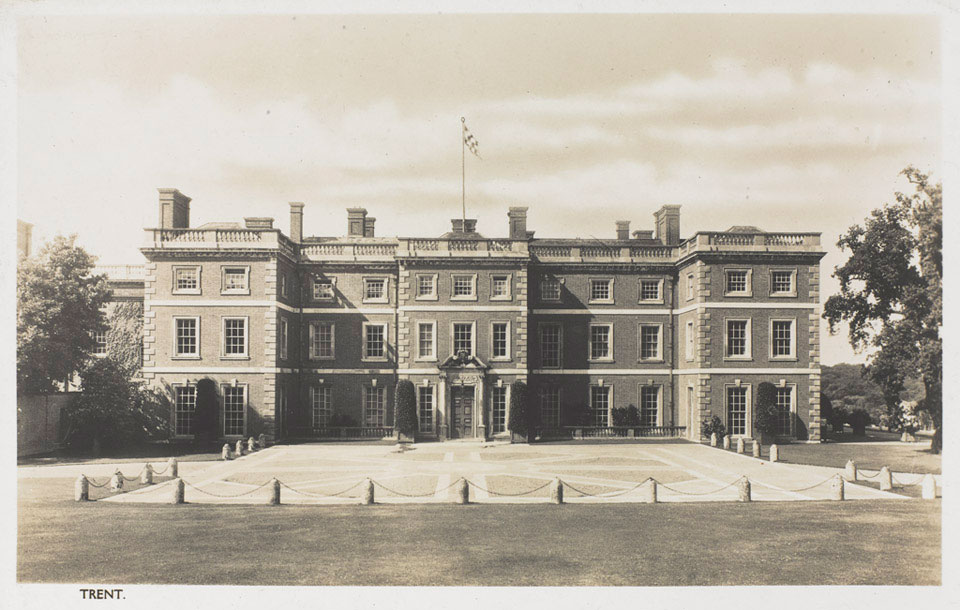
Entrance front of Trent Park, Enfield, north London (Image © National Army Museum ref: NAM. 1993-10-163-1)

Similarly, Mytchett Place, Surrey, during 1941–42, this Victorian mansion was fortified and codenamed “Camp Z,” serving as a one-man prison wired for surveillance for the detention of Deputy Führer Rudolf Hess.

Further north, the Huntroyde Hall estate in Lancashire, long the seat of the Starkie family, was similarly turned over to military purposes, its once-private parkland accommodating prisoners and personnel within hastily erected compounds. As with Sissinghurst, the mistreatment during the harsh use as a prison was a significant factor in its later demolition. Earlier, in the First World War, the partly medieval Badsey Manor House in Worcestershire was similarly employed to house prisoners of war, marking a utilitarian phase in its long domestic history.

The changing attitude to the role of prisons

The use of country estates and their houses was partly one of necessity in wartime, but in the post-war period also reflected a change in attitudes towards a more therapeutic approach towards incarceration from the 19th-century focus on harsh conditions and hard labour as a deterrent.

Why country houses? They offered several advantages: privacy (away from cities, escapes less dangerous to public), space for agriculture and workshops (important for training prisoners in trades), and an existing infrastructure of accommodations and kitchens. Also, symbolically, placing prisoners in a “less oppressive” environment was meant to encourage self-respect and responsibility – a deliberate contrast to the austere walled prison. Askham Grange’s homely appearance was cited as beneficial for women.

The open-prison concept drew heavily on Alexander Paterson, who joined the Prison Commission in 1922. He argued that imprisonment should actively shape behaviour for the better, with inmates encouraged to develop through structured physical and mental activity.

In the 1940s, there had been a steady increase in the total number of people convicted of indictable offences. During a House of Lords debate on Penal Reform in November 1946, the Lord Chancellor, Lord Jowitt, lamented the tendency towards increasing crime before WWII, stating that,

I take the five years 1934–1938. The number of young persons found guilty of indictable offences moved up from 10,000 odd in 1934 to 14,000 odd in 1938 – that is males; females from 1,300 odd in 1934 to 1,600 odd in 1938. …When we have the figures of 14,000 young men and 1,600 young women going up to the sort of figures we have to-day [1947], for the total number of persons – 78,000 in 1938, moving up in 1945 to 116,000…it is quite obvious that we have here a very real problem. (Source: Hansard – column 442)

The noble Lord’s figures indicated a serious issue so whilst not everyone convicted was incarcerated, there was a steady rise in the prison population:
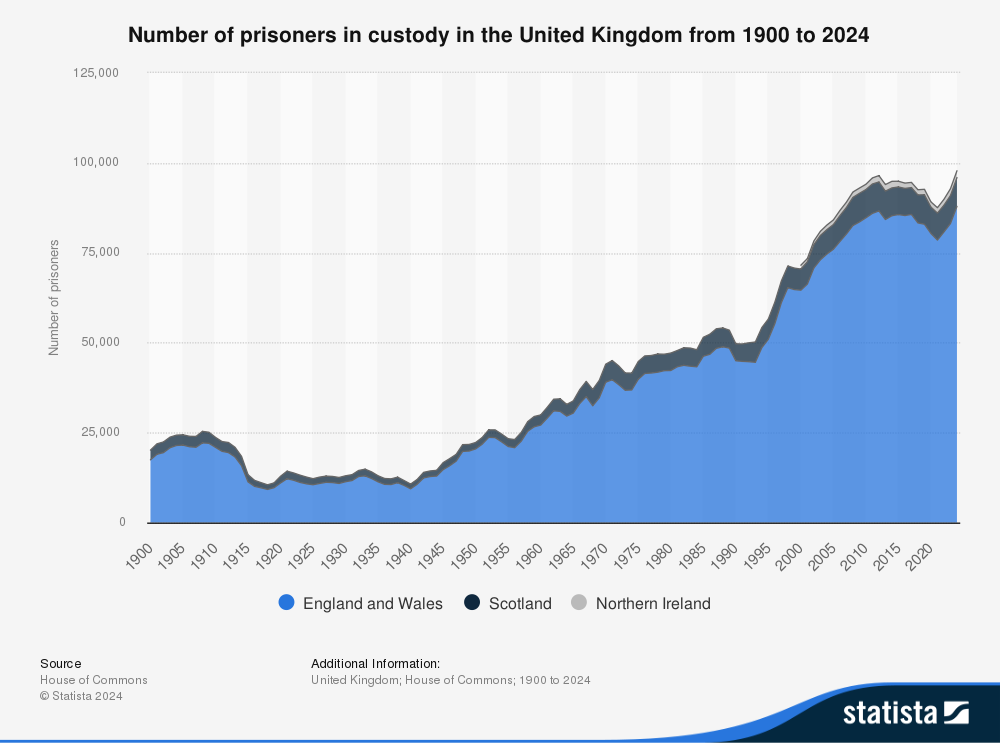
Number of prisoners in custody in the United Kingdom from 1900 to 2024 (Image source: Statista. Data source: UK prison population statistics – published July 2024. House of Commons Library)

The sustained increase in the total population by over 50% from 1940-1950, would place significant stress on any system of incarceration. However, attitudes had changed and the harsh conditions of punishment of the nineteenth century were now considered to do more harm than good, especially for young offenders. The Criminal Justice Act of 1948 introduced major reforms for young and habitual offenders. It barred sending under-21s to prison except as a last resort, directing them instead to borstal training or, for shorter terms, to detention centres.

This more enlightened perspective, which the Lord Chancellor was fully supportive in that same debate, created a requirement for a system which emphasised a more probationary approach via the borstal system. By relying on less stringent security, and often promoting training and useful labour – particularly agricultural – this created a means to reform and improve the lives of those who had been convicted. The Lord Chancellor welcomed that:

Thank goodness, we are now approaching the time when it will no longer be necessary to detain in prison for long periods persons who are ultimately going to serve their sentences in Borstal. The institutions we now have are of very varied types. Sometimes they are in a camp and sometimes they are in a country house, where the inmates can be engaged on agricultural work. We have also opened a new Borstal institution for girls at East Sutton Park in Surrey. That is a small institution and will take some fifty girls. (Source: Hansard – column 447)
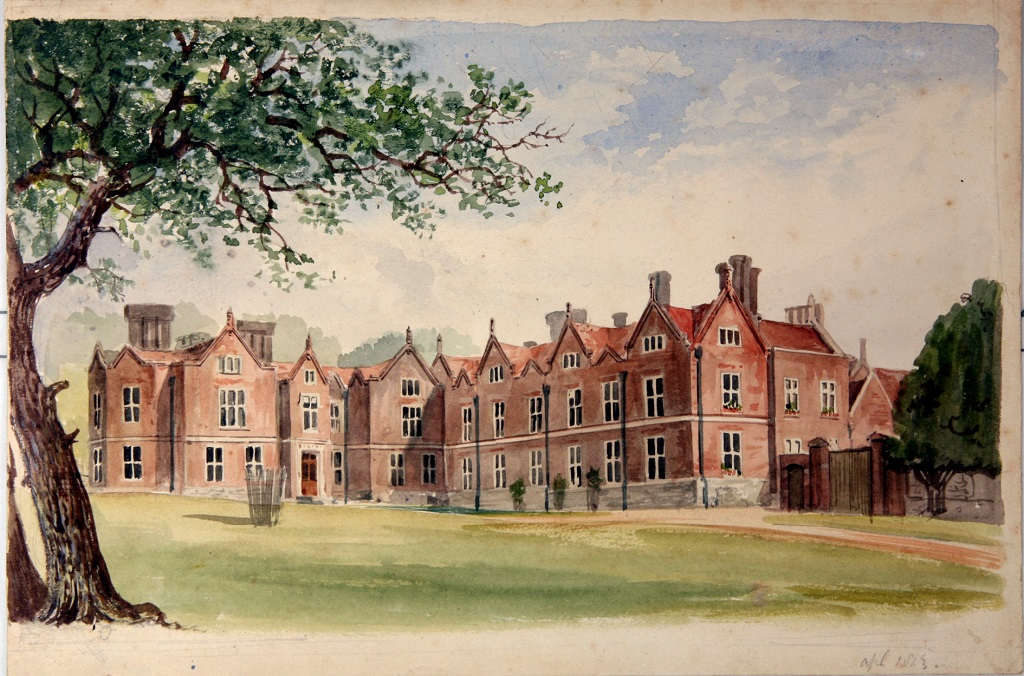
East Sutton Place [Park], Kent, which became the first open female Borstal in 1946 (Image © Kent Archives)

Interest also developed in adapting elements of the short-lived but influential “Wakefield experiment,” introduced during the First World War to manage the most uncompromising conscientious objectors – the Absolutists – who refused all military orders. Previously held in ordinary prisons, they became the focus of MPs arguing for more humane treatment. The government resisted releasing them but agreed to trial a compromise by placing all COs under a new regime at Wakefield.

This system relied on a high degree of trust. Cell doors were left unlocked, prisoners could move freely within the prison, and a small allowance allowed them to buy writing materials and tobacco. Conditions were not freedom, but a clear improvement. Leisure and work were timetabled, with expectations of diligence and no “singing, shouting, whistling, or reading” during working hours. The experiment collapsed when the men rejected the rules they had helped draft, leading to their return to standard prisons. Even so, its central idea – combining restrictions with opportunities for responsibility and reform – would influence later thinking about penal regimes.

Entrance to Tortworth Court, Gloucestershire (Image from private collection)

Speaking during the same debate in 1946, the Lord Chancellor again highlighted that such facilities were being developed:

We have recently taken over a former hospital at Tortworth [Court] in Gloucestershire as what is called a minimum security prison for selected convicts. In that way we can do much towards their rehabilitation and their ultimate reassimilation into ordinary civilian life. (Source: Hansard – column 447)

This approach influenced the selection of suitable locations for the new prisons. At HMP Leyhill, the government repurposed an ex-American Army hospital camp on the Tortworth estate to create the first open prison in 1946. The adjacency of Tortworth Court (then still with the Earl of Ducie) gave the model of a country setting if not using the main house. Interestingly – the house was not taken as it was returned to the Earl; but by the 1950s, Leyhill expanded and did start using some estate buildings, thought the wider estate is still owned and managed by the Earl of Ducie’s family as Tortworth Estates.

Hewell Grange

Hewell Grange epitomizes the pattern for long-term penal conversion. An existing country house could be successfully integrated into the penal system for decades, effectively becoming a self-contained village (with a chapel, workshops, and housing all on site).

The grand main house, last great prodigy houses of its era, provided an environment, even when not used directly as cells for prisoners, was arguably more humane than a typical prison – former inmates often remarked on the beauty of the lake and gardens, which were part of a 250-acre landscape park laid out by Capability Brown, with formal terraces, a lake, and extensive service buildings. By the lake are also the ruins of Old Hewell Grange, the classical predecessor to the current house. After being superseded by the new Hewell Grange in the 1890s, it was accidentally gutted by fire and abandoned, and now survives as a roofless ruin, its classical form still partly visible among collapsed walls and encroaching vegetation.
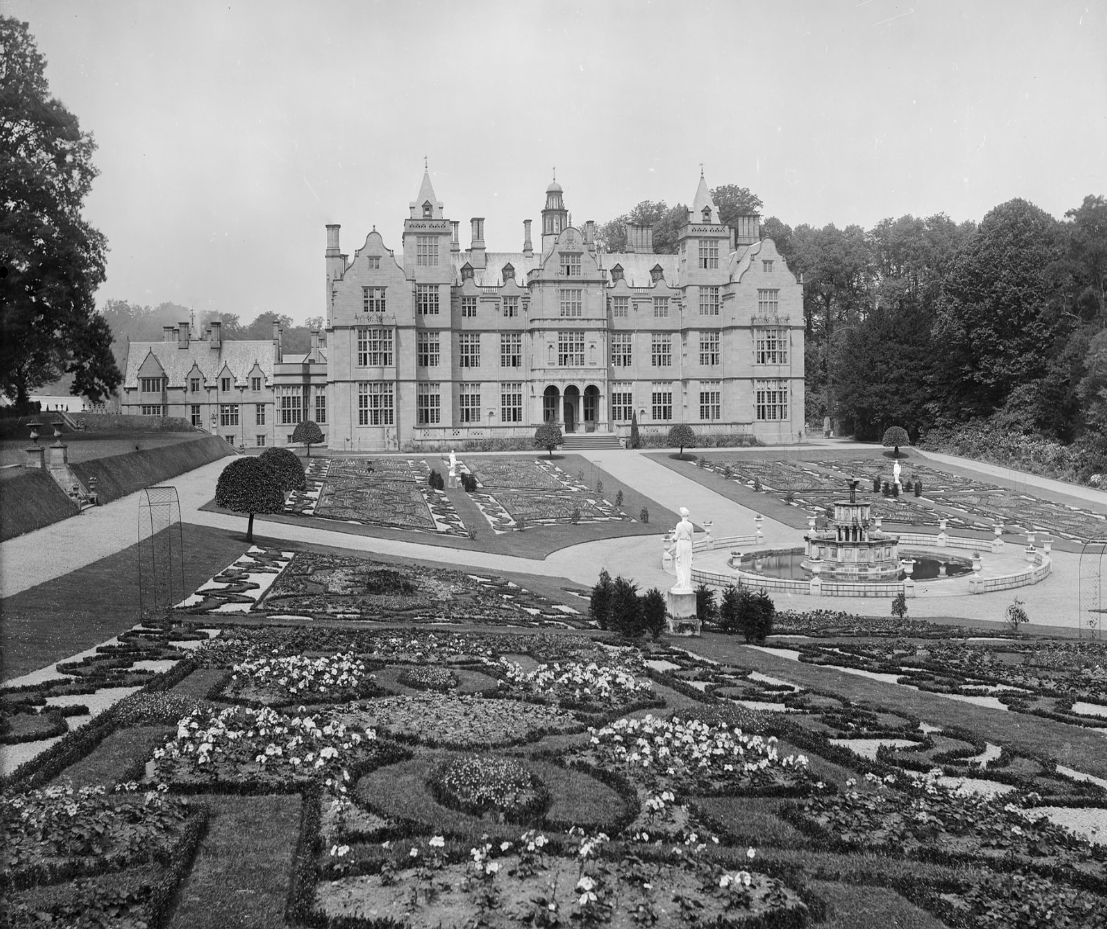
View of Hewell Grange and the formal garden to the south-east of the house c.1892 (Image © Historic England, ref: BL11660/016)

The new house was built between 1884 and 1891 for Robert Windsor-Clive, later 1st Earl of Plymouth, Hewell Grange cost approximately £250,000 (equivalent to spending c.£39m today). Designed by George Frederick Bodley and Thomas Garner in the Jacobethan style, the red brick house with stone dressings features an E-plan, steeply pitched gables, clustered chimneys, and mullioned-transomed windows. Interiors include carved oak panelling, a double-height Great Hall with a minstrel gallery, and elaborately modelled plaster ceilings.
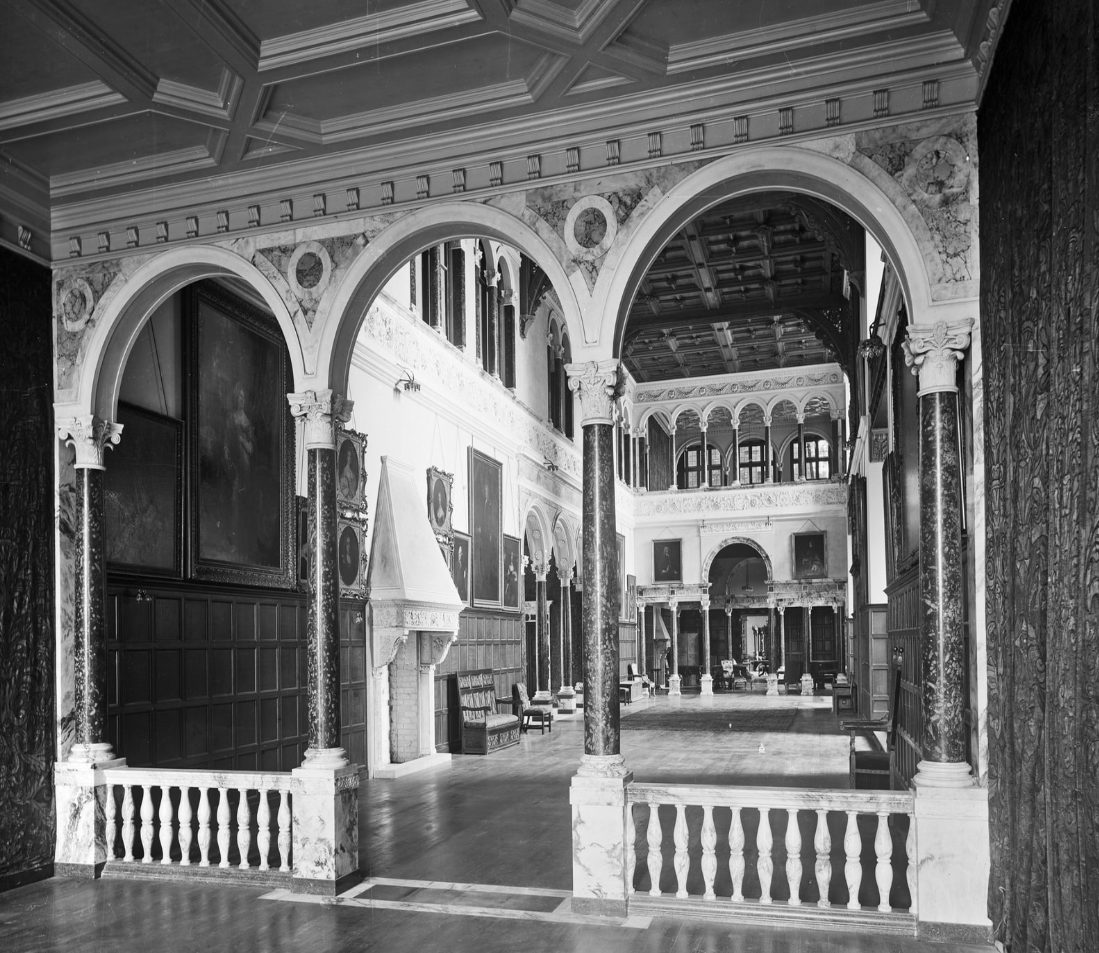
Interior of the Italianate style Great Hall of Hewell Grange, 1891 (Image © Historic England, ref: BL11026)

However, Hewell Grange also reveals both the potential and limitations of prison use: spacious and already built, the house saved the state construction costs in 1946; but by 2019, it was anachronistic and expensive to run. By the 2010s, the UK prison estate was being rationalized. In 2019 the Ministry of Justice announced the closure of the open prison at Hewell Grange, following a critical inspection report and also reflected the cost of maintaining an ageing mansion for modern custody standards. The prison formally closed in 2020, and the entire site was consolidated into one (closed) prison to the north east of the house, around 600 meters away.

Hewell Grange house is now vacant and lacking a clear future, beyond occasional use for filming and events. As is so often the case for heritage without a viable and sustainable purpose, its condition has deteriorated to ‘poor’ after closure, with concerns about lack of maintenance, resulting in it being placed on the Heritage at Risk Register. As of early 2022, the government put the property up for sale, seeking a new custodian to repurpose the historic estate once again.

It was apparently sold in 2023 to a hotel group but it’s unclear whether this fell through or they immediately put it back on the market, as it has been offered through Cushman & Wakefield, with 247 acres, for an undisclosed price. This inevitably raises questions about the future: will it return to a private residence, become a hotel or institution, or will it just be allowed to deteriorate until it becomes another country house to succumb to neglect, urban exploration or a mysterious fire?

Conclusion

The pattern of country house reuse reflects adaptability to historical moment. In wartime, necessity drove usage; in peacetime, policy experimentation and economic forces did. This practice peaked in the mid-20th century and today it would exceptionally unlikely for a house to be taken over for this purpose, with a clear preference for building dedicated facilities.

From a wider heritage perspective, Hewell Grange’s story is instructive as, unlike so many country houses that were demolished in the mid-20th century, the use as a prison provided a value and so it was preserved precisely because it found an institutional function. Now its preservation will depend on finding a sympathetic new use after its institutional life has ended.


A list of country houses used (either currently or previously) for incarceration by the state since 1900

Prison nameCountry houseCounty
Askham GrangeAskham GrangeYorkshire
BlundestonBlundeston LodgeSuffolk
Buckley HallBuckley HallLancashire
Bullwood HallBullwood HouseEssex
East Sutton ParkEast Sutton ParkKent
ErlestokeErlestoke ParkWiltshire
Foston HallFoston HallDerbyshire
HewellHewell GrangeWorcestershire
Hill HallHill HallEssex
HumberEventhorpe HallYorkshire
Kirklevington GrangeKirklevington GrangeYorkshire
Latchmere HouseLatchmere HouseSurrey
LittleheyGaynes HallCambridgeshire
Lowdham GrangeLowdham GrangeNottinghamshire
Morton HallMorton HallLincolnshire
Penninghame HousePenninghame HouseDumfriesshire
Spring HillGrendon HallBuckinghamshire
StockenStocken HallRutland

If I have missed any others, please share the details in the comments or contact me directly and I’ll update the list.

Sites associated with nearby country houses

Prison nameCountry houseCounty
Eastwood ParkEastwood ParkGloucestershire
LeyhillTortworth CourtGloucestershire
Swinfen HallSwinfen HallStaffordshire


Selected references


Further research

Interestingly, the subject of the use of the country house for incarceration doesn’t appear to have been covered in depth academically, as far as I could discover. Given the numerous angles, this would appear to be an area which someone may wish to investigate further as the official records and related information would probably reveal a richer story than I have been able to share here. Happy to have a chat if anyone wishes to take it on.

50 years on from ‘The Destruction of the Country House’ exhibition at the V&A


Below is the first of two exclusive articles marking the 50th anniversary. This piece delves into the inception of the exhibition and offers some additional reflections. The next article, to be published shortly, will provide an eagerly anticipated update on current research efforts to identify all the lost houses, featuring some significant news on the total count.


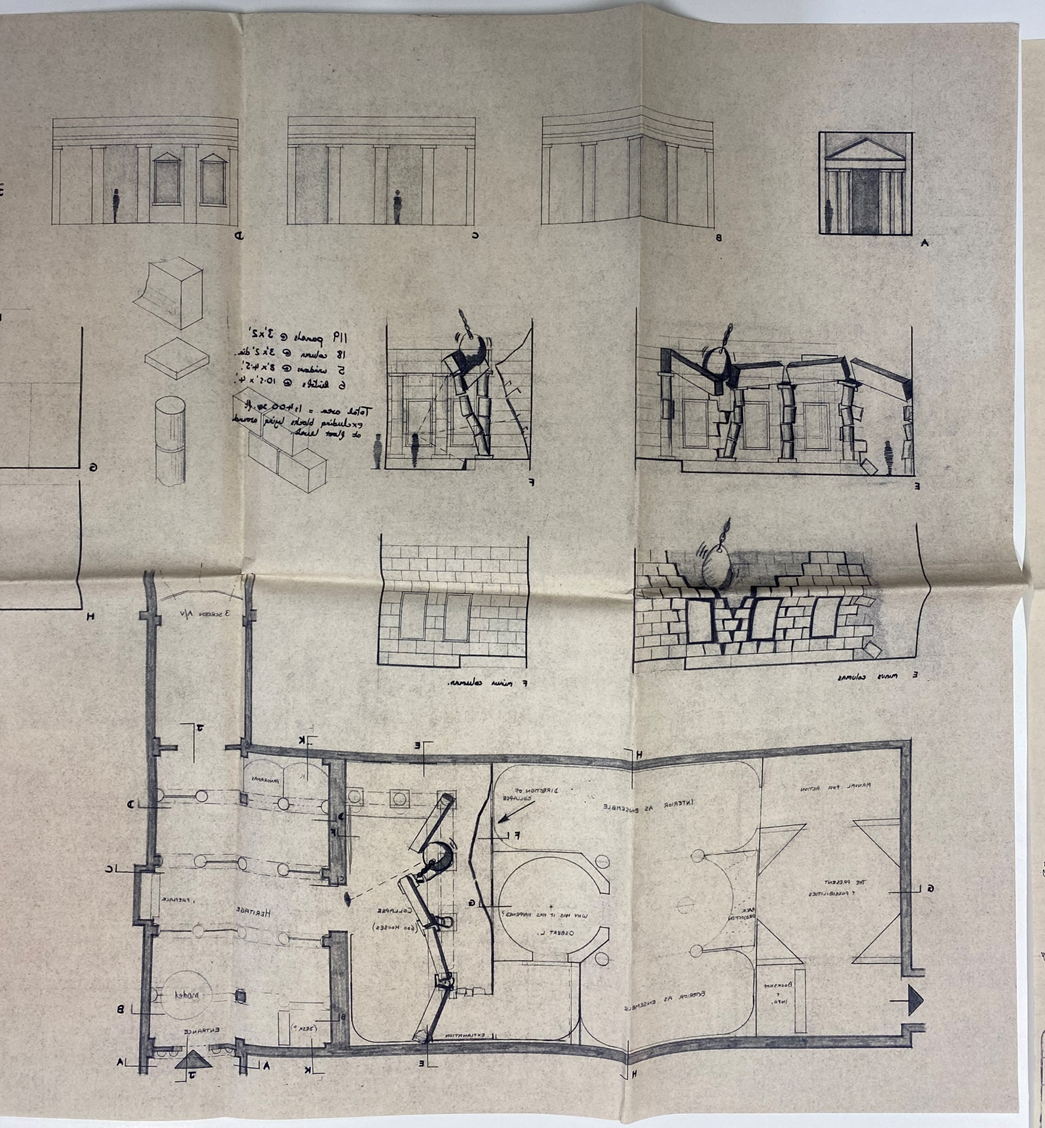
On 9 October 1974, on the day before the second general election of that year, the first visitors started making their way to the Victoria & Albert Museum to view the newly-opened exhibition: ‘The Destruction of the Country House: 1875 – 1975.’. Passing through the grand entrance to the monumental museum and then along the stately corridors would have heightened the shock as they entered a room to be faced with the toppling columns and seemingly endless photos of similar architecture which had been so ruthlessly demolished. However, as bad as the situation seemed – might the losses, though deeply regrettable, have been a catalyst for a better future for the country house?

Hall of Lost Houses, from the 1974 Destruction of the Country House exhibition at the V&A
Hall of Lost Houses, from the 1974 Destruction of the Country House exhibition at the V&A (Image © Robin Wade / Victoria & Albert Museum) reproduced by kind permission

Immersed in designer Robin Wade’s collapsing neo-classical portico, and as the late John Harris’ voice grimly intoned a roll call of the fallen, they may have wondered how such destruction could have been allowed.

Robin Wade, ‘V&A Museum: Gone, Going, Going’ (10th March 1974) (Image © Robin Wade / Victoria & Albert Museum) reproduced by kind permission

To survey the country houses losses in the UK over the last century is to be staggered as to the diversity of beauty and history which has been destroyed. That’s not to say that everything that’s been built should or can be preserved, but the sustained pattern of losses of country houses was cumulatively one of the largest of a particular building type since the Dissolution of the Monasteries. Although each loss was individual, collectively, it was certain to be noticed and mourned. As the then head of the V&A, Roy Strong, considered the situation, it was clear that the time had come to raise awareness of the losses – but could it also help prevent further destruction?

For Strong, working with Marcus Binney and John Harris, the aim of the emotionally-charged exhibition was to:

…draw the public’s attention to the country house as a major part of our national heritage, showing the tragic losses over the last century, stressing the need to preserve important houses with their contents and setting intact, emphasising the positive achievements over the past twenty-five years, and forcibly pointing to the problems that lie in the future.

Strong also wrote that:

…the threatened Wealth and Inheritance Taxes if applied to historic house owners will see … the end of a thousand years of English history and culture, as pell-mell the contents are unloaded into the saleroom, the houses handed over to the Government or demolished. I can’t tell you the horrors looming unless one fights and intrigues at every level behind the scenes.

The V&A exhibition was a landmark in a number of ways. Rarely has an exhibition in a major national museum been so overtly polemical – and political. The Observer newspaper stated that it was ‘the most emotive, propagandist exhibition ever to grace a public museum’s walls’. The Daily Mirror took a rather more dismissive tone, rather snarkily observing that:

Gad…our stately homes are grim! Life in Britain’s stately homes is becoming simply too awful for the coronet set. Dukes, baronets and earls have to use buckets to catch rain dripping through the roofs. They shiver in front of electric fires because the central heating is faulty. (Roger Todd, Daily Mirror, 9 October 1974)

The stark reality of life in the country house had been at the forefront of Roy Strong’s mind when considering their presentation. In a letter from Strong, dated 24 June 1974, to Sir Osbert Lancaster, the social cartoonist and proposed contributor to the exhibition, he highlighted some of the threats to the country house in the twentieth century, including; taxes, loss of heirs in WWI, partial demolition or dereliction, sales of art, land…everything, motorways, urban expansion, conversion to some other purpose, even the National Trust, before culminating in…opening to the public.

Roy Strong to Osbert Lancaster (21 June 1974) V&A Archive, MA/28/243/1

Although the tone is ambiguous, flippant or haughty depending on your perspective, it is interesting that many of the eventual solutions to the problem of the demolition of country house are included. Conversion to alternative uses, be it offices, schools, or hotels, has saved hundreds of houses. The National Trust have been saviours of some of the crown jewels and helped to change the narrative around the purpose of the country house. This has included developing new ways to engage the public and future generations (and continuing to do so), solidifying the cultural foundation of the country house as part of our national recreational and cultural identity.

The November 1974 general election ushered in a new Labour government, during the midst of turbulent economic times. A government which would be considering how to implement their manifesto commitment of “…a fundamental and irreversible shift in the balance of power and wealth in favour of working people and their families.”. It was a bold move by the V&A to try to defend the mansions of the wealthy – but this was also a collective national heritage, even if privately owned. Counter-intuitively, by highlighting that another strand of the national fabric was not only fraying but had serious holes, it may have skilfully blended into general concerns about the overall fate of the nation.

The V&A was not acting alone. As Adrian Tinniswood highlights in ‘Noble Ambitions‘, 1974 was the year in which the country house owners got organised. John Cornforth’s report ‘Country Houses in Britain – can they survive?‘, published that year (by the then almost activist Country Life magazine), painted a dramatic picture of the almost perfect storm which he felt might have led to a crisis within 8-15 years, but was now looming large in the immediate future. Despite his pessimism, Cornforth later wrote ‘The Country Houses Of England 1948-1998‘ in which he strikes a much happier tone, saying:

‘The history of the English houses in the past twenty-five years has proved to be infinitely more positive, and the view of the future more optimistic, than seemed conceivable at the time of The Destruction of the Country House exhibition…when their very existence was threatened by new taxes.’

Back in 1974, Cornforth’s rather gloomy views were echoed elsewhere. In June, Lord Grafton (qualifications: Duke of Grafton, chairman of SPAB, member of Historic Buildings Council, the National Trust’s Historic Buildings Representative in the East of England, and owner of Euston Hall) spoke in the House of Lords to raise with his noble friends/fellow house owners, and the government, that the proposed wealth tax, and a transfer tax to replace death duties, spelled disaster for the country house. The influential Times newspaper editorial also weighed in, and the newly formed lobby group, the Historic Houses Association, emphasised the economic benefits, whilst also organising a petition which garnered a remarkable 1.25m signatures. This level of public support was in some ways unsurprising given that by 1972, 43 million visits were made to the 800 houses and ancient monuments open to the public.

Looking back now, the assumption seemed to be that owners of country houses had almost a right to perpetually live in them, and that the state should subsidise this. There is an argument that the state should look after the interests of all subjects, to a greater or lesser extent, but the preservation of the institution of the country house was certainly presented as one where protecting the elite benefited the nation, tapping into a deep cultural reserve of respect or deference – rightly or wrongly.

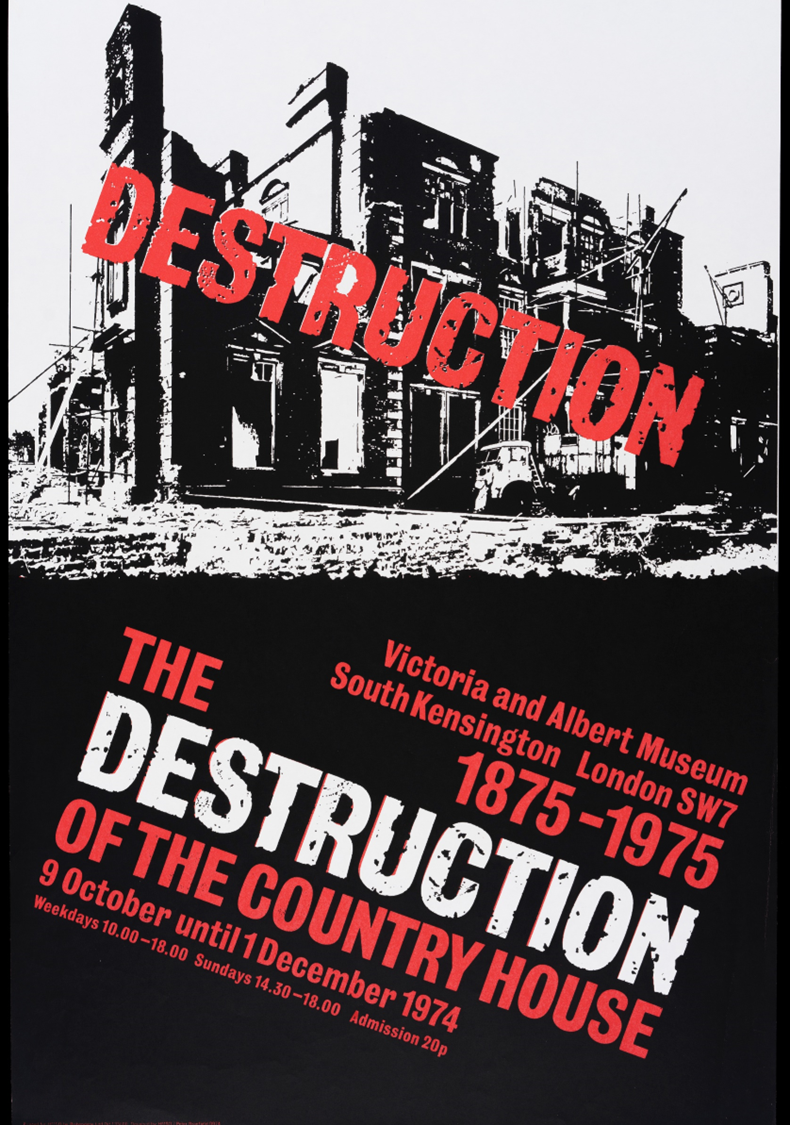
The Destruction of the Country House exhibition poster (V&A Archive MA/24/132) produced by Peter Branfield for Her Majesty’s Stationary Office (reproduced with kind permission of Dr Oliver Cox/V&A)

So, although the exhibition was one of the most high profile actions in defence of the country house, it was not without wider support and deep foundations. A preservationist ‘ley line’ can be drawn through the exhibition, connecting it to Historic Buildings and Ancient Monuments Act of 1953, which extended heritage protection to inhabited buildings, leading to a dramatic decline in the number of houses being lost. Although there were other earlier voices raised in defence of our built heritage, including Sir John Vanbrugh’s argument, in 1709, to preserve Woodstock Manor. Of particular note was Philip Kerr, the 11th Marquess of Lothian (1882–1940), who was the catalyst for the National Trust Act of 1937, which created the Country Houses Scheme which saved so many more houses from destruction. Also intersecting our ‘ley line’ is the establishment of the various amenity societies; the Victorian Society in 1958, the Georgian Group in 1937, the Ancient Monuments Society in 1924, and the Society for the Protection of Ancient Buildings in 1877.

It’s also worth noting that the dates referenced in the title of the exhibition extended into the future, if by only a year. The implication was that the destruction was still an on-going process to be feared, though this underestimated the almost immediate positive impact that it would have. The genesis of the exhibition was usefully covered in a blog article I wrote for the 40th anniversary which I would recommend if you’d like some further thoughts.

The exhibition exemplified the challenge of the definition of the reason for the country house; was it a home, a rural business, or museum? Or did, by the nature of the sometimes competing, sometimes intersecting interests of the owners, society, and the state, demand it be all these at once. Legislation crafted to protect or promote one aspect, may impinge on the ability for it to fulfil its other roles, creating a tension which actively threatened the long-term sustainability of the house.

Yet, one reason the exhibition was so successful, and had such a positive impact, was that it also gave hope. Despite the tone of Strong’s letter to Osbert Lancaster, displays showed how country houses could be adapted to survive with many a house escaping demolition through conversion to a school, offices, or hospitality. Sensitive sub-division into apartments by thoughtful developers such as Kit Martin, also offered long-term solutions. Indeed, a number of Kit Martin’s conversions, such as Gunton Park, Burley on the Hill, and Stoneleigh Abbey, are still prized today.

View of the south front of Stoneleigh Abbey, Warwickshire. An Anglo-Baroque facade by Smith of Warwick surrounded by lush gardens and colorful flowers, set against a vibrant blue sky.
View of the south front of Stoneleigh Abbey, Warwickshire, which was converted into apartments in the late 1990s by Kit Martin. (Image © Stoneleigh Abbey Events)

John Harris not only credits the demonstration of alternative uses, but also that there was grant support (though this has now been largely removed). As Giles Worsley noted in his magisterial book ‘England’s Lost Houses‘ (2002) that by the time the exhibition opened, the tide had already turned and the numbers of houses being lost had abated. The demolition of large houses such as Warter Priory (Yorkshire) in 1972, or the threatened total loss of The Grange, Hampshire, (even if it was gutted) was now more of an outlier than a regular occurrence.

South front of Warter Priory, Yorkshire, which was significantly enlarged by the architects Smith and Broderick of Hull for Lord Nunburnholme. Demolished 1972. (Image: Lost Heritage)

Perhaps most importantly for country house conservation, the preservation of our wider architectural heritage, was the founding of SAVE Britain’s Heritage in 1975, by Marcus Binney, one of the co-curators of the exhibition. Binney has been an immense presence in campaigning across the country not only to fight for specific buildings but to change attitudes and the whole perception of the value of our nation’s architecture. Although he has been rightly recognised with an OBE and CBE, how he has not been given a knighthood for his work is one of those inscrutable mysteries. Sadly, the other curator, John Harris died in 2022 and will rightly be remembered as a brilliant architectural historian, with a sparkling wit and enormous fount of stories, particularly relating to his post-war exploration of these derelict mansions.


That the country house remains an easily accessible, and deeply symbolic, cultural touchpoint is a testament to strength of the concept, even though it is now rightly subject to a more honest examination of the history. A greater transparency only adds to the weight of interest in the houses and their extraordinary past, creating a flywheel effect to support further research. This doesn’t diminish the shorthand that the country house represents: beauty, tradition, continuity. To ensure that the concept of the country house remains viable, it has to be refreshed and reinterpreted. This synthesis of the realities of the present and the inheritance of the past, is what creates new opportunities for the country house, not only as an area of academic study, or as place of public culture and entertainment, but also, most critically, as a home.

Perhaps one of the most significant pieces of legislation in creating a sustainable future for the country house was not any of the heritage Acts. Until the Marriage Act 1994 the only ‘approved premises’ for a wedding ceremony was a church or registry office. After 1994, country houses were also considered appropriate venues, ushering in a new avenue for owners to secure an income from their asset. This brought about a fundamental change in the attitude towards the house, both from the owners, and now the wider public, who were now welcomed into these exclusive spaces. The emotional value invested in each occasion, has ensured that there is a ready army of those who will think fondly of a specific house, and often, the idea of the country house more generally.

Wedding ceremony taking place in Holkham’s famous Marble Hall (Image © Holkham Hall)

So what is the future of the country house? To imagine that their current situation and the opportunities they have are guaranteed is fanciful. A recent Law Commission report suggested that weddings could be held in “any safe and dignified location” including family homes, forests, and village halls. Given the rising cost of hiring premium venues such as country houses, this risks driving them back into the more gilded edges of society. The sharply rising cost of maintenance and operating such a house, either as a venue or as a home, increases the risk of benign or malign neglect – the former from the family who don’t wish to leave, but struggle to afford to stay, or the latter; those who only see the opportunities to replace an existing house with something more modern, whilst enjoying the benefits of a location which has been carefully crafted by previous generations.

However, the concept of the country house remains surprisingly endurable. As an aspirational token of success, it has rarely been bettered. Ultimately, the ‘Destruction of the Country House’ exhibition continued the evolution of the country house, further democratising the concept and ultimately helping to build the political and social framework which underpins their survival and success. The fortunes which provides the funding are continually made and lost, with the country house and estate hopefully continuing to stand proud of such vicissitudes for future generations to enjoy.

Acknowledgements

I am indebted and very grateful to Dr Oliver Cox, Head of Academic Partnerships at the V&A South Kensington, who very kindly shared the materials from his lecture in May 2024 on the genesis and impact of the exhibition and gave his permission to use them. His research was facilitated by the excellent V&A Archives team and I echo his gratitude to them.

Further reading

If you are interested in finding out more, then my Amazon bookshop as well as a range of non-fiction and fiction books on country houses has a specifically-selected list of books on lost country houses.

Guided missel: the rise of the country house guide book

‘Dear Picture Editor for the 2017 National Trust Handbook

National Trust Guide Book 2017

Yours is a challenging job. Faced with selecting one cover image to represent the National Trust for an entire year and with the myriad opportunities presented by having over two hundred country houses (unfortunately now minus Clandon), hundred of thousands of acres of countryside, and 775 miles of coastline, such a welter of natural and man-made beauty makes your task both enviable and daunting.

It’s therefore somewhat odd that the 2017 image is a close-up of a couple and their slightly disdainful-looking dog getting caught in a wave on a beach. The lady in the couple looks distinctly unhappy, the chap is possibly saying a swear word. Perhaps the oddest thing about it is that the bloke is wearing a bowler hat. For a walk on a beach. Of course, you would know that the bowler was created in August 1849 by the famous London hat-maker, James Lock, for the Coke family at Holkham Hall to help protect their gamekeepers from branches; both those attached to trees and those wielded by poachers. Holkham Hall, awkwardly, is not one of the many country houses (minus Clandon) under NT care so this image is, on many levels, a bit silly.

For next year, may I personally suggest a country house. Though I fear that they, as a class, appear to somewhat out of favour in the upper echelons of the NT, hopefully by appearing on the cover of the handbook, it may remind them that they are custodians of one of the finest groups of country houses one could dream to care for in perpetuity (minus Clandon).’

Guide books have long been a source of fascination for those who visit country houses. Topographical guides have been written for hundred of years to help those of us fascinated by country houses to determine which we might be able to gain entry to and revel in, whether in splendour or shabbiness.

Country house tourism is not a modern phenomenon.  Whether pilgrim or royalty, the idea of visiting houses was an ingrained part of the tapestry of life in the Middle Ages for providing hospitality.  One key difference can be seen in the preferences of Henry VIII who largely visited his own houses compared to Elizabeth I who frequently visited those of her favoured courtiers. Thus the concept of the country house (or palace) being built as much for display and prestige as the more mundane practicalities of large scale domestic occupation became a core characteristic of aristocratic life.

An Historical Account of Corsham House in Wiltshire, the seat of Paul Cobb Methuen [1806]
An Historical Account of Corsham House in Wiltshire, the seat of Paul Cobb Methuen by John Brittan [1806]
In the Georgian era, the burgeoning wealth of the expanded upper classes afforded increased leisure opportunities for travel and cultural pursuits. Their desire to assimilate themselves into the attitudes of the existing aristocracy fuelled a natural curiosity about their lives and tastes.  With frequent wars on the Continent often thwarting the traditional Grand Tour destinations, travellers now looked more domestically to visit their extended families and their friends. Even without the wars, it’s likely that the opportunities for women to travel were more restricted and to visit other ‘good’ families in their homes would have been an acceptable way for them to broaden their knowledge and tastes, thus cross-pollinating ideas, styles and fashions.

However, a family’s immediate social circle might contain only a limited number of contemporaries with whom they would be comfortable lodging.  Therefore, when visiting an area, either as a family guest or staying in accommodation, for example during the Season in Bath, day trip visits to other country houses was a favoured activity.  Despite the expectation that an owner would, as part of their duty to better society, open their house, the key question was how to find them and to determine whether they would even be amenable to visitors, no matter how genteel. Much as today, in fact, and hence the birth of the country house guidebook.

Opening Times in 'An Historical Account of Corsham House in Wiltshire, the seat of Paul Cobb Methuen' by John Brittan [1806]
Opening Times in ‘An Historical Account of Corsham House in Wiltshire, the seat of Paul Cobb Methuen’ by John Brittan [1806]
By the latter part of the eighteenth-century, an infrequent stream of visitors had become something of a torrent, if not a flood. Houses near large conurbations were particularly susceptible as Horace Walpole found at his charming neo-Gothic villa at Strawberry Hill, near Twickenham, described as ‘the prettiest bauble you ever saw’.  Writing to his friend Sir Horace Mann in July 1783, Walpole complained that ‘I am tormented all day and every day by people that come to see my house, and have no enjoyment of it in summer.’  Areas with a higher density of fine houses, which were within a day or two ride of a city or existing tourist destinations, such in as Norfolk, Derbyshire or Wiltshire, were soon part of an unofficial British Grand Tour. This was a natural progression for a society structured around the idea of circuits; domestically through suites of rooms and socially through visiting friend’s houses and at functions and balls.

Shirburn Castle, Oxfordshire (J. Skelton, 1825)

As the idea of country house visiting grew, so did the need to manage the number of visitors and their conduct whilst in the houses. Some simply refused access – a galling experience for those who might have travelled long distances such John Byng, who despite being just a civil servant, toured widely.  On being refused access to Shirburn Castle, Oxfordshire, he splenetically cried ‘Let people proclaim that their great houses are not to be view’d, and then travellers will not ride out of their way with false hopes.’ Owners increasingly favoured knowing when visitors may appear and so started having set days of admission. By 1760, Chatsworth was specifically open on two days per week. In 1774, Walpole, though ‘very ready to oblige any curious persons with the sight of his house and collection’ started personally issuing tickets and rules for good conduct.

The internal tours of country houses were usually conducted by the housekeeper who would provide rich accounts of the history of the building and family and details about the works of art – and sometimes the information was even true.  Unfortunately many myths about a family’s history and unwarranted artistic attributions for paintings are likely to have been started by the imagination of the unwitting guide. As the hobby of visiting grew in popularity so too did demand for more accurate accounts; giving birth to the new concept of the guidebook. The earliest from the 1730s-40s were more for reference at home rather than from a carriage and usually focused on individual houses, giving a history,  a catalogue of art works and sometimes a plan for the route to take through the house. These quickly spawned more democratic versions from competing booksellers, sometimes for the same property such as Benton Seeley’s ‘A Description of the House and Gardens…at Stow‘ (first published 1744, totalling twenty-two subsequent editions)

'Plan of the Library Story' from 'The Peak Guide; containing the topographical, statistical, and general history of Buxton, Chatsworth, Edensor, Castlteon [sic], Bakewell, Haddon, Matlock, and Cromford' by Stephen Glover of Derby [1830]
‘Plan of the Library Story’ from ‘The Peak Guide; containing the topographical, statistical, and general history of Buxton, Chatsworth, Edensor, Castlteon [sic], Bakewell, Haddon, Matlock, and Cromford’ by Stephen Glover of Derby [1830]
The guidebooks were both guide and tutor, ushering the visitor through an agreed route around a house but also providing sometimes detailed entries on each individual art work with the expectation that the visitor would view and gain a deeper understanding. This can be seen in ‘The Peak Guide‘ by Stephen Glover [1830] where the entry for the most significant house in the county, Chatsworth, runs to a generous thirty-seven pages. Starting with a description of the immediate vicinity, the bulk of the text runs to great detail on the Cavendish family, the architectural history (including the architects, painters, plasterers, even the plumber’), and the expected walking tour of the house.  A typical entry reads

The second Drawing-room is 36ft by 30ft hung with Gobelins’ tapestry, representing the Death of Ananias and Sapphira, Peter and John healing the cripple, and Paul and Barnabas at Lystra. In an oval compartment in the ceiling is painted the discovery of Mars and Venus. In this room are the following portraits, viz. William, first Earl of Devonshire, in his state robes, ascribed to Mytems; and declared by Mr. Walpole to be one of the finest single figures he had ever seen. Two fine whole-length portraits, said to be the Earls of Pembroke, with pointed beards, whiskers, vandyke sleeves and slashed hose; James, Duke of Ormond, and an Earl of Devonshire, in the costume of the seventeenth century

The level of detail created almost the sensation of a virtual tour, allowing those who could afford a copy of the book, or at least get access to one, the chance to imagine inhabiting the palaces and houses which may be socially or physically out of reach.

Guidebooks have evolved continuously as the requirements of owners and visitors have demanded. Early National Trust books were written by noted historians such as John Cornforth and maintained the seventeenth-century principle of guidance and education. However more recent editions have dispensed with much of the in-depth information in lieu of more pictures of daffodils or scones (and let’s not even get started on the paucity of information about the houses on the National Trust website *sigh*). Happily, other private owners have created lavish books very much in the form of those earlier versions – Woburn Abbey, Bedfordshire, and Boughton, Northamptonshire, are notable examples.

Whatever their role, the guidebooks are an essential component to the experience of the country house. Without them, the rooms would simply be an anonymous store of gilded treasures, without context or understanding. The books remain the key which unlocks the secrets of the houses; the owners and their motivations, their collections and tastes.

Handbook reviews

Hudson's Historic Houses & Gardens, Museums & Heritage Sites 2017
Hudson’s Historic Houses & Gardens, Museums & Heritage Sites 2017

Hudson’s Historic Houses & Gardens, Museums and Heritage Sites 2017

Content (design/layout): Having now been published for 30 years, the Hudson’s guide is a unique oracle for identifying ‘historic houses & gardens, museums and heritage sites’ for your visiting pleasure. In slightly-larger-than-A4 format, this is a book to be enjoyed as much at home, with full-page entries for leading houses, enhanced by full-colour photos. Bonus features include interviews and number of interestingly varied articles (including location filming / James Paine / The Clive Collection / Indian influences on the Royal Pavilion) and thematic guides such as dog friendly sites, events venues, and which properties have guided tours. If there is any criticism it’s that some of the smaller entries for houses read as though it were copied from their usual leaflet and sounds a little off-key.  However, given the comparatively almost lavish space, most sites have an informative, rather than purely functional, write-up with history and details on the art and architectural features.

Comprehensiveness: Unrivalled – the guide is invaluable when in an unfamiliar area and need to plan days out. It includes private properties, National Trust, HHA, plus other heritage sites.

Convenience: The larger-than-A4 format and number of pages means this is not one for the pocket and would be a bit hefty to carry all day. That said, the design means that planning your itinerary is both practical and a pleasure.

Verdict: Even if you get other member handbooks for free, for those wanting more detail or looking to visit a broader range of heritage sites, the Hudson’s guide is unequalled and definitely worth the modest investment. (Available on Amazon or all good bookshops)

*Transparency notice: Hudson’s did send me free copy to review but had no editorial input to any part of this blog post and I’d buy a copy anyway.

National Trust Members Handbook 2017

Content (design/layout):  As the product of many years of refinement, the guide is an excellent way to plan your visits. Set out with listings by county, each property or location has a brief write-up though some properties eclectically get more space and further details. All the useful information is in there including opening times and facilities. Bonus content includes a clever themed index highlighting which properties tick boxes for ‘Adventure playground, boat hire, bicycle hire, camping and caravanning, gardens, ghosts, and industrial heritage’. Note that neither ‘art’ nor ‘architecture’ make the cut as categories. Ghosts though, do.

Comprehensiveness: Unsurprisingly, it only covers National Trust properties.

Convenience: About the dimensions of a paperback novel so easy to leave in the glove box of the car or add to a rucksack.

Verdict: A benchmark for member organisation guides – one that marries convenience to practical information to help plan visits. Just wish it felt able to give equal billing to the houses and their contents as much to the playgrounds and cafes.

Historic Houses Association Friend’s Handbook / English Heritage

Unfortunately I’m not a member (there are limits to funds and time, you see) so I haven’t seen a copy of the latest version – but if said organisations would like to send me this year’s edition, I’ll add details to this page.

Other suggestions

If anyone can suggest other guides (either members or general) then please do comment below.

Find out more

Reflections on the loss of Clandon Park, Surrey

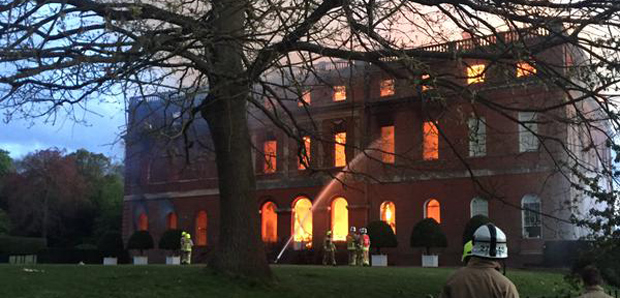
Loss is mainly regret that we will never see something, or that we have known it and will never see it again.  Where the loss is of something of beauty, which embodied ideas, history, culture, it takes on many facets. Fire is a destructive, cruel enemy, consuming all in its path; caring not for the value – either great or small – simply taking whatever it can as fuel for its avaricious need to grow. On 29 April 2015, as the fire at Clandon Park took hold we hoped for the best – yet sadly, less than twelve hours later, all that remained was a gaunt, blackened shell. The loss was not just the building and its beautiful interiors and contents, but also what it represented to UK architectural history.

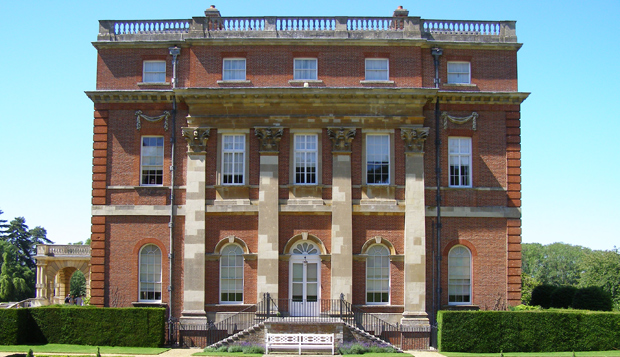
Clandon Park, Surrey (Image: Matthew Beckett)

News breaks now on social media, the first photos and reports of huge plumes of smoke spreading much as the flames did; slowly at first, rapidly growing. Quickly it became clear that the fire had reached the roof and that the rooms on the ground floor of the south side had already gone – the Green Drawing, Palladio, Hunting, Prince Regent.  Each a small gem in themselves, their contents the result of decades of collecting and curation. As the floors above collapsed, it became clear that this was a very serious situation and thoughts immediately are to hope that, first, everyone is safe, but, secondly, how far would the fire go? Sadly, it soon became clear that the entire house was to be consumed in the inferno.

Clandon Park on fire, 29 April 2015 (Image: © Andrew Blondell / BBC Surrey)

Why was Clandon Park important? It wasn’t just the history and collections.  Most importantly, the design of the house was a key transitional link between two defining periods of British architectural history; the Anglo-Baroque and the Palladian. The house, both interior and exterior, was designed by a Venetian architect, Giacomo Leoni, and built between 1723-29.  Both the architect and the dates are key to understanding why the house was so significant.

Clandon Park on fire - two-thirds of the house was now on fire (Image: © Oliver Dixon)
Clandon Park on fire – two-thirds of the house was now on fire (Image: © Oliver Dixon)

Giacomo Leoni (b.1686 – d.1746) played a key role in bringing the ideas of Palladio to the UK through the publication of that architects’ ‘I Quattro Libri dell’Architettura (which he called ‘The Architecture of A. Palladio, in Four Books’). Although not an entirely accurate recreation (Leoni wasn’t above adding his own improvements) the instalments (published between 1715-20) were a huge success, casting the ideas of the Palladian ideal deep into the aspirational hearts of the British aristocracy.  Leoni’s edition remained the primary source of the nascent Georgian Palladianism until (prompted by Lord Burlington) Issac Ware produced a more accurate translation in 1738.

Clandon Park on fire - the flames reached the north side (Image: © Alex Greenwood)
Clandon Park on fire – the flames reached the north side (Image: © Alex Greenwood)

For all his intellectual influence, Leoni’s physical output was relatively meagre for a 45-year career – his earliest designs were for an unexecuted rebuilding of Wrest Park in August 1715 for the 1st Duke of Kent. His first completed work was in London in 1721, Queensberry House, 7 Burlington Gardens, for John Bligh, Lord Clifton, which featured an antique temple front, a reduced version of which appears on the south front of Clandon Park. Leoni’s output was mainly country houses; he designed eleven but only nine were completed (the two unfinished houses being Carshalton Park and Thorndon Hall) of which four have been lost already (Moulsham Hall – dem. 1809, Bold Hall – dem. 1901, Burton (or Bodecton) Park – fire 1826, and Lathom House – dem. 1929/1955).

Comparison of Leoni's 7 Burlington Gardens and south front of Clandon Park (Image: 7BG: Wikipedia / Clandon: Matthew Beckett)
Comparison of Leoni’s 7 Burlington Gardens and south front of Clandon Park (Image: 7BG: Wikipedia / Clandon: Matthew Beckett)

This left just four completed house which survived into the 21st-century; Lyme Park (c.1725-35), Alkrington Hall (1735-36), Wortley Hall (1743)- and Clandon Park (1723-29).

The brilliance of Leoni’s design for Clandon had survived almost unchanged as it had remained in the Onslow family until being handed to the National Trust in 1956. Where Clandon excelled was that the exterior was early-Anglo-Palladian; chaste, restrained decoration, subtle temple motif, but this was married with one of the greatest of the Anglo-Baroque rooms, the Marble Hall (the plasterwork of which Sir Simon Jenkins thought better than the similar room at Houghton Hall), and other rooms rich in beauty. This contrast between the quiet exterior and the exuberant interior is what made Clandon so important as the link between two of the most significant trends in British architectural history.

Marble Hall, Clandon Park (Image: Matthew Beckett)

So, what next? The incredible staff and volunteers of the National Trust swiftly put into place the plans they never hoped to have to use and clearly, the efforts are being directed to the care of the salvaged contents and an examination of what can be recovered from the debris.   Investigations will be undertaken and conclusions reached as to the cause but looking to the future the options are the same as ever; rebuild, re-use, or ruin.

Marble Hall, after the fire (Image: © John Millar / NT Picture Library)

As a nation, we have fetishised ruins for centuries with castles, abbeys, fortifications and now factories celebrated for their managed decay. We have enough derelict country houses (far too many, truth be told), so to consign another to that sad, lonely fate would miss the chance to grasp a recoverable beauty and miss the opportunity to demonstrate and inspire through an educational process around the reconstruction.

The Landmark Trust’s inspired recent work at Astley Castle, Warwickshire, to create a modern living space in a shell created by a fire in 1978, shows that ruins can be re-used intelligently and with great aesthetic success.  However, Astley Castle was a smaller house and also without the spectacular interiors which once graced Clandon Park.

Uppark, Sussex (Image: © Matthew Beckett)

So the remaining option is rebuilding and restoration.  As has been shown at Uppark, Sussex, which also suffered a serious (though not quite as devastating) fire in August 1989, it is possible to restore the house back to as it was before.  This is not pastiche as it’s not conjectural – we have extensive, detailed records of the interiors and, combined with salvaged fabric, it is possible to recreate what was there.  As Sir Simon Jenkins argued in the Sunday Times (03/05/2015), it would be unthinkable not the reinstate the great Marble Hall – because we can.

Modern care and conservation means that the rate of losses of country houses has dropped from the hundreds each year in the 1950s to barely a handful and these are almost always due to fire. All those we have – that which survived this far – are fragile and it’s an uncomfortable truth to understand that they will not last forever.  As the painter Salvator Rosa once wrote:

All our works is fallen and sicken
Nothing is eternal
The Colossei die, the Baths
The worlds are dust, their pomp a nothing…

Rather than despair, we should celebrate and enjoy the architectural heritage which is still available to us and care for it for future generations. The original Clandon Park is lost; that patina of age, the individual details which only it knew are no more. Although the contents have been largely lost, resurrection is the most appropriate option as the main shell of the house has survived – the sterling work of the fire service has saved at least one half of Leoni’s vision. Modern craftsmen with ancient crafts, honed at Uppark, Hampton Court, and Windsor Castle, can recreate the beauty of the interior.  It won’t be the original but from our shock at the loss can come awe at the artistic skills that can recreate such wonders as the Marble Hall.

———————————————————————————

Gallery of images of the aftermath: ‘Clandon Park fire 2015‘ [National Trust Picture Library]

Statement: ‘Fire breaks out at Clandon Park, Surrey‘ [National Trust]

Syngenta’s shame: proposed demolition of Dalton Grange, Hudderfield

To paraphrase: ‘all that is required for heritage to be lost, is for good people to do nothing‘.  Sometimes this can be through deliberately ignoring a situation or through lack of awareness that a situation even exists. So, this is a quick post to highlight the shamefully poor justification that Syngenta Ltd have proposed as reason to demolish the mistreated but ‘hugely characterful’ Dalton Grange in Huddersfield.

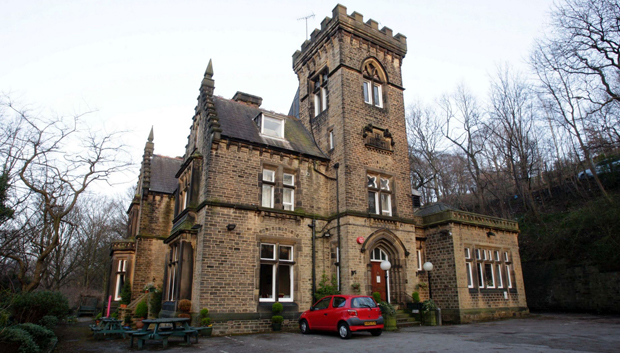
Dalton Grange, Huddersfield, Yorkshire (Image: Huddersfield Examiner)

Syngenta Ltd is a Swiss-based, global agri-business with revenues of over $14bn and profits of over $1.6bn (2013) – and I have no problem with that at all; big business provides jobs but it also creates local responsibilities.  The corporate website is bathed in the language of sustainability and waste reduction – noble, certainly, but sadly in Huddersfield, they appear to not be interested in following these aims.

A recent application was made by Syngenta to Kirklees Council to demolish Dalton Grange; a building the Victorian Society have identified in their response as being locally significant, both historically and architecturally.  They note that it was built in 1870 by prominent local industrialist Henry Brook, of J.H. Brook & Sons of Bradley Mills (both north and south mills at Bradley Mills are listed Grade II).  Sited on a hill, the house is:

…a sturdy and handsome essay in baronial Gothic, with a prominent castellated turret providing dramatic views of the building at the end of its drive. It is a hugely characterful building and is set in large terraced gardens that in recent years have been restored in order to provide the beautiful landscaped setting that it once enjoyed.
Consultee Responses: Victorian Society

Dalton Grange staircase (Image: Dalton Grange)

Care for a local area should be integral to how a company operates, respecting the traditions and heritage which surround their sites.  In both local terms and in relation to national guidelines, the bar needs to be set high to justify the loss of heritage – so how do Syngenta address this:

Reason for demolition: No foreseeable future use for the building. In addition there are anticipated excessive costs associated with ongoing maintenance & refurbishment
Source: Application 2014/68/91888/W

Allow me to paraphrase: ‘Syngenta can’t be bothered to use this heritage asset which is in their care and it’s looking a bit expensive to look after in the way we are supposed to, so we would prefer it if we could just get rid of it.‘ In some meeting, this must have seemed like a quick solution. Hold on though, we’d better think of something we can usefully use this space for once we’ve cleared it. What inspiring solution can we find? What might conceivably justify this lost of a building which has been part of the Huddersfield landscape for nearly 150 years – let’s look at their application again, specifically section 5:

Please describe details of the proposed restoration of the site: A possible outcome is that parking provision for a number of cars will be made available to help ease traffic problems during stadium events.

A car park. Well done, Syngenta.  Speaking to the Huddersfield Examiner, Syngenta community relations manager (ha ha!), Carl Sykes said “This is a private building on private industrial land.” Which I think is his way of saying ‘It’s none of your business’. He continues:

“Times have changed and now they don’t want to run a social club and we no longer have a use for the building. [Or ‘if we can’t have it, no-one can have it’]

“We’re looking to keep skilled manufacturing jobs in Huddersfield for future generations, we cannot continue to subsidise a tired and decaying building that is becoming beyond economic repair.

“We know there is asbestos in the building and attempts to renovate or modify the building would run into tens of thousands of pounds.” [Asbestos is now the new dry rot – used to justify any sort of historic demolition]

“When the demolition is completed, we shall explore how we might use the land to give some real value to the area, rather than becoming a shuttered up, rotting, old building. [Of course, if you sold it to someone who cared about Huddersfield’s heritage it would avoid the fate you are clearly planning for it]

“For example, the land could be used for allotments or maybe stadium match day parking.” [Oh yes, that’s definitely better. What a fine swap].

This is symptomatic of the casual way in which heritage is being treated up and down the country.  Although there are some great examples of sensitive corporate care for heritage assets, there are many others – from small developers to global multi-national agri-businesses – who fail to recognise that heritage is to be cared for and respected.

Dalton Grange, Yorkshire (Image: Huddersfield Examiner)

Kirklees Council also need to take the role expected of them and reject (forcefully) this casual destruction of historic buildings which are an integral part of the character of their local area. Syngenta may be a major local employer but that’s all the more reason to stand firm and provide a precedent that will ensure that the local residents know that the Council cares about protecting a local environment, rich in character and heritage.  The Huddersfield Daily Examiner, should also be leading a campaign to save their heritage, giving voice to those who live in the area who, if asked, would almost certainly prefer to retain a fine old historic house – an article published on 21 March 2015 does start this with a suitably sceptical headline: ‘Proposed demolition of Dalton Grange sparks outrage‘.

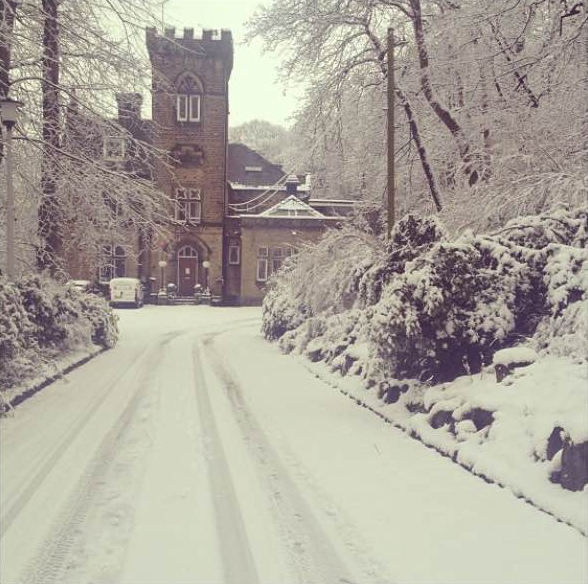
Dalton Grange in the snow (Image: Dalton Grange)

Of course, perhaps Dalton Grange isn’t the most spectacular building or in the best condition or in the best position, on the edge of a huge Syngenta production plant but it is separated by a pleasant band of woodland so it would not impact the integrity of their site if they sold it. And perhaps that plant won’t always be there but during their tenure they should ensure that they show respect to local architectural heritage which has been there since long before them.  To demolish the house on such flimsy grounds as ‘maintenance is a bit expensive’ and ‘we fancy a car park’ would be a shameful episode.  Syngenta should immediately withdraw the application, explain how they are going to restore Dalton Grange or sell it, and help find a sustainable long-term use (in line with their professed corporate philosophy) for this small but locally important part of Huddersfield’s heritage.

——————————————————————————————————

Prior notification for demolition of building: Dalton Grange, 19, Bradley Mills Road, Rawthorpe, Huddersfield, HD5 9PR [2014/68/91888/W]

Proposed demolition of Dalton Grange sparks outrage‘ [Huddersfield Examiner]

Victorian Society

Dalton Grange