Looking for a saviour: St Osyth Priory, Essex

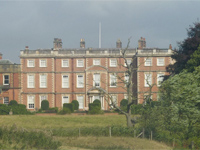
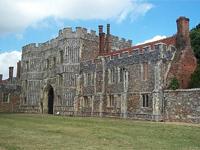
St Osyth Priory, Essex (Image: Stephen Dawson/geograph.co.uk)

Of the phrases most likely to cause concern for those who love our country houses, up there with ‘dry rot’, ‘water leak’ and ‘death duties’ has to be ‘enabling development’.  Originally designed to protect heritage assets by permitting limited development to fund repairs, it appears to now be used to circumvent local and national planning guidelines to facilitate inappropriate development where it otherwise ought to be refused.

In Essex, perhaps one of the largest examples of its kind was submitted by the Sargeant family who bought St Osyth Priory in 1999 through their development company ‘City and Country Group‘ (CCG) .  The company applied to build 190 houses as part of an enabling development to fund repairs to the main house and the other 22 listed buildings in the complex claiming that some £30m-worth of repairs were required (and personally I doubt the cost would be that high – happy to be proved wrong by an independent survey from a SPAB scholar).   This number would naturally bolster the calculation for the total conservation deficit (that is, the amount by which the cost of repair (and conversion to optimum beneficial use if appropriate) of a significant place exceeds its market value on completion of repair and conversion, allowing for all appropriate development costs, but assuming a nil or nominal land value).  But is this a case of a developer using the provisions of enabling development to gain permission regardless of the consequences for the house – and the local area?

After passing through various Royal hands, it was sold to Lord Darcy in 1553 and remained the home of various Earls, Viscounts, Lords and Baronets until it was eventually bought in 1954 by author Somerset de Chair who, in 1974, married Lady Juliet Wentworth-Fitzwilliam, daughter of the 8th Earl Fitzwilliam of Wentworth Woodhouse. The couple lived in the gatehouse, with much of the valuable Wentworth Woodhouse art collection, but de Chair died in 1995, so in 1999 Juliet married Dr. Christopher Tadgell and sold St Osyth to CCG and went to live in Bourne Park, near Canterbury.

CCG have a track record of taking on historic houses and have recently restored Balls Park, Hertfordshire and Herringswell Manor, Suffolk and previously Cheverells and Gilston Park – but these were easier to convert as they had all been used for other institutional or commercial purposes rather than as a family home.  St Osyth Priory and related buildings have sad recent history of insufficient maintenance over many years and have been included on the various buildings at risk registers and undoubtedly needs significant work – but can the repair bill really be £30m (by comparison, the whole of St Paul’s Cathedral was recently restored for £40m)?

To play Devil’s advocate, perhaps this figure might be explained by the provisions of ‘enabling development’ which require that;

It is demonstrated that the amount of enabling development is the minimum necessary to secure the future of the place”
– ‘Enabling development and the conservation of significant places‘ English Heritage (2008)

…so to secure a development of sufficient size to make it profitable for CCG, it would need a suitably large repair bill to justify this (see letter from local resident).  It has been suggested on the St Osyth Parish Council website that offering the house for sale (with just 20-acres rather than the full estate) is merely part of the process of proving that no-one is willing to take on the house and restore it and therefore the enabling development is the only option.  In reality, for someone to invest that much in a house (purchase+restoration) they would expect an estate of at least 100-acres, if not two or three times that.  The plans also seem inappropriate with regard to other provisions of the English Heritage guidance:

  • It will not materially harm the heritage values of the place or setting.
  • It avoids detrimental fragmentation of management of the place.

This all seems depressingly familiar where a developer ignores what’s best for the house, and, in this case, what seems to be determined to bloat the size of the local village in pursuit of this unpopular and out-sized scheme.  An active and well-supported local campaign has been highlighting the various flaws of the scheme and the potential damage to the setting and the village if the scheme were to go ahead, but of course, it’s the house which is continuing to suffer.

In an ideal world, the house would be restored for much less than £30m thus showing that the scale of development proposed was unjustifiably large. This again would show that ‘enabling development’ is apparently being used as a means to try and circumvent the usual planning restrictions which are there to protect our heritage and countryside. Then perhaps one day the house with the full estate (hopefully once CCG realise they won’t get permission) will be offered for sale and someone will get the chance to take care of this important house and estate without sacrificing it for housing.

Property details: ‘St Osyth Priory, Essex‘ – Bidwells

More details:  ‘Priory battle gathers pace‘ [Daily Gazette]

Rent a doll’s house: Gunby Hall, Lincolnshire

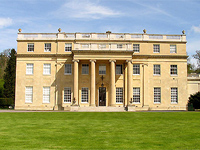
Gunby Hall, Lincolnshire (Image: Gardens-Guide)

Sitting on a small rise, just off the A158 on the road to Skegness in Lincolnshire sits one of the prettiest of the National Trust’s many country houses; Gunby Hall. However, unlike the others, where we can only ever dream of moving in, Gunby is currently available to rent for the bargain rate of £10,000 per year – but do remember to add an estimated £100,000 for the annual running costs.

Gunby Hall was built in 1700 (commemorated with the date on the rainwater heads) for Sir William Massingberd by an unknown architect but one who was obviously familiar with the work of Sir Christopher Wren.  Built of warm plum-red bricks the sophisticated 3-storey exterior shows the elegant use of stone dressings which elevates this grade-I listed house to being one of the finest of the smaller country houses.  Although showing stylistic links with Wren it was almost certainly by a skilled provincial imitator or local builder.  Wren designed very few country houses – Tring Park in Hertfordshire, Winslow Hall and, according to John Harris, contributed designs for Wimpole Hall in Cambridgeshire, and Houghton Hall in Norfolk – all for patrons who were somehow connected to Wren.  So unless someone discovers a link between Sir William and Sir Christopher it is likely that the local ‘architect’ had only been shown Wren’s designs.

Newby Hall, Yorkshire (Image: johnet/flickr)

When Gunby Hall was built it would have been regarded as very fashionable as Baroque style houses had only become popular in the 1680s.  Newby Hall in Yorkshire is one of the best examples and was rated as the finest house in Yorkshire when it was completed c.1690 (remember the houses we regard as the finest today in Yorkshire such as Castle Howard, Wentworth Castle, and Wentworth Woodhouse amongst others hadn’t yet been built).  In many ways, Gunby Hall and Newby Hall are architectural ‘cousins’ – closely stylistically related but distinct, particularly in size; reflecting the relative wealth of the owners .  Similarities can also be seen with other Yorkshire houses such as the earlier Ribston Hall, built in 1674, and the wonderful but now sadly demolished Wheatley Hall built in 1680, and the later Bolton Hall.

Gunby Hall was later altered c.1730 and extended in 1873 and 1900 to very successfully add a Dining Room, Servants’ Hall and Service Wing.  The later additions blend very neatly with the existing building creating the harmonious look which is so attractive today.  Gunby has long been admired with the famous poet Lord Alfred Tennyson reputedly using it as his inspiration when he wrote during one visit:

. . . an English home – gray twilight

On dewy pastures, dewy trees

Softer than sleep – all things in order stored,

A haunt of ancient peace.

The house was also admired by James Lees-Milne who described it as ‘an Augustan squire’s domain, robust, unostentatious, dignified and a little prim.’.  Lees-Milne was a regular visitor and was instrumental in not only bringing the house to the National Trust, as he did many other houses, but also saving it from outright demolition during WWII.  This terrible prospect came about in 1943 when the Air Ministry wished to extend the airfield they had built at Great Steeping only later discovering that Gunby Hall inconveniently blocked the proposed path of the longer runway.  Luckily the combined forces of James Lees-Milne and the impressively named owner, Field Marshal Sir Archibald Montgomery-Massingberd, persuaded them to re-route the runway thus saving the house.  In thanks, the family immediately made over the house to the National Trust becoming one of the few houses to be taken on during the war.

So if you fancy living in one of the prettiest stately homes in the country and don’t mind a few tourists having a look round occasionally, get in contact with the Savills Lincoln office.

More details: ‘Stately home can be yours for just £10k a year… plus another £100k for the staff‘ [This is Lincolnshire]

Property details: ‘Gunby Hall‘ [Savills]

Houses as hospitals: the country houses in medical service

Hatfield House, Hertfordshire (Image: Amy Lloyd/flickr)

Our country houses have always been adaptable as changing fashions or functions required they accommodate new ways of living or roles.  One role which quite a few houses have taken on is that of hospital – either privately or as a fully-fledged part of the NHS – though this use has not always been sympathetic.  However, as the modern health service centralises to larger sites it seems some country houses are re-emerging to become homes again.

Hospitals were traditionally monastic, centred on the abbeys and convents but these were obviously scarce.  The ill were treated in large dormitories although some established houses in the country away from the main abbey to care for the mentally ill.  However the dismantling of the religious orders during the Reformation from 1536, meant that increasingly the burden for care of the pauper sick fell to secular civic bodies, with towns creating their own hospitals.  This model persisted until the 17th-century when private benefactors became increasingly prominent, donating funds and buildings for the care of the ill.

One of the earliest country houses to be converted was the partially completed Greenwich Palace. Originally a Tudor royal house, it had become derelict during the English Civil War, so in 1664 Charles II commissioned John Webb to design a replacement but which was only partially completed.  It was this building which Queen Mary II, who had been affected by the sight of the wounded sailors returning from the Battle of La Hogue in 1692, ordered to be converted to a navel hospital in 1694, to the designs of Sir Christopher Wren and Nicholas Hawksmoor and later Sir John Vanbrugh.

Possibly inspired by the royal example, other country houses were donated or converted for use as hospitals.  However, it quickly became apparent that they weren’t particularly suitable with one Irish physician, Edward Foster, complaining in 1768 that ‘In general, Houses have been rented for Hospitals, which are as fit for the Purposes, as Newgate for a Palace‘.  By the 1850s hospital design was beginning to emerge as a distinct branch of architecture -Florence Nightingale wrote to an officer of the Swansea Infirmary in 1864 saying that a hospital was a difficult to construct as a watch; no building ‘requires more special knowledge‘.  From this time, the country houses themselves became less important than the space they offered with the house itself being used as accommodation or offices. However, for the treatment of respiratory illness the clear country air was considered part of the cure with houses being acquired as tuberculosis sanatoria such as at Moggerhanger Park in Bedfordshire originally designed by Sir John Soane for the Thornton family.

The First World War necessarily required country houses to come back into medical use due to the terrible consequences of the strategy of attrition through trench warfare in WWI which created large numbers of wounded.  Without a national health service there were fewer hospitals able to cope with the seriously disabled or even those simply convalescing.  Many country houses were pressed into service, their clean country air and fine grounds considered most helpful to rest and recuperation. During WWII, fewer houses were used as military hospitals as changes in military tactics led to many fewer casualties than expected.  However, a significant number were used either by the military or as civilian replacements for urban hospitals which it was feared would be bombed.

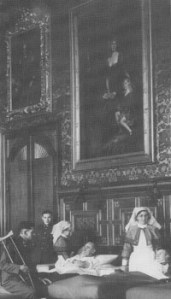
Hatfield House, Herts - King James Drawing Room as a hospital ward in WWII

For country house owners, given the possible options of who might take over their house, the bed-ridden were infinitely preferable to the bored squaddies who wreaked such havoc at other houses (apparently housing art treasures was first preference, evacuated schools second, hospitals third).  This reality plus a genuine sense of wanting to help led to many owners voluntarily turning over their houses as hospitals including the Earl of Harewood offering Harewood House, Lord Howard of Glossop Carlton Towers, Lady Baillie lent Leeds Castle and the 4th Marquess of Salisbury offering Hatfield House as he had done during WWI.  On the civilian side, Brocket Hall in Hertfordshire became a maternity hospital as was Battlesden Abbey in Bedfordshire, Stockeld Park and Farnley Hall, both in Yorkshire. Cholmondeley Castle in Cheshire became a Royal Navy Auxiliary Hospital, treating ‘cases of good morale, who are suffering from nervous breakdown usually as the result of operational stresses’.

After the war many houses were returned to their owners in such terrible disrepair that unfortunately hundreds were demolished.  Others continued in their wartime roles with some such a Poltimore House in Devon becoming hospitals after the war when two local GPs recognised the need for more bedspaces and so took over the old seat of the Bampfyldes until it was nationalised after the creation of the NHS in 1948.  There were also many War Memorial hospitals, founded by public subscription after WWI, which often made use of a country house. The nationalisation of these hospitals gave the NHS many of the country houses it has today – although it is relatively few overall as less than 5% of all their buildings are grade II* or grade I listed.  Of the historic ‘therapeutic’ landscapes it manages, seven are included on the English Heritage Register of Parks and Gardens of Special Historic Interest in England.

However, sometimes these country houses and their settings can escape and revert to being homes, either through conversion or, if the houses has been lost, replacement.   Bretby Hall in Derbyshire, built between 1813-15 by Sir Jeffry Wyatville for the Earl of Chesterfield, was an orthopaedic hospital until the 1990s when the main house was converted into flats, as was the High Victorian Wyfold Court in Berkshire.  Harewood Park in Hertfordshire was demolished in 1959 after use as hospital in WWII but the estate has been bought by the Duchy of Cornwall with proposals for an elegant and very impressive new Classical house by Craig Hamilton Architects.  A similar plan has been put forward for the 57-acre site of the former Middleton Hospital in Yorkshire with the permission requiring the demolition of various redundant buildings from its former use to restore the site.

Sadly though, sometimes the NHS fails to adequately look after the houses it has in its care.  As the trend has moved towards large, new hospitals so the historic elements have been overlooked or abandoned as new hospitals are built elsewhere. As funding for new hospitals is not dependent on the sale of the old site and the house, sadly they can be neglected or subject to inappropriate development as has been the case with the grade-II listed Stallington Hall in Staffordshire, which became a home for the mentally ill in 1928, but after it closed has been vandalised and neglected with a housing development built inappropriately close to the house across the lawn, forever ruining it as a country house –  a poor payback for years of public service.

Related story: ‘Developers draw up plan for country house‘ [Ilkley Gazette]

Background information: ‘Reusing historic hospitals‘ [Institute of Historic Building Conservation]

Views of seats; the mixed relationship between houses and motorways

Hardwick Hall, Derbyshire (Image: Bolsover Online)

Our best motorways draw us through beautiful landscapes, by turns revealing hills, valleys, broad vistas and narrow glimpses, sometimes punctuated with a country house.  Yet, country house owners have long fought many battles to keep the roads from carving up their precious parks and ruining the Arcadian views.

A recent article in the Guardian (‘Britain’s best views: motorway mansions‘) highlighted three great houses of Derbyshire each visible from the M1 motorway: Bolsover Castle, Sutton Scarsdale, and Hardwick Hall.  In our haste to get to destinations it’s easy to forget that where we drive was once part of great estates and previous owners would have wielded sufficient political power to ensure roads were routed away from their domains.  The echoes of this power can still be seen today if you look at aerial views of some of the great houses – major roads circle the gardens and immediate parkland such as at Chatsworth, Eaton Hall, and Clumber Park (though for the latter the house was demolished in 1938).

Yet, in other cases, officials either due to sheer bureaucratic efficiency, malice, or philistinism have carved roads through some historic parklands, cutting off the house from its setting, sometimes playing their part in step towards the eventual demise of the house. Sometimes the motorway is the gravestone; tarmac lies across the original sites of two lost houses so spare a thought for Tong Castle as you drive northbound just past junction 3 on the M54, or for Nuthall Temple, just north of junction 26 on the M1.

For planners, bypasses naturally need space and the obvious choice would be through the convenient estate which often borders a town.  From their perspective, taking on just single owner seems the easiest option, especially as it can be difficult to muster public support to defend a private landowners personal paradise.

One country house owner who has had several run-ins with roads is the National Trust, with varying degrees of success.  When they accepted Saltram House in Devon in 1957 they knew that a road was proposed which would cut across the parkland to the east of the house.  However, as a matter of principle they had to fight when finally earmarked for action in 1968, particularly as the road was much wider than originally proposed – though ultimately they were unsuccessful. For the private owners of Levens Hall in Cumbria, it was their research which prevented a link road to the M6 cutting across an avenue by proving it was originally planted in 1694 by garden designer Guillaume de Beaumont.  Yet other battles were lost; Capability Brown’s work at Chillington, Staffordshire was butchered by the M54, with the road now running just 35 yards from the grade-I listed Greek Temple.  At Tring Park in Hertfordshire the A41 slashes through the original tree-lined avenue.

The longest running, and most successful battle has been by the National Trust at Petworth House in Sussex.  The Trust has long accepted evolutionary changes but opposes drastic alterations regardless of the possible benefits to the local area – convenience does not trump heritage.  The village of Petworth suffers from heavy traffic so in the 1970s a four-lane bypass was approved which would run through the middle of the 700-acre, Capability Brown parkland, forever destroying the celebrated views painted by J.M.W. Turner in the early 1800s.  After objections were raised, an alternative, but equally damaging plan was suggested which used a ‘cut and cover’ tunnel – causing just as much destruction, particularly to the gardens, but then hiding their vandalism.  However, after a spirited public campaign, which included a dramatic poster showing the house with tyre tracks rolling over it (designed by David Gentleman for SAVE Britain’s Heritage), the plan was blocked and has almost certainly been killed off permanently.

So although the motorway has helped us to visit our wonderful country houses they also have, and continue to, pose a threat to them.  Thanksfully, stronger planning legislation which recognises the value of historic parkland has made it harder for the planners to simply draw a line between A and B without regard for the beautiful and important landscapes they would destroy.

Article: ‘Britain’s best views: motorway mansions‘ [The Guardian]

Converting country houses from commercial to residential: a sound investment?

Benham Valence, Berkshire (Image: wikipedia)

As the pressures of the twentieth century forced more country houses owners to face the reality that they could no longer live as they had and would have to move out of their homes they then had to decide what to do with it.  Unfortunately this meant demolition of hundreds of large houses but some owners were more creative and many houses became commercial premises, either as hotels, schools or institutions, and others became some of the grandest office buildings in the country.  However, recent pressures of this century have now seen some of these offices being converted back into homes or being offered for sale as an opportunity to do so.

In many ways the country house has always had an element of the commercial to it with the estate offices usually being based either in a part of the main house or in a nearby building to enable the owner to deal with business without having to travel far from home. The changes of the twentieth century were on an altogether more comprehensive scale with the entire house being changed to accommodate the demands of business.  This not only meant the conversion of the main house with all that entailed for the interiors but also the building of further offices in the grounds.

Sometimes the development was kept a good distance from the main house such as at Ditton Park in Berkshire.  This became the office of the Admiralty Compass Observatory from 1917 until it was sold in the 1990s to Computer Associates who built a huge office building to the west of the main house (which became a conference centre) leaving the setting intact.

Sometimes though it’s possible for smaller businesses to be accommodated just within the main house such as at Gaddesden Place in Hertfordshire.  The house, built in 1768, is a elegant Palladian villa (similar to the White Lodge in Richmond Park) and was James Wyatt’s first country work.  The site is said to have some of the best views in the home counties and the sensitive use of the house has allowed to remain in splendid seclusion.

However, modern concerns mean that a country house has lost some of it’s appeal as offices.  One key issue is that by their nature the houses are isolated meaning that employees must have cars to reach it leading to more cars on the roads and the need to provide huge areas of parking.  Stronger heritage legislation now also means it’s much harder to alter the houses to meet modern business requirements such as air conditioning and computer networking.  The nature of the houses also means that maintenance costs are higher than for a purpose built office.

This has led to some houses which were formerly offices to be converted back into homes.  Mamhead House in Devon, built between 1827-33 and regarded as one of Anthony Salvin‘s finest designs, it was, for many years, a school before becoming offices for a local building company.  It was bought by a businessman who converted the main part of the house back into being a home whilst still letting out part of the house to the Forestry Commission.

Perhaps the grandest and largest opportunity for many years to restore a house into a home is the mansion at Benham Valence in Berkshire.  This superb house was built in 1772-75 for the 6th Earl of Craven and was designed by Henry Holland in collaboration with his father-in-law, Lancelot (Capability) Brown, the famous landscape architect.  The south front features a grand tetrastyle Ionic portico which looks out over a large lake with views into the parkland.  Inside, there are many fine chimney-pieces bought from the sale at Stowe in 1922, including one from the State Dining Room.  It also features a small circular double-height vestibule adjoining the inner hall, a design later adopted by Sir John Soane.

The house was empty in 1946 and remained so until it was sold in 1983 and converted to use as offices with a large wing to the north east of the house being demolished and replaced, in part, by an ugly 80’s complex providing over 100,000 sq ft of space.  Luckily though the main house was largely spared and remains Grade II* with the 100-acres of Grade-II parkland. Now offered for sale at £6m this is a rare opportunity to create a wonderful country house – providing it’s possible to obtain planning permission to convert it back – which, once restored, could be worth £10-12m.  One key requirement would be the demolition of the office complex and the ripping up of the huge car park – but give me a pickaxe and I’ll be happy to lend a hand.

Full property details: ‘Benham Valance, Berkshire‘ [Strutt & Parker]