Romancing the stone; country houses built by love

Many a man has been driven to great lengths by love – and architecture is often a rewarding though insatiable mistress for such a passion.  Whether as an expression of love for a wife or a demonstration of a yearning, aching heart, each found that their country houses were caught in that very human desire to make real those Romantic desires which otherwise are sometimes only expressed in far more transient ways. Though sometimes love’s labours are lost to unrequited desires, often country houses were the ideal means to commemorate the passions which had created their happiness.

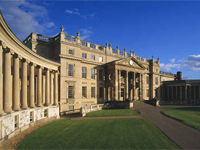
Osborne House, Isle of Wight - holiday home of Queen Victoria and Prince Albert (Image: English Heritage)
Osborne House, Isle of Wight – holiday home of Queen Victoria and Prince Albert (Image: English Heritage)

The motivations behind the choice of architecture or design or even the starting of the construction of a new country house is sometimes overlooked in the literature. The occasion of ennoblement was an important catalyst for a grander house and equally a marriage and new building project are often keen bedfellows – though often the new house was financed through the newly acquired wealth of the husband from his bride and was more an expression of his newly-bolstered financial strength.  With the status of the married woman somewhere equal to that of the china plates, for many, their influence was limited to the running of a home.  The choice of some furnishings and the interiors of the ‘female’ areas of the houses were often the accepted limits of the wife’s contribution – though there were exceptions such as Lady Leicester who, after 1759, was left £2,000 a year to finish several of the state rooms at Holkham Hall (n.b. website annoyingly plays birdsong automatically).

Syon House, Middlesex (Image: Syon House)

The choice of architect, interiors, furnishings, furniture and art were all reserved for the man as an expression of his taste and power. Writing of his design for Kimbolton Castle, the architect Sir John Vanbrugh said, “I’m sure this will make a Noble and Masculine Shew‘, and that in the exterior visitors would “See a Manly beauty in it when tis up…‘. Clearly reflecting the female taste, or even necessarily their comfort, was not high on an architects priorities. Although some enjoyed a level of luxurious indulgence, such as the Dowager Lady Egerton for whom James Wyatt created a sumptuous Pompeiian-style dressing room at Heaton Hall in the 1770s, perhaps the experience of the Duchess of Northumberland was more common.  When Robert Adam remodelled their London seat, Syon House, in the 1760s, he was careful to place the Duke’s private apartments in a separate area, accessed via a private staircase, whilst the Duchess’ dressing room enjoyed a much less secluded arrangement, as it was included in the main circuit of entertaining rooms.
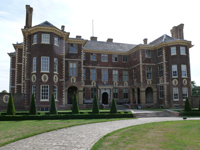
Ham House, Surrey - now owned by the National Trust (Image: Matthew Beckett)
Ham House, Surrey – now owned by the National Trust (Image: Matthew Beckett)

Wives and widows were slowly asserting greater independence, often due to their personal wealth, but slowly changing attitudes did provide greater opportunities for their views and tastes to be heard and seen.  In the 17th-century, couples such as the Duke and Duchess of Lauderdale were acting very much in concert together in the design and furnishing of their home, Ham House. It had been the home of the Duchess and her father and she had fiercely held on to it during the dark years of the Civil War when he had been forced to escape abroad. After her marriage in 1672, Ham House became not only a symbol of their wealth, but also a testament to their shared love of travel and the finer things in life.

Dobroyd Castle, West Yorkshire (Image: wikipedia)

Romance was surely often part of the motivation to build; a golden word that could turn a mere building into architectural poetry. Dobroyd Castle in Todmorden was the creation of a wealthy local mill owner, John Fielden, to honour a promise after his intended bride, Ruth, a poor labourer’s daughter, had said, during their extended courtship, “Build me a castle and I’ll marry you.“.  This can be said with either a romantic or mercenary inflection but, in honour of St Valentine, let’s believe that her request was for a fairytale expression of their marriage.  At least it was not a pre-condition, as they married in 1857 and work started on the castle in 1866 with completion in 1869.  Designed by the little known architect John Gibson, throughout the house the initials of John and Ruth are carved into the building many times as a constant reminder of their love.

Luscombe Castle, Devon (Image: Country Life Picture Library)

The desire to do all one can for a wife, especially one who is ill, creates opportunities for love to be the patron of great architecture.  The delicate health of Dorothea Robinson, wife of Charles Hoare, a partner in the eponymous family bank, necessitated a more temperate climate and so an estate outside the small Devon coastal town of Dawlish was purchased. Requiring a house and not lacking in funds, Hoare commissioned the fashionable John Nash and Humphry Repton to create a retreat for rural recuperation.  With Repton’s help, Dorothea chose a most Picturesque site nestled in a secluded valley. Repton then recommended to Nash that it be in the ‘Character of a Castle’, and so Luscombe Castle was built between 1800-1804.  Considered one of the finest Regency houses, the external beauty is matched with a domestically convenient interior; a distilled version of Nash’s rather grander castle designs, but which perfectly suited the location and as a romantic reminder of a husband’s concern for his wife.
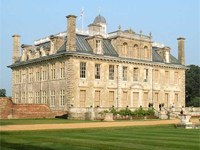
Kingston Lacy, Dorset (Image: wikipedia)

A love unrequited or thwarted is often a powerful force which can inspire many things.  For some, such as William Bankes, a prominent MP and renowned traveller, his enforced exile to escape a possible death penalty for being caught in a compromising situation with a soldier in Green Park in 1841, meant leaving his life’s work; the building and beautification of his Dorset home, Kingston Lacy. Subject to a punitive ‘outlawry‘ order, Bankes first escaped to France before settling in Venice. Bankes had been forced to give up, under threat of forfeiture, any legal title to his estates and contents to his brothers but he continued to be relatively well-funded and managed the building works at Kingston Lacy via detailed correspondence with the Clerk of Works.  One can only guess at the frustration of Bankes as he could only imagine how his plans were turning out, not only in relation to the building works but also the numerous pieces of art which he sent to Dorset.  Proving that for love, some will risk all, it is thought that Bankes risked imprisonment to be smuggled back into England in 1854 so that he might see his house and collection, which he had only been able to dream of, and give direction as to how it might be finished.

Wallington Hall, Northumberland (Image: Visit Northumberland)

By the Victorian era, it was often both the husband and the wife who would take increasingly equal roles, especially as the role of the house was firmly centred on entertaining; a role traditionally taken on by the wife. It also reflected a relatively more accommodating age when women were at last more broadly considered intelligent equals to men.  The increasing importance of women can also be seen in the literature where discussion of the creation of a house now talks more husband and wife, though still often with their roles demarcated to exteriors/interiors.  The wives often had their own circles of interest leading to interesting contributions such as at Wallington Hall in Northumberland where the Pre-Raphaelite painted decoration in the central hall is by the artist William Bell Scott, whom Lady Pauline Trevelyan met through her literary activities.

Osborne House, Isle of Wight (Image: English Heritage)

Perhaps the most famous husband and wife architectural collaboration in the Victorian era was the creation of the summer retreat at Osborne House on the Isle of Wight by Queen Victoria and her beloved husband, Prince Albert.  With a society leaning towards a more moral aspect, Victoria was determined that the royal family should be seen in step with it and so the planning of Osborne is not only to meet the needs of the family for entertaining but also, equally, that it be a family home. Indeed, writing to her daughter in 1858 from Windsor Castle, she tells how “I long for our cheerful and unpalacelike rooms at Osborne.”.  Her husband’s influence was the Italianate exterior, with the stucco work and belvedere towers, designed by the Prince and the London builder Thomas Cubitt, which matched his passion for Italian art, though Victoria was perhaps also influenced by the design of Trentham Hall, Staffordshire (by Sir Charles Barry) which was the home of her close friend the Duchess of Sutherland.  Osborne became the place she perhaps most associate with her husband and, after his death in 1861, it was one of the places she felt most at ease.

So, the building of a country house isn’t simply to mark ennoblement or new wealth, but can be an expression of love or passion between a couple, which one hopes might be more inspiring.  Certainly a love of country houses is something to be celebrated any day of the year.

—————————————————–

If you know of any other examples (and I’m sure there are many) please do add a comment below.

Possibly for sale – a landmark for landowners: Crichel House, Dorset

Crichel House, Dorset (Image: BNPS / Daily Mail)

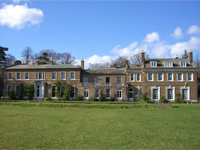
When to believe the rumours? Occasionally one of the old families will decide that they no longer wish to hold onto the estate which has been the family seat for many years – sometimes centuries. When these estates come to market they usually attract a significant price-tag which truly reflects their beauty, significance and acreage.  If the unconfirmed rumours which feature very prominently on page 2 of the Sunday Times (26 June 2011) are to be believed, then the Marten family of Crichel House in Dorset have decided to sell – almost 60-years after the family won a decision against the government of the day which became a landmark in the rights of landowners against government.

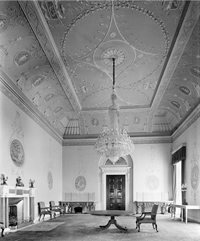
Crichel House is widely regarded as one of the best houses in the county – indeed, John Julius Norwich states that it “…possesses the most spectacular series of state rooms in all Dorset.“.  Crichel started off as a modest house in 1743; hastily built to replace a charming Elizabethan house which was burnt down in 1742.  This smaller seat of a country squire – brick-built and just five bays by seven – was for Sir William Napier, who left it to his nephew, Humphry Sturt, in 1765.  Sturt had inherited not only his uncle’s house and wealth but had also married well. He didn’t feel the house was grand enough for a man of his fortune, and so embarked on an impressive rebuild, creating a house “…so immensely enlarged that it has the appearance of a mansion of a prince more than that of a country gentleman.” (Hutchin’s ‘History of Dorset‘ – 1774).

Dining Room, Crichel House, Dorset (Image: A. E. Henson / Country Life Picture Library)

Sturt, using an unknown architect (though thought to be from nearby Blandford), effectively wrapped a new house around the old one to the east and the west, and linking the two on the south front with an impressive recessed portico and suite of rooms on the first floor.  However, the need to accommodate the dimensions of the old house created a slightly cramped feeling to the first floor elevations.  However, all is forgiven by the splendid interiors which are, in parts, a curious mix of early Georgian created late (e.g. the staircase, the library), and fashionable later Georgian, particularly in the stunning Hall, Dining Room and Drawing Room where Adam-style plasterwork reigns.  The latter rooms were probably designed by James Wyatt who was working nearby at Milton Abbey and at Bryanston.  The Dining Room is considered the finest room in the house; a coved ceiling framing delicate plasterwork and decorative panels in the style of Cipriani and Angelica Kauffmann.

So, how did part of the Crichel estate become so significant that it became immortalised as a set of planning procedures known as the ‘Crichel Down Rules’? In part, it was due to the bureaucratic arrogance of the post-War era which meant the Civil Service felt able to deal rather high-handedly with anyone, and particularly landowners who were not popular under Attlee’s socialist government. In 1937, 742-acres of Crichel Down had been compulsorily bought as part of a larger area for use as a bombing range. Churchill had given a very public commitment in the House of Commons in 1942 that land purchased in this way would be offered back to the original owners once it was no longer required for the original purpose.

Hinton Ampner, Dorset (Image: ec1jack / flickr)

However, there was an even greater danger of compulsory purchase for houses which had been adapted for wartime use under the ‘Requisitioned Land and War Works Act (1945)’ (sections 8 & 9 Geo. 6 c.43 in case you were wondering!) which gave officials the right to buy, regardless of the wishes of the former owner or any previous assurances. At Hinton Ampner in Hampshire where Ralph Dutton (the 8th and last Lord Sherborne), having just finished an extensive remodelling in 1939 only to be turfed out by a girls school, received a letter saying that the Royal Observatory were interested as a new Royal Observatory.  Dutton took the day off work at the Foreign Office and was on the doorstep when the officials arrived and gave an impassioned speech about the importance of the house, how it had been in the family for generations and that losing it would be akin to an amputation. The officials apparently looked somewhat embarrassed but gave no sign of retreating until a short note arrived a little later confirming that they were taking Hurstmonceaux Castle instead.

At Crichel Down, the government had decided to retain the land as a new model farm.  Lt-Cdr George Marten (who had married Mary Sturt, the only child of the 3rd Lord Alington), began a vigorous one-man campaign to examine the conduct and procedures of the relevant departments.  In doing so, he exposed a series of administrative errors as officials tried to evade the requirement to offer back the land and retain it for the government’s use.  Eventually, in 1954, public and press criticism led to the minister in charge, Sir Thomas Dugdale, resigning in one of the first examples of a minister taking responsibility even though he had not been involved in the earlier decisions and the land was sold back to the Martens.  To avoid a repeat of such failings, new planning rules regarding compulsory purchase were drawn up which are today known as the ‘Crichel Down Rules’ and are a vital part of the framework protecting landowners from the sometimes autocratic decisions of officials.

The death of Mary Marten in 2010 (her husband pre-deceased her) led to the recent sale of some of the contents of the house including a small collection of Asian jade ornaments which raised some £12.5m.  However, if the rumours are right, the rest of the house and 5,000-acre estate are also quietly on the market with an estimated price tag of around £100m, which, if it sold as a whole estate, would make it the most expensive sale ever outside of London.  It’s always a regret when families no longer wish to keep an estate which has been in the family for centuries, however, with the demands of sibling equality it is understandable that each of the six children – five females, one male – should wish to share their inheritance.  It would be a wonderful outcome if it could be bought in its entirety and remain one of the most important estates in Dorset, with the glorious Crichel House at it’s heart.

————————————————————————-

Update – 7 July 2013: Crichel House has been sold

Daily Mail confirms that the house plus 400-acres has been bought by Richard L. Chilton, a US hedge fund billionaire.  Initial reports indicate that he is a ‘conservationist’ having rescued other houses in the States so it seems promising that he is the right buyer; one with both the right attitude and pockets deep enough to do the house justice.  Though sadly it’s the end of an era for the Marten family, one hopes that this next phase will see the house restored to its former glory.

And if Mr Chilton happens to read this, it would be great to get your perspective – please do email me.

————————————————————————-

More images – both interior and exterior: ‘Crichel House, Dorset‘ [Country Life Picture Library]

‘Take a Chance on Me’ – Buildings at Risk Register 2011

'Take a Chance on Me' - 2011 SAVE Buildings at Risk Register

Despite the obvious deep and passionate interest society has with historic buildings every year the SAVE Britain’s Heritage Buildings at Risk Register highlights just how many properties are still under threat from neglect and those in power who believe the only good building is a new one with their name on the opening ceremony plaque.  The 2011 BaR register – ‘Take a Chance on Me‘ – has just been published and sadly, as always, it contains some country houses which really deserve a better fate.

Perhaps the one of the most attractive, both architecturally and in terms of being a  case for restoration is Blackborough Hall, near Cullompton in Devon. This elegant, if thoroughly dilapidated grade-II house, is a remnant of the grand building plans of the Earl of Egremont whose many-columned main house, Silverton Park, was demolished in 1902.  The house is actually two, as when built in 1838, it formed one house at the front and a second at the rear for the local rector.  In recent years it became a car scrap yard which covers most of the immediate grounds and would obviously need clearing first – though I suspect the costs could be made back through selling some of the classic cars. The house is currently for sale for a nice round £1m and has been listed with Winkworths who, after an initially poor showing, have now managed to put a few more photos and a floor-plan online.

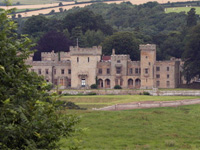
Elvaston Castle, Derbyshire (Image: Steve Tomkinson / Friends of Elvaston Castle)

Elvaston Castle in Derbyshire has a grade-II* listing putting it in the top 4% of buildings nationally but that hasn’t stopped it making an entry into the Register this year.  Originally built in 1633 for the Earls of Harrington it was largely rebuilt in a ‘Gothick’ style c.1817 to designs by James Wyatt.  Now owned and managed by Derbyshire County Council (who had a fairly poor record in the 20th-century of demolishing country houses in their ‘care’) it is today mostly vacant and with the Council now claiming it can’t afford to maintain it they are seeking a developer to get them out of a hole of their own making.  Luckily an active local campaigning group – the Friends of Elvaston Castle – have been objecting to these plans and trying to force the Council to face up to their responsibilities – though perhaps there is an opportunity for someone else to come up with a viable plan.

Stone Cross Mansion, Cumbria (Image: HiddenShadow / 28dayslater)
Stone Cross Mansion, Cumbria (Image: HiddenShadow / 28dayslater) - click for more images of the house today

Stone Cross Mansion, Cumbria presents the interesting confusion of a Scots Baronial design in England.  Built in the 1870s by a stubborn man, one Myles Kennedy, who wanted to buy Conishead Priory for £30,000, but who met an equally stubborn vendor who wouldn’t accept less than £35,000.  Mr Kennedy may have come to regret his obstinacy when presented with the final bill which totalled nearly £45,000.  The sum reflected the high quality of the workmanship, particularly the impressive High Victorian Gothic grand hall (scroll down) which originally had a fine staircase which was later removed when the house became a special school to make it easier to play indoor football (seriously, where do they find these people?!).  The house then became a corporate headquarters during which it time it was restored to a high-standard before falling into neglect.  Repeated enabling development proposals have been rejected (not that the council is against it) so this house either needs someone willing to restore the house on the back of a sensitive ED proposal – or, ideally, someone to rescue this house and make it a home again.

Plas Gwynfryn, Wales (Image: SAVE Britain's Heritage)

Another house which would make a fantastic home is Plas Gwynfryn in south Wales.  This house has been featured before on this blog (‘Orphan seeks new carers: Plas Gwynfryn, Gwynedd‘) which sparked some passionate debate in the comments about who the owner is – and that same unresolved question is why the house makes an appearance in the BaR this year. Built in 1866 to replace an earlier one, this distinctive house – described in the listing description as ‘romantically assymetrical’ – was a hospital in WWII, before becoming an orphanage and then a hotel before a serious fire in 1982 gutted it.  Although in a derelict condition this house can be restored and would once again be a fine part of the local architectural heritage.

The Register is available from 1 June 2011 priced at £15 (£13 to Friends of SAVE) and can be ordered from the SAVE website. The BaR contains many other types of property so even if your budgets are less lavish than these house might require it is well worth having a look.  Of course, SAVE does superb work across the country to protect our architectural heritage and I would strongly urge everyone to become a Friend to help support their efforts (well, I would say that as I’m on the Committee – but I’d also say it anyway!) which will also give you access to the online version of the BaR register which contains hundreds of other potential future success stories.

——————————————————————————–

A more comprehensive list of country houses currently at risk can be found on my Lost Heritage website: ‘Houses at Risk

Country House Rescue: school’s out – High Elms Manor, Herts

High Elms Manor, Hertfordshire (Image: Ishin Ryu)

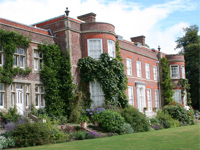
If there was a prize for commitment above and beyond financial sense then the owner of High Elms Manor/Garston Manor could probably win ‘Highly Commended’ for her determination to rescue this once-derelict country house on the edge of Watford, Hertfordshire, which is the next destination of Ruth Watson and Country House Rescue. The house is an interesting example of the various pressures which can affect country houses and the solutions having experienced almost the complete range over the last century with the new owners adding a few more.

Built sometime before 1813 and once the centre of a 500-acre estate, High Elms Manor originally enjoyed fine rural seclusion, its nearest neighbours the St Pancras Industrial School and Metropolitan District Asylum to the west (now demolished and built over) and Bucknalls, a Victorian manor house now home to the Buildings Research Establishment, to the east.  Originally known as High Elms Manor, it was changed to Garston Manor in 1895, though the current owner has apparently decided to go back to using the original name; even if it’s not the one used by Channel 4.

Relentless urban growth over the last 100 years pushed housing estates and industry right up to the boundaries of many country estates – and usually then overwhelmed them.  The sad pattern was often industry moving closer and blighting the views, then the air, ruining the very attributes which had been their reason for being built in the first place.  As workers followed industry so more land was needed for housing and so estates on the edges of towns were particularly vulnerable (as they still unfortunately are today).

Cassiobury House, Hertfordshire (Image: Lost Heritage)

Watford has already lost one major house – Cassiobury – to just these pressures, though this was much closer to the centre of the modern town and was lost back in 1927. The long-time seat of the Capel family, Earls of Essex, who built a fine house which was altered by Hugh May c.1674-80 and which boasted superb interiors, with carvings by Grinling Gibbons, and which was later ‘Gothicised’ by James Wyatt (c.1800).  Visited by Country Life magazine in 1910 it was still rural:

“‘…set in great and delightful grounds and surrounded by a grandly timbered park. Therein is peace and quiet; the aloofness of the old-country home far from the haunts of men reigns there still, and Watford and its rows of villas and its busy streets is forgotten as soon as the lodge gates are passed’.”

Yet by 1922 the house and 458-acre park were for sale and were bought in 1927 by a consortium of local businessmen who stripped the house for materials, sold the carvings to museums and private collectors and then demolished the house, with residential estates over-running that once rural idyll.  Sadly this was the case for so many of our demolished country houses.

High Elms Manor, being further north, escaped these immediate pressures.  The house became home to the Watney brewing family around 1870, who commissioned alterations which enlarged the house.  The house was then sold to the Benskins, another family of brewers, before it was bought in 1911 by Walter Bourne, co-founder of the Oxford Street department store Bourne & Hollingsworth (now split into retail units and offices – history (scroll past the odd photos at top of the page)), who made further changes around 1920, shortly before his death in 1921.  Stafford Bourne, one of the sons of the founder, described High Elms as:

“…one of the finest and most dignified medium-sized estates in the county of Hertfordshire.”

With fine and interesting interiors, this was a house built for entertaining and accommodating large numbers of guests and visitors.  This was to perhaps save the house from demolition as the house was sold once again after Walter Bourne’s death and took on another of the many uses our country houses have been adapted for and became a medical rehabilitation unit, still known as Garston Manor.  It remained in this role until the 1990s when the council, faced with rising maintenance costs, abandoned it and left it to decay.

Sadly, although boarded up, the house suffered from repeated vandalism and theft, with roof lead and floorboards proving particularly attractive.  When the now-owner Sheila O’Neill came to view the house it was a daunting prospect:

‘It had been empty for years when I came to see it,’ says the present owner. ‘It was more or less derelict. Ceilings had fallen in, all the floors had been damaged, the wood panelling had turned green, chimneys had collapsed, lead had been stripped off the roof by vandals, there were 100 broken windows, the garden was a jungle, it was in a terrible state…”

Stowe House, Buckinghamshire (Image: e-architect)

Thankfully, as many other country houses have discovered, they can be rescued from such a parlous state.  High Elms was now adapted to that familiar role for a country house; that of being a school.  There is a long and fine tradition of our country houses educating future generations in grand adapted ballrooms and dining rooms.  In cases such as the spectacular Stowe House in Buckinghamshire, (now being wonderfully restored by the Stowe House Preservation Trust with backing from the World Monuments Fund) it almost certainly saved it from demolition.  Stowe is an especially grand example of the country house as a school but there are hundreds across the UK, each doing their bit to preserve our architectural heritage – though sadly the necessary ancillary buildings can sometimes detract from the setting.

Thankfully though, in the case of High Elms Manor, the needs of the school have been accommodated within the 80-odd rooms of the house with, for example, the ballroom serving as a gymnasium.  However, a house of this size requires significant funding not only in terms of capital investments in the house but also just to meet the £75,000 per year running costs.  Having bought it for £500,000, Sheila O’Neill estimates she has poured at least that much again in her quest to restore the house.  Faced with her own need for a replacement hip, and the relatively low profits from running her Montessori school, Mrs O’Neill has turned to Ruth to provide guidance as to how to make more from the not-very-successful wedding hire business and for any other tips. With strong local competition from the incredibly pretty Hunton Park, it seems that it is the posse of daughters who appear to hold the key to maintaining and improving their situation.

Country House Rescue: ‘Garston Manor‘ [Channel 4]

Country House Rescue: see complete previous episodes

Interview with Sheila O’Neill: ‘Country House Rescue in Garston‘ [Hertfordshire Life]

Country House Rescue: the weight of history – Kentchurch Court, Herefordshire

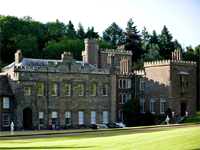
Kentchurch Court, Herefordshire (Image: mhaswell / flickr)

For some who inherit, the weight of family history can easily overcome the burden of running a historic home on a limited budget.  As we saw in the previous episode of Country House Rescue at Trereife House in Cornwall, the desire to not be the generation which loses the ancestral home, a prospect which faced the Le Grice family who had been there since 1799.  So imagine the weight of responsibility facing the Lucas-Scudamore family who have lived for ten centuries at Kentchurch Court in Herefordshire.

The house itself was originally a Saxon tower with further additions in the 14th-century.  However, the main style of the house as it stands today is due to work commissioned from the famous Regency architect John Nash (b.1752 – d.1835).  More importantly, Kentchurch is a significant as one of a number of houses built in the area around that time which were a visible expression of a new wave of architectural fashion; the Picturesque.

Strawberry Hill, London (Image: D Kendall / EH Viewfinder)

When thinking of Georgian architecture many think of the symmetrical classical façades and strictly proportioned Palladian designs which were so prevalent in that era.  Yet one house, Strawberry Hill in Twickenham, south London, was to be the catalyst for a new way of thinking, breaking these patterns and ushering in a more organic way of viewing architecture. This saw the house as part of a landscape with the design playing its part in the beauty of the view as much as the lakes, gardens and parkland. Originally an unremarkable house, it was bought in 1747 by the wealthy Horace Walpole, 4th Earl of Orford and fourth son of Walpole the Prime Minister, who was an astute observer of society, art, and architecture. Walpole contributed little to art but was particularly well read and as he pursued his academic studies decided to start experimenting with alterations to his house.

Fonthill Abbey, Wiltshire (Image: John Rutter (1823) / RIBA)

His original changes from about 1749 were uncontroversial and, importantly, followed the convention for symmetry.  However, from 1753 onwards the interiors were fashioned in a gothic style with the help of what he called his ‘Committee of Taste’ comprising a few of his equally well-read friends.  This experimentation was confined to the interiors until, in 1759, he broke with architectural convention and had a great circular tower constructed but which, radically, had no matching pair.  The house was to continue to grow in a rather free fashion which can still be admired today (particularly so following the completion of phase one of a fantastic restoration by the Strawberry Hill Trust, the Heritage Lottery Fund and the World Monuments Fund). The house became famous, attracting day trippers in large numbers and spawned imitators; though it was James Wyatt’s Lee Priory (built 1785-90 – dem. 1955) which was said to the be first ‘child of Strawberry’.  Also considered worthy, and also designed by Wyatt were the fantastical Fonthill Abbey (collapsed in 1825) for William Beckford, and Ashridge Park for the 7th Earl of Bridgewater.

Downton Castle, Herefordshire (Image: gardenvisit.com)

One man particularly taken with this new style was Richard Payne Knight, a Herefordshire MP and intellectual with a large inheritance.  Using his wealth, in 1774 Payne Knight started the construction of a new home, Downton Castle, which bore similarities to Strawberry Hill, with the asymmetry and a large circular tower, and an irregular plan which was quite radical for the time.  This house was a prototype for a new ‘castellated’ style of house which was to be popular for fifty years from about 1790.  Driving this new style was the publication of three key books, the first two in 1794; ‘The Landscape, a Didactic Poem‘ by Payne Knight, and ‘Essay on the Picturesque‘, a brilliant reply in support by Uvedale Price (another local landowner), and, in 1795, ‘Sketches and Hints on Landscape Gardening‘ by the landscape-gardener, Humphrey Repton, who formed a successful and highly influential partnership with the architect John Nash that same year.

Nash had moved to Aberystwyth after his bankruptcy following a failed speculative buildings scheme in Bloomsbury in London.  Yet, the contacts he was to make in Wales led to Nash becoming one of the leading architects of the Picturesque.  The early development of his interest in the ideas of the movement can be seen when he designed a castellated triangular lodge for Uvedale Price sometime between 1791-4.  He also worked for Thomas Johnes at the spectacular Hafod estate where Johnes had planted 3 million trees to paradoxically create a more ‘natural’ looking Picturesque landscape.

For Nash, the ideas he developed in that short period from 1790 until he left to go back to London in 1796, were what made him one of the most significant architects of the period. The influence of Downton Castle and Nash also created a strong regional collection of these mock castles – Garnons (dem. 1957), Saltmarshe Castle (dem. 1955), Goodrich Court (dem. 1950), Garnstone Castle (by Nash, built 1806-10 – dem. 1958) Hampton Court Castle (alterations 1830s-40s) and extending down to Devon where Nash designed perhaps one of his best creations; Luscombe Castle (built 1800-4), and into Cornwall, where he designed Caerhays Castle (built 1807-10).

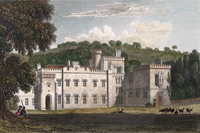
Kentchurch Court from "Views of the Seats, Mansions, Castles, etc. of Noblemen and Gentlemen" (London : 1829-1831)

By their very nature these were large houses and often a little impractical which sadly meant many were demolished.  This is why Kentchurch Court is important – not only is an early work by Nash in the style of house which was to become his trademark, but it’s also one of the survivors of the tragedy of the many demolished country houses.

Perhaps the current Mrs Lucas-Scudamore should be grateful, in some ways, that their branch only inherited some fine carvings from the sale of the other much grander family seat, the grade-I Holme Lacy House (now a hotel) rather than the house itself with its 9 fine rooms with plaster ceilings which Pevsner though to be some of the best in the county.  The story of Kentchurch Court today is a familiar one of a family with an incredible history and a fine house and estate struggling with the usual demands for maintenance and £120,000 per year running costs.  Mrs Lucas-Scudamore and her two children (Mr Lucas-Scudamore being estranged and living away) battle on with determination but managing a house like this requires a money tree not a family tree – but this house is too important to be neglected.

Country House Rescue: ‘Kentchurch Court‘ [Channel 4]