A religious conversion: Rempstone Hall

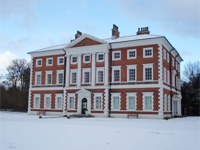
Rempstone Hall, Leicestershire (Image: Country Life)

In the early part of the 20th-century one option for a country house to avoid demolition was to be converted to institutional use.  In this way, many houses became schools, hospitals or offices, but also some became religious institutions – for example, in the 1940s and 50s, Gloucestershire lost seven houses but twenty-two were converted to institutional use.  Now with property prices rising but membership of convents falling, houses used for holy purposes are now being sold – and could once again be homes.  Rempstone Hall in Leicestershire, currently the Holy Cross Convent, is on the market for £2.5m, as the nuns move to a purpose-built home nearby.

Rempstone Hall is a classically beautiful Georgian red-brick house, originally built in 1792 for William Gregory Williams, a major local landowner.   Various families passed though the house usually keeping it as a secondary house to much grander seats elsewhere.  By the beginning of the 20th-century it was unoccupied as probably, as with many other houses, at risk of demolition as the houses became surplus to requirements and a drain on finances already under pressure.  Rempstone Hall was saved in 1909 when P.W. Carr moved in and made significant additions including a new north wing and a fine stable block before selling it in 1920 to the Derbyshire family from whom the Convent bought it in 1979 for just £110,000.

During their time at Rempstone, the nuns have removed the exterior stucco to expose the warm red-bricks giving the house a bold appearance, the two red blocks framing an elegant loggia which faces the gently sloping lawn.  At 21,000sqft this is undeniably a large house with 20 bedrooms, a large entrance hall with possibly Jacobean staircase, a sizable chapel and many other rooms.  One downside of institutional use is the rather functional decor and Rempstone is no exception, with lino, acres of red carpet and various partitions which the new owner would need to remove; total renovation costs are estimated to be in the region of £500,000.

This fine and beautiful house, well-located in the Midlands, with 60-acres and several estate buildings, cries out for someone with taste to restore this house back to being a family home – which is helpfully the outcome favoured by the local planners.

More details: ‘Your prayers have been answered‘ [Sunday Times: Home]

Townhead House, untouched since 1939, to be restored

Townhead House, Lancashire (Image: SAVE Britain's Heritage)

Townhead House is a rare thing indeed – a house which has not been altered since before the last people to use it left in 1939 but also is not in a dire state of dereliction.  Its unoccupied status was a cause for concern and although parts of the house required attention, overall the house was in remarkable condition.

Built in 1729 for Henry Wiglesworth using parts of a 17th-century building, the architect is unknown but achieved an elegant if somewhat austere house using large blocks of coursed limestone.  Inside, the main rooms with their fine Georgian panelling and particularly the staircase indicated the architect was influenced by other such as Wren, Jones and Gibbs.  This can be seen with the use of certain architectural elements before they became widely known through pattern books such as Batty Langleys.

The grade-II listed house was used just a shooting lodge between the 1890s and 1930s.  Now finally, a local man, semi-retired businessman Robert Staples, has bought the house and has promised to sensitively restore it to use as his home:

“The works will ensure that the integrity and longevity of Townhead is not compromised and that the building has a continued and long future.”

All this bodes well for this important part of the local architectural heritage. Also encouraging is Mr Staples’ professed desire to return the house to being the centre of a ‘gentleman’s estate’ – a welcome reversal of the pattern of the last 50 years when small estates were increasingly broken up and lost.

Full story: ‘Historic Slaidburn house set to become a home again after 100 years‘ [Lancashire Telegraph]

Lytham Hall restoration to secure future

Lytham Hall, Lancashire (Image: Lytham Hall blog)

To secure the future of what is considered to be one of the finest Georgian houses in Lancashire, the owners of  Lytham Hall have unveiled an ambitious £5m restoration plan.

The house was built for Thomas Clifton by the famous architect John Carr of York between 1752-64 and incorporated elements of the existing Jacobean house.  It remained the Clifton family home until the 1960s when it was finally sold to Guardian Royal Exchange Insurance who owned it until 1997, and is now run by Heritage Trust for the North West on a 99-year lease on behealf of the owners, Lytham Town Trust.

The £5m plans are the first part of an eventual £10m plan to upgrade every aspect of the house and estate to provide holiday accomodation, a tea room and conference facilities.  Although a shame that the house is no longer a home, it’s encouraging to find plans which respect the history and architectural importance of the house as they seek ways to ensure a secure future.

Full story: ‘New lease of life for historic hall‘ [Lytham St Anne’s Express]

English Heritage grant helps towards Sockburn Hall restoration

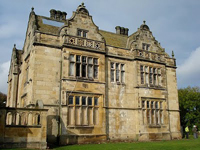
Sockburn Hall, County Durham (Image: Sockburn Hall Project)

A project to restore the long-neglected Sockburn Hall has received a boost with a grant for £37,000 from English Heritage.  This is in addition to the £38,000 it was also awarded last year as part of a long-term project to make the house watertight, eliminate the dry rot and then restore the interiors.

The grade-II* listed Sockburn Hall was originally built in 1834 in a neo-Jacobean style for the Blackett family on the site of a lost Jacobean house built for the Conyers family which had vanished by 1823.  The house became notorious in 2000 when the sisters who lived there were prosecuted for keeping animals in squalid conditions in the various rooms of the house. Listed on the English Heritage ‘Buildings at Risk’ Register it had long been a cause for concern as water penetration and vegetation growth threatened the structure of the house.

The family have taken on the house as a restoration project to avoid selling it and risking it being developed and have created a small group of volunteers who are valiantly clearing the grounds and restoring features whilst specialist firms are working on the house. The grant in 2009 enabled emergency repair work to be undertaken on the roofs and guttering to remove the temporary tin sheeting and to ensure good drainage to help stop water ingress into the building.  This project will take years but hopefully, one day, the family will be able to move back into this house and make it a home again.

You can follow the progress of the work either on their website or via the Sockburn Hall Facebook group where you can also volunteer to help out.

New series of ‘Country House Rescue’ starts 4 March

Plas Teg, Wales (Image: Plas Teg website)

The fascinating first series of ‘Country House Rescue’ showed all to clearly that ownership of a country house is no passport to an easy life of luxury.  In fact, it demonstrated that being the ‘lord of the manor’ brings with it many responsibilities which can take a significant toll both physically but most importantly financially.

On Thursday 4 March at 20:00 on Channel 4 the next series of ‘Country House Rescue‘ starts in Wales with the owner of Plas Teg; a grade-I listed Jacobean house which has remained remarkably unchanged since it was built in 1610.  However, for the owner who gave up her glamorous life in Notting Hill when she moved to this 20,000sq ft house, it has proved to be a constant struggle to maintain this important house.  Hopefully Ruth can provide some of her usual robust advice to help get Plas Teg on the path to a more secure future.

More details: ‘Country House Rescue‘ [Channel 4]