Reflections on the loss of Clandon Park, Surrey

Loss is mainly regret that we will never see something, or that we have known it and will never see it again.  Where the loss is of something of beauty, which embodied ideas, history, culture, it takes on many facets. Fire is a destructive, cruel enemy, consuming all in its path; caring not for the value – either great or small – simply taking whatever it can as fuel for its avaricious need to grow. On 29 April 2015, as the fire at Clandon Park took hold we hoped for the best – yet sadly, less than twelve hours later, all that remained was a gaunt, blackened shell. The loss was not just the building and its beautiful interiors and contents, but also what it represented to UK architectural history.

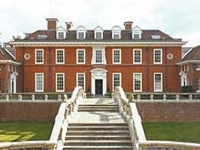
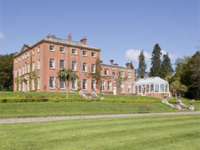
Clandon Park, Surrey (Image: Matthew Beckett)

News breaks now on social media, the first photos and reports of huge plumes of smoke spreading much as the flames did; slowly at first, rapidly growing. Quickly it became clear that the fire had reached the roof and that the rooms on the ground floor of the south side had already gone – the Green Drawing, Palladio, Hunting, Prince Regent.  Each a small gem in themselves, their contents the result of decades of collecting and curation. As the floors above collapsed, it became clear that this was a very serious situation and thoughts immediately are to hope that, first, everyone is safe, but, secondly, how far would the fire go? Sadly, it soon became clear that the entire house was to be consumed in the inferno.

Clandon Park on fire, 29 April 2015 (Image: © Andrew Blondell / BBC Surrey)

Why was Clandon Park important? It wasn’t just the history and collections.  Most importantly, the design of the house was a key transitional link between two defining periods of British architectural history; the Anglo-Baroque and the Palladian. The house, both interior and exterior, was designed by a Venetian architect, Giacomo Leoni, and built between 1723-29.  Both the architect and the dates are key to understanding why the house was so significant.

Clandon Park on fire - two-thirds of the house was now on fire (Image: © Oliver Dixon)
Clandon Park on fire – two-thirds of the house was now on fire (Image: © Oliver Dixon)

Giacomo Leoni (b.1686 – d.1746) played a key role in bringing the ideas of Palladio to the UK through the publication of that architects’ ‘I Quattro Libri dell’Architettura (which he called ‘The Architecture of A. Palladio, in Four Books’). Although not an entirely accurate recreation (Leoni wasn’t above adding his own improvements) the instalments (published between 1715-20) were a huge success, casting the ideas of the Palladian ideal deep into the aspirational hearts of the British aristocracy.  Leoni’s edition remained the primary source of the nascent Georgian Palladianism until (prompted by Lord Burlington) Issac Ware produced a more accurate translation in 1738.
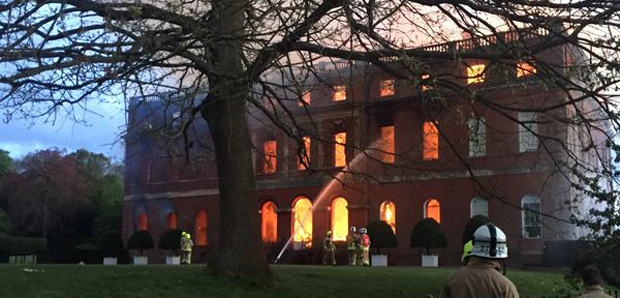
Clandon Park on fire - the flames reached the north side (Image: © Alex Greenwood)
Clandon Park on fire – the flames reached the north side (Image: © Alex Greenwood)

For all his intellectual influence, Leoni’s physical output was relatively meagre for a 45-year career – his earliest designs were for an unexecuted rebuilding of Wrest Park in August 1715 for the 1st Duke of Kent. His first completed work was in London in 1721, Queensberry House, 7 Burlington Gardens, for John Bligh, Lord Clifton, which featured an antique temple front, a reduced version of which appears on the south front of Clandon Park. Leoni’s output was mainly country houses; he designed eleven but only nine were completed (the two unfinished houses being Carshalton Park and Thorndon Hall) of which four have been lost already (Moulsham Hall – dem. 1809, Bold Hall – dem. 1901, Burton (or Bodecton) Park – fire 1826, and Lathom House – dem. 1929/1955).

Comparison of Leoni's 7 Burlington Gardens and south front of Clandon Park (Image: 7BG: Wikipedia / Clandon: Matthew Beckett)
Comparison of Leoni’s 7 Burlington Gardens and south front of Clandon Park (Image: 7BG: Wikipedia / Clandon: Matthew Beckett)

This left just four completed house which survived into the 21st-century; Lyme Park (c.1725-35), Alkrington Hall (1735-36), Wortley Hall (1743)- and Clandon Park (1723-29).

The brilliance of Leoni’s design for Clandon had survived almost unchanged as it had remained in the Onslow family until being handed to the National Trust in 1956. Where Clandon excelled was that the exterior was early-Anglo-Palladian; chaste, restrained decoration, subtle temple motif, but this was married with one of the greatest of the Anglo-Baroque rooms, the Marble Hall (the plasterwork of which Sir Simon Jenkins thought better than the similar room at Houghton Hall), and other rooms rich in beauty. This contrast between the quiet exterior and the exuberant interior is what made Clandon so important as the link between two of the most significant trends in British architectural history.

Marble Hall, Clandon Park (Image: Matthew Beckett)

So, what next? The incredible staff and volunteers of the National Trust swiftly put into place the plans they never hoped to have to use and clearly, the efforts are being directed to the care of the salvaged contents and an examination of what can be recovered from the debris.   Investigations will be undertaken and conclusions reached as to the cause but looking to the future the options are the same as ever; rebuild, re-use, or ruin.
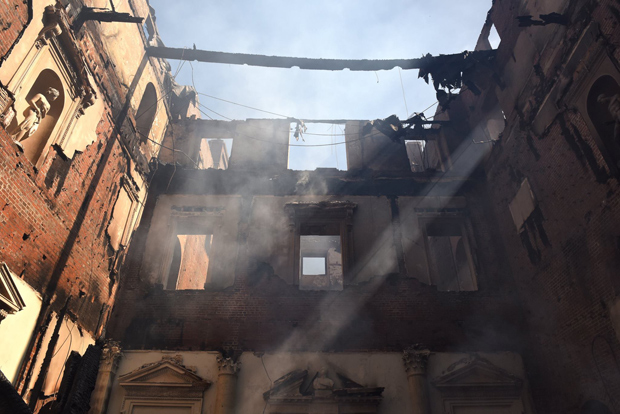
Marble Hall, after the fire (Image: © John Millar / NT Picture Library)

As a nation, we have fetishised ruins for centuries with castles, abbeys, fortifications and now factories celebrated for their managed decay. We have enough derelict country houses (far too many, truth be told), so to consign another to that sad, lonely fate would miss the chance to grasp a recoverable beauty and miss the opportunity to demonstrate and inspire through an educational process around the reconstruction.

The Landmark Trust’s inspired recent work at Astley Castle, Warwickshire, to create a modern living space in a shell created by a fire in 1978, shows that ruins can be re-used intelligently and with great aesthetic success.  However, Astley Castle was a smaller house and also without the spectacular interiors which once graced Clandon Park.
Uppark, Sussex (Image: © Matthew Beckett)

So the remaining option is rebuilding and restoration.  As has been shown at Uppark, Sussex, which also suffered a serious (though not quite as devastating) fire in August 1989, it is possible to restore the house back to as it was before.  This is not pastiche as it’s not conjectural – we have extensive, detailed records of the interiors and, combined with salvaged fabric, it is possible to recreate what was there.  As Sir Simon Jenkins argued in the Sunday Times (03/05/2015), it would be unthinkable not the reinstate the great Marble Hall – because we can.

Modern care and conservation means that the rate of losses of country houses has dropped from the hundreds each year in the 1950s to barely a handful and these are almost always due to fire. All those we have – that which survived this far – are fragile and it’s an uncomfortable truth to understand that they will not last forever.  As the painter Salvator Rosa once wrote:

All our works is fallen and sicken
Nothing is eternal
The Colossei die, the Baths
The worlds are dust, their pomp a nothing…

Rather than despair, we should celebrate and enjoy the architectural heritage which is still available to us and care for it for future generations. The original Clandon Park is lost; that patina of age, the individual details which only it knew are no more. Although the contents have been largely lost, resurrection is the most appropriate option as the main shell of the house has survived – the sterling work of the fire service has saved at least one half of Leoni’s vision. Modern craftsmen with ancient crafts, honed at Uppark, Hampton Court, and Windsor Castle, can recreate the beauty of the interior.  It won’t be the original but from our shock at the loss can come awe at the artistic skills that can recreate such wonders as the Marble Hall.

———————————————————————————

Gallery of images of the aftermath: ‘Clandon Park fire 2015‘ [National Trust Picture Library]

Statement: ‘Fire breaks out at Clandon Park, Surrey‘ [National Trust]

Finest prospects: the artist and the country house (and a challenge)

The country house has always been a trophy to be admired and enjoyed.  Yet, in the age before mass media and transportation made it easier to see these fine houses, often the only way to remind yourself and, more importantly, guests to your London townhouse, of your rural wealth and power was through the rather special branch of art that is the country house portrait.  Though originally European, it found new and invigorating life once it had crossed the Channel, creating an important and fascinating record of the lives, tastes and architecture of the landed classes. We also have a mystery house in a painting to find…

The country house first started appearing in paintings in France, with one of the very earliest depictions being that of the Duc de Berry’s houses and estates in 1416 by Pol de Limbourg.  These paintings served not only as reminders of wealth but also as practical tools for the running of extensive estates. The earliest English contemporary of these paintings is a 15th-century portrait of John of Kentchurch with a view of Kentchurch Court, Herefordshire in the background.  Although the depiction of the country house was a primarily European feature, it was still a relatively niche pursuit until the late 1500s, with painters more usually employed to portray the religious, historical or mythological.

Detail of 'An Aerial View of Tottenham Park, Wiltshire' by Pieter Andreas Rysbrack (after 1737) - this picture hung for many years in the estate office.

The trade in country house views was particularly popular in the Netherlands, where a demand for topographical engravings combined with many estates created a ready market.  The genesis of the English tradition is also to be found here as the Royalist aristocracy fled to the region during the Civil War. The connections made at this time were to prove fruitful for the many painters who followed their current and prospective patrons back across the Channel after the the Restoration in 1660. Before then, views of a country house were usually part of an estate survey, bar a few exceptions such as those of Conway Castle in c.1600, Nonsuch Palace and Richmond Palace c.1620, and the ‘King’s houses’ by Alexander Kierincx in 1639-40.  It was the famous engraver Wenceslas Hollar who completed the first significant set; five views of Albury House in Surrey in the late 1630s. Hollar was also significant in establishing the new fashion for these views once confidence was restored in the late 1650s.

The Restoration of Charles II gave new life to the art, with Dutch artists eager to record the newly invigorated estates of the aristocracy.  Without the artistic constraints often found in Europe, the style of the art in England was largely determined by the owner rather than royal preference.  By the 1680s, the country house portrait was as well established, as well  as those of the family, and reflected both pride and change.  Views were often painted to record the old house before it was swept away or remodelled or after the work had finished to showcase their new seat.

One of the finest artists of this period was Leonard Knyff who had arrived in England in around 1676 but whose first country house painting, completed in 1696, is of Dunham Massey, Cheshire.  A few more paintings followed, but his master work was a collection of eighty engraved views published (by Johannes Kip) in 1707 under the title ‘Britannia Illustrata: Or Views of Several of the Queen’s Palaces, also of the Principal seats of the Nobility and Gentry of Great Britain…’.  It remains one of the finest records of the country houses of the period – today, even individual prints can sell for hundreds of pounds and full copies of the book for tens of thousands.

Detail of 'Westwood, Worcestershire' published 1709 for "Britannia Illustrata: Or Views of Several of the Queen's Palaces, also of the Principal seats of the Nobility and Gentry of Great Britain...." by Johannes Kip & Leonard Knyff
Detail of 'Westwood, Worcestershire' published 1709 for "Britannia Illustrata" by Johannes Kip & Leonard Knyff

From the 1700s, the composition of the paintings shifts to include, and give greater prominence to, sporting activities and also the setting of the house, particularly the gardens. With sports such as riding and hunting being such a key part of the enjoyment and reputation of an estate, it was natural that these should feature in any artistic celebration.   As the fashions for landscaping and elaborate gardens took hold, so to did a desire for these to also be included in such detail that the house became a much smaller element, subsumed into a wider bucolic vision.  The more ‘survey’-like paintings showed in almost cartographic detail the layout of the gardens with the tree-lined rides radiating away from the house.

'Lowther Castle, Westmorland, Seen from a Distance by 'Day' in 1810' - J.M.W. Turner

This trend was not only driven by the owners who were very proud of their new environment but also because it was a natural continuation of the earlier work of these artists, as recorders of landscapes. John Harris argues that it would be difficult to confirm the exact influence which art exerted over landscaping but the popularity of landscape painters such as Claude Lorrain, coincided with the popularity of advocates of the more natural landscape such as Humphrey Repton and Lancelot ‘Capability’ Brown in the 1760s.  Parkland now moved from the more formal ‘boxes’ which Knyff had so accurately portrayed, and was now shown as a more rural, naturalistic form, the landscape now dominating the picture.  How far this style departed from formal country house portraiture can be seen in the works of J.M.W. Turner who frequently reduced the house to a mere smudge in the distance – and even when the house featured clearly, it was subordinate to the overall setting and atmosphere.  That’s not to say that the ‘Claudian’ view was the only one – the preferences of the owners for clear visions of their seats kept artists such as William Hodges, James Barret, William Marlow, and Theodore de Bruyn busy too.

By the mid-1800s there had been a marked decline in the demand for these type of paintings. Improved communications meant that houses were no longer so remote, and with the advent of mass printing, publishing filled the demand for images of the houses as typified by the eleven volumes of J.P. Neale’s ‘Views of the Seats of Noblemen and Gentlemen‘ (1818-1829).  Owners of houses were also now increasingly from the new wealthy who had their powerbases in cities and the country house was merely a retreat. By 1880, photography was also firmly supplanting oil paint as the medium of choice, as shown by the success of photographers such as Bedford Lemere, and, by the 1900s, the success of magazines such as Country Life which placed a high priority on using only the best photos.

Detail of 'Carclew, Cornwall' by Algernon Newton (house built 1720s, burnt out in 1934) - painting commissioned for the family which owned it at the time of the fire

However, in the last twenty years, a resurgent interest amongst country house owners has again created a demand for the country house portrait.  Artists such as Algernon Newton, Julian Barrow, James Hart Dyke, Jonathan Warrender, and Marcus May have led the way in continuing the tradition.  One artist has even been responsible for creating a country house which only existed in one of his paintings. Felix Kelly had painted an imaginary scene of Palladio’s Villa Rotunda within an English landscape; inspired by this, Sebastian de Ferranti then commissioned the architect Julian Bicknell to translate this art into reality, completing the house in 1986.

These important paintings are now, for some houses, the only record of how they were before later changes obscured or obliterated them forever. For many others, they are a wonderful reminder of the beauties of architecture and are a unique and invaluable record of our country houses.

—————————————————————-

Detail from 'Portrait Group' (1936) - William Bruce Ellis Ranken
Detail from 'Portrait Group' (1936) - William Bruce Ellis Ranken - click for full painting

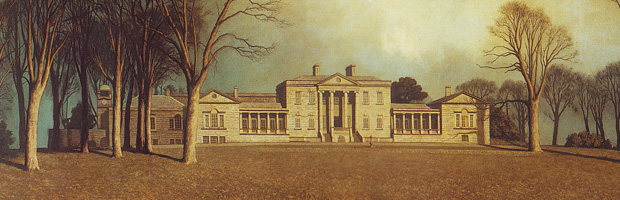
The Challenge: can you identify the mystery house in this painting?

Detail from 'Portrait Group' (1936) - William Bruce Ellis Ranken

The catalyst for this post about country houses in paintings was an email I received from Wendy & Gordon Hawksley who are working to re-establish the reputation of William Bruce Ellis Ranken (1881-1941). A famous artist in his day, he socialised with the great and good and painted many of them before fading into obscurity after his death.  This painting was exhibited at the Royal Academy in 1936 (this is also the year it was painted) under the title of ‘Portrait Group’ but as yet it has not been possible to identify either the sitters or the house. And so to the challenge: simply, can we identify the house – almost certainly English or Irish, Palladian, engaged columns to the front (a la Kedleston Hall) with flanking curved colonnaded wings facing a large reflecting pool.  Obviously there may be some degree of artistic licence but it seems likely that this was the home of the subjects of the portrait. Suggestions either via the comments below or via email to me.  No prizes I’m afraid beyond a credit here and the happy thought that art history is slightly richer for your efforts.

—————————————————————-

For a more in-depth history and many images (and to which this post is much indebted)  I recommend ‘The Artist and the Country House: from the Fifteenth Century to the Present Day‘ by the ever-brilliant John Harris – unfortunately now out of print.

PPS7 – the saviour of the new build country house

Grafton New Hall, Cheshire (Image: Robert Adam Architects)

The nature of our country houses is one of evolution in design, form, and function.  As society has changed, so too have the requirements of the wealthy and, as their houses have been a direct expression of their wishes, these changes can be traced through the architectural record.  Much as we love the many beautiful houses we have already there will always be the desire to build anew, which will constantly reinvigorate this branch of architecture.  As always, some designs will not stand the test of time and will be replaced but the best houses of today will be appreciated by generations to come.  Estate agents often have sites with planning permission for sale and the most interesting come with a design already approved – and in an interesting trend, they are almost all classical, rejecting the avant-garde in favour of brick, stone and Palladian proportions.

Longleat House, Wiltshire (Image: wikipedia)

Once Britain became a more domestically peaceful land under Elizabeth I, the form of our country houses changed from defensive, to one of show as exemplified by the Prodigy houses such as Longleat, Wollaton and Hardwick.  Gone was the need for walls, keeps and battlements and instead the requirements of the aristocracy became focused on courtly entertainments, sport and the display of one’s level of taste and education. This largely set the pattern which can still be seen today, with only the architectural choices as to style varying according to fashion and whim.

Yet it seems that for the wealthy who commission these houses, the overall exterior style has evolved as far as necessary because, despite the efforts of the last Labour government to promote the bold and radical as the only appropriate response, a majority of the houses designed and built today are in a form that your average 18th-century gentry would broadly recognise.  Although most construction in the countryside is largely forbidden, rules introduced by the Conservative government in 1997 – known as PPG7 section 3.21 – allowed for planners to approve houses where:

“An isolated new house in the countryside may … exceptionally be justified if it is clearly of the highest quality, is truly outstanding in terms of architecture and landscape design, and would significantly enhance its immediate setting and wider surroundings.”

In 2004 the Labour government sought to drop this, ostensibly because they thought it a loophole, but many suspected an undercurrent of class warfare (an early day motion put down that year by the former Member for Denton and Reddish, Andrew Bennett, stated that “this House … further believes that if the countryside is to be preserved by not building ordinary houses, it is even more important that is should not be polluted with big houses for the arrogant, vulgar and rich.“).  After a strong backlash with MPs (well worth reading is Alan Howarth’s spirited defence of the country house) and architects leading the charge, the rules were amended to become PPS7 which largely retained the status quo giving owners the opportunity to continue the fine tradition of new country houses but with a distorting preference for houses which would reflect “the highest standards in contemporary architecture.“. In fact, the market proved that clients know what they want more than misguided politicians and civil servants.

In response to the proposed changes the RIBA put on an exhibition called ‘The New English Country House‘ which looked at houses commissioned between 1997-2004 under PPG7.  Of the 24 houses included, 15 were in a historical style and only 9 contemporary, with a majority of the former being seen through to completion.  Interestingly, of the houses listed, at least half (by my reckoning) are replacements for previously demolished  country houses perhaps providing an object lesson in the folly of their original loss.

Proposed Grafton New Hall, Cheshire (Image: Ushida Finlay Architects)

The poster child for the new ‘modernist’ country house was the design produced by Ushida Finlay in response to the 2001 RIBA competition to build “the country estate of the future”.  The original Tudor Grafton Hall in Cheshire had been demolished in 1963 after becoming derelict but the 200-acres of parkland offered the ideal opportunity to create an excellent smaller country estate. Yet for the limited pool of those wishing to spend the estimated £20m to build this vision the design ticked none of their boxes. After 7 years of marketing by the estate agents, it was decided to commission a new design from one of our best Classicists, Robert Adam, whose new proposal was described as “an exceptionally outstanding design“. However, the opportunity to create this new house is still being marketed with Jackson-Stops for £5m – so the argument hasn’t been decisively won in this instance just yet.

Proposed Alderbrook Park, Surrey (Image: PRS Architects)

In much the same way as those in previous centuries wished to express themselves through their architecture, so it is the case today.  Houses such as the proposed Alderbrook Park in Surrey for the billionaire Lakshmi Mittal are a radical re-interpretation of the country house but driven by the particular requirements of the client.  Also of particular note is  Ferne Park in Wiltshire for Lady Rothermere – easily one of the finest country houses to be completed in the last 100-years and very much the product of the client working in conjunction with her architect, the brilliant Quinlan Terry.  Speculative developments seem less likely to find buyers as they become more an expression of the ego of the architect rather than the reflecting the personality of the buyer. The prime example of this is the poorly designed Updown Court in Surrey, once the most expensive house for sale in the UK at £70m, which now faces being carved up into flats or becoming a hotel.

Nyn Park, Hertfordshire (proposed) (Image: Julian Bicknell & Associates)

So what other architecturally attractive opportunities are out there? One quite close to London is Nyn Park, Hertfordshire to replace a house which burnt down in 1963 with a design by another icon of the Classicists, Julian Bicknell, who designed the brilliant Henbury Rotunda in Cheshire. The proposed plan bears no relation to the former house and shows the type of new design allowed under PPS7. Just to underline the level of wealth required for these projects, the estate is being marketed at £10m, built costs could easily be £1m-2m, and the buyer must lodge £3m with the local council as a Landscape Bond that they will fulfil their obligations with regards to restoration which will be returned in tranches as the work is completed.

The Ridge, Gloucestershire (proposed) (Image: Yiangou Architects / Knight Frank)

Another house which has featured before in this blog is the impressive ‘The Ridge’ in Gloucestershire; another replacement for a lost house designed by Humphrey Repton and demolished in 1934.  Designed by Ross Sharpe (who also designed the Icomb Grange), this 33,000 sq.ft. design takes the form of the original house but adds an extra level of architectural flair.  As expected, this is £5m for the opportunity with build costs on top.  Interestingly, the Knight Frank website also says that alternative plans for a smaller 15,000 sq.ft. house have been drawn up, hoping to draw in a wider pool of potential owners.

The Parkwood Estate in Surrey, designed again by Robert Adam, has also been featured previously on this blog back in July 2010 as part of the discussion around justifiable replacement.

For some, a new build will never be a substitute for a historic country house but for those with specific requirements or where there is a shortage of suitable houses, then the option of creating from scratch will always be enticing.  It is also important that the tradition of country house building is allowed to continue as it is only through development that it is shown that these fine buildings can contribute to, and enhance, the much-loved countryside.  PPS7 provides an important legal support for the principle that architecture should be allowed to flourish where it is justified and supportable and should be defended against any narrow-minded interests who would deny our history and diminish the future.

———————————————————–

The websites of the leading country house architects show the broad range of fascinating projects they are involved with, and that, fingers crossed, will one day be built:

The Royal country house honeymoon

So the happy Royal couple, our new Duke and Duchess of Cambridge, have taken just the long weekend for their honeymoon leaving an interesting question as to whether they are breaking with the tradition of spending their first days of marriage in an British country house?  With the twin demands of luxury and privacy, the country houses of the UK have often proved particularly attractive, though Royal palaces even more so.

Hampton Court Palace, Surrey (Image: Gail Johnson / flickr)

In an earlier age, the Royal family would often simply use one of their own palaces as a convenient venue.  Already secure and well-established for the great demands of catering and supporting a King or Queen, they had a natural advantage.  One often used has been Hampton Court Palace, in Surrey, one of the finest Royal residences ever built and a worthy equal to the splendour of Versailles.  Construction started in 1514 by Thomas Wolsey, an Archbishop of York, who built a palace which rivalled any that King Henry VIII then possessed.  With over a 1,000 rooms and accommodation for 280 guests, Wolsey wisely answered, when asked by the King in 1526 why he had built such a magnificent house, “To show how noble a palace a subject may offer to his sovereign.”

Having now taken ownership, Henry then embarked on his own ambitious programme, adding a third courtyard and stamping his mark on all aspects of the palace. It was in this sprawling residence which he enjoyed at least two of his honeymoons; with Jane Seymour, his third wife, in 1537, and with Kathryn Howard, his sixth, who he married at Hampton Court in 1543.  Due to his unhappiness with the looks of his fourth wife, Anne of Cleves, and the very short marriage (Jan-July 1540), it seems unlikely that he would have made any significant arrangements and so possibly used Hampton Court as his most convenient palace near London.

Henry VIII’s daughter, Mary I, also spent her honeymoon with Philip I at Hampton Court  in 1544. It was used again by King James I on his marriage to Henrietta Maria in 1625 and then by Charles II and Katherine of Braganza in 1662.

Rycote Park (Palace), Oxfordshire (Image: Thame History)

Henry VIII obviously had several opportunities to honeymoon, though his first was more a working tour as, following his marriage to Catherine of Aragon in 1501, he was sent to Ludlow Castle to preside over the Council of Wales and the Marches. His second, with Anne Boleyn in 1533, was at Shurland Hall, Isle of Sheppey in Kent, which has recently become the 70th building to be rescued by The Spitalfields Trust (and which is currently for sale).  His honeymoon with Catherine Howard, his fifth wife, in 1540, was spent at Rycote Park, in Oxfordshire. It’s not entirely clear who originally built this Tudor mansion but it certainly of a status to attract the Royal couple.  The house suffered a devastating fire in 1745, but was rebuilt before being emptied in a contents sale in 1779, and then sold for materials in 1807.

The tradition of the Royal family using their own houses has largely continued, though in more recent times they have also used suitable private houses as the retinues required have shrunk making it unnecessary to require a palace.

Taymouth Castle, Scotland (Image: RCAHMS)
Taymouth Castle, Scotland (Image: RCAHMS) - click for more images of interior

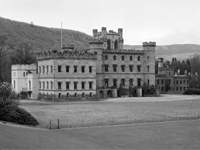
Queen Victoria and HRH Prince Albert enjoyed only a mini-honeymoon of three days in 1840, which was spent at Windsor Castle. The Queen, unwilling to ignore her duties and responsibilities as monarch which require frequent contact with her ministers, wished to stay close to London – even if her husband might have preferred a quieter break further away.  They did take a belated honeymoon in 1842 to Scotland where they stayed at the impressive Taymouth Castle, seat of the Marquesses of Breadalbane, owners of one of the largest estates covering 450,000-acres, which took over 40 years to build and had only recently been completed but to standard above almost any other seat in Scotland.  Designed by James Gillespie Graham, it was a convalescence home in WWII and a school but is currently unused whilst negotiations continue about turning it into a ‘seven star’ hotel.

Polesden Lacey, Surrey (Image: Matthew Beckett)

In the early part of the 20th-century, King George VI and his new bride, later the Queen Mother, stayed in 1923 with the remarkable society hostess, Mrs Ronald Greville, at her country retreat Polesden Lacey in Surrey (now National Trust).  An accomplished hostess, Mrs Greville and her staff were well used to catering for the cream of society.  Once home to Richard Brinsley Sheridan, after his death it was largely demolished and rebuilt by Thomas Cubitt in 1821 as, essentially, a neo-classical seaside villa.  After being bought by the Grevilles in 1906, she employed Mewes and Davis, architects of the Ritz, to remodel the interior.  The new opulence was matched by with an equal measure of intimacy, with rooms flowing between each other and the outside to create a fluid social space lined with portraits by Lely, Raeburn and Reynolds and cabinets full of Meissen china – a perfect venue for a Royal honeymoon.  Continuing the tradition started by Queen Victoria, they also spent time in Scotland at Glamis Castle, ancestral home of the Earls of Strathmore, and that of the future Queen Mother.

Balmoral Castle, Scotland (Image: Stuart Yeates / flickr)

On her marriage in 1947, our current monarch, Her Majesty Queen Elizabeth II, continued this practice and stayed at Broadlands in Hampshire, one of the best mid-sized Georgian houses, which largely appears to day as it was when it was finished in 1766. Elizabeth II also stayed at the family’s Scottish estates at Balmoral Castle and Birkhall, which were also destinations for the Prince and Princess of Wales in 1981 along with Birkhall which also used by Prince Edward and Sophie Wessex in 1999 and by the Prince of Wales and Camilla in 2005.

Alternatively, if they do wish to go abroad, they have the examples of the Duke and Duchess of Windsor who, in 1937, who spent three months at Castle Wasserloenburg in Austria, or Princess Anne who, in 1973, chose to spend her honeymoon cruising in the West Indies.  So, seeking peace and security, perhaps we’ll see the Duke and Duchess of Cambridge take a short break in a smaller country house before spending time in Scotland – or perhaps jetting off, but either way is in keeping with a long history of Royal honeymoons.

For sale: ‘Shurland Hall, Kent‘ [Jackson-Stops & Staff]

Thanks to Andrew for his help.

A bad omen: the spring country house relaunch

One rather unscientific barometer of the health of the country house market is the thickness of Country Life magazine as it comes through the letterbox each week.  After the thinning of the issue in the run-up to Christmas it’s always pleasing to feel the first weighty edition of the new year.  Yet, though this week’s issue (2 March) boasts ’70 pages of property for sale’ it’s remarkable that the estate agents have so few significant country houses to offer and of those that are there, it seems, along with last week’s issue, the largest houses are relaunches.

Pyrford Court, Surrey (Image: Savills)

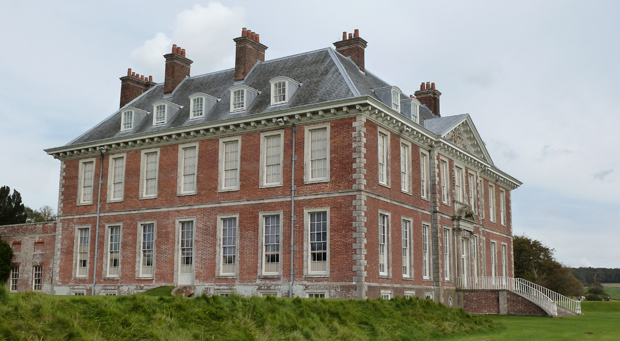
One of the most interesting is grade-II listed Pyrford Court, Surrey.  Originally built in 1910 for the 2nd Lord Iveagh, of the Guinness brewing family, it was one of a group of houses built around that time on the profits of beer (along with Polesden Lacey, Elveden Hall, and Bailliffscourt). The land was sold to Lord Iveagh by his father-in-law, Lord Onslow, whose family had owned the area since the 17th-century.  The house was designed by Clyde Young who had also worked at Elveden, another seat of the Guinness family, though the sensitively designed wings were added in 1927-29 by J.A. Hale of Woking to designs by Lord Iveagh.  The stylish neo-Georgian house is an elegant red-brick composition which originally sat in a 1,000-acre estate – though sadly now reduced to just 21-acres.  Lord Iveagh died in 1967 and the house sat empty until sold in 1977 – apart from a brief burst of fame as a location in the 1976 film ‘The Omen’.  The house then became an old people’s home with all the attendant damage until the current owners started their seven-figure restoration.

Pyrford Court was originally launched on the market in January 2010 for an ambitious £20m, a staggering rise in valuation from the £3.25m paid in 2000 and from the £8m asking price when it was offered for sale in 2002 (reduced, a year later, to £6.5m).  Yet this proved too much for the market to take; even for a ‘super-prime’ house within 25 miles of central London, and despite the high-quality restoration of the impressive interiors.  It subsequently languished and has now been promoted with a double-page advert – though the price is ‘on application’ meaning we won’t yet know quite how far the price has dropped.  However, looking at the other houses Savills have for sale in the area this is by far the most interesting and attractive house.

Brockhampton Park, Herefordshire (Image: Jackson-Stops & Staffs)

Another impressive house is the classically elegant, red-brick Brockhampton Park, Herefordshire.  Although the architect hasn’t been confirmed, the fact that it is virtually identical to Hatton Grange in Shropshire by Thomas Farnolls Pritchard, means it can probably be attributed to him.  The house was built in the late 1750s for Bartholomew Richard Barneby, probably using the £3,000 brought to him through his marriage in 1756 to one Betty Freeman. The Barneby family had owned the estate since the 15th-century and were to own it until 1946 when John Talbot Lutley (who was a descendent of the  Barneby family) left the house and 1,200-acre estate to the National Trust. Col. Lutley was a no-nonsense man who, on hearing of the NT country houses scheme, wrote them a short letter in 1938 saying that as he was a bachelor whose heirs were rather distant, would they be interested?

James Lees-Milne was duly dispatched – and almost rejected it on sight as it wasn’t pure Georgian due to some relatively small Victorian alterations.  However, after a tour of the estate and on seeing the beautiful Lower Brockhampton Manor, he felt that the latter two would be fine additions for the Trust – even if the big house would be a drain. It was duly left to the NT in 1946 following the Colonel’s death. Neither the house nor the contents were of sufficient quality to justify retaining or opening to the public so they sought to let it.  Unfortunately no private tenant wished to take it on, usually citing its remoteness, however in 1985 an insurance company let the house as offices and undertook a comprehensive restoration programme.  After they moved out in 1996 it was again restored as a private home and is now available with just 8-acres but surrounded by the rest of the NT-owned estate.  Interestingly the house is listed under the ‘Sales’ section of the Jackson-Stops & Staff website but I suspect this is due to it being leasehold – again ‘price on application’ so the price of the privilege is unknown, but the house has been advertised since last summer so it may be cheaper than before.

Ebberly House, Devon (Image: Savills)

Perhaps the most surprising house to still be available is the grand Ebberly House, Devon.  Rather than the expected provincial house, this is a house which displays remarkable architectural sophistication. Described by Pevsner as ‘unusual and attractive’, whose distinctive rounded ends ‘hint at the variety of room shapes inside; a provisional echo of the interest of contemporary architects such as Nash and Soane’.  Designed by Thomas Lee of Barnstaple, a pupil of Sir John Soane, the grade-II* house compensates for it’s remoteness with a fantastic house set in a fine 250-acre estate.  Offers in excess of £4m on the back of a postcard to Savills in Exeter.

Perhaps there are some clever marketing plans being hatched at the estate agents which means that rather than pushing their best properties in the first big property edition of Country Life of 2011 they’re saving them for…when?  Bonuses have just been announced and those looking to buy are probably active so perhaps there is just a general scarcity of significant country houses coming to the market.  Does this indicate 2011 will be rather thin for the agents as uncertainty limits buyers to the super-rich looking for somewhere in London or will the market pick up and a slew of new houses soon be released to whet our appetites?