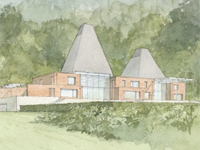
So you can’t afford a whole house: country house apartments

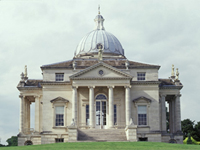
Charlton Park, Wiltshire (Image: Chesterton Humberts)

Country houses were always a community with not only the family but also a significant number of staff.  Yet as these houses became more uneconomical and houses emptied, large sections often lay dormant, until the family moved out and, in darker times, the house might be demolished.  However, conversion of the house into multiple individual homes offered a route to not only save the house but ensure that it was lived in rather than just used as a conference centre or hotel.  These apartments are now highly prized and offer the fascinating possibility of living in a grand stately home without many of the burdens – but only if it was converted sensitively and the setting preserved, which sadly isn’t always the case.

The idea of converting country houses into smaller, more manageable units is a fairly modern practice, largely since World War II, though some smaller conversions had taken place previously.  A pioneer was the now defunct Country Houses Association which was set up in 1955 to provide shared accommodation, with communal meals, for well-to-do retirees in good health in a style to which many residents had formerly been accustomed. The first house to be bought and converted, in 1956, was the red-brick Elizabethan Danny in Sussex. Next, in 1959, was the grade-I listed Aynhoe Park in Northamptonshire, a Soanian masterpiece with an elegant central block framed by two wings (though this has now been converted back into being a single home).  These set the pattern which was successfully repeated for seven other houses, some of which remain as retirement communities despite the collapse of the CHA scheme.

Around the same time, Christopher Buxton formed ‘Period and Country Houses Ltd’ which focused on creating independent units within the house and estate buildings.  Buxton had several notable successes such as the restoration of Kirtlington Park in Oxfordshire, keeping the splendid central portion as his own home, and also Charlton Park in Wiltshire, seat of the Earls of Suffolk, who currently still live in a portion of the house and own the 4,500-acre estate surrounding it.

In the 1950s and 60s, sale adverts for country houses often included the phrase “eminently suitable for conversion”.  Other developers could now see the potential and developed their own schemes – but with little heritage protection they often did more harm than good.  For them the key to getting the maximum profit was to cram in as many units as possible within the house and estate buildings before trying to built in the parkland.  This sadly meant that the grandest rooms in the houses – ballrooms, libraries etc, – would be crudely sub-divided, wreaking their proportions and destroying decorative details.  Sometimes developers simply developed the houses in the estate and then neglected to restore the main house, often citing the mounting costs of the work.

Northwick Park, Gloucestershire (Image: Cotswold District Council)

A sad example of where the house has been compromised through too many units is at Northwick Park in Gloucestershire, a grade-I listed house of 1686, with later work by Lord Burlington in 1728-30 for Sir John Rushout.  An architecturally interesting house with a Classical east front topped with a decorated pediment, which contrasts with Burlington’s work on the east front, which was later, oddly, given shaped gables sometime between 1788-1804.   Empty from 1976 with significant thefts of chimneys and doorcases and general deterioration, it was then bought including just 19-acres in 1986 by a local developer for £2m.  With repairs estimated at the time to come to at least £1.5m, the local authority permitted some enabling development totalling 68 new units – with just six in the main house itself.  However, the new properties had to be sited within the footprint of existing estate buildings leading to an overcrowded development with the house becoming almost an architectural ornament, lost in the rest of the residential development.

Many of the most successful and sensitive conversions have been undertaken by Kit Martin, a gifted architect who has saved some wonderful houses and been instrumental, with assiduous promotion by Marcus Binney of SAVE Britain’s Heritage, in demonstrating that it is possible to convert a house without compromising it.  His particular skill was in dividing the houses vertically, rather than horizontally, which gave each residence (as they always are in KM’s developments – never apartments) a range of rooms and usually included one of the fine rooms.  Starting with Dingley Hall, a beautiful but terribly derelict house at risk of complete loss, he has worked on a number of significant houses including The Hazells in Bedfordshire, Burley-on-the-Hill in Leicestershire, and Ecton Hall in Northamptonshire.  His finest work, however, has been at Gunton Park in Norfolk, grade-II* listed house of 1742 designed by Matthew Brettingham with later work c1785 by Samuel and William Wyatt.

Formerly seat of Lord Suffield it had suffered a serious fire in 1872 leaving a large section of the main house as a burnt out shell.   Fortunately for Mr Martin, extensive Georgian estate buildings had been constructed in anticipation of future work to enlarge the house which never happened, leaving him with a perfect opportunity to create a new community.  He then proceeded to vertically divide the main house into four large 5,000 sq ft houses, with other smaller houses created in the wings and outbuildings.  Having restored the house, he then sought to recreate the 1,500-acre parkland by William Gilpin and Humphrey Repton and has succeeded in re-acquiring over 1,000-acres and has been replanting over 6,000 trees – each one in the place originally marked out on Repton’s plan.

It’s not known in total how many country houses have been converted to multiple residences but it is probably at least between 40-50.  Many of these would otherwise likely have been demolished so conversion is preferable but only where it respects the existing architectural heritage and setting.  However, where successful, these fascinating properties allow the opportunity for those of lesser means to experience living in the grandeur of a stately home with the cost and responsibility of owning a whole one.


Examples of apartments currently for sale in country houses:


Developer shows sense; Ruperra Castle for sale

Ruperra Castle, Newport, Wales (Image: Savills)

Run-down or derelict country houses are often an enticing prospect for a developer, especially where the house still retains some land, on which they can propose ‘enabling development’.  In theory this is the correct use of this exemption but frequently the developer will suggest too many houses or ignore the fact that the house has too little land to avoid any development compromising the setting of the house.  When this happens, it is often the house which suffers as the developers wait for appeals or a change in policy whilst allowing the house to deteriorate further.  So in the case of Ruperra Castle in Wales it’s encouraging that the owner has decided to bow out giving someone else the chance to restore this architecturally interesting house.

Ruperra is an early example of the ‘mock’ castles which became fashionable in the Elizabethan and Stuart eras and were an example of life imitating art as the idea of these houses drew from the ‘pageant castles’ as featured in court entertainment of the time.  These stage castles formed the centrepiece to the royal ‘masques’ and were laden with allegorical symbolism as they might be populated by damsels (signifying virtue) but successfully defended against attacking knights (signifying baser desires).  Works such as Edmund Spenser’s The Faerie Queen (published in 1590 and 1596) also fed a fashion for chivalry and heraldic forms. Importantly, the long period of domestic peace during Elizabeth’s reign meant that the design of houses moved from being primarily military and defensive to more simply domestic with the look of a house increasingly dictated by aesthetics.

Ruperra wasn’t quite the first of it’s type; that distinction could be said to be held by houses such as Michaelgrove in Sussex built for the Shelley family in 1536 (dem. 1830s), and Mount Edgcumbe in Devon, built between 1547 – 1554, which also were not fortresses and featured a square or rectangular central block with drum or square towers on each corner.  This was followed by the fabulous Wollaton Hall in Nottinghamshire, begun in 1580, which was an altogether more grandiose statement of power but broadly followed the same layout – as did Hardwick Hall, although in an adapted form. However, the Renaissance ornamentation of Robert Smythson‘s design at Wollaton contrasted dramatically with more austere designs of the true ‘mock’ castles which harked back to the earlier simplicity of decorated castles such as Herstmonceaux Castle in Sussex, begun in 1440, with its many windows and regularised defensive elements (such as the arrow loops) making them almost decorative.

Lulworth Castle, Dorset (Image: Matthew Beckett)

The design for Ruperra Castle was clearly based on that for Lulworth Castle, just 100 miles away in Dorset, and built between 1603-05.  Always called a ‘castle’ but built with the instruction from Lord Howard of Bindon that it ‘prove pretty’, it was never military.  Indeed, Thomas Gerard writing in 1630 described it as ‘well seated for prospect and pleasure; but of little other use’. Bought by the Weld family from Lord Howard it remained their family seat until a devastating fire in 1929 completely gutted the interior – as it remains today, although the building itself has been restored.  Another house thought to have been built around 1612 is Compton Bassett House in Wiltshire (dem. c1929) which clearly shared a similar layout although the corner turrents were square.

The builder of Ruperra Castle was Thomas Morgan (b.1564 – d.1632), who made his fortune as the Steward for the Earls of Pembroke at Wilton House, Wiltshire.  Morgan would have been regularly exposed to court life and would have been very aware of the latest architectural fashions.  Hence when he came to build his own house, which was finished in 1626, he deliberately drew on the latest architectural fashions and created one of the first of the ‘modern’ country houses.  The layout was a significant departure as the rooms were orientated to the outside to make the most of views – hence Ruperra’s elevated site chosen for its beauty rather than defensibility.  Interestingly the ‘castle’ design seemed to fall quite quickly from favour and so there are few other examples of this type – though one late example was Beaurepaire Park in Hampshire built in 1777 (sadly burnt down in 1942).

Ruperra Castle remained as part of the Morgan’s vast Tredegar estate and was traditionally used to house the eldest son before he inherited Tredegar House, the family’s principal seat.  The castle originally had dormers but these were removed during the rebuilding after a fire in 1785 and replaced with the crenellations there today.  It was last inhabited during World War II when a searchlight battery requisitioned it and they were there when the terrible fire caused by faulty wiring broke out in 1941.  Despite best efforts, the house was completely gutted and was eventually sold, along with the rest of the 52,000-acre Tredegar estate in 1952.

Since then, constant promises of restoration have come to nothing and it has steadily deteriorated, most dramatically when, in 1982, the south east tower largely collapsed.  Sold to the current vendor, Mr Ashraf Barakat, in 1998 he had hoped to convert the house into 11 flats and build 18 more houses in the 14-acre grounds that remained with the house.  After a final rejection at a public enquiry in 2009, Mr Barakat has now, wisely, put the still grade-II* listed Ruperra Castle on the market for £1.5m, rather than holding on and letting the house deteriorate further.  This should not be considered a development opportunity, so hopefully now someone with deep pockets will come forward to restore, as a single family house, this architecturally important building.  Its rescue would once again connect the modern history of country house design in Wales, bringing life back to a house which, when it was built, was the most sophisticated in the country.

Property details: ‘Ruperra Castle, Lower Machen, Gwent, Wales‘ [Savills]

More on this story:

More information:

Credit: I’m indebted to the prior work of Mark Girouard (‘Elizabethan Architecture‘ 2009) and the late Andor Gomme for their knowledge of Elizabethan architecture.

For the polo enthusiast; for sale – Cowdray Park House, Sussex

Cowdray Park House, West Sussex (Image: Knight Frank)

Despite a house having been in the family for over a hundred years, sometimes it can seem the most rational choice to sell.  For the current Lord Cowdray, the idea that he might saddle his heir with what he considers a burden has led to his decision to put the impressive Cowdray Park House up for sale.

If you mention Cowdray often the first house which springs to mind are the atmospheric ruins which are all that are left of one of the grandest Tudor houses in the country.  The fire in September 1793 destroyed not only a large part of the house but also many priceless and historically important artefacts including William the Conqueror’s sword and also the roll-call of those present at the Battle of Hastings.   Just two weeks after the fire the 8th Viscount Montague drowned whilst swimming in the Rhine, forcing the title to a distant descendent of the the 2nd Viscount, who died childless, extinguishing the Viscountancy.

The tragedies continued – the 8th Viscount’s sister inherited but both her sons died whilst swimming off Bognor in 1815.  The three daughters who then inherited in 1840 eventually decided to sell and it was bought by the 6th Earl of Egmont for £300,000.  The current Cowdray Park House dates from 1878 when the 7th Earl, who had inherited the estate in 1874, massively enlarged the Keeper’s Lodge to create the house we see today.  A large rambling, but very picturesque creation, it obviously has taken its cues from houses such a Knole and Penhurst with their varied rooflines and many courtyards.  The grounds had been previously landscaped by Lancelot ‘Capability’ Brown between 1768 and 1774 with the ornamental gardens laid out in the early 18th-century.

The house was bought in 1908 by Sir Weetman Pearson who was created Viscount Cowdray in 1917.  Sir Weetman was a brilliant engineer who not only built the Blackwall Tunnel under the Thames but also had extensive oil interests in Mexico.  The house then passed through the Pearson family with few changes until the 3rd Viscount, in pursuit of his passion for polo, created one of the premier polo grounds in the country within the 16,500-acre estate.

Yet being a titled aristocrat living in a 16-bedroomed, 44,000 sq ft house in the middle of a fine estate proved to not be what the current Viscount hoped for after he inherited in 1995.  In May 2009 it was announced that he and his wife and son were to move out of the main house and into a smaller house on the estate, Fernhurst, where they had lived before inheriting.  The 2009 plan involved finding someone to take a long lease and create a hotel and spa in the house but the wider economic circumstances have forced this plan to be abandoned.    Unwilling to continue managing such a large house, with all the attendant issues with staffing and maintenance, the Viscount has decided to sell, putting it on the market, with 110-acres, for £25m, whilst retaining the rest of the estate including the world-famous polo grounds.  Renting the house out, he says, would just be delaying the decision.

Speaking to the Sunday Times in 2009 when he announced his plans, Viscount Cowdray admitted that “I’m not the sort of person who feels hugely attached to things, and it’s a big house.” and later speaking to the Observer that same year he said “I have worried whether I will be leaving Perry a wonderful asset or a noose around his neck. I fear it is likely to be the latter,”.

Whilst the arguments put by the Viscount seem rational it does seem a shame to divorce the house from the estate.  The Cowdray estate has long adapted to changing circumstances but to dismember it seems to be a short-term solution which his son may, with hindsight, regret when he comes to take over, as it leaves one of the most significant estates in Sussex without a principal house.

*Update* Remarkably, Cowdray Park House is unlisted so any buyer has the opportunity to make any changes they wish – and I’m willing to bet they won’t be good.  Knight Frank are touting this as a benefit but perhaps representations ought to be made to Chichester District Council to nominate it for listing using this form.

More details: ‘Cowdray Park House on sale for £25m‘ [Chichester Observer]

Property details: ‘Cowdray Park House, West Sussex‘ [Knight Frank]

The Cowdray Estate

Views of seats; the mixed relationship between houses and motorways

Hardwick Hall, Derbyshire (Image: Bolsover Online)

Our best motorways draw us through beautiful landscapes, by turns revealing hills, valleys, broad vistas and narrow glimpses, sometimes punctuated with a country house.  Yet, country house owners have long fought many battles to keep the roads from carving up their precious parks and ruining the Arcadian views.

A recent article in the Guardian (‘Britain’s best views: motorway mansions‘) highlighted three great houses of Derbyshire each visible from the M1 motorway: Bolsover Castle, Sutton Scarsdale, and Hardwick Hall.  In our haste to get to destinations it’s easy to forget that where we drive was once part of great estates and previous owners would have wielded sufficient political power to ensure roads were routed away from their domains.  The echoes of this power can still be seen today if you look at aerial views of some of the great houses – major roads circle the gardens and immediate parkland such as at Chatsworth, Eaton Hall, and Clumber Park (though for the latter the house was demolished in 1938).

Yet, in other cases, officials either due to sheer bureaucratic efficiency, malice, or philistinism have carved roads through some historic parklands, cutting off the house from its setting, sometimes playing their part in step towards the eventual demise of the house. Sometimes the motorway is the gravestone; tarmac lies across the original sites of two lost houses so spare a thought for Tong Castle as you drive northbound just past junction 3 on the M54, or for Nuthall Temple, just north of junction 26 on the M1.

For planners, bypasses naturally need space and the obvious choice would be through the convenient estate which often borders a town.  From their perspective, taking on just single owner seems the easiest option, especially as it can be difficult to muster public support to defend a private landowners personal paradise.

One country house owner who has had several run-ins with roads is the National Trust, with varying degrees of success.  When they accepted Saltram House in Devon in 1957 they knew that a road was proposed which would cut across the parkland to the east of the house.  However, as a matter of principle they had to fight when finally earmarked for action in 1968, particularly as the road was much wider than originally proposed – though ultimately they were unsuccessful. For the private owners of Levens Hall in Cumbria, it was their research which prevented a link road to the M6 cutting across an avenue by proving it was originally planted in 1694 by garden designer Guillaume de Beaumont.  Yet other battles were lost; Capability Brown’s work at Chillington, Staffordshire was butchered by the M54, with the road now running just 35 yards from the grade-I listed Greek Temple.  At Tring Park in Hertfordshire the A41 slashes through the original tree-lined avenue.

The longest running, and most successful battle has been by the National Trust at Petworth House in Sussex.  The Trust has long accepted evolutionary changes but opposes drastic alterations regardless of the possible benefits to the local area – convenience does not trump heritage.  The village of Petworth suffers from heavy traffic so in the 1970s a four-lane bypass was approved which would run through the middle of the 700-acre, Capability Brown parkland, forever destroying the celebrated views painted by J.M.W. Turner in the early 1800s.  After objections were raised, an alternative, but equally damaging plan was suggested which used a ‘cut and cover’ tunnel – causing just as much destruction, particularly to the gardens, but then hiding their vandalism.  However, after a spirited public campaign, which included a dramatic poster showing the house with tyre tracks rolling over it (designed by David Gentleman for SAVE Britain’s Heritage), the plan was blocked and has almost certainly been killed off permanently.

So although the motorway has helped us to visit our wonderful country houses they also have, and continue to, pose a threat to them.  Thanksfully, stronger planning legislation which recognises the value of historic parkland has made it harder for the planners to simply draw a line between A and B without regard for the beautiful and important landscapes they would destroy.

Article: ‘Britain’s best views: motorway mansions‘ [The Guardian]

After the fire, the difficult choices: Raasay House, Scotland

Raasay House, Scotland (Image: BBC News)

When Raasay House on the Isle of Skye Raasay was largely destroyed by a huge fire in January 2009 just days before it was due to reopen following a £4m refurbishment, the locals and owners vowed to quickly rebuild the house as it was.  Fire has always been one of the major threats to our country houses and when it strikes the responses to the destruction can vary greatly – particularly in the modern era.

For many country house owners in the 16th-19th-centuries immediate rebuilding was the favoured response if funds allowed – either to re-create the original house or sometimes to build an entirely new one.  Raasay House was built in 1746 for the clan Macleod after the previous house, built in the 1500s, was deliberately burnt down in 1745 in the wave of retribution which followed the Battle of Culloden.  The house, extended in the 1870s, was run as an outdoor pursuits centre and was an important part of the economy on the Isle of Skye Raasay.  This meant the response was largely on the basis of local economics which required the house to be rebuild to support the business, apparently not for its intrinsic architectural value.  However, the Scottish grade-A listing (equivalent to the English grade-I) means that the ‘new’ Raasay will be a faithful recreation of the original house as it was before the fire.

Although country house owners have long rebuilt, the principle that the house will be strictly rebuilt exactly as it was is, in some ways, a modern response as heritage legislation requires full salvage of any architectural fragments with the presumption of restoration.  Insurance companies also pay out for recreation of the old building, not the construction of a new one.  So responses now are sometimes based on the architectural or heritage value, and sometimes due to the constraints placed on the owners.  The wishes of the owners also play an important part with some looking to recreate whilst others follow the principles of the Society for the Protection of Ancient Buildings who state:

Although no building can withstand decay, neglect and depredation entirely, neither can aesthetic judgement nor archaeological proof justify the reproduction of worn or missing parts. Only as a practical expedient on a small scale can a case for restoration be argued.

– SPAB manifesto

The 1992 fire at Windsor Castle destroyed large sections of the State Apartments including the Crimson and Green Drawing Rooms, the Queen’s Private Chapel and St George’s Hall.  It was quickly decided by the Restoration Committee (headed by Prince Philip) that many of the rooms would be restored to as close as possible their original state with only a few modern rooms and the Queen’s Private Chapel to be restored in a modern style.

However, no lesser organisation than the National Trust also has firmly followed the faithful re-creation approach, particularly following the devastating 1989 fire at Uppark, Sussex.  Although the dramatic pictures of the fire would suggest total loss, brave efforts by staff saved the majority of the contents of the house and the fire was found to have only destroyed the attic and first floors whilst severely damaging the ground floor.  It was then announced by Martin Sekers, the National Trust’s Regional Director for the Southern Region, that “We feel that enough survives to justify total restoration.”.  So how much has to survive to warrant re-creation?  A spirited public debate at the time brought forward opposing views such as that expressed by the respected architecture critic Deyan Sudjic who argued in an article in the Sunday Correspondent (17 Sept 1989) that:

“…it won’t actually be Uppark no matter how skilful the work of the 20th Century craftsman who seek to recreate it. What tourists come to see will, in fact, be a replica, one which could be said to diminish those fragments which actually are authentic…”

However, other eminent architectural historians such as Dan Cruikshank came out strongly in favour of recreation principally from the point that it provided the opportunity to re-learn old techniques and provide a model in their use.  Andor Gomme argued that a recreated Uppark would be the only appropriate way to show the rescued contents in an appropriate setting.  Gomme also highlighted that in previous cases where a house owned by the National Trust had burnt down (the incomparable Coleshill, Berkshire in 1953 and Dunsland House, Devon in 1967) the decision at the time to demolish what remained was later deeply regretted.

So for public organisations the clear preference is strongly in favour of re-creation despite the claims of the modernist and the SPAB that such an approach is to miss an opportunity or is simply fake.  Yet, for private country house owners, their long-held preference has been to simply restore as much as possible – even if just the walls were left standing.

When Knepp Castle, Sussex was gutted by fire in 1904, work started in 1905 to recreate John Nash’s original design.  Similarly after fires at Bramham Park in 1828, Duncombe Park in 1879, Stourhead in 1902, Monzie Castle in 1903 and Sledmere in 1911, the owners all worked to faithfully recreate the houses to the state as they had been.  For houses such as Lees Court in Kent which was almost completely destroyed in 1911 (scroll to last image) the house was just rebuilt using what remained of the outer walls.

So is restoration the best approach?  Although there is danger that the new work might be a poor pastiche of the earlier work, to just discard what has been salvaged and what remains and to only allow modern work would seem to be overly dogmatic.  However, it will only work if any restoration is of the highest quality to avoid any chance that what is produced is merely a lifeless reproduction.  Owners over the last 400-years when faced with a greater or lesser degree of loss have often sought to restore and to continue that tradition today is to draw on a much longer history than to rely only on the intellectual restrictions of the later purists.

Full story: ‘Fire damaged Raasay House to rise from ashes‘ [BBC News]

For those who like their houses with pedigree: Plumpton Place, Sussex

Plumpton Place, Sussex (Image: Knight Frank)

One of the greatest of the UK’s country house architects was Sir Edwin Lutyens – a man with undoubted talent who was also able to use thoroughly modern techniques of collaboration and media exposure to boost his career and win business.  His main media connection was the tireless promotion of his work by Country Life magazine which was, in no small part, due to his close friendship with the founder and editor Edward Hudson.  So when Hudson needed to restore and modernise a manor house he’d bought it was inevitable who he would call on.   Plumpton Place in Sussex is now considered to be one of Lutyens’ best country houses and it’s for sale.

Lutyens (b. 1869 – d. 1944) was a master at the creation of houses which evoked what many would have in their minds as the ‘ideal’ country house.  He was able to marry the romanticism of the Arts & Crafts movement to his own clear ideas as to how a house should look both inside and out.  A strong proponent of using local materials he, more importantly, was able to use them in innovative ways which made his houses distinctive.

Marsh Court, Hampshire (Image: Clicks_1000 @ flickr)

A classic example of this was his use of chalk at Marsh Court in Hampshire which gave this house a brilliant white appearance, and which contrasted with small tiles of knapped flint set into the walls and the red-brick chimneys.  Marsh Court (finished in 1904 and for sale in 2007 for around £13m) was the last of Lutyens’ ‘Tudor’ style houses but it would never be considered an old house – again showing his genius of matching local materials with an assured architectural design.

Much of Lutyens’ fame can be attributed to the unstinting support he received from Edward Hudson who had cleverly exploited the growing urban middle-classes interest in a nostalgic view of ‘olde’ England and the country lifestyle.  Founded in 1897 it chronicled not only the best of the grand old country seats but also sought to keep the tradition alive at a time when the lifestyle was beginning to come under threat. One of his writers was the renowned garden designer Gertrude Jekyll who had met Lutyens in 1889 and had collaborated with him to create some of the best regarded house-and-garden compositions in the country.  Jeykll introduced Lutyens to Edward Hudson in 1899 thus creating a life-long friendship between the two.  To Hudson, Lutyens’ ability to create these idealistic visions of country life were the perfect material for his magazine.  Coupled with the extensive use of their distinctive, high-quality black & white photos it provided an unrivalled opportunity for Lutyens to built fame with the middle-classes but also advertise his talents to the aspirational wealthy or the existing gentry.

Hudson was a man to put his money where his magazine was and commissioned Lutyens to work on three houses; Deanery Gardens, Lindisfarne Castle and Plumpton Place – all now considered to be Lutyens’ best work.  Hudson had bought Plumpton, a derelict, moated manor house, in 1928 for £3,300, to be used as a weekend retreat and a place to entertain.  In some ways Lutyens’ work there was a surprising contrast to the grand Classical-style banks and corporate work he was engaged with in London and elsewhere.  Lutyens created a new route to the house which used a theatrical sense of surprise to hide the house except for glimpses through arches and trees.  Inside the most notable addition was that of a music room with huge, almost mullioned, windows with small panes of glasses set into wooden frames rather than the then fashionable steel, flooding the room with light.

The house was bought in 1983 for £800,000 by an American venture capitalist called Tom Perkins who has since lavished ‘millions’ on careful restoration.   So if you have £8m, this is a rare opportunity to live in a genuine Lutyens masterpiece which has played its own part in shaping our national impression as to what a country house should look like.

Property details: ‘Plumpton Place, Sussex‘ [Knight Frank]

A country seat of learning: Wispers, Sussex

Wispers, Sussex
Wispers, Sussex (Image: Daily Mail)

There has been a long tradition of country houses being converted to schools.  Indeed, the practice has saved many hundreds from being demolished all together, denying us today the pleasure of houses such as Stowe and Bryanston.  In recent years fewer houses have passed into institutional use with a preference for modern school buildings.  However, despite some difficulties in the last couple of years for private schools, the recent sale of Wispers in Sussex has shown that there is still the appetite for the country house based school.

Grade-II listed Wispers was built in 1874-76 by Richard Norman Shaw for stockbroker Alexander Scrimgeour and was sold in 1928 to the Bedford estate for Dame Mary Russell (the wife of the 11th Duke of Bedford) as a weekend retreat to which she added the huge eastern wing in the 1930s.  Dame Mary was known as ‘The Flying Duchess’ due to her interest, later in life, in aviation which led to her regularly flying her Tiger Moth – including from the Bedford’s main home, Woburn Abbey, to Wispers.  To help accommodate her new mode of transport, at the same time as the new wing was being added to the house, she had an airplane hanger built as well.  Dame Mary’s love of flying did eventually lead to her death when, at the age of 71 in 1937, her plane disappeared over the North Sea as she flew from Woburn to Cambridge.

Following her death, the house was sold in 1939 and became a school known as St Cuthman’s before West Sussex council bought it as a special needs facility.  After this closed in 2003, the house was sold and a planning application lodged to convert the main house into 7 flats with other buildings on the estate being either converted or demolished.  However, this plan was never implemented and after lying empty for 6 years was sold for £3m (against an original asking price of £4.5m) with 20 of the original 35 acres in April 2010 to Durand Primary, near Brixton, South London. The school was able to use the profits from its successful leisure and student accommodation business to provide Wispers as a weekly boarding environment for secondary age pupils.

Educational use has saved many country houses from being demolished or converted – though sometimes the alterations required or the heavy wear and tear on these buildings could be quite damaging.  When English Heritage took on Apethorpe Hall in Northamptonshire they discovered light switches and other fittings had been poorly installed, usually by simply hacking through the plasterwork.  However, on balance, these minor issues are the lesser of two evils compared to possible complete loss.  It’s not known precisely how many country houses have been used for educational purposes at some point in their lives (and many took on this role temporarily in WWII, most famously Blenheim Palace and Castle Howard) but it certainly shows the versatility of our country houses.  Use as a school can also help preserve a house so that one day it might possibly be converted back to being a home.

More details: ‘Inner-city school buys mansion to keep pupils safe from knife crime‘ [Daily Mail]

A labour of love: the restoration of Hammerwood Park

Hammerwood Park, Sussex (Image: South Downs Living)

Once a house has sunk to such a level of dereliction that even the developers won’t take it on, this can easily lead to an application for demolition and the loss of another piece of our architectural heritage.  Yet, as we see in the media, there are often people willing to commit themselves and their money towards saving these beautiful homes – Hammerwood Park is one which certainly falls into this category.

The house was built in 1792 for Benjamin Sperling and is particularly important as the design of the house was the first commission of Benjamin Latrobe (b.1764 – d.1820) who was later to be hugely influential in the direction of American architecture.   Latrobe had studied architecture privately and served for a year from 1789 as an architectural draughtsman in the office of neo-Classical architect S.P. Cockerell. Howard Colvin suggests that Latrobe was also strongly influenced by the work of French architects such as Étienne-Louis Boullée whose own strictly neo-Classical style emphasised the paring back of unnecessary ornamentation and the use of grand scale with repetitive elements.  Through Hammerwood Park it’s possible to see this philosophy in practice with the giant pilasters on the garden front and the miniature temples on the flanking wings.

The early death of Latrobe’s wife in 1793 caused him to abandon Britain and head to America where he made friend’s with President George Washington’s nephew.  It was these contacts which enabled him to obtain further commissions including the Bank of Pennsylvania in Philadelphia which has been described as the ‘first monument of the Greek Revival in America’ (dem. 1867).  It was this and his later work designing the first Capitol building in Washington which so greatly influenced the future of American architecture towards the ne0-Classical which is so evident even today.

That a building as interesting as Hammerwood Park was ever allowed to deteriorate to that extent was unfortunately all too common in the post-WWII era. It is only the dedication of it’s current owner, David Pinnegar, that has probably saved the house from conversion or even demolition.  After various owners it was requisitioned during WWII for use by the Army who left it in their usual poor condition.  Post-war, the Chattell family, who then owned the house, sub-divided the house into flats but as dry rot took hold, the residents moved out and the house was sold in 1973 to the rock group Led Zeppelin for use as a country retreat to work on their music. However, touring commitments meant they never moved in (and rumour has it they even forgot they owned it) and whilst empty, thieves took the roof lead leading to massive wet rot outbreaks.  The house was boarded up in 1976 before finally being offered for sale in 1982 in Country Life magazine with the marvellous understatement that it was ‘in need of modernisation’.

David Pinnegar, then only 21, bought the now grade-I listed house and has since dedicated his life to its restoration.  The vast house has revealed many interesting architectural nuances as he and many volunteers have worked through the vast catalogue of repairs. Although he has secured some grants from English Heritage, the vast majority of the work has been financed through day visitors, B&B guests, and its use as location for a wide variety of films and music video shoots.  In many ways, David’s dedication is proof that all houses, no matter how poor their condition, can find a saviour.

Full story: ‘Hammerwood Park, East Grinstead: Whole Lotta Love‘ [South Downs Living]

House website: ‘Hammerwood Park

A house and it’s garden to be reunited? Leonardslee, Sussex

Leonardslee House, Sussex (Image: tom@picasaweb)

Often the course of the country estate over the last 100 years has been for the land to be gradually sold off, starting with the outlying areas, and moving closer until just the house and it’s immediate gardens remain intact.  At Leonardslee in Sussex the process was eventually taken one step further with the house being sold off.  This, however, may about to be reversed.

Sir Edmund Loder bought the manor house and 225-acre gardens from his inlaws in 1889 and soon opened them to the public.  Over the next five generations, the Loder family added to the planting and landscaping to create what is now one of the only 163 grade-I listed gardens in the country.  Despite the family still owning the gardens the grade-II listed Italianate manor house, built in 1853 and featuring a 900 sq ft central hall decorated with Ionic columns, was sold off separately in the 1980s and became offices.  The gardens grew in reputation so it was something of a shock when in April 2008 it was announced that they were being put up for sale by Robin Loder for £5m through the estate agency Savills.  Cleverly, the company who owned the house also announced they were open to offers at around £3.25m for the house.

The Times is now reporting that after nearly two years on the market, the gardens have been sold to a private businessman and are likely to close to the public.  They are also reporting that the house may also be under offer at £2.75m to the same businessman giving him a perfect  opportunity to once again recreate a stunning small estate which, with the addition of the house, could be worth in the region of £10m.  Though a sad day for the many garden-lovers who have made many a pilgrimage to wander among the wallabies, it’s an encouraging reversal of the trend for houses to lose the control of the landscape which so often perfectly frames them.

Full story: ‘Leonardslee Gardens to close to the public after being sold‘ [The Times]