Orphan seeks new carers: Plas Gwynfryn, Gwynedd

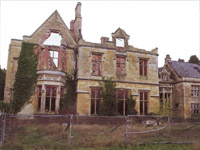
Plas Gwynfryn, Wales (Image: SAVE Britain's Heritage)

It’s often been said that there are no problem buildings, just problem owners.  However, an even more difficult situation is where the house is ‘orphaned’ because no legitimate owner can be found.  This can make it doubly frustrating for those looking to buy and restore a property who are forced to sit by and watch a building deteriorate as the search goes on to find the owner.  This also highlights something of a legislative loophole as having no known owner also prevents the council serving an ‘Urgent Works Notice’ to force repairs thus ensuring that the house will continue to deteriorate. Which brings us to Plas Gwynfryn; an orphan with good prospects if adoption takes place quickly.

The grade-II listed Plas Gwynfryn is another of the many Welsh country houses built to serve the minor gentry, with their increased wealth from the Victorian industrial boom.  The estate had been inherited from a childless uncle by Owen Jones Ellis-Nanney in 1819, and he hugely increased the size of his lands by purchasing the neighbouring Plas Hen estate. On his death it passed to his son, Hugh John Ellis-Nanney.  Having been educated at Eton and Oxford and, on his 21st birthday, now owner of a huge estate, Hugh was the epitome of the eligible bachelor and wanted a house to reflect his status.

The old house was demolished in 1866 and the new house was completed by 1876 at the then astronomical cost of £70,000 (approximately £3m in today’s money).   The design, by architect George Williams, was regarded as very fashionable to the extent that the house was featured in ‘The Builder’ magazine in June 1877.  Hugh was very active in local politics and in 1895 almost beat the local Liberal candidate, the future Prime Minister David Lloyd George, losing by only 194 votes.  Almost by way of consolation Hugh was given a baronetcy and happily lived out his days at Plas Gwynfryn, dying in 1925, with his wife following in 1928.  As their only son had died aged just eight, the house was inherited by their daughter who moved out to Plas Hen.  The house was then let to the Church of Wales before being sold off in 1959 when the estate was broken up.

It then became a hospital and then a hotel before a mysterious fire entirely gutted it in 1982.  Since then it has stood as an empty shell, slowly deteriorating, and is now in serious danger of collapse with the tower a particular risk.  Almost no work has been done on the house except for a brief period when a conservation-minded squatter moved in and started work.  This prompted the only known appearance by the apparently Canadian owner who appeared in a local court during eviction proceedings.   Since then nothing has been heard of the owner and the local council, though aware of the situation, seem powerless to act unless the owner can be found.  A local developer, Aaron Hill, who has completed other historic restorations, is keen to find the owner and buy Plas Gwynfryn with a view to fully restoring it as a family home – which would surely be the best outcome.

Although rare, this example shows that despite the combined efforts of the local Council and a potential buyer an owner can remain a mystery, thwarting well-intentioned efforts to rescue a house before it deteriorates beyond the point of repair.  If there is a legislative loophole it must be closed to prevent any other houses languishing in such a way.

Perhaps councils could be given the legal power to compulsorily purchase when a house is at risk of complete loss, with the money held in escrow in case the owner should appear. Councils are often reluctant to use their powers of compulsory purchase as they become legally responsible for repairs but surely in cases like this with an owner desperate to take the house on, the risk to the public purse is very low. The power would have to only be used in extremis when all other avenues had been exhausted but at least it would give a tool of last resort to ensure that more of our heritage is not lost just because a problem owner can’t be located and forced to honour their responsibilities.

If you are the owner and you happen to read this, please do get in contact with either me or the Council or SAVE Britain’s Heritage who would be more than happy to help get the process of rescuing this house under way.
Is Mentmore Towers finally for sale?

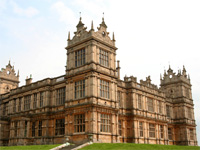
Mentmore Towers, Buckinghamshire (Image: wikipedia)

After various legal battles it seems that Mentmore Towers, one of the finest country houses in the UK may be for sale.  Part of the property empire of Simon Halabi, who was declared bankrupt in April 2010, it was bought with the intention of turning it into six-star country hotel with the ‘In and Out Club’ as the London clubhouse.  The plans were thwarted by the global financial crisis which not only reduced the market for such a venture but also the financing.  Now with the recent £150m sale of Halabi’s prime London West End estate, which included the ‘In and Out Club’, putting Mentmore on the market is the next logical stage of the disposals.

The only source for this story is a blog post by Christian Metcalfe who writes the Legal blog on the Estates Gazette website which has enough details to make it sound very plausible.

The grade-I listed Mentmore Towers was built between 1852-54 for Baron Mayer de Rothschild as one of several country houses built for the Rothschild family in the area.  Designed by Joseph Paxton, architect of Crystal Palace, the neo-Renaissance house was inspired by the Elizabethan ‘Prodigy’ houses such as Wollaton Hall in Nottinghamshire.  Inherited by the Baron’s wife and then his daughter, it then passed to her husband, the Earl of Rosebery, following her early death.  It remained in the Rosebery family until the death of the sixth Earl in 1973 when the then Government stupidly turned down the offer of the house and world-class collections in lieu of death duties, triggering one of the finest country house sales of the 20th-century.  The house plus 81-acres was then sold in 1977 for £220,000 to the Transcendental Meditation foundation as a meditation centre, who cared for the house until it was sold in 1997 to Simon Halabi.  Since then little work has been done on the house and there have long been fears for its condition with English Heritage placing it on the ‘At Risk’ register.

The house is now apparently being quietly offered for sale, by as yet unknown estate agents, for around £16m – but no details on how much land would be included.  At that price, the house would be a bargain on square footage basis alone – but it would require a huge financial commitment from the new owner to not only restore the house but maintain it in the future, ideally as a family home.  The Rothschild’s have remained very much involved with the estate so perhaps this is their opportunity to bring it back into the family – although with Sir Evelyn de Rothschild living at nearby Ascott House perhaps Nat Rothschild, the incredibly successful hedge fund manager said to be worth around £300m, might like to take a look?

Original blog story published June 7, 2010 3:35 PM: ‘Will the real estate agent please stand up, please stand up‘ [Estates Gazette] – @Christian: if I do find out who the estate agent is, I’ll be sure to let you know.

Anyone with deep pockets? Country houses at risk today

It seems remarkable that between the popularity of country houses as tourist attractions or business or simply as homes that any would be at risk.  Yet as the 2010 SAVE Britain’s Heritage Building’s at Risk Register shows there are still a broad selection of fine houses which, for various reasons, are in need of someone with a desire to restore part of our heritage, lots of dedication, and pretty deep pockets.

Nocton Hall, Lincolnshire (photo copyright: Tom Vaughan)

One of the saddest is the case of Nocton Hall in Lincolnshire – a county which has lost so many of it’s fine old country houses already.  Fire is still one of the main reasons a house can quickly go from being a secure home to an ‘at risk’ shell.  Grade-II listed Nocton Hall is a warm honey-coloured stone house built for the 1st Earl of Ripon in 1841 to replace the original Jacobean house which burnt down in 1834.  After a stint as an RAF hospital in WWII it became a residential home before being bought by a property developer.  Unfortunately no development took place and the house was allowed to slowly deteriorate before a serious fire severely damaged what had been a perfectly good house.  Still sitting in its own gardens and parkland and near the village Nocton Hall cries out to be restored either as a h,otel or ideally as a grand family home.

Barmoor Castle, Northumberland (Photo: SAVE Britain's Heritage)

To look at the photo, Barmoor Castle in Northumberland looks in pretty good shape – but a picture can hide as much as it shows.  The first issue with Barmoor is that it actually is unused and sits in the middle of a caravan park which has been established in the grounds. Inside, there is some water damage as the roof has been leaking – although recent work, part funded by English Heritage, has alleviated this for the moment. Barmoor was built in 1801 around an older tower by the architect John Patterson of Edinburgh in a castellated Gothic Revival style for Francis Sitwell, in whose family it remained until 1979 when it was sold along with 200-acres.  The current owners have operated the caravan park since then but didn’t live in the house or use it leading to it’s current neglected state.  This is a classic example of where a house could be rescued from an inappropriate use, restored and enjoyed as a fine country house as was intended.

St Botolph's Mansion, Wales (Image: SAVE Britain's Heritage)

St Botolphs Mansion in Pembrokeshire was built in the early 1800’s for General Richard Le Hunt is a house in need of a use rather than repair.  The Doric porch and neat window architraves create an interesting facade which would normally ensure that such a house would be jealously fought over if it came to market.  However it is now owned by the nearby oil refinery (the proximity probably ruling out residential use) but they are exploring options as to how to make use of this elegant Georgian house – perhaps as a conference facility might be more appropriate.  Either way, this is a house which shouldn’t be forgotten.

Other country houses of note in the report include the Grade-II* listed Plas Machen nr Newport, the surviving portion of the 15th-century house of the Morgans who moved up in the world to Tredegar House, which is for sale. Also for sale, since 2007, is Benwell Towers in Newcastle which was a country house when built but is now suburban, achieving fame in later life as the set for the kid’s TV series ‘Byker Grove’.

Even if your pockets can’t stretch to a country house there are many other buildings seeking a saviour so do order your copy of ‘Live or Let Die‘ and certainly consider joining SAVE Britain’s Heritage to help to preserve our architectural legacy for future generations.

Converting country houses from commercial to residential: a sound investment?

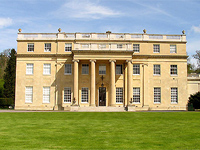
Benham Valence, Berkshire (Image: wikipedia)

As the pressures of the twentieth century forced more country houses owners to face the reality that they could no longer live as they had and would have to move out of their homes they then had to decide what to do with it.  Unfortunately this meant demolition of hundreds of large houses but some owners were more creative and many houses became commercial premises, either as hotels, schools or institutions, and others became some of the grandest office buildings in the country.  However, recent pressures of this century have now seen some of these offices being converted back into homes or being offered for sale as an opportunity to do so.

In many ways the country house has always had an element of the commercial to it with the estate offices usually being based either in a part of the main house or in a nearby building to enable the owner to deal with business without having to travel far from home. The changes of the twentieth century were on an altogether more comprehensive scale with the entire house being changed to accommodate the demands of business.  This not only meant the conversion of the main house with all that entailed for the interiors but also the building of further offices in the grounds.

Sometimes the development was kept a good distance from the main house such as at Ditton Park in Berkshire.  This became the office of the Admiralty Compass Observatory from 1917 until it was sold in the 1990s to Computer Associates who built a huge office building to the west of the main house (which became a conference centre) leaving the setting intact.

Sometimes though it’s possible for smaller businesses to be accommodated just within the main house such as at Gaddesden Place in Hertfordshire.  The house, built in 1768, is a elegant Palladian villa (similar to the White Lodge in Richmond Park) and was James Wyatt’s first country work.  The site is said to have some of the best views in the home counties and the sensitive use of the house has allowed to remain in splendid seclusion.

However, modern concerns mean that a country house has lost some of it’s appeal as offices.  One key issue is that by their nature the houses are isolated meaning that employees must have cars to reach it leading to more cars on the roads and the need to provide huge areas of parking.  Stronger heritage legislation now also means it’s much harder to alter the houses to meet modern business requirements such as air conditioning and computer networking.  The nature of the houses also means that maintenance costs are higher than for a purpose built office.

This has led to some houses which were formerly offices to be converted back into homes.  Mamhead House in Devon, built between 1827-33 and regarded as one of Anthony Salvin‘s finest designs, it was, for many years, a school before becoming offices for a local building company.  It was bought by a businessman who converted the main part of the house back into being a home whilst still letting out part of the house to the Forestry Commission.

Perhaps the grandest and largest opportunity for many years to restore a house into a home is the mansion at Benham Valence in Berkshire.  This superb house was built in 1772-75 for the 6th Earl of Craven and was designed by Henry Holland in collaboration with his father-in-law, Lancelot (Capability) Brown, the famous landscape architect.  The south front features a grand tetrastyle Ionic portico which looks out over a large lake with views into the parkland.  Inside, there are many fine chimney-pieces bought from the sale at Stowe in 1922, including one from the State Dining Room.  It also features a small circular double-height vestibule adjoining the inner hall, a design later adopted by Sir John Soane.

The house was empty in 1946 and remained so until it was sold in 1983 and converted to use as offices with a large wing to the north east of the house being demolished and replaced, in part, by an ugly 80’s complex providing over 100,000 sq ft of space.  Luckily though the main house was largely spared and remains Grade II* with the 100-acres of Grade-II parkland. Now offered for sale at £6m this is a rare opportunity to create a wonderful country house – providing it’s possible to obtain planning permission to convert it back – which, once restored, could be worth £10-12m.  One key requirement would be the demolition of the office complex and the ripping up of the huge car park – but give me a pickaxe and I’ll be happy to lend a hand.

Full property details: ‘Benham Valance, Berkshire‘ [Strutt & Parker]

‘Live or Let Die’: the 2010 Buildings at Risk Register

'Live or Let Die' - 2010 SAVE Buildings at Risk Register

For anyone interested in architectural conservation the annual SAVE Britain’s Heritage ‘Buildings at Risk Register‘ will always trigger ‘what if’ moments as you contemplate possibly taking on a forlorn building which catches your eye.  Yet the Register should also inspire some concern and disappointment that once again so many wonderful buildings are at risk in the first place.

The 2010 report, entitled ‘Live or Let Die‘, again provides a fascinating snapshot of a broad collection of buildings which we are now at risk of losing.  Some are merely unused and crying out for sympathetic conversion, others are more extreme and would require great quantities of time and money – but they would deliver the most incredible homes or workplaces once finished.  And remember, estate agents almost always value good quality, well-restored period properties higher than a similar but modern property in the same area.

The report features over a hundred properties from the large country houses such as St Botolph’s mansion, in Herbrandston, which was built in the early 1800s, but is now empty and deteriorating.  Other substantial houses include the house featured on the cover; Northwold Manor in Northwold, Norfolk.  However, it’s not just houses, but mills, schools, libraries, town halls and many more.

SAVE Britain’s Heritage has been successfully campaigning for historic buildings since its formation in 1975 by a group of architects, journalists and planners. It is a strong, independent voice in conservation, free to respond rapidly to emergencies and to speak out loud for the historic built environment. It has published a Buildings at Risk Register for England and Wales since 1989 and has had many successes and is responsible for saving many buildings we love today.  Even if you can’t take on a property, if you wish to support their work, please consider becoming a Friend of SAVE and you will not only receive discounts on publications, but newsletters and access to the online version of the Register featuring over a thousand properties in need of care.

Order your copy today: ‘Live or Let Die – 2010 Buildings at Risk Register‘ [SAVE Britain’s Heritage]