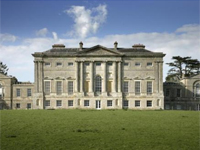
For sale for the first time in 1000 years: Shakenhurst Hall, Shropshire

Shakenhurst Hall, Shropshire (Image: Nick Edwards/Panoramio)

It has been estimated that there are approximately 2,000 large country houses in the UK with decent size estates  (over 100 acres) – but very few are still in the hands of the family which originally built them. Yet despite the many sales over the years it’s still possible for a house and land to remain with one family for many hundreds of years – though that is now coming to an end for Shakenhurst Hall in Shropshire, seat of the Meysey family for much of the last 1000 years and now on the market for the first time at £12m.

The lands were first given to a French Baron, Roger de Toeni, for his help in the conquest of Britain in 1066.  It has then passed through inheritance through various members of the Meysey family except when it passed for period to a godson in the 20th-century and then his wife, before being bequeathed to Michael Severne, a descendent of the Meyseys.  On his death in 2007 it passed to his only daughter Amanda who died of cancer in 2008 leaving the house and estate to her husband.

The grade-II listed Georgian house, built in the 1790s but with a 16th-century core, is now up for sale as it faces that age-old difficulty of an estate no longer providing sufficient income to maintain the house – and neither of their two sons are in a position to take it on.  Michael Severne had run a successful plastics business from outbuildings on the estate but with his death the business folded.  Interestingly this mirrors the challenges faced by country house owners in the 19th-century who relied also on a single source of income, agriculture, who were hit particularly hard by the 1870s depression in farm produce prices and land values.

Land has always been regarded as the most important asset (even if mortgaged) and so when faced with the choice of economising, selling land, or selling paintings or books it was usually the latter which went first.  This lead to the rise of the art sales particularly from the 1890s until the 1930s which dealers such as Joseph Duveen exploited as they extracted exquisite Old Master Italian paintings and others by the finest English artists which would then be shipped to the United States. Here a new class of exceptionally wealthy financiers and industrialists such as Hearst, Frick, Morgan, Mellon, Carnegie and Rockefeller would compete to secure the finest works of art before donating them to eponymous public galleries.

Although this did leave significantly smaller collections for some houses it did sometimes provide the finance to either diversify into investments or tide them over until agriculture recovered in the 1930s – although for some it merely delayed the more unpalatable choice of demolition which unfortunately was the outcome for hundreds of houses in the UK.  With demolition now thankfully out of the question an owner is left with few options and it can be easier to simply sell up which is what appears to be the case with Shakenhurst Hall.

Sad though it is that such a long connection is to come to an end, here’s hoping the next owner will respect the 1300-acre estate, the history and the house to create a rewarding new chapter for this elegant ‘minor’ country house.

Property details: ‘Shakenhurst Hall‘ [Savills]

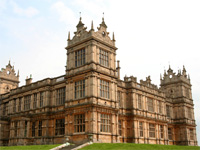
PS: it’s interesting that two houses should be available which look so alike. I was struck by just how similar Shakenhurst Hall is to Peatling Parva Hall in Leicestershire which is currently on the market for £4.75m.  Interestingly the latter only took on it’s current form after alterations in 1910 after the Arts-and-Crafts architect Detmar Blow added two bays to the original house.  Was this just a coincidence of architects thinking alike or had Blow seen either Shakenhurst or something similar?

Property details: Peatling Parva Hall [Knight Frank]
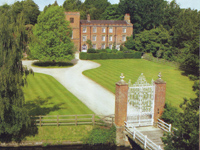
Phoenix for sale: Beaurepaire House, Hampshire

Beaurepaire House, Hampshire (Image: Knight Frank)

Launched this week ( 23 June 2010) in Country Life magazine is a fine, grade-II* listed, moated manor house set in nearly 250 acres of Hampshire.  Open the first set of impressive wrought iron gates and follow the drive down to the ancient moat and through the second, equally impressive, set of white painted gates over the wooden bridge. Before you stands a beautiful red-brick manor house – but why is the house set in one small corner of the island? Why does the drive lead over the moat but unusually not to the middle of the house?  And why does that tower look a bit new?

The answer to all these questions is that Beaurepaire House, as it now stands, is what remains of an important and beautiful manor house which burnt down in 1942 after a chimney fire.    What happened subsequently is an interesting example of how disaster need not lead to the loss of the whole house or the estate.

Beaurepaire House, Hampshire before the fire (Image: Lost Heritage: England's Lost Country Houses)

Beaurepaire House has royal connections having been visited twice, once by Henry VIII in 1531 and then by his daughter Elizabeth I during her visit to The Vyne.  The moat itself dates from 1369 but the original house was built in the 16th-century but was badly damaged during the Civil War and was only rebuilt in 1777.  The design of the new Georgian ‘Gothick’ house followed the rare structure of having a square core with castellated corner turrets.  There are relatively few examples of these houses – and the ones we have today are all ruined to some degree (Ruperra Castle, Wales / Lulworth Castle, Dorset) or lost entirely (Compton Bassett House, Wiltshire).

At the time of the fire the house was owned by one of the richest men in the country, Sir Strati Ralli, but wartime building restrictions prevented restoration. After the war the estate was owned by Lady Sherfield and in 1965 she decided to restore the remaining servant’s wing as a house and commissioned the well-known architect Tom Bird, who had restored many other country houses, to make the house habitable.  Bird decided to add a sympathetic tower, which continued the existing architectural style, to the fire-damaged southern flank of the remaining wing to not only provide structure but also to improve the proportions of what was left.  The addition was less than 10% of what remained but successfully ensured that the house was able to rise again from the ashes of the fire to retain the role it had enjoyed for hundreds of years as the centrepiece to an impressive country estate.

_____________________

Property details: Knight Frank seem to have forgotten to put the details on their website.   Nevermind, here’s a link to all the Hampshire houses they’re selling in the hope that they soon add it in: Knight Frank: Hampshire

The relative cost of your English country house

Great Hockham Hall, Norfolk (Image: Savills)

So you’ve decided you really want a country house.  Nothing too big; more a residential estate than a working or sporting one so perhaps just 48 acres. Luckily your four-bed house in the best part of Fulham is worth £1.75m so you can sell up and surely move straight into your dream rural arcadia? Unfortunately a recent survey by upmarket estate agents Savills has shown that you might need just a bit more money than that.

As always, proximity to London is the key factor in determining how far your money will stretch.  With the Russians and Middle Eastern families not willing to be too far from the cultural delights of Bond Street the price of a decent country house with 48 acres in Surrey tops the table.  To secure a decent small estate in the nicest parts would require between £15m-£20m but a similar property in Hampshire would set you back just £10m on average.

So with the those two counties ruled out, where next?  The Cotswolds have always been popular with the corresponding effect on prices but if Hampshire is too expensive then unfortunately you’re also out of luck in Gloucestershire with the average there hitting £12m – but north Oxfordshire might look attractive with the average of between £7m-£8m.

Distance from London reduces prices but with broadband making working from your country home on Friday possible Dorset or Wiltshire are still very attractive but more affordable – but you’ll still have to expect to pay between £4.5m-£5m.  Fewer transport options make East Anglia even cheaper with a country house in Norfolk going for around £3.25m – which makes the pretty Great Hockham Hall [pictured above], a grade-II listed Queen Anne house built in 1702 and with 47.66 acres, almost a bargain at £2.95m.

So where could you trade in your Fulham house for a small country estate? Step forward Lincolnshire where the average is the lowest in England at ‘just’ £1.75m-£2.25m. So proving that everything is relative it seems that even the high prices of London don’t always directly translate into a ticket to the country life unless you’re willing to go where the market takes you.

______________________

Source: research by Savills (but listed not on their website) and reported in The Times ‘Bricks & Mortar’ property supplement on Friday 18 June (but their website doesn’t allow access so no link there either).

If you are interested in the rest of the report or the averages for other counties I’m guessing the best contact is Alex Lawson at Savills (Rural Research) on +44 (0) 20 7409 8882 or email alawson@savills.com.

Conversion reversion? Wardour Castle, Wiltshire

Wardour Castle, Wiltshire (Image: Strutt & Parker)

With so many country houses lost in the twentieth century, almost any alternative which saved them from the demolition crew was to be welcomed; no matter how drastic.  For some this meant institutional use but for many others of all sizes the solution was conversion into flats and apartments – though with varying degrees of success.  However, as these properties come on to the market, is it perhaps time to consider converting them back into the single, glorious houses they were intended to be?

Launched this week (16 June 2010) in Country Life magazine is the principal apartment in what is considered James Paine’s finest creation; Wardour Castle, a supremely elegant essay in Palladian architecture.

Central stairwell and gallery, Wardour Castle, Wiltshire (Image: Strutt & Parker)

Built from 1770 – 76, for the eighth Lord Arundell the most impressive feature is a breath-taking central stairwell with first-floor gallery which Pevsner called ‘the most glorious Georgian interior of Wiltshire’ and which forms the core of Apartment One which is now for sale.  Wardour Castle house has proved to be adaptable becoming Cranborne Chase School in 1960 until it closed in 1990 when it was then converted into ten apartments.  As the divisions appear to have respected the natural sections of the house this seems to be a good example of where someone could convert the house back to a single home.

There are many examples of houses being rescued by conversion.  SAVE Britain’s Heritage have long campaigned to protect these houses and have worked in conjunction with one of the leading architects, Kit Martin, in supporting conversion.  A 1983 SAVE report entitled ‘The Country House: to be or not to be’, written by Kit Martin and Marcus Binney, includes particularly interesting studies of how these houses could be sensitively converted.  These show that although almost any country house could be sensitively adapted some are naturally more suitable particularly where the overall layout of the house is symmetrical, shallow and long.

The study was an important milestone in the practice of country house conversion and saved many houses from complete loss or inappropriate use including The Hazells in Bedfordshire, the grade-I Northwick Park in Gloucesterhire, Dingley Hall in Northamptonshire.  The sensitive approach they championed now means that it should be possible to consider converting a house back if the right opportunity arose.  It should be said that some houses are never going to be converted back due to a variety of factors including there being too many apartments involved such as at Thorndon Hall in Essex which contains 37 flats, or where not enough land has been retained to make the unified house valuable enough to justify reversion.

Perhaps the idea of reversion becomes more realistic where more than one part of the same house comes on the market at the same time such as recently happened with grade II*-listed Ampthill Park House, Bedfordshire.  Built by the Cambridge architect Robert Grumbold in 1687-9 and completed by John Lumley of Northampton in 1704-6, with major additions by Sir William Chambers in 1769 it is certainly one of the most impressive houses in the county. It was rescued from dereliction by conversion into just four large houses; two of which were put on the market in April 2010, the largest of which includes most of the principal rooms.

Although it’s nice to dream about these houses becoming single homes probably the biggest obstacles are not only being able to secure the other apartments but also that the value of the individual properties may be greater than the value of the unified house.  However, it’s not entirely beyond the bounds of possibility that someone with deep pockets and a desire to restore a house could take on one of these conversion reversions and recreate a superb country house.

Property details: ‘Apartment One – Wardour Castle, Wiltshire‘ [Strutt & Parker] – £2.75m

Detailed architectural description: ‘Wardour Castle, Wiltshire‘ [English Heritage: Images of England]

Is Mentmore Towers finally for sale?

Mentmore Towers, Buckinghamshire (Image: wikipedia)

After various legal battles it seems that Mentmore Towers, one of the finest country houses in the UK may be for sale.  Part of the property empire of Simon Halabi, who was declared bankrupt in April 2010, it was bought with the intention of turning it into six-star country hotel with the ‘In and Out Club’ as the London clubhouse.  The plans were thwarted by the global financial crisis which not only reduced the market for such a venture but also the financing.  Now with the recent £150m sale of Halabi’s prime London West End estate, which included the ‘In and Out Club’, putting Mentmore on the market is the next logical stage of the disposals.

The only source for this story is a blog post by Christian Metcalfe who writes the Legal blog on the Estates Gazette website which has enough details to make it sound very plausible.

The grade-I listed Mentmore Towers was built between 1852-54 for Baron Mayer de Rothschild as one of several country houses built for the Rothschild family in the area.  Designed by Joseph Paxton, architect of Crystal Palace, the neo-Renaissance house was inspired by the Elizabethan ‘Prodigy’ houses such as Wollaton Hall in Nottinghamshire.  Inherited by the Baron’s wife and then his daughter, it then passed to her husband, the Earl of Rosebery, following her early death.  It remained in the Rosebery family until the death of the sixth Earl in 1973 when the then Government stupidly turned down the offer of the house and world-class collections in lieu of death duties, triggering one of the finest country house sales of the 20th-century.  The house plus 81-acres was then sold in 1977 for £220,000 to the Transcendental Meditation foundation as a meditation centre, who cared for the house until it was sold in 1997 to Simon Halabi.  Since then little work has been done on the house and there have long been fears for its condition with English Heritage placing it on the ‘At Risk’ register.

The house is now apparently being quietly offered for sale, by as yet unknown estate agents, for around £16m – but no details on how much land would be included.  At that price, the house would be a bargain on square footage basis alone – but it would require a huge financial commitment from the new owner to not only restore the house but maintain it in the future, ideally as a family home.  The Rothschild’s have remained very much involved with the estate so perhaps this is their opportunity to bring it back into the family – although with Sir Evelyn de Rothschild living at nearby Ascott House perhaps Nat Rothschild, the incredibly successful hedge fund manager said to be worth around £300m, might like to take a look?

Original blog story published June 7, 2010 3:35 PM: ‘Will the real estate agent please stand up, please stand up‘ [Estates Gazette] – @Christian: if I do find out who the estate agent is, I’ll be sure to let you know.