Is Gwrych Castle for sale again?

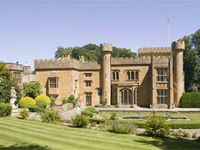
Gwrych Castle, Wales (Image: geograph.co.uk)

When Gwrych Castle was finally sold in June 2006 after twenty years of neglect, dereliction, fires and theft, there was much praise and relief locally that the once-beautiful “showplace of Wales” was to be rescued.  Bought by Yorkshire-based Clayton Hotels for £860,000, they estimated that once planning permission had been secured, the restoration would take between 2-3 years and cost an estimated £6m – however three years later, the major part of the restoration work has yet to start.

Built between 1819-1825 for Lloyd Hesketh Bamford-Hesketh, grade-I listed Gwrych was one of the largest ‘castlellated mansions’ in Europe, part of a ‘gothick’ revival which included some of Britain’s most picturesque country houses such as Eastnor Castle, East Cowes Castle, Lea Castle, and Castel Coch and many more. Following its sale by the 13th Earl of Dundonald in 1946 it was opened to the public in various forms and under various owners until 1989.  The failure of the redevelopment plans led to the castle being left unprotected against the ravages of the weather, travellers, and vandals, leaving the castle a mere shell, the fine interiors rotting in piles in the collapsed ground floor.

The plans unveiled by Clayton Hotels in 2007 showed that the castle would be fully restored and largely based on the original layout. Mark Baker of the Gwrych Castle Preservation Trust, who had campaigned since he was 11 to save the castle, welcomed the plans and for many it seemed that the end was in sight.  In February 2009, Wales Online (‘Welsh ruin to be transformed with techniques fit for royal home‘) trumpeted how the design work for the restoration was starting under the care of Donald Insall, one of the best conservation architects in the UK.  However, in May 2009, a story on BBC News (‘Slow economy delays hotel plans‘) explained that the slow economy had delayed plans and also the cost for the project had risen to between £12-14m.

Now a recent story (‘Clitheroe man haunted by ghostly image in castle window‘) about a ghost in a window included some interesting quotes which raise some questions about the status of the project – or perhaps just the intended future clients.

A Lancashire businessman who combines being an optician with “psychic management” claimed to have taken a picture of a girl standing at a window where there is no floor.  Kevin Horkin claimed he was visiting the site as “I buy property and was looking at the castle with the view buying it.” and the story ends by saying that “Kevin has put a bid in for the castle which he hopes to turn into a luxury psychic retreat.”.  Despite the obvious convenience of a psychic who wants to open a hotel taking one of the clearest ever pictures of a ghost, it does raise questions about why he is saying the hotel is for sale? The Clayton Hotels website is one page with an email link and with the dramatic rise in restoration costs and the difficulties of the property markets, is the castle being quietly marketed ‘off the record’? Perhaps the quotes are misconstrued, or perhaps Clayton will refurbish the house but lease it Mr Horkin, but either way, Clayton Hotels should perhaps clarify exactly what is happening to this iconic part of Wales’ architectural heritage especially as so many people have spent so long campaigning for its rescue.

More information about the house: ‘Gwrych Castle Trust

National Trust to allow life back into properties

Calke Abbey, Derbyshire (Image: National Trust / Rupert Truman)

In an important change of policy, the National Trust has decided to lift some of the many restrictions which had led to criticisms that it was being too museum-like in it’s approach to its wonderful country houses.  The new strategy is designed to give visitors more of flavour of how a house might have been used when it was a home. 

This vision was inspired, at least in part, by the experience of the NT chairman Simon Jenkins, when visiting Chatsworth House in Derbyshire which is still the family home of the Duke and Duchess of Devonshire as well as one of the finest homes in private ownership in Europe.  Visitors often find that the Duchess has joined them and rooms show the momentoes and items found in any home.

The NT accepts that this will increase the wear-and-tear on the properties and inevitably some mistakes will be made. The expertise and experience of the Trust should ensure that the correct controls are still in place where appropriate as no-one wants to see damage to delicate fabrics, books or paintings. The new atmosphere of exploration and freedom will hopefully enhance the visitors experience and allow them to appreciate the house as it was intended to be; as a home.

Full story: ‘Welcome to Britain’s stately home from homes‘ [The Times]

An architectural gem – but still slow to sell: Iver Grove

Iver Grove, Buckinghamshire (Image: The Listed Property Owners Club)

When it was completed in 1724, Iver Grove was one of the first houses in Britain built using the then radical Palladian styling; pre-dating even Lord Burlington’s famous Chiswick House.  Iver Grove is a beautiful and compact red brick essay in the use of the Classical elements with a Doric portico and topped with an elegant pediment.  Although originally attributed to either Sir Christopher Wren or Nicholas Hawksmoor, it’s now more widely accepted to be the work of John James who worked with Wren on St Paul’s Cathedral and succeeded him as the surveyor of the Commissioners’ Churches.  The front steps lead into a spacious and light entrance hall featuring the original oak staircase.

That the house is here today is remarkable in itself as after WWII it was in a parlous state and at risk of becoming one of the many hundreds of country houses demolished in the 1950s.  The house was smothered in ivy, riddled with dry rot and had been subject to various thefts of lead and fixtures and vandals who had smashed all but one of the Wedgewood stained-glass panels in window over the staircase.  The house was one of the first to be bought by the Government in an effort to save it – although this led to angry questions in the House of Commons from philistine MPs who demanded to know why we had spent more saving an “extremely beautiful house” (Lord John Hope) than we had sent to aid the Congo.  Such amazing short-sightedness still prevails today with those asking why we spend any money on heritage with similarly spurious justifications.

Anyway, thanks to the Government, the house was rescued through a programme of works which included demolishing the collapsed Victorian wing – and in so doing bring the house back to it original scale, and conveniently making it more manageable.  So when the this grade-I listed house was first launched in 2007 with much press coverage including a glowing write-up by Marcus Binney in The Times (‘A fast track to perfection‘) and later in Country Life (‘Georgian estate for sale‘) it was thought it would sell quickly.  However, £6.5m price tag was probably boosted by its architectural importance above the fact that it was a six-bedroom house with just 17-acres near to the M25.  The price was probably quickly identified as the issue as in The Times article in May the price is £6.5m, by the time the Country Life article was published in December the price was given as ‘offers over £5m’.  Now, two and half years later the price has dropped to a more reasonable £4.25m, and hopefully this will entice a new sympathetic purchaser with a desire to live in an important country house with manageable grounds but who will appreciate being just 17 miles from Hyde Park corner.  Actually, if I win the lottery, I’ll probably go for it.

Full details: ‘Iver Grove, Buckinghamshire‘ [Knight Frank]

Still available for sale – the country houses proving difficult to sell

Despite the enthusiasm of the estate agents, it seems that some of the most impressive houses featured in the glossy adverts at the front of Country Life magazine are proving difficult to sell.  Whether this is due to a poor local market or unreasonable prices, or just bad luck, here are a few stunning country houses which are still looking for buyers.

Noseley Hall, Leicestershire (Image: Knight Frank)

Noseley Hall in Leicestershire has been in the family of the present Lord Hazelrigg for nearly 300 years but was put up for sale in April 2009 at a guide price of £14m for the grade-II* listed house plus the 1,200-acre estate.  Built in 1728 on the back of Northumberland coal mining wealth, the house is decorated with works of art (though fewer now following several auctions), and fine plasterwork.  However, Lord Hazelrigg admitted that the estate doesn’t cover the costs of running the house, and so he decided to sell, but it’s still listed on the Knight Frank website – and still with a guide price of £14m.   More details: ‘The last of the romantics‘ [Sunday Times]

Dowdeswell Court (Image from Savills)

Another house which has been for sale is Dowdeswell Court in Gloucestershire which was first advertised in 2005 and then sold for £4.75 but then came back on the market in summer 2009 with a guide price of £7.9m (and was featured in this blog).  When serial restorer James Perkins took on the house it had been a 46-room nursing home resulting in a huge restoration project and since he sold in 2005 has moved on to restoring other country houses including Aynhoe Park.  The grade-II house was built between 1833-35 by local architect Charles Paul of Cheltenham and was originally three storeys but during the 1920s the top storey was neatly removed.  The more manageable house is a beautiful example of neo-Classical detailing combined with modern comforts. The house is available through either Knight Frank or Savills.

Compton Pauncefoot Castle - Somerset (Image: Bidwells)

The final property for this list is the impossibly beautiful Compton Pauncefoot Castle in Somerset which has been for sale since 2006.   Built in 182o, the grade-II listed house sits in a 1,278-acre estate with 40-acres of stunning gardens and lakes.  Originally on the market for £22m, it failed to sell even during the boom years of 2007-8 and despite 20 buying agents being invited to a launch event, and being featured in the The Sunday Times, it’s now being sold at auction – though I suspect the reserve would be near the current price advertised on the agents websites of in excess of £17m.  Perhaps the fact that it’s only for sale as a whole may have put off those who might just want the house and immediate grounds – but this would deny the owner the certainty of privacy that the surrounding estate would bring.  The house is available through Bidwells and Knight Frank (who despite putting it as their lead advert in Country Life this week fail to have it on their website).

Ranton Abbey to be resurrected – or replaced?

Ranton Abbey, Staffordshire (Image: Knight Frank)

When the historic Ranton Abbey was accidentally set alight and gutted in 1942 by the Dutch troops stationed there, it was likely that it would go the way of many other houses and simply be demolished. Yet the Earls of Lichfield, who owned the 300-acre estate, simply left it and focused on turning the land into a first-class shoot, allowing the house to slowly collapse, leaving just the ivy-clad walls visible today.

The death of the 5th Earl, the famous photographer Patrick Lichfield, in 2005, prompted the family to look again at the estate.  However, rather than simply sell it they decided to obtain planning permission for the building of a new house and have now put both for sale at £3.5m.  Although an obvious course of action, the choices made seem a bit odd.  The new house is strongly Palladian in design but the projections produced so far have it sited so close to the red-brick shell of the old house, and the grey stone of the church, that it seems to have almost landed there by accident.  It certainly does not seem to appear at home in this location and appears almost arbitrary, resulting in three large architectural elements fighting for prominence in a small area.

As the respected architectural writer Marcus Binney says in the ‘Bricks and Mortar’ supplement of Friday’s Times newspaper, surely the better option would be to restore the original house.  This would bring back the balance which existed before and remove at once the obvious difficulties of leaving the old house as a giant garden ornament to compete with the new house.  Whoever buys the estate and planning permission will hopefully think again about this scheme and look seriously at restoration.

Full story: ‘Historic homes: restoration dilemma‘ [The Times]

Property details: ‘Ranton Abbey, Staffordshire‘ [Knight Frank]