School’s out: seats of learning for sale

One of the many uses to which our country houses have been successfully adapted to is that of schooling – from the grandest such as Stowe and Bryanston to the many smaller houses which have delighted and terrified children in equal measure for many years.  Even as recently as April 2010, Wispers in Sussex, was sold to a London primary school as a satellite to their main campus. Yet for all the fond memories held by generations of youngsters, private schools and educational colleges are facing their own periods of austerity, forcing some to close.  With closure comes a rare opportunity for a house to once again become a home – though such a move is fraught with practical, and sometimes political, challenges.
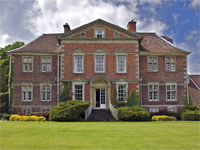
Urchfont Manor, Wiltshire (Image: Augustus Photographic via flickr)

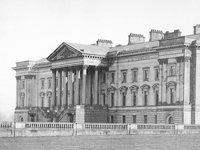
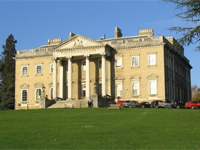
One of the bonuses of writing this blog is to discover houses so little known that, despite their obvious beauty, they seldom appear in books.  Urchfont Manor, Wiltshire is a classic example of this. Currently a residential college, this stunning smaller William and Mary country house was built around 1678 for William Pynsent, a wealthy London barrister, who would have been well-aware of the latest architectural fashions. The architect is unconfirmed but, with the hipped roof and projecting, pedimented centrepiece, it appears to draw inspiration from houses such as Horseheath Hall, Cambridgeshire (though 7-bays to Horseheath’s eleven) designed by Sir Roger Pratt in 1663-5 (dem.1777), and also clear stylistic similarities with houses such as  the north and south fronts of Fawley Court, Buckinghamshire (built 1684-5, by Sir Christopher Wren) and Puslinch, Devon (a late proponent of the style, being built c1720).  One curious anecdote, told to Sir John Julius Norwich, was that the house was substantially altered, creating the elegant east front, about twelve years after construction to designs by William Talman – but Colvin doesn’t mention it and no firm evidence has appeared to support this…so far.
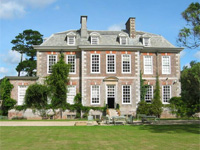
Puslinch House, Devon (Image: Devon Rural Archive)

Urchfont is a fascinating and enchanting smaller manor house which successfully plays the neat visual trick of looking larger than it is – at least from some angles. The two key views of the house are from the main road from the village, which gave a clear view of the east front and the road running below the south front (the house was once more visible; maps from 1880s show only a few clumps of trees, much fewer than there are now).  If one only saw these two fronts, one might think this a large, cube-shaped house – but move round to the north and the house is clearly only one room deep on the east front. A lovely piece of social aggrandisement.  The house passed through various families and was tenanted before being bought by another lawyer, Hamilton Rivers-Pollock, in 1928, who lived there until his death in 1941.  It then became a home for London children suffering from tuberculosis, and was then bought in 1945 by Wiltshire County Council as a residential college.  Now, faced with cutbacks,  the council have decided to sell up, amid much local controversy, giving this beautiful house an opportunity to once again become a home.
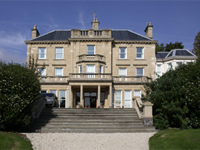
The Hill, Abergavenny, Monmouthshire (Image: Cooke & Arkwright)

Across the country in Monmouthshire, The Hill, as the name implies, sits rather proudly on the edge of Abergavenny.  Built in the mid-18th century, the house sits in 20-acres of gardens (which are included on the Register of Parks and Gardens of Special Historic
Interest in Wales) from a once larger estate, the residential spread of the town having crept up towards it.  Sadly, poor planning has led to a small residential estate taking up the grounds to the east of the house, and further buildings associated with its time as a college now stand between them and the house.  This makes it exceptionally unlikely that the house would become a single-family home again but potentially a high-quality development, replacing the modern buildings and respecting the grounds, could offer a workable solution.

Bedgebury Park, Kent (Image: Knight Frank)

On a larger scale, the curse of the associated buildings also blights Bedgebury Park, Kent. The original house of the estate, seat of the influential Culpepper family, financed by a flourishing iron business based on the clay-ironstone on which it sits, was to the east of the current grand mansion (now a lake), and played host to Elizabeth I, who visited in August 1573.  The current house was built in 1688 for Sir James Hayes, a man who had become wealthy through  his wife’s inheritance and financing the recovery of jewels and gold from a sunken Spanish ship.  Sir John Cartier bought it in 1789 and added some impressive plasterwork and the chain of lakes on the estate.  Following Cartier’s death,  Bedgebury was bought by one of the Duke of Wellington’s most trusted men, Field Marshal Viscount Beresford.  He commissioned Alexander Roos c.1838 and the subsequent extensive alterations and the addition of the cross wings to create the H-shape, obscured the red-brick original behind an impressive cladding of warm, honey-coloured sandstone ashlar, creating a house which positively glows in the sun. Inherited by Alexander Beresford Hope in 1854, he made his mark on the house by adding the impressive Neo-Classical stairhall and the striking mansard roof.

Stairhall created c.1850s, Bedgebury Park, Kent (Image: Knight Frank)

The house was bought by the Church Education Corporation with 200-acres in 1919, opening as a school with just five pupils in 1920.  It quickly grew and new buildings were added in the grounds providing extra teaching and residential facilities, before closing in 2006.  Now offered at £7.5m, the grade-II* house sits in a 90-acre estate awaiting its future.  The brochure mentions that the local planning department are open to the idea of it becoming a single unit residence again – a possibly tempting prospect for a billionaire who needs an impressive house, a small estate, and doesn’t mind having to demolish the modern school buildings which have sprung up.  Considering the quality of the interiors, this must surely be a feasible prospect, especially in light of the recent sale of Park Place for £140m which proved that there are those willing to pay exceptional prices for the best quality properties.

Apethorpe Hall, Northamptonshire (Image: English Heritage)

For those seeking to move into a former school which has been partially restored to the highest standards and now only requires the finishing touches (if you have a couple of million pounds available), then possibly the finest option would be Apethorpe, Northamptonshire.  This fascinating Tudor/Jacobean/Elizabethan house has played a supporting role in royal entertainments for 500 years and features some of the finest plaster ceilings in the country – and became a particularly grand school between the late 1940s and 1982, when it closed. Bought by an absentee owner, it languished for years, flirting with dereliction.  Finally, intervention by English Heritage brought it into their care and it’s currently for sale for offers around £5m (English Heritage reputedly spent £7m on the rescue so far), and would require another approximately £4m to complete the restoration.  On an remarkable side note; the fact that Apethorpe was saved from the usual vandalism, arson and theft which so often afflicts empty buildings, was largely due to the tireless efforts of the caretaker, George Kelley, who carried on even though he wasn’t being paid to do so.

The most recent closure (at least partially) is of St Michael’s in Tawstock, Devon.  Originally known as Tawstock Court, it was built in 1787 in a provincial Gothick style to replace an Elizabethan house which burnt down that same year.  Although the staff and parents have made heroic efforts to save it, the concern for them is that the house will fall into the hands of developers who will convert it into flats – and considering the poor job most do of such a task, their concerns are very valid.

In these straitened times, sadly a number of parents and councils will be forced to economise and schools, usually private, may well close.  Sad though this will inevitably be for the many current and former pupils, it does also offer a possibility that these houses may revert to their former role for which they were designed – and few would argue that the spectacular Marshcourt in Hampshire, designed by Lutyens, was better off as a school. However, as the roll call of struggling schools lengthens, it is important that the future of the often wonderful buildings, which gave each school their character, are given due priority to ensure an appropriate transition and restoration if the opportunity arises for them to return to being family homes.

————————————————————————

Original story: ‘Urchfont Manor sale row erupts‘ [Gazette and Herald]

Listed building description: ‘Bedgebury Park, Kent‘ [British Listed Buildings]

A stay in the country: country houses as hotels – and a bad plan

Stoke Park, Buckinghamshire (Image: Stoke Park Country Club and Resort)

Although country houses were built primarily as homes, an integral and important function was their use for entertaining.  However, one dramatic change has been the nature of the guests and how they paid for their visits – and the birth of the refined country house holiday now regarded as the best the hospitality industry can offer.  That said, running such a hotel is no guaranteed path to the wealth suggested by the lifestyle; with huge initial costs, large ongoing expenses and the elusive need for profitability leading to the recent troubles for the Von Essen hotel chain which had dominated this niche, including running the finest country house hotel – Cliveden, before collapsing under their own ambition.  The chase for profitability has also led to some shocking schemes for building further accommodation which can be seen in the recent proposals for Wyreside Hall in Lancashire.

Country houses have long been used as accommodation for travellers, be they friends of the owning family or, more spectacularly in medieval and Renaissance periods, for the monarch.  Often considered a great honour (supposedly there are more beds in which Queen Elizabeth I has apparently slept than nights she was alive), the occasion of a royal visit – or the possibility of one – would cause local aristocrats, or those aspiring, to refurbish suites of rooms such as at Burghley, Hatfield House, and Kirby Hall (even though Elizabeth I never came to the latter).  Sometimes, the ruinous expense of hosting the royal retinue would sometimes leave the owner with a title but also debts they’d be paying off for decades.

Eaton Hall, Cheshire (by Alfred Waterhouse - dem. 1961) (Image: Lost Heritage)

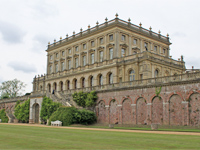
The heights of country house entertaining were reached by the Victorians and Edwardians who popularised, amongst the aristocracy, the vast weekend house party.  This led to houses being built or extended to create, in effect, large hotels.  The key difference was the guests were pre-selected from a narrow social strata and were expected to ‘pay’ for the hospitality with reciprocal entertainment or with business or political favours.  The greater the social elevation of the guests, so the number of staff required increased, leading to some houses, particularly at the cream of society, such as Eaton Hall and Clumber House, being greatly extended.  Eaton Hall eventually numbered around 150 bedrooms ranging from those for the honoured guests down to the  lowliest servants who would share dormitories.  Sadly, it was these sizeable extensions and aggrandisements which were largely the reason for their demolition in the 20th-century in their hundreds as austerity hit home and these huge palaces became unaffordable.

Sandringham, Norfolk (Image: Sandringham Estate)

Edward VII, when Prince of Wales, was the longest serving Regent and developed a highly cultivated habit of ‘weekending’ at country houses, especially his own at Sandringham, Norfolk.  His preferences have been said to have laid the foundations for not only the practice of weekend visits but also for indulging with grand breakfasts followed by country activities such as shooting, followed by convivial dinners.  Such was his reputation that some owners would fear a visit for the expense involved with one family, the Gurneys of Northrepps Hall in Norfolk, allegedly burning down a wing to forestall such a visit. By contrast, in 1902, when Edward VII visited Burton in Staffordshire an entire wing was built and named after him in his honour at Rangemore Hall.

Country house visiting had been a common activity for the travelling aristocrat in the Georgian era (a topic explored in a previous article ‘How tourism split a house from the estate‘).  Often calling on those they knew, they would also call on the notable houses in an area (an acceptable enough practice to be included by Jane Austen in ‘Pride and Prejudice‘) – and the owners of these ‘show houses’ were happy to parade their good taste.  By the beginning of the 18th-century, Blenheim, Castle Howard, Chatsworth, Wilton and Burghley had become the ‘must-see’ houses for the country house tourist – later joined by Houghton, Holkham, Eaton Hall and Kedleston.  Sadly, visitors weren’t always there for the educational opportunities of seeing some of the finest art in the world – as Horace Walpole lamented regarding the visitors to his father’s Houghton Hall, where he was a guide, the worst were the seers:

 …they come, ask what such a room is called, in which Sir Robert lay, write it down, admire a lobster or a cabbage in a market-piece, dispute whether the last room was green or purple, and then back to the inn for fear the fish should be overdressed.

Tregenna Hotel, Cornwall (Image: lindad4a via flickr)

It’s the last line which is of particular interest – even the well-to-do Georgian guest would be staying in a nearby coaching inn unless they had family nearby.  By the Victorian era, the nature and number of the guests had changed, but still the houses were private residences – until 1878 when the first country house became a hotel; Tregenna Castle near St Ives, Cornwall.  The catalyst was the extension of the railway, and the purchasers of a initial lease on Tregenna, before buying the freehold in 1895, was the Great Western Railway who could not only provide the destination, but the means to get there.

Cliveden, Buckinghamshire (Image: sjm_1974 via flickr)
Cliveden, Buckinghamshire (Image: SJM_1974 via flickr)

The growth of a paying middle class in the Victorian and Edwardian eras created demand – but most importantly, both eras were about aspiration.  The middle class may not have had the wealth to run a country house (and in the 1930s and 1950s, many owners didn’t either) but they certainly wanted to experience it.  The glut of country houses which became available in the first half of the 20th-century presented many opportunities for the hospitality industry to cater for these new markets.  For the upper classes, although many had been forced to sell up or move out, they still wanted to continue the lifestyle – though not necessarily alongside the nouveau riche. This created another market for the exclusive country club with clear social stratification driving the finest hotels to become bywords for extravagant elegance – something still clear today (though entry is more socially open) when one looks at hotels such as Cliveden or Stoke Park.

Gravetye Manor, Sussex (Image: Patrick Baty)

Though initially slow to take-off, the first half of the 20th-century saw a number of houses become hotels; in 1929, Theobalds Park, Hertfordshire and North Bovey Manor, Devon (another for the Great Western Railway), Welcombe Manor, Warwickshire in 1931, Otterburn Tower, Northumberland and Studley Priory, Oxfordshire, both in 1947 and Greywalls in Scotland in 1948, to name but a few.  Gravetye Manor was sold to Peter Herbert in 1957, when he paid £57,000 and charged £2 per night.  One author reported that the 1995 Egon Ronay guide listed 220 country house hotels, and the Historic Houses Association estimated that a quarter of the country houses sold between 1972-1990 were converted into hotels.  Though some have inevitably failed, the trend continues with one of the most recent being Coworth Park, built in 1776, opening in September 2010.

This potential re-use of the houses has not always been benign.  The nature of hotels is that the bedrooms generate the income so the more you have the better for them – though usually not for the architectural cohesion of the house. In hotel terms, many houses would not be economic which has led to the building of large, and not necessarily sensitive, additions.  Considering the original intentions of country house owners were to demonstrate their wealth and taste and to build a house to last, rarely are the modern extensions designed with anything approaching the same care and expense so there is an inevitable mismatch.  Many a country house hotel is scarred with poor quality and visually flawed wings which are almost designed to detract from the main house – but then buildings designed by accountants never win prizes for beauty.

Wyreside Hall, Lancashire (Image: Lancaster Guardian)

Although there is evidence of a greater sensitivity in recent years where new wings are tucked away from the main house and linked by corridors, it seems that there are still some owners who see the house as merely an ornament to put on the front cover of the brochure whilst they ruin the setting.  It was hoped that the worst schemes were behind us but sometimes one is proposed which is so bad that it would be laughable if it didn’t threaten a fine (though currently not in the best condition) house – Wyreside Hall in Lancashire (hat-tip to Matthew Steeples for flagging this one up).

The house was originally built in the 17th-century but was remodelled in 1790 by the then owner, John Fenton Crawthorne, MP, to a design by the gifted architect, Robert Adam.  Though the full scheme wasn’t implemented, the exterior benefited from a graceful symmetry with the drawing room, dining room and library also completed to his plans (though apparently no evidence of their decoration now remains).  The now Grade-II house remained in the Garrett family until 1936 after which it became a school and then home for a local motorsport legend.  The scheme that has now been proposed learns none of the lessons of sensitive hotel development (or any work involving heritage) over the last 50 years.

Proposed development, Wyreside Hall, Lancashire (Image: Wyre Council planning proposal, via Matthew Steeples)

Yes, it really is that ugly.  The design effectively doubles the size of the house and, as can be seen from the plan (scroll to page 44 – no direct link, sorry), the associated access roads, parking and ‘landscaping’ ruin the immediate setting of the house.  The usual arguments have been made about this bringing jobs to the area but if we must sacrifice the very heritage which gives an area a distinct identity, which attracts tourists or the wealthy (who usually also spend money locally) then it’s a poor bargain.  Wyre Council should throw out this and any subsequent plan which displays equally limited thinking and such an arrogant disregard for the architectural heritage of the area.  As we’ve seen, country house hotels can work – but not when they are at the expense of the original building.

———————————————————————————

Matthew Steeples’ original blog post is available here: ‘Adam would turn in his grave

Listed buildings description: ‘Wyreside Hall, Lancashire‘ [British Listed Buildings]

Planning application documents: ‘Ref 11/00840/LBC – Wyreside Hall‘ [Wyre Council]

———————————————————————————

This is the last post for 2011 – 43 posts in total, now over 350 subscribers to the blog, nearly 210,000 pages served up; and 850 followers of @thecountryseat on Twitter, so all-in-all, a fairly impressive level of interest; thank you! Matthew

A poor prognosis: Great Barr Hall, Staffordshire

Great Barr Hall, Staffordshire (Image: English Heritage)

Many of the houses featured in this blog are shown as a celebration of the brilliance of our architects and craftsmen in creating one of the finest bodies of buildings of their type in the world.  Yet, in abundance is, perhaps inevitably, failure; where an interesting house becomes a victim of circumstance, policy, incompetence or, sometimes, all of the above.  Great Barr Hall, once outside Birmingham, now encircled by advancing urbanisation, is a sad example of where a house can languish and deteriorate whilst deliberate vandalism and institutional lethargy condemn it to its fate – and unless something is done soon, Great Barr Hall will join the already far-too-long list of the lost country houses of England.

Great Barr Hall c1800 (Image: artist known / sourced from Bill Dargue)

Despite its current sorry state, Great Barr Hall was once a sizable house – though precisely how large is unclear.  An early print in 1798 Stebbing Shaw’s ‘History and Antiquities of Staffordshire‘ shows a 11-bay castellated house with four corner turrets but the present house is 9-bays.  For comparison, it’s interesting to note the stylistic similarities with Syon House in west London, a seat of the Dukes of Northumberland, though it is also 9-bays wide and has an imposing porte cochere.

What is known is in the 1760s, Sir Joseph Scott, then head of a family line which had been in the area for 600 years, built a new house in a ‘gothick’ style.  The original architect is unknown but Stebbing Shaw describes how ‘The present possessor [Joseph Scott], about the year 1767, began to exercise his well known taste and ingenuity upon the old fabric, giving it the pleasing monastic appearance it now exhibits – and has since much improved it by the addition of a spacious dining room at the east end, and other rooms and conveniences‘. If Scott was his own architect, perhaps he was, in part, inspired by the remodelling of Syon House by Robert Adam which started in that same year.

Sir Joseph Scott’s original extensive works led to some financial difficulties and so, from 1785, he moved to the Continent and rented the house out.  The lease was taken by Samual Galton junior, a controversial Birmingham Quaker, banker,  gun manufacturer, and intellectual who hosted meetings of the Lunar Society at Great Barr Hall leading to it becoming a noted crossroads for industrial ideas, a crucible for the Midlands industrial growth and the wider Industrial Revolution.

Where Great Barr becomes particularly interesting from our point of view is with the arrival of the young architect John Nash and his business collaborator and famous landscaper, Humphrey Repton. Nash was there to provide the buildings which Repton needed to complete his  gardening visions. This worked well for both men; Nash was to pay Repton 2.5% for any work the latter passed his way so Nash charged his clients the then rather high fee of 7%, giving him a 4.5% fee. There is no record of Nash ever putting any work towards Repton – but Nash benefited with work on over one hundred estates. There seems to be some uncertainty as to exactly when Nash started working there but John Summerson gives the date as 1800 for the construction of a gothic archway to the adjacent chapel, but other works such as the gate lodges, an icehouse and a new steeple for the chapel started in 1797 and were probably also by Nash and Repton.

Corsham House, Wiltshire - copper engraved print published in The Beauties of England and Wales, 1813 (Image: Ancestry Images)

About this time, the house was also updated to create the appearance we can just make out today – but it hasn’t been confirmed that Nash was the architect.  However, there are tantalising clues that it could well be by him. Nash had been developing his particular style of Picturesque gothic during his time in Wales and had been applying it with varying degrees of success since then during alterations at Kentchurch Court, Herefordshire, (1795) and at Corsham House, Wiltshire (1797 – a disaster due to poor workmanship with Nash’s work later demolished).  Yet, some of the architectural fingerprints of each of these can be seen in Great Barr.  Externally, one such feature is the crenellations applied to both the roof and the tops of the projecting towers, another is the hooded Elizabethan-style windows. Another interesting piece of the jigsaw is a house which Nash was working on in 1800 in Buckinghamshire,  Chalfont Park, which bears not only a superficial stylistic similarity but also one of form – a long rectangular main body with a projecting 3-bay centre.  However, Chalfont Park was also altered by Anthony Salvin in 1840 so it’s not possible to tell how much of the gothic detailing is Nash’s.

The Scott’s return in 1797 prompted the works of Repton and Nash before further work in 1830 and 1848 which included moving the entrance from the west side to the north.  In 1863, a chapel was built to a design thought to be by Sir George Gilbert Scott, though it was never consecrated and so became a billiard room.

The replacement windows (Image: Simon Cornwell) - click to see 'before and after'

The house remained with the Scotts until the house became a hospital for the mentally ill in 1918 following the death of Lady Bateman-Scott in 1909.  As is usual, the institutional nature of hospital use was not kind to the house.  Beyond the extensive network of buildings which marched across Repton’s parkland (and the south eastern corner of the estate being carved up by the M6 motorway), the house itself had a modern two-storey extension added in 1925 and in 1955 the clock tower, stables and much of the east wing were demolished.  In the 1960s, some sensitive architectural ‘genius’ removed the two splendid first-floor oriel windows which flanked the main entrance and inserted a pair of non-matching government-issue casement windows.

The current plight of Great Barr Hall can largely be laid at the door of Bovis Homes and John Prescott, formerly the Deputy Prime Minister, and the one who eventually signed off on the architectural blight that now affects the house.  Considering that the hospital buildings were in two distinct campuses, one to the north west and another to the north east, if there had to be development, replacing the buildings to the NW would have placed them furthest from the house, with the advantage of creating a more complete parkland around the house, with the possibility of re-instating, to some extent, the earlier Picturesque drive.  To hope that someone of Prescott’s aesthetic insensibilities would see such a solution was always forlorn but one might hope that someone on the local council or in English Heritage might have proposed a more sensitive outcome.  Sadly it was not to be and now a large development of 445 executive-style homes has been built, the closest being scarcely a hundred metres from the back of the house.  Worse, following the sale of the house to a building preservation trust, little progress has been made, with questions now being asked about the trust’s failure to restore it as promised earlier.  It was again put up for sale in May 2011 by the Trust at the unrealistic price of £2.2m with the option to buy a further 100-acres of parkland – with the threat of even more development.

Despite some architectural uncertainties, what is clear is that those charged with its care in the recent decades have failed.  Perhaps this is a broader failure of policy, that without an explicit mandate to determine that the architectural heritage must be managed, maintained and preserved as far as is possible, it will fall to all-to-fallible councillors to look beyond their own short-term interests; sadly, an unlikely prospect.  The NHS generally has a poor record of managing historical assets once it has no further use for them e.g Sandhill Park, and Stallington Hall are just two examples and don’t forget that Soane’s Moggerhanger survived despite the NHS, not because of it. A strong national policy should provide a clear strategy for preservation of heritage assets taken over by the state rather than just relying on existing listed buildings legislation.  In Great Barr Hall’s sad circumstance, one can only hope that someone will be able to extract the money owed as part of the enabling development, which can then be devoted to restoring this interesting and significant house so that it once again can be something for the local residents to be proud of, rather than the monument to NHS, central government and local council incompetence which it is today.

————————————————————————

Still for sale? (thanks to Andrew for spotting this): Great Barr Hall might still be for sale – there is a page with details but it’s not listed on the agent’s website: ‘Great Barr Hall‘. Now listed for £3m but with 150-acres but with another 100-acres of parkland by separate negotiation.   Considering the Building Preservation Trust paid just £900,000 for the entire site this seems a little odd – perhaps someone will enlighten us.

————————————————————————

Listing description: ‘Great Barr Hall‘ [British Listed Buildings]

‘At Risk’ Register entry: ‘Great Barr Hall‘ [English Heritage]

Recent history of house and some proposals for rescue

News stories:

A rural power house; literally – Fairfield House, Somerset

Fairfield House, Somerset (Image: Anthony Kersting)

To describe a country seat as a ‘power house’ was usually to allude to its status economically, politically, certainly as a local employer, usually even in matters of style. Yet, these houses also indirectly, and sometimes very directly, played an important part in the provision of the electricity which has grown to power our everyday lives.  Power stations play an obvious central role and their expansion has often been controversial.  In earlier decades, a local power house was sometimes sacrificed to the demands of industry and the needs for power stations, but now, for some, particularly Fairfield House in Somerset, they have proven to be a windfall.

Country estates have a long history of being the beneficiaries of the need for power. In medieval times, the natural resources of an estate, such as a fast-flowing river or extensive woodland would be harnessed or harvested to drive local industry.  The most productive land could prove especially valuable if it could support the entire production cycle such as for bread, with corn grown on the estate, being ground in the windmill or mill on the river, before being sold in the market in a town owned by the local lord, who, at each stage would profit.  As the Industrial Revolution flourished, so the need for power grew, leading landowners to fully exploit the natural resources which lay beneath their land as well, with coal becoming a leading creator of Victorian fortunes.

Methley Hall, Yorkshire - demolished 1963 (Image: Lost Heritage)

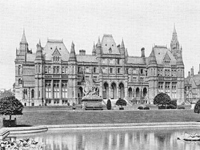
Yet, the almost insatiable need for power, and the coal which generated it, has also consumed some of our country houses, including one of the grandest, and threatens some even today.  One of the greatest threats from mining is subsidence caused by extensive mine workings which simply followed the coal seam – wherever it may lead.  Given the choice between a loss of income or the loss of the family seat, it was rarely the house which won.  It was, of course, the northern counties which were worst affected; Methley Hall, seat of the Earls of Mexborough, was eventually ruined by the coal workings which surrounded it (an issue even when Country Life visited in 1907) and demolished in 1963.  Kippax Park, once the second longest country house in the country, stood in the way of an open-cast coal mine which eventually consumed it in the late 1950s.  In County Durham, Coxhoe Hall, was eventually bought by the local coal board who proceeded to demolished it in 1956 to avoid having to fix the structural issues they had created.

Hamilton Palace, Lanarkshire, Scotland - demolished 1919 (Image: Wikipedia) - more info from Virtual Reconstruction website

This is, inevitably, just a small selection of some of the many losses but easily the most spectacular casualty of coal mining would be Hamilton Palace in Lanarkshire. Built for the Dukes of Hamilton, the Palace was the epitome of aristocratic wealth, creating both a home and a collection which would rival the best in Europe.  Built on the incredible wealth generated by the Lanarkshire coalfields they owned, the 10th Duke, Alexander, enclosed the existing house in a grand Classical embrace. The one-room deep extension of the house, in 1819, accommodated not only the many works of art he had acquired on his Grand Tour but also many of the treasures inherited from the fabulous collection of William Beckford which came via the Duke’s wife, who was Beckford’s youngest daughter.  Yet those same coalfields eventually fatally undermined the house, and faced with such a substantial problem, and not lacking other houses to move to, the decision was taken in 1919 to demolish the Palace – the most serious loss to Scottish country house architecture in the last 200 years.

Others houses were even more directly affected by the need for power stations which, ironically, shared similar requirements with the aristocracy for their homes; a level site with good access to roads (and later rail), a ready water supply and space to expand.  In the dark days of the mid-twentieth century, for an impoverished owner, the offer to be bought out by the local power company must have been very attractive – and perhaps may have helped their guilt by feeling that it was contributing to national infrastructure; though often the house had already gone.

Drakelow Hall, Derbyshire (Image: Lost Heritage)

One house which certainly matched these criteria was Drakelow Hall, Staffordshire, seat of 28 generations of the Gresley family and which, declared Country Life in 1902, “…is one of those seats of ancient eminence which win the regard of all Englishmen.“. Situated above the River Trent, the house was perhaps best known for the Painted Dining Room by Paul Sandby which was completed in 1793.  Sadly, declining family fortunes led to its sale in 1933, followed by ill-fated ventures such as a country club and motor racing circuit before the house was demolished in 1938, though, fortunately, a section of the Dining Room was saved by the V&A.  In 1948, the huge Drakelow Power Station rose on the site, attracted by the sizable 707-acre estate and its proximity to the river, and railways, road and, most importantly, the East Midlands coalfields. Hams Hall in Warwickshire similarly vanished under the same demands. One house which was rescued was Barlaston Hall in Staffordshire, a wonderful small villa by Sir Robert Taylor, which was bought for £1 by SAVE Britain’s Heritage to prove that it was possible to restore it.  The house is now again a home as a result of their valiant efforts. However, even today, subsidence from old coal workings threatens other houses such as at Wentworth Woodhouse, where the owner, Clifford Newbold, has lodged a claim for £100m in compensation to fund the stabilisation and restoration of this magnificent house.

The requirements for nuclear power stations were different in that they were obviously less dependent on proximity to the raw fuel but they did require vast quantities of water for cooling so were often sited on the coast – which thankfully also meant fewer houses would be affected. Of those, the small manor house at Calder Hall had already gone by the time the decision was taken to built the UK’s first nuclear reactor on the site in 1947. So although the opportunities for landowners are now primarily around wind turbines, a report in the Sunday Times (13 Nov 2011) highlights the windfalls from owning the land adjacent to a nuclear power station scheduled for expansion.

Main entrance - Fairfield House, Somerset (Image: Anthony Kersting)

Lady Elizabeth Gass, Lord Lieutenant of Somerset, and current owner of the 6,000-acre family estate, recently accepted a £50m offer from EDF to purchase 230-acres of farmland which will become the proposed Hinckley C power station.  The Fairfield House estate (a prime candidate for the Handed On blog of lesser-known seats) has descended through the Palmer-Acland-Wood-Fuller families for 800 years and has never been sold. The current part-Elizabethan house was begun in about 1580, but with later changes in 1633 to change it from a medieval courtyard layout to the more familiar E-plan which we see today.  Excitingly, traces of the old house are still embedded in the fabric today, with a cell for those awaiting the justice of the local magistrate and, once revealed behind some 19th-century plasterwork in the attics, the original finely-carved late-medieval roof timbers of a first floor hall.

The future of this wonderful estate is now secure and stands as a testament to how changing patterns of land use which once threatened and toppled grand houses can also enrich a country estate.  That it is going to support a rare survivor of familial descent is an added bonus and I hope Lady Gass feels rightly proud of her success.

————————————————————————————-

More details: ‘£50m deal as Somerset wind turbine land goes to nuclear plant‘ [This is Somerset]

Listing description: ‘Fairfield House, Somerset‘ [British Listed Buildings]

————————————————————————————-

An apology: you may have noticed that I haven’t been able to publish as frequently as I’d like but just to reassure you that this is definitely not due to any slackening of interest on my part but simply due to my day job requiring a greater commitment at the moment.  This hopefully will be temporary and as we go into the Spring I can pick up the pace again – but in the meantime, please do take time to re-read some of the old posts you may not have seen, and hopefully discover something new amongst the archives.

Thanks for your patience.

Matthew

For sale: a Soanian springboard – Burnham Westgate Hall, Norfolk

Burnham Westgate Hall, Norfolk (Image: Savills)

For any architect starting out, the early commissions are perhaps the most important; establishing them both in terms of not only their designs but also how they operate in the execution.  In architectural terms, the early buildings of some architects are sometimes less prized, and therefore protected, than their later works which benefit from the full measure of their developed skill and experience.  In that light, Burnham Westgate Hall deserves to be cherished as not only a fine house but also the first substantial country house project of Sir John Soane.  It provided the springboard for one of our finest architects and is important for the promise shown but also for securing one of the most important prizes in the Georgian era: patronage.

For someone who ended up a knight of the realm, with fame and a noble client list, Sir John Soane (b.1753 – d.1837) had a very ordinary start in life as the son of a bricklayer from Goring-on-Thames, near Reading.  Patronage and connections were to define Soane’s personal and professional life, providing opportunities to establish himself in a way that his competitors, often connected from birth, already enjoyed.  Almost nothing is known of his early life but his obvious talent must have been spotted as he entered the office of George Dance the Younger in 1768, though only starting as errand boy, via an introduction by James Peacock, an employee of Dance who knew Soane’s older brother.

Claremont, Surrey (Image: Claremont Fan Court School)

His talent and work ethic propelled Soane to join the Royal Academy Schools in 1772, where he quickly won the silver medal for a measured drawing of the facade of Inigo Jones’ Banqueting House.  What was particularly clear during Soane’s time at the Royal Academy was his ambition and an industriousness that was to serve him well in later periods, combined with an attention to detail which proved to be a blessing in his professional life.  In 1776, he won the Academy gold medal, which made him eligible to compete for the highly coveted King’s travelling scholarship which, for someone of Soane’s limited financial means, would be his only chance to see Italy first-hand.  Soane had heard that George III thought him a suitable candidate and so he rashly gave up his position with Henry Holland (where Soane was known to have assisted on three country house commissions: Claremont in Surrey, Benham Park in Berkshire, and Cadland in Hampshire (dem. 1953)) only to find out that Sir Joshua Reynolds had intervened to demand the winner of the scholarship be by vote from the Academicians. This delayed his departure by a year but it was put to good use completing smaller tasks for Henry Holland such as estimating bills and measuring work which exposed him to clients such as Thomas Pitt, 1st Baron Camelford; a man of noted taste and an amateur architect who was to prove particularly important in Soane’s career.  Though delayed, in 1777 Soane set off on the single most important trip of his life to Italy; one which was to establish him professionally and socially.

Arch of TItus, Rome - drawing by Sir John Soane
Arch of TItus, Rome – drawing by Sir John Soane

The Grand Tour had become an institution amongst the younger aristocrats as a way of experiencing the glories of classical art and architecture in their native environments.  It was also a fine opportunity for the wealthy to indulge their passion for art collecting but, for novice architects, days were largely spent measuring and recording the wonders of Roman architecture.  On a more practical level, Soane would have seen and experienced during his time with Dance and Holland how useful family and professional networks were in securing commissions.  In Italy, Soane worked assiduously to develop his own connections; travelling with his friend Robert Furze Brettingham (nephew of the famous architect Matthew Brettingham the Elder who had designed the original Burnham Westgate Hall, then called Polstede Hall) and visiting the English Coffee House; a central meeting point for the English nobility abroad, whom Soane courted as clients.

Soane's proposed design for Downhill, Northern Ireland (Image: Sir John Soane's Museum) - click to see full sketchbook page
Soane’s proposed design for Downhill, Northern Ireland (Image: Sir John Soane’s Museum) – click to see full sketchbook page

Patronage could also be a double-edged sword, with the ambitions of the client giving what could turn out to be false hope to an architect.  Of all those Soane met in Italy, Frederick Hervey, Bishop of Derry, later the 4th Earl of Bristol, was a prime example of the capricious client – though despite the Earl’s failure to deliver, he did introduce Soane, once again, to Thomas Pitt, Lord Camelford, and cousin of William Pitt the younger, and who became a lifelong friend, supporter, mentor and patron.  Soane had fallen under the influence of the Earl, a charming, witty aristocrat who had a growing reputation for being a difficult client.  How much Soane knew of this is unclear but after travelling through Naples and Sicily for many weeks together discussing architecture, Soane believed he would be given a handsome commission to improve Downhill (now a ruin), the Earl’s rather bleak seat, set in the coastal hills of County Derry, Northern Ireland. However, after persuading Soane to cut short his travels by a year and luring him over to Ireland in 1780, after six fruitless and frustrating weeks with the disagreeable Earl not committing to any of Soane’s designs, he left Ireland in despair, seriously out of pocket, and with the hopes of his first significant commission of his architectural career in tatters.

Rustic dairy at Hammels Park, Hertfordshire (Image: Sotheran's)
Rustic dairy at Hammels Park, Hertfordshire (Image: Sotheran’s)

Back in London, Soane’s wealthy and well-connected friends, particularly those he had made in Italy, and especially Pitt, sought to ease his plight by asking for his designs for smaller estate buildings or their own houses, such as for his friend John Stuart at Allanbank, Berwickshire.  Again, although the smaller projects were built, the larger plans failed to materialise – the only one of significance being some limited  alterations to Petersham Lodge, one of Lord Camelford’s homes.  After this, Soane took on a few smaller commissions from other clients which allowed him to develop his skills as an architect, not just in designing but the delivery of the projects, including the elegant dairy in the fashionable rustique, Rousseau-esque style at Hammels Park, Hertfordshire for the Hon. Philip Yorke, later 3rd Earl of Hardwick – another of his Italy contacts.

Proposed design for Allanbank, Berwickshire by Sir John Soane (Image: Sir John Soane Museum)

However, it was his main supporter, Lord Camelford, who provided the largest commission in 1783, the one which elevated Soane from dreamer of grand plans but only executor of small estate buildings.  Camelford’s wife had inherited Burnham Westgate Hall and now her husband wished to create a seat of suitable standing near to that other fulcrum of political influence in north Norfolk, Holkham Hall, home of the Earl of Leicester.  Burnham Westgate is curious in that it is one of the early examples of Soane’s practice of reusing his designs.  Compare Burham Westgate Hall today with the unexecuted design illustrated right which Soane completed for John Stuart at Allenbank – the overall form of the house is similar, differing only in the striking chimneys and the size of the flanking wings.  Soane seemed to do this less as he grew as an architect but it can be seen in his bow-fronted design for Saxlingham Rectory and enlarged version seen on the south front of Tendring Hall (dem. 1955), and even more directly between Shotesham Hall in Norfolk and Piercefield near Chepstow.

Burnham Westgate Hall has perhaps been a little overlooked in the literature, perhaps suffering from being overshadowed by Soane’s next project: his first solo, entirely new-build house; Letton Hall, which was started in the following year in 1784.  However, the innovation of Letton could only be created on a sound architectural foundation which Soane had spent years building; the smaller commissions of temples, kennels and interiors, before Burnham Westgate gave him the opportunity to demonstrate that he was capable of working on a project of that size.  Bar the limited and hotly contested public works, private country houses were some of the most significant commissions available to any architect and Burnham Westgate was Soane’s calling card; his proof of his ability, imagination and practical ability to deliver a fine house suitable for those in upper society.  That it is a close variation on a earlier design can be forgiven considering the nascent stage of his career; this sale offers a new owner the chance to own the project which gave Sir John Soane the springboard which helped establish this most brilliant of architects.

————————————————————————————–

Property details: ‘Burnham Westgate Hall‘ – £7m, 38-acres [Savills]

Detailed listing description: ‘Burnham Westgate Hall‘ [British Listed Buildings]

Further information:

————————————————————————————–