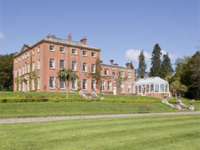
Restoration continues inside and out; Wilton House and others

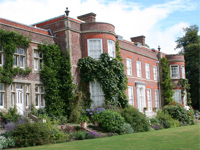
Wilton House, Wiltshire (Image: John Goodall/Geograph)

Any time of economic difficulties can often lead to any expenditure being put on hold, including vital restoration projects.  So it’s encouraging to see projects still being completed – but as some of these were approved and started back in the heady days of government largesse, perhaps these are the last we’ll see for a while except where private money can fill the gap?

One of the most impressive has been the award-winning restoration of the family dining room at Wilton House, Wiltshire – and maybe all the more impressive as it was funded privately by the owner, the 18th Earl of Pembroke.  Although ranked as joint 574th in the Sunday Times Rich List 2010, with an estimated worth of £115m, most of this wealth is tied up in the value of the house, the contents (including superb paintings by Van Dyck and Rembrandt), and the estate.

Anyone undertaking an architectural project at Wilton is following in some fairly illustrious footsteps.  The main house, one of the finest still in private hands, is unusual in that the scale of the house was a response to the incredible gardens designed by Issac de Caus in 1632.  The design is sometimes attributed to Inigo Jones but a drawing found by Howard Colvin at Worcester College by de Caus showed he was responsible for the original plan for a much larger, 21-bay palace, with a grand central portico, running to a total length of 330-ft.  However, the untimely death of the newly-married Earl in 1636 and the subsequent return of the huge £25,000 marriage dowry (approx £40m today) to the bride’s father, the Duke of Buckingham, meant that the scheme was now too ambitious and so just one half of the original design was built; which is what we see today. The half-a-house was considered plain so Jones became involved, adding the one-storey corner towers to the design.

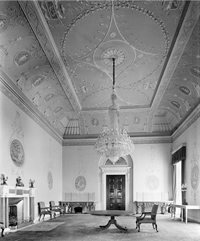
Private dining room - Wilton House (Image: Historic Houses Association)

Wilton’s interior, in particular the celebrated set of seven state rooms in the southern facade which includes the famous Double Cube room, were largely the creation of Jones, assisted by his able deputy John Webb.  Yet there are other fine rooms which had become misused over the years and one has now been restored in sumptuous style as a private dining room.  Formerly cluttered with the normal ephemera of family life – CDs, books, old furniture etc – it was  fairly sorry sight.  The current Earl and Countess of Pembroke have spent an undisclosed, but undoubtedly substantial, sum on creating a glorious dining room but which will sadly not be included on the tourist trail.  Tapestries now cover the deep green walls, interspersed with family portraits by Reynolds, completing what James Stourton, chairman of Sotheby’s UK described as “…one of the outstanding country house renovations of the decade.” and winning the 2010 HHA/Sotheby’s Restoration Award.

One of the largest of the recent projects has been the £5.6m restoration of grade-II listed Bedwellty House in Tredegar, south Wales.  Built in 1818 for the owner of the first iron works in Tredegar, it was increasingly at risk of falling into dereliction.  Realising the importance of the building, the local council spent four years securing grants to fund the ambitious programme from organisations such as the Heritage Lottery Fund, the Welsh Assembly, Blaenau Gwent council, and Cadw [Welsh equivalent to English Heritage] .  The works have included work on the ornate plaster ceilings, the sash windows and shutters, and the main structure.  Work will now continue on the parkland and gardens to bring them back to their former glory.

The grounds of our country houses were also not just a buffer to keep the world from intruding but also a stage on which to create idealised landscapes and views.  To this end they were often populated with follies or architectural creations to catch the eye of those looking out from the house but also those walking the grounds.  Sadly, the isolation of these buildings has often meant that in recent years they have been cut-off from the main house, forgotten, or neglected and vandalised.  Nowadays these wonderful architectural vignettes have been increasingly valued and urgent works undertaken to restore them.  One fine example is the grade-I listed Wentworth Castle Rotunda in Yorkshire.  Started in 1739 and finished in 1742, the design is based on the Temple of Vesta at Tivoli near Rome.  One of 26 listed buildings in the 500-acre parkland, the temple has now been restored following a grant of £300,000, which has enabled the removal of overgrowing shrubs, and the cleaning and repair of the stonework, roof, and floors.

Thankfully the official organisations don’t have a monopoly on generosity. Perhaps those selling a house in need of some restoration might take a lead from admirable seller of Newberry Hall, Ireland, Richard Robinson.  Realising that the elegant Palladian house with its wonderful flanking pavilions is in dire need of restoration, the elderly owner has put the house on the market but with the offer of a substantial contribution towards the costs of restoration to bring the house back to its former glory.  With such generosity, one hopes a suitably sympathetic buyer can be found who will be willing to take on the project and complete an appropriate restoration.

Restoration has always been expensive so in their straitened times we can only hope that funds for basic care and maintenance are found so that in a few years time we are not faced with a slew of houses and monuments suffering from any short-sighted desire to save a few pence today at the cost of many pounds tomorrow.  Long may the stories be of enhanced glories such as that at Wilton House rather than urgent appeals to save buildings at risk.

Full story: ‘Winner of Historic Houses Restoration Award 2010 Announced‘ [Art Daily]

Full story: ‘Tredegar’s Bedwellty House restoration work unveiled‘ [BBC News]

Full story: ‘Restoration of Wentworth Castle Rotunda completed‘ [BBC News]

Full story: ‘Rotunda is reopened to round of applause for works‘ [Yorkshire Post]

Full story: ‘Deal for buyer who will rescue Kildare demesne‘ [Irish Times]

Conran collects another Georgian gem: Wardour Castle, Wiltshire

Wardour Castle, Wiltshire (Image: Strutt & Parker)

The recent financial crisis has forced many properties onto the market and easily one of the grandest was the main apartment of Wardour Castle in Wiltshire which has now been bought by the fashion designer Jasper Conran.

The Apartment (as it’s imaginatively known) includes the wonderful central staircase, described by Pevsner as ‘the most glorious Georgian interior of Wiltshire’, plus the other major state rooms which were restored with the assistance of John Pawson, the high priest of Minimalism.  This particular property has featured twice in this blog, once for suggested conversion back to being a single family home, but also later with the news that the property was one of the grandest repossessions in the country.

Ven House, Somerset (Image: Mike Searle/wikipedia)

What is interesting about Conran’s purchase is that he appears to be collecting fine Georgian houses in the same way one might collect furniture or paintings.  In 2007 he bought the incredibly elegant Ven House in Somerset for just less than the £8.5m asking price. At the time the house had languished on the market for two years before Conran took it on.  Although more famous as a fashion designer, Conran has a good track record with property restoration having bought Walpole House in Chiswick, London for £7.25m which was sold following refurbishment for £12.5m in 2008 or Flemings Hall in Suffolk which he sold for £2m in 2006. Ven required comparatively little work and has remained his country home, opening it up for use by local organisations for charity fund-raisers.

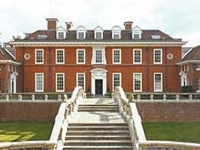
It seems fashion designers have a taste for Georgian as Jasper’s father Terence Conran lives in Barton Court, an elegant red-brick villa-style house in west Berkshire which he bought in the 1970s and has carefully restored.  On a much larger scale, the American fashion designer Leon Max famously bought the magnificent Easton Neston in Northamptonshire for £15m in 2005.  The grade-I listed house, designed by Nicholas Hawksmoor and built between 1695-1710, was the home of the Hesketh-Fermor family for nearly 500-years before the current Lord Hesketh decided to sell up. Leon Max purchased the house with the intention of converting a fire-damaged wing into a base for his fashion company.

Perhaps the natural grace and light of the best of the Georgian homes appeals just as much to the aesthetic eye of the designer as it does to most of us, confirming their broad appeal.  Happily for Wardour Castle it seems that has caught the eye of someone who has a good track record of looking after the wonderful homes he has bought.  Perhaps he might be open to suggestions for others that need some attention: Melton Constable Hall perhaps?

Full story: ‘Conran captures the repossessed castle: Fashion designer Jasper snaps up £7m ‘Billy Elliot’ house – for just £2.75m‘ [Daily Mail]

Aristocratic tenants of the National Trust; Shugborough House, Staffordshire

Shugborough Hall, Staffordshire (Image: Neilsvrx via flickr)

The news that the area of Shugborough House open to the public is to ‘double in size’ with the inclusion of the Lichfield family apartment, is a reminder of just how advantageous some of the deals were for the owners who gave their houses to the National Trust.  The Trust today is perhaps almost best known for its country houses which form an important part of its work.  However the houses were not simply museums but, due to the often very generous terms under which the families ‘gifted’ the houses, they were often able to stay on in private apartments.

When founded in 1895, the original aims of the National Trust were very much focussed on the preservation of countryside with houses only coming later. The first house the NT acquired was Barrington Court, Somerset in 1907 but the unexpectedly high cost of maintenance and repairs meant that another wasn’t acquired for over 30 years.  With the first crisis period of the country house in the 1930s, leading to many demolitions, there was a growing realisation that the National Trust was well placed to rescue some of the threatened homes.  In 1936 they set up a ‘Country House Committee’ in response to the suggestion of Philip Kerr, the 11th Marquess of Lothian at the 1934 AGM that the NT should be able to accept the gift of country houses, with endowments in land or capital, free of tax. This new regime was then given legislative powers through the National Trust Act of 1937 with Lothian then providing the first donation of one of his four great houses, Blickling Hall with its 4,760 acres, in 1940. To help guide them, Country Life magazine was asked to draw up a list of those properties (which totalled 60 larger and 600 smaller houses) which ought to be saved for the nation.

Having created the legislative backing the NT was well placed in the second period of crisis in the immediate post-war period when the tireless, if not faultless, Secretary of the Committee, James Lees-Milne, travelled up and down the country persuading owners to part with their inheritance.  He was helped by the pernicious, and still highly damaging, death duties which, since 1904 had risen from 8% (for estates valued at over £1m) to 50% by 1934, leading to massive sales of land and contents to fund the demands of the ever-grasping Exchequer.  The multiple sets of duties levelled against the aristocratic families who had sometimes lost father and then son in WWI (and who had been particularly vulnerable as they were often officers and so first over the top) meant estates were inherited by an uncle with no deep connection to a house and estate who would happily sell up.  However, for some who were loathe to simply sell, the National Trust seemed to offer an attractive alternative where someone else would pay the maintenance bills whilst they were still able to live in the house.

The degree to which the family remained in the house was sometimes simply down to how well the family had negotiated with the NT and dependent on the chips they had to bargain with.  For some such as Lord Faringdon at Buscot Park where he retains ownership of the contents, this is powerful position as the house would be severely diminished without the collection of furniture and art.  For others such as Throckmorton family at Coughton Court and the Dashwoods at the glorious West Wycombe Park, long leases (250-300 years) ensure their continued presence.  For some, the pre-eminent importance of the house gave them the edge with Sackvilles at Knole, an Elizabethan treasure-house, living in a large section of the house and still owning vital parts of the house and the entire 1000-acre parkland.  At other houses, the family remain living in the almost the whole house but with almost all the rooms open to the public such as at Anthony where the Carew-Pole family have just a small kitchen and sitting room as their own.  For others such as the Hyde-Parkers at Melford Hall they were retained by the NT as the paid administrators of their own family home which is almost completely open.  Other families like the Lucy’s at Charlecote Park have just a private wing or simply a flat in a wing such as the Drewe’s at Castle Drogo.

For the grade-I listed Shugborough House, begun in 1695, the elegant enlargement and magnificent plasterwork and decoration by James ‘Athenian’ Stuart between 1760-70, ensured that the house would always be on the list of ‘major’ houses to be saved.  When the then Lord Lichfield gave the house and 900-acre estate to the NT in 1966 in lieu of death duties the agreement regarding the house only included the state rooms on the ground floor and a small section of the first floor with the rest was leased as private apartment for the family.  The rooms to now be opened include the Boudoir with original real silver leaf wallpaper dating from 1794, and the impressive Bird room which was Lord Lichfield’s private drawing room.  The 6th Earl of Lichfield has now surrendered the lease allowing Staffordshire County Council, who run the house on behalf of the NT, to include the rest of the ground and entire upper floors.

It may seem like a strange anachronism to have the donor family still living and enjoying the family seat (although they pay rent) whilst having the National Trust pick up most of the bills for maintenance. However, the family add a rich layer of history and their commitment to the care of the houses is second-to-none with their residence helping the houses avoid the awful fate highlighted by Philip Kerr that ‘nothing is more melancholy than to visit these ancient houses after they have been turned into public museums’.

Full press release: ‘Shugborough mansion is set to double in size‘ [Shugborough Hall]

Superb post by Fugitive Ink on ‘James Lees-Milne and the National Trust‘ [fugitiveink.wordpress.com]

Thanks to Andrew for original link.

The danger of interpretation: Abbotsford House, Scotland

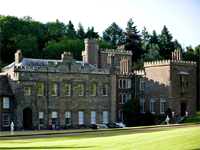
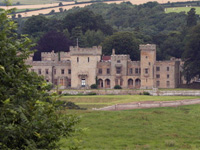
Abbortsford House, Scotland (Image: The Scotsman)
Abbotsford House, Scotland (Image: The Scotsman)

For Abbotsford House in Scotland, home of the famous author Sir Walter Scott, the recent news that it was to receive a £4.85m Heritage Lottery Fund grant is the sort of news which should be welcomed as that level of funding can usually remedy any necessary maintenance or repairs.  However, the grant is not actually to be spent on the house (despite headlines such as ‘Lottery cash means Walter Scott’s beloved Abbotsford will get £10m facelift‘ [The Scotsman]) but mainly on a new, separate visitors centre.

Sir Walter Scott (b.1771 – d.1832) played a key part creating a literary context for the developing Picturesque movement which sought to reject the rigid formality of the Georgians and create a more organic architecture, which he developed in the construction of his own house.

The theory of the Picturesque raised the importance of how one ‘felt’ about a scene or view – a definite break with the austere, ‘correct’ classicism which so dominated.  The exploration of more fluid forms had started in the 1750s and had been adopted by such noted figures as Sir Horace Walpole for his own house at Strawberry Hill in Surrey.  However it was a local Surrey parson, the Rev. William Gilpin, whose guidebooks were to lead the way for those who came afterwards such as Herefordshire squires Sir Uvedale Price and Richard Payne Knight who had the funds to realise these ideas.

Inspired in part by the idealised landscapes of the artists Nicholas Poussin or Claude Lorrain, architects sought to provide an almost ‘arcadian’ vision of buildings integrating naturally with an environment, forcing them to think of the building and environment as a whole rather than simply viewing their particular work in isolation. This also affected the plan of the house, with rooms now being aligned along the best viewing lines rather than simply lined up. One architect who took on this new style was John Nash who met Uvedale Price in about 1790 during Nash’s time in Wales.  Price was at the time building a small summer house and Nash, after meeting him, proposed a typical villa – a design antithetical to Price’s own philosophy.  Price instead guided Nash to design a new house where rooms followed views, and the overall design echoed its rocky coastal location; as he wrote ”The form of it is extremely varied from my having obliged him [Nash] to turn the rooms to different aspects‘.  Castle House, sadly demolished in 1897, was a watershed in the rejection of the dominant Georgian style and Nash quickly developed new designs based on these radical principles which became his distinctive ‘cottage orne‘ style.

Sir Walter Scott didn’t set out to link literature and architecture – in fact his ‘Waverley’ novels were simply a quick way to make some money after financial difficulties.  The books, which he initially wrote anonymously, were the first truly successful historical fiction, and brought Scott considerable wealth and, once his authorship was known, praise.  It was this wealth that enabled him to set about creating his ideal house.  Raised in the Scottish borders he had a close affinity for the natural landscape and so the Picturesque style would have appealed.  However, Scott ensured the existing designs for Abbotsford House had a distinctly Scottish twist, creating what is known today as the ‘Scots Baronial’ style so closely associated with our romantic notions of Scotland today.

Scott bought a small farmhouse in 1811 and engaged William Atkinson (b.c1774 – d.1839) who, between 1814-24, created the house we see today.  Atkinson was not considered one of the best ‘Gothick’ architects, with Howard Colvin thinking that his designs lacked the elegant charm of the 18th-century work and the scholarly accuracy of the 19th-century.  However at Abbotsford, the architectural vocabulary he employed – steeply pitched slate roofs, turrets, bartizans, and crowstepped gables – became the standard language of Scots country houses for anyone not following the Classical style.

So Abbotsford House is an architectural genesis – the first of it’s kind.  It seems a shame to lavish millions on a separate interpretation centre in a modern design which will only compete with the existing architecture of the house and estate.  It’s also a competition the new building is unlikely to win.  Perhaps it would be better for the money to be spent on sensitively incorporating the displays and materials from Scott’s life and work into the home he so lovingly and thoughtfully created.

More details: ‘Lottery cash means Walter Scott’s beloved Abbotsford will get £10m facelift‘ [The Scotsman]

Official website: ‘Abbotsford House

Background: the Picturesque movement [Wikipedia]

Bargains from difficult circumstances: country house reposessions

Sheriff Hutton Hall, Yorkshire (Image: Savills)

An article in the Sunday Times Home section (11 June 2010) includes two houses featured on this blog; one recently and one back in November 2009.  The story this week exposes that both are for sale as some of the grandest repossessions in the country with lenders forcing the sale.

Each of these houses when bought was probably the realisation of an aspiration many have to own a grand country house.  Yet, what goes up can come down and each owner has now been forced out of their dream.  The first house, Sheriff Hutton Hall in Yorkshire is a grade-I listed gem surrounded by 170-acres and indeed featured on this blog entitled ‘If I won the lottery…‘.  Originally built in the early 1600s as a hunting lodge before being remodelled in a lighter brick in 1732.  The outbuildings were constructed using quantities of stone and panelling from nearby Sheriff Hutton Castle, it also features richly decorated ceilings with plasterwork by John Burridge and Francis Gunby, who is also thought to have worked on the Dining Room at Temple Newsam in Leeds.

Sheriff Hutton Hall was sold in 1998 and became the northern branch of the East 15 acting school.  Today however, despite strenuous efforts by the owner, a secondary lender has called in their loan forcing the sale.  Originally for sale, through Savills, at offers over £5m (nearer £6m was apparently hoped for) the price has now dropped to £4.5m.

Sale details: ‘Sheriff Hutton Hall‘ [Savills]

Detailed architectural description: ‘Sheriff Hutton Hall‘ [British Listed Buildings]

Wardour Castle, Wiltshire (Image: Strutt & Parker)

The second property, Apartment One in Wardour Castle, Wiltshire, was only launched in Country Life magazine a few weeks ago and was featured here with the idea that it might be used as a starting point for the conversion of the house back to a single home (‘Conversion reversion: Wardour Castle‘).  Yet it now appears that it was the original project to convert this Georgian gem that has caused the current vendor’s difficulties.  The house, designed by James Paine, was built in the 1770s for the eighth Baron Arundell and was (and in some ways still is) the grandest and largest house of it’s era in Wiltshire.

After use as a school for thirty years until 1990 it had an uncertain future.  Nigel Tuersley then bought the grade-I listed house for £1m in 1992 and decided to convert the house into ten large apartments with Nigel retaining the largest in the centre of the house for himself.  However with property boom turning to bust the bank was unwilling to continue funding the project.  This first manifested itself when the same apartment, all 23,000 sq ft of it, was put on the market for £7m in 2008 – possibly a bit ambitious even at the time.  With the contents now removed (not that you can really tell as the interior was designed by the famous Minimalist architect John Pawson) the apartment now waits for someone with a more reasonable £2.75m through Strutt & Parker.

The house is another in a small but sadly growing list of ‘posh repossessions’ (those valued at over £1m) which show that dreams, however big, can still be brought down and that perhaps the hardest part of reaching the top is staying there.

Sale details: ‘Apartment One – Wardour Castle‘ [Strutt & Parker]


Credit: original story in the Sunday Times Home section – 11 July 2010.  Story only available online to subscribers.

For sale for the first time in 1000 years: Shakenhurst Hall, Shropshire

Shakenhurst Hall, Shropshire (Image: Nick Edwards/Panoramio)

It has been estimated that there are approximately 2,000 large country houses in the UK with decent size estates  (over 100 acres) – but very few are still in the hands of the family which originally built them. Yet despite the many sales over the years it’s still possible for a house and land to remain with one family for many hundreds of years – though that is now coming to an end for Shakenhurst Hall in Shropshire, seat of the Meysey family for much of the last 1000 years and now on the market for the first time at £12m.

The lands were first given to a French Baron, Roger de Toeni, for his help in the conquest of Britain in 1066.  It has then passed through inheritance through various members of the Meysey family except when it passed for period to a godson in the 20th-century and then his wife, before being bequeathed to Michael Severne, a descendent of the Meyseys.  On his death in 2007 it passed to his only daughter Amanda who died of cancer in 2008 leaving the house and estate to her husband.

The grade-II listed Georgian house, built in the 1790s but with a 16th-century core, is now up for sale as it faces that age-old difficulty of an estate no longer providing sufficient income to maintain the house – and neither of their two sons are in a position to take it on.  Michael Severne had run a successful plastics business from outbuildings on the estate but with his death the business folded.  Interestingly this mirrors the challenges faced by country house owners in the 19th-century who relied also on a single source of income, agriculture, who were hit particularly hard by the 1870s depression in farm produce prices and land values.

Land has always been regarded as the most important asset (even if mortgaged) and so when faced with the choice of economising, selling land, or selling paintings or books it was usually the latter which went first.  This lead to the rise of the art sales particularly from the 1890s until the 1930s which dealers such as Joseph Duveen exploited as they extracted exquisite Old Master Italian paintings and others by the finest English artists which would then be shipped to the United States. Here a new class of exceptionally wealthy financiers and industrialists such as Hearst, Frick, Morgan, Mellon, Carnegie and Rockefeller would compete to secure the finest works of art before donating them to eponymous public galleries.

Although this did leave significantly smaller collections for some houses it did sometimes provide the finance to either diversify into investments or tide them over until agriculture recovered in the 1930s – although for some it merely delayed the more unpalatable choice of demolition which unfortunately was the outcome for hundreds of houses in the UK.  With demolition now thankfully out of the question an owner is left with few options and it can be easier to simply sell up which is what appears to be the case with Shakenhurst Hall.

Sad though it is that such a long connection is to come to an end, here’s hoping the next owner will respect the 1300-acre estate, the history and the house to create a rewarding new chapter for this elegant ‘minor’ country house.

Property details: ‘Shakenhurst Hall‘ [Savills]

PS: it’s interesting that two houses should be available which look so alike. I was struck by just how similar Shakenhurst Hall is to Peatling Parva Hall in Leicestershire which is currently on the market for £4.75m.  Interestingly the latter only took on it’s current form after alterations in 1910 after the Arts-and-Crafts architect Detmar Blow added two bays to the original house.  Was this just a coincidence of architects thinking alike or had Blow seen either Shakenhurst or something similar?

Property details: Peatling Parva Hall [Knight Frank]

Phoenix for sale: Beaurepaire House, Hampshire

Beaurepaire House, Hampshire (Image: Knight Frank)

Launched this week ( 23 June 2010) in Country Life magazine is a fine, grade-II* listed, moated manor house set in nearly 250 acres of Hampshire.  Open the first set of impressive wrought iron gates and follow the drive down to the ancient moat and through the second, equally impressive, set of white painted gates over the wooden bridge. Before you stands a beautiful red-brick manor house – but why is the house set in one small corner of the island? Why does the drive lead over the moat but unusually not to the middle of the house?  And why does that tower look a bit new?

The answer to all these questions is that Beaurepaire House, as it now stands, is what remains of an important and beautiful manor house which burnt down in 1942 after a chimney fire.    What happened subsequently is an interesting example of how disaster need not lead to the loss of the whole house or the estate.

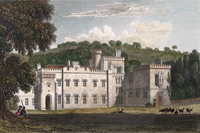
Beaurepaire House, Hampshire before the fire (Image: Lost Heritage: England's Lost Country Houses)

Beaurepaire House has royal connections having been visited twice, once by Henry VIII in 1531 and then by his daughter Elizabeth I during her visit to The Vyne.  The moat itself dates from 1369 but the original house was built in the 16th-century but was badly damaged during the Civil War and was only rebuilt in 1777.  The design of the new Georgian ‘Gothick’ house followed the rare structure of having a square core with castellated corner turrets.  There are relatively few examples of these houses – and the ones we have today are all ruined to some degree (Ruperra Castle, Wales / Lulworth Castle, Dorset) or lost entirely (Compton Bassett House, Wiltshire).

At the time of the fire the house was owned by one of the richest men in the country, Sir Strati Ralli, but wartime building restrictions prevented restoration. After the war the estate was owned by Lady Sherfield and in 1965 she decided to restore the remaining servant’s wing as a house and commissioned the well-known architect Tom Bird, who had restored many other country houses, to make the house habitable.  Bird decided to add a sympathetic tower, which continued the existing architectural style, to the fire-damaged southern flank of the remaining wing to not only provide structure but also to improve the proportions of what was left.  The addition was less than 10% of what remained but successfully ensured that the house was able to rise again from the ashes of the fire to retain the role it had enjoyed for hundreds of years as the centrepiece to an impressive country estate.

_____________________

Property details: Knight Frank seem to have forgotten to put the details on their website.   Nevermind, here’s a link to all the Hampshire houses they’re selling in the hope that they soon add it in: Knight Frank: Hampshire

Conversion reversion? Wardour Castle, Wiltshire

Wardour Castle, Wiltshire (Image: Strutt & Parker)

With so many country houses lost in the twentieth century, almost any alternative which saved them from the demolition crew was to be welcomed; no matter how drastic.  For some this meant institutional use but for many others of all sizes the solution was conversion into flats and apartments – though with varying degrees of success.  However, as these properties come on to the market, is it perhaps time to consider converting them back into the single, glorious houses they were intended to be?

Launched this week (16 June 2010) in Country Life magazine is the principal apartment in what is considered James Paine’s finest creation; Wardour Castle, a supremely elegant essay in Palladian architecture.

Central stairwell and gallery, Wardour Castle, Wiltshire (Image: Strutt & Parker)

Built from 1770 – 76, for the eighth Lord Arundell the most impressive feature is a breath-taking central stairwell with first-floor gallery which Pevsner called ‘the most glorious Georgian interior of Wiltshire’ and which forms the core of Apartment One which is now for sale.  Wardour Castle house has proved to be adaptable becoming Cranborne Chase School in 1960 until it closed in 1990 when it was then converted into ten apartments.  As the divisions appear to have respected the natural sections of the house this seems to be a good example of where someone could convert the house back to a single home.

There are many examples of houses being rescued by conversion.  SAVE Britain’s Heritage have long campaigned to protect these houses and have worked in conjunction with one of the leading architects, Kit Martin, in supporting conversion.  A 1983 SAVE report entitled ‘The Country House: to be or not to be’, written by Kit Martin and Marcus Binney, includes particularly interesting studies of how these houses could be sensitively converted.  These show that although almost any country house could be sensitively adapted some are naturally more suitable particularly where the overall layout of the house is symmetrical, shallow and long.

The study was an important milestone in the practice of country house conversion and saved many houses from complete loss or inappropriate use including The Hazells in Bedfordshire, the grade-I Northwick Park in Gloucesterhire, Dingley Hall in Northamptonshire.  The sensitive approach they championed now means that it should be possible to consider converting a house back if the right opportunity arose.  It should be said that some houses are never going to be converted back due to a variety of factors including there being too many apartments involved such as at Thorndon Hall in Essex which contains 37 flats, or where not enough land has been retained to make the unified house valuable enough to justify reversion.

Perhaps the idea of reversion becomes more realistic where more than one part of the same house comes on the market at the same time such as recently happened with grade II*-listed Ampthill Park House, Bedfordshire.  Built by the Cambridge architect Robert Grumbold in 1687-9 and completed by John Lumley of Northampton in 1704-6, with major additions by Sir William Chambers in 1769 it is certainly one of the most impressive houses in the county. It was rescued from dereliction by conversion into just four large houses; two of which were put on the market in April 2010, the largest of which includes most of the principal rooms.

Although it’s nice to dream about these houses becoming single homes probably the biggest obstacles are not only being able to secure the other apartments but also that the value of the individual properties may be greater than the value of the unified house.  However, it’s not entirely beyond the bounds of possibility that someone with deep pockets and a desire to restore a house could take on one of these conversion reversions and recreate a superb country house.

Property details: ‘Apartment One – Wardour Castle, Wiltshire‘ [Strutt & Parker] – £2.75m

Detailed architectural description: ‘Wardour Castle, Wiltshire‘ [English Heritage: Images of England]

Anyone with deep pockets? Country houses at risk today

It seems remarkable that between the popularity of country houses as tourist attractions or business or simply as homes that any would be at risk.  Yet as the 2010 SAVE Britain’s Heritage Building’s at Risk Register shows there are still a broad selection of fine houses which, for various reasons, are in need of someone with a desire to restore part of our heritage, lots of dedication, and pretty deep pockets.

Nocton Hall, Lincolnshire (photo copyright: Tom Vaughan)

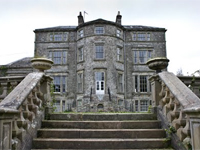
One of the saddest is the case of Nocton Hall in Lincolnshire – a county which has lost so many of it’s fine old country houses already.  Fire is still one of the main reasons a house can quickly go from being a secure home to an ‘at risk’ shell.  Grade-II listed Nocton Hall is a warm honey-coloured stone house built for the 1st Earl of Ripon in 1841 to replace the original Jacobean house which burnt down in 1834.  After a stint as an RAF hospital in WWII it became a residential home before being bought by a property developer.  Unfortunately no development took place and the house was allowed to slowly deteriorate before a serious fire severely damaged what had been a perfectly good house.  Still sitting in its own gardens and parkland and near the village Nocton Hall cries out to be restored either as a h,otel or ideally as a grand family home.

Barmoor Castle, Northumberland (Photo: SAVE Britain's Heritage)

To look at the photo, Barmoor Castle in Northumberland looks in pretty good shape – but a picture can hide as much as it shows.  The first issue with Barmoor is that it actually is unused and sits in the middle of a caravan park which has been established in the grounds. Inside, there is some water damage as the roof has been leaking – although recent work, part funded by English Heritage, has alleviated this for the moment. Barmoor was built in 1801 around an older tower by the architect John Patterson of Edinburgh in a castellated Gothic Revival style for Francis Sitwell, in whose family it remained until 1979 when it was sold along with 200-acres.  The current owners have operated the caravan park since then but didn’t live in the house or use it leading to it’s current neglected state.  This is a classic example of where a house could be rescued from an inappropriate use, restored and enjoyed as a fine country house as was intended.

St Botolph's Mansion, Wales (Image: SAVE Britain's Heritage)

St Botolphs Mansion in Pembrokeshire was built in the early 1800’s for General Richard Le Hunt is a house in need of a use rather than repair.  The Doric porch and neat window architraves create an interesting facade which would normally ensure that such a house would be jealously fought over if it came to market.  However it is now owned by the nearby oil refinery (the proximity probably ruling out residential use) but they are exploring options as to how to make use of this elegant Georgian house – perhaps as a conference facility might be more appropriate.  Either way, this is a house which shouldn’t be forgotten.

Other country houses of note in the report include the Grade-II* listed Plas Machen nr Newport, the surviving portion of the 15th-century house of the Morgans who moved up in the world to Tredegar House, which is for sale. Also for sale, since 2007, is Benwell Towers in Newcastle which was a country house when built but is now suburban, achieving fame in later life as the set for the kid’s TV series ‘Byker Grove’.

Even if your pockets can’t stretch to a country house there are many other buildings seeking a saviour so do order your copy of ‘Live or Let Die‘ and certainly consider joining SAVE Britain’s Heritage to help to preserve our architectural legacy for future generations.

Converting country houses from commercial to residential: a sound investment?

Benham Valence, Berkshire (Image: wikipedia)

As the pressures of the twentieth century forced more country houses owners to face the reality that they could no longer live as they had and would have to move out of their homes they then had to decide what to do with it.  Unfortunately this meant demolition of hundreds of large houses but some owners were more creative and many houses became commercial premises, either as hotels, schools or institutions, and others became some of the grandest office buildings in the country.  However, recent pressures of this century have now seen some of these offices being converted back into homes or being offered for sale as an opportunity to do so.

In many ways the country house has always had an element of the commercial to it with the estate offices usually being based either in a part of the main house or in a nearby building to enable the owner to deal with business without having to travel far from home. The changes of the twentieth century were on an altogether more comprehensive scale with the entire house being changed to accommodate the demands of business.  This not only meant the conversion of the main house with all that entailed for the interiors but also the building of further offices in the grounds.

Sometimes the development was kept a good distance from the main house such as at Ditton Park in Berkshire.  This became the office of the Admiralty Compass Observatory from 1917 until it was sold in the 1990s to Computer Associates who built a huge office building to the west of the main house (which became a conference centre) leaving the setting intact.

Sometimes though it’s possible for smaller businesses to be accommodated just within the main house such as at Gaddesden Place in Hertfordshire.  The house, built in 1768, is a elegant Palladian villa (similar to the White Lodge in Richmond Park) and was James Wyatt’s first country work.  The site is said to have some of the best views in the home counties and the sensitive use of the house has allowed to remain in splendid seclusion.

However, modern concerns mean that a country house has lost some of it’s appeal as offices.  One key issue is that by their nature the houses are isolated meaning that employees must have cars to reach it leading to more cars on the roads and the need to provide huge areas of parking.  Stronger heritage legislation now also means it’s much harder to alter the houses to meet modern business requirements such as air conditioning and computer networking.  The nature of the houses also means that maintenance costs are higher than for a purpose built office.

This has led to some houses which were formerly offices to be converted back into homes.  Mamhead House in Devon, built between 1827-33 and regarded as one of Anthony Salvin‘s finest designs, it was, for many years, a school before becoming offices for a local building company.  It was bought by a businessman who converted the main part of the house back into being a home whilst still letting out part of the house to the Forestry Commission.

Perhaps the grandest and largest opportunity for many years to restore a house into a home is the mansion at Benham Valence in Berkshire.  This superb house was built in 1772-75 for the 6th Earl of Craven and was designed by Henry Holland in collaboration with his father-in-law, Lancelot (Capability) Brown, the famous landscape architect.  The south front features a grand tetrastyle Ionic portico which looks out over a large lake with views into the parkland.  Inside, there are many fine chimney-pieces bought from the sale at Stowe in 1922, including one from the State Dining Room.  It also features a small circular double-height vestibule adjoining the inner hall, a design later adopted by Sir John Soane.

The house was empty in 1946 and remained so until it was sold in 1983 and converted to use as offices with a large wing to the north east of the house being demolished and replaced, in part, by an ugly 80’s complex providing over 100,000 sq ft of space.  Luckily though the main house was largely spared and remains Grade II* with the 100-acres of Grade-II parkland. Now offered for sale at £6m this is a rare opportunity to create a wonderful country house – providing it’s possible to obtain planning permission to convert it back – which, once restored, could be worth £10-12m.  One key requirement would be the demolition of the office complex and the ripping up of the huge car park – but give me a pickaxe and I’ll be happy to lend a hand.

Full property details: ‘Benham Valance, Berkshire‘ [Strutt & Parker]