How to get depressed quickly: the English Heritage Buildings at Risk Register 2010

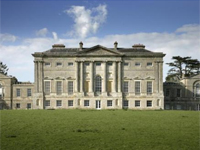
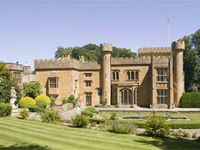
Winstanley Hall, Lancashire (Image: English Heritage)

This blog has highlighted several country houses which are at risk but the true scale of the issue is unfortunately much larger, as the publication of the 2010 English Heritage Buildings at Risk Register shows.

Country houses all too easily can move from being secure, watertight buildings to having minor problems to becoming seriously at risk due to their size and the high standards required to repair them necessarily making even simple tasks much more expensive.  For the owners this can mean that the burden of looking after their ancestral family home becomes a daily challenge which, rather than facing, can be easier to ignore – especially if they are able to simply shut the door to a wing and forget the damp and leaks.

One of the greatest enemies of the country house is obscurity – particularly when combined with negligent or incapable owners. For some the house is merely an obstacle to redevelopment and so it is in their interest to forgo maintenance and hope that the house quickly and quietly deteriorates to the point where they can apply for permission to demolish.  Unfortunately under-resourced councils are rarely able to regularly survey all the listed buildings in the area meaning that houses can slip through the cracks.  The current economic climate means that it is even more unlikely that councils will be able to fully fund the heritage teams to ensure that they are able to ensure owners meet their obligations.

Melton Constable Hall, Norfolk (Image: English Heritage)

Although English Heritage have had some limited successes (e.g. Sockburn Hall, County Durham) there are still far too many houses at risk – I counted nearly 100 in a couple of searches.  It should be noted that houses are included even where works are planned or under way such as at Clarendon House, Wiltshire which was recently sold (with estate) for a reputed £30m and where restoration is expected to be completed by the end of 2010).  However, other examples include:

Others on the list include:

The head of English Heritage, Simon Thurley, said at the launch:

“Neglect is a slow, insidious process whose costly damage takes time to become clearly visible. Cuts in both private and public spending are currently inevitable but armed with our Heritage at Risk Register, English Heritage is well-equipped to guard against the loss of the nation’s greatest treasures and to suggest effective and economical strategies to protect our national heritage.”

One can only hope that this proves to be the case and that EH are able to fully fulfil their role particularly in relation to country houses and ensure that these beautiful buildings aren’t allowed to quietly slip into dereliction, depriving future generations of wonder of these grand houses.

More details: English Heritage Buildings at Risk 2010 or you can search the 2010 Register

The relative cost of your English country house

Great Hockham Hall, Norfolk (Image: Savills)

So you’ve decided you really want a country house.  Nothing too big; more a residential estate than a working or sporting one so perhaps just 48 acres. Luckily your four-bed house in the best part of Fulham is worth £1.75m so you can sell up and surely move straight into your dream rural arcadia? Unfortunately a recent survey by upmarket estate agents Savills has shown that you might need just a bit more money than that.

As always, proximity to London is the key factor in determining how far your money will stretch.  With the Russians and Middle Eastern families not willing to be too far from the cultural delights of Bond Street the price of a decent country house with 48 acres in Surrey tops the table.  To secure a decent small estate in the nicest parts would require between £15m-£20m but a similar property in Hampshire would set you back just £10m on average.

So with the those two counties ruled out, where next?  The Cotswolds have always been popular with the corresponding effect on prices but if Hampshire is too expensive then unfortunately you’re also out of luck in Gloucestershire with the average there hitting £12m – but north Oxfordshire might look attractive with the average of between £7m-£8m.

Distance from London reduces prices but with broadband making working from your country home on Friday possible Dorset or Wiltshire are still very attractive but more affordable – but you’ll still have to expect to pay between £4.5m-£5m.  Fewer transport options make East Anglia even cheaper with a country house in Norfolk going for around £3.25m – which makes the pretty Great Hockham Hall [pictured above], a grade-II listed Queen Anne house built in 1702 and with 47.66 acres, almost a bargain at £2.95m.

So where could you trade in your Fulham house for a small country estate? Step forward Lincolnshire where the average is the lowest in England at ‘just’ £1.75m-£2.25m. So proving that everything is relative it seems that even the high prices of London don’t always directly translate into a ticket to the country life unless you’re willing to go where the market takes you.

______________________

Source: research by Savills (but listed not on their website) and reported in The Times ‘Bricks & Mortar’ property supplement on Friday 18 June (but their website doesn’t allow access so no link there either).

If you are interested in the rest of the report or the averages for other counties I’m guessing the best contact is Alex Lawson at Savills (Rural Research) on +44 (0) 20 7409 8882 or email alawson@savills.com.

Conversion reversion? Wardour Castle, Wiltshire

Wardour Castle, Wiltshire (Image: Strutt & Parker)

With so many country houses lost in the twentieth century, almost any alternative which saved them from the demolition crew was to be welcomed; no matter how drastic.  For some this meant institutional use but for many others of all sizes the solution was conversion into flats and apartments – though with varying degrees of success.  However, as these properties come on to the market, is it perhaps time to consider converting them back into the single, glorious houses they were intended to be?

Launched this week (16 June 2010) in Country Life magazine is the principal apartment in what is considered James Paine’s finest creation; Wardour Castle, a supremely elegant essay in Palladian architecture.

Central stairwell and gallery, Wardour Castle, Wiltshire (Image: Strutt & Parker)

Built from 1770 – 76, for the eighth Lord Arundell the most impressive feature is a breath-taking central stairwell with first-floor gallery which Pevsner called ‘the most glorious Georgian interior of Wiltshire’ and which forms the core of Apartment One which is now for sale.  Wardour Castle house has proved to be adaptable becoming Cranborne Chase School in 1960 until it closed in 1990 when it was then converted into ten apartments.  As the divisions appear to have respected the natural sections of the house this seems to be a good example of where someone could convert the house back to a single home.

There are many examples of houses being rescued by conversion.  SAVE Britain’s Heritage have long campaigned to protect these houses and have worked in conjunction with one of the leading architects, Kit Martin, in supporting conversion.  A 1983 SAVE report entitled ‘The Country House: to be or not to be’, written by Kit Martin and Marcus Binney, includes particularly interesting studies of how these houses could be sensitively converted.  These show that although almost any country house could be sensitively adapted some are naturally more suitable particularly where the overall layout of the house is symmetrical, shallow and long.

The study was an important milestone in the practice of country house conversion and saved many houses from complete loss or inappropriate use including The Hazells in Bedfordshire, the grade-I Northwick Park in Gloucesterhire, Dingley Hall in Northamptonshire.  The sensitive approach they championed now means that it should be possible to consider converting a house back if the right opportunity arose.  It should be said that some houses are never going to be converted back due to a variety of factors including there being too many apartments involved such as at Thorndon Hall in Essex which contains 37 flats, or where not enough land has been retained to make the unified house valuable enough to justify reversion.

Perhaps the idea of reversion becomes more realistic where more than one part of the same house comes on the market at the same time such as recently happened with grade II*-listed Ampthill Park House, Bedfordshire.  Built by the Cambridge architect Robert Grumbold in 1687-9 and completed by John Lumley of Northampton in 1704-6, with major additions by Sir William Chambers in 1769 it is certainly one of the most impressive houses in the county. It was rescued from dereliction by conversion into just four large houses; two of which were put on the market in April 2010, the largest of which includes most of the principal rooms.

Although it’s nice to dream about these houses becoming single homes probably the biggest obstacles are not only being able to secure the other apartments but also that the value of the individual properties may be greater than the value of the unified house.  However, it’s not entirely beyond the bounds of possibility that someone with deep pockets and a desire to restore a house could take on one of these conversion reversions and recreate a superb country house.

Property details: ‘Apartment One – Wardour Castle, Wiltshire‘ [Strutt & Parker] – £2.75m

Detailed architectural description: ‘Wardour Castle, Wiltshire‘ [English Heritage: Images of England]

Still available for sale – the country houses proving difficult to sell

Despite the enthusiasm of the estate agents, it seems that some of the most impressive houses featured in the glossy adverts at the front of Country Life magazine are proving difficult to sell.  Whether this is due to a poor local market or unreasonable prices, or just bad luck, here are a few stunning country houses which are still looking for buyers.

Noseley Hall, Leicestershire (Image: Knight Frank)

Noseley Hall in Leicestershire has been in the family of the present Lord Hazelrigg for nearly 300 years but was put up for sale in April 2009 at a guide price of £14m for the grade-II* listed house plus the 1,200-acre estate.  Built in 1728 on the back of Northumberland coal mining wealth, the house is decorated with works of art (though fewer now following several auctions), and fine plasterwork.  However, Lord Hazelrigg admitted that the estate doesn’t cover the costs of running the house, and so he decided to sell, but it’s still listed on the Knight Frank website – and still with a guide price of £14m.   More details: ‘The last of the romantics‘ [Sunday Times]

Dowdeswell Court (Image from Savills)

Another house which has been for sale is Dowdeswell Court in Gloucestershire which was first advertised in 2005 and then sold for £4.75 but then came back on the market in summer 2009 with a guide price of £7.9m (and was featured in this blog).  When serial restorer James Perkins took on the house it had been a 46-room nursing home resulting in a huge restoration project and since he sold in 2005 has moved on to restoring other country houses including Aynhoe Park.  The grade-II house was built between 1833-35 by local architect Charles Paul of Cheltenham and was originally three storeys but during the 1920s the top storey was neatly removed.  The more manageable house is a beautiful example of neo-Classical detailing combined with modern comforts. The house is available through either Knight Frank or Savills.

Compton Pauncefoot Castle - Somerset (Image: Bidwells)

The final property for this list is the impossibly beautiful Compton Pauncefoot Castle in Somerset which has been for sale since 2006.   Built in 182o, the grade-II listed house sits in a 1,278-acre estate with 40-acres of stunning gardens and lakes.  Originally on the market for £22m, it failed to sell even during the boom years of 2007-8 and despite 20 buying agents being invited to a launch event, and being featured in the The Sunday Times, it’s now being sold at auction – though I suspect the reserve would be near the current price advertised on the agents websites of in excess of £17m.  Perhaps the fact that it’s only for sale as a whole may have put off those who might just want the house and immediate grounds – but this would deny the owner the certainty of privacy that the surrounding estate would bring.  The house is available through Bidwells and Knight Frank (who despite putting it as their lead advert in Country Life this week fail to have it on their website).

Odd goings-on at Oddington

The Sunday Times reports that permission has been granted to Sir Anthony Bamford to demolish the lodge at Oddington House.  Sir Anthony bought the Grade-II listed house as a £10m wedding gift to his son – who decided to decline (wonder what else was on the wedding list!).  Rather than sell the house it appears the JCB tycoon has grand plans – but looking at a photograph of the lodge it is obviously a substantial and attractive building  so one hopes that the report is wrong as this sets a rather worrying precedent.