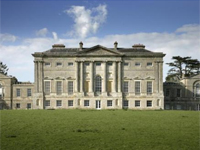
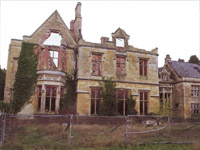
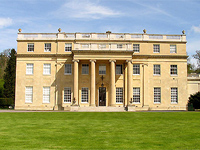
Calke Abbey, Derbyshire (Image: National Trust / Rupert Truman)
In an important change of policy, the National Trust has decided to lift some of the many restrictions which had led to criticisms that it was being too museum-like in it’s approach to its wonderful country houses. The new strategy is designed to give visitors more of flavour of how a house might have been used when it was a home.
This vision was inspired, at least in part, by the experience of the NT chairman Simon Jenkins, when visiting Chatsworth House in Derbyshire which is still the family home of the Duke and Duchess of Devonshire as well as one of the finest homes in private ownership in Europe. Visitors often find that the Duchess has joined them and rooms show the momentoes and items found in any home.
The NT accepts that this will increase the wear-and-tear on the properties and inevitably some mistakes will be made. The expertise and experience of the Trust should ensure that the correct controls are still in place where appropriate as no-one wants to see damage to delicate fabrics, books or paintings. The new atmosphere of exploration and freedom will hopefully enhance the visitors experience and allow them to appreciate the house as it was intended to be; as a home.
The project to restore an important Devon country house, which is finally being rescued after being neglected since the 1970s, has received a significant boost. English Heritage has awarded a £500,000 grant which will allow major work to continue on making Poltimore House watertight and safe for the ongoing restoration work.
The grade-II*-listed house has been a familiar sight to anyone who has driven on the M5 near Exeter who would have seen it slowly deteriorating since it ceased being a hospital in 1975. Originally the Bampfylde family seat, Poltimore was originally built in the 1550s with this part now forming a still visible core section of the house. It was greatly extended in 18th-century with the work including a Rococo-style saloon and then again in the 19th-century with the addition of a grand imperial staircase.
The decline started when the Bampfyldes finally left the house in 1921 after the death of the third Baron Poltimore, and put it up for sale. For many houses this was a prelude to demolition but Poltimore escaped by becoming a boarding school for until 1939 when it then became temporary home for Dover College during WWII. After the war the house became a nursing home and remained in use as a hospital until 1975. Once empty, the decline accelerated rapidly with thefts of lead, fireplaces and other fittings including the entire balustrade from the staircase. The damage was compounded by serious arson attack which destroyed the roof.
The journey back from total dereliction started in 1997 when the house was acquired by the Buildings at Risk Trust before being taken over by the Poltimore House Trust in 1999. Their intention is fully restore the house for mixed use with commercial aspects combined with community and arts use. A large and active group of Friends of the house have tirelessly campaigned to save this important piece of Devon’s heritage and English Heritage are to be congratulated for such a large contribution towards the estimated £5.5m restoration bill.
More information including details of the planned restoration: ‘Poltimore House‘
Despite the enthusiasm of the estate agents, it seems that some of the most impressive houses featured in the glossy adverts at the front of Country Life magazine are proving difficult to sell. Whether this is due to a poor local market or unreasonable prices, or just bad luck, here are a few stunning country houses which are still looking for buyers.
Noseley Hall in Leicestershire has been in the family of the present Lord Hazelrigg for nearly 300 years but was put up for sale in April 2009 at a guide price of £14m for the grade-II* listed house plus the 1,200-acre estate. Built in 1728 on the back of Northumberland coal mining wealth, the house is decorated with works of art (though fewer now following several auctions), and fine plasterwork. However, Lord Hazelrigg admitted that the estate doesn’t cover the costs of running the house, and so he decided to sell, but it’s still listed on the Knight Frank website – and still with a guide price of £14m. More details: ‘The last of the romantics‘ [Sunday Times]
Dowdeswell Court (Image from Savills)
Another house which has been for sale is Dowdeswell Court in Gloucestershire which was first advertised in 2005 and then sold for £4.75 but then came back on the market in summer 2009 with a guide price of £7.9m (and was featured in this blog). When serial restorer James Perkins took on the house it had been a 46-room nursing home resulting in a huge restoration project and since he sold in 2005 has moved on to restoring other country houses including Aynhoe Park. The grade-II house was built between 1833-35 by local architect Charles Paul of Cheltenham and was originally three storeys but during the 1920s the top storey was neatly removed. The more manageable house is a beautiful example of neo-Classical detailing combined with modern comforts. The house is available through either Knight Frank or Savills.
The final property for this list is the impossibly beautiful Compton Pauncefoot Castle in Somerset which has been for sale since 2006. Built in 182o, the grade-II listed house sits in a 1,278-acre estate with 40-acres of stunning gardens and lakes. Originally on the market for £22m, it failed to sell even during the boom years of 2007-8 and despite 20 buying agents being invited to a launch event, and being featured in the The Sunday Times, it’s now being sold at auction – though I suspect the reserve would be near the current price advertised on the agents websites of in excess of £17m. Perhaps the fact that it’s only for sale as a whole may have put off those who might just want the house and immediate grounds – but this would deny the owner the certainty of privacy that the surrounding estate would bring. The house is available through Bidwells and Knight Frank (who despite putting it as their lead advert in Country Life this week fail to have it on their website).
The New Year period can be a very quiet time for the sale of country houses. This can often be easily seen in the much-thinner-than-usual selection of property adverts at the front of Country Life magazine, the weekly bible of the country house. However, someone has obviously decided to steal a march on the spring rush by putting a stunning home on the market; Abbey House in Witchampton, Dorset.
The Grade-II* listed property was originally built in the early 16th century and is thought to be the first brick-built house in Dorset. Formerly known as Witchampton Manor, it has 5 reception rooms, 8 bedrooms, 5 bathrooms (you might want to do something about that), plus the usual selection of outbuildings. The 6.8-acres of beautiful gardens also includes river frontage – perhaps an eco-alternative to the swimming pool.
This is a jaw-droppingly lovely house and I suspect with the currently dearth of decent larger homes on the market the owners may well have timed the sale very well as the bonus money from the City looks to find a country hole to escape to.
Dissington Hall was largely derelict when it was bought by Eric Brown in 1968, despite the then preference for new properties. A senior dentist and dental lecturer, he was not the obvious buyer for such a large Georgian house but he and his wife had fallen in love with it and now were determined to rescue it from its long decline. Their success and love of the building has been passed on to his son Michael, who was just four when he moved in, and it is now he and his family who have completed this labour of love and brought back into use this elegant house.
The house was originally built for the Collingwood family in 1797 who had been commissioned the architect William Newton (b.1730 – d.1798) in 1794. Newton had designed a number of significant local country houses including Capheaton Hall (1758), Backworth Hall (1778), Howick Hall (1782), Whitfield Hall (1785) before his work at Dissington. Dissington Hall is an elegant design with a first-floor string course to relieve the mass of the vertical elevation and a ground floor cornice which was a Newton characteristic. It was built in the local sandstone in fine Ashlar with the blocks being so finely cut that the joins are near-invisible. Further changes where made between 1820 and 1850 with a new clock tower, stables, porch, alterations to the roofline and the additions of a new servant’s stair.
Despite the obvious quality of the house, it was to suffer much during World War II when it was requisitioned. It served as a dormitory for 50 WAFF ladies who worked at the Polish Airforce Headquarters at Ousden Aerodrome, a hospital and, at one point, a TNT storage depot. These various roles caused many poor quality or poorly planned alterations along with the general damage caused by huge numbers of people. Perhaps the single biggest cause of damage was a bomb dropped in 1940 which caused cracking to the east and south elevations. Following the war, the house was unoccupied and so was the target of thieves who, in 1947, stole all the lead from the main roof. Water penetration followed, combined with some earlier alterations which lead to long and inefficient guttering which frequently leaked. This led to extensive outbreaks of both wet and dry rot which have all had to be conquered.
The story brightens from 1955 when it was bought by the local Sharrett family who lived there and carried out some restoration before selling it to the Brown family in 1968. Michael recalls that they only lived in a small part of the house as much of the rest was then uninhabitable with sections of the roof having fallen in. Since then, the house has been painstakingly restored and is now filled with antiques and appropriate fittings. The Browns have even managed to acquire the original architectural plans. The house has been a wedding and conference venue since 1992 but is also, perhaps most importantly, still their family home; a heartening example of how dedication can rescue and protect a key piece of our local architectural heritage.
Grade-II* listed Woolsington Hall, set in 340 acres of fine parkland, was bought in 1994 by Sir John Hall, who had successfully turned Wynyard Hall into a palatial hotel. Though on a much smaller scale, Woolsington was to also be converted into a small, luxury hotel at a cost of £8m – 10m. However, after several years of inaction, its deteriorating condition led to it being placed on the English Heritage ‘buildings-at-risk’ register in 2002. Despite work in 2008 to make the building watertight and in prepartation of the main conversion, work has been halted again. Sir John insists the money is still available but that he is so busy with his many other ventures that he is unable to commit to it at the moment.
Though this is somewhat understandable in the current economic climate, as a Grade-II* listed building it must not be forgotten and allowed to decay again. The building remains on the English Heritage register but hopefully work will start again to rescue this charming smaller country house in 2010 and bring it back to life.
Campaigners have vowed to continue the twenty-year battle for Elmswell Old Hall despite the latest setback. The house, near Driffield, was built in 1642 and the home of the seventeenth-century agricultural diarist Henry Best – but the last time someone lived in the house was in 1965. Although Grade-II* listed and thought to be one of the first brick-built houses in Yorkshire, it has slowly fallen into such an advanced state of dereliction that the owners have requested permission, via an entity ironically named ‘Elmswell Heritage Ltd’, to partially demolish what remains and consolidate the rest as a ruin.
An alternative plan, supported by locals and the Yorkshire Buildings Preservation Trust, has been put forward by the Spitalfields Trust who have a long record of restoring Georgian townhouses and historic country houses including the recently for sale Shurland Hall. This plan would not only consolidate what fabric of the building remains but would also then restore it for use as a home. However, a major obstacle is that the house and land are owned by the same estate who have made it clear that the plan was unfeasible as they would not sell land nor access to the house.
So the future for the house appears to be that of architectural curiosity, open occasionally for school visits and scholars. Unless a miracle happens, is seems another piece of Yorkshire, and the nation’s, heritage has been effectively lost due to fifty-years of neglect by the owner and the local council who should’ve stepped in decades ago to protect the hall.
It’s such a depressingly familiar pattern; a beautiful old house with grounds, falls into a state of neglect and is then bought by a developer. With absolutely no incentive to maintain the house it slowly slips into a downward spiral of decay and vandalism until the inevitable request for demolition is presented to the council. And it’s happening again.
Brook House in Tiptree, Essex is a classic, grade-II listed, red-brick Georgian village house lacked an owner after the last member of the family died and now after being owned by a developer it has unsurprisingly reached a rather sad state. The developer might be disappointed that no-one has yet burnt it down but nonetheless he had requested permission to demolish and replace it with several new houses saying that the house is beyond repair – all backed up by a survey which was commissioned by…the developer! What’s perhaps worse is that English Heritage have also sided with the developer and agreed. I despair. What is the point of EH if they fail to stand up when buildings are threatened like this?
Anyway, if you live within the area, please contact Colchester Council and ask them to not only refuse this vandalism but also to serve an enforcement notice to repair this lovely part of Tiptree’s heritage.