Converting country houses from commercial to residential: a sound investment?

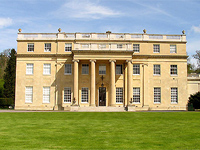
Benham Valence, Berkshire (Image: wikipedia)

As the pressures of the twentieth century forced more country houses owners to face the reality that they could no longer live as they had and would have to move out of their homes they then had to decide what to do with it.  Unfortunately this meant demolition of hundreds of large houses but some owners were more creative and many houses became commercial premises, either as hotels, schools or institutions, and others became some of the grandest office buildings in the country.  However, recent pressures of this century have now seen some of these offices being converted back into homes or being offered for sale as an opportunity to do so.

In many ways the country house has always had an element of the commercial to it with the estate offices usually being based either in a part of the main house or in a nearby building to enable the owner to deal with business without having to travel far from home. The changes of the twentieth century were on an altogether more comprehensive scale with the entire house being changed to accommodate the demands of business.  This not only meant the conversion of the main house with all that entailed for the interiors but also the building of further offices in the grounds.

Sometimes the development was kept a good distance from the main house such as at Ditton Park in Berkshire.  This became the office of the Admiralty Compass Observatory from 1917 until it was sold in the 1990s to Computer Associates who built a huge office building to the west of the main house (which became a conference centre) leaving the setting intact.

Sometimes though it’s possible for smaller businesses to be accommodated just within the main house such as at Gaddesden Place in Hertfordshire.  The house, built in 1768, is a elegant Palladian villa (similar to the White Lodge in Richmond Park) and was James Wyatt’s first country work.  The site is said to have some of the best views in the home counties and the sensitive use of the house has allowed to remain in splendid seclusion.

However, modern concerns mean that a country house has lost some of it’s appeal as offices.  One key issue is that by their nature the houses are isolated meaning that employees must have cars to reach it leading to more cars on the roads and the need to provide huge areas of parking.  Stronger heritage legislation now also means it’s much harder to alter the houses to meet modern business requirements such as air conditioning and computer networking.  The nature of the houses also means that maintenance costs are higher than for a purpose built office.

This has led to some houses which were formerly offices to be converted back into homes.  Mamhead House in Devon, built between 1827-33 and regarded as one of Anthony Salvin‘s finest designs, it was, for many years, a school before becoming offices for a local building company.  It was bought by a businessman who converted the main part of the house back into being a home whilst still letting out part of the house to the Forestry Commission.

Perhaps the grandest and largest opportunity for many years to restore a house into a home is the mansion at Benham Valence in Berkshire.  This superb house was built in 1772-75 for the 6th Earl of Craven and was designed by Henry Holland in collaboration with his father-in-law, Lancelot (Capability) Brown, the famous landscape architect.  The south front features a grand tetrastyle Ionic portico which looks out over a large lake with views into the parkland.  Inside, there are many fine chimney-pieces bought from the sale at Stowe in 1922, including one from the State Dining Room.  It also features a small circular double-height vestibule adjoining the inner hall, a design later adopted by Sir John Soane.

The house was empty in 1946 and remained so until it was sold in 1983 and converted to use as offices with a large wing to the north east of the house being demolished and replaced, in part, by an ugly 80’s complex providing over 100,000 sq ft of space.  Luckily though the main house was largely spared and remains Grade II* with the 100-acres of Grade-II parkland. Now offered for sale at £6m this is a rare opportunity to create a wonderful country house – providing it’s possible to obtain planning permission to convert it back – which, once restored, could be worth £10-12m.  One key requirement would be the demolition of the office complex and the ripping up of the huge car park – but give me a pickaxe and I’ll be happy to lend a hand.

Full property details: ‘Benham Valance, Berkshire‘ [Strutt & Parker]
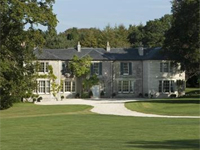
The start of the rush? Country houses for sale in the Sunday Times Home section

Sandley, Dorset (Image: Knight Frank)

The usual spring rush of country houses coming to market has been later this year – a combination of the hangover from the uncertainty in the market of the last couple of years along with that of the General Election.  That traditional shop-window of the country house – the Home section of the Sunday Times – has this week (16 May 2010) heralded what it sees at the start of the rush by including three pages of those for sale.

For those who like their country houses to look traditional from the outside but prefer a more modern interior then the Grade-II listed, six-bedroom Sandley in Dorset, set in 178-acres, might be perfect – if you have the necessary £9m.  The owners decided that the rather ‘quaint’ style of the house was not for them and so they spent ‘a couple of million pounds’ and over two years to strip it back and then make it look very ‘London’.  Personal taste is the final arbiter for whether you think this is a good thing – but not all tastes are the same and it can mean that the appeal of the country house is taken to new markets.

Ebberly House, Devon (Image: Savills)

However, if your tastes are more usual and traditional then there are other options. Holt Manor in Wiltshire, set in 94-acres, mixes both old and new with a more traditional interior cleverly concealing the latest in sound, television and security systems.  With parts dating back to the 12-th century, the Grade-II listed house has been thoroughly modernised whilst still being a recognisably English country house. £5.95m [Holt Manor: Knight Frank]

If, however, you are looking for a more architecturally impressive house, the Ebberly House, near Winkleigh in Devon, could well be the house for you.   Designed by Thomas Lee, a student of Sir John Soane, Ebberly was described by Pevsner as an ‘unusual and attractive house’ and was the first to sell in Devon for over £1m when it sold in 1997.  The Grade-II* listed house possibly benefited from Soane’s personal influence as he was working nearby at Castle Hill which may explain the elegant, and very Soanian, top-lit oval stair hall with its fine cantilevered wooden staircase and curved doors, or the drawing room divided using three shallow arches. Set in  250-acres it has a wonderful estate featuring 20-acres of woodland, estate cottages generating £20,000 p/a in rental income, and spectacular views across to Dartmoor. It was also given an excellent and detailed write-up in Country Life – always a good seal of approval.  [Ebberly House: Savills]

Chapel Cleeve Manor, Somerset (Image: Webbers)

Perhaps one of the most interesting of the houses featured is unfortunately only given a photo and no details is Chapel Cleeve Manor in Minehead, Somerset. Perhaps now not strictly a country house as it only has 7-acres, at £1.695m for 17+ bedrooms, it may seem a bargain for someone who wants to live in a country house but doesn’t want the responsibility of an estate. Although such a situation a hundred years ago could have led to the demolition of the house as happened to so many others. Yet, with so much wealth now generated without the need for a large estate to support the house, it’s now entirely reasonable for someone to take on and enjoy such a pleasing Gothic-Revival house. The house has been used as a conference venue for a number of years but with careful restoration this could be rescued from commercial use and be a spectacular home for someone who requires a lot of space. [Chapel Cleeve Manor: Webbers]

So has the rush started?  Nobody really knows and asking estate agents is never an exact science.  Several house which have been launched recently are still waiting to find new owners but the right house launched at the right time for the right price usually does find the right buyer.

Full story: ‘The landscape has changed‘ [The Sunday Times: Home section]

Perfect for a family of five: Knole, Kent

Knole, Kent (Image: Matthew Beckett)

The Sunday Times ‘Home’ section (9 May 2010) features an article which gives some insight into the concerns that might naturally arise when you inherit a huge house in this day and age.  When the 7th Baron Sackville inherited the vast Elizabethan Knole house in Kent in 2004 he and his wife had to decide whether they even wished to move from a four-bedroom cottage on the estate into one of the treasure houses of England with its 365 rooms, 52 staircases, 12 entrances, and 7 courtyards. Luckily shared with the National Trust since 1946 it is still a huge responsibility.

Despite having to share the house with the 80,000 annual visitors, with a house this size it’s quite possible to still hide the several members of the Sackville family who have apartments in the house or estate.  The Baron occupies the south wing whilst his mother lives in the north wing within a building with a footprint of approximately 4-acres with an exotic roofline which gives the impression of a small medieval town.  Even in these restricted quarters the family enjoys nine bedrooms and multiple reception rooms including a room known as the colonnade with superb trompe l’oeil decoration and a huge library along with the more domestic kitchen and ‘flower’ room.

The Sackvilles have long  opened Knole to the public starting in the early 1800s and had it’s first guidebook in 1819.  The fortunes of the town of Sevenoaks, which sits on the edge of the park, was increasingly dependent on the tourists, much as Leamington Spa and Warwick became on the success of Warwick Castle.  However, after the last of the male line of Sackvilles died in 1843, taking the Dukedom of Dorset with it, a series of inheritances left it, after various family challenges, with Lord Buckhurst in 1870, the eldest son of one of the last Duke’s daughters.  Although the house had remained open in the 1874 season, however he decided, for reasons which are not entirely clear, to close the house in October of that year.  He then removed the various access privileges which had been afforded to the people of Sevenoaks.  This prompted first local grumblings, then letters to the paper, then letters to Lord Sackville (as he had now become), until in 1883 it spilled over into the now infamous ‘Knole Disturbances’ where the locals, roused by stirring speeches,  tore up the gates and chains which had blocked their access, before marching to the door of the house.  However, all this left the cantankerous Lord Sackville unmoved and the house and grounds remained closed until after his death in 1888.

One side effect however of this was the raising of questions nationally as to the levels and rights of access to these parks and estates which were increasingly seen as something the public could enjoy at their leisure.  These sort of questions and the resulting answers, which were clearly in favour of the preservation of these open spaces – and later the houses – eventually led to the creation of the National Trust, which is now the current owner of Knole, and very unlikely to ever close the gates again.

Full story: ‘Living it large with 365 rooms‘ [The Sunday Times]

National Trust: ‘Knole, Kent

Ferne Park, Wiltshire: the building of a modern Classical masterpiece

Ferne House, Wiltshire (Image: Q&F Terry, Architects)

The English country house is considered our greatest contribution to the field of architecture – the unified vision of house and landscape combined with fine interiors, superb furnishings and exceptional art collections.  Yet in the 20th-century, it seemed that after Lutyens we largely lost our ability to excel in their creation – the new country houses seemed shadows of our earlier confidence, lacking the grand flair, and certainly the detailing, which had so defined the Georgian Classical house.  This was partially due to financial circumstances but also due to the influence of modernism which sought to re-interpret the country house in a new language – and it often didn’t translate well.

Yet, there are signs that given the right client and the right architect, we can again create the sort of country houses which will be admired in 200 years. Country Life magazine this week (5 May 2010) features one of the best country houses to be built in the last 70 years; Ferne Park in Wiltshire, winner of the Georgian Group award for the Best Modern Classical House in 2003.

This is a house built in the finest traditions of the English country house – with its clear use of the Palladian vocabulary but skilfully reinterpreted for the location and the needs of the client, Lady Rothermere.  The architect responsible, Quinlan Terry, has been responsible for some excellent buildings but this may well be his best.  The new house, built in 2000-2, was on the site of a previous Georgian mansion called Ferne House which was demolished in 1965 having fallen into a poor condition.  By rebuilding on the same site, Terry had a setting which was simply waiting for a new house to be created.

The local authority had already set the requirement that the new house must be Classical so both client and architect drew on other houses they knew such as Came House (Dorset) and Castletown Cox (Ireland), and were able to develop a distinctive plan for the site.  The house also cleverly has contrasting fronts with the dramatic views to the north matched by the stately columns and pediment, whilst the south, with the gentler views into Dorset, using a simpler facade.

Ferne Park has revived hope that it is possible to build a successful Classical house which is recognisably a continuation of the the glorious Georgian traditions which have created so many of the houses we love today.

More pictures of the house: Ferne House, Wiltshire [Quinlan & Francis Terry, Architects]


Part II of the article will be published in the 12 May 2010 edition of Country Life.

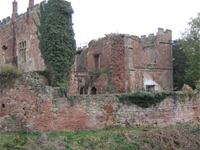
Astley Castle rises from the ashes

Astley Castle, Warwickshire

The devastating fire which tore through Astley Castle not only ended it’s use as a hotel but also seemed to mark the end as a building.  However, a remarkable project by the Landmark Trust is seeking to once again restore life to this battered shell.

Although never a proper ‘castle’, Astley was designed as a fortified manor house (see also the beautiful Compton Wynyates nearby). This original house was built largely by the Grey family but it was slighted following the execution of Lady Jane in 1554.  The house was rebuilt in 1600 by a new owner, Edward Chamberlain, and it eventually became part of the Newdigate family’s Arbury Hall estate, with a new ‘Gothick’ stable block added in the 18th-century – but with little done to the house itself.  The grade-II* listed castle was leased out as home for most of in the 20th-century until the 1960s when it became a hotel until the fire destroyed it, leaving it as a deteriorating ruin for the next 30 years.

The Landmark Trust has been attempting to find a solution to this situation since the 1990s, originally looking at plans for a full restoration, but which unfortunately proved too costly.  The continued decline of the building fabric gave fresh impetus to their efforts as it was realised that without urgent work the house as a structure would be lost forever.  In 2005, the Trust held a competition to find a design for accommodation to be created within the shell as sensitively as possible, which could then be used as a holiday let.  The winning design from the architects Witherford Watson Mann will create a modern two-storey structure in the oldest part of the castle, with the first-floor living spaces enjoyed spectacular views across the parkland.  A £500,000 £1.47m grant from the Heritage Lottery Fund, plus earlier fund-raising, has taken the Trust to within just £134,000 of the total project cost of £2.3m, and great progress has been made on the scheme. What’s particularly impressive about this project is that it has enabled a full architectural survey of the house, which has revealed many fascinating features as the rubble has been cleared and the later Victorian additions are removed.

The Landmark Trust has a strong record of taking on derelict listed buildings, converting them, and finding a long-term sustainable use for them – usually as unusual holiday accomodation.  Although it’s not been possible to fully restore Astley Castle as a home it is encouraging to see it being consolidated and enhanced with a sensitive modern addition which will provide the opportunity for others to experience this amazing part of our architectural heritage which was so nearly lost.

More details: ‘Astley Castle‘ [The Landmark Trust]