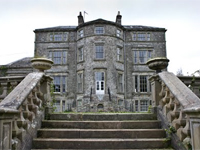
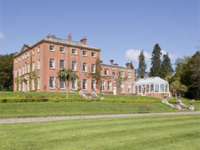
Monreith House, Scotland (Image: Mike Harrison / UK Wildlife Photography)
Country House Rescue heads from Tapeley Park in Devon to the other end of the country to Monreith House in Galloway, Scotland. A dignified house, it has suffered from a classic problem for those that inherit, as the current owner Sir Michael Maxwell did in 1987, that: “…to put it politely, my relatives’ expenditure exceeded their income by many times.”. The necessary economies forced on Sir Michael have meant some cut corners which Ruth Watson quickly identifies as hindering his attempts to move upmarket.
The Maxwells of Monreith were certainly aristocratic with their baronetcy granted by Charles II in 1681 and various family members marrying well including the 8th Baronet’s wife, Lady Mary, who was a daughter of the Duke of Northumberland, one of the richest and largest landowners in England. The Maxwells had been based at Myrton Castle since they bought it in 1685, obviously needing a house to match their newly elevated status.
Leuchie House, Scotland (Image: John Small - 1883 / buildings fan on flickr)
Monreith House was built in 1791 by Sir William Maxwell, 4th Baronet, to replace Myrton, which was partially demolished to provide building materials for the new one. The architect was the Edinburgh-based Alexander Stevens, son of a better known Alexander Stevens who specialised in designing and building bridges. His design at Monreith shows that he was well versed in the Palladian vocabulary but is in contrast to his other principal design; the impressive Raehills in Dumfriesshire, built for the 3rd Earl of Hopetoun in 1786, which is an imitation of Robert Adam‘s castle style. Monreith shows closer similarities with Leuchie House in Lothian, built for Sir William Dalrymple between 1779-1785, to designs by the little known Alexander Peacock who was also based in Edinburgh. By the 1790s, the first wave of Palladianism had long ago swept through the country and much provincial design can be traced back to the many architectural pattern books which had been produced. Stevens’ limited but varied output could indicate he used also used them, though perhaps more competently than most.
The Maxwells of Monreith became one of the most important families in the area with a substantial estate which totalled 17,000-acres. The house has passed down through the Maxwells, though it never went to the most famous of the family, the writer Gavin Maxwell, heir to the 8th Baronet, Aymer Maxwell, but who died of cancer in 1968. Gavin’s books were best-sellers, with his most famous being the autobiographical ‘A Bright Ring of Water‘ about his pet otter, the profits of which might have helped the estate but for his profligate ways. His father also faced financial difficulties and, lacking funds to maintain the house, apparently felt it easier – and cheaper – to let the house deteriorate rather than pay to have it demolished.
When Sir Michael inherited the house from his uncle it was in a seriously neglected state, saying he remembers that “When it rained hard the water would run down the stairs and land in puddles on the floor.”. Sir Michael had trained as a surveyor so he was able to approach much of the work himself – though this also appears to be part of the problem. One money-making scheme was to convert the top floor into holiday flats but these, and the rest of the house, all show signs of his major flaw – a determination to do things as cheaply as possible leading to various poor choices which compromise his aspirations.
Sir Michael displays an admirable duty towards maintaining the house – a contrast to that displayed initially by Hector Christie of Tapeley Park in the previous episode. Sir Michael says “It would be too easy if your great-grandfather dropped dead and left you money to end up a drunk in the gutter – so it’s a challenge. Essentially, you’re not given much choice when you inherit a house like this.”. Thankfully he does appear to want to listen to Ruth Watson’s advice and one hopes that this will put him on the path to a sustainably prosperous future which will ensure the Maxwells remain at Monreith.
The subject of the 13 March episode of Country House Rescue, Tapeley Park in Devon, carries on the wonderful tradition for country house eccentricities – and eccentrics. From how the site was chosen to the manner of the inheritance, this beautiful house has a fascinating history – though more recently it’s been a little neglected.
According to Simon Jenkins, “Few Devon houses have so spectacular an outlook” – and few would disagree. Situated above the pretty seaside town of Bideford, the site of the house was apparently chosen by the builder, Captain William Clevland, who apparently spotted the location through his telescope as he sailed up the Torridge in 1702. He made good on his wish, rebuilding the existing manor house in an austere and somewhat uninspiring style but which took full advantage of the fine views from its elevated position – though this was later largely negated by an enthusiastic blocking up of windows to avoid the window tax.
Tapeley Park, Devon - before Belcher alterations (Image: tapeleygardens.com)
The house eventually passed to the Christie family through marriage when Agnes Clevland married William Langham Christie in 1855. The Christie fortune was made when one Daniel Christie joined the East India Company and was later given a fortune in gems by a Sultan in thanks for having prevented troops from pillaging a harem. On his return he married the daughter of Sir Purbeck Langham of Glyndebourne in East Sussex and Saunton Court in Devon. His grandson, Augustus Langham Christie, inherited both estates and now being a very eligible and wealthy man was able, in 1882, to marry the daughter of the Earl of Portsmouth, Lady Rosamund, whose family seat was the nearby Eggesford House (demolished in 1917). Coming from such a grand house she was fairly unimpressed with Tapeley, writing in her diary:
“When I first saw Tapeley it was in the winter of 1881 before my marriage to Augustus Langham Christie. It was a Georgian stucco house, very plain and rather dreary in appearance, for many of the front windows had been blocked and the sunk apertures painted black with halfdrawn paint blinds, cords and tassells, looked very dull. The terrace walk and garden did not exist and the drive approached between iron railings.”
The marriage was not a particularly happy one with Lady Rosamund eventually banishing Augustus to the other Christie estate, the nearby Saughton Court, for his ‘eccentricities’ which apparently included ‘childish behaviour’ such as kicking the furniture repeatedly to annoy her. In his absence, Lady Rosamund poured her energies into rebuilding Tapeley and engaged one of the leading neo-baroque architects, John Belcher (b.1841 – d.1913). Due to limited finance, the work was to last from 1896 until 1916 but the professional relationship between client and architect was a happy one – so much so that on his death she had a plaque added to a wall in his memory.
Belcher is not as widely known as perhaps he should be, though his work is well regarded. He worked mainly on commercial buildings and institutions including the Whiteleys department store in London, and the brilliant Mappin & Webb building in the City of London which was scandalously demolished in 1994 to build No.1 Poultry (the only good view is looking out from the top of it!). More prominently, Belcher also designed in 1907 the imposing Ashton Memorial in Lancaster for Baron Ashton.
Belcher transformed the ‘dreary’ house to create an imposing but elegant ‘Queen Anne’ style Georgian villa of brick with stone pilasters, parapet and a pediment, sitting above the impressive terraced gardens. The interiors are also of note, featuring a grand staircase hall and also several good fireplaces and plaster ceilings from the original house. Lady Rosamund had to fight to keep hold of her creation as, in an act of revenge, Augustus left the house in his will on his death in 1930 to a distant cousin in Canada, forcing her to have to go to court to argue, successfully, that Augustus was obviously insane.
The house and estate were inherited by her son, John Christie, who founded the famous opera at Glyndebourne, where he spent the other half of his time when he wasn’t at Tapeley. Tapeley was then inherited by his daughter, another Rosamund, who frugally ran the house until her death in 1988 and was known for conducting the tours with a parrot on her head.
The current owner is one Hector Christie, Rosamund’s nephew, who apparently decided with his brother which was to inherit Glyndebourne and Tapeley by flipping a coin whilst in a Brighton nightclub. Hector, though Eton-educated, is something of a rebel, once sneaking into a Labour party conference to heckle Tony Blair about the Iraq war, and also extending a fairly broad invitation to various hippies to create something of an eco-commune at Tapeley.
Though almost all the hippies have now left, Hector has now decided that he should focus on managing the house and estate on a more commercial basis, and not a moment too soon judging by the deteriorating condition of the grade-II* listed house, where part of the dining room ceiling fell in shortly before Ruth Watson’s first visit. Fingers crossed her advice can provide a means for the family to stay in their ancestral seat without compromising either the architecture or setting or his principles.
Apethorpe Hall, Northamptonshire (Image: English Heritage)
Despite the image of wealth and power a country house might create, in reality their existence is far more precarious – as can be seen with nearly 1,800 houses lost over the last two centuries. A house facing the threats of being uninhabited without a concerned, well-funded owner with an inclination to keep it in good repair can quickly deteriorate leaving another gap in the tapestry of the countryside. Sometimes it requires someone other than concerned locals and architectural historians to highlight and campaign on behalf of those ‘at risk’ so here’s a quick round-up of the main English organisations fighting on behalf of country houses and who are very worthy of support.
English Heritage inhabits a prime position in view of its role in defining and, in conjunction with local authorities, implementing the statutory protection of our built heritage. Its role can be traced back to the Ancient Monuments Act of 1882 – though the legislation specifically excluded privately owned houses. The responsibilities were exercised through various government departments until it became a quango in 1984. As well as being responsible for the listing system and the annual production of the various ‘at risk’ registers (focussing mainly on grade-I and -II* properties), EH is also directly responsible for various country houses including Brodsworth Hall (Yorkshire), Rufford Abbey (Nottinghamshire), Hill Hall and Audley End (Essex), Kirby Hall (Northamptonshire), Witley Court (Worcestershire), Stokesay Castle (Shropshire), and Apethorpe Hall (Northamptonshire). It’s at the grade-I listed Apethorpe where EH has done some of it’s most interesting work; taking a direct role in the restoration of one of the finest Elizabethan/Jacobean houses in the country following a long period of neglect. Since 2008, the house has been for sale for around £5m – though there is a compulsory £4m list of renovations, and if you want complete privacy expect to pay another £8m to fully reimburse EH otherwise you have to open it for 28 days a year; so a nice round £20m to restore, furnish and keep as your own. However, this is a role that I fully support them in taking on – they should be there as owner and restorer of last resort for threatened grade-I houses. Now perhaps we can interest them in the sadly deriorating Melton Constable Hall in Norfolk…?
Another important group of campaigners are recognised in the 1968 Town and Country Planning Act which formalised the role of what are known as ‘amenity societies‘; that is, well-established voluntary societies who are experts in their areas, who must, by law, be informed of any applications for listed building consent to demolish listed buildings in whole or in part in England and Wales.
One of the best known is the Georgian Group who cover a period broadly from 1700-1837. The society was established in 1937 and has long campaigned for the sensitive restoration and retention of not only the buildings but the many important, and sometimes sadly overlooked, internal features which are a key part of the character of a building. Current active campaigns and cases they are involved in include Bank Hall in Lancashire and Trewarthenick House in Cornwall and many others. They also produce a scholarly annual research journal which provides a much more in-depth view of aspects of Georgian architecture. Access for the wonderful trips to houses not normally open to the public are worth joining for alone.
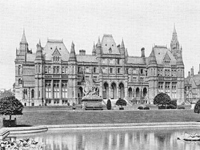
Eaton Hall, Cheshire (by Alfred Waterhouse - dem. 1961) (Image: Lost Heritage)
The Victorian Society (which also covers Edwardian buildings too) was formed in 1958 at a time when almost all things Victorian were disliked and an easy target for demolition. Founded at the suggestion of Anne, Lady Rosse, along with her influential friends such as Sir John Betjeman and Sir Nicklaus Pevsner, the Society has fought some notable battles; losing some such as Euston Station but winning others, such as the soon-to-reopen St Pancras Midland Grand Hotel building. Victorian country houses have suffered badly as, although designed by eminent architects such as Richard Norman Shaw and Alfred Waterhouse, they were often built on a much grander and therefore less economically sustainable scale and at the times of greatest threat (the 1930s and 1950s) had few friends to argue on their behalf. Luckily though this has changed – but with the predominant ‘gothic-revival’ style being quite polarising, threats to houses from this period will always be present. Again, well worth joining.
Perhaps more controversially for this blog, it’s also worth bearing in mind the Twentieth Century Society. Although the focus of the houses usually covered is before 1900, there has been a growing recognition that some of the country houses built in the 20th-century were well-planned and architecturally pleasing, even if they sometimes replaced a much more attractive Georgian or Victorian house. It does seem to take about 50 years after a style has passed from being fashionable for it to be appreciated, so I suspect there will be a growing realisation that we need to protect the work of those such as Francis Johnson, Craig Hamilton, Quinlan Terry, and Robert Adam (amongst many others) in the future.
The Society for the Protection of Ancient Buildings (SPAB) is, as its name makes clear, not usually concerned with country houses as they are relatively ‘modern’ in terms of its remit. However, they do immensely important work in promoting good repair practice to all buildings and their courses have taught generations of owners and craftsmen to respect the country houses and to approach any work required with a more ‘heritage’ mindset.
Although not ‘amenity societies’, two other organisations deserve a mention. The first is the Historic Houses Association which acts on behalf of the private owners of country houses and often lobby government to make them aware of the immense work done by the individual owners to maintain their slice of the national architectural heritage. It may seem unfashionable in wider society to support the wealthy but they are the ones not only maintaining their homes to the exacting standards of English Heritage, but also restoring and rescuing houses and converting them back into homes again – and for that they deserve our thanks.
The Grange, Hampshire (Image: mpntod / Wikipedia)
The other organisation is one in which I have an interest having worked with them for several years: SAVE Britain’s Heritage. Founded in 1974, SAVE have taken a very active stance on campaigning, willing to create media interest at short notice, but also to take time to produce some excellent research on houses at risk with thoughtful proposals for their re-use. These campaigns have saved houses such as Calke Abbey in Derbyshire, The Grange in Hampshire, Barlaston Hall in Staffordshire (where SAVE bravely took on the house for £1!), and, working with Kit Martin, have acted as a catalyst for the saving of other houses through conversion into apartments. Supporting SAVE’s work and becoming a Friend also gives access to their extensive ‘Buildings at Risk Register’ which features over 800 properties, including several country houses, which are in need of rescue – could it be you?
It is also worth keeping an eye out for local activists and campaigns which can also be remarkably successful at highlighting buildings at risk but can also sometimes take a more direct role; see the wonderful work at Poltimore, Devon, Bank Hall, Lancashire, and Copped Hall, Essex. These are just three examples where concerned locals have organised themselves and presented a credible alternative and prevented the complete loss of the house.
All of these organisations are worth joining but economics being what they are it can be best to join a national organisation and then another to focus on the period which you prefer. Joining up means that you are helping to support research but also active campaigns to ensure that as much of our built heritage is passed on to future generations.
———————————————————
I realise this selection is not comprehensive and is quite national in focus and deficient in regional organisations but this will be remedied in another post once I’ve had time to learn a bit more about who’s out there.
The history of the country house is sadly often a cycle of rise and fall with the main variable being the speed of each respectively. The old phrase was ‘one generation made the wealth, the second enjoyed it, and the third lost it’. Over recent decades the trend has changed slightly in that, with longer life expectancies prolonging the older generations, the houses have had fewer chances for the rejuvenation which inheritance often brought. As an alternative, Ruth Watson uses Country House Rescue as a catalyst for the type of entrepreneurial change which is the only way for these houses to survive – if only the owners would listen!
The first episode in Series 3, to be broadcast at on Channel 4 at 21:00 on 6 March 2011, takes us to Wyresdale Park in Lancashire to meet a father and son who don’t agree on the best way to maximise the obvious potential of the beautiful estate.
Wyresdale Hall was built between 1856-65 for Bolton cotton-magnate-turned-banker, Peter Ormrod, who bought 6,000-acres from the Duke of Hamilton to create his estate. The house, which cost £50,000 (about £4m at today’s value) at the time, was designed by noted local architect Edward Graham Paley (b.1823 – d.1895) who had an extensive practice, partnering first with his mentor Edmund Sharpe, then, following Sharpe’s retirement, Hubert Austin, before being joined by his son, Henry Paley. The work of Paley & Austin in particular was well-regarded with Pevsner saying they “did more outstanding work than any other in the county” and was “outstanding in the national as well as the regional context”.
Paley worked on relatively few country houses, being much better known for his ecclesiastical output, with included the design of Lancaster Cathedral. Paley was brought up in deeply religious home and, working with Edmund Sharpe, who was heavily influenced by Pugin, it was unsurprising that Paley adopted the strict ecclesiastical style with the ‘correct’ use of Gothic elements. Perhaps looking a little too much like a convent rather than a home, the house is, nonetheless, still a good example of the type of regional interpretations of Pugin’s architectural theories which gained ground in the 19th-century.
The grade-II listed house and estate passed through the Ormrod family before the land was bought by the Whewell family in the 1920s who then bought the house in 1967. Now the family are facing the usual struggles of a listed house, an extensive list of improvements, and the need to make the changes which sometimes sit uncomfortably with the more traditional older generation.
———————————
Country House Rescue – Series 3
My usual powers have slightly failed me and I haven’t a verified list of all the houses in Series 3 but here are the ones I have identified so far:
One rather unscientific barometer of the health of the country house market is the thickness of Country Life magazine as it comes through the letterbox each week. After the thinning of the issue in the run-up to Christmas it’s always pleasing to feel the first weighty edition of the new year. Yet, though this week’s issue (2 March) boasts ’70 pages of property for sale’ it’s remarkable that the estate agents have so few significant country houses to offer and of those that are there, it seems, along with last week’s issue, the largest houses are relaunches.
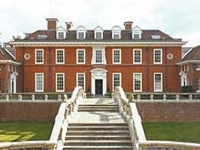
Pyrford Court, Surrey (Image: Savills)
One of the most interesting is grade-II listed Pyrford Court, Surrey. Originally built in 1910 for the 2nd Lord Iveagh, of the Guinness brewing family, it was one of a group of houses built around that time on the profits of beer (along with Polesden Lacey, Elveden Hall, and Bailliffscourt). The land was sold to Lord Iveagh by his father-in-law, Lord Onslow, whose family had owned the area since the 17th-century. The house was designed by Clyde Young who had also worked at Elveden, another seat of the Guinness family, though the sensitively designed wings were added in 1927-29 by J.A. Hale of Woking to designs by Lord Iveagh. The stylish neo-Georgian house is an elegant red-brick composition which originally sat in a 1,000-acre estate – though sadly now reduced to just 21-acres. Lord Iveagh died in 1967 and the house sat empty until sold in 1977 – apart from a brief burst of fame as a location in the 1976 film ‘The Omen’. The house then became an old people’s home with all the attendant damage until the current owners started their seven-figure restoration.
Pyrford Court was originally launched on the market in January 2010 for an ambitious £20m, a staggering rise in valuation from the £3.25m paid in 2000 and from the £8m asking price when it was offered for sale in 2002 (reduced, a year later, to £6.5m). Yet this proved too much for the market to take; even for a ‘super-prime’ house within 25 miles of central London, and despite the high-quality restoration of the impressive interiors. It subsequently languished and has now been promoted with a double-page advert – though the price is ‘on application’ meaning we won’t yet know quite how far the price has dropped. However, looking at the other houses Savills have for sale in the area this is by far the most interesting and attractive house.
Brockhampton Park, Herefordshire (Image: Jackson-Stops & Staffs)
Another impressive house is the classically elegant, red-brick Brockhampton Park, Herefordshire. Although the architect hasn’t been confirmed, the fact that it is virtually identical to Hatton Grange in Shropshire by Thomas Farnolls Pritchard, means it can probably be attributed to him. The house was built in the late 1750s for Bartholomew Richard Barneby, probably using the £3,000 brought to him through his marriage in 1756 to one Betty Freeman. The Barneby family had owned the estate since the 15th-century and were to own it until 1946 when John Talbot Lutley (who was a descendent of the Barneby family) left the house and 1,200-acre estate to the National Trust. Col. Lutley was a no-nonsense man who, on hearing of the NT country houses scheme, wrote them a short letter in 1938 saying that as he was a bachelor whose heirs were rather distant, would they be interested?
James Lees-Milne was duly dispatched – and almost rejected it on sight as it wasn’t pure Georgian due to some relatively small Victorian alterations. However, after a tour of the estate and on seeing the beautiful Lower Brockhampton Manor, he felt that the latter two would be fine additions for the Trust – even if the big house would be a drain. It was duly left to the NT in 1946 following the Colonel’s death. Neither the house nor the contents were of sufficient quality to justify retaining or opening to the public so they sought to let it. Unfortunately no private tenant wished to take it on, usually citing its remoteness, however in 1985 an insurance company let the house as offices and undertook a comprehensive restoration programme. After they moved out in 1996 it was again restored as a private home and is now available with just 8-acres but surrounded by the rest of the NT-owned estate. Interestingly the house is listed under the ‘Sales’ section of the Jackson-Stops & Staff website but I suspect this is due to it being leasehold – again ‘price on application’ so the price of the privilege is unknown, but the house has been advertised since last summer so it may be cheaper than before.
Ebberly House, Devon (Image: Savills)
Perhaps the most surprising house to still be available is the grand Ebberly House, Devon. Rather than the expected provincial house, this is a house which displays remarkable architectural sophistication. Described by Pevsner as ‘unusual and attractive’, whose distinctive rounded ends ‘hint at the variety of room shapes inside; a provisional echo of the interest of contemporary architects such as Nash and Soane’. Designed by Thomas Lee of Barnstaple, a pupil of Sir John Soane, the grade-II* house compensates for it’s remoteness with a fantastic house set in a fine 250-acre estate. Offers in excess of £4m on the back of a postcard to Savills in Exeter.
Perhaps there are some clever marketing plans being hatched at the estate agents which means that rather than pushing their best properties in the first big property edition of Country Life of 2011 they’re saving them for…when? Bonuses have just been announced and those looking to buy are probably active so perhaps there is just a general scarcity of significant country houses coming to the market. Does this indicate 2011 will be rather thin for the agents as uncertainty limits buyers to the super-rich looking for somewhere in London or will the market pick up and a slew of new houses soon be released to whet our appetites?






 The Country Seat