Ferne Park, Wiltshire: the building of a modern Classical masterpiece

Ferne House, Wiltshire (Image: Q&F Terry, Architects)

The English country house is considered our greatest contribution to the field of architecture – the unified vision of house and landscape combined with fine interiors, superb furnishings and exceptional art collections.  Yet in the 20th-century, it seemed that after Lutyens we largely lost our ability to excel in their creation – the new country houses seemed shadows of our earlier confidence, lacking the grand flair, and certainly the detailing, which had so defined the Georgian Classical house.  This was partially due to financial circumstances but also due to the influence of modernism which sought to re-interpret the country house in a new language – and it often didn’t translate well.

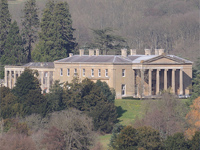
Yet, there are signs that given the right client and the right architect, we can again create the sort of country houses which will be admired in 200 years. Country Life magazine this week (5 May 2010) features one of the best country houses to be built in the last 70 years; Ferne Park in Wiltshire, winner of the Georgian Group award for the Best Modern Classical House in 2003.

This is a house built in the finest traditions of the English country house – with its clear use of the Palladian vocabulary but skilfully reinterpreted for the location and the needs of the client, Lady Rothermere.  The architect responsible, Quinlan Terry, has been responsible for some excellent buildings but this may well be his best.  The new house, built in 2000-2, was on the site of a previous Georgian mansion called Ferne House which was demolished in 1965 having fallen into a poor condition.  By rebuilding on the same site, Terry had a setting which was simply waiting for a new house to be created.

The local authority had already set the requirement that the new house must be Classical so both client and architect drew on other houses they knew such as Came House (Dorset) and Castletown Cox (Ireland), and were able to develop a distinctive plan for the site.  The house also cleverly has contrasting fronts with the dramatic views to the north matched by the stately columns and pediment, whilst the south, with the gentler views into Dorset, using a simpler facade.

Ferne Park has revived hope that it is possible to build a successful Classical house which is recognisably a continuation of the the glorious Georgian traditions which have created so many of the houses we love today.

More pictures of the house: Ferne House, Wiltshire [Quinlan & Francis Terry, Architects]


Part II of the article will be published in the 12 May 2010 edition of Country Life.

Lifting the curse of Hampton Gay manor house


Hampton Gay Manor House, Oxfordshire
Hampton Gay Manor House, Oxfordshire (Image: Robert Silverwood on flickr)


The fire which gutted the largely unaltered Elizabethan Hampton Gay manor house in 1887 was seen as the retribution of a curse said to have been put on the house when the inhabitants refused to offer help and shelter when the Paddington-to-Birkenhead Express crashed nearby in 1874.  The fire tore through the building leaving nothing but a shell which has stood for nearly 150 years.  However, with continuing structural deterioration threatening its very survival, an application has been submitted to restore it as a new home.

Even ten years ago the idea of restoring a historic ruin would have probably been immediately refused by English Heritage but over the last decade a series of interesting restorations have shown that ruins need not always remain that way.  This re-evaluation was probably a result of the realisation that it is almost impossible to fully arrest deterioration to a building which is not in use.  However, there is a strong incentive for an owner to ensure that his home remains secure and watertight.

One example of this new permissiveness is Eggesford House in Devon.  Formerly the home of the Earls of Portsmouth, this house, built between 1820-30, was abandoned in preference for their Hampshire estates in 1911 and put up for sale in 1913. It was eventually bought by a local man who slowly stripped it of anything usable in the 1920s leaving a derelict shell.  In the early 1980s it was expected that within a few years the last remaining walls would collapse leaving no sign of the grand house.  However it (plus 80-acres) was sold in the 1990s for around £300,000 to the architect Edward Howell who created a huge new house within the existing walls which successfully uses the old room heights to create Regency-style proportions in a very modern house.

Another project which was driven forward by sheer determination was that of Hellifield Peel in Yorkshire whose story was told as part of a 90-minute special edition of Grand Designs.  At it’s core a 14th-century fortified tower, it had been modernised in the Georgian period but abandoned in the 1950s until it was a roofless shell.  With dereliction threatening total loss, English Heritage decided to allow conversion – albeit with some serious stipulations regarding the archaeology. Architect Francis Shaw had always wanted to live in a castle and this was a labour of love – certainly only someone very dedicated would continue after seeing the central spine wall collapse into hundreds of tons of rubble.  However, anyone who sees the house today would probably agree that English Heritage made the right choice.

Astley Castle in Warwickshire was another ancient home ravaged by a fire in 1978 and a fast deteriorating ruin which the Landmark Trust, with grant support from English Heritage, are in the process of rescuing.  Their plan involves the insertion of a smaller house into the shell of the castle to support the walls and provide holiday accommodation thus ensuring an income to provide a secure future for this historic house.

So the plans for Hampton Gay aren’t as radical as some might believe. However, the 18th-century passion for the ‘Picturesque’ – an appreciation for natural environments and particularly for ruins – is still influential today and some may object to this interference in what is considered one of the most beautiful views in Oxfordshire.  However, without significant intervention there is a real risk that the ruin would simply collapse and be lost forever.  So if the choice is between losing an atmospheric ruin or allowing restoration it seems that the current preference from the official bodies is that the latter is to be allowed – although the heavy restrictions will hopefully ensure that only well-funded restorers with a sympathetic understanding of the building will undertake these projects.  This raises some tantalising prospects; perhaps one day we may even see Kirby Hall in Northamptonshire as a home once again?

Story: ‘Grand design for ruins‘ [Witney Gazette]

Lodges to lost houses: Thorington Hall Gate Lodge, Suffolk

Thorington Hall Lodge, Suffolk (Image: buildings_fan on Flickr)

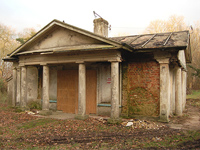
Often the only visible sign of  a grand estate is the lodge house seen as we drive past; their varied size and designs indicating the wealth and aspirations of the owners.  Although still a integral part of the functioning of some estates, providing security and accommodation, sometimes these beautiful buildings lie abandoned, intriguing those who go past them everyday.  ‘The Restoration Man’ series on Channel 4 has been showing people who have been willing to take on abandoned listed buildings and bringing them back to life. The episode to be shown on Sunday 25 April features Thorington Hall Gate Lodge, a forlorn reminder of Thorington Hall, one of the many elegant demolished Suffolk country houses.

Although their main function was to provide shelter for the estate worker who opened the gates, lodges were often designed by the same pre-eminent architects who were working on the main house.  Far from being an afterthought, these houses were often strongly imbued with the overall architectural style of the estate and were seen as an important way of announcing the status of the estate and owner.  Alternatively they gave scope for the owner to indulge in some architectural experimentation.  The styles of the lodges are as varied as the many houses they protected, from Victorian Gothic follies to small thatched cottage orne to minature Greek temples, such as at Thorington Hall.  The publication of ‘pattern books’ such as Joseph Gandy’s ‘Designs for Cottages, Cottage Farms and other Rural Buildings, Including Entrance Gates and Lodges‘ (1805) also enabled the discerning owner to select particular buildings from an established design without the need for an architect.

Many of these lodge cottages are now no longer part of the estate and have been turned into interesting family homes.  Their smaller, more domestic, scale also ensured that they often survived the demolition of the main house.  One example is Clumber Park in Nottinghamshire where all nine lodges at each of the estate entrances survive despite the palatial mansion being demolished in 1938.  Increasingly, the modern estate owner is buying back these buildings to reintegrate them with the overall estate.  However, some still survive as neglected shells and these can prove to be an exciting opportunity to create a home.  One important factor bear in mind is that these houses are often very small (sometimes only two rooms) and their listed status means it’s not always possible to add significant new extensions.  One of the joys of these houses is their diminutive size and that should be respected when considering restoration, but completed sensitively, these houses can be an interesting feature of your local heritage.

To find lodge houses which may be available for sale, join SAVE Britain’s Heritage and access their ‘Buildings at Risk Register’ where you can search for these properties plus many others.  Their latest ‘Buildings at Risk’ report – ‘Live or Let Die’ – will be published on 1 June 2010 and can be pre-ordered now.

To find out more about the many country houses which have been demolished in Suffolk there is a superb book which has been recently published called ‘The Lost Country Houses of Suffolk’ by W.M. Roberts [amazon.co.uk].

Programme details: ‘The Restoration Man‘ [Channel 4]

A problem shared? Whitbourne Hall visited by Country House Rescue

Whitbourne Hall, Herefordshire (Image: David Cronin on flickr)

The great wealth generated by the Victorians led to the creation of some of our grandest country houses.  Designed to impress guests and provide a showcase for the collections and taste of the owners, these houses were remarkable and beautiful expressions of the power and preferences of the age.  However, in the more straitened circumstances of the 20th-century, this left owners with running costs which far outstripped their wealth and which unfortunately led to hundreds of our country houses being demolished.

Some escaped the wreckers pickaxe through conversion into apartments – but this doesn’t always solve the questions about the long term sustainability of a house, as shown by the visit of the TV programme Country House Rescue to Whitbourne Hall in Herefordshire.

The grade-II* listed house was built for vinegar magnate Edward Bickerton Evans whose father founded the Hill Evans Vinegar works in Worcester in 1830, which was, by 1905, the biggest vinegar producer in the world.  As was standard practice for the discerning Victorian millionaire he decided to build a grand country house and chose a cornfield in Whitbourne as the perfect location.

Despite its Georgian appearance, it was built between 1860 and 1862 to a design by Edmund Wallace Elmslie and inspired by the Erectheum on the Acropolis in Greece. The house was a lavish example of neo-Palladian architecture with a six-column portico, whilst on the south front a huge orangery, now known as the palm house, was added in 1875 and was thought to be the tallest in Europe.  The interior features a fine pillared main Hall with a rare blue and white glass ceiling, and the main reception rooms retain many original features.  At it’s height in 1876, the estate extended to over 2,500 acres with the classically beautiful Whitbourne Hall sitting proudly at the centre.

Remarkably, the Hall remained in the Evans family until 1980, when it was purchased by Whitbourne Hall Community Ltd to be run as a communal housing project with individual apartments and set in eight acres of gardens.  This original arrangement floundered and a commercial company was created to run the house as a more conventional managed community of 23 apartments.  The main rooms have been preserved much as they were with the Morning and Drawing Rooms retaining their original wall coverings.  However the sheer scale of the house means that the average annual maintenance bill is about £42,000 – and due to extensive and significant work required to maintain a house of this quality, that bill is expected to double in 2011, posing serious problems for the residents.  Extensive restoration is now required as the house is now suffering from a catalogue of issues including failing plasterwork as water penetrates through the coffered ceiling of the main hall.    Curiously Whitbourne Hall doesn’t seem to be on the English Heritage Buildings at Risk Register – it would be interesting to know why not.

One of the perennial difficulties of owning a country house is not just the huge costs such as heating but also the ongoing maintenance (as demonstrated by the Earl Spencer’s sale), the costs of which, rise significantly the higher the classification.   With the paucity of public grants for maintenance it falls to the owners to seek innovative ways to make these wonderful houses financially self-sufficient if possible.  However, as Country House Rescue often shows, it’s the owners who can sometimes be the problem who need to be convinced before they become part of the solution.

More details: ‘Country House Rescue‘ [Channel 4]

Empty walls? The sale of contents to fund the house – Althorp House

Althorp House, Northamptonshire (Image: Andrew Walker @ wikipedia)

For hundreds of years the political power of a country house was in the ownership of the house, and most importantly the estate – acreage equated with power even if the land was mortgaged to the hilt.  The paintings or furniture which furnish these houses were not only decorative but assets which were easy to sell off when financial circumstances demanded that money be raised.  An upcoming sale at Christies highlights how this is still the case today – even if the strength of the art market means that fewer works now need to be sold to raise the totals required.

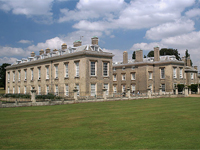
Althorp House in Northamptonshire has famously been the home of the Spencer family since the 16th-century and sits in a 14,000-acre estate.  The family fortune was founded in livestock and commodities which enabled John Spencer to purchase the red-brick Tudor house at Althorp in 1522.  It was this house which the 2nd Earl Spencer commissioned the architect Henry Holland to modernise in 1787-89, encasing it in white brick and tiles and remodelling the interior to create the grade-I listed house we see today.  The Spencer family then built up their connections becoming politically influential but also extensive art collectors.

Today, Althorp is in the middle of a £10m project to put the house on a sound structural footing.  One major task, along with repairing the ornate stonework and the external tiles, is to fix the roof – an undertaking which is taking nine months and requires over 50-tonnes of lead.  Globalisation means that commodity prices have been rising strongly on the back of growing demand from countries such as China meaning the cost of the project has proved too great to be borne through income.  So the 9th Earl Spencer has been forced to put a selection of art, considered ‘non-core’ to the collection by the trustees, up for auction.  However, the flip side to globalisation is the massive wealth creation and more well-funded collectors chasing the best works.  In this case, the quality of the paintings and the robust prices being achieved at recent auctions, it is possible to raise enough money with just a few works.

The highlight is ‘A Commander Being Armed for Battle‘ by Sir Peter Paul Rubens which is expected to fetch between £8-12m which should cover the restoration bill for the house with the other works, including ‘King David‘ by the Italian Giovanni Francesco Barbieri, known as Il Guercino, providing some financial breathing space.  Ironically, the current Earl publicly criticised his stepmother for selling off four van Dycks and a Stubbs in the 1970s and 80s but this time the difference is that the proceeds will be re-invested in the house and estate rather than just simply for running costs.  It’s a fact of life that ownership of a country house is a constant battle against physical deterioration and with grant aid from the public bodies in such short supply it is unfortunately the artistic heritage which is once again being sacrificed to ensure that the family seat remains intact.

Full story: ‘On their uppers: The great aristocratic art sell-off‘ [The Independent]

Auctioneers: Christies – The Spencer House sale will be on 8 July 2010.