The history of the country house is sadly often a cycle of rise and fall with the main variable being the speed of each respectively. The old phrase was ‘one generation made the wealth, the second enjoyed it, and the third lost it’. Over recent decades the trend has changed slightly in that, with longer life expectancies prolonging the older generations, the houses have had fewer chances for the rejuvenation which inheritance often brought. As an alternative, Ruth Watson uses Country House Rescue as a catalyst for the type of entrepreneurial change which is the only way for these houses to survive – if only the owners would listen!
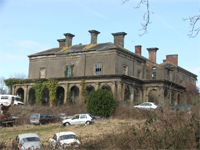
The first episode in Series 3, to be broadcast at on Channel 4 at 21:00 on 6 March 2011, takes us to Wyresdale Park in Lancashire to meet a father and son who don’t agree on the best way to maximise the obvious potential of the beautiful estate.
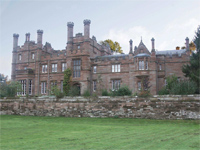
Wyresdale Hall was built between 1856-65 for Bolton cotton-magnate-turned-banker, Peter Ormrod, who bought 6,000-acres from the Duke of Hamilton to create his estate. The house, which cost £50,000 (about £4m at today’s value) at the time, was designed by noted local architect Edward Graham Paley (b.1823 – d.1895) who had an extensive practice, partnering first with his mentor Edmund Sharpe, then, following Sharpe’s retirement, Hubert Austin, before being joined by his son, Henry Paley. The work of Paley & Austin in particular was well-regarded with Pevsner saying they “did more outstanding work than any other in the county” and was “outstanding in the national as well as the regional context”.
Paley worked on relatively few country houses, being much better known for his ecclesiastical output, with included the design of Lancaster Cathedral. Paley was brought up in deeply religious home and, working with Edmund Sharpe, who was heavily influenced by Pugin, it was unsurprising that Paley adopted the strict ecclesiastical style with the ‘correct’ use of Gothic elements. Perhaps looking a little too much like a convent rather than a home, the house is, nonetheless, still a good example of the type of regional interpretations of Pugin’s architectural theories which gained ground in the 19th-century.
The grade-II listed house and estate passed through the Ormrod family before the land was bought by the Whewell family in the 1920s who then bought the house in 1967. Now the family are facing the usual struggles of a listed house, an extensive list of improvements, and the need to make the changes which sometimes sit uncomfortably with the more traditional older generation.
———————————
Country House Rescue – Series 3
My usual powers have slightly failed me and I haven’t a verified list of all the houses in Series 3 but here are the ones I have identified so far:
One of the main satisfactions of having a house built is that, as it’s your money, you get to decide the style, design, scale and detail according to your whims. With many of the stranger flights of fancy now curtailed by cost or planning controls it’s interesting to look at earlier houses built without such restraints and, in particular, those which incorporated horological elements creating the phenomena of the ‘calendar house’; that is, where the architecture was influenced according to the number of days, weeks or months in a year.
The genesis of the calendar house appears to have been in the intellectually fertile Elizabethan period when the elite of society revelled in the advances of science, mathematics and astronomy. They also had a great love of the ‘device’ which in the 16th-century meant any ingenious or original shape or concept. Mark Girouard, in his excellent book ‘Elizabethan Architecture – Its Rise and Fall, 1540 – 1640‘, states that although there are precursors to the idea of an entire building as a device – which can be seen in the designs of Henry VIII’s forts and and contemporaries’ gatehouses – this was its extent.
Under the Elizabethans, this idea can be seen to grow – from gatehouses to entrance fronts to courtyards (before they disappear) and the whole house is the device. Yet for all the intellectual attraction, the idea of the form of a house being dictated by the calendar is actually quite rare. In fact, Girouard’s book doesn’t mention the idea at all, as technically the first house to incorporate these principles, Knole in Kent, was built in 1604 by one of her courtiers, Thomas Sackville, 1st Earl of Dorset, a year after Elizabeth I‘s death.
The principle of the calendar house is that the number of external doors, windows or panes of glass, chimneys, or staircases etc should total either 4 (the number seasons), 7 (days in a week), 12 (months in a year), or 365 (days in a year). So in Knole’s case, the calendar is represented through the 365 rooms, 52 staircases and 7 courtyards. It is this choice of the number of which elements that provides the variation to the theme and can lead to the creation of palaces such as Knole. It also helps explain the relative scarcity of these houses as they require a certain commitment from the owner to complete the build and not compromise on the plans for fear of spoiling the totals.
One of the most compact of the calendar houses was built in 1681 – Scout Hall in Yorkshire. This wonderful house – which would give Hardwick Hall a run for its money for the phrase ‘more glass than wall’ – was built for a local silk merchant, John Mitchell, by an unknown designer and includes 365 panes of glass and 52 doors. Considering the rarity of calendar houses, it’s interesting to consider how this concept suddenly appeared over 70 years after the first and several hundred miles north. Perhaps Mitchell’s trade had taken him south and he had been to, or heard of, Knole. Who knows? What we do know is that this grade-II* house has been on the ‘buildings at risk register‘ for many years and has been derelict since the 1980s.
Cairness House, Aberdeenshire
The next appearance of a calendar house is in the far north at Cairness House in Aberdeenshire, designed by the renowned architect James Playfair and built between 1791-97 for Charles Gordon of Cairness and Buthlaw as the centrepiece of his 9,000-acre estate. What’s particularly remarkable about the house is that it resolutely neo-classical in design – a very unlikely style to marry with such a whim. Yet Charles Gordon had something of the Elizabethan love of the ‘device’ as the design contains numerous Masonic and pagan symbols with even the overall layout of the house making the initials ‘CH’.
Holme Eden Hall, Cumbria (Image: Smiths Gore estate agents)
It would be another forty years before the idea would be used again – this time in Cumbria in the construction of Holme Eden Hall in 1837. Built in a Tudor gothic style for a local cotton mill owner, Peter Dixon, to designs by John Dobson, a prolific local architect responsible for the remodelling of Newcastle-upon-Tyne and who worked on over one hundred country houses. Dobson had the rare facility of being able to competently design in many styles so it’s possible that the idea of the calendar house came from the owner; this time featuring 365 panes of glass, 52 chimneys, 12 passageways, 7 entrances and 4 storeys. The choice of the number of which elements was probably dictated by the budget as Dixon couldn’t have afforded to construct a house on the scale of Knole. After becoming a convent, the house fell into some decay but was converted by intelligent developers who kept the theme going and created 12 apartments, each named after a month.
Balfour Castle, Isle of Shapinsay, Scotland (Image: Balfour Castle)
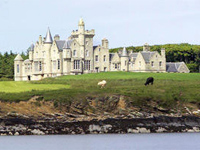
The next house appears in Scotland again; Balfour Castle on the Isle of Shapinsay. This was a remodelling of an existing house by the famous Scottish architect David Bryce, who did so much to popularise the ‘Scots Baronial’ style we now associate with the country. The owner was David Balfour whose grandfather had originally purchased the house and estate in 1782. The Bryce alterations were completed in just two years from 1847 and the calendar theme this time produced 365 panes of glass, 52 rooms, 12 exterior doors, and 7 turrets.
Bradgate House, Leicestershire - dem. 1925 (Image: Lost Heritage)
Bradgate House, Leicestershire was built in 1854 for the extravagant George Harry Grey, the 7th Earl of Stamford, though it was only to survive 70 years before being demolished in 1925. A gentleman sportsman with a liking for the Turf, the 7th Earl was probably inspired by the contemporary Victorian fashion of connecting families with their real (or sometimes imagined) ancestral past and building an Elizabethan style house would remind everyone that the Grey family had first been elevated to the peerage by Queen Elizabeth I. Exactly why he chose a calendar scheme is unknown but the house included 365 windows, 52 rooms and 12 main chimneys.
The Towers, Didsbury, Lancashire (Image: Paul F Hamlyn)
Although perhaps not strictly a country seat, The Towers, in Didsbury, Lancashire was built between 1868-72 as a rural escape for the proprietor and editor of the Manchester Guardian, John Edward Taylor. Designed by Thomas Worthington in a bold gothic style, it was reputed to have cost £50,000 to build – equivalent to around £3.3m today, and features 365 windows, 52 rooms and 12 towers. Pevsner appears conflicted about it describing it as both ‘…grossly picturesque in red brick and red terra cotta’ but also as ‘the grandest of all Manchester mansions’. It was subsequently purchased in 1920 for just £10,000 and became the headquarters for the British Cotton Industry Research Association and became known as the Shirley Institute, before becoming rental offices sadly surrounded by bland office blocks.
Bedstone Court, Shropshire was designed in a completely different style – mock Elizabethan – but again followed the pattern with 365 windows, 52 rooms, 12 chimneys and 7 external doors. The house was designed for Sir Henry Ripley by Thomas Harris, and had survived largely intact despite changing from use as a home to a school, until a serious fire in 1996 severely damaged large sections of the house necessitating extensive restoration.
Avon Tyrrell, Hampshire, completed in 1891 and now grade-I listed, was, as far as is known, the last calendar house to be built in the UK and incorporates 365 windows, 52 rooms, 12 chimneys, and 7 external entrances. Designed by the distinguished Arts & Crafts architect W.R. Lethaby, a founding member of the architectural conservation charity the Society for the Protection of Ancient Buildings, he was also particularly interested in architectural theory and design, so it is likely that he would have suggested the idea of the calendar house to Lord Manners. The client was a wealthy racehorse owner who built the house on the back of his winnings from a famous bet he made in 1881, that he could buy, train and ride the winner of the 1882 Grand National – which he did. Lord Manners donated the house to the “Youth of the Nation” and it is now an activity centre.
Considering that the idea of the calendar house was essentially Elizabethan in conception, it’s interesting to note that only one was built in that time, with the next in the late 17th-century, one in the 18th-century, but that it was the Victorians who produced the most. Perhaps this was a reflection of their interest in time, order and structure but also a revival in the Elizabethan delight in science and challenges. As a distinct group of houses they deserve to be better known – and in the case of Scout Hall, it deserves to be treated as a priority for rescue and restoration before it runs out of time.
—————————————————————————————–
Two other houses may also be calendar houses but I haven’t been able to reliably confirm this:
Kinmel Hall, north Wales – said to have 365 windows on the front elevation, 52 chimneys and 12 external doors.
Welcombe House, Warwickshire – now a hotel and has undergone significant alterations but is supposed to have 365 windows, 52 chimneys, 12 fireplaces and 7 entrances.
One often forgotten aspect of local newspapers is their ability to draw on their archives and provide reminders of local history. The local paper frequently played an important part in publicising the goings on at the ‘big house’, reporting the successes and scandals with usually equal vigour. A recent article in the Northamptonshire ‘Evening Telegraph‘ reflects not only on the collapse of the Volta tower, built by the owner of Finedon Hall as a memorial to his drowned son, but also the later dereliction and near loss of the house itself as it slipped from dereliction ever closer to demolition. Yet, unlike so many hundreds of other country houses which were lost, Finedon Hall was one of the many which have been saved.
Finedon Hall has 17th-century origins but its current style is the result of what Mark Girouard called “eccentric chunky” alterations by E.F. Law for the owner, William Mackworth-Dolben, in the 1850s. Built in a Tudor-Gothic style in the local ironstone (which was quarried on their land) the house passed through the family until the last of the family, the spinster Ellen Mackworth-Dolben died in 1912. With no heirs, the estate was sold off in parcels with the house passing through a number of owners before being bought by developers in 1971. For over a decade they allowed the house to deteriorate until just ten years later parts of the roof had gone and the exterior was in serious danger of collapse. Luckily, more enlightened developers stepped in and during the 1990s the house (and estate buildings) were converted into apartments.
One of the largest houses to be converted in this way was Thorndon Hall in Essex. One of James Paine‘s largest commissions, this Palladian mansion was originally built for the 9th Lord Petre in 1764-7 but was gutted by fire in 1876, leaving only the eastern end of the main block and the eastern pavilion intact. The Petre family lived in the reduced house until 1919 when they leased it and the estate to a golf club and they moved back to the original family home, Ingatestone Hall. The house remained a largely ruined shell until it was sold for development in 1976 but was then bought in 1978 by a local builder who created a total of 84 apartments in the house, pavilions and estate buildings.
Ecton Hall, Northamptonshire (Image: Conway Collections / Courtauld Institute of Art)
One of the most accomplished and intelligent of the developers to convert country houses is Kit Martin who has saved several houses and including Ecton Hall in Northamptonshire. The house was largely remodelled by Ambrose Isted in 1755 in the then relatively new ‘Gothic-Revival‘ style (Horace Walpole had only started his work at Strawberry Hill in the early 1750s and it’s considered one of the earliest houses in the new style). The house was filled with fine art, books and furniture and passed through the Isteds and then, by marriage, to the Sothebys who owned it until the last died, childless, in 1952. At this point the rot set in; builders called in to remove a large kitchen extension also, apparently, stole the valuable lead from the roof leading to dry and wet rot. Alexander Creswell, visiting in the 1980s, described the scene:
“The rich ochre stone of the garden front is engulfed in Virginia creeper, and sparkles of broken glass litter the terrace. Inside the house, the drawing room fireplace rises above a heap of plaster that the roof has brought down…At one end of the house the winter storms have toppled a gable, which in falling has crushed the fragile camellia-house below; one surviving camellia blooms among the rubble of ironstone – the only flourishing vestige of Ecton’s former glory” – ‘The Silent Houses of Britain‘
However, by 1989 Kit Martin had finished his work and the new apartments were advertised for sale in Country Life; a remarkable rescue for this almost lost house.
Gunton Park, Norfolk (Image: Broads Marshman / flickr)
Perhaps Kit’s finest work is Gunton Park in Norfolk. The house was originally the work of Matthew Brettingham, a competent, if sometimes unimaginative, Palladian who had first achieved recognition with his work executing William Kent and Lord Burlington‘s designs for Holkham Hall. This work brought him to the attention of other aristocratic clients, particularly in Norfolk, including Sir William Harbord who commissioned him in 1745 to design a replacement at Gunton for an earlier house which had burnt down three years earlier. Brettingham’s house was to be significantly enlarged c.1785 to designs by James Wyatt.
Sadly, fire struck again; in 1882 the Brettingham portion of the house, including the fine rooms, was almost completely gutted and remained a forlorn shell for the next 100 years. Kit Martin bought the house in 1981 and sensitively created well-proportioned apartments in the remaining wings. The front of the Brettingham wing (pictured above) become one large house separated from the main block by a large void created by the fire but still linked by the retained façades. It’s not just the house which has been rejuvenated; the parkland – nearly 1,000 acres – has also been bought or, through agreements, reunited (and in the process winning an award from Country Life magazine) to restore the setting of this elegant house.
Barlaston Hall, Staffordshire (Image: Peter I. Vardy / Wikipedia)
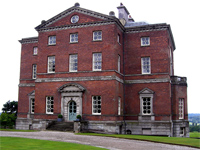
It’s rare for a house, once in a state of dereliction, to be restored as a single family home, yet thankfully it does happen. Barlaston Hall is one example of this – and it’s rescue was down to some bold decisions by the campaigning charity SAVE Britain’s Heritage and their President, the architectural writer Marcus Binney, who was offered this elegant house for £1! Barlaston Hall is, according to Binney, almost certainly the work of the architect Sir Robert Taylor (b.1714 – d.1788). The house is a relatively unadorned but sophisticated house, enlivened with unusual octagonal and diamond glazing bars in the sash windows; Taylor’s response to the popularity of Chinese Chippendale furniture and a general fashion for the Rococo.
Dining Room - Barlaston Hall, Staffordshire (Image: Christopher Dalton)
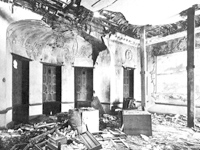
However, the house had been built on several coal seams which threatened the house when they were mined in the 20th-century. Structurally unsound, it had been abandoned and vandalised but SAVE stepped in to challenge Wedgewood’s application to demolish. At the subsequent public inquiry, the National Coal Board threw down the challenge that SAVE could buy the house for £1 provided it completed restoration and repairs within six years. SAVE swung into action, raising money through grants and by forcing the NCB to meet its obligations (which it did after some shameful attempts to avoid doing so), and the house was stabilised, restored, and subsequently sold to a couple who completed the interior and it remains a family home.
Piercefield House, Monmouthshire (Image: darkcell / flickr) - click to see large version
Sadly there are many country houses still at risk today – though the rescues also continue. Pell Well Hall in Shropshire, a wonderful house by Sir John Soane built in 1822-28, has been restored as a shell after decades of neglect, vandalism and fire, and now requires someone with vision to complete the process. Bank Hall in Lancashire was featured in the original ‘Restoration’ TV series but has continued to deteriorate with sections collapsing. However, planning permission is being sought to convert the house into apartments which will enable restoration of the house. One house however has, inexplicably (well, to me), remained unrestored; Piercefield House in Monmouthshire. This beautiful house, again by Sir John Soane, became uninhabited and was mistreated during WWII by the American troops stationed nearby who used the façade for target practice. The house, set in 129 acres, has been for sale for several years but despite the architectural provenance and the wonderful setting it remains unsold.
The story of the country house has always been one of changing fortunes, which sadly led to many being demolished. The difference now we have heritage legislation is that whereas before houses were often simply demolished, now their plight is likely to drag on for many years. Restoration is often the best course of action, preserving as much of the original fabric as possible, and ideally as a single family home, though the less palatable options of conversion are always to be preferred to the complete loss of another of our historic houses.
Blackborough House, Devon (Image: Trouserama / Derelict Places) - currently for sale with Winkworths
Heritage and the dedicated work of those who seek to rescue it can often be overlooked only to be occasionally thrust into the spotlight of TV – though this can be a useful promotion in these times of austerity. Sadly, the schedules seem to focus on heritage in bursts, giving us ‘The Restoration Man‘ and ‘Country House Rescue‘ at the same time but it’s good to know that their popularity encourages the programme makers to continue to commission this type of series. Of course these programmes need material so if you know anyone restoring a UK country house, please read on.
One of the most successful of the heritage programmes was the original ‘Restoration‘, a wonderful series presented by Griff Rhys Jones who has personal experience of restoring his own rural Welsh farmhouse. This series truly caught the attention of the public and raised awareness of the buildings at risk in their own areas. Keen to tap this interest again, Endemol, the production company behind ‘Restoration’, have a new series, ‘Restoration Home‘, ready for broadcast in Spring 2011 (and flagged up as a comment already on this blog) – though sadly without Griff as the presenter. The new series focuses on private owners and follows their restoration of ‘at risk’ houses as modern homes. Although the intention is that these will be sensitive restorations it will be interesting to see exactly what compromises and sacrifices are made in creating the home the owner wishes to achieve.
As a sign of the confidence that Endemol have in likely popularity of the series, they are already looking for houses to feature in a second series with, ideally, work starting in the next few months and reaching completion around March 2012. To quote Natasha Evans of Endemol Television:
“Each show will chart the restoration process by the owners of one house, as they restore their home to its former glory. Much as the original series, we’ll bring the property to life, setting it in its cultural and historic context. This is a major aspect of each show and will be interwoven with the restoration. At the same time, we’ll be looking at the different stages of its architectural styles.”
One of the key criteria is that the houses must be owned privately by those who are intending to live in them, that they are currently in need of a bit of love and attention, and that the owners are passionate about their house and specifically interested in the history of their house. So if you are undertaking your own project, or know someone who fits the criteria, please contact Natasha Evans on 0208 222 4326 or by email natasha.evans@endemoluk.com
——
If you are inspired by these programmes and would like to find your own building at risk then one of the best places to start is the ‘Buildings at Risk Register‘ managed by the architectural heritage charity SAVE Britain’s Heritage. To access the register you need to subscribe but this will give you full access to the register of hundreds of properties in need of a sensitive owner.
If Blackborough House (pictured above) takes your fancy, it’s currently (January 2011) for sale with Winkworths for between £1m – £1.5m, but will require at least that (and probably more) spent again on it to restore it as a home.
One of the sadly almost inevitable side-effects of urban and industrial growth is the loss of more of our countryside. Sometimes it can be on a smaller scale for residential developments and industrial units but occasionally society’s plans are much grander and require a greater sacrifice. This has been shown with the publication of the latest proposed route for the new High Speed 2 rail project to provide a fast link between London and Birmingham. In previous generations, landowners could influence the path of developments such as roads or canals to their benefit but as their power has diminished so routes of these developments can now threaten the settings of our country houses.
The High Speed 2 railway is aiming to dramatically reduce the need for internal domestic flights in the UK by linking London to, first, the West Midlands, followed by Leeds and Manchester. The plan has always been controversial, requiring the loss of hundreds of homes in the urban areas around the terminals and also a significant loss of farmland. Following an initial proposal, the latest route was announced to the House of Commons on 20 December 2010 which reflected some concerns about the initial proposal. However, 13 of the 30 sections (yes, I have been through all of them!) contain a number of country houses and manors which will still be significantly affected by the plans.
Edgcote House, Northamptonshire (Image: Bacab)
One bit of good news is that fears over the proximity of the link to the wonderfully elegant West Wycombe Park (raised in a blog post in Oct 2009) have been alleviated as the new route is further away. However, another significant house will still be badly affected; the Georgian, grade-I listed, Edgcote House, Northamptonshire. The proposed route now slices through the remarkably unlisted grounds with the line passing just to the east of the ornamental lake which forms one of the main axial views from the house. Edgcote was built between 1747-1752 for London merchant Richard Chauncey by architect William Jones and featured as ‘Netherfield’ in the 1995 TV adaptation of ‘Pride and Prejudice’. The house and grounds form the centrepiece to a 1,700-acre estate which was bought for £30m in 2005. Interestingly, this value has not deterred the planners (who moved the line from the original position cutting across the lake) so it will be interesting to see if the owner submits a claim a for ‘statutory blight‘ [.pdf]. This gives the Secretary of State the option to buy the property at the current market value if the owner can show that they have been unable to sell due to the Government proposals, or only at a substantially lower value.
Hartwell House, Buckinghamshire (Image: Giano via Wikipedia)
Amendments have also been made to protect another significant property; Hartwell House in Buckinghamshire. A grade-I listed house, now run as a hotel, it was built in the early 17th-century for the Hampden family but was later let to the exiled King Louis XVIII of France who lived there between 1809-14. Originally Jacobean, it was substantially enlarged and ‘Georgianised’ between 1759 and 1761 by the architect Henry Keene. Again, following initial concerns, the route has now been moved further away from the house so that it would not be visible and will benefit from extra earth works and planting to reduce the noise.
Stoneleigh Abbey, Warwickshire (Image: PinkyVicki via Flickr)
Another grade-I house which would have been worse affected if it hadn’t been blighted already is Stoneleigh Abbey in Warwickshire. This imposing house, now converted into apartments, is part medieval, part Georgian designed by the talented Francis Smith of Warwick, exists in a seriously compromised setting with the Stoneleigh Park exhibition and conference venue built in one half of the immediate parkland. The proposed line will not only cut through the conference venue but also forever separate the house from the northern edge of the original park – though the massive scale of development already means this was never a house which was going to be returned to splendid isolation.
Another compromised house is Swinfen Hall in Staffordshire where the train will pass in front but quite some distance away. The house itself, a beautiful Baroque-style Georgian mansion was built in 1757 to a design by Benjamin Wyatt and remained the home of the Swinfen family for nearly 200 years. After the death of the last Swinfen in 1948 the land was sold and later a huge youth detention centre built to the immediate north-west with the house being left to deteriorate until it was converted into a hotel in the 1980s. Having a railway line in the middle distance is the least of the concerns for the setting of this house.
Waddesdon Manor, Buckinghamshire (Image: National Trust)
Despite the vocal complaints of Lord Rothschild it seems that the route will be quite far from their old family seat of Waddesdon Manor. However, Rothschild has become one of the leading opponents of the scheme – along with 16 other Conservative MPs whose constituencies will be affected.
With the rail route cutting across the countryside it was unavoidable that it would pass near to country houses, ironically which, of course, were often built to get away from the industrial blight. Other houses which now lie close to the proposed route include:
Classical Shardeloes, built between 1758-66 for William Drake MP by the architect Stiff Leadbetter would also suffer from the high speed line cutting across the main view from the house.
Grade-II* Doddershall House would be within a couple of hundred metres of the line on which up to 18 trains per hour are expected to rush past at speeds of up to 400kph.
Berkswell Hall, Warwickshire – a grade-II* listed house now converted into apartments
Coleshill Manor, Birmingham – now offices and already suffering from being surround by motorways, the house will now have the line within metres, also necessitating the demolition of a new office complex next door.
The route also cuts across the old estate of the now demolished Hints Hall in Staffordshire – an elegant two-storey Georgian mansion with giant pilasters to enliven the facade. It’s unlikely that if the house had survived it would have prevented the proposed route but again, without the house, an estate becomes even more vulnerable.
These are just the houses affected by the first 120 miles of the proposed 355 mile scheme. If successful, we can expect more houses to be blighted as the route carves through the Midlands and up into Lancashire, shattering the peace and quiet that were the original reasons for the creation of these refuges from the industrial reality of the cities. Although progress can often bring benefits, in this case the price is being paid by our country houses as their parklands and estates are judged the path of least resistance.







 The Country Seat