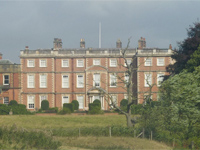
Looking for a saviour: St Osyth Priory, Essex

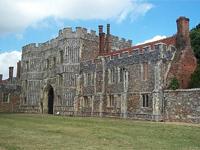
St Osyth Priory, Essex (Image: Stephen Dawson/geograph.co.uk)

Of the phrases most likely to cause concern for those who love our country houses, up there with ‘dry rot’, ‘water leak’ and ‘death duties’ has to be ‘enabling development’.  Originally designed to protect heritage assets by permitting limited development to fund repairs, it appears to now be used to circumvent local and national planning guidelines to facilitate inappropriate development where it otherwise ought to be refused.

In Essex, perhaps one of the largest examples of its kind was submitted by the Sargeant family who bought St Osyth Priory in 1999 through their development company ‘City and Country Group‘ (CCG) .  The company applied to build 190 houses as part of an enabling development to fund repairs to the main house and the other 22 listed buildings in the complex claiming that some £30m-worth of repairs were required (and personally I doubt the cost would be that high – happy to be proved wrong by an independent survey from a SPAB scholar).   This number would naturally bolster the calculation for the total conservation deficit (that is, the amount by which the cost of repair (and conversion to optimum beneficial use if appropriate) of a significant place exceeds its market value on completion of repair and conversion, allowing for all appropriate development costs, but assuming a nil or nominal land value).  But is this a case of a developer using the provisions of enabling development to gain permission regardless of the consequences for the house – and the local area?

After passing through various Royal hands, it was sold to Lord Darcy in 1553 and remained the home of various Earls, Viscounts, Lords and Baronets until it was eventually bought in 1954 by author Somerset de Chair who, in 1974, married Lady Juliet Wentworth-Fitzwilliam, daughter of the 8th Earl Fitzwilliam of Wentworth Woodhouse. The couple lived in the gatehouse, with much of the valuable Wentworth Woodhouse art collection, but de Chair died in 1995, so in 1999 Juliet married Dr. Christopher Tadgell and sold St Osyth to CCG and went to live in Bourne Park, near Canterbury.

CCG have a track record of taking on historic houses and have recently restored Balls Park, Hertfordshire and Herringswell Manor, Suffolk and previously Cheverells and Gilston Park – but these were easier to convert as they had all been used for other institutional or commercial purposes rather than as a family home.  St Osyth Priory and related buildings have sad recent history of insufficient maintenance over many years and have been included on the various buildings at risk registers and undoubtedly needs significant work – but can the repair bill really be £30m (by comparison, the whole of St Paul’s Cathedral was recently restored for £40m)?

To play Devil’s advocate, perhaps this figure might be explained by the provisions of ‘enabling development’ which require that;

It is demonstrated that the amount of enabling development is the minimum necessary to secure the future of the place”
– ‘Enabling development and the conservation of significant places‘ English Heritage (2008)

…so to secure a development of sufficient size to make it profitable for CCG, it would need a suitably large repair bill to justify this (see letter from local resident).  It has been suggested on the St Osyth Parish Council website that offering the house for sale (with just 20-acres rather than the full estate) is merely part of the process of proving that no-one is willing to take on the house and restore it and therefore the enabling development is the only option.  In reality, for someone to invest that much in a house (purchase+restoration) they would expect an estate of at least 100-acres, if not two or three times that.  The plans also seem inappropriate with regard to other provisions of the English Heritage guidance:

  • It will not materially harm the heritage values of the place or setting.
  • It avoids detrimental fragmentation of management of the place.

This all seems depressingly familiar where a developer ignores what’s best for the house, and, in this case, what seems to be determined to bloat the size of the local village in pursuit of this unpopular and out-sized scheme.  An active and well-supported local campaign has been highlighting the various flaws of the scheme and the potential damage to the setting and the village if the scheme were to go ahead, but of course, it’s the house which is continuing to suffer.

In an ideal world, the house would be restored for much less than £30m thus showing that the scale of development proposed was unjustifiably large. This again would show that ‘enabling development’ is apparently being used as a means to try and circumvent the usual planning restrictions which are there to protect our heritage and countryside. Then perhaps one day the house with the full estate (hopefully once CCG realise they won’t get permission) will be offered for sale and someone will get the chance to take care of this important house and estate without sacrificing it for housing.

Property details: ‘St Osyth Priory, Essex‘ – Bidwells

More details:  ‘Priory battle gathers pace‘ [Daily Gazette]

Rent a doll’s house: Gunby Hall, Lincolnshire

Gunby Hall, Lincolnshire (Image: Gardens-Guide)

Sitting on a small rise, just off the A158 on the road to Skegness in Lincolnshire sits one of the prettiest of the National Trust’s many country houses; Gunby Hall. However, unlike the others, where we can only ever dream of moving in, Gunby is currently available to rent for the bargain rate of £10,000 per year – but do remember to add an estimated £100,000 for the annual running costs.

Gunby Hall was built in 1700 (commemorated with the date on the rainwater heads) for Sir William Massingberd by an unknown architect but one who was obviously familiar with the work of Sir Christopher Wren.  Built of warm plum-red bricks the sophisticated 3-storey exterior shows the elegant use of stone dressings which elevates this grade-I listed house to being one of the finest of the smaller country houses.  Although showing stylistic links with Wren it was almost certainly by a skilled provincial imitator or local builder.  Wren designed very few country houses – Tring Park in Hertfordshire, Winslow Hall and, according to John Harris, contributed designs for Wimpole Hall in Cambridgeshire, and Houghton Hall in Norfolk – all for patrons who were somehow connected to Wren.  So unless someone discovers a link between Sir William and Sir Christopher it is likely that the local ‘architect’ had only been shown Wren’s designs.

Newby Hall, Yorkshire (Image: johnet/flickr)

When Gunby Hall was built it would have been regarded as very fashionable as Baroque style houses had only become popular in the 1680s.  Newby Hall in Yorkshire is one of the best examples and was rated as the finest house in Yorkshire when it was completed c.1690 (remember the houses we regard as the finest today in Yorkshire such as Castle Howard, Wentworth Castle, and Wentworth Woodhouse amongst others hadn’t yet been built).  In many ways, Gunby Hall and Newby Hall are architectural ‘cousins’ – closely stylistically related but distinct, particularly in size; reflecting the relative wealth of the owners .  Similarities can also be seen with other Yorkshire houses such as the earlier Ribston Hall, built in 1674, and the wonderful but now sadly demolished Wheatley Hall built in 1680, and the later Bolton Hall.

Gunby Hall was later altered c.1730 and extended in 1873 and 1900 to very successfully add a Dining Room, Servants’ Hall and Service Wing.  The later additions blend very neatly with the existing building creating the harmonious look which is so attractive today.  Gunby has long been admired with the famous poet Lord Alfred Tennyson reputedly using it as his inspiration when he wrote during one visit:

. . . an English home – gray twilight

On dewy pastures, dewy trees

Softer than sleep – all things in order stored,

A haunt of ancient peace.

The house was also admired by James Lees-Milne who described it as ‘an Augustan squire’s domain, robust, unostentatious, dignified and a little prim.’.  Lees-Milne was a regular visitor and was instrumental in not only bringing the house to the National Trust, as he did many other houses, but also saving it from outright demolition during WWII.  This terrible prospect came about in 1943 when the Air Ministry wished to extend the airfield they had built at Great Steeping only later discovering that Gunby Hall inconveniently blocked the proposed path of the longer runway.  Luckily the combined forces of James Lees-Milne and the impressively named owner, Field Marshal Sir Archibald Montgomery-Massingberd, persuaded them to re-route the runway thus saving the house.  In thanks, the family immediately made over the house to the National Trust becoming one of the few houses to be taken on during the war.

So if you fancy living in one of the prettiest stately homes in the country and don’t mind a few tourists having a look round occasionally, get in contact with the Savills Lincoln office.

More details: ‘Stately home can be yours for just £10k a year… plus another £100k for the staff‘ [This is Lincolnshire]

Property details: ‘Gunby Hall‘ [Savills]

Houses as hospitals: the country houses in medical service

Hatfield House, Hertfordshire (Image: Amy Lloyd/flickr)

Our country houses have always been adaptable as changing fashions or functions required they accommodate new ways of living or roles.  One role which quite a few houses have taken on is that of hospital – either privately or as a fully-fledged part of the NHS – though this use has not always been sympathetic.  However, as the modern health service centralises to larger sites it seems some country houses are re-emerging to become homes again.

Hospitals were traditionally monastic, centred on the abbeys and convents but these were obviously scarce.  The ill were treated in large dormitories although some established houses in the country away from the main abbey to care for the mentally ill.  However the dismantling of the religious orders during the Reformation from 1536, meant that increasingly the burden for care of the pauper sick fell to secular civic bodies, with towns creating their own hospitals.  This model persisted until the 17th-century when private benefactors became increasingly prominent, donating funds and buildings for the care of the ill.

One of the earliest country houses to be converted was the partially completed Greenwich Palace. Originally a Tudor royal house, it had become derelict during the English Civil War, so in 1664 Charles II commissioned John Webb to design a replacement but which was only partially completed.  It was this building which Queen Mary II, who had been affected by the sight of the wounded sailors returning from the Battle of La Hogue in 1692, ordered to be converted to a navel hospital in 1694, to the designs of Sir Christopher Wren and Nicholas Hawksmoor and later Sir John Vanbrugh.

Possibly inspired by the royal example, other country houses were donated or converted for use as hospitals.  However, it quickly became apparent that they weren’t particularly suitable with one Irish physician, Edward Foster, complaining in 1768 that ‘In general, Houses have been rented for Hospitals, which are as fit for the Purposes, as Newgate for a Palace‘.  By the 1850s hospital design was beginning to emerge as a distinct branch of architecture -Florence Nightingale wrote to an officer of the Swansea Infirmary in 1864 saying that a hospital was a difficult to construct as a watch; no building ‘requires more special knowledge‘.  From this time, the country houses themselves became less important than the space they offered with the house itself being used as accommodation or offices. However, for the treatment of respiratory illness the clear country air was considered part of the cure with houses being acquired as tuberculosis sanatoria such as at Moggerhanger Park in Bedfordshire originally designed by Sir John Soane for the Thornton family.

The First World War necessarily required country houses to come back into medical use due to the terrible consequences of the strategy of attrition through trench warfare in WWI which created large numbers of wounded.  Without a national health service there were fewer hospitals able to cope with the seriously disabled or even those simply convalescing.  Many country houses were pressed into service, their clean country air and fine grounds considered most helpful to rest and recuperation. During WWII, fewer houses were used as military hospitals as changes in military tactics led to many fewer casualties than expected.  However, a significant number were used either by the military or as civilian replacements for urban hospitals which it was feared would be bombed.

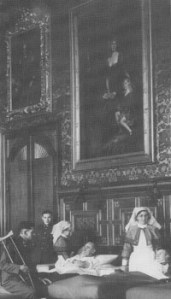
Hatfield House, Herts - King James Drawing Room as a hospital ward in WWII

For country house owners, given the possible options of who might take over their house, the bed-ridden were infinitely preferable to the bored squaddies who wreaked such havoc at other houses (apparently housing art treasures was first preference, evacuated schools second, hospitals third).  This reality plus a genuine sense of wanting to help led to many owners voluntarily turning over their houses as hospitals including the Earl of Harewood offering Harewood House, Lord Howard of Glossop Carlton Towers, Lady Baillie lent Leeds Castle and the 4th Marquess of Salisbury offering Hatfield House as he had done during WWI.  On the civilian side, Brocket Hall in Hertfordshire became a maternity hospital as was Battlesden Abbey in Bedfordshire, Stockeld Park and Farnley Hall, both in Yorkshire. Cholmondeley Castle in Cheshire became a Royal Navy Auxiliary Hospital, treating ‘cases of good morale, who are suffering from nervous breakdown usually as the result of operational stresses’.

After the war many houses were returned to their owners in such terrible disrepair that unfortunately hundreds were demolished.  Others continued in their wartime roles with some such a Poltimore House in Devon becoming hospitals after the war when two local GPs recognised the need for more bedspaces and so took over the old seat of the Bampfyldes until it was nationalised after the creation of the NHS in 1948.  There were also many War Memorial hospitals, founded by public subscription after WWI, which often made use of a country house. The nationalisation of these hospitals gave the NHS many of the country houses it has today – although it is relatively few overall as less than 5% of all their buildings are grade II* or grade I listed.  Of the historic ‘therapeutic’ landscapes it manages, seven are included on the English Heritage Register of Parks and Gardens of Special Historic Interest in England.

However, sometimes these country houses and their settings can escape and revert to being homes, either through conversion or, if the houses has been lost, replacement.   Bretby Hall in Derbyshire, built between 1813-15 by Sir Jeffry Wyatville for the Earl of Chesterfield, was an orthopaedic hospital until the 1990s when the main house was converted into flats, as was the High Victorian Wyfold Court in Berkshire.  Harewood Park in Hertfordshire was demolished in 1959 after use as hospital in WWII but the estate has been bought by the Duchy of Cornwall with proposals for an elegant and very impressive new Classical house by Craig Hamilton Architects.  A similar plan has been put forward for the 57-acre site of the former Middleton Hospital in Yorkshire with the permission requiring the demolition of various redundant buildings from its former use to restore the site.

Sadly though, sometimes the NHS fails to adequately look after the houses it has in its care.  As the trend has moved towards large, new hospitals so the historic elements have been overlooked or abandoned as new hospitals are built elsewhere. As funding for new hospitals is not dependent on the sale of the old site and the house, sadly they can be neglected or subject to inappropriate development as has been the case with the grade-II listed Stallington Hall in Staffordshire, which became a home for the mentally ill in 1928, but after it closed has been vandalised and neglected with a housing development built inappropriately close to the house across the lawn, forever ruining it as a country house –  a poor payback for years of public service.

Related story: ‘Developers draw up plan for country house‘ [Ilkley Gazette]

Background information: ‘Reusing historic hospitals‘ [Institute of Historic Building Conservation]

As predicted; Cherkley Court, Surrey now for sale

Cherkley Court, Surrey

When the doors to Cherkley Court in Surrey closed to visitors in December 2009, it was thought that low visitor numbers had proved it uneconomic to keep the house and gardens open.  However, as predicted by a commenter to my original blog post [thanks Andrew], Cherkley Court is now for sale and has been launched with a double-page centre spread in the Sunday Times Home section today [19 Sept 2010].

If one was to try an define what might constitute a perfect trophy estate in Surrey, Cherkley Court might well tick most of the estate agents’ criteria.  The grade-II listed house, built c1870 (and rebuilt after a fire in 1893), is a four-storey, chateau-style mansion extending to over 24,000 sq ft with home cinema and five grand reception rooms, with nearly 400-acres of gardens and parkland.

The house is now for sale following a 7-year, £10m restoration of the house and grounds orchestrated by the architect Christopher Smallwood and David Mlinaric, the interior designer.  The house became a famous venue for parties under the ownership of Max Aitken (later Lord Beaverbrook) and his wife Gladys who lived there until her death in 1994.  It was her death which sparked a bitter legal dispute between beneficiaries of the will which has forced the sale.

So if you have £20m and don’t mind the restriction on not landing your helicopter in the grounds, have a word with Savills.

Property details: ‘Cherkley Court, Surrey‘ [Savills]

Listed building description: ‘Cherkley Court, Surrey

Restoration continues inside and out; Wilton House and others

Wilton House, Wiltshire (Image: John Goodall/Geograph)

Any time of economic difficulties can often lead to any expenditure being put on hold, including vital restoration projects.  So it’s encouraging to see projects still being completed – but as some of these were approved and started back in the heady days of government largesse, perhaps these are the last we’ll see for a while except where private money can fill the gap?

One of the most impressive has been the award-winning restoration of the family dining room at Wilton House, Wiltshire – and maybe all the more impressive as it was funded privately by the owner, the 18th Earl of Pembroke.  Although ranked as joint 574th in the Sunday Times Rich List 2010, with an estimated worth of £115m, most of this wealth is tied up in the value of the house, the contents (including superb paintings by Van Dyck and Rembrandt), and the estate.

Anyone undertaking an architectural project at Wilton is following in some fairly illustrious footsteps.  The main house, one of the finest still in private hands, is unusual in that the scale of the house was a response to the incredible gardens designed by Issac de Caus in 1632.  The design is sometimes attributed to Inigo Jones but a drawing found by Howard Colvin at Worcester College by de Caus showed he was responsible for the original plan for a much larger, 21-bay palace, with a grand central portico, running to a total length of 330-ft.  However, the untimely death of the newly-married Earl in 1636 and the subsequent return of the huge £25,000 marriage dowry (approx £40m today) to the bride’s father, the Duke of Buckingham, meant that the scheme was now too ambitious and so just one half of the original design was built; which is what we see today. The half-a-house was considered plain so Jones became involved, adding the one-storey corner towers to the design.

Private dining room - Wilton House (Image: Historic Houses Association)

Wilton’s interior, in particular the celebrated set of seven state rooms in the southern facade which includes the famous Double Cube room, were largely the creation of Jones, assisted by his able deputy John Webb.  Yet there are other fine rooms which had become misused over the years and one has now been restored in sumptuous style as a private dining room.  Formerly cluttered with the normal ephemera of family life – CDs, books, old furniture etc – it was  fairly sorry sight.  The current Earl and Countess of Pembroke have spent an undisclosed, but undoubtedly substantial, sum on creating a glorious dining room but which will sadly not be included on the tourist trail.  Tapestries now cover the deep green walls, interspersed with family portraits by Reynolds, completing what James Stourton, chairman of Sotheby’s UK described as “…one of the outstanding country house renovations of the decade.” and winning the 2010 HHA/Sotheby’s Restoration Award.

One of the largest of the recent projects has been the £5.6m restoration of grade-II listed Bedwellty House in Tredegar, south Wales.  Built in 1818 for the owner of the first iron works in Tredegar, it was increasingly at risk of falling into dereliction.  Realising the importance of the building, the local council spent four years securing grants to fund the ambitious programme from organisations such as the Heritage Lottery Fund, the Welsh Assembly, Blaenau Gwent council, and Cadw [Welsh equivalent to English Heritage] .  The works have included work on the ornate plaster ceilings, the sash windows and shutters, and the main structure.  Work will now continue on the parkland and gardens to bring them back to their former glory.

The grounds of our country houses were also not just a buffer to keep the world from intruding but also a stage on which to create idealised landscapes and views.  To this end they were often populated with follies or architectural creations to catch the eye of those looking out from the house but also those walking the grounds.  Sadly, the isolation of these buildings has often meant that in recent years they have been cut-off from the main house, forgotten, or neglected and vandalised.  Nowadays these wonderful architectural vignettes have been increasingly valued and urgent works undertaken to restore them.  One fine example is the grade-I listed Wentworth Castle Rotunda in Yorkshire.  Started in 1739 and finished in 1742, the design is based on the Temple of Vesta at Tivoli near Rome.  One of 26 listed buildings in the 500-acre parkland, the temple has now been restored following a grant of £300,000, which has enabled the removal of overgrowing shrubs, and the cleaning and repair of the stonework, roof, and floors.

Thankfully the official organisations don’t have a monopoly on generosity. Perhaps those selling a house in need of some restoration might take a lead from admirable seller of Newberry Hall, Ireland, Richard Robinson.  Realising that the elegant Palladian house with its wonderful flanking pavilions is in dire need of restoration, the elderly owner has put the house on the market but with the offer of a substantial contribution towards the costs of restoration to bring the house back to its former glory.  With such generosity, one hopes a suitably sympathetic buyer can be found who will be willing to take on the project and complete an appropriate restoration.

Restoration has always been expensive so in their straitened times we can only hope that funds for basic care and maintenance are found so that in a few years time we are not faced with a slew of houses and monuments suffering from any short-sighted desire to save a few pence today at the cost of many pounds tomorrow.  Long may the stories be of enhanced glories such as that at Wilton House rather than urgent appeals to save buildings at risk.

Full story: ‘Winner of Historic Houses Restoration Award 2010 Announced‘ [Art Daily]

Full story: ‘Tredegar’s Bedwellty House restoration work unveiled‘ [BBC News]

Full story: ‘Restoration of Wentworth Castle Rotunda completed‘ [BBC News]

Full story: ‘Rotunda is reopened to round of applause for works‘ [Yorkshire Post]

Full story: ‘Deal for buyer who will rescue Kildare demesne‘ [Irish Times]