How did Bessingham Manor get into this state?

Bessingham Manor, Norfolk (Image: Eastern Daily Press)

Norfolk has suffered the loss of many of it’s larger country houses but the smaller houses often not only survived but were much cherished as manageable but beautiful examples of local architecture.  Yet, even today it’s possible for one of these lovely red-brick homes to slip into dereliction, at risk from the weather and criminals; Bessingham Manor has become another of these sad examples.

Built in 1870 for the Spurrell family, who had farming connections in Suffolk going back over 500 years, the house originally had 52-acres but this has now been reduced to a more manageable five.  The house remained in the Spurrell family until the last member died in 1952.  It was then bought by Robert Gamble who eventually found maintenance a significant challenge which was compounded by a poor quality roof repair which failed leading to massive water damage to part of the house, including the collapse of sections of the second floor.  The near derelict state of the interior is mirrored in the exterior which is partially supported by scaffolding or probably held together by the extensive ivy.  Perhaps questions should be asked as to why this gradual decay was not spotted by the local conservation department who may have been able to force repairs before the damage became so extensive?

It was in this sorry state that the house was finally put up for auction in September 2009 with the agents, William H Brown, who optimistically thought it might go for around £900,000 – despite a likely £1m bill to fully restore the house.  Unsurprisingly, it failed to reach even the reserve of £640,000 from a starting price of £400,000.  To compound the problems, thieves also broke in and stole a fireplace from one of the ground floor rooms.  Despite this the agents have continued to try to find a buyer but with only limited success.

By the beginning of 2010, there were three offers on the table.  Two were from individuals looking to create family homes but worryingly, one of the offers still in the table was from a developer looking for a commercial project – which is probably an inappropriate enabling development.  With all the wealth still available and our nation’s ostensible love of older buildings, it is sad and mystifying as to it’s been so difficult to find a sympathetic owner.   Once restored the house would probably be worth several million – so if someone has approximately £1.5m needing a profitable use then this would be the ideal opportunity; just please do it sensitively.

Estate agent: William H Brown

—————————————————–

Good news

Despite the initially pessimistic outlook and the subsequent challenges, Bessingham Manor has survived, and more than that, is nearing completion of the restoration – see this comment left on another Country Seat article by William Hickey. This shows that the analysis of developers should often be taken with a measure of scepticism, especially where heritage assets are involved.  The rescue/restoration of Bessingham Manor is to welcomed and the owners congratulated for their success.
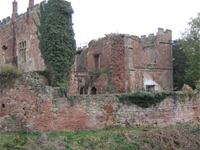
Astley Castle rises from the ashes

Astley Castle, Warwickshire

The devastating fire which tore through Astley Castle not only ended it’s use as a hotel but also seemed to mark the end as a building.  However, a remarkable project by the Landmark Trust is seeking to once again restore life to this battered shell.

Although never a proper ‘castle’, Astley was designed as a fortified manor house (see also the beautiful Compton Wynyates nearby). This original house was built largely by the Grey family but it was slighted following the execution of Lady Jane in 1554.  The house was rebuilt in 1600 by a new owner, Edward Chamberlain, and it eventually became part of the Newdigate family’s Arbury Hall estate, with a new ‘Gothick’ stable block added in the 18th-century – but with little done to the house itself.  The grade-II* listed castle was leased out as home for most of in the 20th-century until the 1960s when it became a hotel until the fire destroyed it, leaving it as a deteriorating ruin for the next 30 years.

The Landmark Trust has been attempting to find a solution to this situation since the 1990s, originally looking at plans for a full restoration, but which unfortunately proved too costly.  The continued decline of the building fabric gave fresh impetus to their efforts as it was realised that without urgent work the house as a structure would be lost forever.  In 2005, the Trust held a competition to find a design for accommodation to be created within the shell as sensitively as possible, which could then be used as a holiday let.  The winning design from the architects Witherford Watson Mann will create a modern two-storey structure in the oldest part of the castle, with the first-floor living spaces enjoyed spectacular views across the parkland.  A £500,000 £1.47m grant from the Heritage Lottery Fund, plus earlier fund-raising, has taken the Trust to within just £134,000 of the total project cost of £2.3m, and great progress has been made on the scheme. What’s particularly impressive about this project is that it has enabled a full architectural survey of the house, which has revealed many fascinating features as the rubble has been cleared and the later Victorian additions are removed.

The Landmark Trust has a strong record of taking on derelict listed buildings, converting them, and finding a long-term sustainable use for them – usually as unusual holiday accomodation.  Although it’s not been possible to fully restore Astley Castle as a home it is encouraging to see it being consolidated and enhanced with a sensitive modern addition which will provide the opportunity for others to experience this amazing part of our architectural heritage which was so nearly lost.

More details: ‘Astley Castle‘ [The Landmark Trust]

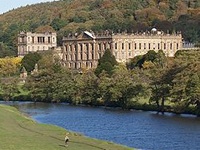
The glory that is Chatsworth House today

Chatsworth House, Derbyshire (Image: Wikipedia)

The modern era has, in many ways, not been kind to our country houses.  Faced with massive social changes in the early part of the 20th-century staff became harder to find leading to reduced maintainence.  Often this started a spiral of decline which led to the demolition of hundreds of our largest and finest country houses.  Even today, faced with the costs of conservation standard repairs, it can be a struggle for owners to keep their houses looking at their best.   This is why the recently completed £14m restoration of possibly England’s finest country house, Chatsworth, is such an achievement.

Chatsworth House exemplifies the best in the fine tradition of the development of our country houses.  Passed down through generations of the Dukes of Devonshire, the south and east fronts of the house we see today were built for the 1st Duke by the architect William Talman in 1696 in a grand Baroque style around the origianal Elizabethan courtyard.   The west and west fronts are thought to be the work of another great architect Thomas Archer, with further work in the 19th-century by Jeffry Wyattville to modernise the house for the 6th Duke.  Within the fine exterior the Devonshires also had acquired one of the finest art collections in the world.  Unfortunately many have been sold off in the 20-th century to meet the rapacious demands of death duties but the house still holds works by some of the finest artists of the day.

With its spectacular interiors, grand exteriors and palatial grounds, the responsibilities are immense for the 12th Duke.  Happily for this wonderful example of the glory of the English country house, the wealth of the Devonshires allows them to maintain the house in a way many other owners can only dream of, and is allied with his own determination to ensure that the house and estate is maintained in the best possible condition.  Considering the ravages that economics and circumstance have visited on so many of our houses, it’s a remarkable testament to the care of the Devonshires that this house looks as fine as it does, as the covers come off and the house opens again to the curious public this weekend for another season.

More details: ‘Chatsworth reopens to public with exhibition amid £14m restoration‘ [The Times]

Townhead House, untouched since 1939, to be restored

Townhead House, Lancashire (Image: SAVE Britain's Heritage)

Townhead House is a rare thing indeed – a house which has not been altered since before the last people to use it left in 1939 but also is not in a dire state of dereliction.  Its unoccupied status was a cause for concern and although parts of the house required attention, overall the house was in remarkable condition.

Built in 1729 for Henry Wiglesworth using parts of a 17th-century building, the architect is unknown but achieved an elegant if somewhat austere house using large blocks of coursed limestone.  Inside, the main rooms with their fine Georgian panelling and particularly the staircase indicated the architect was influenced by other such as Wren, Jones and Gibbs.  This can be seen with the use of certain architectural elements before they became widely known through pattern books such as Batty Langleys.

The grade-II listed house was used just a shooting lodge between the 1890s and 1930s.  Now finally, a local man, semi-retired businessman Robert Staples, has bought the house and has promised to sensitively restore it to use as his home:

“The works will ensure that the integrity and longevity of Townhead is not compromised and that the building has a continued and long future.”

All this bodes well for this important part of the local architectural heritage. Also encouraging is Mr Staples’ professed desire to return the house to being the centre of a ‘gentleman’s estate’ – a welcome reversal of the pattern of the last 50 years when small estates were increasingly broken up and lost.

Full story: ‘Historic Slaidburn house set to become a home again after 100 years‘ [Lancashire Telegraph]

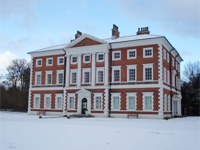
Lytham Hall restoration to secure future

Lytham Hall, Lancashire (Image: Lytham Hall blog)

To secure the future of what is considered to be one of the finest Georgian houses in Lancashire, the owners of  Lytham Hall have unveiled an ambitious £5m restoration plan.

The house was built for Thomas Clifton by the famous architect John Carr of York between 1752-64 and incorporated elements of the existing Jacobean house.  It remained the Clifton family home until the 1960s when it was finally sold to Guardian Royal Exchange Insurance who owned it until 1997, and is now run by Heritage Trust for the North West on a 99-year lease on behealf of the owners, Lytham Town Trust.

The £5m plans are the first part of an eventual £10m plan to upgrade every aspect of the house and estate to provide holiday accomodation, a tea room and conference facilities.  Although a shame that the house is no longer a home, it’s encouraging to find plans which respect the history and architectural importance of the house as they seek ways to ensure a secure future.

Full story: ‘New lease of life for historic hall‘ [Lytham St Anne’s Express]