The recent financial crisis has forced many properties onto the market and easily one of the grandest was the main apartment of Wardour Castle in Wiltshire which has now been bought by the fashion designer Jasper Conran.
The Apartment (as it’s imaginatively known) includes the wonderful central staircase, described by Pevsner as ‘the most glorious Georgian interior of Wiltshire’, plus the other major state rooms which were restored with the assistance of John Pawson, the high priest of Minimalism. This particular property has featured twice in this blog, once for suggested conversion back to being a single family home, but also later with the news that the property was one of the grandest repossessions in the country.
Ven House, Somerset (Image: Mike Searle/wikipedia)
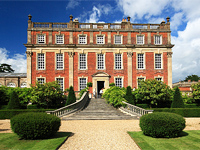
What is interesting about Conran’s purchase is that he appears to be collecting fine Georgian houses in the same way one might collect furniture or paintings. In 2007 he bought the incredibly elegant Ven House in Somerset for just less than the £8.5m asking price. At the time the house had languished on the market for two years before Conran took it on. Although more famous as a fashion designer, Conran has a good track record with property restoration having bought Walpole House in Chiswick, London for £7.25m which was sold following refurbishment for £12.5m in 2008 or Flemings Hall in Suffolk which he sold for £2m in 2006. Ven required comparatively little work and has remained his country home, opening it up for use by local organisations for charity fund-raisers.
It seems fashion designers have a taste for Georgian as Jasper’s father Terence Conran lives in Barton Court, an elegant red-brick villa-style house in west Berkshire which he bought in the 1970s and has carefully restored. On a much larger scale, the American fashion designer Leon Max famously bought the magnificent Easton Neston in Northamptonshire for £15m in 2005. The grade-I listed house, designed by Nicholas Hawksmoor and built between 1695-1710, was the home of the Hesketh-Fermor family for nearly 500-years before the current Lord Hesketh decided to sell up. Leon Max purchased the house with the intention of converting a fire-damaged wing into a base for his fashion company.
Perhaps the natural grace and light of the best of the Georgian homes appeals just as much to the aesthetic eye of the designer as it does to most of us, confirming their broad appeal. Happily for Wardour Castle it seems that has caught the eye of someone who has a good track record of looking after the wonderful homes he has bought. Perhaps he might be open to suggestions for others that need some attention: Melton Constable Hall perhaps?
When Raasay House on the Isle of Skye Raasay was largely destroyed by a huge fire in January 2009 just days before it was due to reopen following a £4m refurbishment, the locals and owners vowed to quickly rebuild the house as it was. Fire has always been one of the major threats to our country houses and when it strikes the responses to the destruction can vary greatly – particularly in the modern era.
For many country house owners in the 16th-19th-centuries immediate rebuilding was the favoured response if funds allowed – either to re-create the original house or sometimes to build an entirely new one. Raasay House was built in 1746 for the clan Macleod after the previous house, built in the 1500s, was deliberately burnt down in 1745 in the wave of retribution which followed the Battle of Culloden. The house, extended in the 1870s, was run as an outdoor pursuits centre and was an important part of the economy on the Isle of Skye Raasay. This meant the response was largely on the basis of local economics which required the house to be rebuild to support the business, apparently not for its intrinsic architectural value. However, the Scottish grade-A listing (equivalent to the English grade-I) means that the ‘new’ Raasay will be a faithful recreation of the original house as it was before the fire.
Although country house owners have long rebuilt, the principle that the house will be strictly rebuilt exactly as it was is, in some ways, a modern response as heritage legislation requires full salvage of any architectural fragments with the presumption of restoration. Insurance companies also pay out for recreation of the old building, not the construction of a new one. So responses now are sometimes based on the architectural or heritage value, and sometimes due to the constraints placed on the owners. The wishes of the owners also play an important part with some looking to recreate whilst others follow the principles of the Society for the Protection of Ancient Buildings who state:
Although no building can withstand decay, neglect and depredation entirely, neither can aesthetic judgement nor archaeological proof justify the reproduction of worn or missing parts. Only as a practical expedient on a small scale can a case for restoration be argued.
The 1992 fire at Windsor Castle destroyed large sections of the State Apartments including the Crimson and Green Drawing Rooms, the Queen’s Private Chapel and St George’s Hall. It was quickly decided by the Restoration Committee (headed by Prince Philip) that many of the rooms would be restored to as close as possible their original state with only a few modern rooms and the Queen’s Private Chapel to be restored in a modern style.
However, no lesser organisation than the National Trust also has firmly followed the faithful re-creation approach, particularly following the devastating 1989 fire at Uppark, Sussex. Although the dramatic pictures of the fire would suggest total loss, brave efforts by staff saved the majority of the contents of the house and the fire was found to have only destroyed the attic and first floors whilst severely damaging the ground floor. It was then announced by Martin Sekers, the National Trust’s Regional Director for the Southern Region, that “We feel that enough survives to justify total restoration.”. So how much has to survive to warrant re-creation? A spirited public debate at the time brought forward opposing views such as that expressed by the respected architecture critic Deyan Sudjic who argued in an article in the Sunday Correspondent (17 Sept 1989) that:
“…it won’t actually be Uppark no matter how skilful the work of the 20th Century craftsman who seek to recreate it. What tourists come to see will, in fact, be a replica, one which could be said to diminish those fragments which actually are authentic…”
However, other eminent architectural historians such as Dan Cruikshank came out strongly in favour of recreation principally from the point that it provided the opportunity to re-learn old techniques and provide a model in their use. Andor Gomme argued that a recreated Uppark would be the only appropriate way to show the rescued contents in an appropriate setting. Gomme also highlighted that in previous cases where a house owned by the National Trust had burnt down (the incomparable Coleshill, Berkshire in 1953 and Dunsland House, Devon in 1967) the decision at the time to demolish what remained was later deeply regretted.
So for public organisations the clear preference is strongly in favour of re-creation despite the claims of the modernist and the SPAB that such an approach is to miss an opportunity or is simply fake. Yet, for private country house owners, their long-held preference has been to simply restore as much as possible – even if just the walls were left standing.
When Knepp Castle, Sussex was gutted by fire in 1904, work started in 1905 to recreate John Nash’s original design. Similarly after fires at Bramham Park in 1828, Duncombe Park in 1879, Stourhead in 1902, Monzie Castle in 1903 and Sledmere in 1911, the owners all worked to faithfully recreate the houses to the state as they had been. For houses such as Lees Court in Kent which was almost completely destroyed in 1911 (scroll to last image) the house was just rebuilt using what remained of the outer walls.
So is restoration the best approach? Although there is danger that the new work might be a poor pastiche of the earlier work, to just discard what has been salvaged and what remains and to only allow modern work would seem to be overly dogmatic. However, it will only work if any restoration is of the highest quality to avoid any chance that what is produced is merely a lifeless reproduction. Owners over the last 400-years when faced with a greater or lesser degree of loss have often sought to restore and to continue that tradition today is to draw on a much longer history than to rely only on the intellectual restrictions of the later purists.
The National Trust for Scotland (NTS) is one of the largest landowners north of the border with 130 properties, including 26 castles, palaces and country houses, and over 78,000-acres. Yet like a feckless son who has inherited plenty but isn’t living up to his responsibilities and squandering his inheritance, so the NTS has been ignoring its duties and now has to face the financial reality of their mistakes – with possibly far-reaching consequences for its country houses.
For many landowners, the 1920s and 30s were a lavish time. Yet, often the land which provided the income was heavily mortgaged and although this could cover expenses it usually left little in reserve. Landowners were ranked according to their acres which led to many to over-extend themselves – leaving them vulnerable if a crisis arose. Although the First World War had had a devastating impact on the lives of many both in the big house and on the estate, for those who came through it must have seemed that life might be able to be resumed from before the war. However, life had changed and although some owners were able to see this and adapt, others refused to face financial facts leading to lavish and unsustainable overspending. This later manifested itself with the massive land and art sales of the 1930s as financial recklessness raced right up to the front door of the main house and forced out the owners.
The National Trust for Scotland (NTS) was formed in 1931, over 30 years after its southern sibling. It now runs 130 attractions which include some of the finest country houses in Scotland such as Haddo House, Culzean Castle, and Pollok House. However, in marked contrast to the National Trust for England and Wales, the NTS hit a £13m financial blackhole in 2009 which led to staff redundancies, the selling of their Edinburgh HQ, and worst of all, the mothballing of various properties. A formal, independent review of the NTS has just been published which makes it clear that they had been living in much the same way as the country house owners of the early 20th-century and now largely faces the same choices they had.
Like those dissolute owners in the 1920s and 30s who initially refused to face reality, the NTS have finally admitted that they have been living beyond its means and would now require a significant cash injection to cover its debts. For the country house owner in the 1920s and 30s they could always hope to marry an American heiress – but with this option denied to the NTS they’ll have to beg from the public.
Interestingly the NTS has also admitted that just 12 of its 130 properties are fully endowed, leaving the other attractions to have to make up the shortfall. The southern National Trust have, since 1968, used a complex calculation known as the ‘Chorley Formula’ which takes account of the probable cost of repairs and maintenance, likely revenues, wages costs etc to assess what level of endowment they would have to receive from the donor before they could agree to accept a house and has led to them rejecting many on that basis.
It seems that the NTS have abandoned this sound practice and over-extended themselves. It has also admitted it doesn’t even have a complete asset register of what properties it actually owns or a list of the necessary repairs to maintain the properties. So like the owners of the houses who suddenly faced a dramatic downturn in the economy and their income, they are faced with some stark choices which the struggling owner in the 1930s would recognise well: sell or turn over some properties to other uses.
The owner in the 1930s also had the option to demolish or abandon a house and many hundreds were lost over the next couple of decades. Thankfully this option is not open to the NTS so what’s likely to happen? Unlike the National Trust for England and Wales, not all the Scottish properties are ‘inalienable’ meaning they could be sold. The NTS have however said that no property of architectural significance would be – so we are unlikely to see Culzean Castle in the local estate agents window but some of the smaller country houses may be tenanted on a long term basis. Some may also turned over to other organisations for community use – though this has a naturally detrimental impact on the fabric of the house through increased wear and tear.
The NTS has shown that, as usual, it’s the owner who’s the problem not the houses. Even an organisation which has admittedly done much to preserve and protect country houses in Scotland over the last 80 years can become part of the problem. Let’s hope that they take this opportunity to reform the ‘byzantine’ governance structure which has led them into this crisis and that it creates a leaner, more financially stable organisation better able to look after the country house treasures they have inherited.
Shugborough Hall, Staffordshire (Image: Neilsvrx via flickr)
The news that the area of Shugborough House open to the public is to ‘double in size’ with the inclusion of the Lichfield family apartment, is a reminder of just how advantageous some of the deals were for the owners who gave their houses to the National Trust. The Trust today is perhaps almost best known for its country houses which form an important part of its work. However the houses were not simply museums but, due to the often very generous terms under which the families ‘gifted’ the houses, they were often able to stay on in private apartments.
When founded in 1895, the original aims of the National Trust were very much focussed on the preservation of countryside with houses only coming later. The first house the NT acquired was Barrington Court, Somerset in 1907 but the unexpectedly high cost of maintenance and repairs meant that another wasn’t acquired for over 30 years. With the first crisis period of the country house in the 1930s, leading to many demolitions, there was a growing realisation that the National Trust was well placed to rescue some of the threatened homes. In 1936 they set up a ‘Country House Committee’ in response to the suggestion of Philip Kerr, the 11th Marquess of Lothian at the 1934 AGM that the NT should be able to accept the gift of country houses, with endowments in land or capital, free of tax. This new regime was then given legislative powers through the National Trust Act of 1937 with Lothian then providing the first donation of one of his four great houses, Blickling Hall with its 4,760 acres, in 1940. To help guide them, Country Life magazine was asked to draw up a list of those properties (which totalled 60 larger and 600 smaller houses) which ought to be saved for the nation.
Having created the legislative backing the NT was well placed in the second period of crisis in the immediate post-war period when the tireless, if not faultless, Secretary of the Committee, James Lees-Milne, travelled up and down the country persuading owners to part with their inheritance. He was helped by the pernicious, and still highly damaging, death duties which, since 1904 had risen from 8% (for estates valued at over £1m) to 50% by 1934, leading to massive sales of land and contents to fund the demands of the ever-grasping Exchequer. The multiple sets of duties levelled against the aristocratic families who had sometimes lost father and then son in WWI (and who had been particularly vulnerable as they were often officers and so first over the top) meant estates were inherited by an uncle with no deep connection to a house and estate who would happily sell up. However, for some who were loathe to simply sell, the National Trust seemed to offer an attractive alternative where someone else would pay the maintenance bills whilst they were still able to live in the house.
The degree to which the family remained in the house was sometimes simply down to how well the family had negotiated with the NT and dependent on the chips they had to bargain with. For some such as Lord Faringdon at Buscot Park where he retains ownership of the contents, this is powerful position as the house would be severely diminished without the collection of furniture and art. For others such as Throckmorton family at Coughton Court and the Dashwoods at the glorious West Wycombe Park, long leases (250-300 years) ensure their continued presence. For some, the pre-eminent importance of the house gave them the edge with Sackvilles at Knole, an Elizabethan treasure-house, living in a large section of the house and still owning vital parts of the house and the entire 1000-acre parkland. At other houses, the family remain living in the almost the whole house but with almost all the rooms open to the public such as at Anthony where the Carew-Pole family have just a small kitchen and sitting room as their own. For others such as the Hyde-Parkers at Melford Hall they were retained by the NT as the paid administrators of their own family home which is almost completely open. Other families like the Lucy’s at Charlecote Park have just a private wing or simply a flat in a wing such as the Drewe’s at Castle Drogo.
For the grade-I listed Shugborough House, begun in 1695, the elegant enlargement and magnificent plasterwork and decoration by James ‘Athenian’ Stuart between 1760-70, ensured that the house would always be on the list of ‘major’ houses to be saved. When the then Lord Lichfield gave the house and 900-acre estate to the NT in 1966 in lieu of death duties the agreement regarding the house only included the state rooms on the ground floor and a small section of the first floor with the rest was leased as private apartment for the family. The rooms to now be opened include the Boudoir with original real silver leaf wallpaper dating from 1794, and the impressive Bird room which was Lord Lichfield’s private drawing room. The 6th Earl of Lichfield has now surrendered the lease allowing Staffordshire County Council, who run the house on behalf of the NT, to include the rest of the ground and entire upper floors.
It may seem like a strange anachronism to have the donor family still living and enjoying the family seat (although they pay rent) whilst having the National Trust pick up most of the bills for maintenance. However, the family add a rich layer of history and their commitment to the care of the houses is second-to-none with their residence helping the houses avoid the awful fate highlighted by Philip Kerr that ‘nothing is more melancholy than to visit these ancient houses after they have been turned into public museums’.
For Abbotsford House in Scotland, home of the famous author Sir Walter Scott, the recent news that it was to receive a £4.85m Heritage Lottery Fund grant is the sort of news which should be welcomed as that level of funding can usually remedy any necessary maintenance or repairs. However, the grant is not actually to be spent on the house (despite headlines such as ‘Lottery cash means Walter Scott’s beloved Abbotsford will get £10m facelift‘ [The Scotsman]) but mainly on a new, separate visitors centre.
Sir Walter Scott (b.1771 – d.1832) played a key part creating a literary context for the developing Picturesque movement which sought to reject the rigid formality of the Georgians and create a more organic architecture, which he developed in the construction of his own house.
The theory of the Picturesque raised the importance of how one ‘felt’ about a scene or view – a definite break with the austere, ‘correct’ classicism which so dominated. The exploration of more fluid forms had started in the 1750s and had been adopted by such noted figures as Sir Horace Walpole for his own house at Strawberry Hill in Surrey. However it was a local Surrey parson, the Rev. William Gilpin, whose guidebooks were to lead the way for those who came afterwards such as Herefordshire squires Sir Uvedale Price and Richard Payne Knight who had the funds to realise these ideas.
Inspired in part by the idealised landscapes of the artists Nicholas Poussin or Claude Lorrain, architects sought to provide an almost ‘arcadian’ vision of buildings integrating naturally with an environment, forcing them to think of the building and environment as a whole rather than simply viewing their particular work in isolation. This also affected the plan of the house, with rooms now being aligned along the best viewing lines rather than simply lined up. One architect who took on this new style was John Nash who met Uvedale Price in about 1790 during Nash’s time in Wales. Price was at the time building a small summer house and Nash, after meeting him, proposed a typical villa – a design antithetical to Price’s own philosophy. Price instead guided Nash to design a new house where rooms followed views, and the overall design echoed its rocky coastal location; as he wrote ”The form of it is extremely varied from my having obliged him [Nash] to turn the rooms to different aspects‘. Castle House, sadly demolished in 1897, was a watershed in the rejection of the dominant Georgian style and Nash quickly developed new designs based on these radical principles which became his distinctive ‘cottage orne‘ style.
Sir Walter Scott didn’t set out to link literature and architecture – in fact his ‘Waverley’ novels were simply a quick way to make some money after financial difficulties. The books, which he initially wrote anonymously, were the first truly successful historical fiction, and brought Scott considerable wealth and, once his authorship was known, praise. It was this wealth that enabled him to set about creating his ideal house. Raised in the Scottish borders he had a close affinity for the natural landscape and so the Picturesque style would have appealed. However, Scott ensured the existing designs for Abbotsford House had a distinctly Scottish twist, creating what is known today as the ‘Scots Baronial’ style so closely associated with our romantic notions of Scotland today.
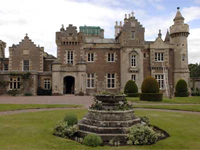
Scott bought a small farmhouse in 1811 and engaged William Atkinson (b.c1774 – d.1839) who, between 1814-24, created the house we see today. Atkinson was not considered one of the best ‘Gothick’ architects, with Howard Colvin thinking that his designs lacked the elegant charm of the 18th-century work and the scholarly accuracy of the 19th-century. However at Abbotsford, the architectural vocabulary he employed – steeply pitched slate roofs, turrets, bartizans, and crowstepped gables – became the standard language of Scots country houses for anyone not following the Classical style.
So Abbotsford House is an architectural genesis – the first of it’s kind. It seems a shame to lavish millions on a separate interpretation centre in a modern design which will only compete with the existing architecture of the house and estate. It’s also a competition the new building is unlikely to win. Perhaps it would be better for the money to be spent on sensitively incorporating the displays and materials from Scott’s life and work into the home he so lovingly and thoughtfully created.


 The Country Seat