‘The National Trust can have it’: why the NT can’t accept all offers

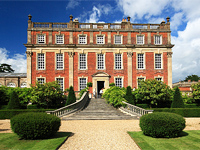
Seaton Delaval Hall, Northumberland

In an ideal world no country house would ever be at risk but poor finances, often caused by pernicious death duties, and insufficient income from the estate or investments leaves families facing the reality of being unable to stay in their ancestral home.  When this situation arises the cry has often been for the National Trust to step in and ‘save’ the house.  Yet the financial complexities of taking on a house and the responsibilities of the many others they already care for mean that it’s unlikely the National Trust would be able to unless it meets their necessarily strict conditions – a marked contrast to the rather more ad hoc approach of the early years of country house acquisitions.

The National Trust owns over 330 houses though only about half would be considered true country houses.  The first, Barrington Court, Somerset was acquired in 1907, though it wasn’t until the 1940s that the National Trust began to acquire houses in any significant numbers.  Instrumental in the early acquisitions was James Lees-Milne, the Secretary of the Country Houses Committee between 1936-51 (see also this fascinating reflection on JLM and the NT).  A complex man from a well-to-do family who got progressively poorer, but with his good looks and manners, and a certain charm, he was able to lay the ground for many of the later acquisitions through his aristocratic contacts.

The National Trust was initially focussed on the countryside with any houses being taken on as rescue missions to save them from demolition.  This changed after an impassioned speech in 1934 by Philip Kerr, Lord Lothian, who argued that our country houses were a unique and valuable heritage and worthy of being saved. Following this, the Trust established the Country Houses Committee with James Lees-Milne at the important first Secretary who set the tone for years to come.  In the early years, Lees-Milne would travel the country meeting the many owners and starting a gentle conversation leading to more hard-headed negotiations – though some would approach the NT begging for them to take their houses such were their financial straits.

For many owners faced with the dramatic social changes after the wars, and their own impoverishment, the options were fairly stark; soldier on in an increasingly dilapidated house, rent or sell to a new resident owner, sell for demolition, or hand it over to the National Trust.  For many owners who were the latest in a line stretching back over hundreds of years the latter option was often the most appealing (especially as they could often continue living there), though many chose to take the other options leading to mass demolitions, particularly in the 1930s and 1950s.  Yet, as Lees-Milne acknowledged, his own enthusiasm meant, “I have to guard against a collector’s acquisitiveness.  It isn’t always to the advantage of a property to be swallowed by our capacious, if benevolent, maw.” (Diaries, 1 June 1945).  However, it was never an easy task as the rest of his entry for that day notes, “The lengths to which I have gone, the depths which I have plumbed, the concessions which I have (once most reluctantly) granted to acquire properties for the National Trust, will not all be known by that ungrateful body.  It might be shocked by the extreme zeal of its servant if it did.  Yet I like to think that the interest of the property, or building, rather than the Trust has been my objective.“. (Amusingly he finishes with “These pious reflections came to me in the bath this morning.“)

The troubled acquisition of Barrington Court had a profound impact on how the National Trust dealt with later offers.  Merlin Waterson in ‘The National Trust – The First Hundred Years‘ highlights that even thirty years later those with fears about unexpected costs for repairs and maintenance were citing Barrington Court in evidence.  Caught between the rock of their own very high standards and the hard place of not having limitless funds, the National Trust began insisting that any house they took on came with a sufficient endowment.  This was formalised in 1968 as the ‘Chorley formula’ (after Roger Chorley who created it and later served as chairman from 1991-1995) which calculates the endowment required, taking in to account expected high-level maintenance and repairs, likely revenues, workers wages and many other factors.

Initially though this meant that a strange paradox developed whereby the NT would only be able to accept houses from wealthy owners – who were unlikely to want or need to hand them over.  However, in 1937, Parliament enabled the National Trust to make money from its properties by allowing it to accept additional property, cash or securities to provide income producing endowments.  One of the first to do so was Philip Kerr himself who, in 1941, bequeathed Blicking Hall in Norfolk along with its content, more than one hundred other houses and cottages, and over 4,700-acres of woodland.  By the end of WWII, the NT owned 23 houses including West Wycombe Park and Cliveden in Buckinghamshire, and Polesden Lacey in Surrey, each of which had come with generous endowments.

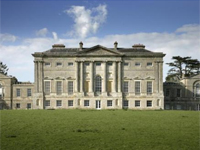
Kedleston Hall, Derbyshire

However, where owners didn’t have the money other sources had to be found, as the protracted negotiations around Kedleston Hall in Derbyshire proved.  This stunning neo-classical mansion of the Curzon family was designed by Robert Adam in the 1760s and has one of the finest collections of Chippendale furniture in the world.  Faced with crippling death duties and a need to pay the grandson a ten-percent inheritance (which he demanded regardless of the threat this posed to the house and estate), the 3rd Viscount Scarsdale opened negotiations with the Trust who determined that it would need a £6m endowment plus another £2.5m for immediate repairs.  Faced with the breakup and sale of the house and its collections, English Heritage, the National Trust, American donors, and the Curzon’s themselves all contributed. This neatly demonstrated the broad spectrum of public and private sources that now had to be called upon to meet obligations such as this – and the difficulties of marshalling such a diverse range each time an opportunity presented itself.

The Trust has been consistent in this policy even when offered fine houses such Heveningham Hall, designed by Sir Robert Taylor with interiors by Wyatt, which had been accepted by the Goverment from the Vanneck family in lieu of inheritance tax in 1970.  Without endowment the Trust refused to take ownership but were happy to manage it for five years whilst the Government found a buyer.  Conversely, when the Dryden family were looking to offload the 16th-century Canons Ashby in 1981 the newly established National Heritage Memorial Fund was able to provide the endowment to fund the family’s gift.

These cases have now formed the model for subsequent campaigns such as the impressive Tyntesfield in Somerset and recently Seaton Delaval Hall in Northumberland where a combination of grants and generous local support enabled them to raise £7m to repair and endow the property.

For many within the National Trust the thinking is now that they have enough houses – for them, current campaigns are mostly around the protection of landscape.  Yet, their obvious financial and political power means that when the need arises they are able to step up to ‘save’ a house.  However, as it is usually preferable that a house remain with the family, hopefully the careful trust arrangements many now have in place mean that increasingly they are able to stay in their home.  Perhaps more houses could have been saved if the National Trust had accepted more of those offered to it, but in reality it is difficult to see how they would have been able to fund so many, especially where the existing owners had proved just how difficult it was to stay financially afloat.  Rather than just saying ‘the National Trust can have it’ we all must be aware that it is not a simple solution and that the long-term care of our country houses requires exceptional planning and commitment – and, ideally, very deep pockets.

The National Trust’s policy on acquisitions [National Trust]

The state of the country house market: Autumn 2010

Noseley Hall, Leicestershire (Image: Knight Frank)

Throughout September, the increasing weight of each week’s ‘Country Life‘ magazine heralds the starts of one of the busy periods for launches of country houses.  As an relatively unscientific barometer it would appear that the market is doing well with some impressive estates and houses being offered up to tantalise the armchair enthusiast and serious purchaser alike – but a few houses are still proving difficult to shift.

The September 1 magazine provided a summary of the successes of the year-to-date with glowing reports from estate agents who, despite some fears in January about an uncertain year ahead, are happy to highlight their successes.  The article quotes Crispin Holborow of Savills who rightly points out that ‘best in class‘ houses will always sell quickly and for above their guide price if the right buyers start competing.  He cites Ropley House in Hampshire which sold at over it’s guide price of £4.25m, as did the grade-I listed Shanks House in Somerset which was offered with 70-acres for £5.5m, but their biggest success was the coveted Chadacre estate in Suffolk with 680-acres which reputedly sold for more than double it’s £10m asking price.  Other houses such as the elegant grade-I Worlingham Hall – regarded by Norman Scarfe as ‘the most beautiful house of manageable size in Suffolk’ – also sold over it’s guide price of £3.9m.

Other houses sold close to their guide include Peatling Hall in Leicestershire (mentioned on this blog in July) which was offered at £4.75m, whilst the stunning Compton Pauncefoot Castle in Somerset suffered from an unfortunately timed launch in September 2008 at £17m which knocked buyer confidence meaning that it hung around until Febuary 2010 before selling at £15m.  Others had to drop their prices or accept being sold in lots with Kiddington Hall in Oxfordshire selling for £15m to Jemima Khan once the rest of the 2,000-acre estate had been sold (originally offered as one for £42m), whilst Fillongley Hall in Warwickshire has yet to find a buyer even after selling 400- out of the original 500-acres originally offered when it went on the market in 2005 (£3.5m, Savills).  Pusey House in Oxfordshire, which was originally launched with 643-acres but when featured as the lead property advert in the September 15 magazine it was offered with just 67.

So who are the awkward squad?  Grade-I listed Noseley Hall in Leicestershire is still with Knight Frank with the same acreage; though now at £12m rather than the original £14m asking price, and Iver Grove in Buckinghamshire, a pocket Palladian gem, is still being offered (again with Knight Frank) – though mysteriously with no price, so probably less that the £4.5m guide in February 2010; and way down from it’s original price of £6.5m when it was first launched in 2007.  Up country, Yester House in Scotland is still available despite having had it’s price halved from £15m to £8m since the original launch in August 2008.

So, although the property market does seem buoyant, it does seem that some are struggling.  Perhaps the flurry of launches will bring an influx of new buyers who may take a renewed interest in the harder-to-sell properties, but they equally may well wonder why they are still available and pass them over.  It seems that some owners who are keen to sell are being flexible, either dropping the price or selling in lots, but for owners who refuse to budge the market may take a very long time to rise to meet what they think their property is worth.  It seems flexibility is still a vital attribute whatever rung of the property ladder you are on.

How tourism split a house from the estate: Warwick Castle, Warwickshire

Warwick Castle, Warwickshire (Image: Gernot Keller/Wikipedia)

A small advert tucked away in a recent Country Life marks the final split of a house from it’s estate. With the sale of the parkland associated with Warwick Castle in Warwickshire, another house loses control over an important asset – though this separation is very much tied up with the history of the opening of country houses to tourists, and this castle in particular.

Country house visiting is perhaps thought of as a more modern phenomenon but Warwick Castle was one of the first houses to be truly exploited as a tourist attraction with visitors coming in significant numbers from 1815 onwards. The growth of the industrial Midlands in the Victorian era and consequently a growing middle class seeking excursions, shifted the pattern of ‘show-houses’ (that is, ones regularly open to the public when the family were absent or on specific days) northwards, away from the more aristocratic 18th-century London-Bath axis.  The Midlands were particularly well provided for with many houses open to the public from the 1850s including Eaton Hall, Chatsworth House, Haddon Hall, Newstead Abbey, and Belvoir Castle amongst perhaps a hundred.  This reached a peak in the 1880s when the most popular houses would receive tens of thousands of visitors a year, reflecting a popular interest in the houses of ‘Olden Time‘ as popularised by writers such as Joseph Nash and Sir Walter Scott.

Warwick Castle, with it’s prized medieval origins, was particularly popular – to the extent that not opening it was considered unthinkable.  That the public expected to be allowed to see inside these houses could be shown in a comment in the Daily Telegraph in 1871 which said:

An Earl of Warwick who would make his whole castle his own in the spirit of an inhospitable curmudgeon, who would shut out all eyes but his own from the feast within those walls, is a being so opposed to every English tradition that it is difficult to realise him.

For the aristocratic owners, economics certainly played a stronger role than any sense of public generosity.  For some, having a popular house in the country was no inconvenience as, such as at Dunster Castle in Somerset, it was remarked in 1845; ‘The owner, an inveterate Bachelor, lives in London and hardly ever comes here‘.

Especially convenient for trippers from Birmingham and the nearby resort of Leamington Spa, Warwick Castle was hosting as many as 6,000 visitors per year in 1825-26 and when the Earl of Warwick’s housekeeper died in 1834 she was said to have left £30,000 earned from tips.  Yet it was the devastating fire of December 1871 which firmly moved the castle from being simply a home to a business. The fire destroyed the family apartments but luckily left the oldest parts of the castle untouched.  The Earl of Warwick’s financial situation meant that he simply could not afford to restore the house to its former glory, a prospect which scared the local tradespeople, fearing the loss of the tourist trade and so a restoration fund was created.  However, to ensure the Earl’s pride was not dented it was presented as recognition of the burden he bore as owner of a national treasure.

However, a furious response from no lesser figure than John Ruskin marked the start of a backlash, saying ‘If a noble family cannot rebuild their own castle, in God’s name let them live in the nearest ditch till they can‘.  Behind this was the growing social democratic movement which moved from support of national treasures privately-owned towards a more socialist belief that national assets ought to be owned by the ‘people’.  The purchase of Aston Hall by Birmingham Council in 1864 as a public museum and park was no doubt playing on the minds of both certain radical sections of society and Lord Warwick – though for different reasons.  The appeal eventually raised £9,000 which paid for restoration by Anthony Salvin but the importance of opening the house as an attraction was highlighted as a way of not only funding costs but also as a way of keeping the public happy that they had ‘access’ to what they now felt of as ‘theirs’.

From this point, the house was never really a private home again.  The Earl and his son embraced the tourist industry but in 1885 closed the castle for a year to re-organise the showing on a more commercial basis.  Gone were the old servants acting as guides; in came professionals paid for by the one shilling admission tickets.  The new system was a success, with 20,000 visitors in the first full year of the new regime.  The new domestic arrangements were confirmed by the 5th Earl who inherited in 1893 and preferred to live at his wife’s estate Easton Lodge in Essex.  In the same year, the castle staged its first historical pageant, which was repeated on a grander scale in 1906.  The 6th Earl, who took over in 1924, further promoted the tourist business, pushing visitors to a peak in 1930 of over 80,000.  Even during the war years, there were over 10,000 visitors in 1943-44, and numbers had recovered to their pre-war peak by 1949-50.

All this increasingly showed that the wider estate, for all its charms – landscaped by Capability Brown in 1747 and much admired by Horace Walpole, it was considered secondary to the primary purpose of the enterprise; to get people into the castle. When the 8th Earl decided to abandon Warwick Castle once and for all in 1978, selling it to the Madame Tussauds group which underlined just how much a tourist attraction it had become, the estate was included but farmed by tenant farmers leaving the grounds as a mere sideshow.  The 679-acres now under offer (guide price: £3m) is the bulk of the estate bar a few acres around the castle.  Land and house have been separated as assets and are unlikely to be reunited. This leaves a house without control of the setting which, although sidelined, has been an important part of what made it into such a popular tourist attraction, and leaving fans of our country houses sad that another has been split up in this way.

Property details: ‘Warwick Castle Park, Warwickshire‘ [John Shepherd]

For more history on country house tourism I can strongly recommend ‘The Fall and Rise of the Stately Home’ by Peter Mandler which proved very useful in relation to this article.

Conran collects another Georgian gem: Wardour Castle, Wiltshire

Wardour Castle, Wiltshire (Image: Strutt & Parker)

The recent financial crisis has forced many properties onto the market and easily one of the grandest was the main apartment of Wardour Castle in Wiltshire which has now been bought by the fashion designer Jasper Conran.

The Apartment (as it’s imaginatively known) includes the wonderful central staircase, described by Pevsner as ‘the most glorious Georgian interior of Wiltshire’, plus the other major state rooms which were restored with the assistance of John Pawson, the high priest of Minimalism.  This particular property has featured twice in this blog, once for suggested conversion back to being a single family home, but also later with the news that the property was one of the grandest repossessions in the country.

Ven House, Somerset (Image: Mike Searle/wikipedia)

What is interesting about Conran’s purchase is that he appears to be collecting fine Georgian houses in the same way one might collect furniture or paintings.  In 2007 he bought the incredibly elegant Ven House in Somerset for just less than the £8.5m asking price. At the time the house had languished on the market for two years before Conran took it on.  Although more famous as a fashion designer, Conran has a good track record with property restoration having bought Walpole House in Chiswick, London for £7.25m which was sold following refurbishment for £12.5m in 2008 or Flemings Hall in Suffolk which he sold for £2m in 2006. Ven required comparatively little work and has remained his country home, opening it up for use by local organisations for charity fund-raisers.

It seems fashion designers have a taste for Georgian as Jasper’s father Terence Conran lives in Barton Court, an elegant red-brick villa-style house in west Berkshire which he bought in the 1970s and has carefully restored.  On a much larger scale, the American fashion designer Leon Max famously bought the magnificent Easton Neston in Northamptonshire for £15m in 2005.  The grade-I listed house, designed by Nicholas Hawksmoor and built between 1695-1710, was the home of the Hesketh-Fermor family for nearly 500-years before the current Lord Hesketh decided to sell up. Leon Max purchased the house with the intention of converting a fire-damaged wing into a base for his fashion company.

Perhaps the natural grace and light of the best of the Georgian homes appeals just as much to the aesthetic eye of the designer as it does to most of us, confirming their broad appeal.  Happily for Wardour Castle it seems that has caught the eye of someone who has a good track record of looking after the wonderful homes he has bought.  Perhaps he might be open to suggestions for others that need some attention: Melton Constable Hall perhaps?

Full story: ‘Conran captures the repossessed castle: Fashion designer Jasper snaps up £7m ‘Billy Elliot’ house – for just £2.75m‘ [Daily Mail]

The start of the rush? Country houses for sale in the Sunday Times Home section

Sandley, Dorset (Image: Knight Frank)

The usual spring rush of country houses coming to market has been later this year – a combination of the hangover from the uncertainty in the market of the last couple of years along with that of the General Election.  That traditional shop-window of the country house – the Home section of the Sunday Times – has this week (16 May 2010) heralded what it sees at the start of the rush by including three pages of those for sale.

For those who like their country houses to look traditional from the outside but prefer a more modern interior then the Grade-II listed, six-bedroom Sandley in Dorset, set in 178-acres, might be perfect – if you have the necessary £9m.  The owners decided that the rather ‘quaint’ style of the house was not for them and so they spent ‘a couple of million pounds’ and over two years to strip it back and then make it look very ‘London’.  Personal taste is the final arbiter for whether you think this is a good thing – but not all tastes are the same and it can mean that the appeal of the country house is taken to new markets.

Ebberly House, Devon (Image: Savills)

However, if your tastes are more usual and traditional then there are other options. Holt Manor in Wiltshire, set in 94-acres, mixes both old and new with a more traditional interior cleverly concealing the latest in sound, television and security systems.  With parts dating back to the 12-th century, the Grade-II listed house has been thoroughly modernised whilst still being a recognisably English country house. £5.95m [Holt Manor: Knight Frank]

If, however, you are looking for a more architecturally impressive house, the Ebberly House, near Winkleigh in Devon, could well be the house for you.   Designed by Thomas Lee, a student of Sir John Soane, Ebberly was described by Pevsner as an ‘unusual and attractive house’ and was the first to sell in Devon for over £1m when it sold in 1997.  The Grade-II* listed house possibly benefited from Soane’s personal influence as he was working nearby at Castle Hill which may explain the elegant, and very Soanian, top-lit oval stair hall with its fine cantilevered wooden staircase and curved doors, or the drawing room divided using three shallow arches. Set in  250-acres it has a wonderful estate featuring 20-acres of woodland, estate cottages generating £20,000 p/a in rental income, and spectacular views across to Dartmoor. It was also given an excellent and detailed write-up in Country Life – always a good seal of approval.  [Ebberly House: Savills]

Chapel Cleeve Manor, Somerset (Image: Webbers)

Perhaps one of the most interesting of the houses featured is unfortunately only given a photo and no details is Chapel Cleeve Manor in Minehead, Somerset. Perhaps now not strictly a country house as it only has 7-acres, at £1.695m for 17+ bedrooms, it may seem a bargain for someone who wants to live in a country house but doesn’t want the responsibility of an estate. Although such a situation a hundred years ago could have led to the demolition of the house as happened to so many others. Yet, with so much wealth now generated without the need for a large estate to support the house, it’s now entirely reasonable for someone to take on and enjoy such a pleasing Gothic-Revival house. The house has been used as a conference venue for a number of years but with careful restoration this could be rescued from commercial use and be a spectacular home for someone who requires a lot of space. [Chapel Cleeve Manor: Webbers]

So has the rush started?  Nobody really knows and asking estate agents is never an exact science.  Several house which have been launched recently are still waiting to find new owners but the right house launched at the right time for the right price usually does find the right buyer.

Full story: ‘The landscape has changed‘ [The Sunday Times: Home section]